Downloaded 13 times
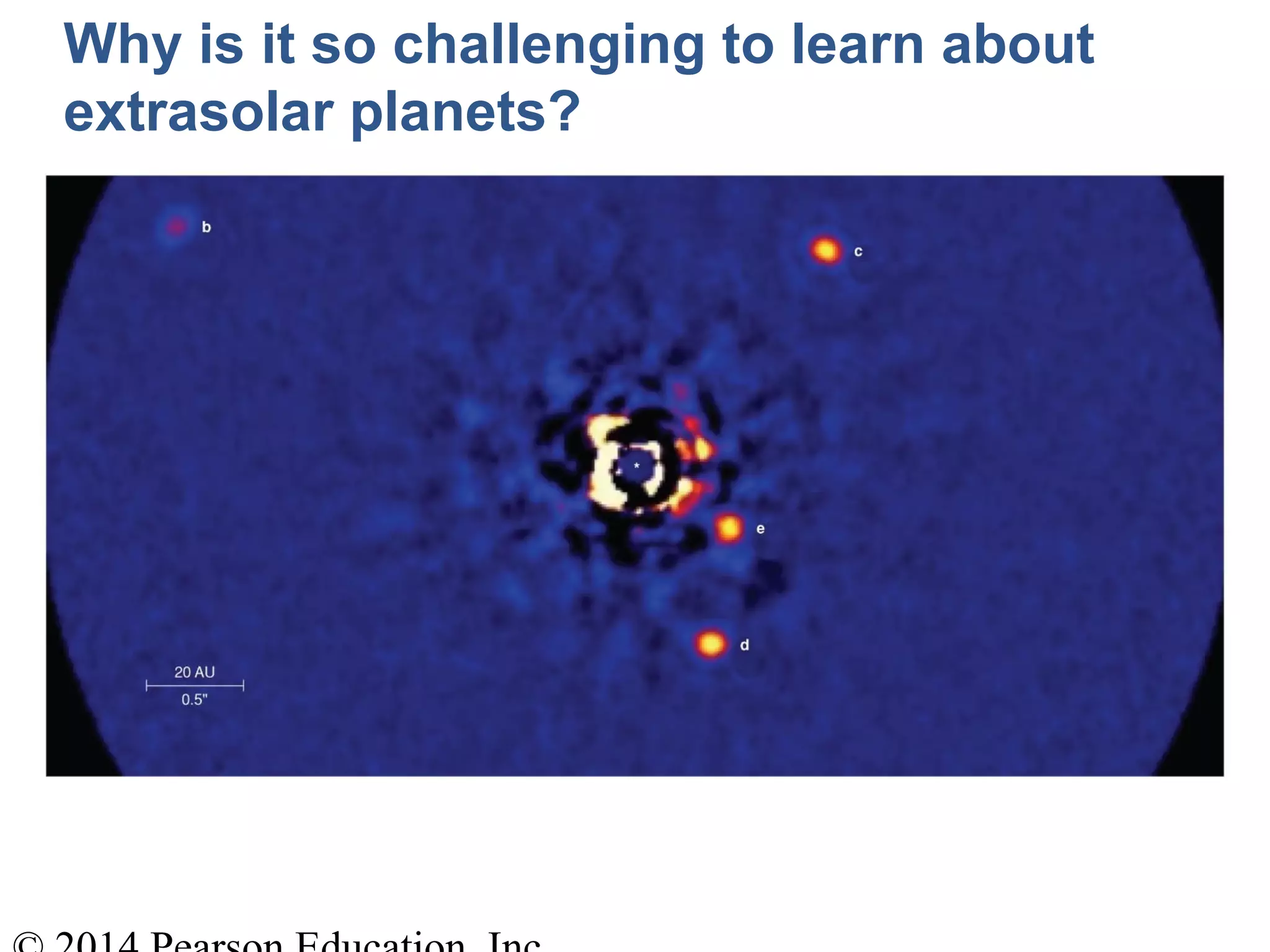
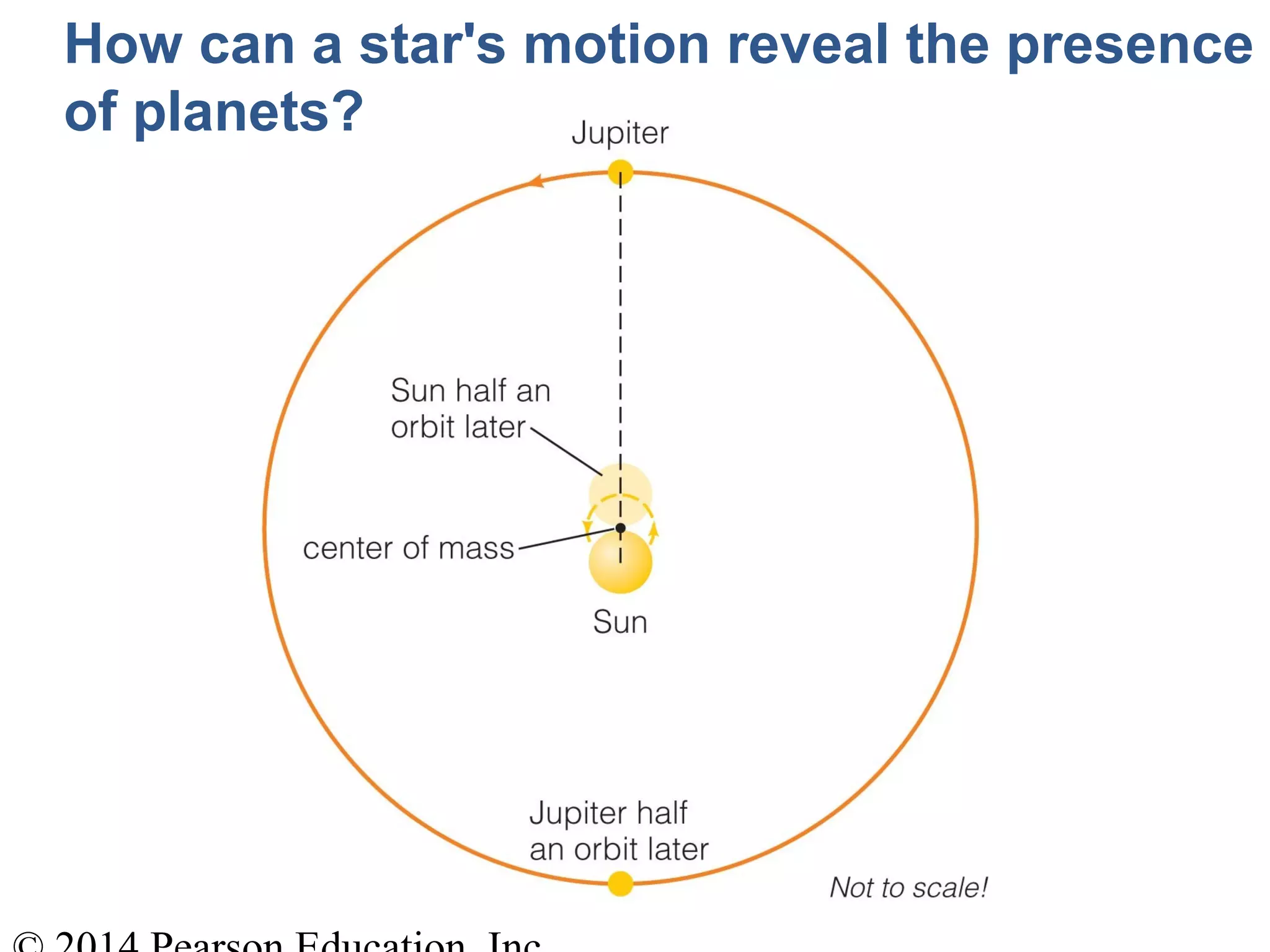
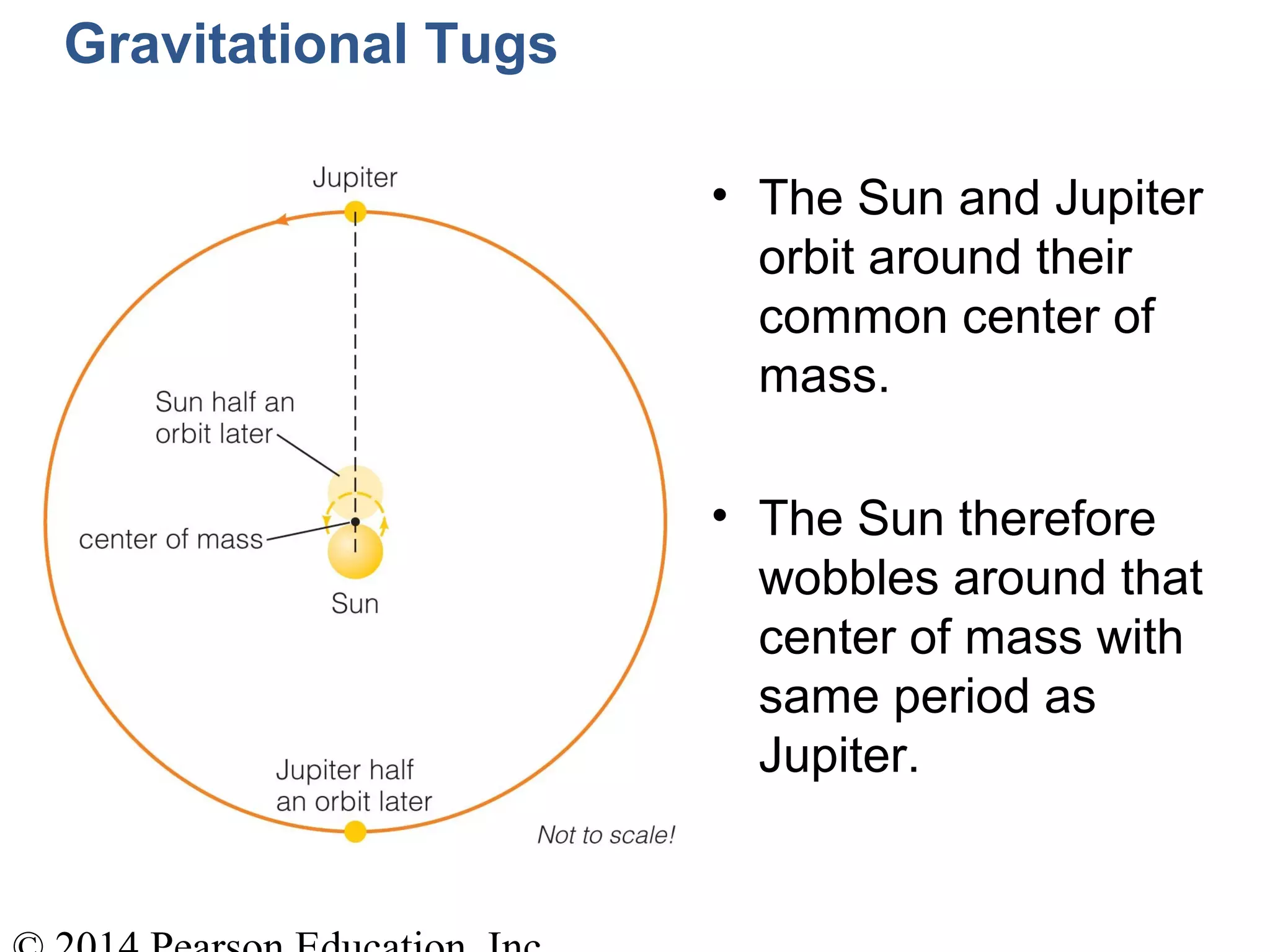
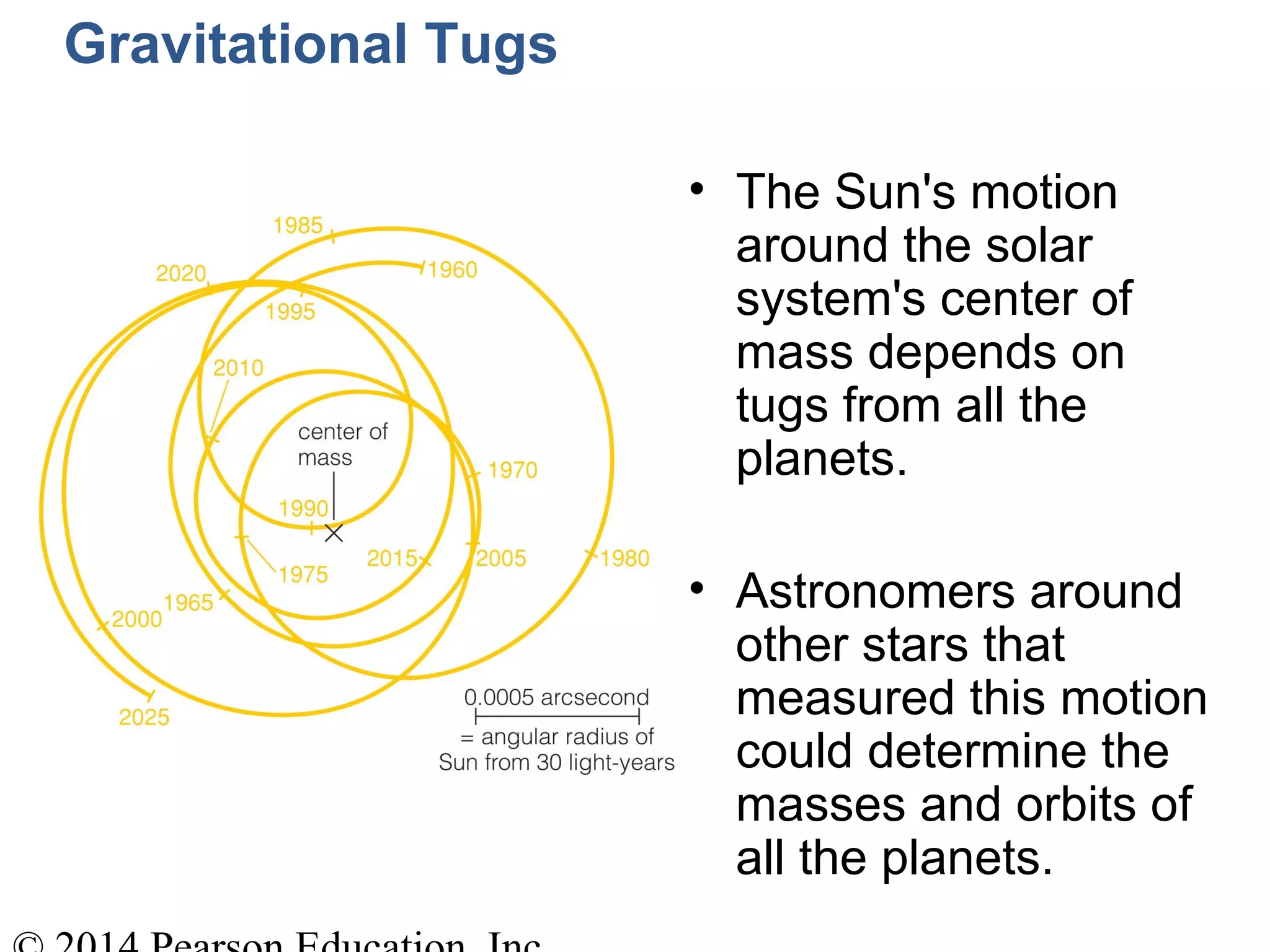
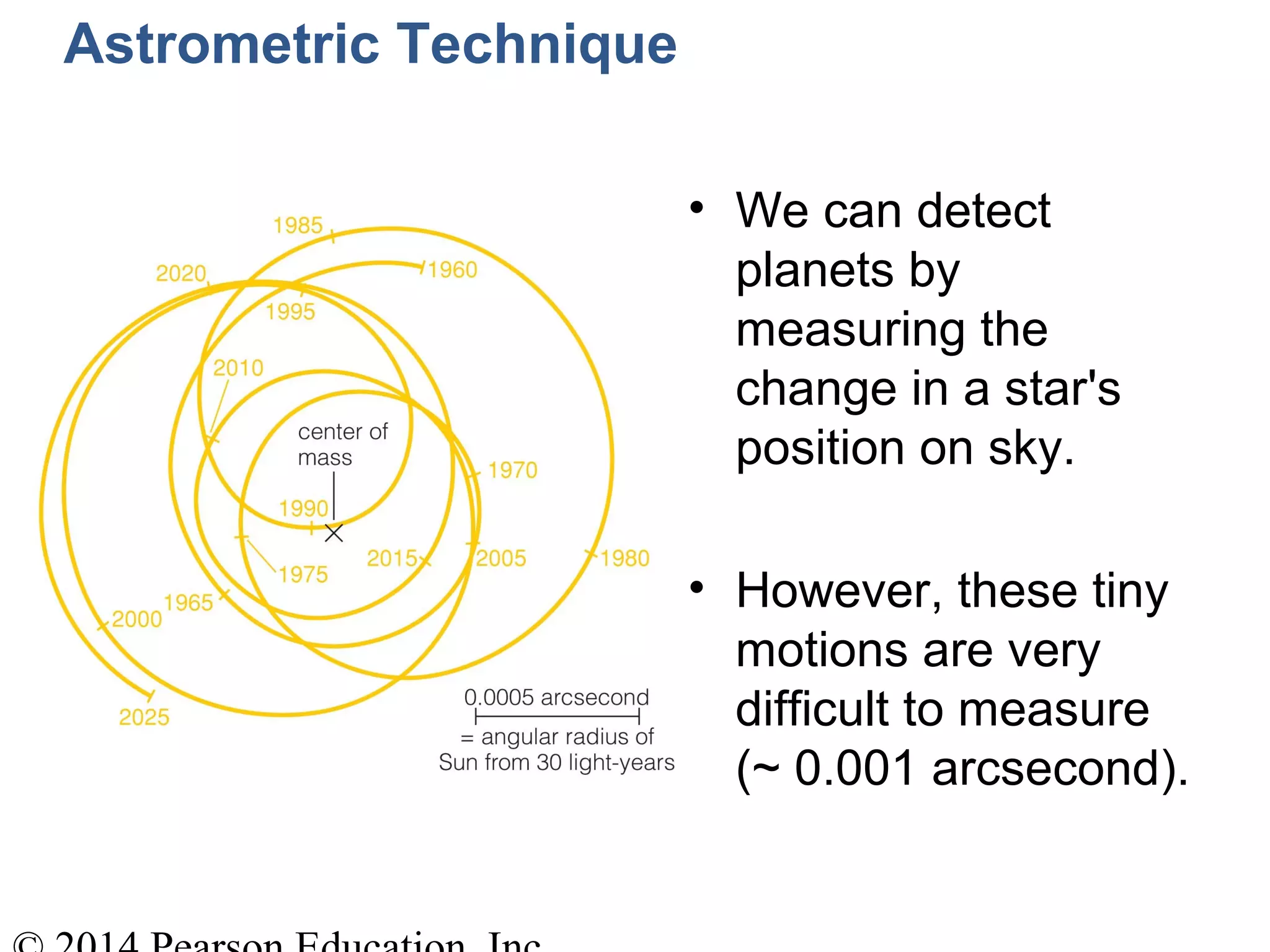
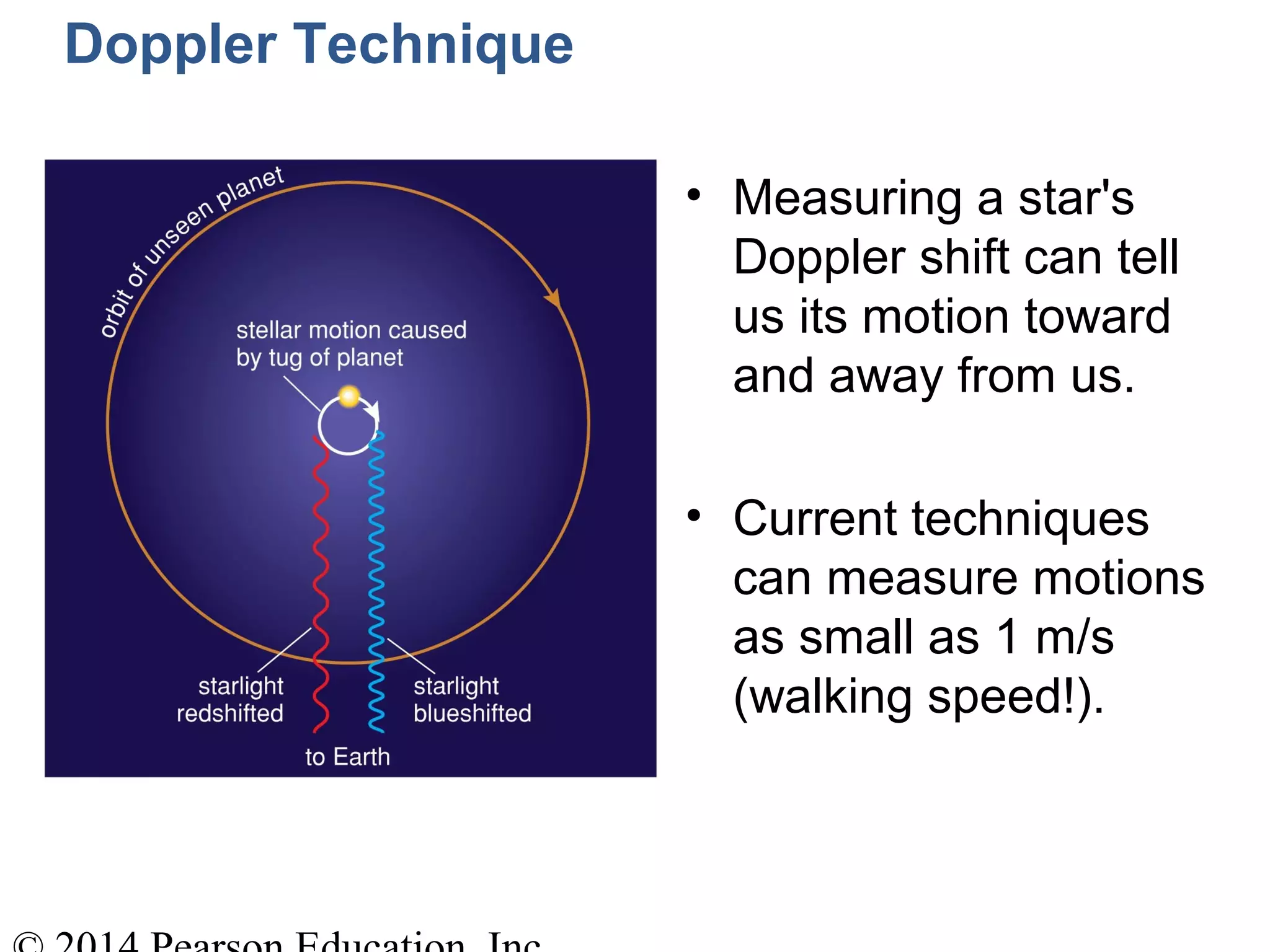
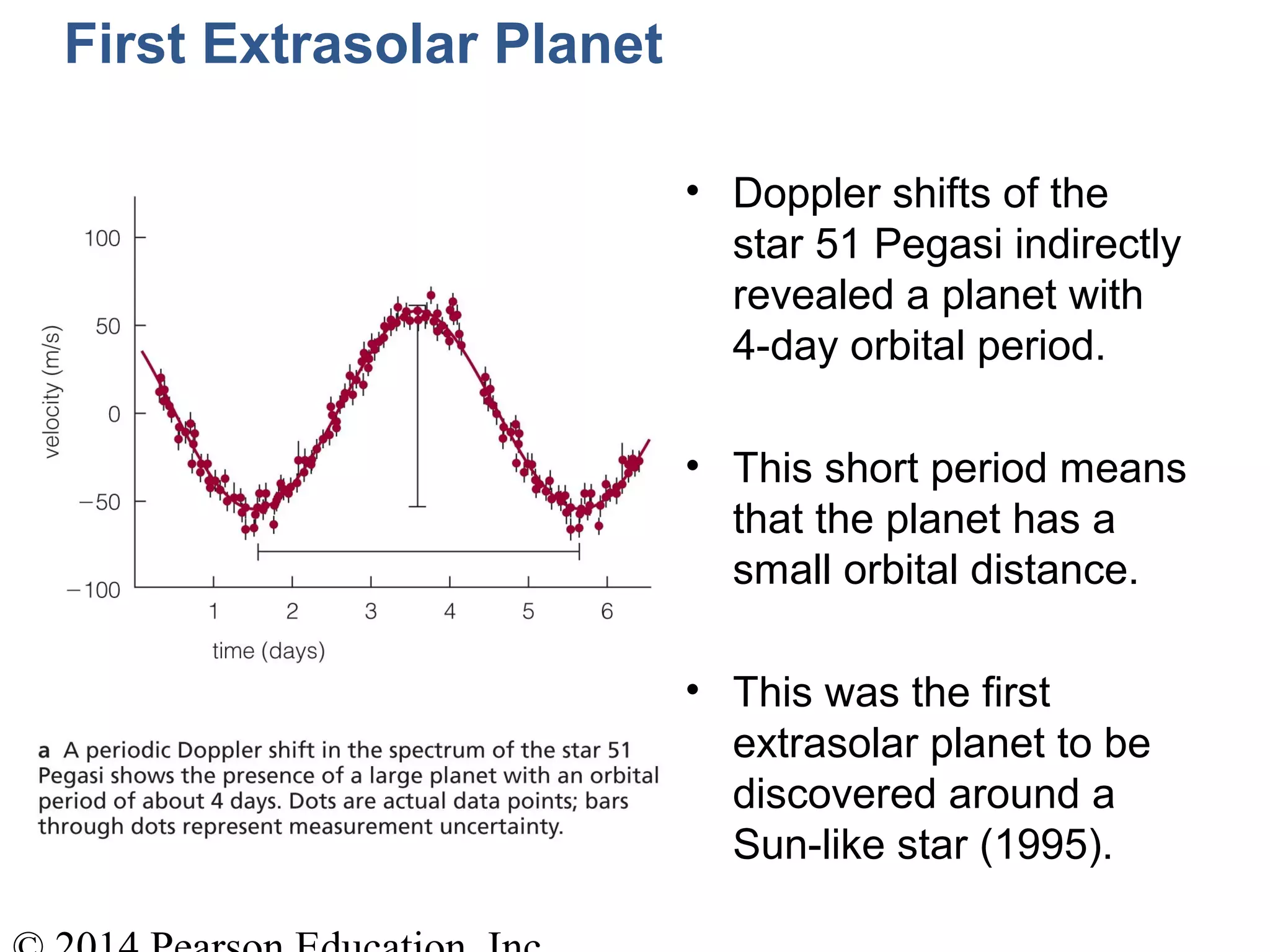
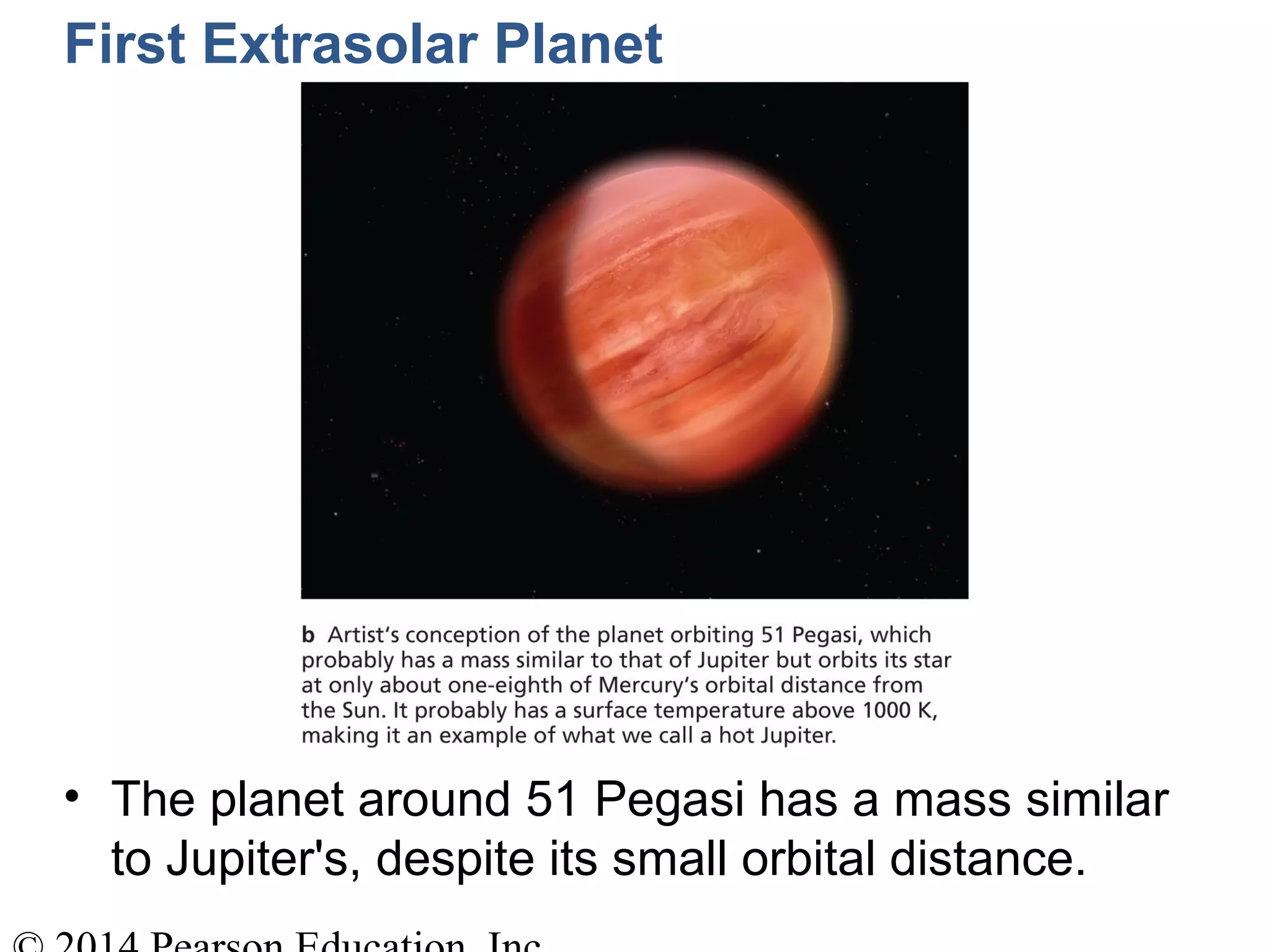
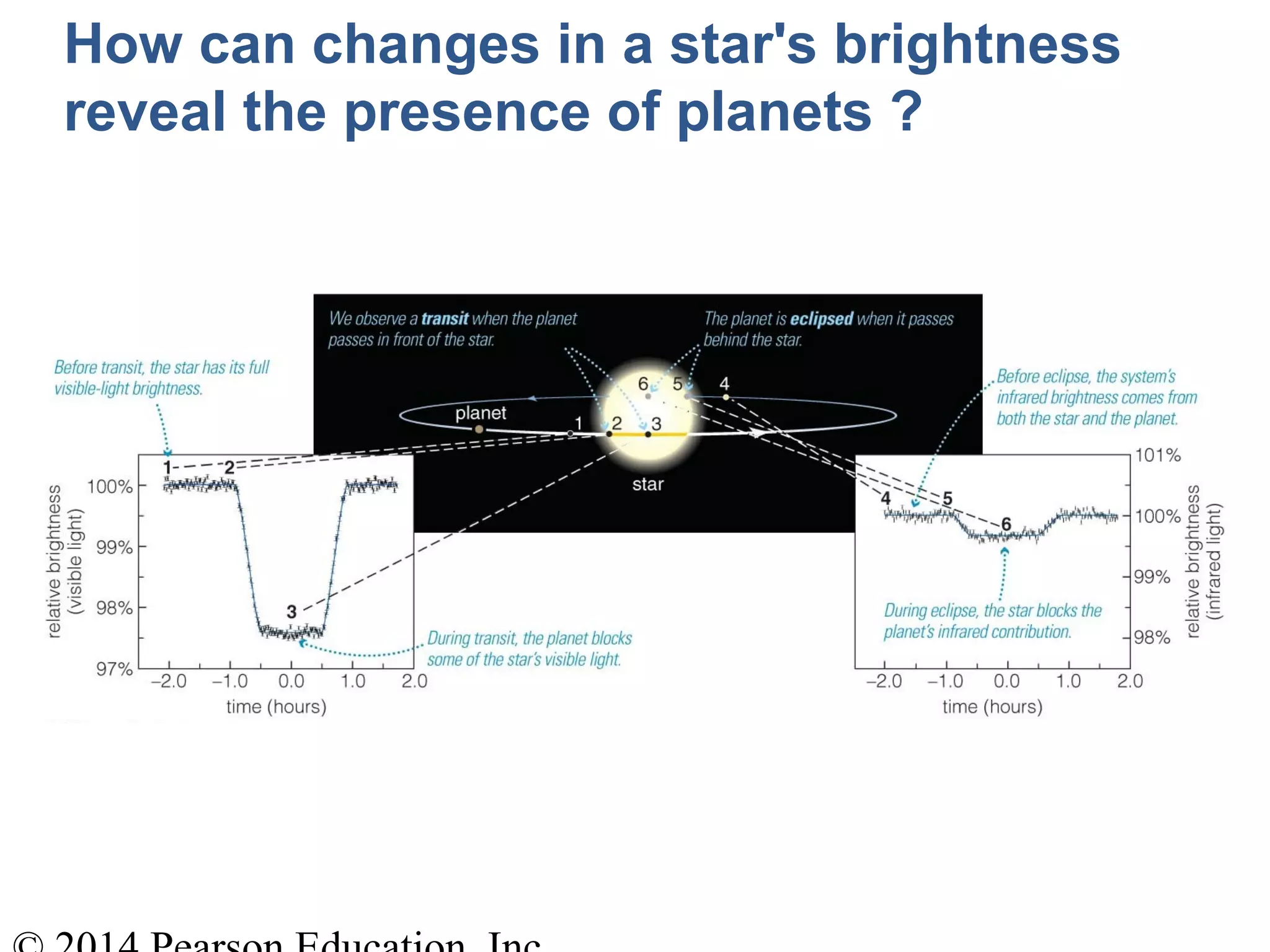
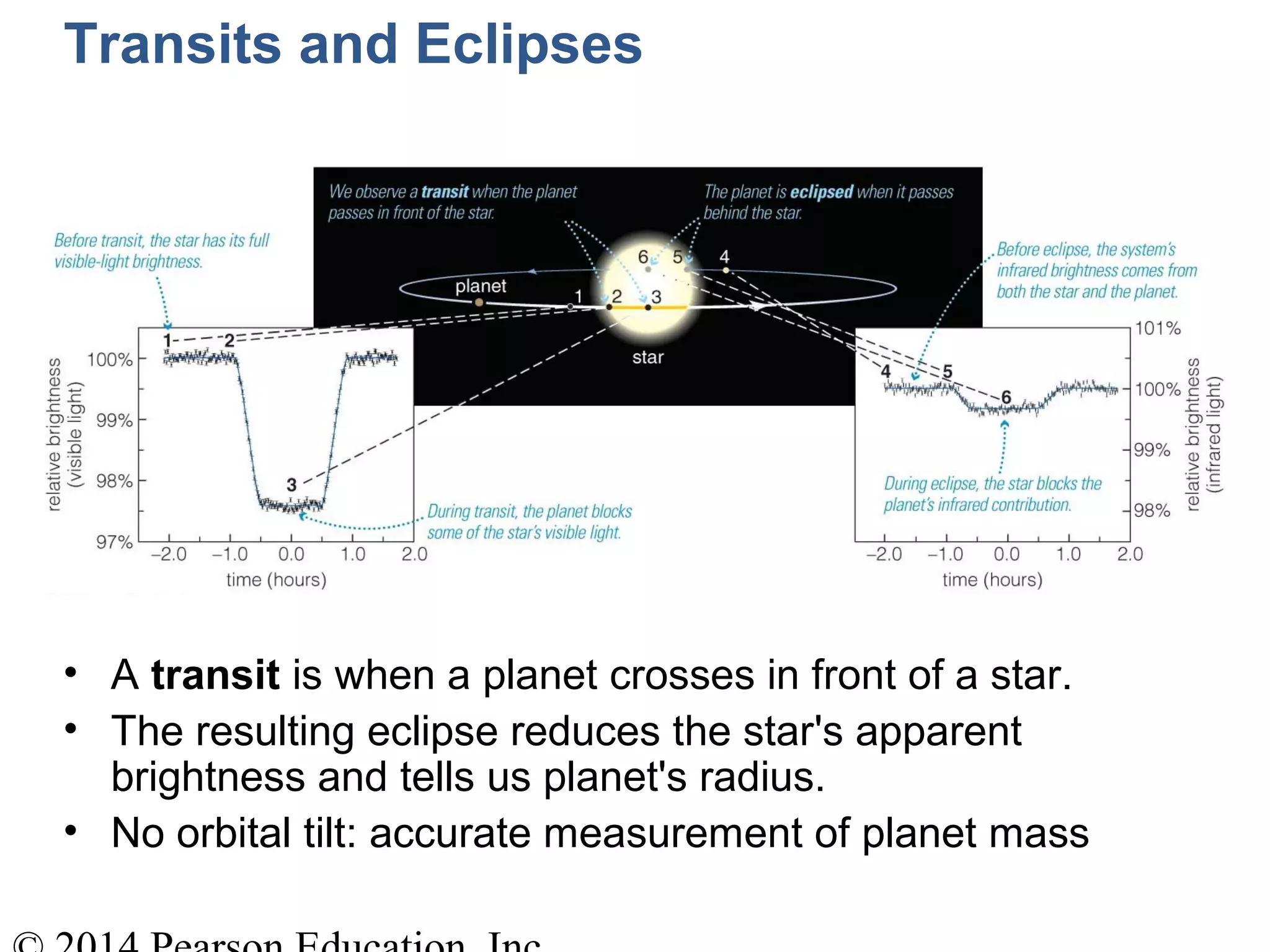
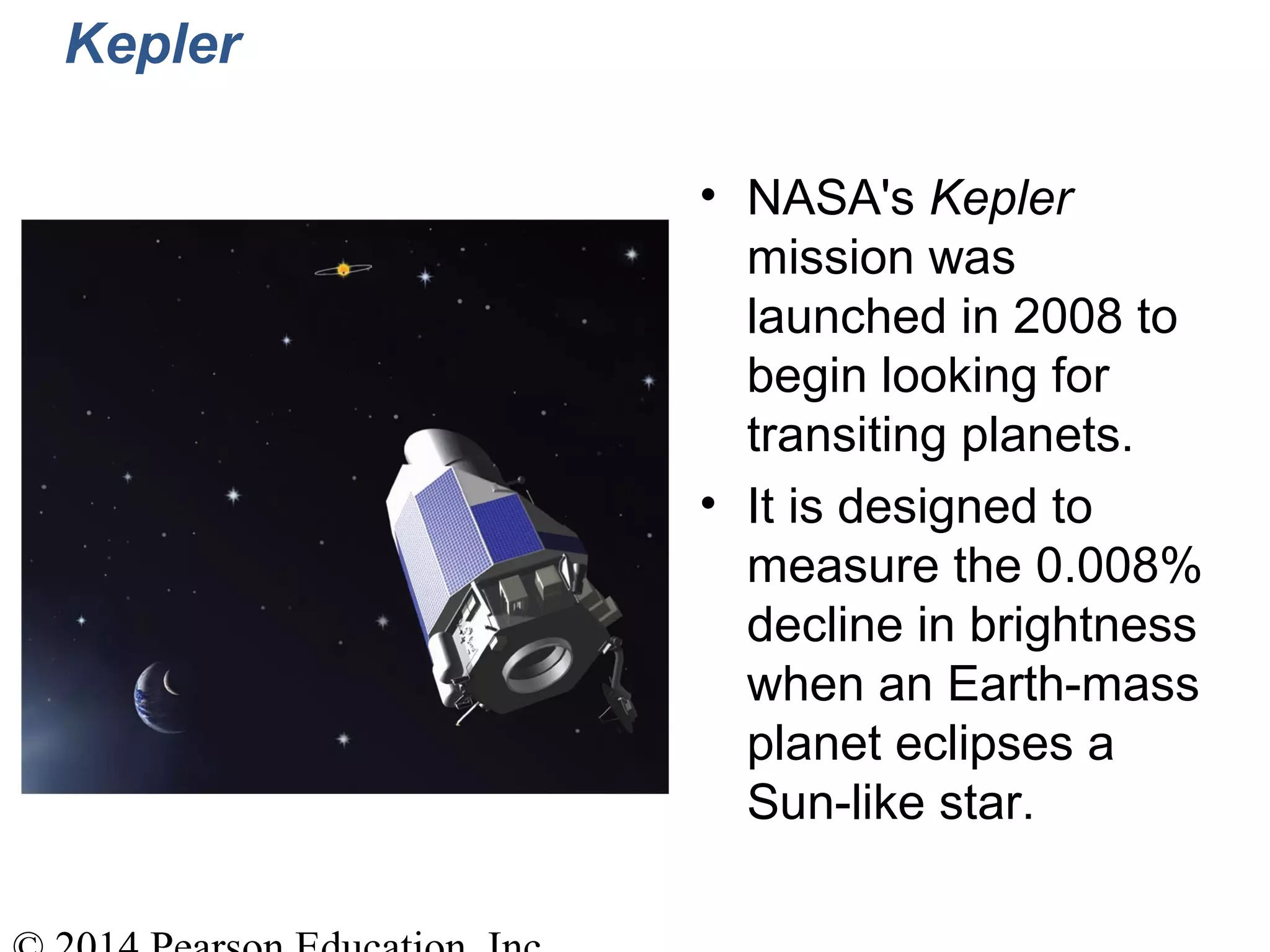
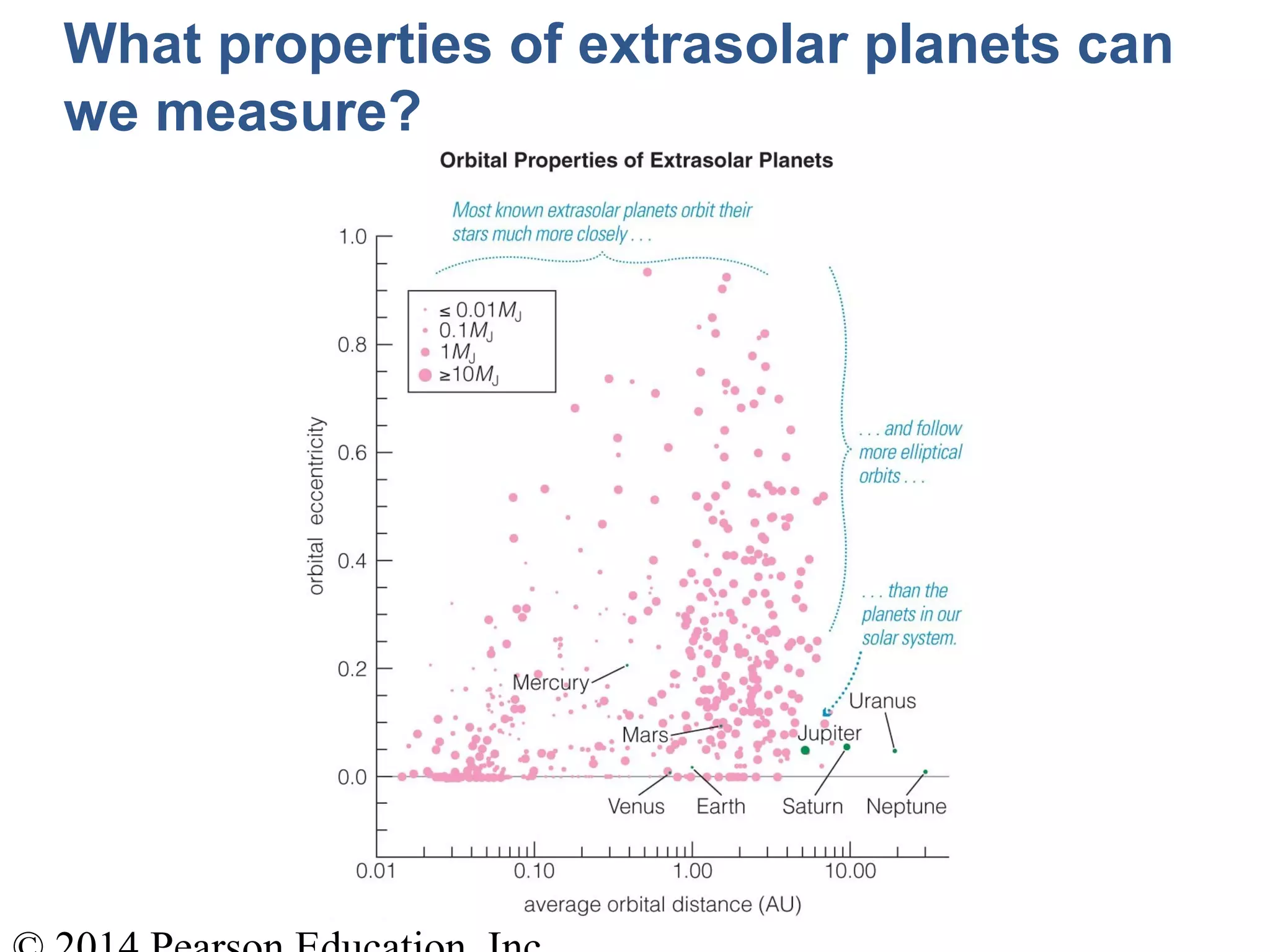
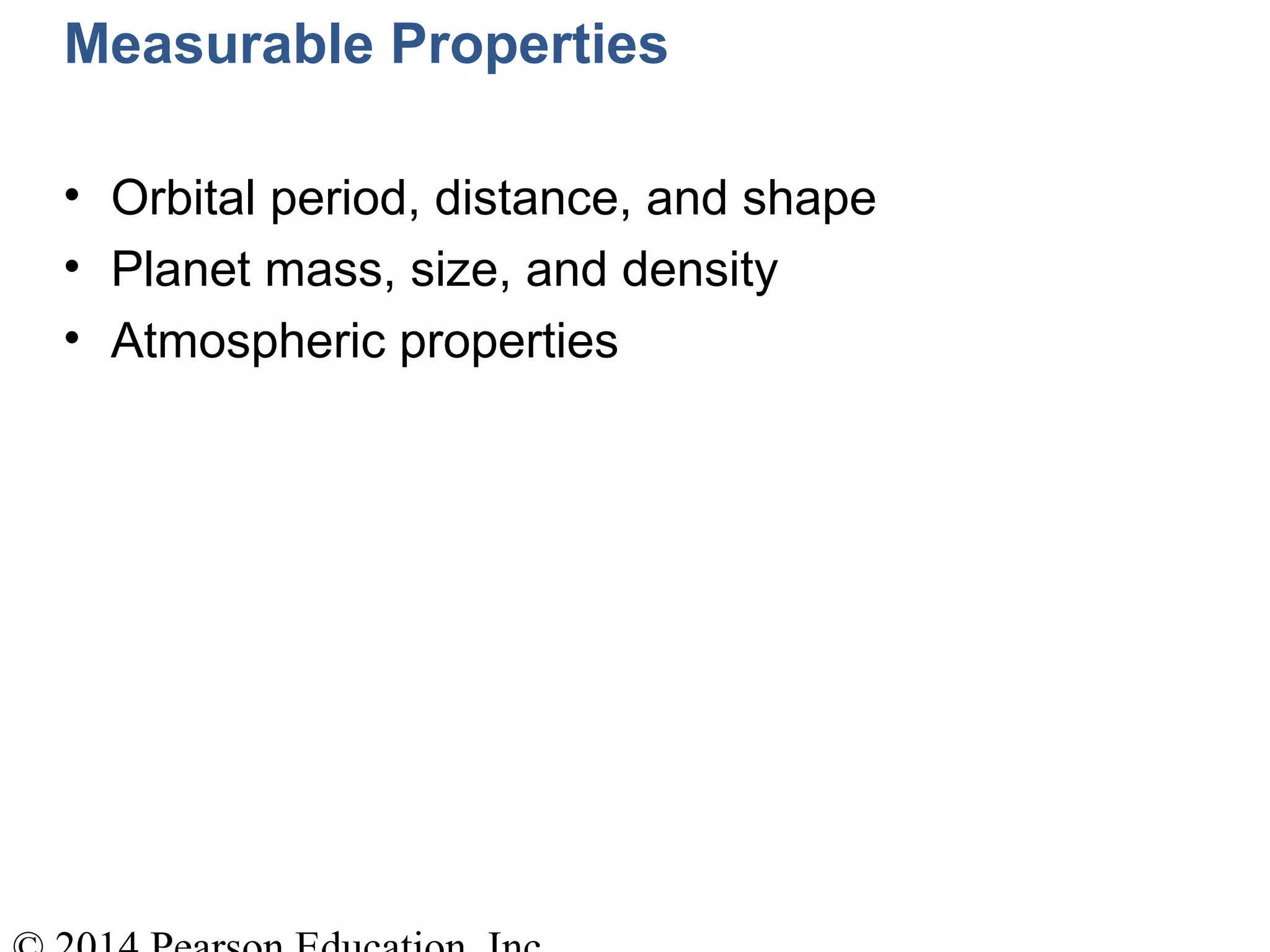
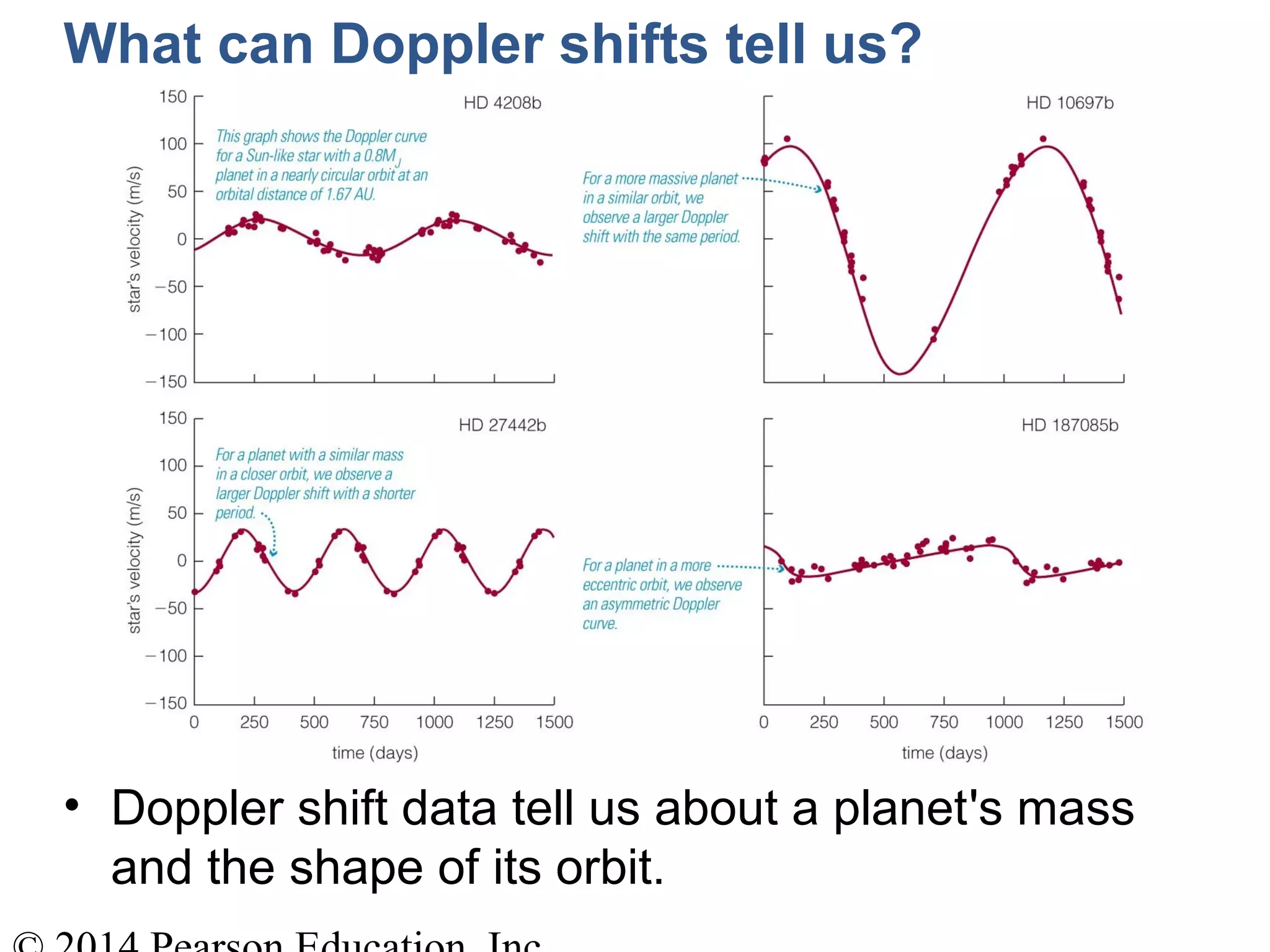
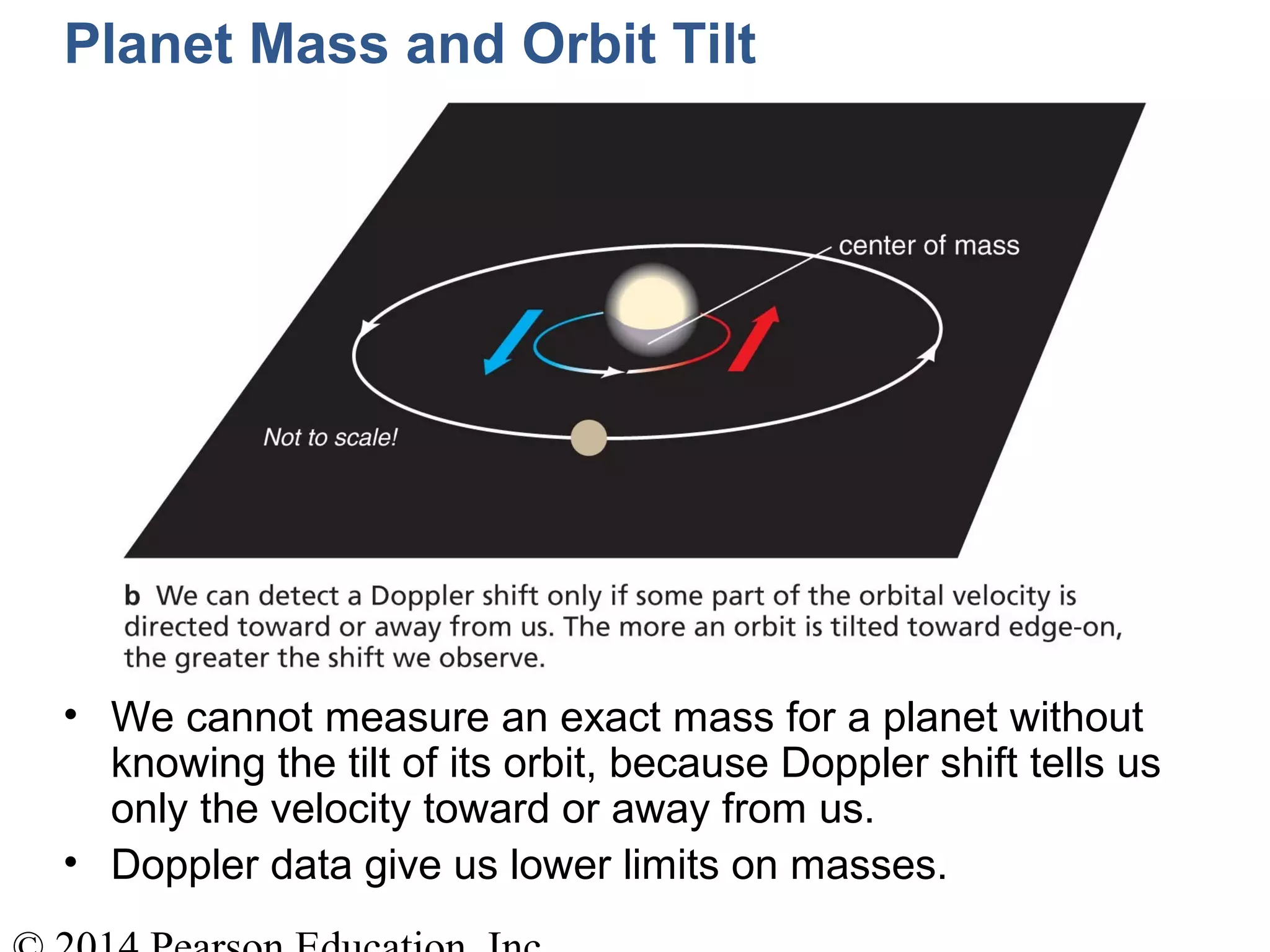

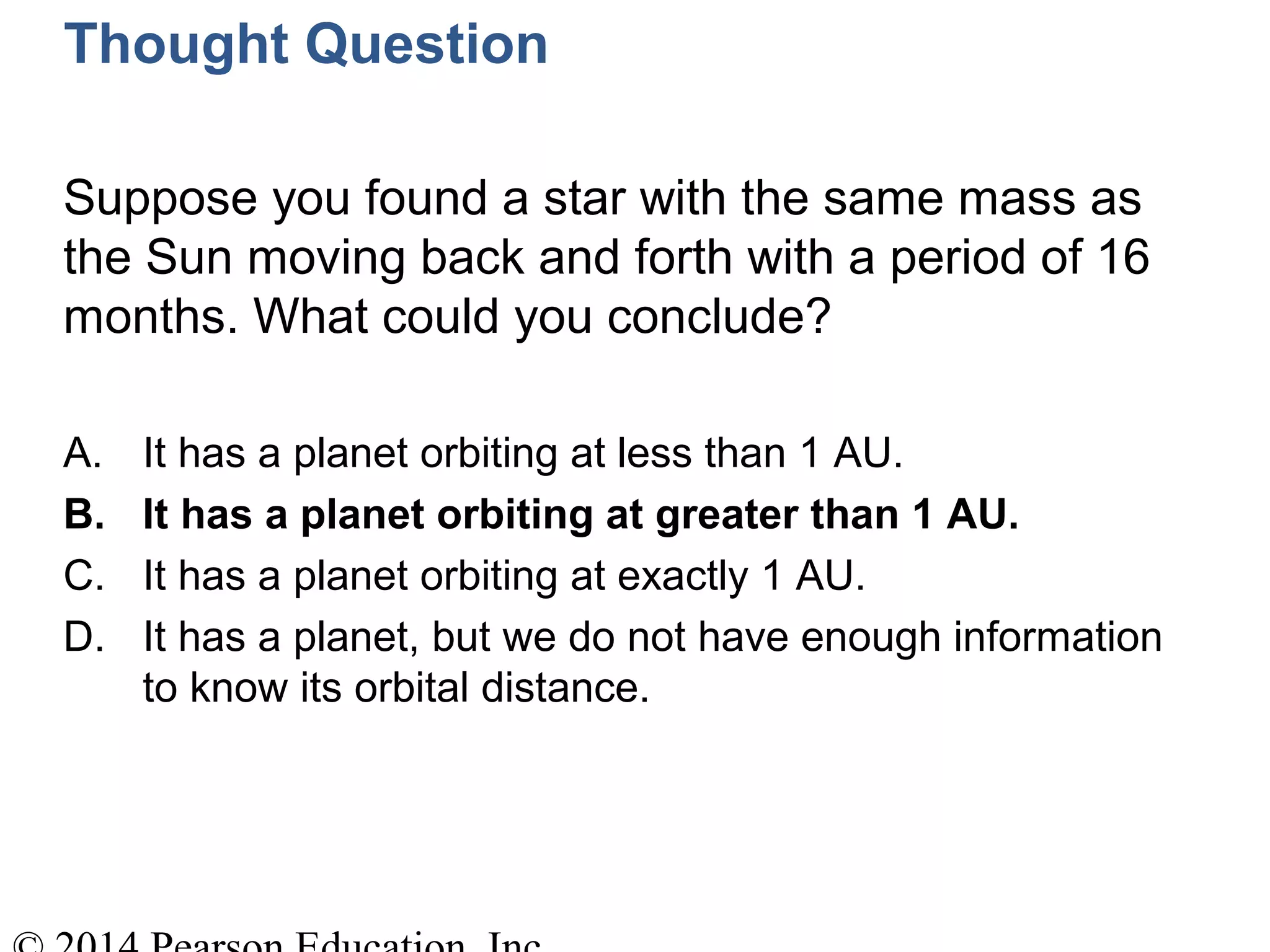
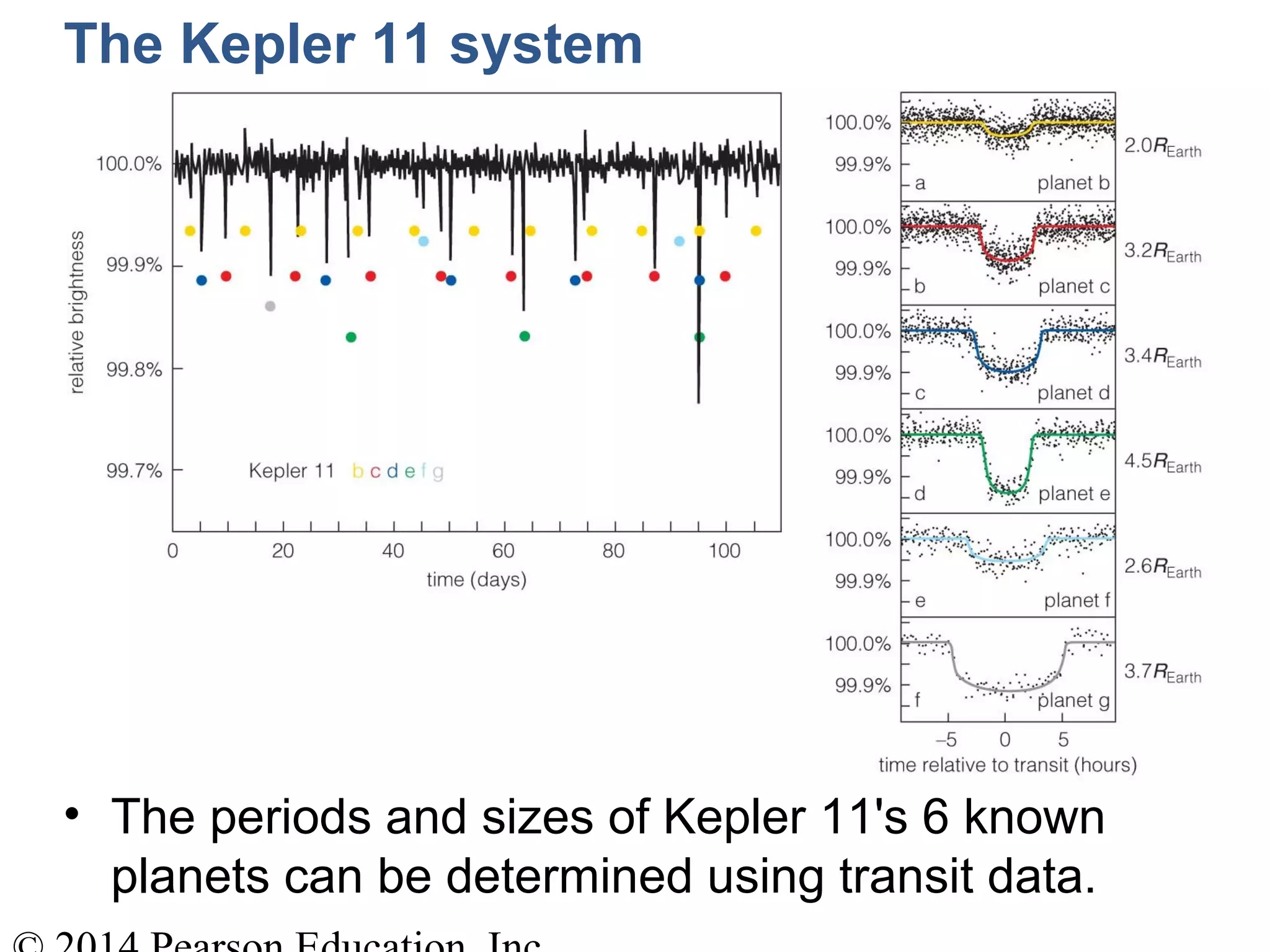
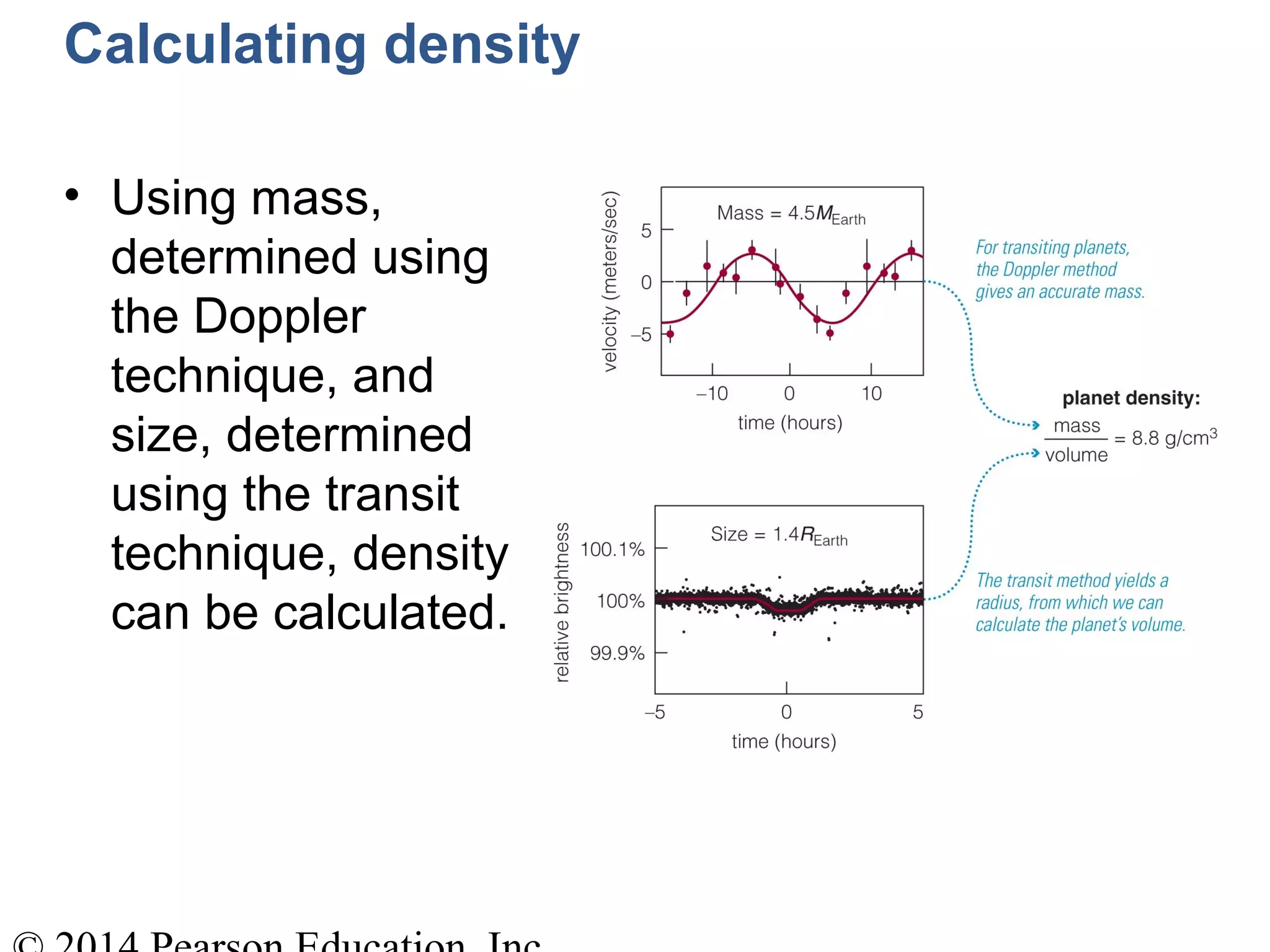
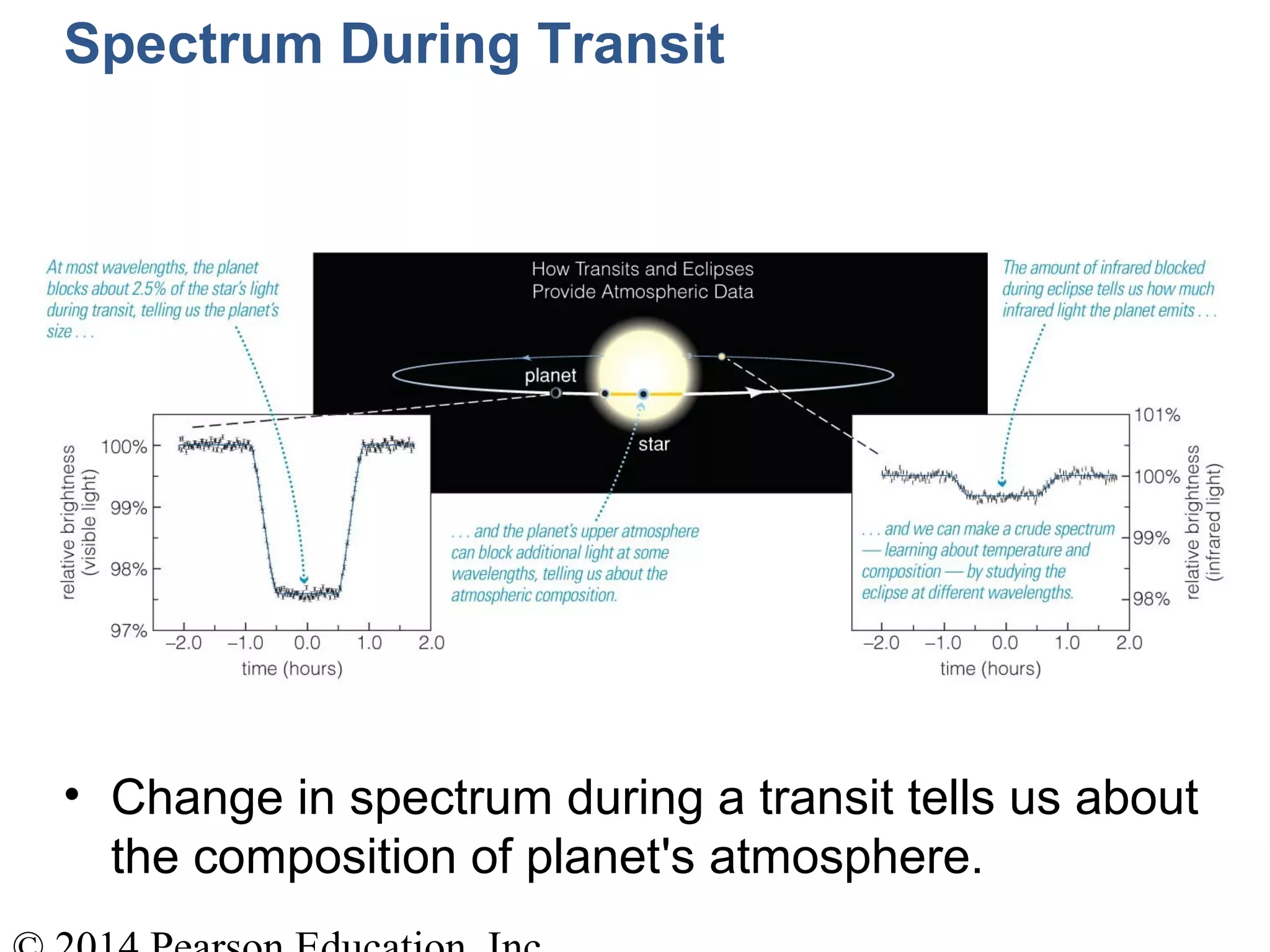
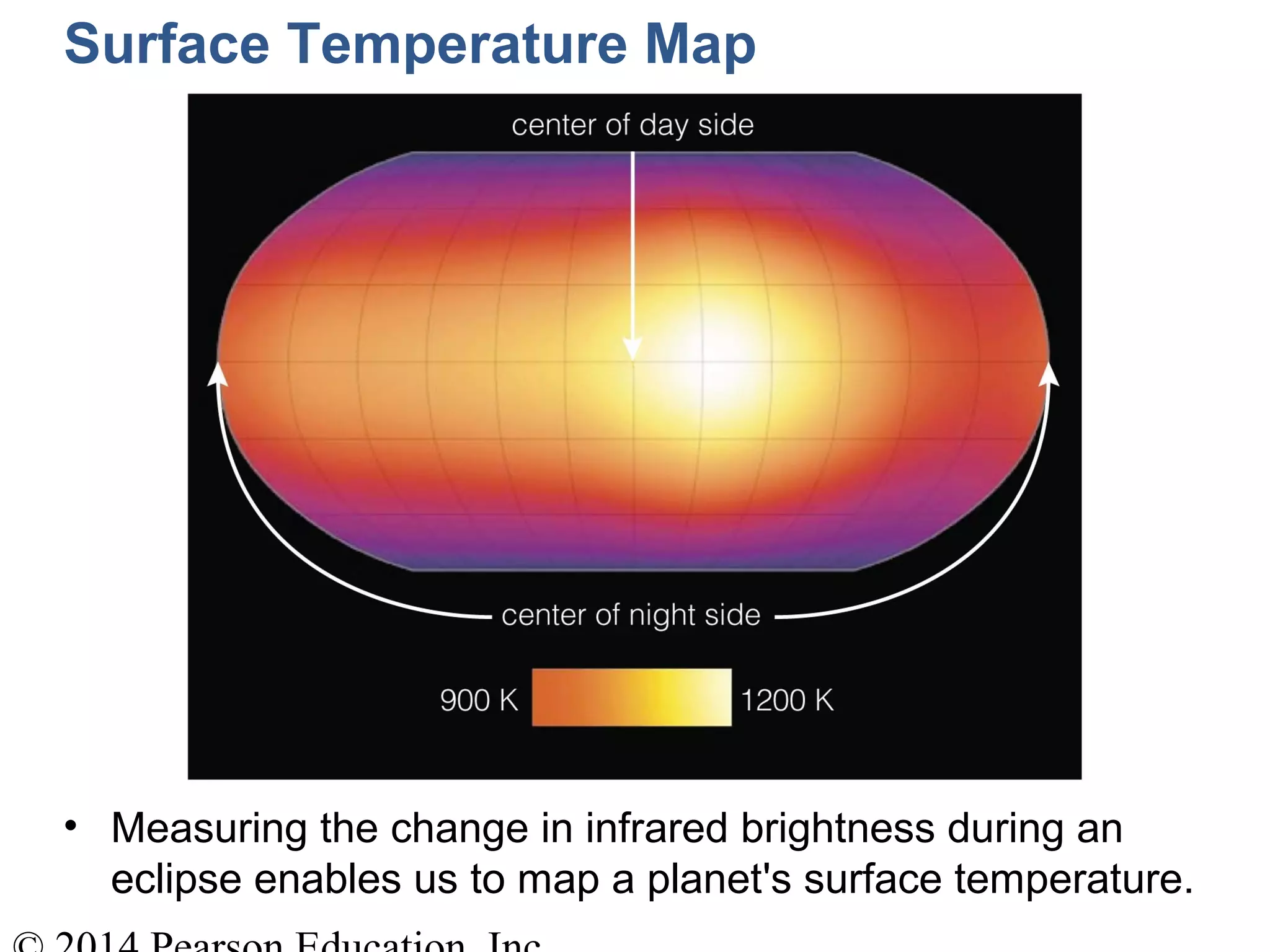
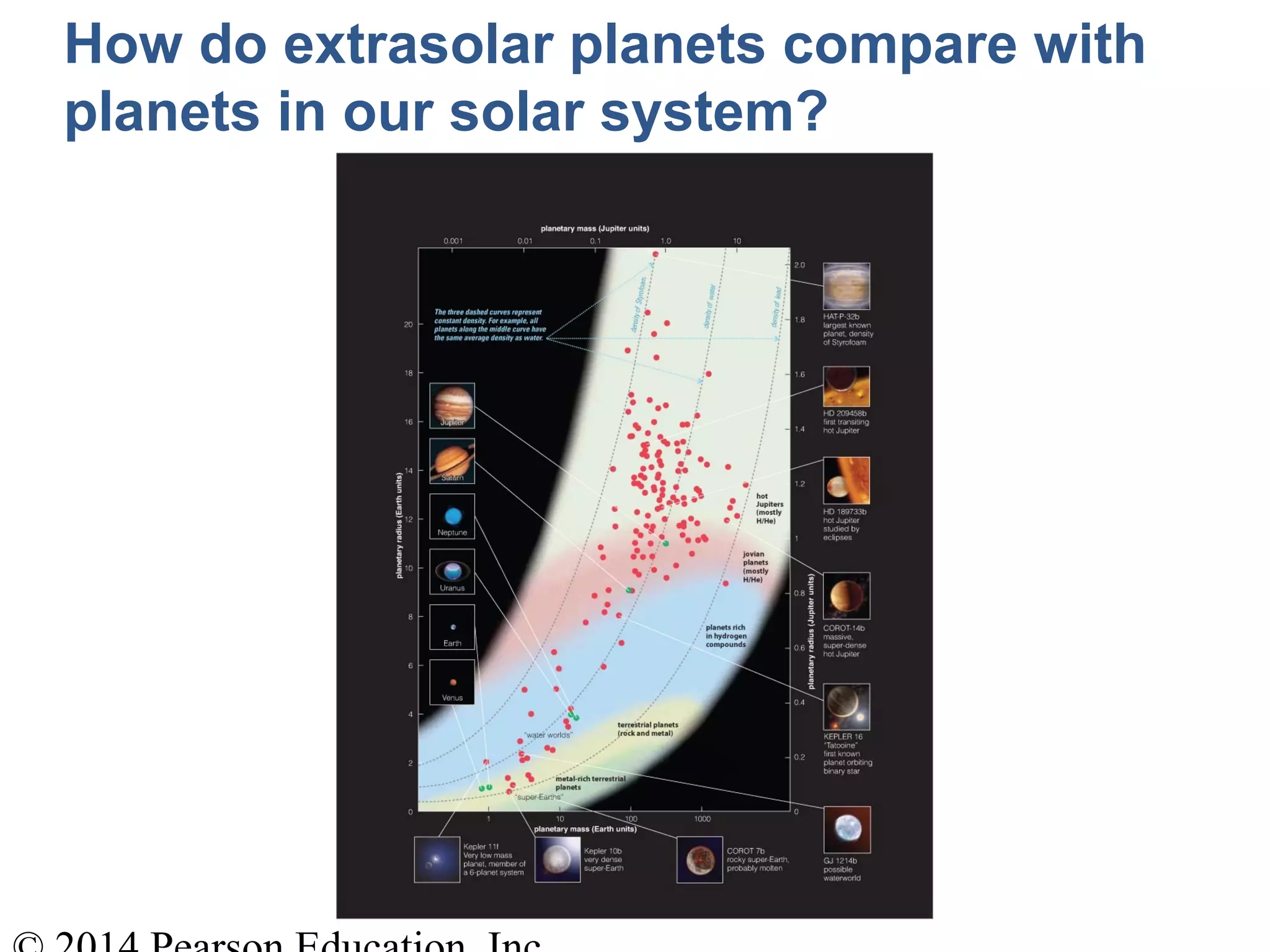
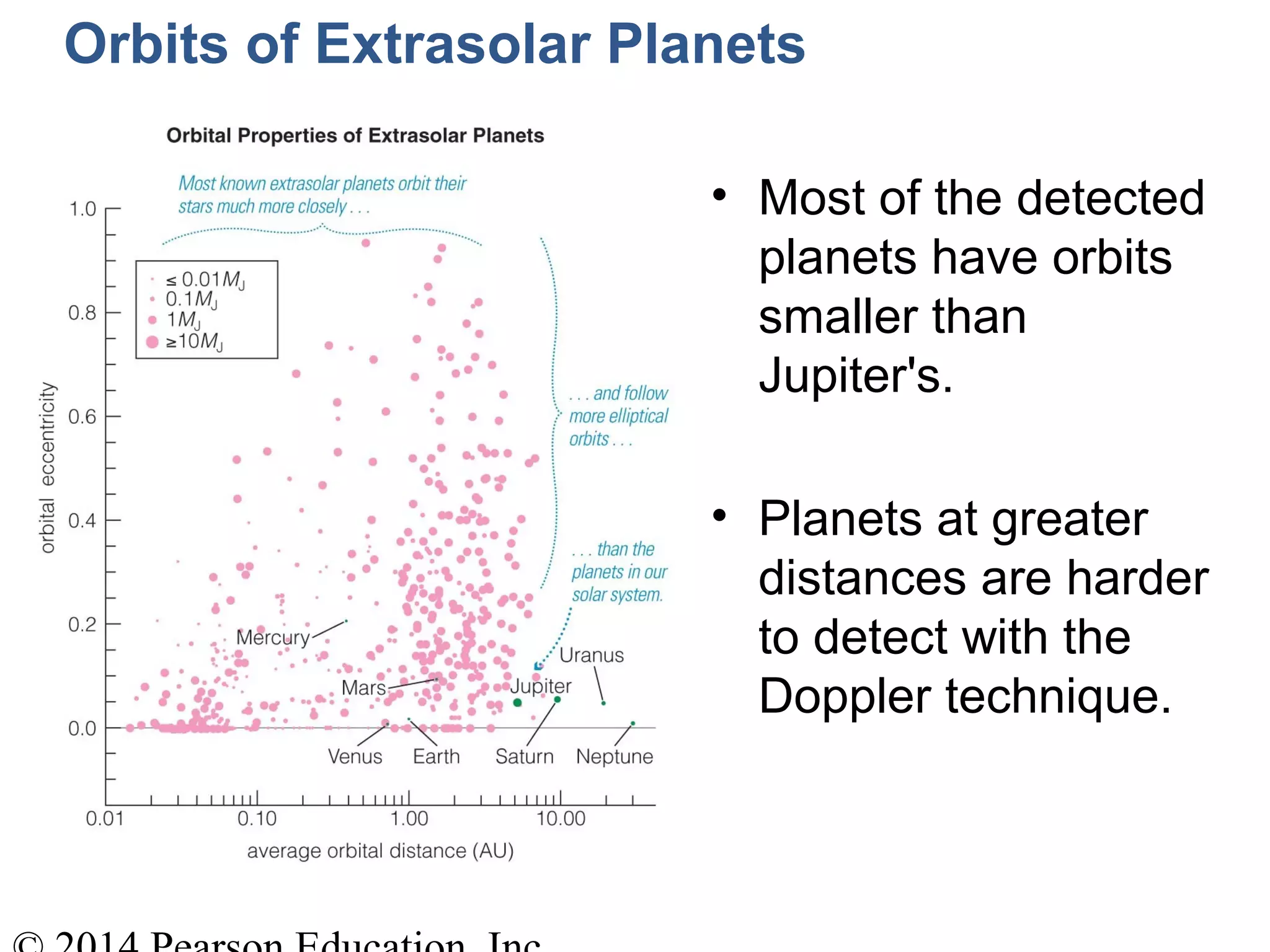
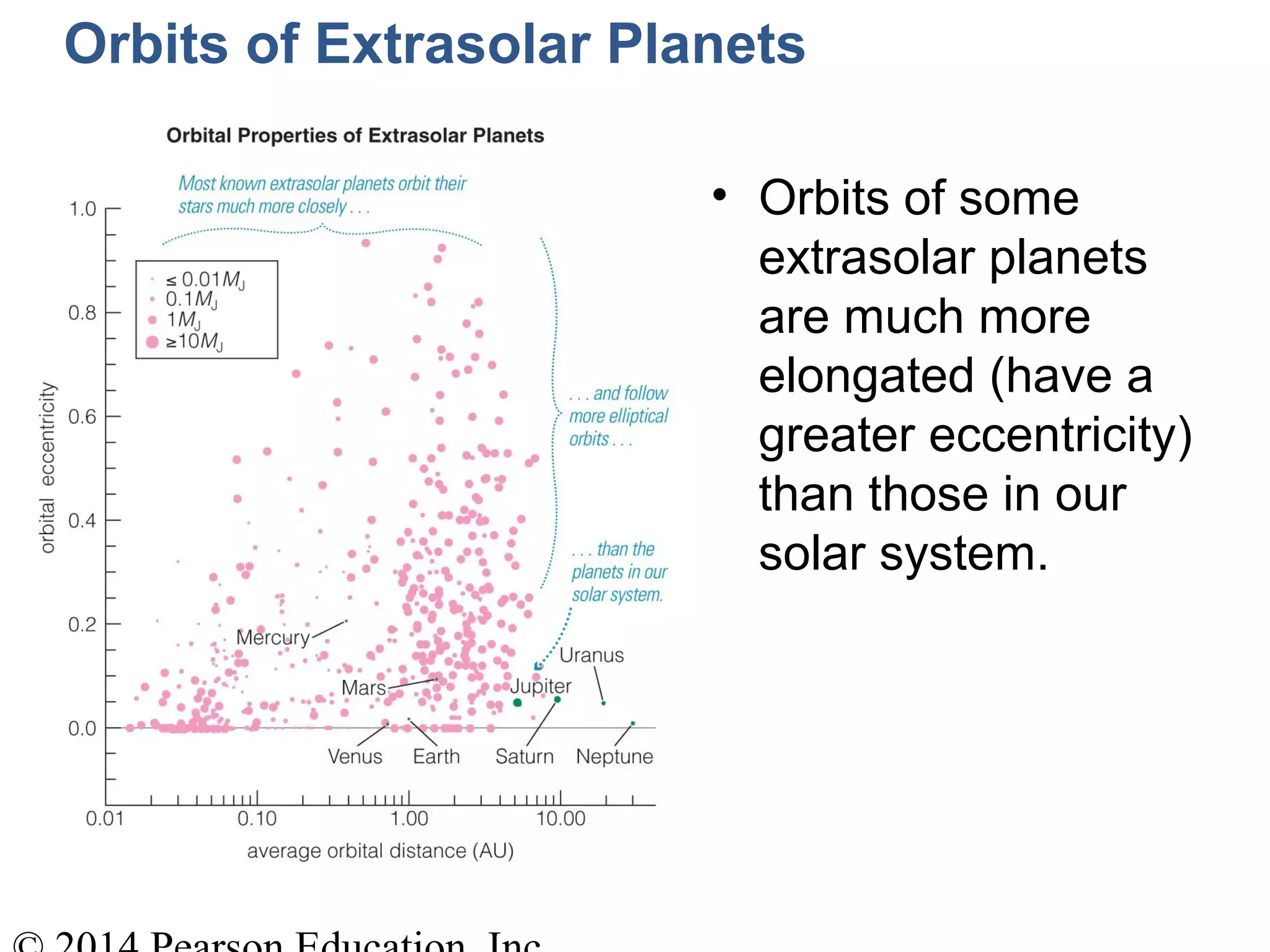
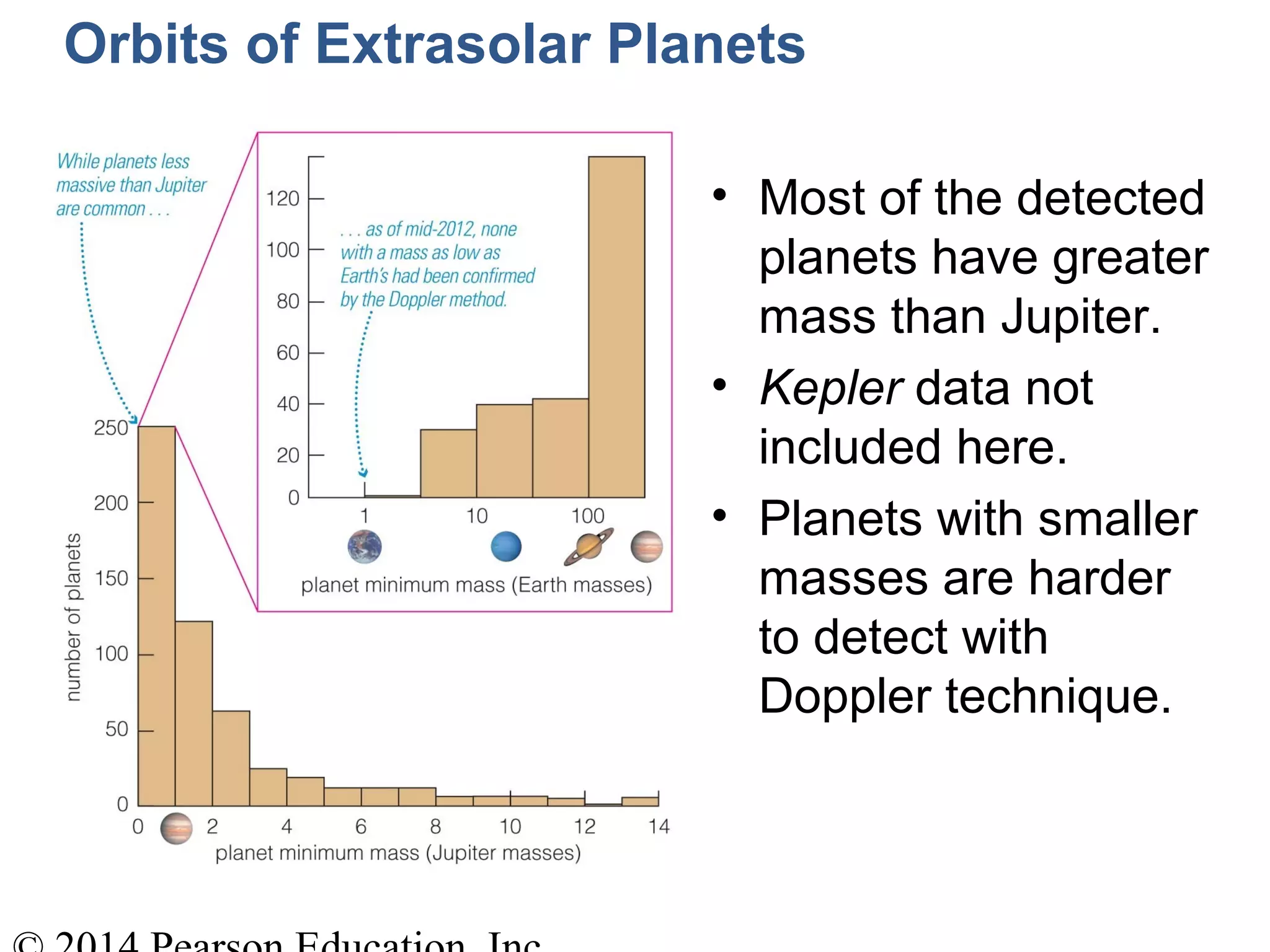
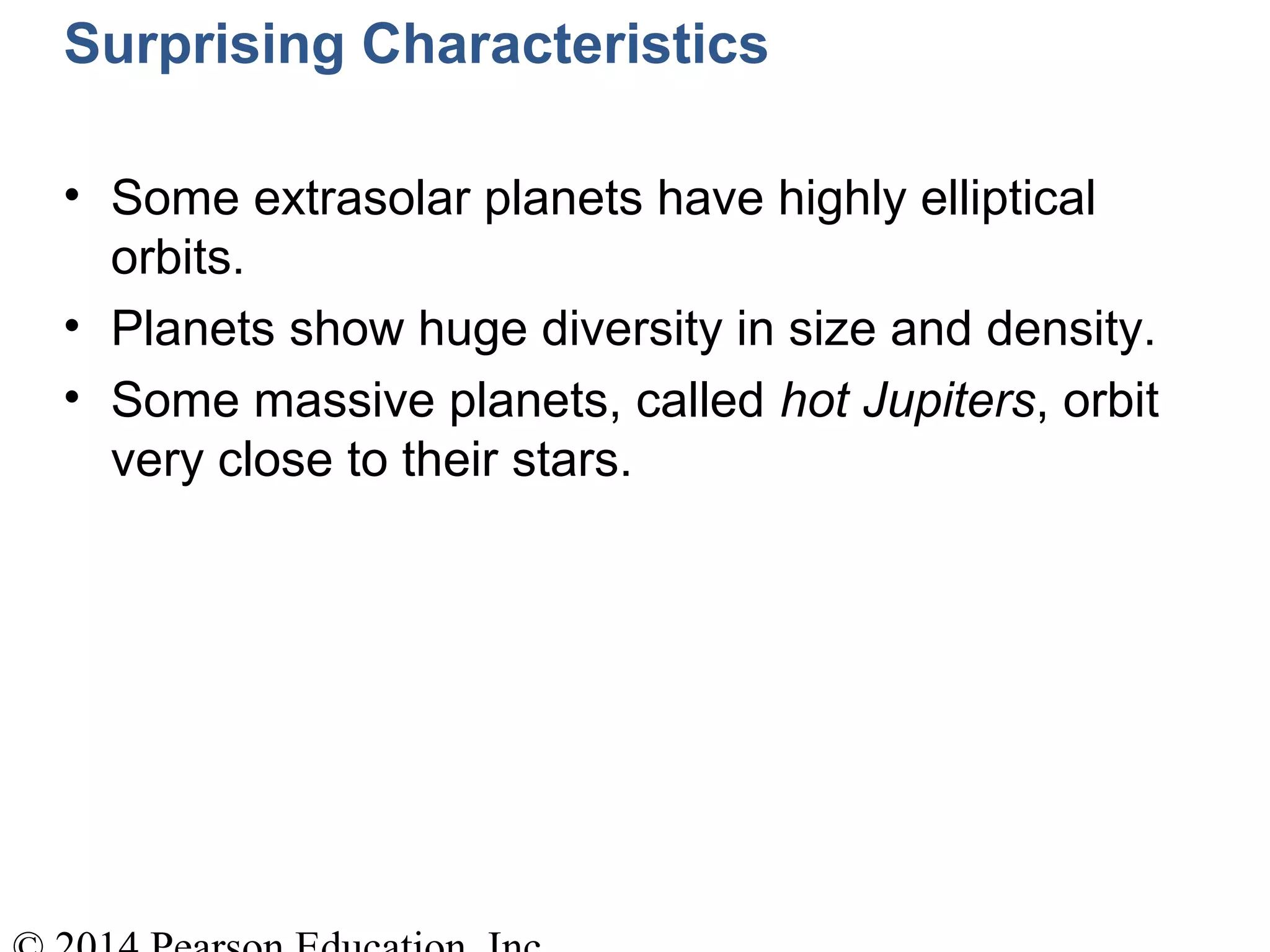
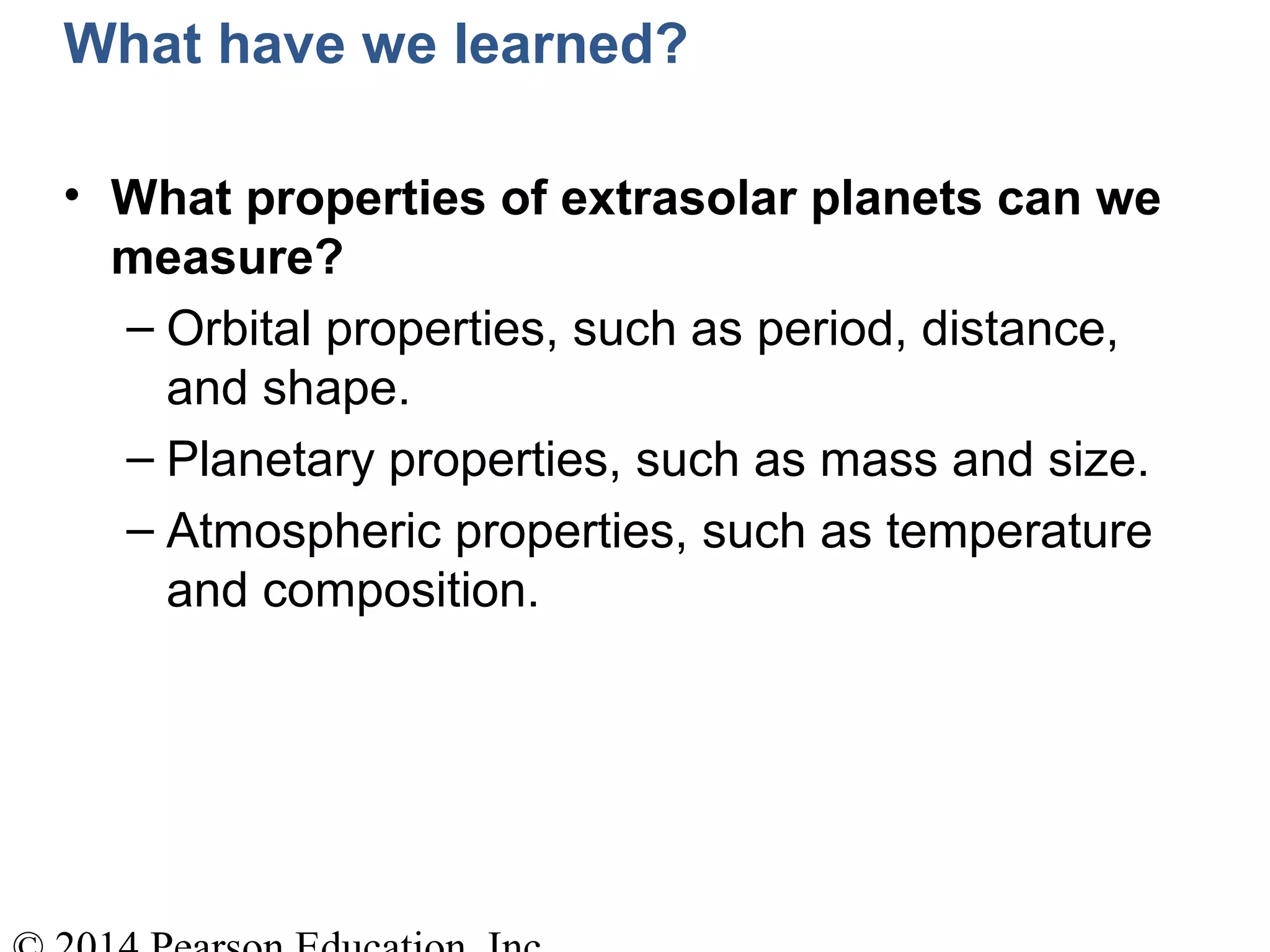
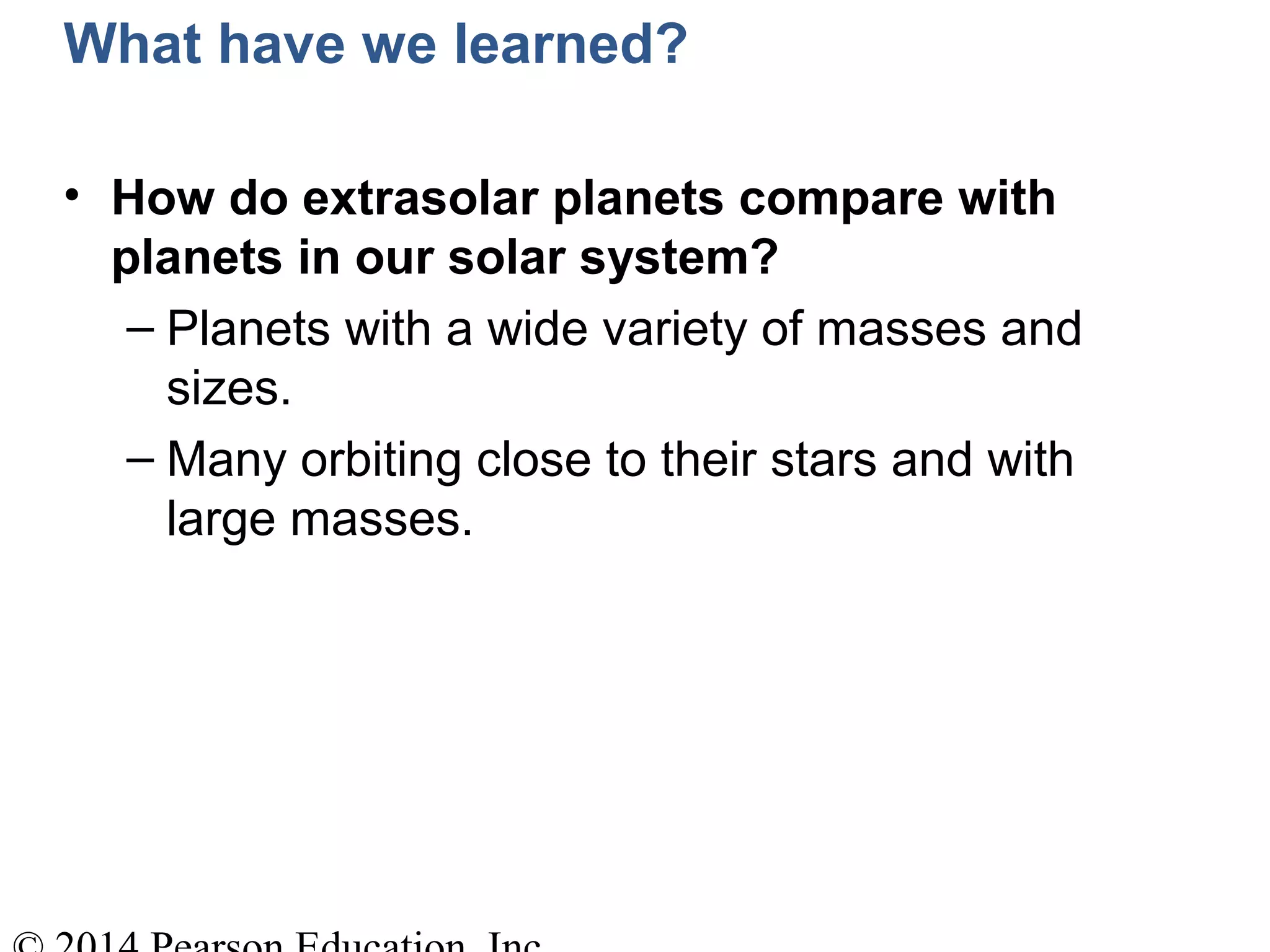
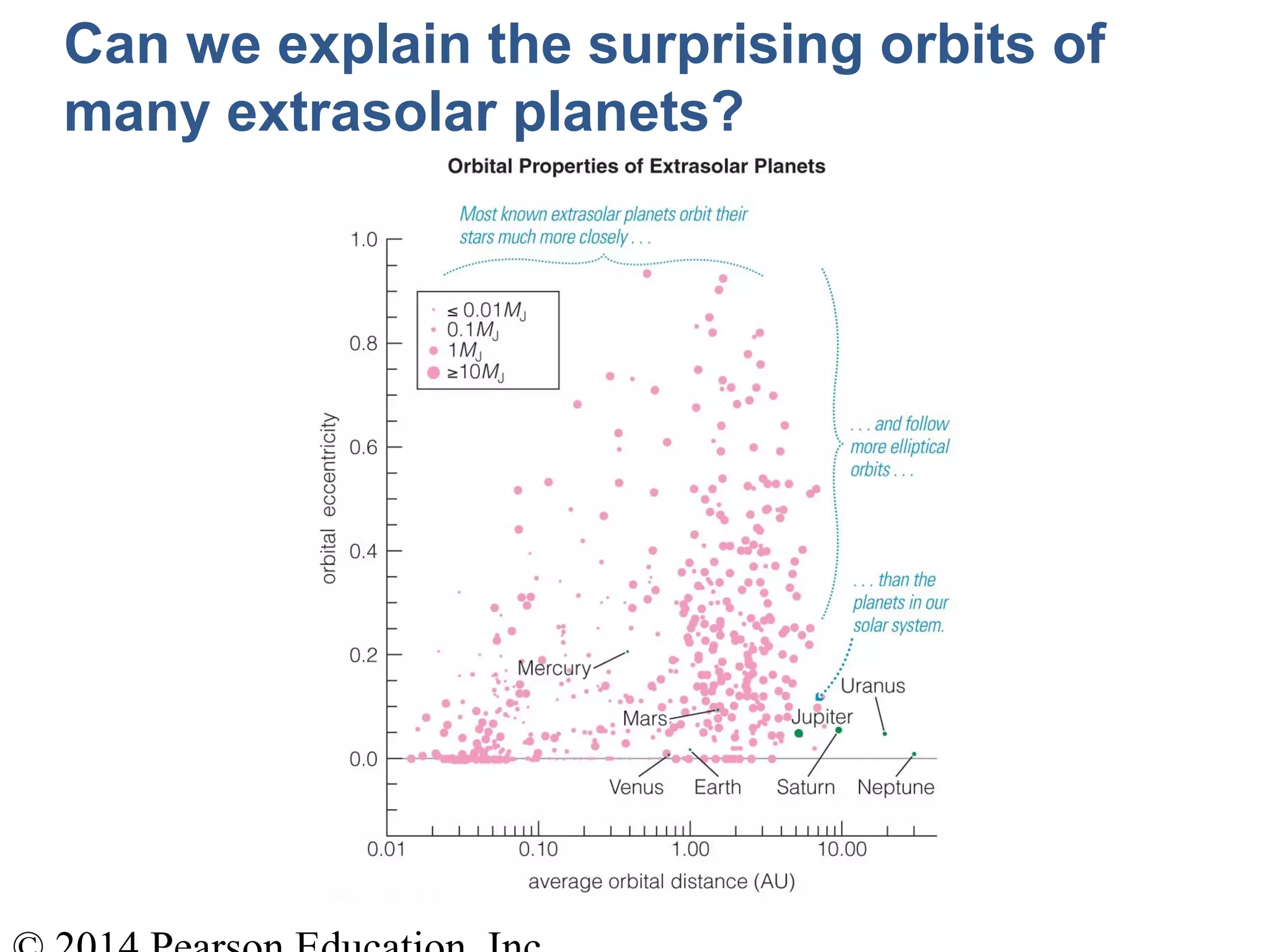
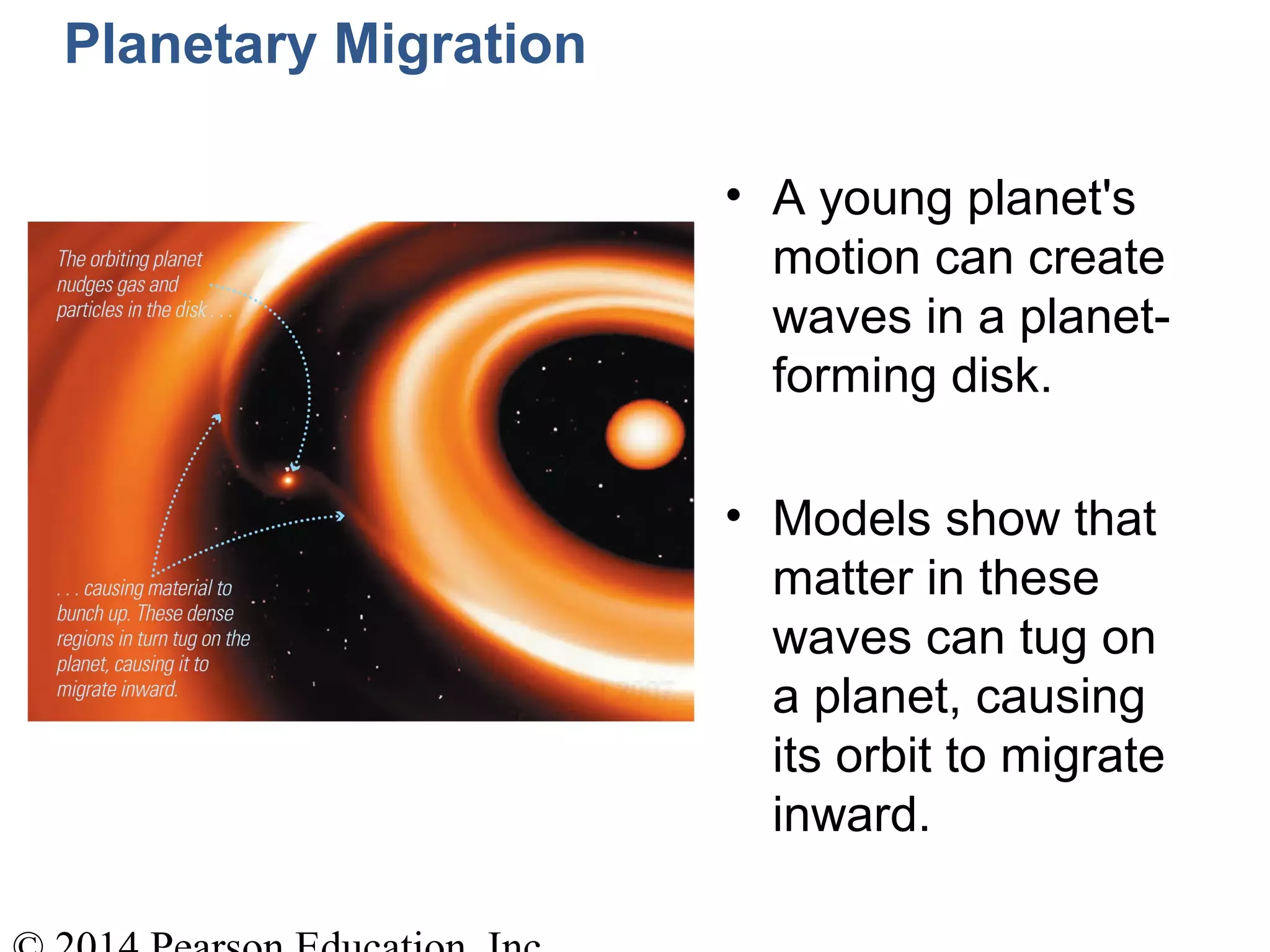

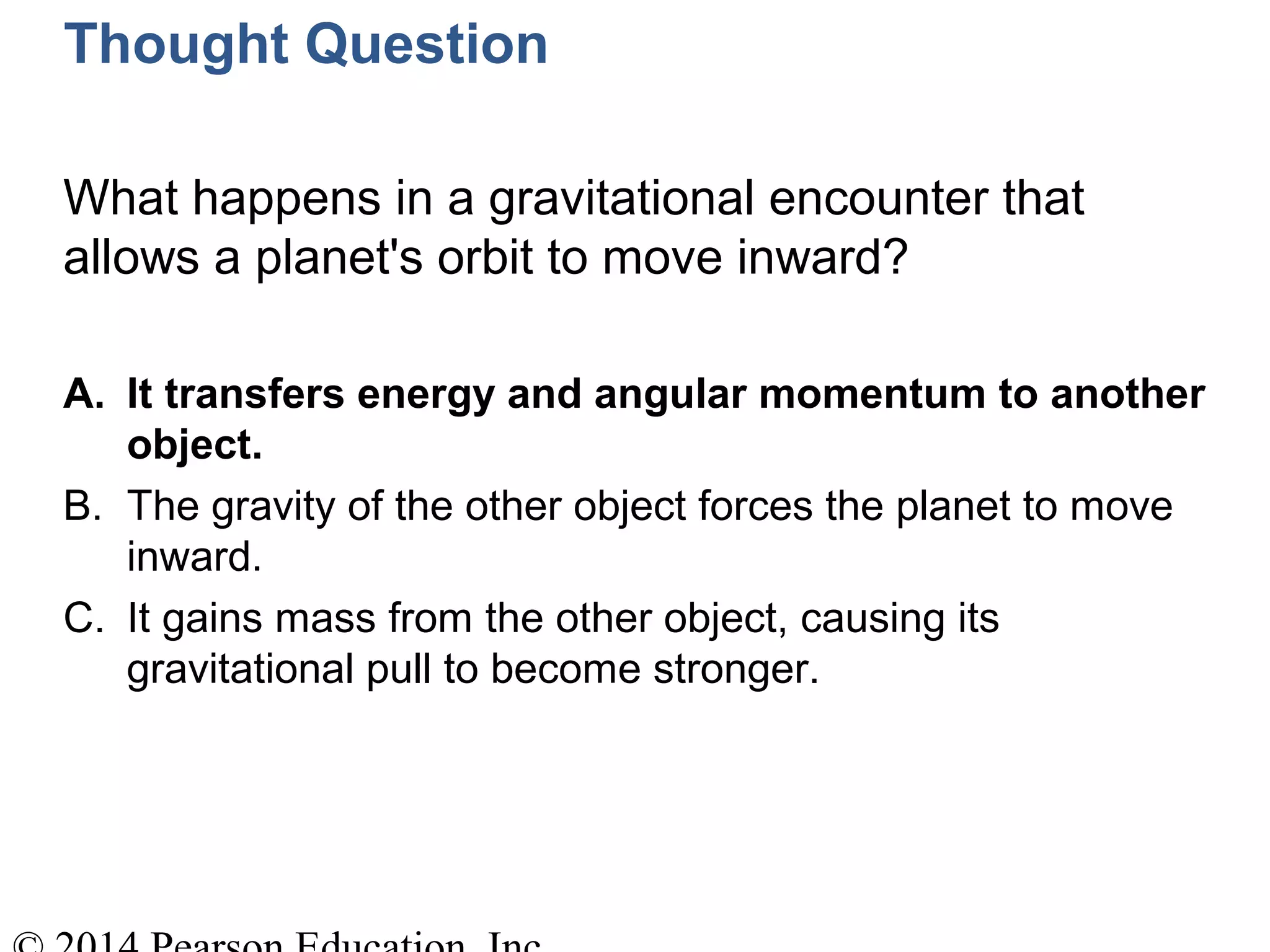
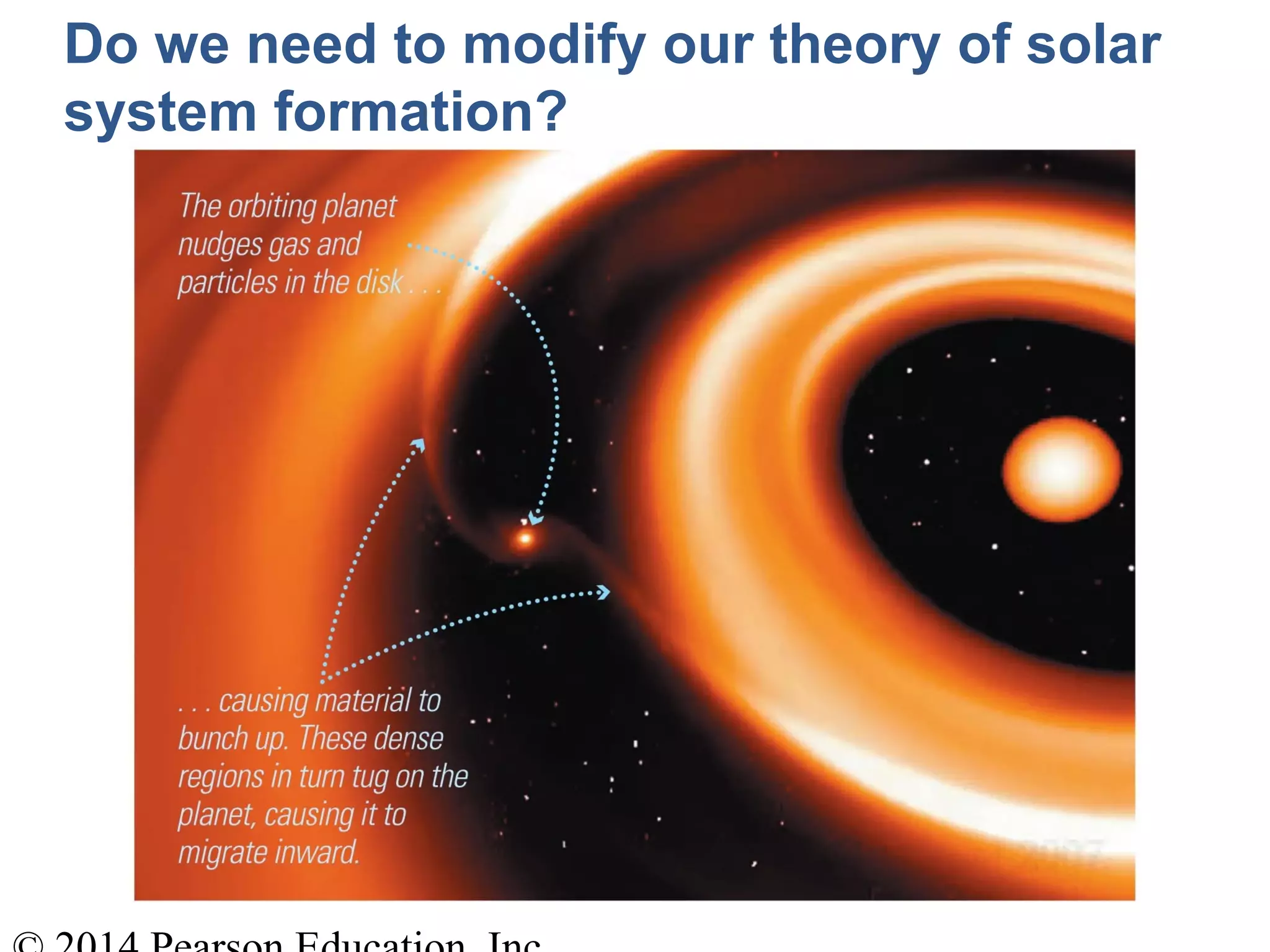
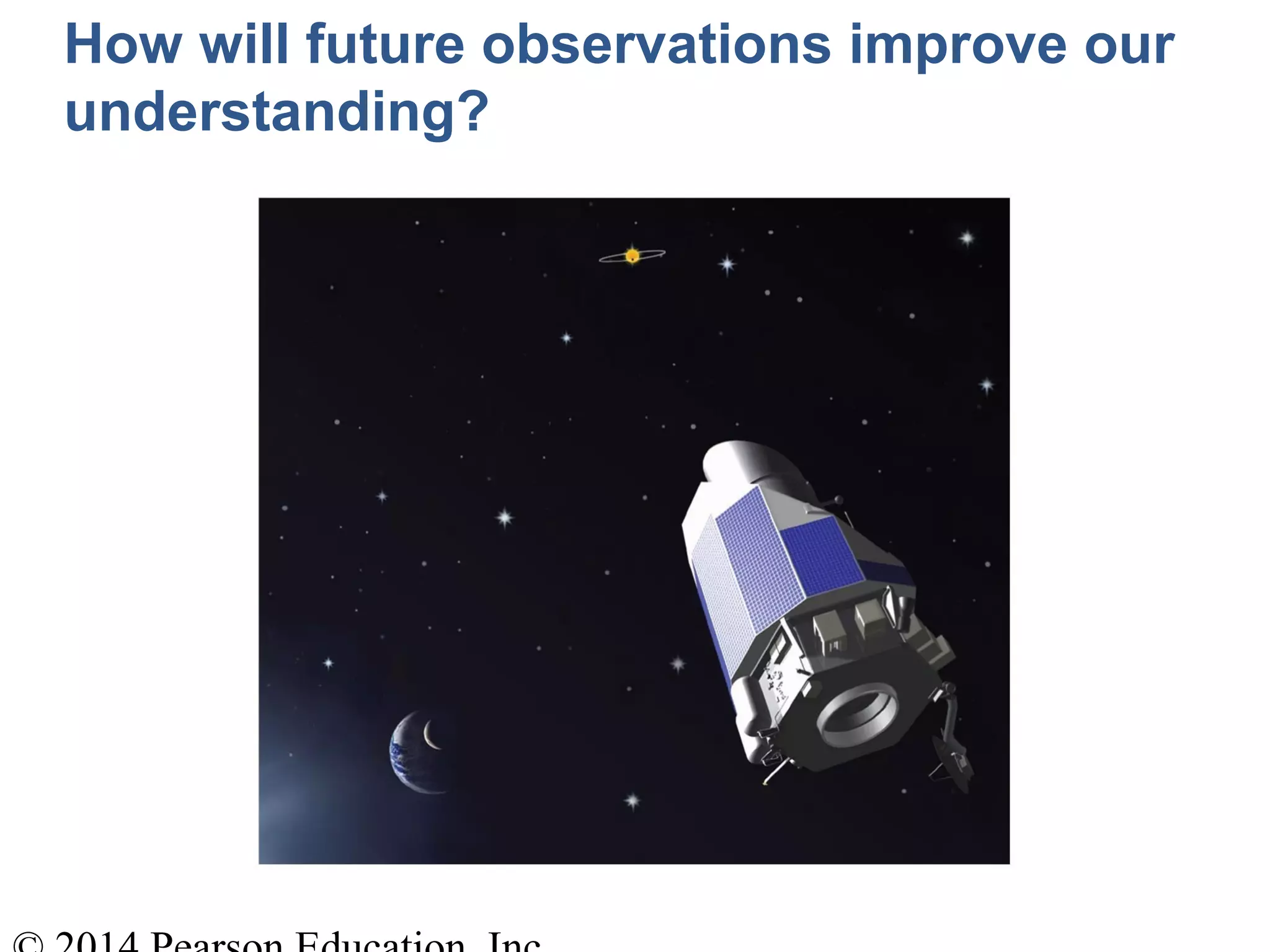
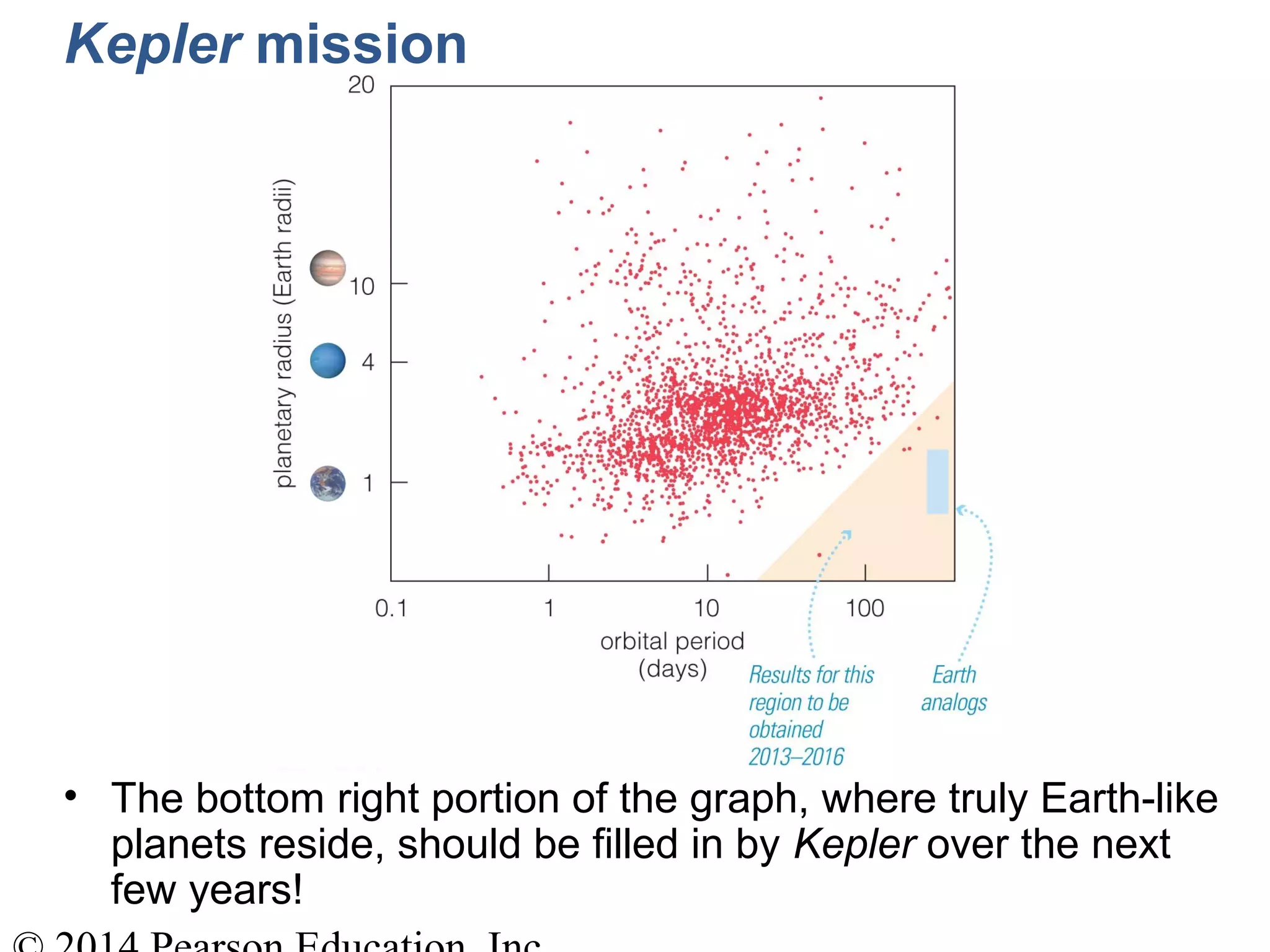
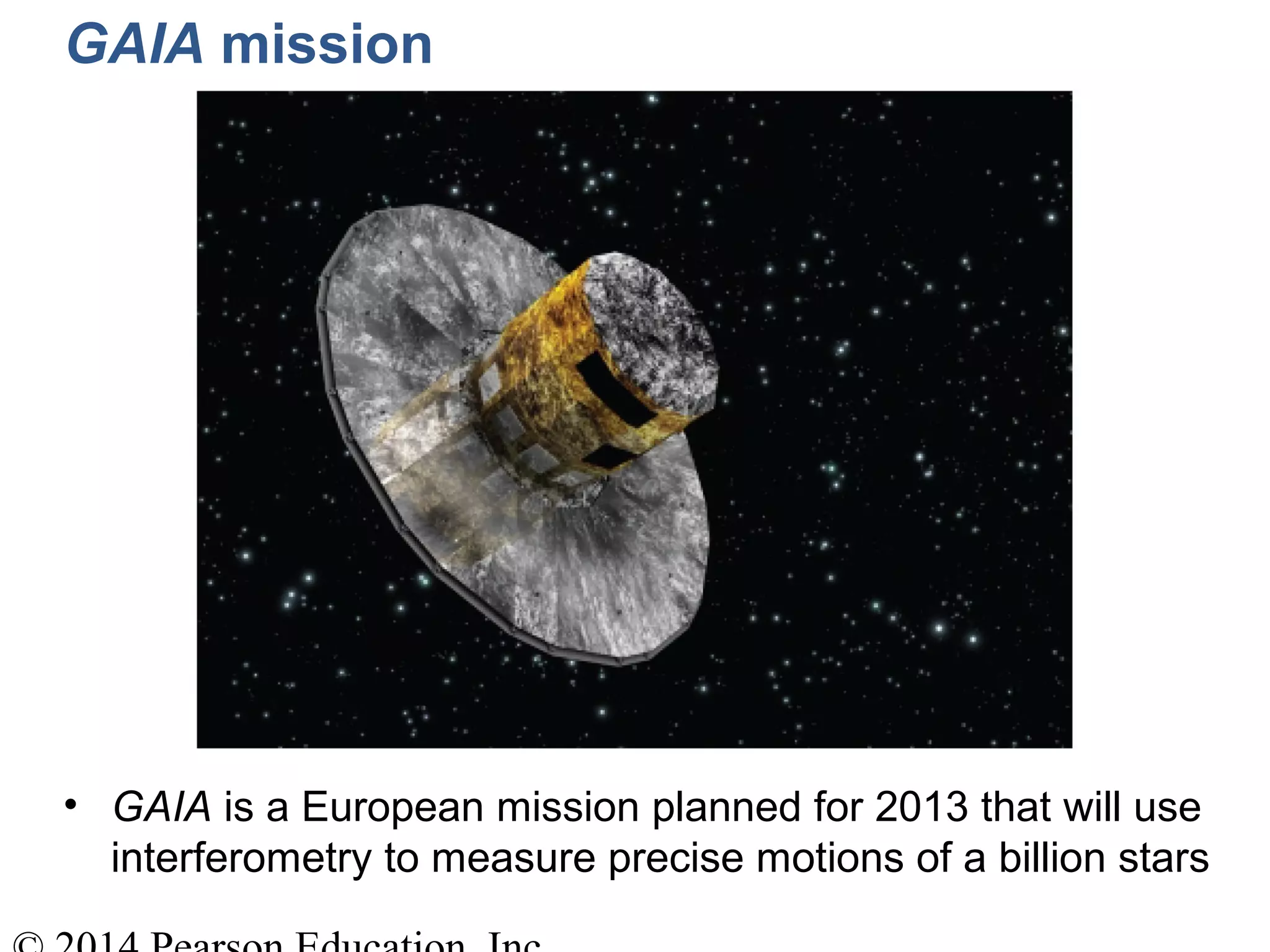
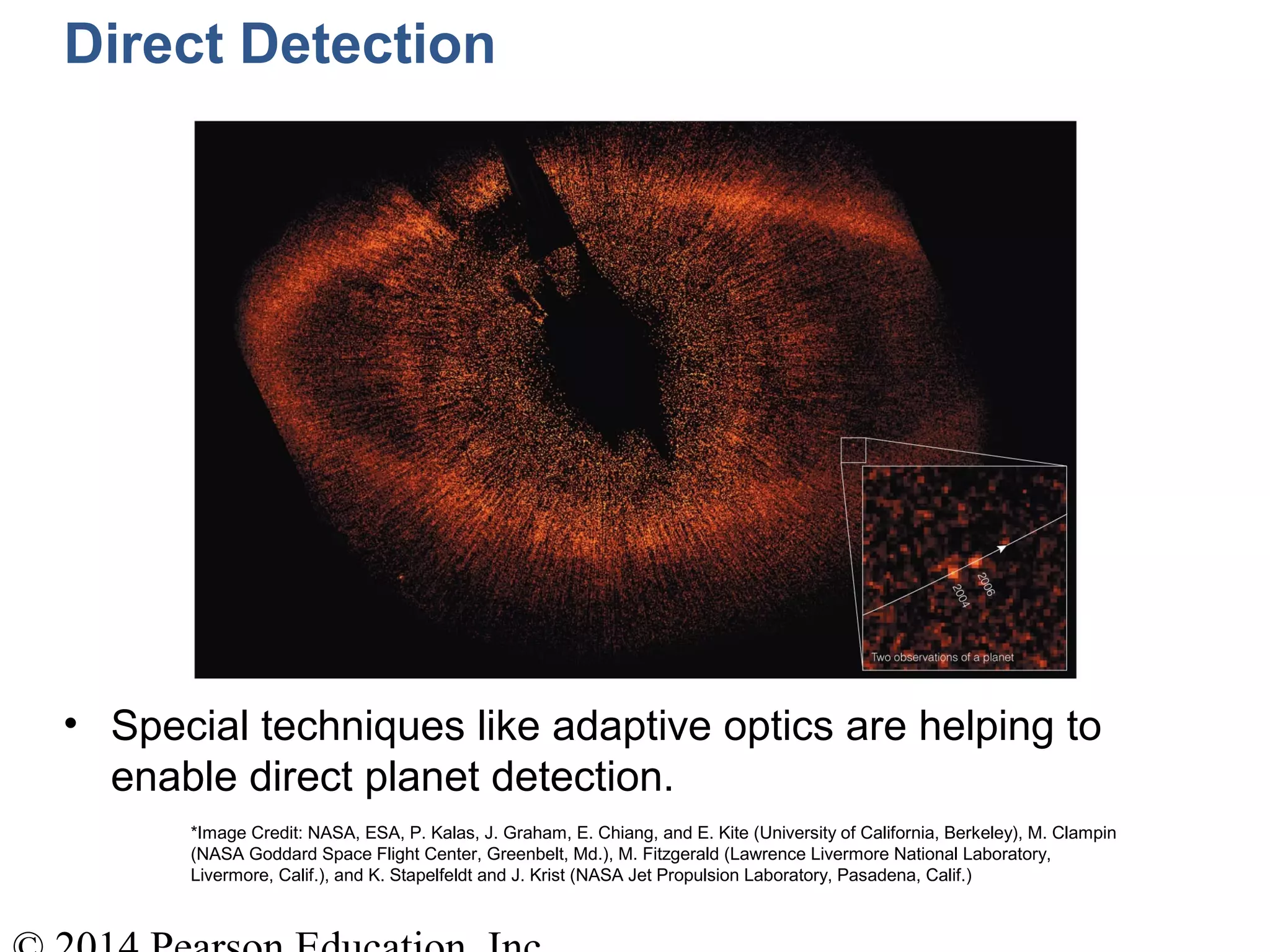
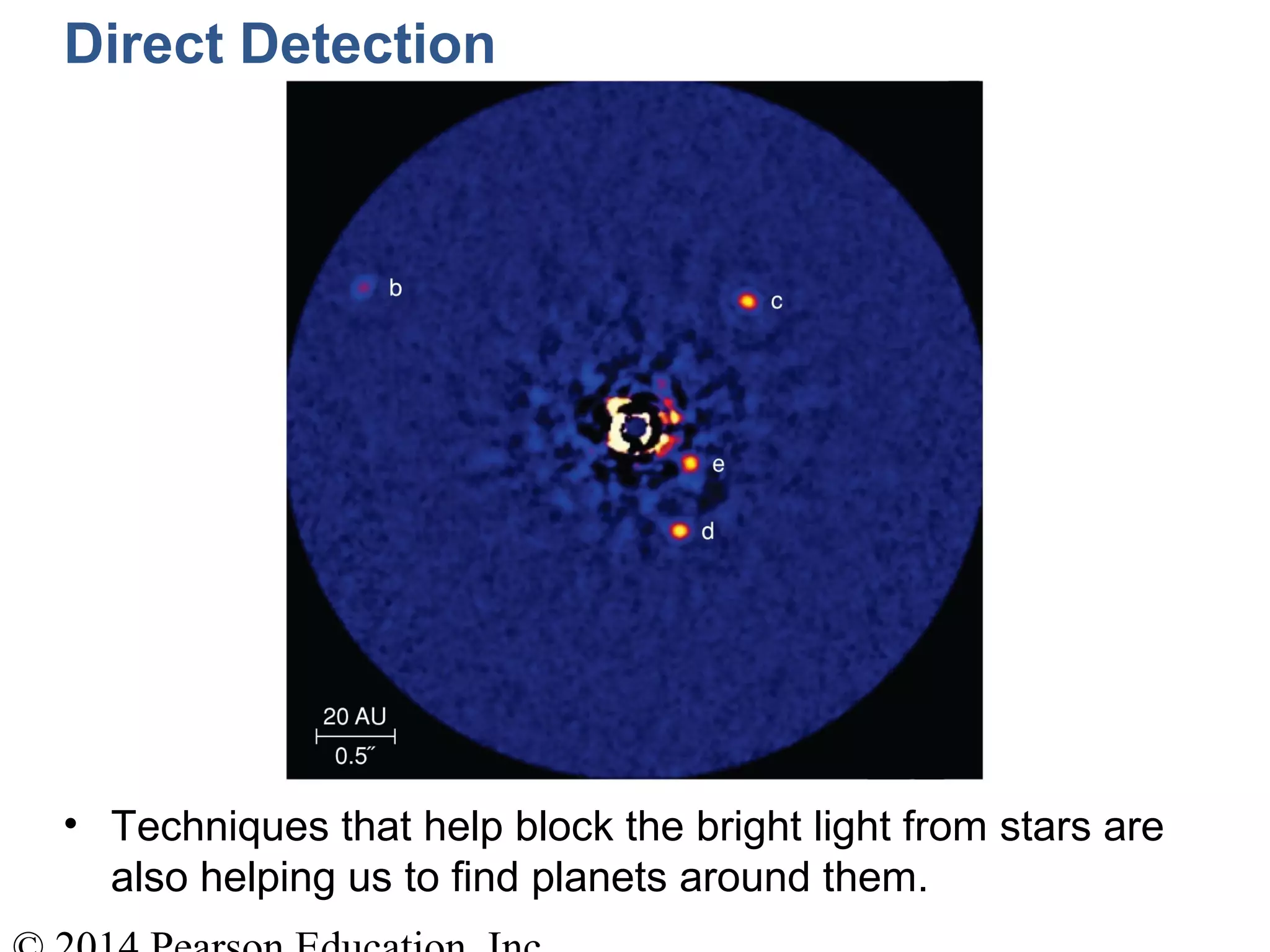

The document summarizes key points about detecting and characterizing exoplanets: 1) It is extremely challenging to detect exoplanets due to their faintness compared to host stars. Techniques like measuring stellar wobbles or brightness dips can reveal planets' presence and properties. 2) Exoplanets show huge diversity in traits like size, mass and orbits. Many have orbits closer to their star and larger masses than planets in our solar system. 3) Theories of planet formation need updating to explain unusual exoplanets. Effects like planetary migration and gravitational encounters may be more influential than originally believed. 4) Future observations by missions like Kepler will improve understanding by finding smaller, Earth-like exoplanets


