Forensic Science An Introduction to Scientific and Investigative Techniques Stuart H. James and Jon J. Nordby Chapter 13 CRC Press: Forensic Science, James and Nordby, 3rd Edition
Chapter 13 The Forensic Laboratory Chapter Author: Linda R. Netzel Presentation created by Greg Galardi,  Peru, Nebraska Edited by Stuart H. James, Fort Lauderdale, Florida and Dan Mabel, Richmond, Virginia Chapter 13 CRC Press: Forensic Science, James and Nordby, 3rd Edition
Forensic Science in the Laboratory Forensic laboratory has two purposes: Responsible for analysis of evidence Involved in all aspects of evidence recognition, collection, and preservation Must insure law enforcement officers, investigators, attorneys, judges and juries are educated in understanding the parameters  which surround collection and testing of evidence Chapter 13 CRC Press: Forensic Science, James and Nordby, 3rd Edition
Quality Assurance Forensic laboratories have quality assurance programs to: Ensure reported results are scientifically valid Opinions are based only upon results deemed reliable Chapter 13 CRC Press: Forensic Science, James and Nordby, 3rd Edition
Quality Assurance Q.A. programs may also have staff education requirements, peer review of results, specific case file documentation, distribution of reports, auditing of testimony, evidence handling and laboratory security Proficiency tests are simulated cases which assist criminalists in determining their error rates Chapter 13 CRC Press: Forensic Science, James and Nordby, 3rd Edition
Staffing Issues Forensics is a general term which may be applied to a number of disciplines, such as anthropology or odontology Criminalistics applies the application of chemistry, biology, or physics to evidence analysis and addresses crime scene investigation and reconstruction Chapter 13 CRC Press: Forensic Science, James and Nordby, 3rd Edition
Staffing Issues Applicants for positions in a forensic laboratory can expect: Thorough background investigation Polygraph examination History of illegal drug use and screening Driving record check Employment and residential history review Chapter 13 CRC Press: Forensic Science, James and Nordby, 3rd Edition
Accreditation and Certification American Society of Crime Laboratory Directors focuses on accreditation of laboratories Laboratories are accredited for 5 years Accreditation includes comprehensive inspection, interviews with staff, review of written procedures and quality assurance programs Chapter 13 CRC Press: Forensic Science, James and Nordby, 3rd Edition
Accreditation and Certification Criminalists may be awarded individual certification by the American Board of Criminalistics or the International Association of Identification To maintain certification, individuals must complete professional activities, attend or provide training, write in scientific journals attend meetings, and complete proficiency testing Chapter 13 CRC Press: Forensic Science, James and Nordby, 3rd Edition
Types of Laboratories Government Laboratories – FBI, ATF, DEA and USPO all have laboratories Private Laboratories – may provide forensic testing to police and or defendants.  Greatest contribution by private labs is retesting evidence examined by government or public lab Chapter 13 CRC Press: Forensic Science, James and Nordby, 3rd Edition
Qualifications of a Forensic Examiner To be a forensic examiner: Possess a baccalaureate degree in natural science: emphasis in physics, biology, chemistry or forensic science On the job training will assist entry level criminalists in gaining necessary skills and knowledge for career development DNA technical managers must have a Master’s Degree according to D.A.B. Chapter 13 CRC Press: Forensic Science, James and Nordby, 3rd Edition
Qualifications of a Forensic Examiner Criminalists should review research journals, especially the Journal of Forensic Sciences, to enhance their knowledge Review of important historical work, by Gross, O’Hara, Osterburg and Kirk are viable sources to learning more about the field of forensic science Chapter 13 CRC Press: Forensic Science, James and Nordby, 3rd Edition
Understanding the Role of the Criminalist Criminalists- provide investigative leads through scientific evaluation of physical evidence and crime scene reconstruction, report results and conclusions of scientific evaluations, and provide expert testimony  Criminalists must be able to use their own ability to ask questions and investigate available information Chapter 13 CRC Press: Forensic Science, James and Nordby, 3rd Edition
Understanding the Role of the Criminalist Criminalists will serve as an educator for law enforcement, investigators, attorneys, medical professionals, judges and others Due to the rapid growth and change within this field, criminalists must constantly stay apprised of changes through education and professional seminars Chapter 13 CRC Press: Forensic Science, James and Nordby, 3rd Edition
Linking a Suspect to a Scene of a Crime Reconstruction Evidence – provides information about the events preceding, occurring during, and after commission of a crime Reconstruction includes: Observation by criminalist Logic of criminalist Experience of criminalist Evaluation of witness statements Chapter 13 CRC Press: Forensic Science, James and Nordby, 3rd Edition
 
Associative Evidence Associative evidence is evidence that can associate a suspect to a crime scene Examples are: hair, fiber, blood, body fluids, paint, glass, firearms, fingerprints and other imprint evidence Chapter 13 CRC Press: Forensic Science, James and Nordby, 3rd Edition
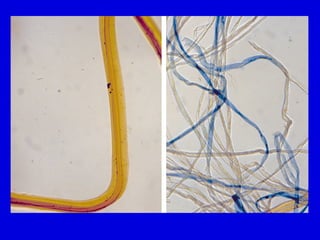
Associative Evidence Associative evidence can be divided into two categories: Class  evidence- not considered unique, examples such as rope fiber, carpet fiber, glass, etc Identification evidence – positively provides for identification – blood, DNA, semen, fingerprints Chapter 13 CRC Press: Forensic Science, James and Nordby, 3rd Edition
 
 
Laboratory Sections, Analytical Instruments and Specialized Equipment Depending on the size of the laboratory, there may be specializations for certain aspects of evidence analysis within that laboratory, such as biological evidence, trace evidence, fingerprint evidence, impression evidence, firearm and tool mark evidence, questioned documents, chemical evidence and photographic evidence Chapter 13 CRC Press: Forensic Science, James and Nordby, 3rd Edition
 
Laboratory Evidence Sections Biological evidence - identification and individualization of human tissues Includes DNA testing of semen, blood, saliva and hair Restriction Fragment Length Polymorphism (RFLP) was first method used to analyze forensic DNA samples Polymerase chain reaction (PCR) is currently used by most laboratories Chapter 13 CRC Press: Forensic Science, James and Nordby, 3rd Edition
Laboratory Evidence Sections Trace Evidence- defined as microscopic physical evidence Can encompass hair, body fluids, paint, fiber, plants , debris, cosmetics, etc Trace evidence must be carefully collected since it can easily be contaminated Chapter 13 CRC Press: Forensic Science, James and Nordby, 3rd Edition
Laboratory Evidence Sections Methods of trace evidence collection: Vacuuming Hand picking Tape lifts Microscopes are the primary tool used during trace evidence analysis Types of microscopes include compound light, polarizing light, phase contrast and comparison  Chapter 13 CRC Press: Forensic Science, James and Nordby, 3rd Edition
Laboratory Evidence Sections Trace evidence analysis may involve use of spectrometers, such as the Fourier transform infrared spectrometry, which assists in providing chemical fingerprints of inorganic and organic substances Scanning electron microscopes (SEM) may also be utilized Chapter 13 CRC Press: Forensic Science, James and Nordby, 3rd Edition
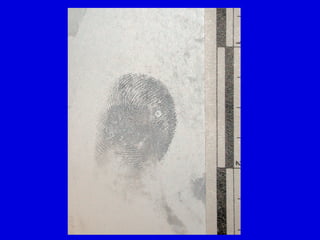
Laboratory Evidence Sections Fingerprint Evidence - two aspects of fingerprinting available: Latent printing- accomplished via chemical methods, physical methods, lighting and photographic methods Digital imaging of fingerprint methods is being increasingly used to identify fingerprints. Automated Fingerprint Identification Systems (AFIS) are being used Chapter 13 CRC Press: Forensic Science, James and Nordby, 3rd Edition
Laboratory Evidence Sections Impression Evidence - footwear and tire impressions are examples of evidence which may be examined in the laboratory Firearm Evidence -  criminalist will examine fired bullets, cartridge casings, and shot shells Impressions and markings are left on these when discharged from weapon Chapter 13 CRC Press: Forensic Science, James and Nordby, 3rd Edition
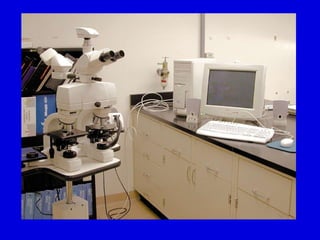
Laboratory Evidence Sections Firearms examiner will use: Stereomicroscope – provides general information about evidence and possibly reveal trace evidence Comparison microscope – allows side by side comparison of projectiles and casings Water tank is used to collect fired bullets, which are compared to bullets form crime scene Chapter 13 CRC Press: Forensic Science, James and Nordby, 3rd Edition
Laboratory Evidence Sections Comparison of bullets will include review of striae, which are markings on  a bullet Distance determinations by criminalists are also made when a person claims self defense Chapter 13 CRC Press: Forensic Science, James and Nordby, 3rd Edition
 
Laboratory Evidence Sections Impressions made by tools such as pry bars, screwdrivers, etc may also leave striation type markings Impressions left by tools at crime scene are cast, and when tool is recovered, an impression is made by that tool and cast for comparison to one from crime scene Other evidence – paint chips, glass Chapter 13 CRC Press: Forensic Science, James and Nordby, 3rd Edition
Laboratory Evidence Sections Questioned documents  are examined through handwriting comparison, alterations, obliterations, and erasures Exemplars are taken from possible authors to compare to forged document Watermarks, copy machine marks, and other machines may also leave distinct marks for comparisons Chapter 13 CRC Press: Forensic Science, James and Nordby, 3rd Edition
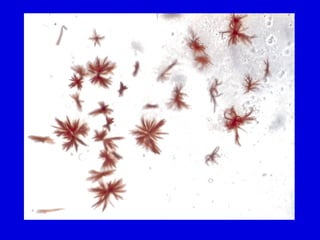
Laboratory Evidence Sections Chemical evidence- testing for chemicals available which caused arson, explosions, blood alcohol determinations, and poison testing may be done Most chemical tests start with a presumptive or spot test- a spot of the evidence is tested with a liquid and liquid turns a specific color if that evidence is present GCMS, FTIR, spectrophotometry, x-rays, and SEM may be used for confirmation testing Chapter 13 CRC Press: Forensic Science, James and Nordby, 3rd Edition

13 Forensic Science Powerpoint Chapter 13 The Forensic Laborat

  • 1.
    Forensic Science AnIntroduction to Scientific and Investigative Techniques Stuart H. James and Jon J. Nordby Chapter 13 CRC Press: Forensic Science, James and Nordby, 3rd Edition
  • 2.
    Chapter 13 TheForensic Laboratory Chapter Author: Linda R. Netzel Presentation created by Greg Galardi, Peru, Nebraska Edited by Stuart H. James, Fort Lauderdale, Florida and Dan Mabel, Richmond, Virginia Chapter 13 CRC Press: Forensic Science, James and Nordby, 3rd Edition
  • 3.
    Forensic Science inthe Laboratory Forensic laboratory has two purposes: Responsible for analysis of evidence Involved in all aspects of evidence recognition, collection, and preservation Must insure law enforcement officers, investigators, attorneys, judges and juries are educated in understanding the parameters which surround collection and testing of evidence Chapter 13 CRC Press: Forensic Science, James and Nordby, 3rd Edition
  • 4.
    Quality Assurance Forensiclaboratories have quality assurance programs to: Ensure reported results are scientifically valid Opinions are based only upon results deemed reliable Chapter 13 CRC Press: Forensic Science, James and Nordby, 3rd Edition
  • 5.
    Quality Assurance Q.A.programs may also have staff education requirements, peer review of results, specific case file documentation, distribution of reports, auditing of testimony, evidence handling and laboratory security Proficiency tests are simulated cases which assist criminalists in determining their error rates Chapter 13 CRC Press: Forensic Science, James and Nordby, 3rd Edition
  • 6.
    Staffing Issues Forensicsis a general term which may be applied to a number of disciplines, such as anthropology or odontology Criminalistics applies the application of chemistry, biology, or physics to evidence analysis and addresses crime scene investigation and reconstruction Chapter 13 CRC Press: Forensic Science, James and Nordby, 3rd Edition
  • 7.
    Staffing Issues Applicantsfor positions in a forensic laboratory can expect: Thorough background investigation Polygraph examination History of illegal drug use and screening Driving record check Employment and residential history review Chapter 13 CRC Press: Forensic Science, James and Nordby, 3rd Edition
  • 8.
    Accreditation and CertificationAmerican Society of Crime Laboratory Directors focuses on accreditation of laboratories Laboratories are accredited for 5 years Accreditation includes comprehensive inspection, interviews with staff, review of written procedures and quality assurance programs Chapter 13 CRC Press: Forensic Science, James and Nordby, 3rd Edition
  • 9.
    Accreditation and CertificationCriminalists may be awarded individual certification by the American Board of Criminalistics or the International Association of Identification To maintain certification, individuals must complete professional activities, attend or provide training, write in scientific journals attend meetings, and complete proficiency testing Chapter 13 CRC Press: Forensic Science, James and Nordby, 3rd Edition
  • 10.
    Types of LaboratoriesGovernment Laboratories – FBI, ATF, DEA and USPO all have laboratories Private Laboratories – may provide forensic testing to police and or defendants. Greatest contribution by private labs is retesting evidence examined by government or public lab Chapter 13 CRC Press: Forensic Science, James and Nordby, 3rd Edition
  • 11.
    Qualifications of aForensic Examiner To be a forensic examiner: Possess a baccalaureate degree in natural science: emphasis in physics, biology, chemistry or forensic science On the job training will assist entry level criminalists in gaining necessary skills and knowledge for career development DNA technical managers must have a Master’s Degree according to D.A.B. Chapter 13 CRC Press: Forensic Science, James and Nordby, 3rd Edition
  • 12.
    Qualifications of aForensic Examiner Criminalists should review research journals, especially the Journal of Forensic Sciences, to enhance their knowledge Review of important historical work, by Gross, O’Hara, Osterburg and Kirk are viable sources to learning more about the field of forensic science Chapter 13 CRC Press: Forensic Science, James and Nordby, 3rd Edition
  • 13.
    Understanding the Roleof the Criminalist Criminalists- provide investigative leads through scientific evaluation of physical evidence and crime scene reconstruction, report results and conclusions of scientific evaluations, and provide expert testimony Criminalists must be able to use their own ability to ask questions and investigate available information Chapter 13 CRC Press: Forensic Science, James and Nordby, 3rd Edition
  • 14.
    Understanding the Roleof the Criminalist Criminalists will serve as an educator for law enforcement, investigators, attorneys, medical professionals, judges and others Due to the rapid growth and change within this field, criminalists must constantly stay apprised of changes through education and professional seminars Chapter 13 CRC Press: Forensic Science, James and Nordby, 3rd Edition
  • 15.
    Linking a Suspectto a Scene of a Crime Reconstruction Evidence – provides information about the events preceding, occurring during, and after commission of a crime Reconstruction includes: Observation by criminalist Logic of criminalist Experience of criminalist Evaluation of witness statements Chapter 13 CRC Press: Forensic Science, James and Nordby, 3rd Edition
  • 16.
  • 17.
    Associative Evidence Associativeevidence is evidence that can associate a suspect to a crime scene Examples are: hair, fiber, blood, body fluids, paint, glass, firearms, fingerprints and other imprint evidence Chapter 13 CRC Press: Forensic Science, James and Nordby, 3rd Edition
  • 18.
    Associative Evidence Associativeevidence can be divided into two categories: Class evidence- not considered unique, examples such as rope fiber, carpet fiber, glass, etc Identification evidence – positively provides for identification – blood, DNA, semen, fingerprints Chapter 13 CRC Press: Forensic Science, James and Nordby, 3rd Edition
  • 19.
  • 20.
  • 21.
    Laboratory Sections, AnalyticalInstruments and Specialized Equipment Depending on the size of the laboratory, there may be specializations for certain aspects of evidence analysis within that laboratory, such as biological evidence, trace evidence, fingerprint evidence, impression evidence, firearm and tool mark evidence, questioned documents, chemical evidence and photographic evidence Chapter 13 CRC Press: Forensic Science, James and Nordby, 3rd Edition
  • 22.
  • 23.
    Laboratory Evidence SectionsBiological evidence - identification and individualization of human tissues Includes DNA testing of semen, blood, saliva and hair Restriction Fragment Length Polymorphism (RFLP) was first method used to analyze forensic DNA samples Polymerase chain reaction (PCR) is currently used by most laboratories Chapter 13 CRC Press: Forensic Science, James and Nordby, 3rd Edition
  • 24.
    Laboratory Evidence SectionsTrace Evidence- defined as microscopic physical evidence Can encompass hair, body fluids, paint, fiber, plants , debris, cosmetics, etc Trace evidence must be carefully collected since it can easily be contaminated Chapter 13 CRC Press: Forensic Science, James and Nordby, 3rd Edition
  • 25.
    Laboratory Evidence SectionsMethods of trace evidence collection: Vacuuming Hand picking Tape lifts Microscopes are the primary tool used during trace evidence analysis Types of microscopes include compound light, polarizing light, phase contrast and comparison Chapter 13 CRC Press: Forensic Science, James and Nordby, 3rd Edition
  • 26.
    Laboratory Evidence SectionsTrace evidence analysis may involve use of spectrometers, such as the Fourier transform infrared spectrometry, which assists in providing chemical fingerprints of inorganic and organic substances Scanning electron microscopes (SEM) may also be utilized Chapter 13 CRC Press: Forensic Science, James and Nordby, 3rd Edition
  • 27.
    Laboratory Evidence SectionsFingerprint Evidence - two aspects of fingerprinting available: Latent printing- accomplished via chemical methods, physical methods, lighting and photographic methods Digital imaging of fingerprint methods is being increasingly used to identify fingerprints. Automated Fingerprint Identification Systems (AFIS) are being used Chapter 13 CRC Press: Forensic Science, James and Nordby, 3rd Edition
  • 28.
    Laboratory Evidence SectionsImpression Evidence - footwear and tire impressions are examples of evidence which may be examined in the laboratory Firearm Evidence - criminalist will examine fired bullets, cartridge casings, and shot shells Impressions and markings are left on these when discharged from weapon Chapter 13 CRC Press: Forensic Science, James and Nordby, 3rd Edition
  • 29.
    Laboratory Evidence SectionsFirearms examiner will use: Stereomicroscope – provides general information about evidence and possibly reveal trace evidence Comparison microscope – allows side by side comparison of projectiles and casings Water tank is used to collect fired bullets, which are compared to bullets form crime scene Chapter 13 CRC Press: Forensic Science, James and Nordby, 3rd Edition
  • 30.
    Laboratory Evidence SectionsComparison of bullets will include review of striae, which are markings on a bullet Distance determinations by criminalists are also made when a person claims self defense Chapter 13 CRC Press: Forensic Science, James and Nordby, 3rd Edition
  • 31.
  • 32.
    Laboratory Evidence SectionsImpressions made by tools such as pry bars, screwdrivers, etc may also leave striation type markings Impressions left by tools at crime scene are cast, and when tool is recovered, an impression is made by that tool and cast for comparison to one from crime scene Other evidence – paint chips, glass Chapter 13 CRC Press: Forensic Science, James and Nordby, 3rd Edition
  • 33.
    Laboratory Evidence SectionsQuestioned documents are examined through handwriting comparison, alterations, obliterations, and erasures Exemplars are taken from possible authors to compare to forged document Watermarks, copy machine marks, and other machines may also leave distinct marks for comparisons Chapter 13 CRC Press: Forensic Science, James and Nordby, 3rd Edition
  • 34.
    Laboratory Evidence SectionsChemical evidence- testing for chemicals available which caused arson, explosions, blood alcohol determinations, and poison testing may be done Most chemical tests start with a presumptive or spot test- a spot of the evidence is tested with a liquid and liquid turns a specific color if that evidence is present GCMS, FTIR, spectrophotometry, x-rays, and SEM may be used for confirmation testing Chapter 13 CRC Press: Forensic Science, James and Nordby, 3rd Edition