DR HEMANT KUMAR LECTURER  ANATOMY DEPT: SINDH MEDICAL COLLEGE & DOW UNIVERSITY OF HEALTH SCIENCES, KARACHI .
CELL SURFACE MODIFICATIONS MICROVILLI CILIA FLAGELLA
Cilia, Flagella, and Microvilli Cilia  move substances over the surface of cells Flagella  are much longer than cilia and propel sperm cells Microvilli  increase the surface area of cell and aid in absorption and secretion
MICROVILLI They are microscopic projections of the free surface and are found in most epithelia. They are numerous, often regularly arranged and uniform in length. Well developed in the lining of the small intestine and other absorptive epithelia.
MICROVILLI Microvilli of the intestine collectively appear vertically striated under L/M, so apical surface has been termed as striated border. E/M reveal that the microvilli composing the border are cell membrane covered cytoplasmic extensions about 2 micrometer long.
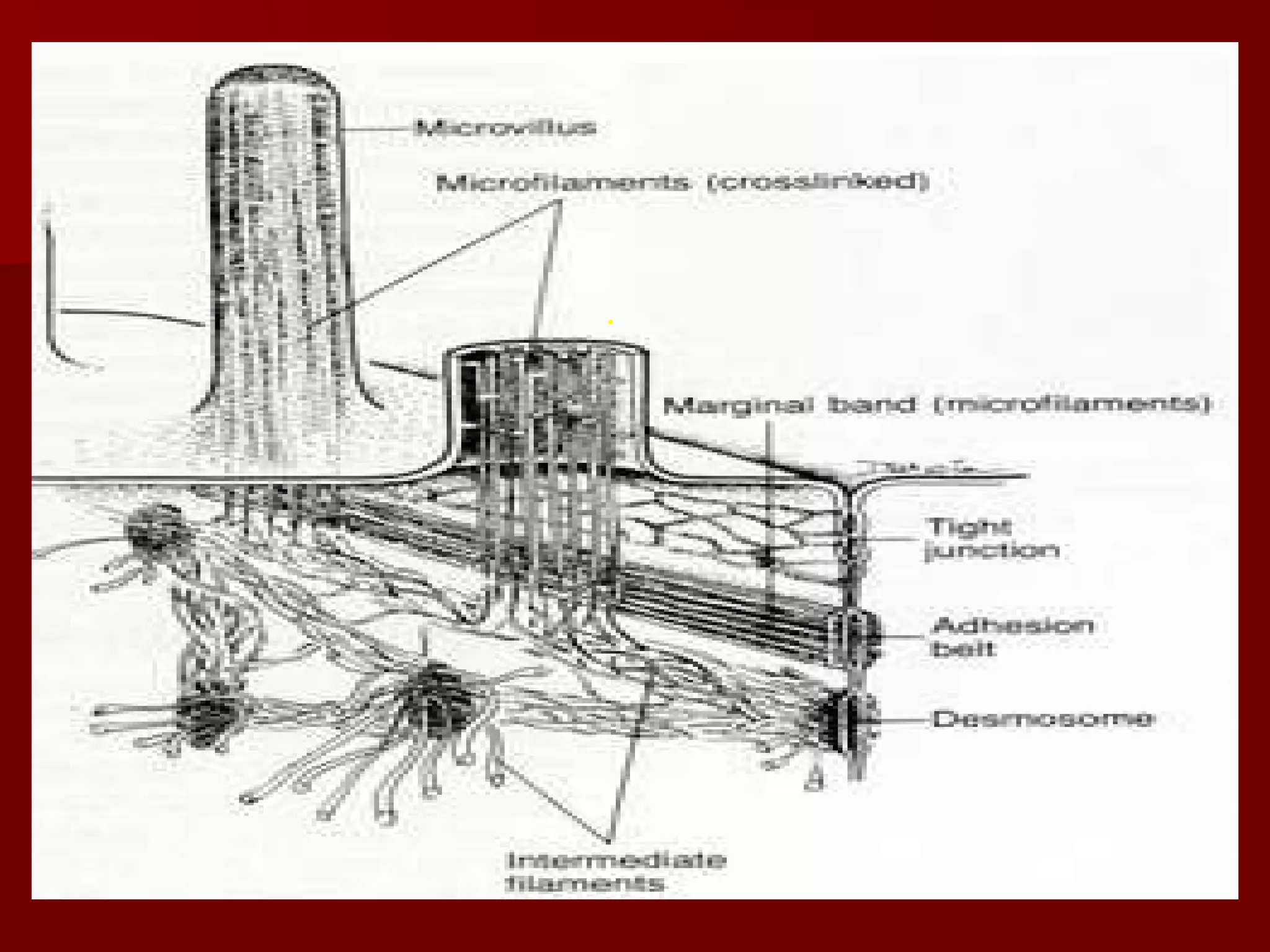
MICROVILLI Each microvillus has a core of fine filaments apparently anchored at the tip and extending into the terminal web. They provide structural support. They are composed of a form of contractile protein actin. They may interact with myosin molecules of the terminal web.
MICROVILLI They provide subtle degrees of microvillar movement. Microvilli increase the surface area of the cells in correlation with absorptive functions. They are also numerous on the free surfaces of the PCT of the kidney as brush border.
.
CILIA They are large, often motile appendages, found on the apex of cells. May present singly or in massive numbers. 5-10 micrometer in length and 0.2 micrometer in diameter. Readily seen in light microscope. Internal structure can be resolved by E/M.
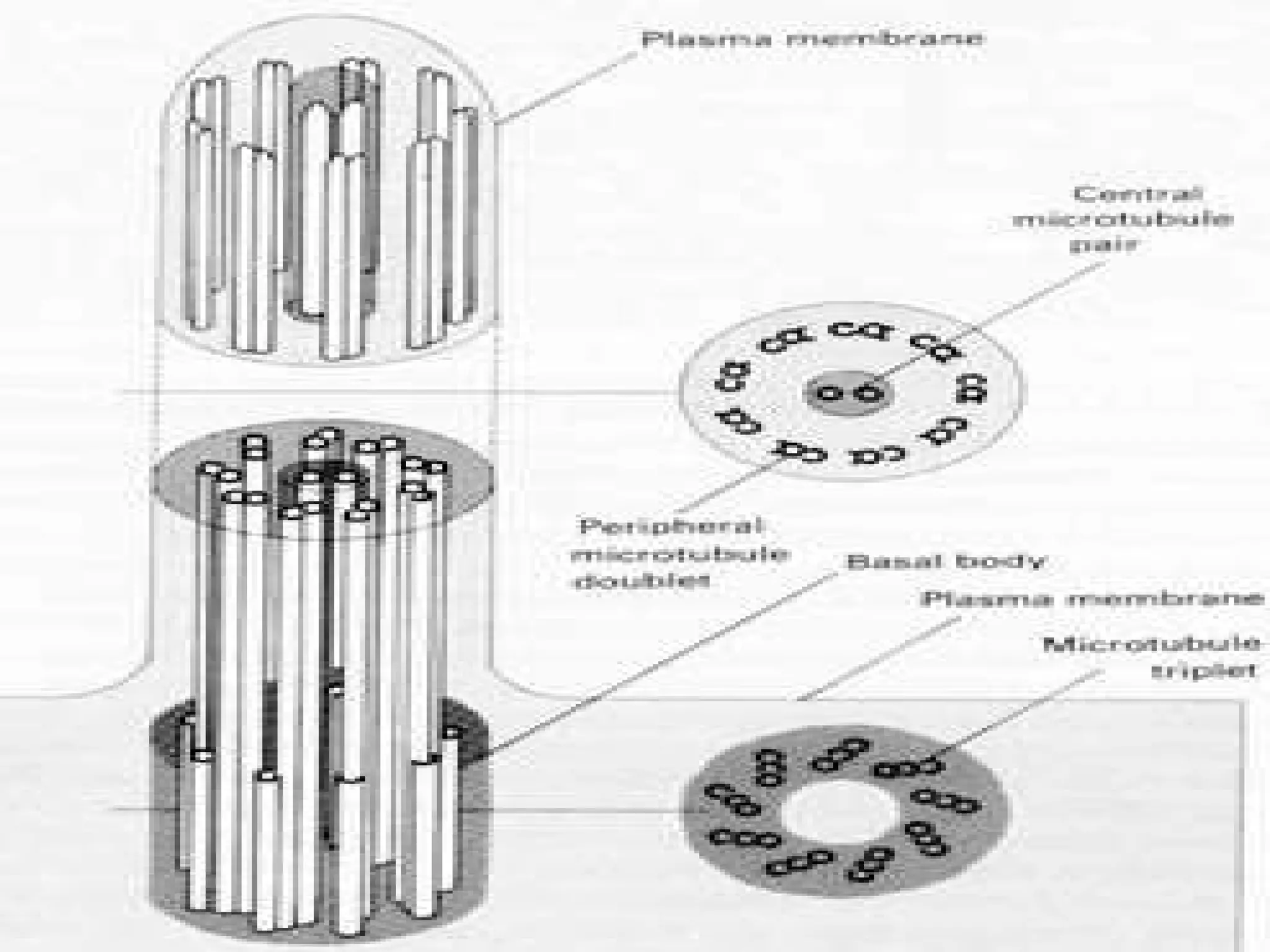
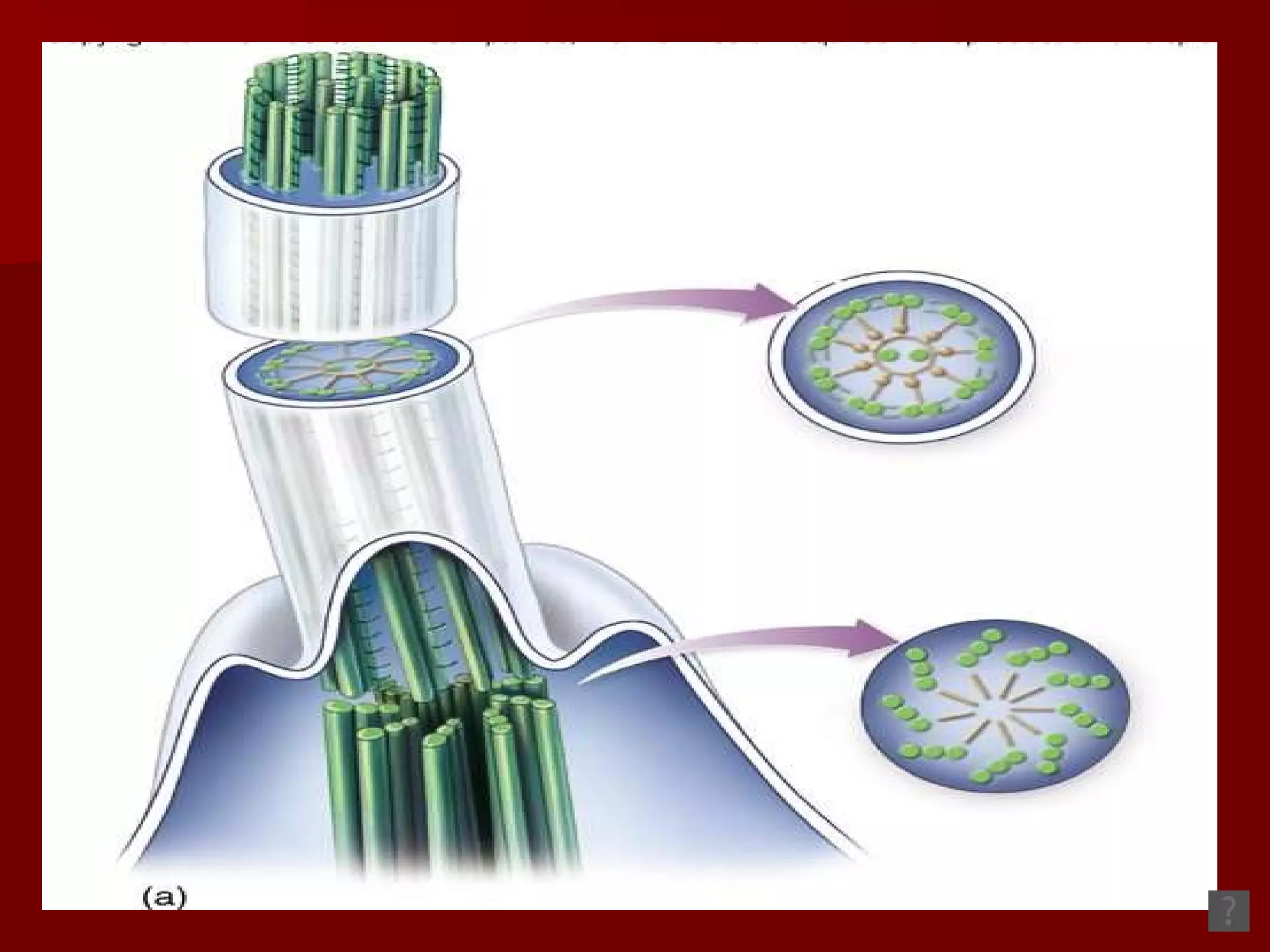
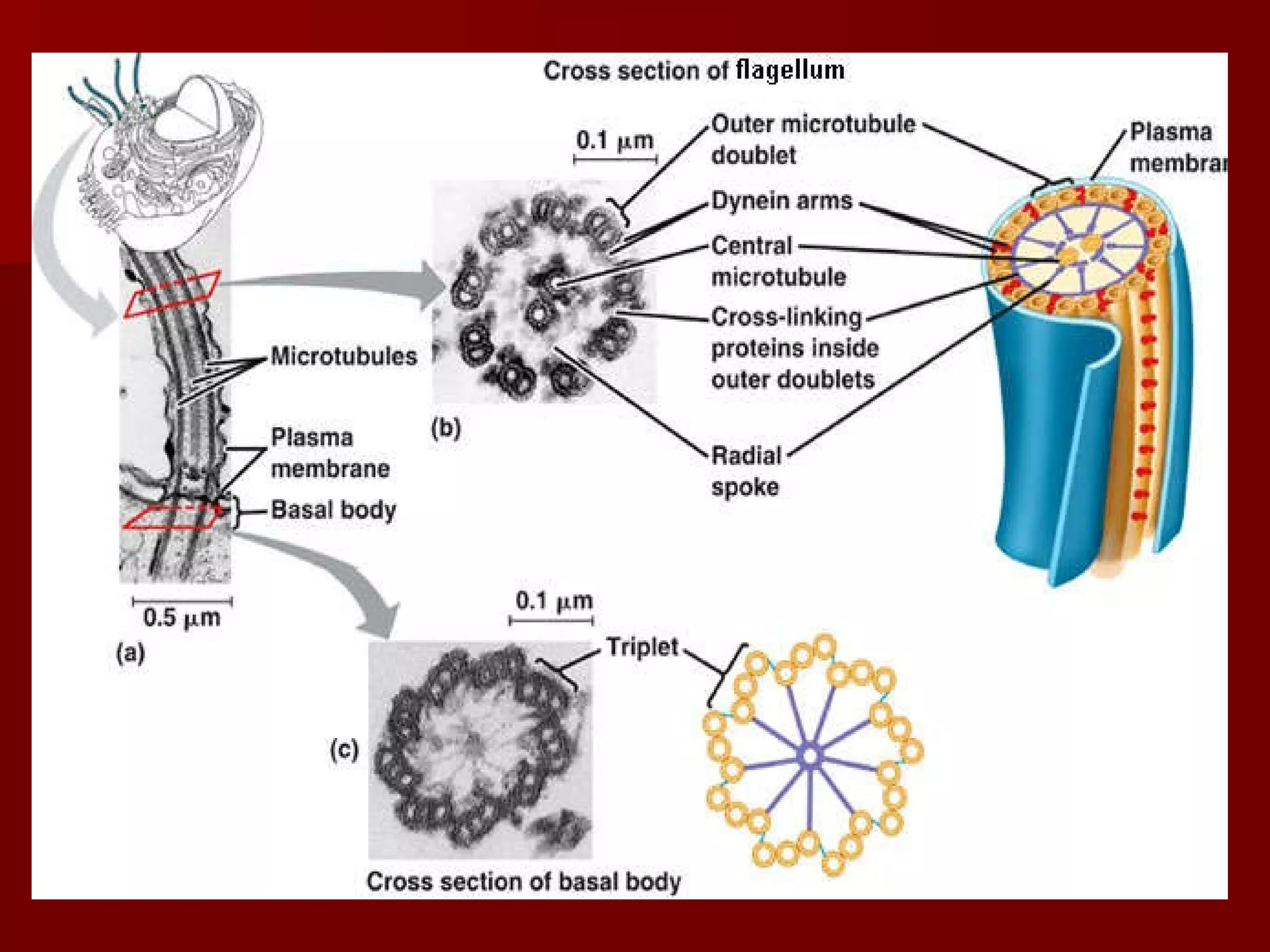
CILIA E/M reveals that the shaft or free part of each cilium is enclosed by a plasma lemma continuous with that of the cell. Each cilium contains longitudinal microtubules, typically arranged in a constant and orderly manner. Most cilia have two single central microtubules and nine peripheral pairs of fused double microtubules or doublets.
CILIA Microtubules extend from near the tip of cilium to its base. A basal body is located in the cytoplasm just inside the free surface of the cell. Each basal body is a modified centriole constituted of a wall of nine triplet microtubules. It is similar to centriole which is needed for cell division.
CILIA Cilia are found in the epithelial lining of respiratory tract, female reproductive system. Cilia beat in the coordinated rhythmical wave like manner, promoting movement of materials over the cell surfaces. Beating of the cilia in the trachea produces an upward movement of mucus with its entrapped dust particles thus preventing the blockage of lower respiratory tract.
 
FLAGELLA Also have same axial structure as cilia but are much larger. Usually are present one or two per cell. Present in the tail of the spermatozoon. Usually beat random whip or wave like motion.
FLAGELLA In certain locations of the body, ciliary projections are highly modified to serve sensory receptor functions like in the outer segment of the rods and cones of retina and in some of the hair cells of sensory portions of the inner ear. Such ciliary processes are usually not motile and lack the central pair of microtubules. Nine doublets are however retained.
STEREOCILIA Are usually long microvilli. Found in part of male reproductive system (epididymis) and in sensory regions of the inner ear. They donot have the structural characteristics of the true cilia or flagella. They increase the surface area of the apical cell membrane and may aid in secretion and absorption (epididymis), reception and transduction of vibratory stimuli (in the inner ear)
 
 
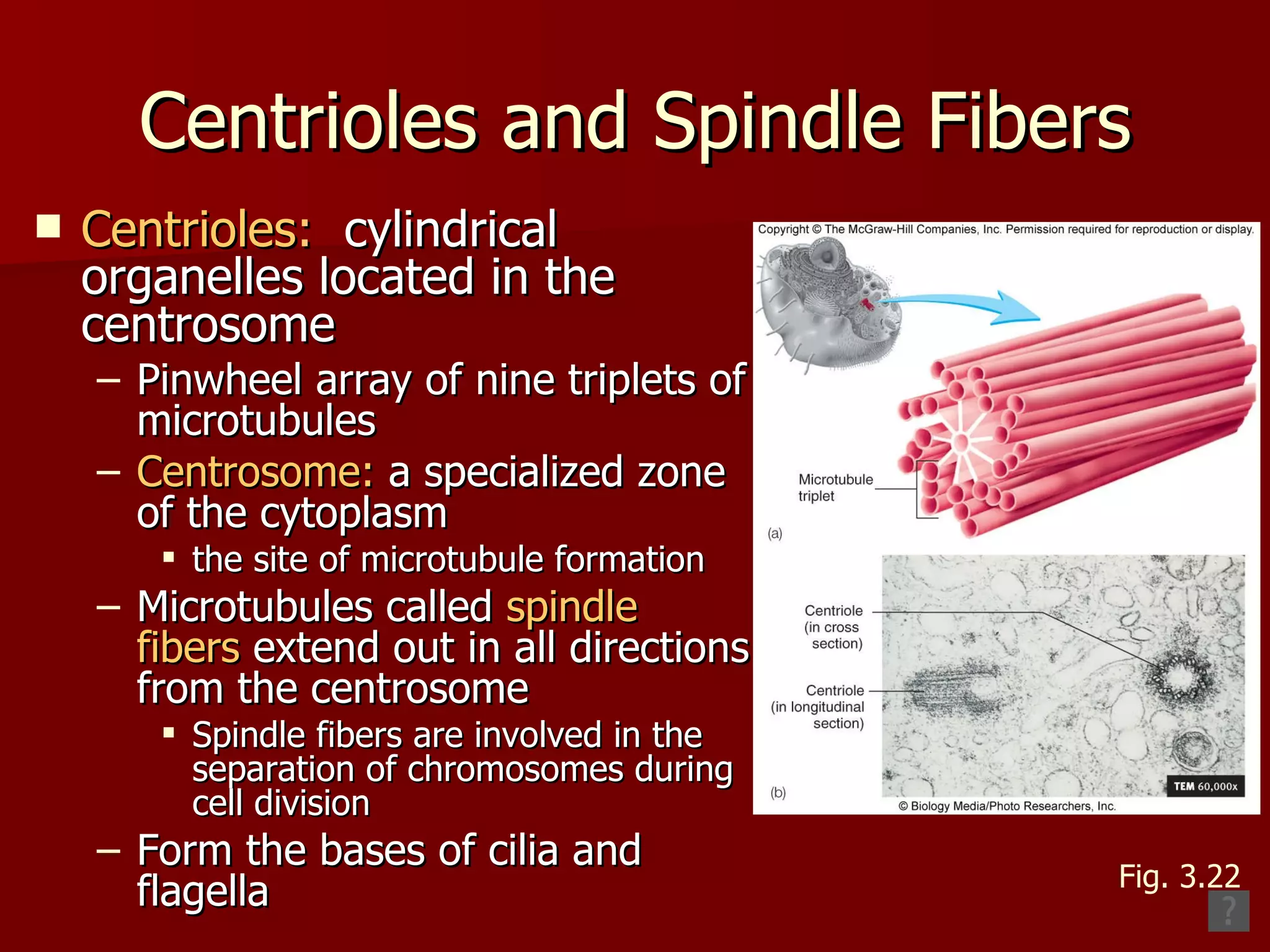
Centrioles and Spindle Fibers Centrioles:  cylindrical organelles located in the centrosome Pinwheel array of nine triplets of microtubules Centrosome:  a specialized zone of the cytoplasm the site of microtubule formation Microtubules called  spindle fibers  extend out in all directions from the centrosome Spindle fibers are involved in the separation of chromosomes during cell division Form the bases of cilia and flagella Fig. 3.22
THANKS…….

11.13 (dr. hemant kumar) cell surface modifications

  • 1.
    DR HEMANT KUMARLECTURER ANATOMY DEPT: SINDH MEDICAL COLLEGE & DOW UNIVERSITY OF HEALTH SCIENCES, KARACHI .
  • 2.
    CELL SURFACE MODIFICATIONSMICROVILLI CILIA FLAGELLA
  • 3.
    Cilia, Flagella, andMicrovilli Cilia move substances over the surface of cells Flagella are much longer than cilia and propel sperm cells Microvilli increase the surface area of cell and aid in absorption and secretion
  • 4.
    MICROVILLI They aremicroscopic projections of the free surface and are found in most epithelia. They are numerous, often regularly arranged and uniform in length. Well developed in the lining of the small intestine and other absorptive epithelia.
  • 5.
    MICROVILLI Microvilli ofthe intestine collectively appear vertically striated under L/M, so apical surface has been termed as striated border. E/M reveal that the microvilli composing the border are cell membrane covered cytoplasmic extensions about 2 micrometer long.
  • 6.
    MICROVILLI Each microvillushas a core of fine filaments apparently anchored at the tip and extending into the terminal web. They provide structural support. They are composed of a form of contractile protein actin. They may interact with myosin molecules of the terminal web.
  • 7.
    MICROVILLI They providesubtle degrees of microvillar movement. Microvilli increase the surface area of the cells in correlation with absorptive functions. They are also numerous on the free surfaces of the PCT of the kidney as brush border.
  • 8.
  • 9.
    CILIA They arelarge, often motile appendages, found on the apex of cells. May present singly or in massive numbers. 5-10 micrometer in length and 0.2 micrometer in diameter. Readily seen in light microscope. Internal structure can be resolved by E/M.
  • 10.
    CILIA E/M revealsthat the shaft or free part of each cilium is enclosed by a plasma lemma continuous with that of the cell. Each cilium contains longitudinal microtubules, typically arranged in a constant and orderly manner. Most cilia have two single central microtubules and nine peripheral pairs of fused double microtubules or doublets.
  • 11.
    CILIA Microtubules extendfrom near the tip of cilium to its base. A basal body is located in the cytoplasm just inside the free surface of the cell. Each basal body is a modified centriole constituted of a wall of nine triplet microtubules. It is similar to centriole which is needed for cell division.
  • 12.
    CILIA Cilia arefound in the epithelial lining of respiratory tract, female reproductive system. Cilia beat in the coordinated rhythmical wave like manner, promoting movement of materials over the cell surfaces. Beating of the cilia in the trachea produces an upward movement of mucus with its entrapped dust particles thus preventing the blockage of lower respiratory tract.
  • 13.
  • 14.
    FLAGELLA Also havesame axial structure as cilia but are much larger. Usually are present one or two per cell. Present in the tail of the spermatozoon. Usually beat random whip or wave like motion.
  • 15.
    FLAGELLA In certainlocations of the body, ciliary projections are highly modified to serve sensory receptor functions like in the outer segment of the rods and cones of retina and in some of the hair cells of sensory portions of the inner ear. Such ciliary processes are usually not motile and lack the central pair of microtubules. Nine doublets are however retained.
  • 16.
    STEREOCILIA Are usuallylong microvilli. Found in part of male reproductive system (epididymis) and in sensory regions of the inner ear. They donot have the structural characteristics of the true cilia or flagella. They increase the surface area of the apical cell membrane and may aid in secretion and absorption (epididymis), reception and transduction of vibratory stimuli (in the inner ear)
  • 17.
  • 18.
  • 19.
    Centrioles and SpindleFibers Centrioles: cylindrical organelles located in the centrosome Pinwheel array of nine triplets of microtubules Centrosome: a specialized zone of the cytoplasm the site of microtubule formation Microtubules called spindle fibers extend out in all directions from the centrosome Spindle fibers are involved in the separation of chromosomes during cell division Form the bases of cilia and flagella Fig. 3.22
  • 20.