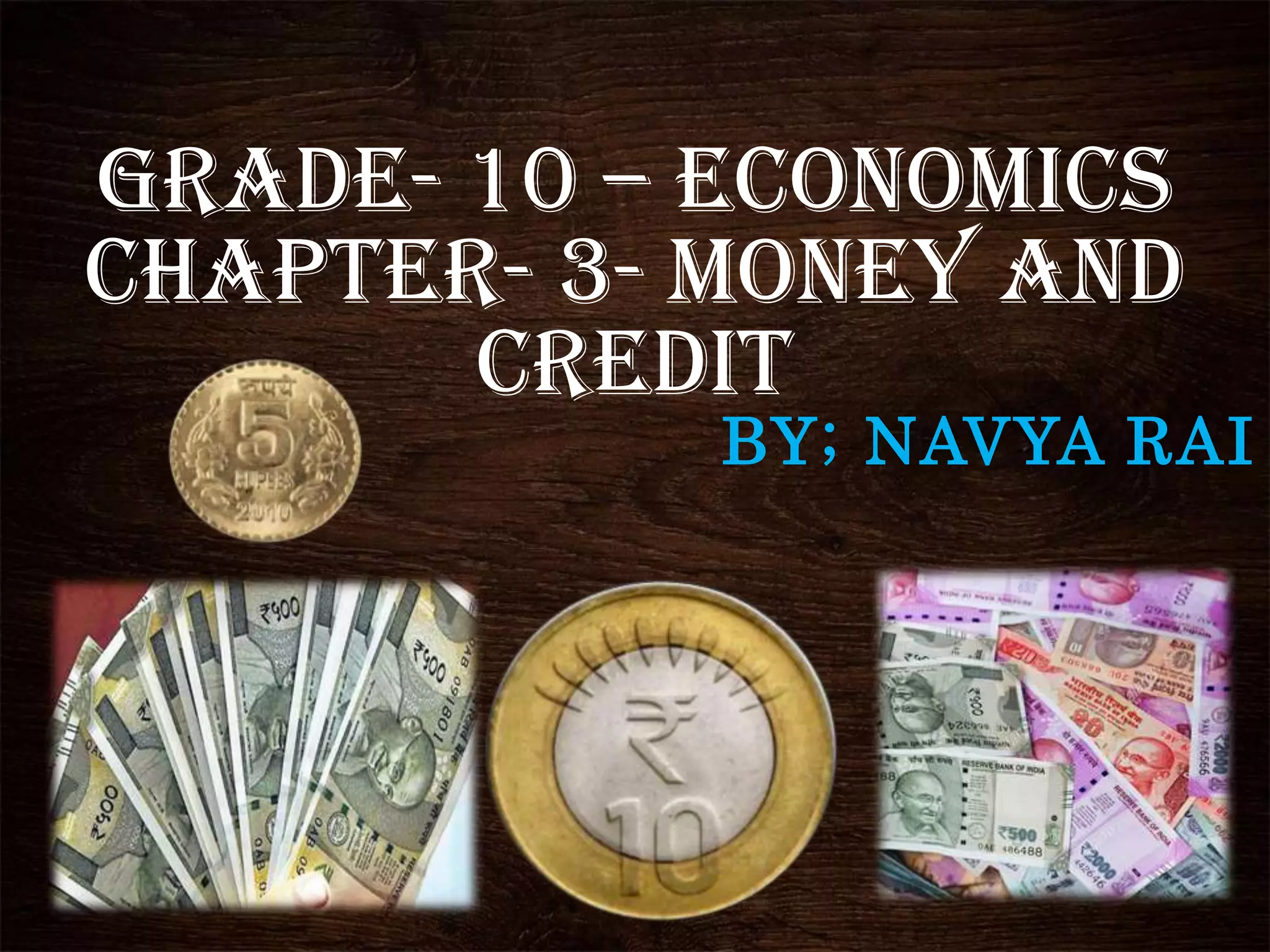
Grade- 10 – Economics
Chapter- 3- Money and
Credit
BY; NAVYA RAI
Money
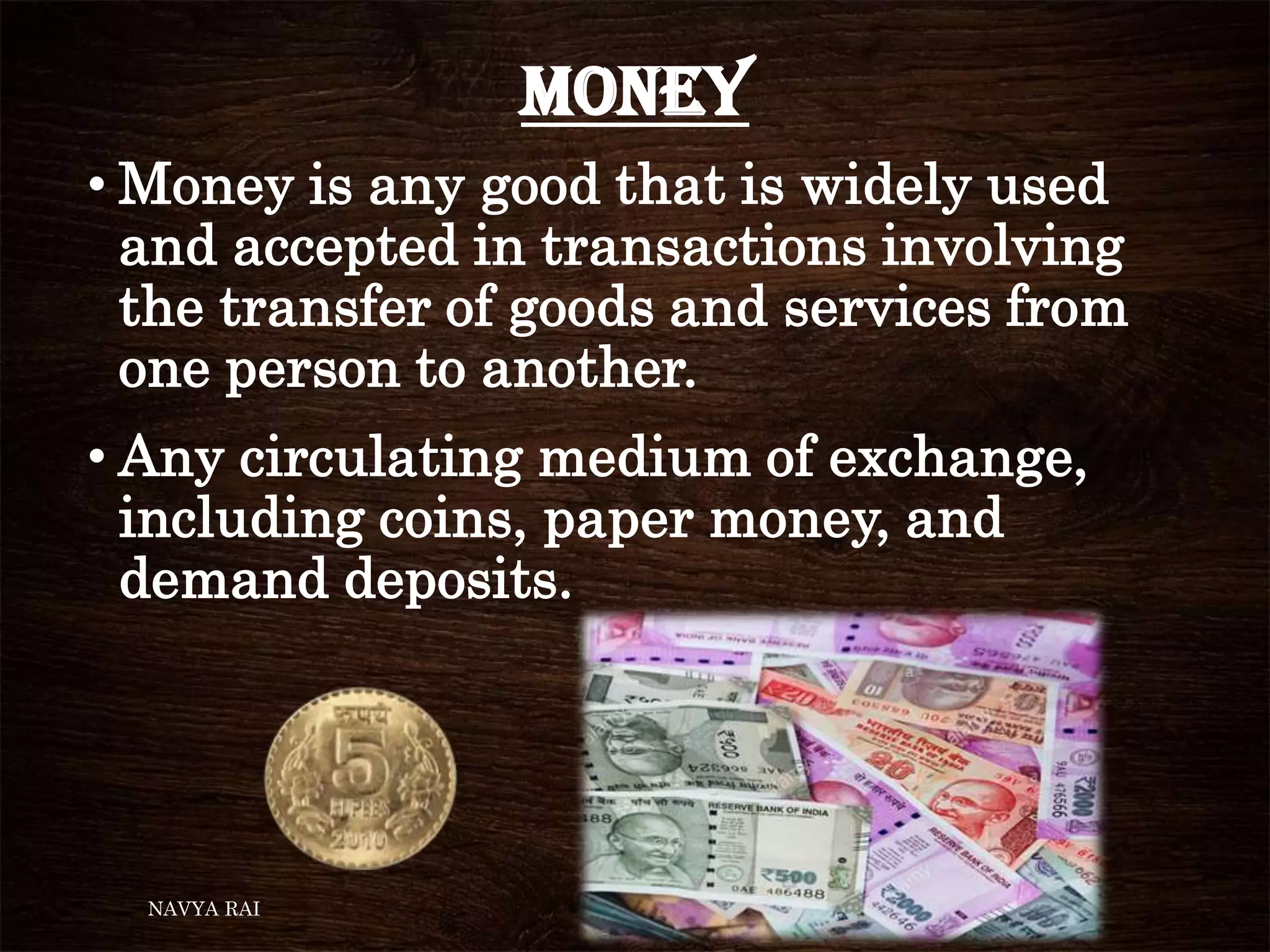
• Money is any good that is widely used
and accepted in transactions involving
the transfer of goods and services from
one person to another.
• Any circulating medium of exchange,
including coins, paper money, and
demand deposits.
NAVYA RAI
Barter System
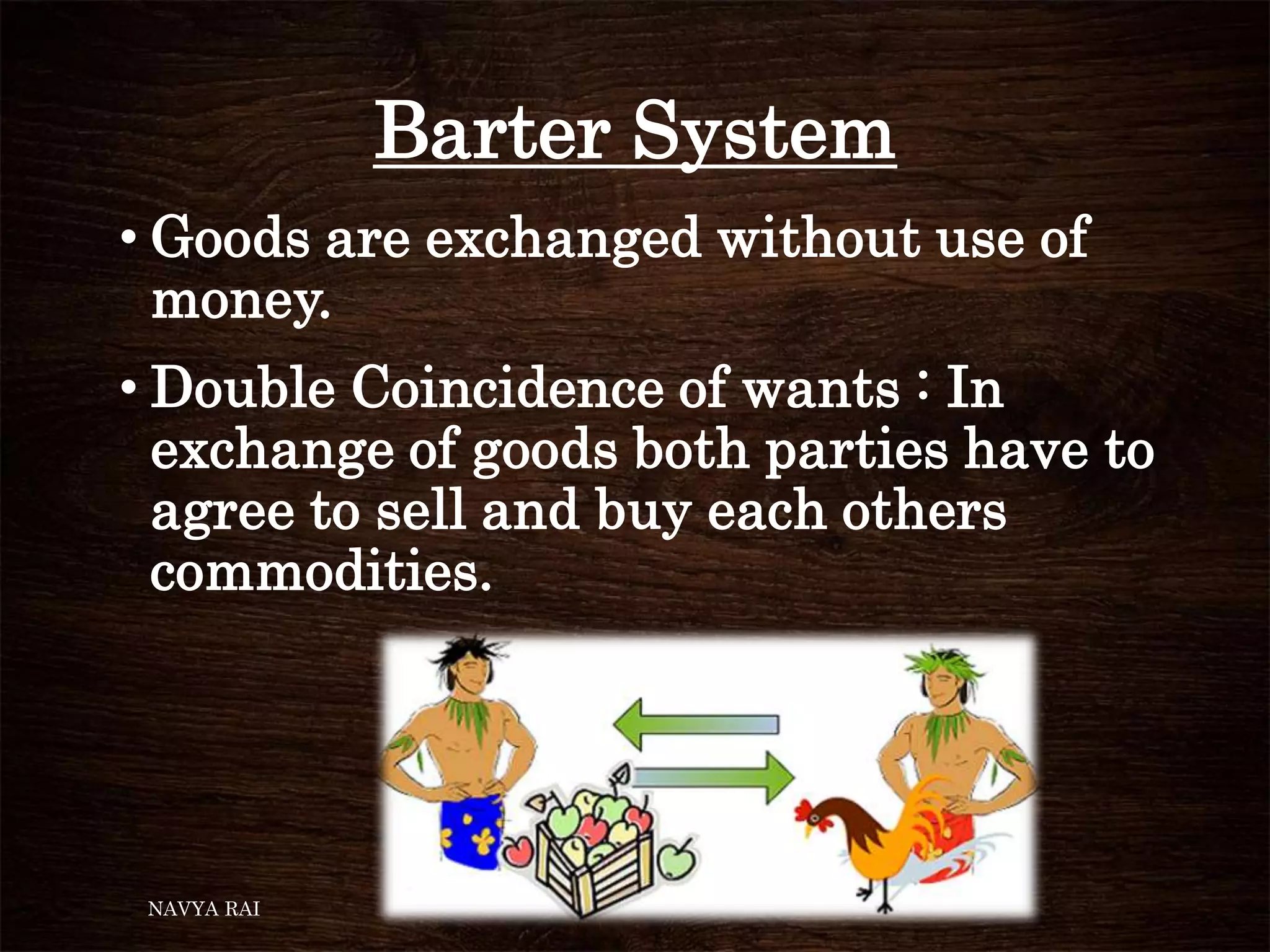
• Goods are exchanged without use of
money.
• Double Coincidence of wants : In
exchange of goods both parties have to
agree to sell and buy each others
commodities.
NAVYA RAI
Limitations of Barter System
NAVYA RAI
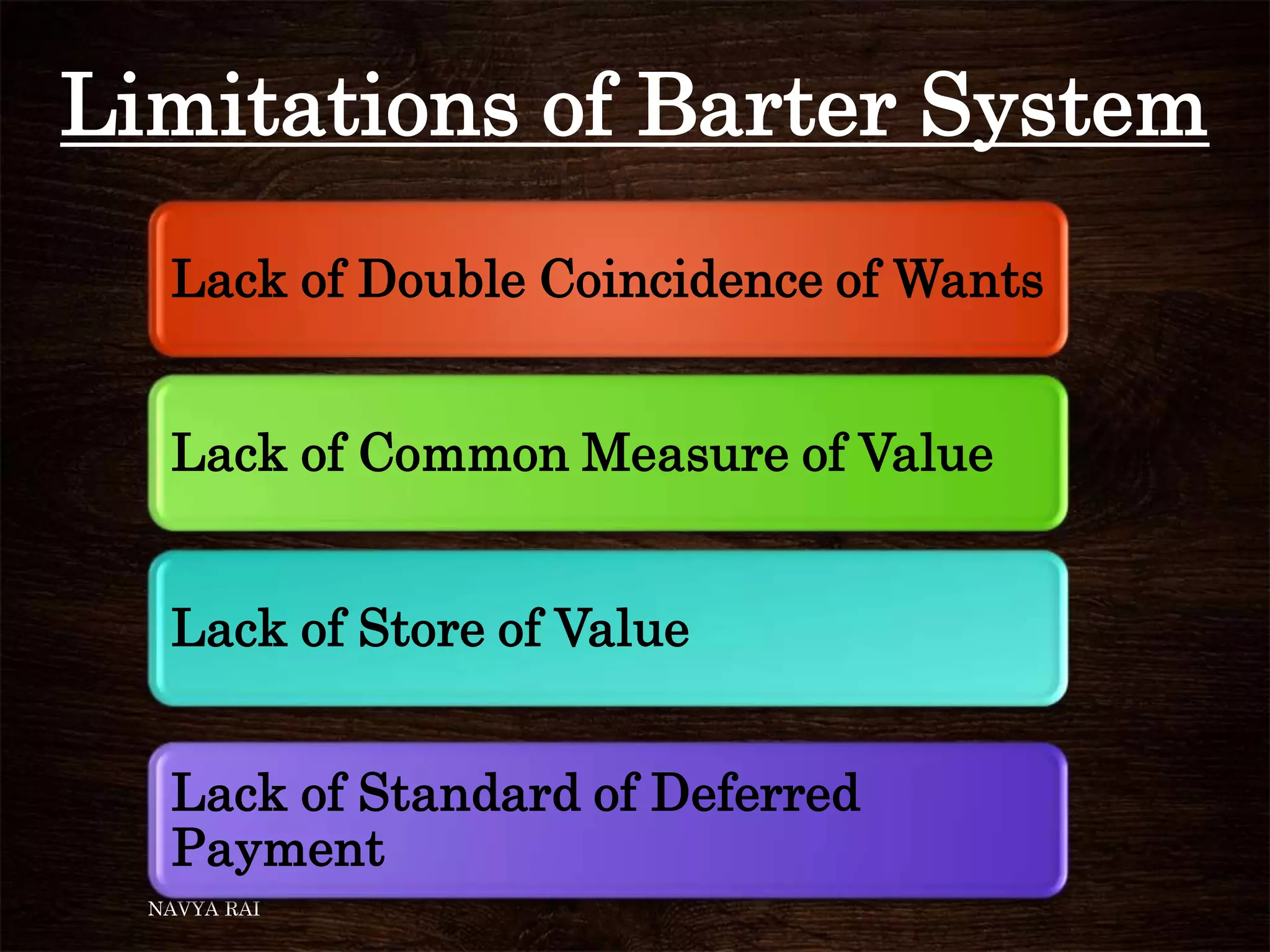
Lack of Double Coincidence of Wants
Lack of Common Measure of Value
Lack of Store of Value
Lack of Standard of Deferred
Payment
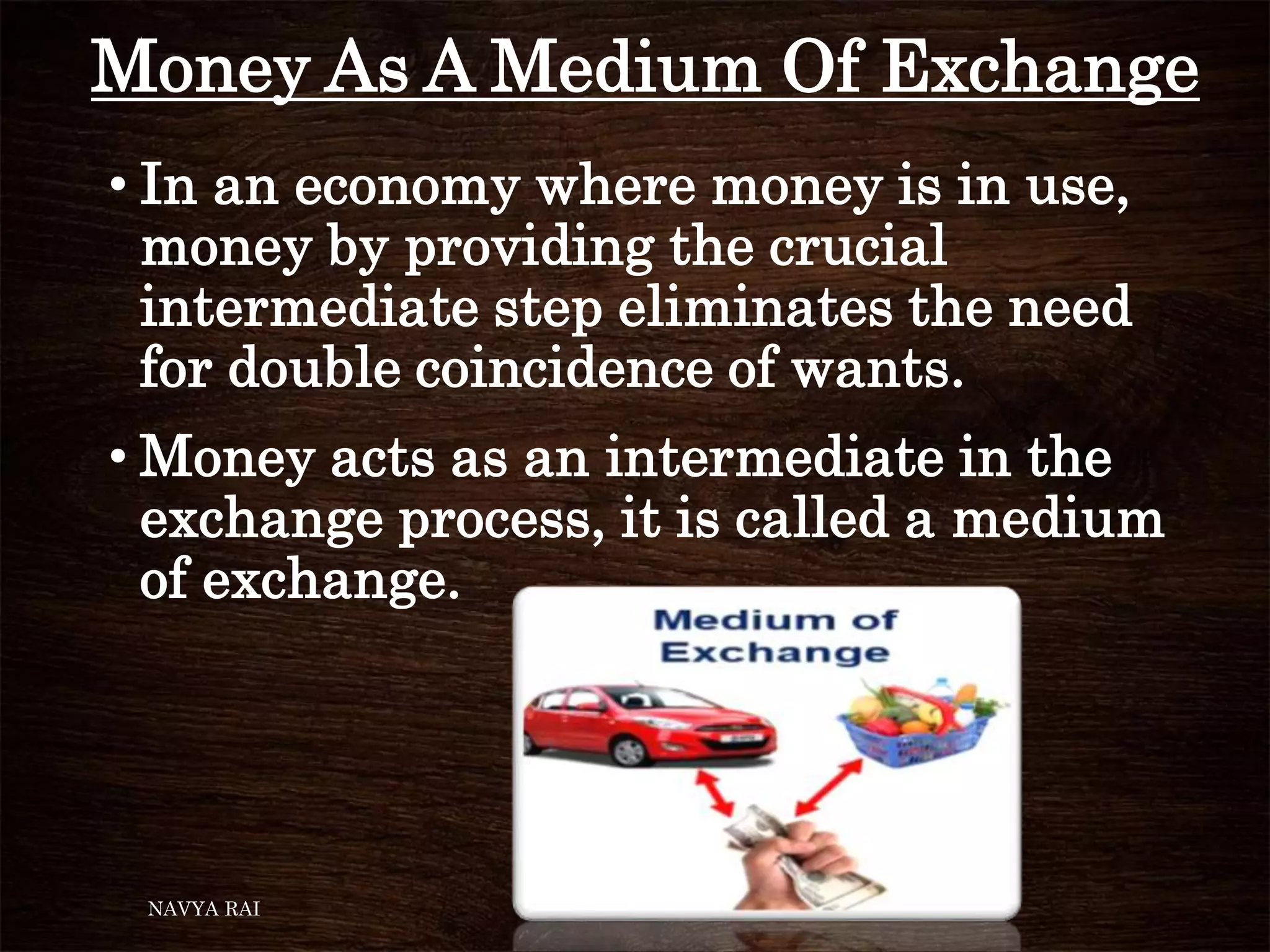
Money As A Medium Of Exchange
• In an economy where money is in use,
money by providing the crucial
intermediate step eliminates the need
for double coincidence of wants.
• Money acts as an intermediate in the
exchange process, it is called a medium
of exchange.
NAVYA RAI
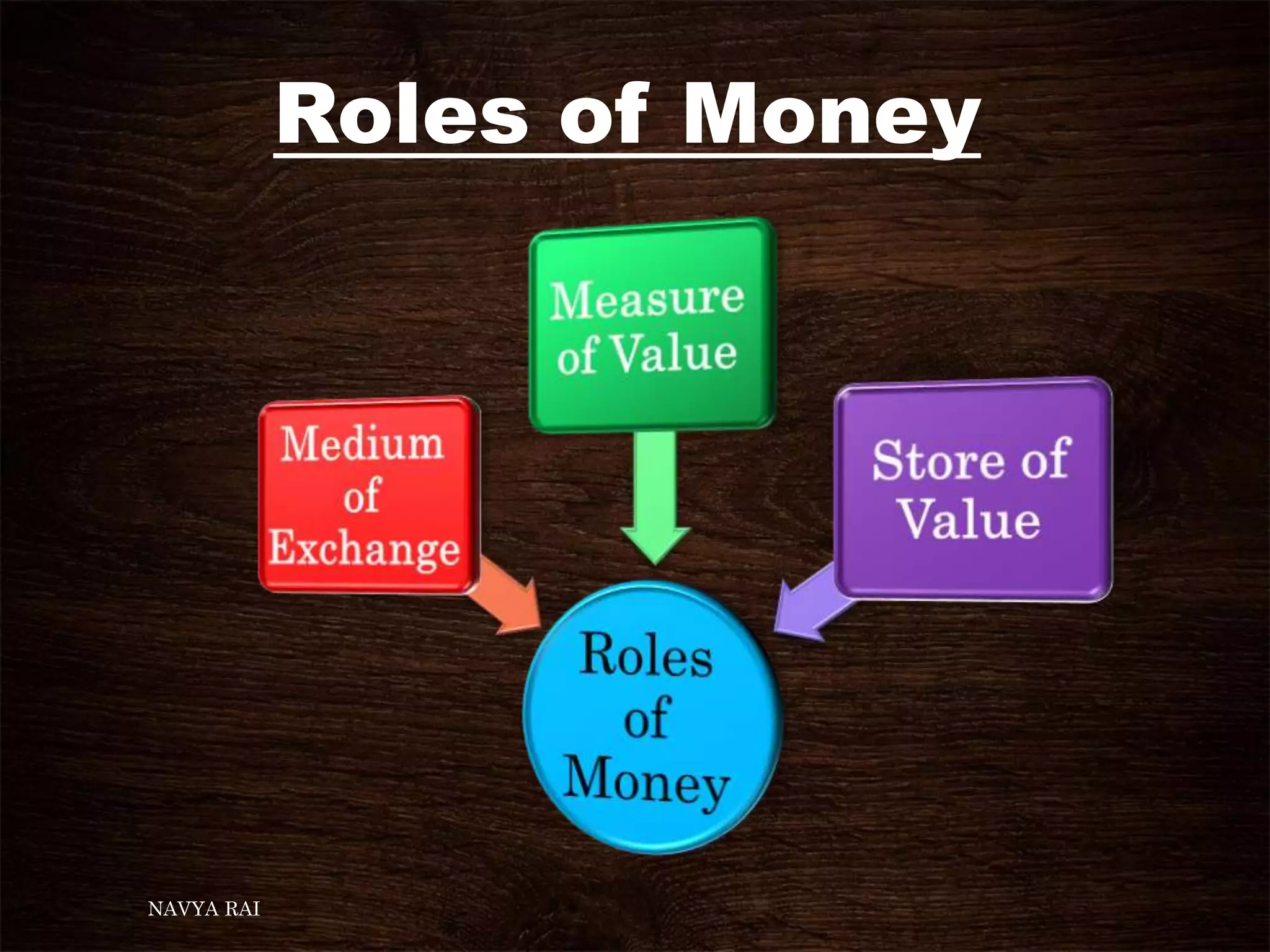
Roles of Money
NAVYA RAI
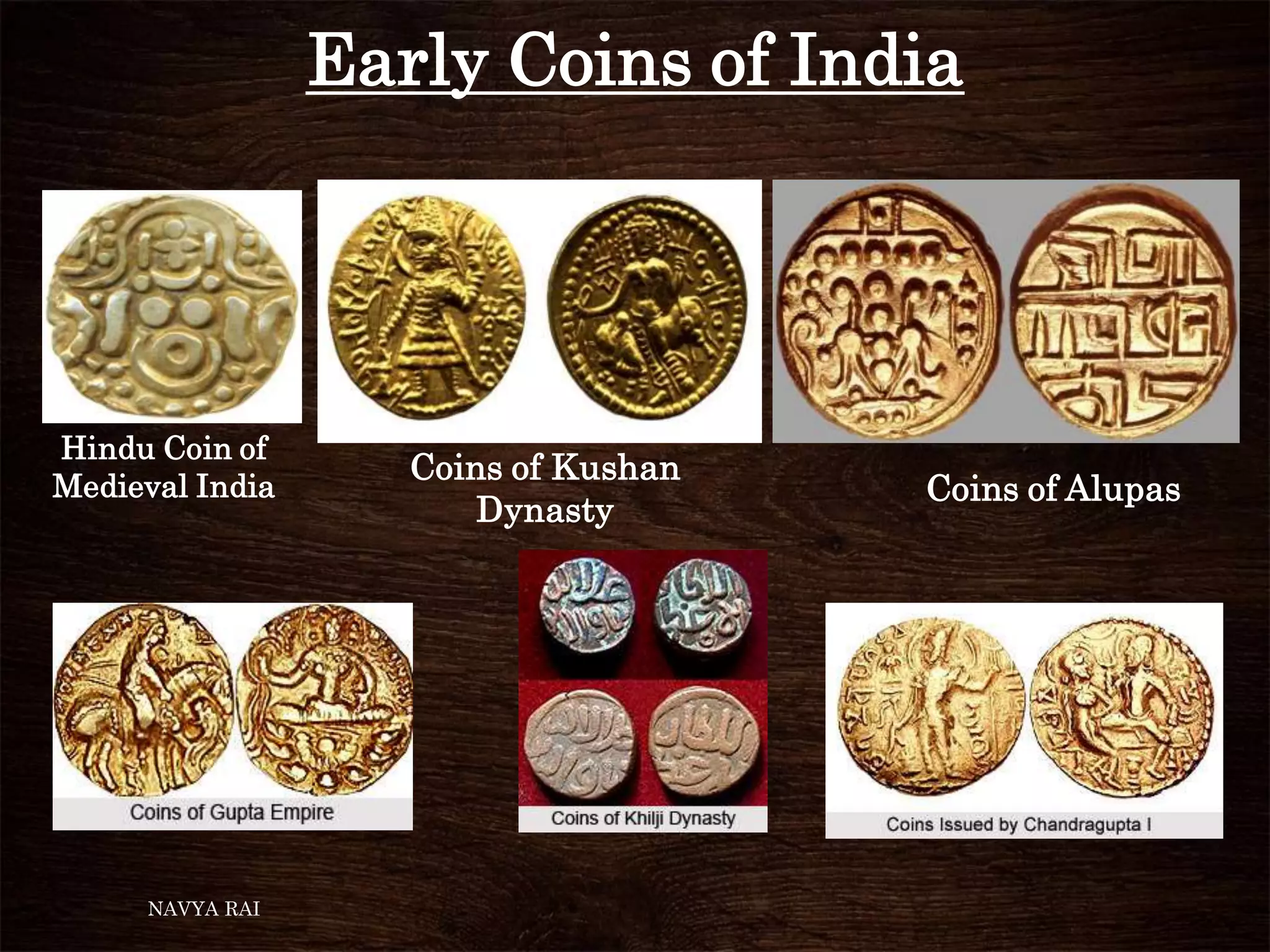
Early Coins of India
NAVYA RAI
Coins of Alupas
Hindu Coin of
Medieval India
Coins of Kushan
Dynasty
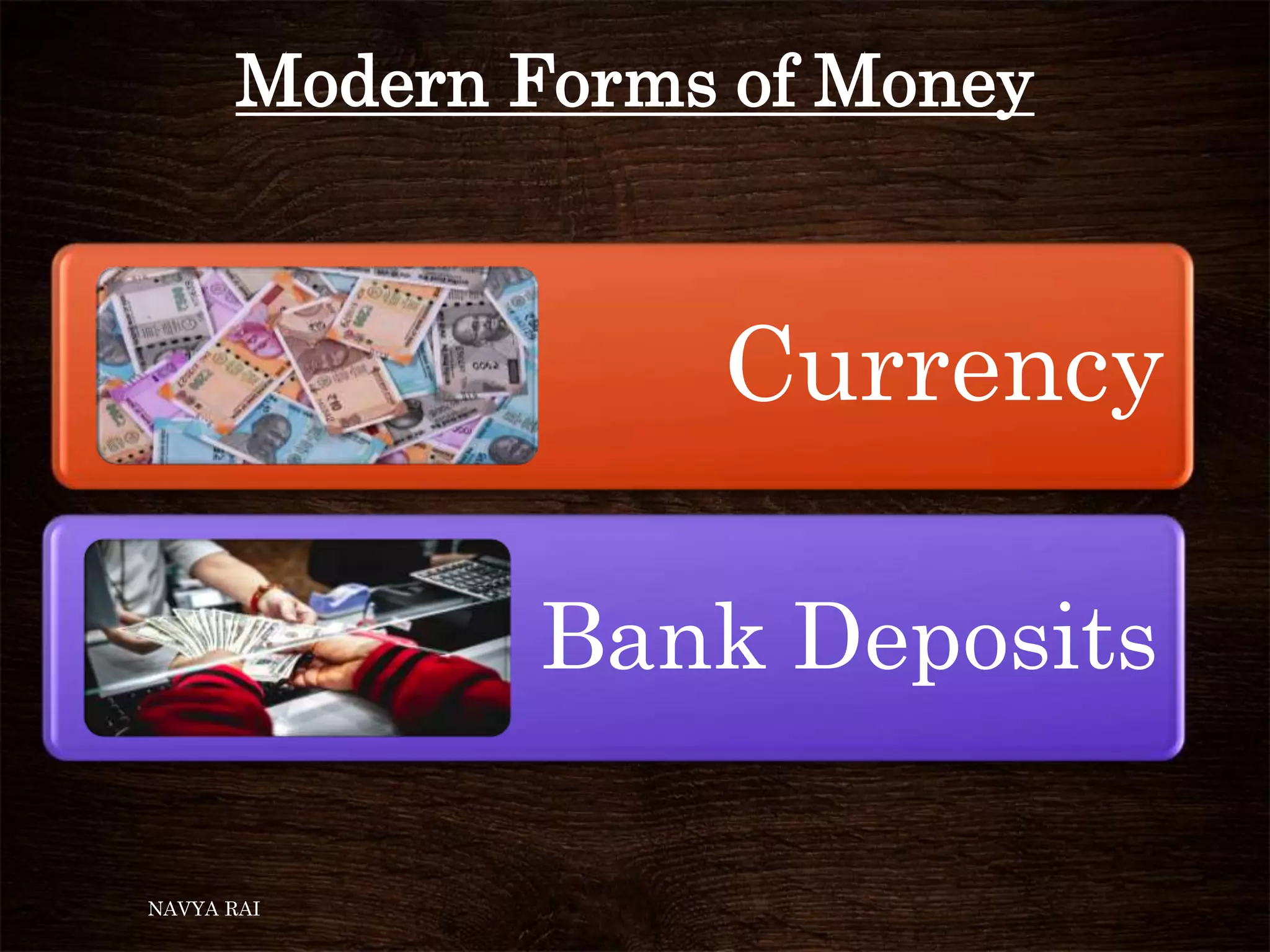
Modern Forms of Money
Currency
Bank Deposits
NAVYA RAI
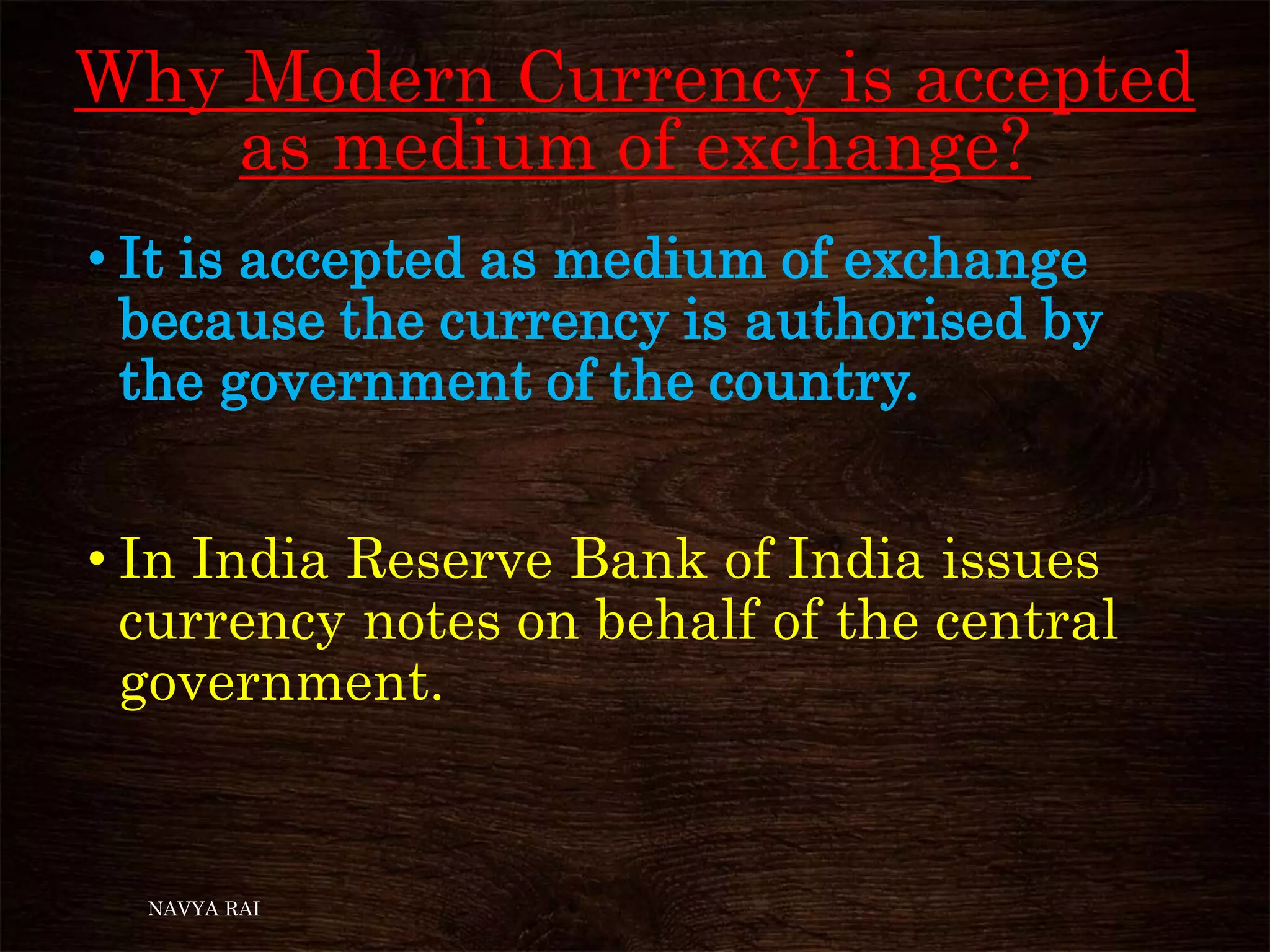
Why Modern Currency is accepted
as medium of exchange?
• It is accepted as medium of exchange
because the currency is authorised by
the government of the country.
• In India Reserve Bank of India issues
currency notes on behalf of the central
government.
NAVYA RAI
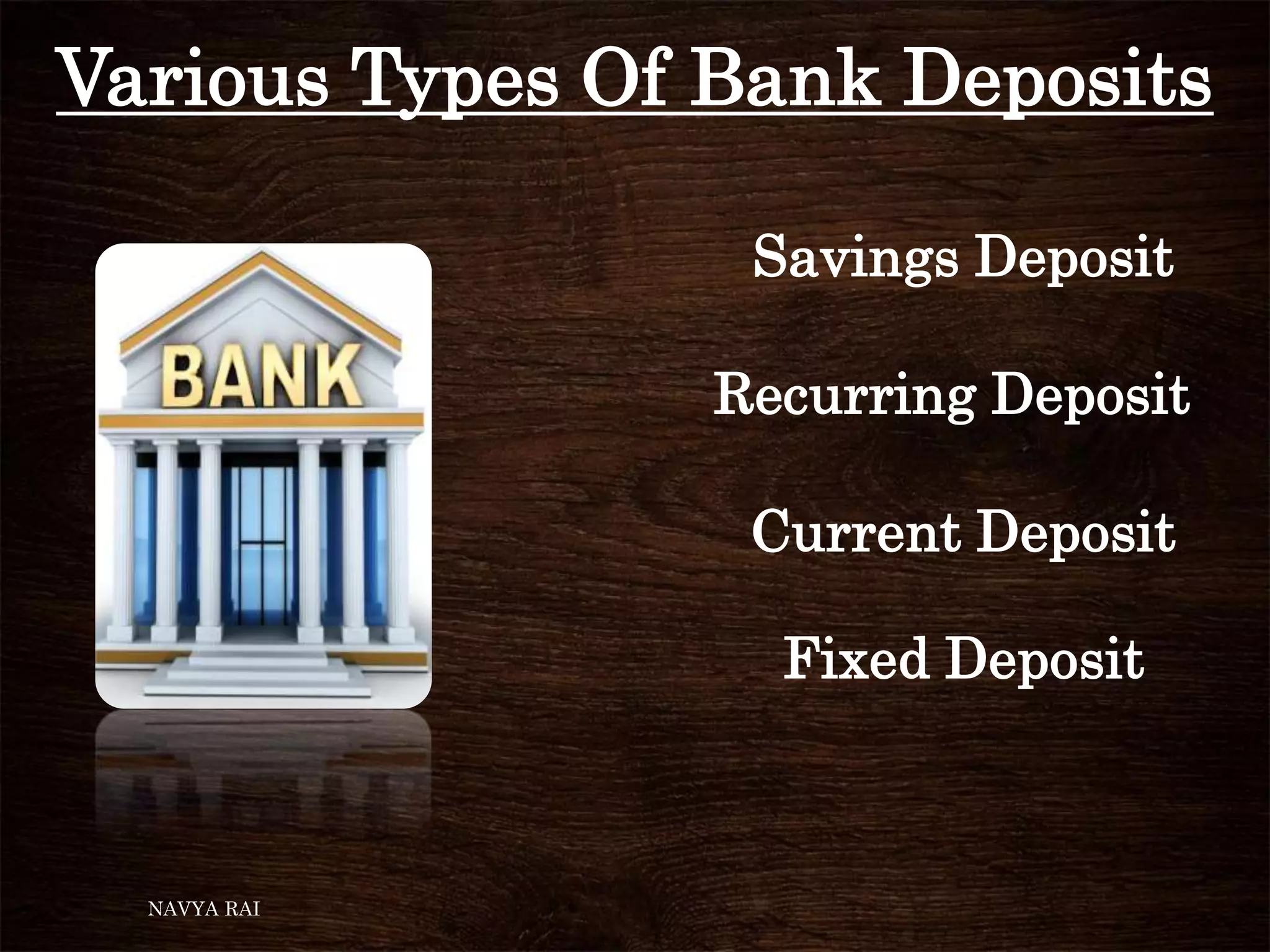
Various Types Of Bank Deposits
NAVYA RAI
Savings Deposit
Recurring Deposit
Current Deposit
Fixed Deposit
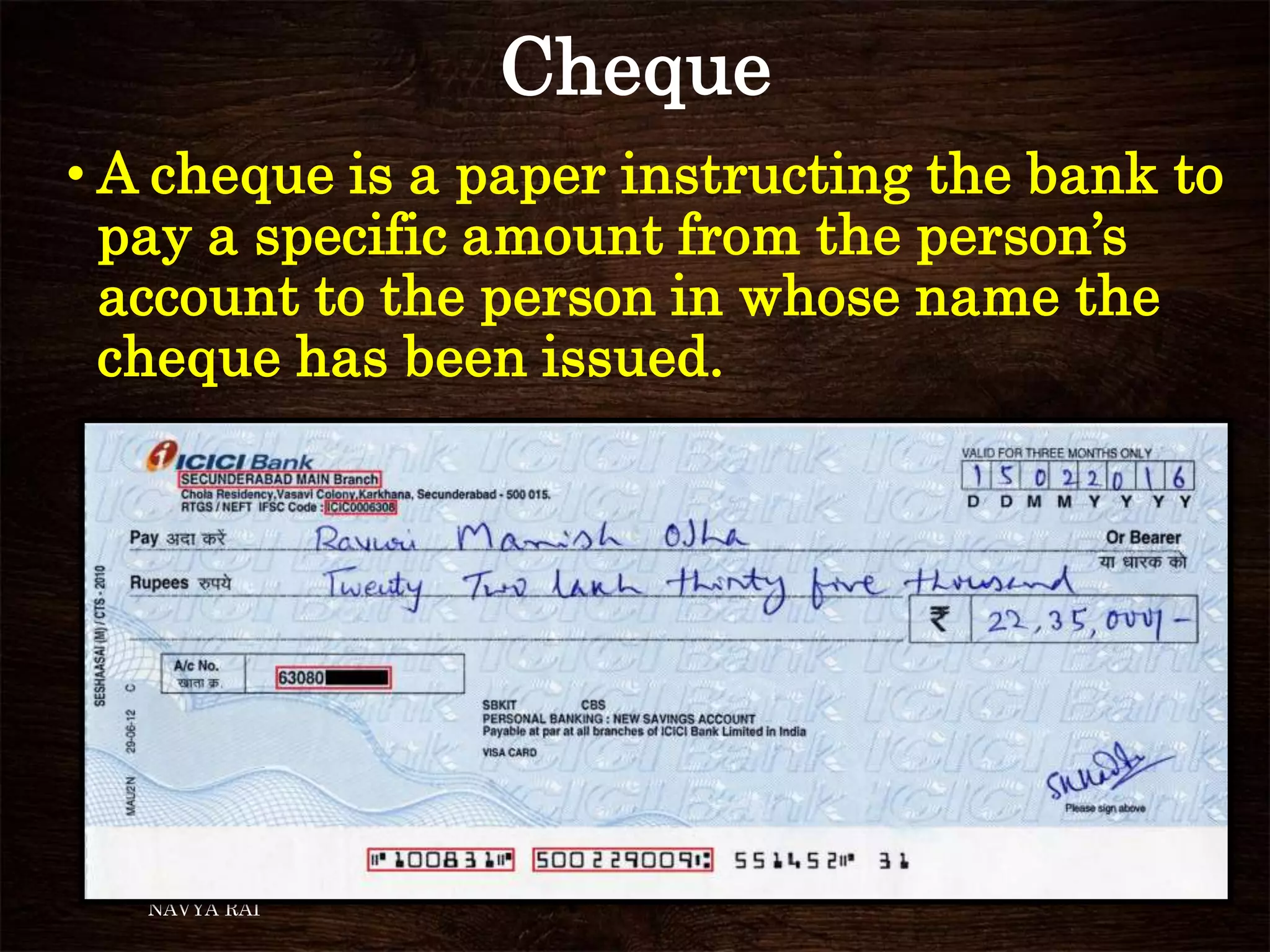
Cheque
NAVYA RAI
• A cheque is a paper instructing the bank to
pay a specific amount from the person’s
account to the person in whose name the
cheque has been issued.
Loan Activities of Bank
• Banks in India these days hold
about 15% of their deposits as cash.
• Bank use the major portion of the
deposits to extend loans.
• Difference between the interest
rates is the main source of income
for banks.
NAVYA RAI
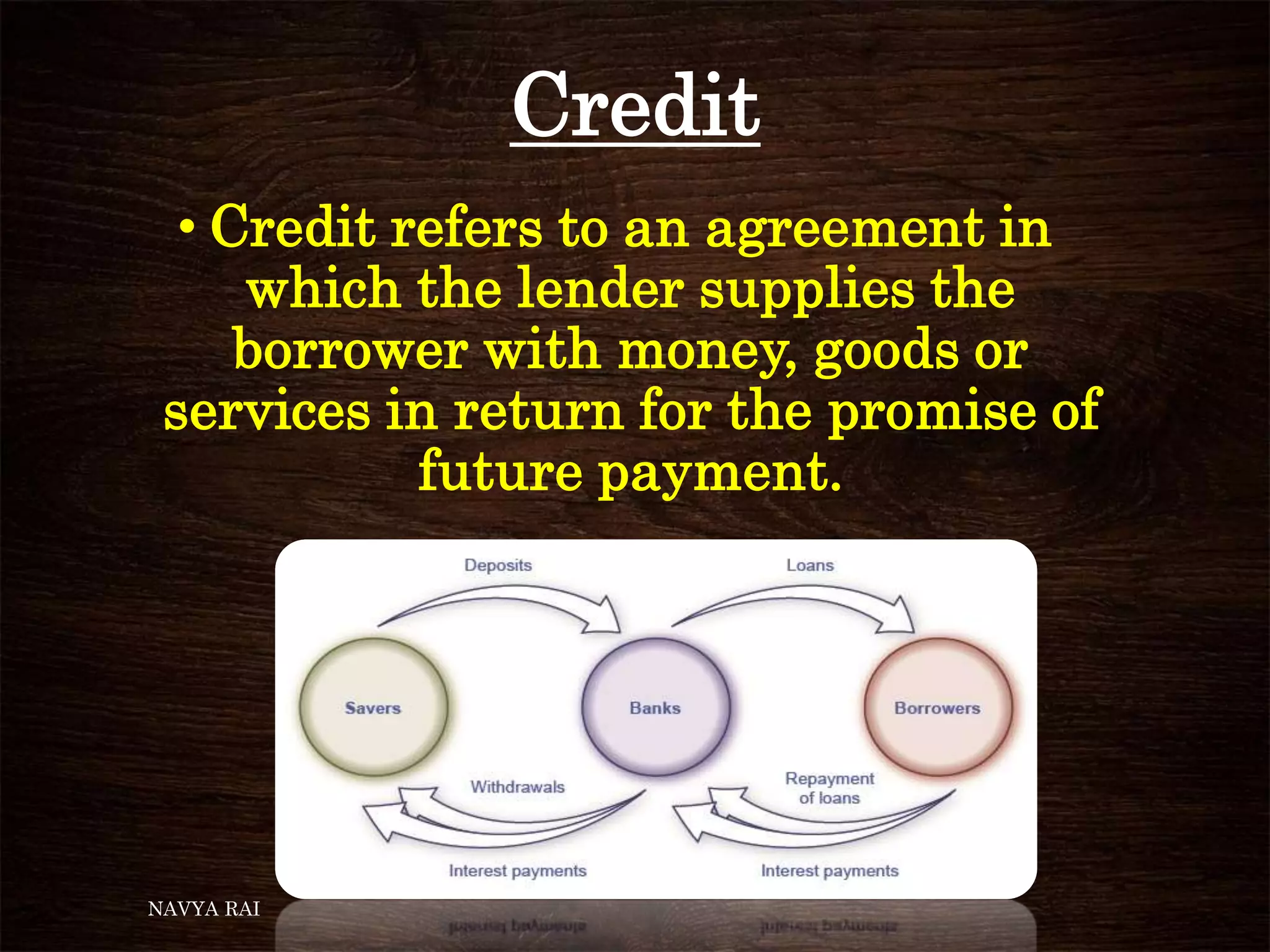
Credit
• Credit refers to an agreement in
which the lender supplies the
borrower with money, goods or
services in return for the promise of
future payment.
NAVYA RAI
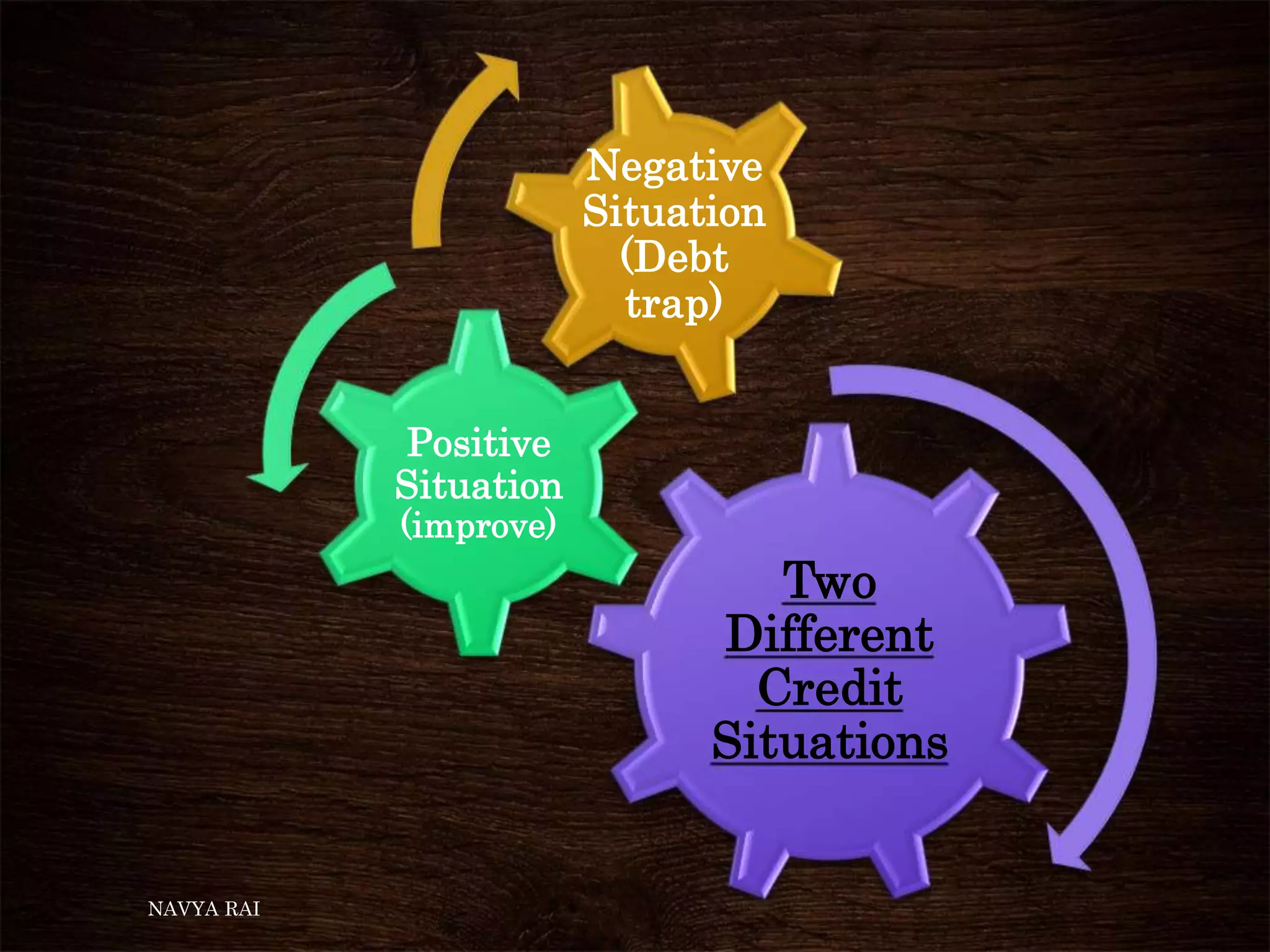
Two
Different
Credit
Situations
Positive
Situation
(improve)
Negative
Situation
(Debt
trap)
NAVYA RAI
NAVYA RAI
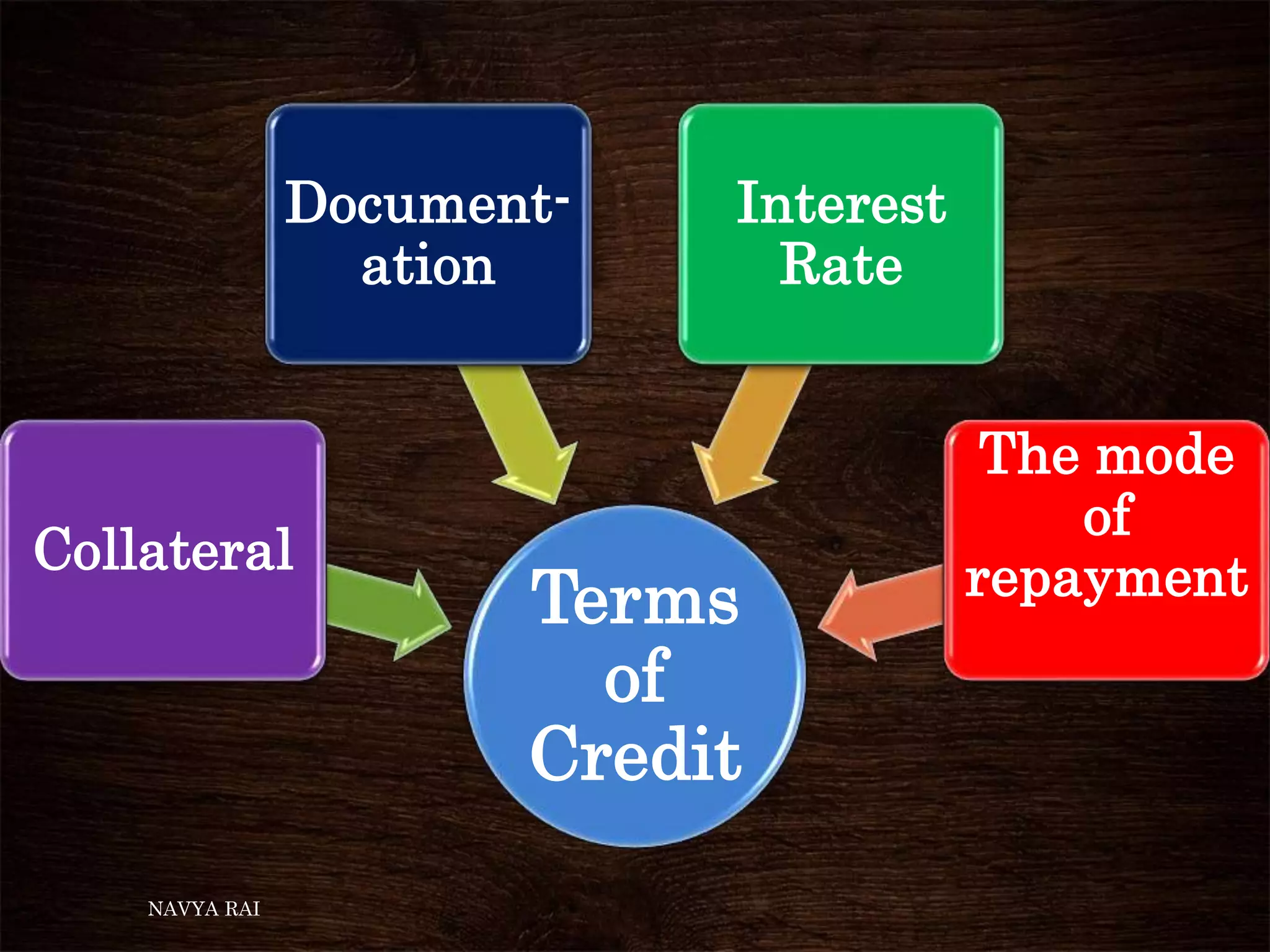
Terms
of
Credit
Collateral
Document-
ation
Interest
Rate
The mode
of
repayment
NAVYA RAI
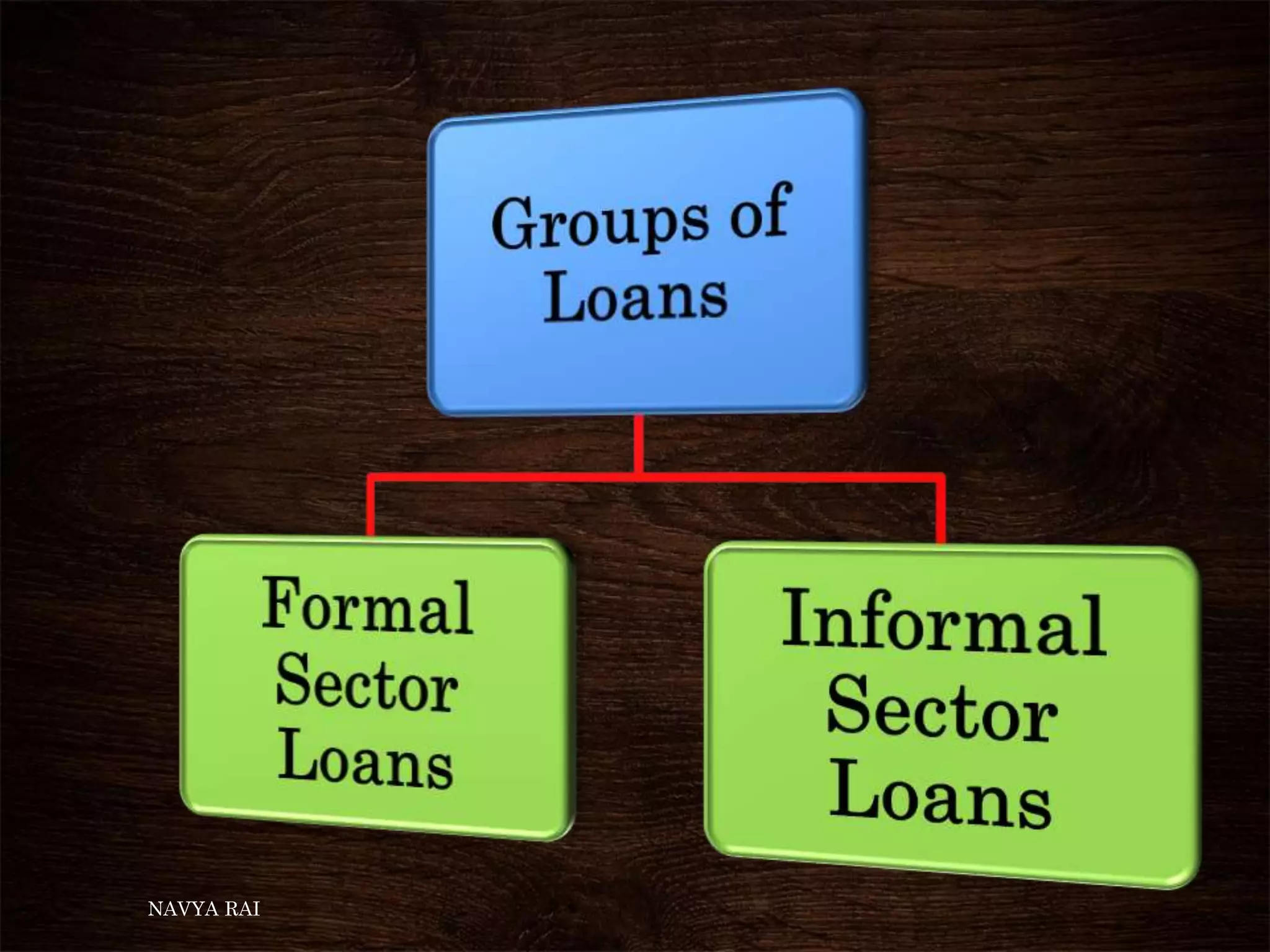
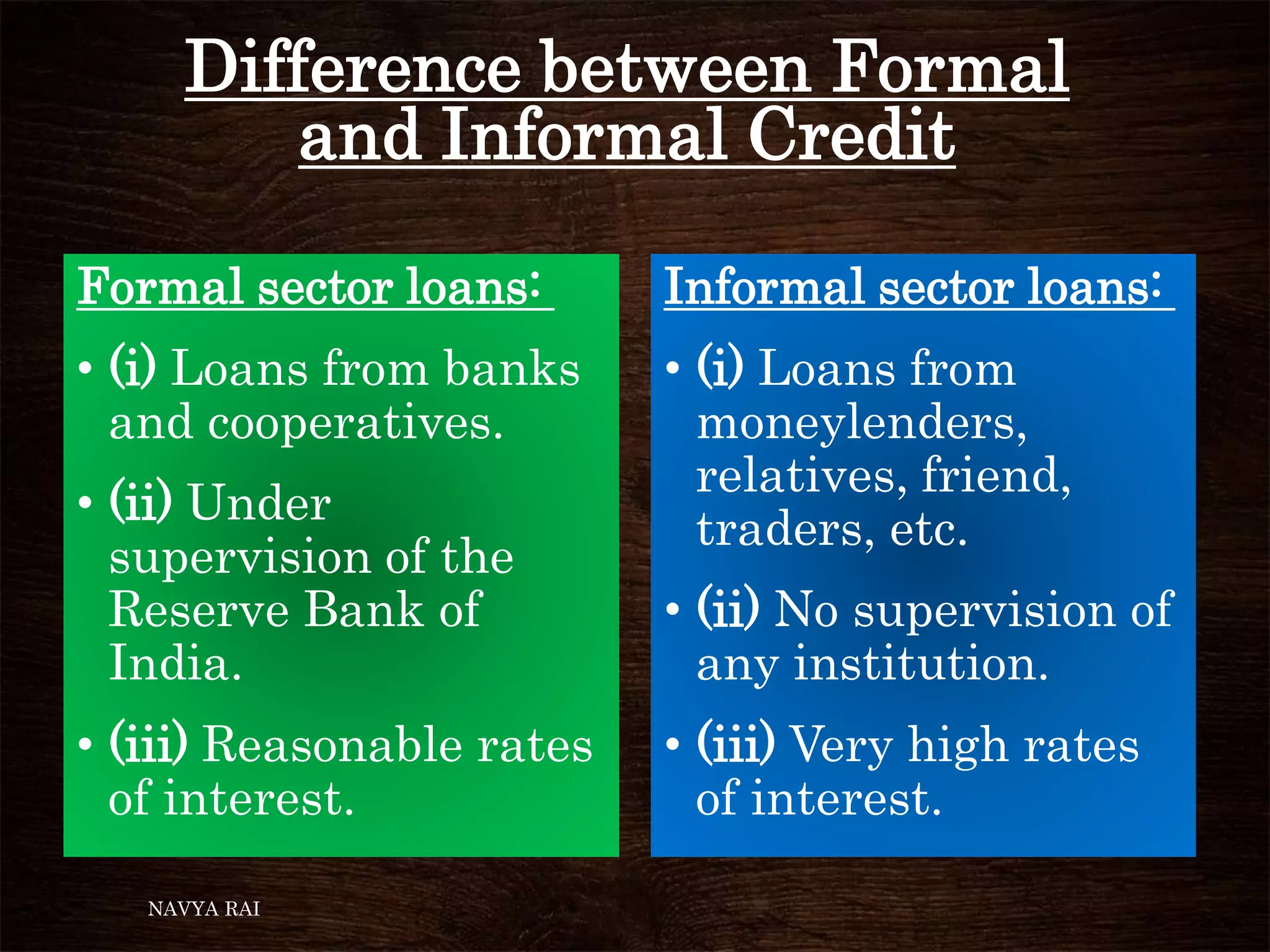
Difference between Formal
and Informal Credit
Formal sector loans:
• (i) Loans from banks
and cooperatives.
• (ii) Under
supervision of the
Reserve Bank of
India.
• (iii) Reasonable rates
of interest.
Informal sector loans:
• (i) Loans from
moneylenders,
relatives, friend,
traders, etc.
• (ii) No supervision of
any institution.
• (iii) Very high rates
of interest.
NAVYA RAI
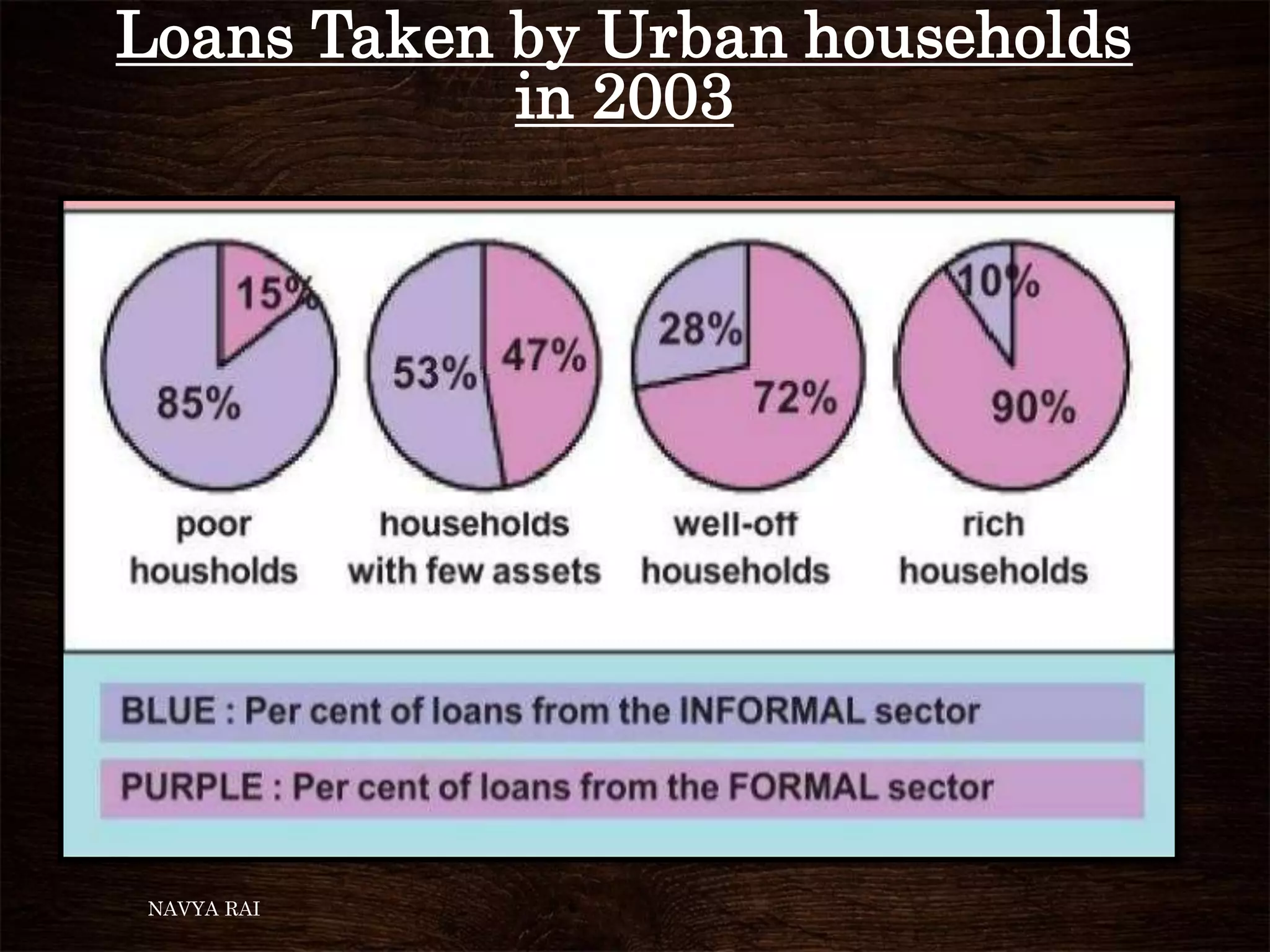
Loans Taken by Urban households
in 2003
NAVYA RAI
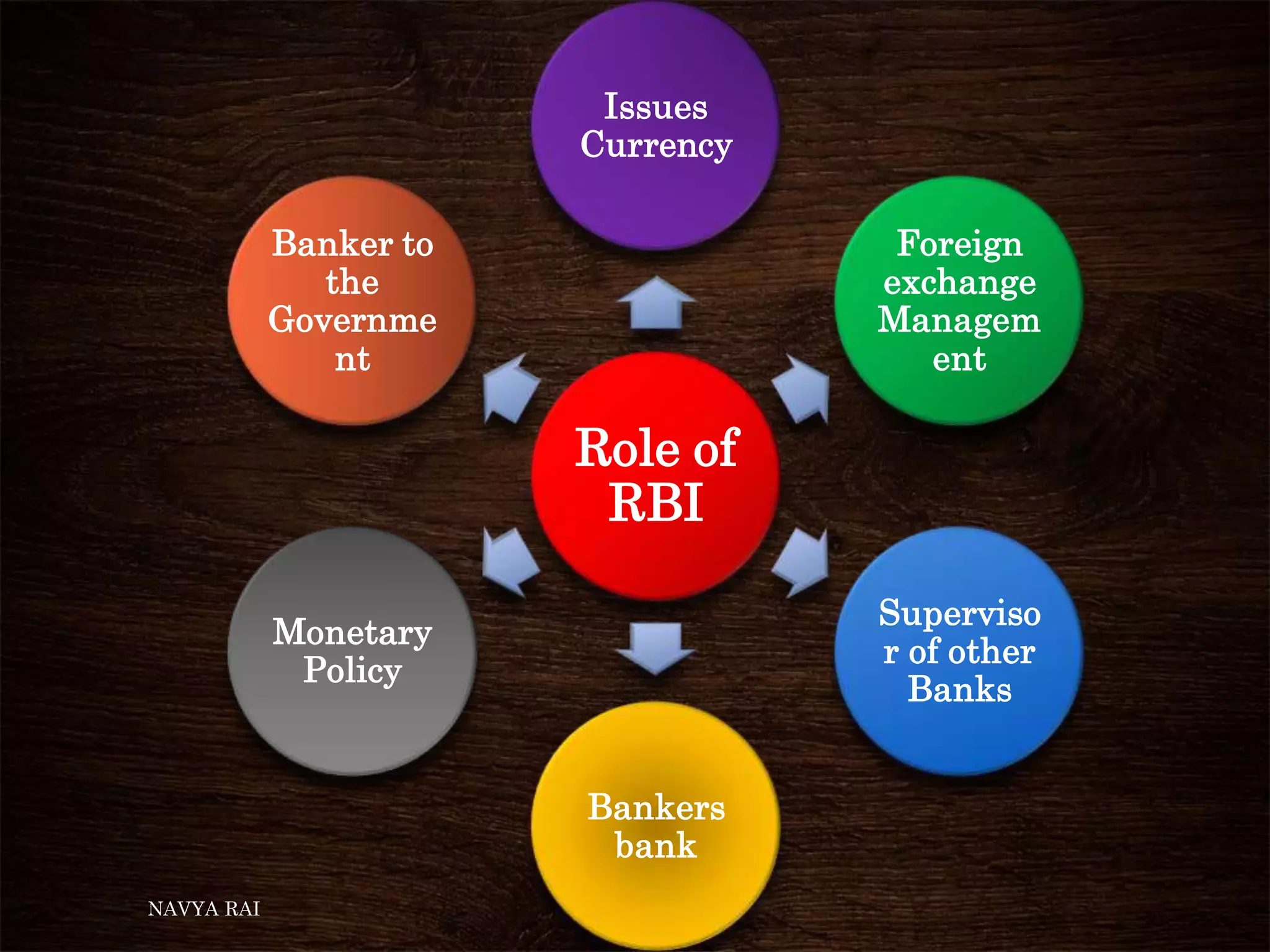
Role of
RBI
Issues
Currency
Foreign
exchange
Managem
ent
Superviso
r of other
Banks
Bankers
bank
Monetary
Policy
Banker to
the
Governme
nt
NAVYA RAI
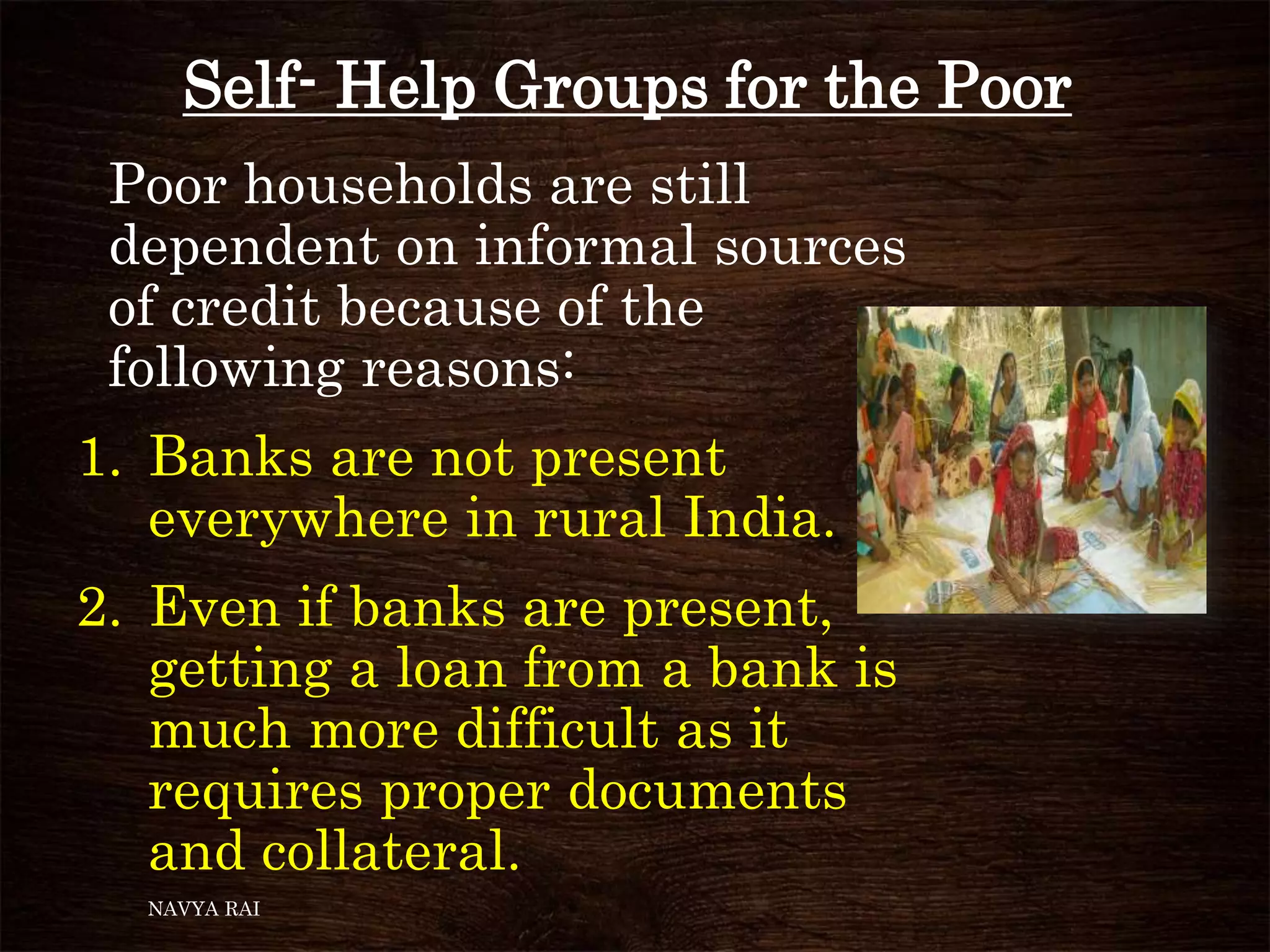
Self- Help Groups for the Poor
Poor households are still
dependent on informal sources
of credit because of the
following reasons:
1. Banks are not present
everywhere in rural India.
2. Even if banks are present,
getting a loan from a bank is
much more difficult as it
requires proper documents
and collateral.
NAVYA RAI
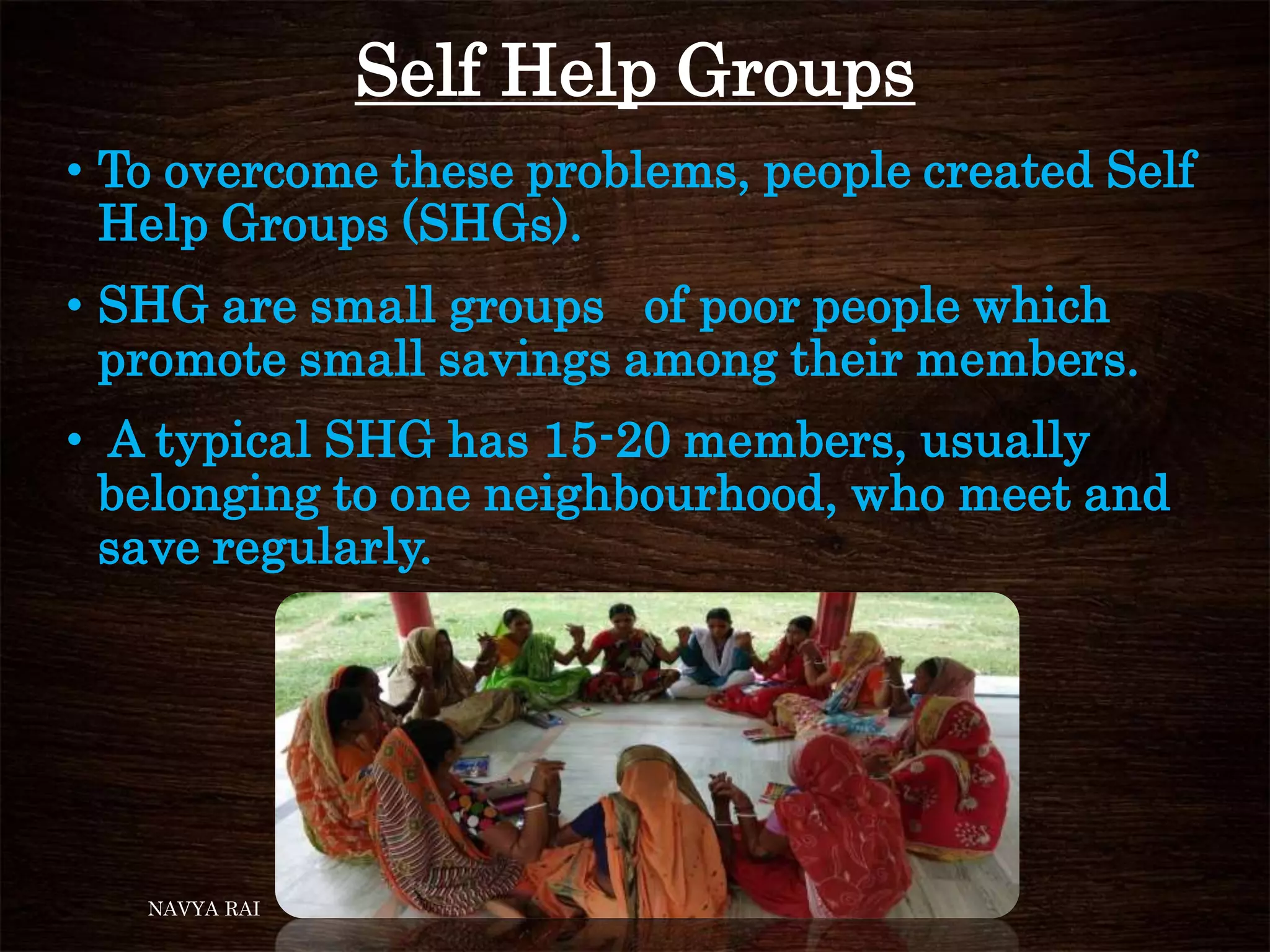
Self Help Groups
• To overcome these problems, people created Self
Help Groups (SHGs).
• SHG are small groups of poor people which
promote small savings among their members.
• A typical SHG has 15-20 members, usually
belonging to one neighbourhood, who meet and
save regularly.
NAVYA RAI
Advantages of Self Help Group (SHG)
1. It helps borrowers to overcome the problem of
lack of collateral.
2. People can get timely loans for a variety of
purposes and at a reasonable interest rate.
3. SHGs are the building blocks of organisation of
the rural poor.
4. It helps women to become financially self-
reliant.
5. The regular meetings of the group provide a
platform to discuss and act on a variety of
social issues such as health, nutrition,
domestic violence, etc.
NAVYA RAI
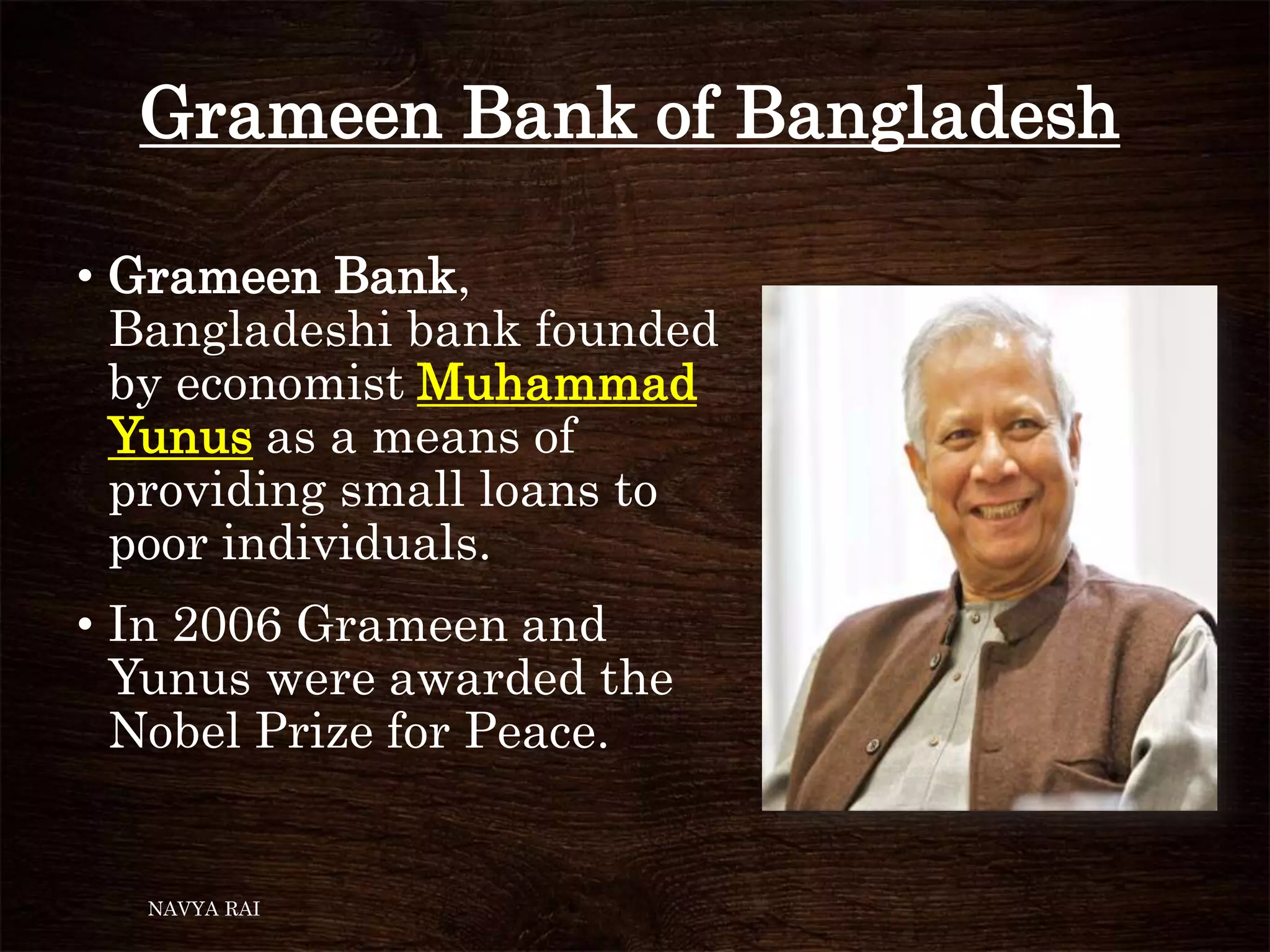
Grameen Bank of Bangladesh
• Grameen Bank,
Bangladeshi bank founded
by economist Muhammad
Yunus as a means of
providing small loans to
poor individuals.
• In 2006 Grameen and
Yunus were awarded the
Nobel Prize for Peace.
NAVYA RAI
Thank You
By : Navya Rai
NAVYA RAI

10th std Economics 3. Money and Credit

  • 1.
    Grade- 10 –Economics Chapter- 3- Money and Credit BY; NAVYA RAI
  • 2.
    Money • Money isany good that is widely used and accepted in transactions involving the transfer of goods and services from one person to another. • Any circulating medium of exchange, including coins, paper money, and demand deposits. NAVYA RAI
  • 3.
    Barter System • Goodsare exchanged without use of money. • Double Coincidence of wants : In exchange of goods both parties have to agree to sell and buy each others commodities. NAVYA RAI
  • 4.
    Limitations of BarterSystem NAVYA RAI Lack of Double Coincidence of Wants Lack of Common Measure of Value Lack of Store of Value Lack of Standard of Deferred Payment
  • 5.
    Money As AMedium Of Exchange • In an economy where money is in use, money by providing the crucial intermediate step eliminates the need for double coincidence of wants. • Money acts as an intermediate in the exchange process, it is called a medium of exchange. NAVYA RAI
  • 6.
  • 7.
    Early Coins ofIndia NAVYA RAI Coins of Alupas Hindu Coin of Medieval India Coins of Kushan Dynasty
  • 8.
    Modern Forms ofMoney Currency Bank Deposits NAVYA RAI
  • 9.
    Why Modern Currencyis accepted as medium of exchange? • It is accepted as medium of exchange because the currency is authorised by the government of the country. • In India Reserve Bank of India issues currency notes on behalf of the central government. NAVYA RAI
  • 10.
    Various Types OfBank Deposits NAVYA RAI Savings Deposit Recurring Deposit Current Deposit Fixed Deposit
  • 11.
    Cheque NAVYA RAI • Acheque is a paper instructing the bank to pay a specific amount from the person’s account to the person in whose name the cheque has been issued.
  • 12.
    Loan Activities ofBank • Banks in India these days hold about 15% of their deposits as cash. • Bank use the major portion of the deposits to extend loans. • Difference between the interest rates is the main source of income for banks. NAVYA RAI
  • 13.
    Credit • Credit refersto an agreement in which the lender supplies the borrower with money, goods or services in return for the promise of future payment. NAVYA RAI
  • 14.
  • 15.
  • 16.
  • 17.
    Difference between Formal andInformal Credit Formal sector loans: • (i) Loans from banks and cooperatives. • (ii) Under supervision of the Reserve Bank of India. • (iii) Reasonable rates of interest. Informal sector loans: • (i) Loans from moneylenders, relatives, friend, traders, etc. • (ii) No supervision of any institution. • (iii) Very high rates of interest. NAVYA RAI
  • 18.
    Loans Taken byUrban households in 2003 NAVYA RAI
  • 19.
    Role of RBI Issues Currency Foreign exchange Managem ent Superviso r ofother Banks Bankers bank Monetary Policy Banker to the Governme nt NAVYA RAI
  • 20.
    Self- Help Groupsfor the Poor Poor households are still dependent on informal sources of credit because of the following reasons: 1. Banks are not present everywhere in rural India. 2. Even if banks are present, getting a loan from a bank is much more difficult as it requires proper documents and collateral. NAVYA RAI
  • 21.
    Self Help Groups •To overcome these problems, people created Self Help Groups (SHGs). • SHG are small groups of poor people which promote small savings among their members. • A typical SHG has 15-20 members, usually belonging to one neighbourhood, who meet and save regularly. NAVYA RAI
  • 22.
    Advantages of SelfHelp Group (SHG) 1. It helps borrowers to overcome the problem of lack of collateral. 2. People can get timely loans for a variety of purposes and at a reasonable interest rate. 3. SHGs are the building blocks of organisation of the rural poor. 4. It helps women to become financially self- reliant. 5. The regular meetings of the group provide a platform to discuss and act on a variety of social issues such as health, nutrition, domestic violence, etc. NAVYA RAI
  • 23.
    Grameen Bank ofBangladesh • Grameen Bank, Bangladeshi bank founded by economist Muhammad Yunus as a means of providing small loans to poor individuals. • In 2006 Grameen and Yunus were awarded the Nobel Prize for Peace. NAVYA RAI
  • 24.
    Thank You By :Navya Rai NAVYA RAI