



 Subject-VerbAgreement refers to the
relationship between the verb and its
subject.
 Every clause or sentence must agree in
number and person with its subject.
 Verb must be singular if its subject is
singular; verb must be plural if its
subject is plural.
 Examples:
 Singular Subject and SingularVerb
▪ Overcrowding causes many of the discipline
problems in our school.
 Plural Subject and PluralVerb
▪ Fires destroy millions of dollars worth of
property each year.
These one creates problem:
The pronoun everyone and someone,
seem plural but they are singular – so
they need singular verb.
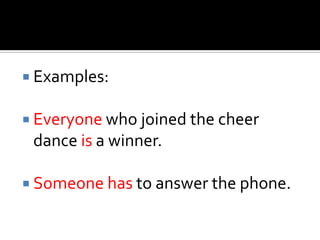
 Examples:
 Everyone who joined the cheer
dance is a winner.
 Someone has to answer the phone.
 To choose the correct verb form,
identify the subject of the
sentence.
Example:
The first three weeks of basic training
is the worst.
The first three weeks of basic training
is the worst.
[The plural subject weeks takes a plural
verb.]
Subject
are
 Another group of words that can cause
confusion is the subordinate clause.
The use of mood altering drugs, although they
sometimes provide great medical benefits, are
generally criticized by the public.
[The singular subject use takes a singular verb.]
Subject
is
 A problem can also arise from the use of
along with, as well as, in addition to, and
together with.
The cost of medication as well as doctors’ fees
are a problem for retired Canadians wintering
in Florida.
[The singular subject cost takes a singular verb.]
Subject
is
 Block all prepositional phrases,
subordinate clauses, and miscellaneous
expressions, you will get the subject
and the verb by process of elimination.
Unless it rains, I plan on leaving as late
as possible, along with all the other
vacationers.
 Look for inverted word order, in
which the subject follows the verb.
From his research has come three
promising cancer drugs.
Subject
have
 Use a plural verb with the most
compound subjects joined by and.
Their television and their camera was
stolen.
Subject wereSubject
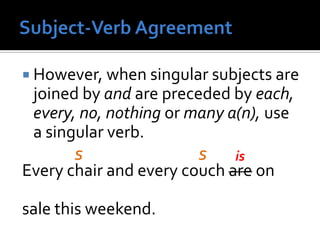
 However, when singular subjects are
joined by and are preceded by each,
every, no, nothing or many a(n), use
a singular verb.
Every chair and every couch are on
sale this weekend.
S isS
No bicycling and no hitchhiking are
permitted on Highway 20.
isSS
 If the two parts of a compound
subject, whether singular or plural,
express a single idea or refer to a
single person, use singular verb.
Ham and eggs are my favorite
breakfast.
S is
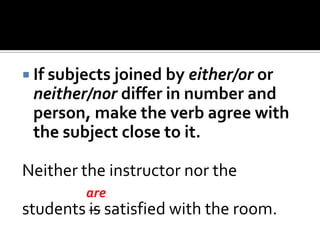
 If subjects joined by either/or or
neither/nor differ in number and
person, make the verb agree with
the subject close to it.
Neither the instructor nor the
students is satisfied with the room.
are
 When a collective noun used as a
subject regards a group as a unit,
use singular verb. When it refers to
the individual members of a group,
use plural verb.
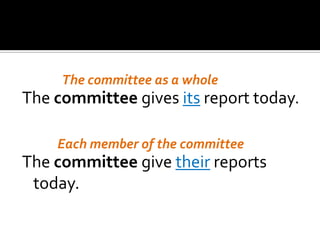
The committee gives its report today.
The committee give their reports
today.
The committee as a whole
Each member of the committee
 When a relative pronoun (who,
which, or that), is the subject,
make the verb agree with the
pronoun’s antecedent.
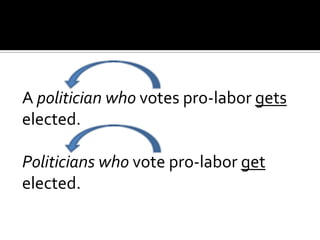
A politician who votes pro-labor gets
elected.
Politicians who vote pro-labor get
elected.
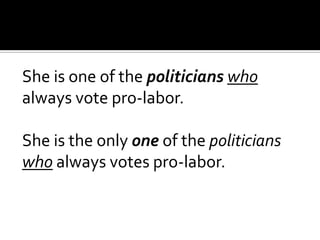
She is one of the politicians who
always vote pro-labor.
She is the only one of the politicians
who always votes pro-labor.
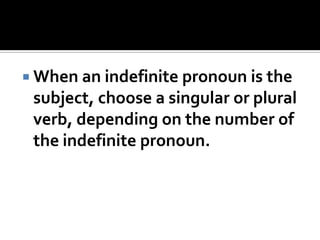
 When an indefinite pronoun is the
subject, choose a singular or plural
verb, depending on the number of
the indefinite pronoun.
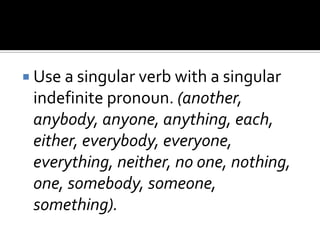
 Use a singular verb with a singular
indefinite pronoun. (another,
anybody, anyone, anything, each,
either, everybody, everyone,
everything, neither, no one, nothing,
one, somebody, someone,
something).
Somebody has to decide whether to
paint the kitchen this year.
[One person (one body) will make the
decision.]
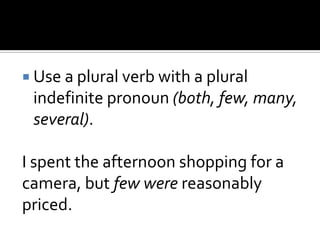
 Use a plural verb with a plural
indefinite pronoun (both, few, many,
several).
I spent the afternoon shopping for a
camera, but few were reasonably
priced.
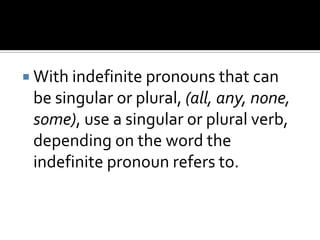
 With indefinite pronouns that can
be singular or plural, (all, any, none,
some), use a singular or plural verb,
depending on the word the
indefinite pronoun refers to.
All of the wheat is harvested.
All of the fields are ploughed.
[Wheat is singular, fields is plural.]
 When the sentence begins with
here or there, make the verb agree
in number with the subject.
There is stone, brick and tile
fireplaces in Blenheim Castle.
are
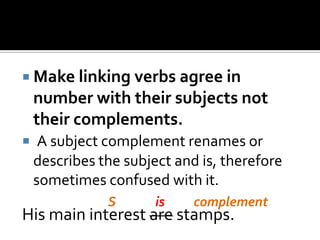
 Make linking verbs agree in
number with their subjects not
their complements.
 A subject complement renames or
describes the subject and is, therefore
sometimes confused with it.
His main interest are stamps.
S complementis
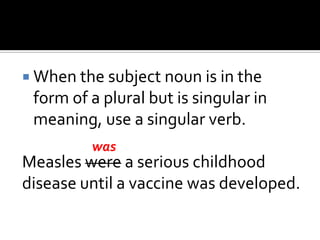
 When the subject noun is in the
form of a plural but is singular in
meaning, use a singular verb.
Measles were a serious childhood
disease until a vaccine was developed.
was
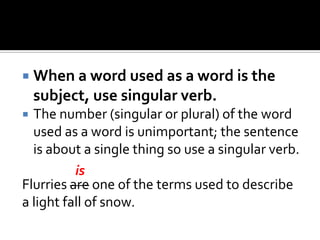
 When a word used as a word is the
subject, use singular verb.
 The number (singular or plural) of the word
used as a word is unimportant; the sentence
is about a single thing so use a singular verb.
Flurries are one of the terms used to describe
a light fall of snow.
is
 When the subject of a sentence is a
noun clause, use a singular verb.
That he actually bought a new jeep
surprises me.
Noun clause
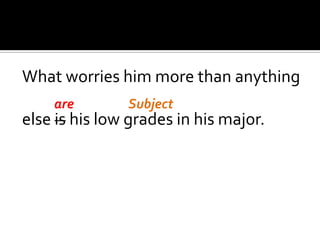
 Noun clauses that begin with what
are the exception. If the subject of
the sentence is plural, the verb is a
linking verb, use a plural verb with a
what clause.
What worries him more than anything
else is his low grades in his major.
Subjectare
-THE END-

10. subject verb agreement

  • 2.
     Subject-VerbAgreement refersto the relationship between the verb and its subject.  Every clause or sentence must agree in number and person with its subject.  Verb must be singular if its subject is singular; verb must be plural if its subject is plural.
  • 3.
     Examples:  SingularSubject and SingularVerb ▪ Overcrowding causes many of the discipline problems in our school.  Plural Subject and PluralVerb ▪ Fires destroy millions of dollars worth of property each year.
  • 4.
    These one createsproblem: The pronoun everyone and someone, seem plural but they are singular – so they need singular verb.
  • 5.
     Examples:  Everyonewho joined the cheer dance is a winner.  Someone has to answer the phone.
  • 6.
     To choosethe correct verb form, identify the subject of the sentence. Example: The first three weeks of basic training is the worst.
  • 7.
    The first threeweeks of basic training is the worst. [The plural subject weeks takes a plural verb.] Subject are
  • 8.
     Another groupof words that can cause confusion is the subordinate clause. The use of mood altering drugs, although they sometimes provide great medical benefits, are generally criticized by the public. [The singular subject use takes a singular verb.] Subject is
  • 9.
     A problemcan also arise from the use of along with, as well as, in addition to, and together with. The cost of medication as well as doctors’ fees are a problem for retired Canadians wintering in Florida. [The singular subject cost takes a singular verb.] Subject is
  • 10.
     Block allprepositional phrases, subordinate clauses, and miscellaneous expressions, you will get the subject and the verb by process of elimination. Unless it rains, I plan on leaving as late as possible, along with all the other vacationers.
  • 11.
     Look forinverted word order, in which the subject follows the verb. From his research has come three promising cancer drugs. Subject have
  • 12.
     Use aplural verb with the most compound subjects joined by and. Their television and their camera was stolen. Subject wereSubject
  • 13.
     However, whensingular subjects are joined by and are preceded by each, every, no, nothing or many a(n), use a singular verb. Every chair and every couch are on sale this weekend. S isS
  • 14.
    No bicycling andno hitchhiking are permitted on Highway 20. isSS
  • 15.
     If thetwo parts of a compound subject, whether singular or plural, express a single idea or refer to a single person, use singular verb. Ham and eggs are my favorite breakfast. S is
  • 16.
     If subjectsjoined by either/or or neither/nor differ in number and person, make the verb agree with the subject close to it. Neither the instructor nor the students is satisfied with the room. are
  • 17.
     When acollective noun used as a subject regards a group as a unit, use singular verb. When it refers to the individual members of a group, use plural verb.
  • 18.
    The committee givesits report today. The committee give their reports today. The committee as a whole Each member of the committee
  • 19.
     When arelative pronoun (who, which, or that), is the subject, make the verb agree with the pronoun’s antecedent.
  • 20.
    A politician whovotes pro-labor gets elected. Politicians who vote pro-labor get elected.
  • 21.
    She is oneof the politicians who always vote pro-labor. She is the only one of the politicians who always votes pro-labor.
  • 22.
     When anindefinite pronoun is the subject, choose a singular or plural verb, depending on the number of the indefinite pronoun.
  • 23.
     Use asingular verb with a singular indefinite pronoun. (another, anybody, anyone, anything, each, either, everybody, everyone, everything, neither, no one, nothing, one, somebody, someone, something).
  • 24.
    Somebody has todecide whether to paint the kitchen this year. [One person (one body) will make the decision.]
  • 25.
     Use aplural verb with a plural indefinite pronoun (both, few, many, several). I spent the afternoon shopping for a camera, but few were reasonably priced.
  • 26.
     With indefinitepronouns that can be singular or plural, (all, any, none, some), use a singular or plural verb, depending on the word the indefinite pronoun refers to.
  • 27.
    All of thewheat is harvested. All of the fields are ploughed. [Wheat is singular, fields is plural.]
  • 28.
     When thesentence begins with here or there, make the verb agree in number with the subject. There is stone, brick and tile fireplaces in Blenheim Castle. are
  • 29.
     Make linkingverbs agree in number with their subjects not their complements.  A subject complement renames or describes the subject and is, therefore sometimes confused with it. His main interest are stamps. S complementis
  • 30.
     When thesubject noun is in the form of a plural but is singular in meaning, use a singular verb. Measles were a serious childhood disease until a vaccine was developed. was
  • 31.
     When aword used as a word is the subject, use singular verb.  The number (singular or plural) of the word used as a word is unimportant; the sentence is about a single thing so use a singular verb. Flurries are one of the terms used to describe a light fall of snow. is
  • 32.
     When thesubject of a sentence is a noun clause, use a singular verb. That he actually bought a new jeep surprises me. Noun clause
  • 33.
     Noun clausesthat begin with what are the exception. If the subject of the sentence is plural, the verb is a linking verb, use a plural verb with a what clause.
  • 34.
    What worries himmore than anything else is his low grades in his major. Subjectare
  • 35.