

How to Write a Good Postgraduate
Research Proposal
Prof. Afaf El-Ansary
1
A research degree (e.g. Masters and PhD,) can be one
of the best experiences of your life.
What you gain along the way will serve you for the
rest of life, if only to make you a more confident and
knowledgeable person.
In addition to making friends, meeting researchers
and being part of the research community.
 It will help you to develop research skills as well as
invaluable transferable skills which you can apply to
academic life, your current job or a variety of
professions.
2
3
What is a thesis proposal?
oAn academic document, in which you as a the graduate
student exposes your plans for the research project or
thesis.
oA contract between the student, the supervisor, and the
other Committee member(s), stating that the student’s
plans would normally lead, upon completion, to the
approval of a thesis or research project (based on
relevance, originality, feasability).
oA plan that might be adjusted and modified throughout
the process of the thesis completion
4
Who is responsible for the thesis or research
project proposal?
oThe thesis proposal is:
oWritten by the graduate student only.
oOriented and corrected by the
supervisor.
oOriented and approved by the thesis
committee
Your proposal describes your proposed plan of
work:
 What you intend to study (scope and research
questions).
 How you intend to study your topic
(methodology).
 Why this topic needs to be studied (significance).
 When you will complete this work (timeline).
 (Occasionally) Where you will conduct this work.
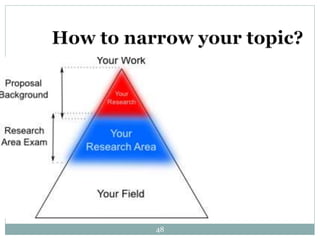
Writing Thesis Proposals
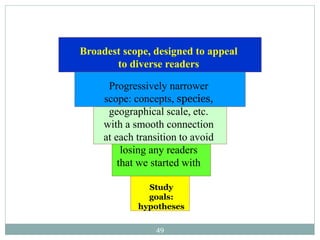
Purpose:
 Justify and plan (or contract for) a research project.
 Show how your project contributes to existing research.
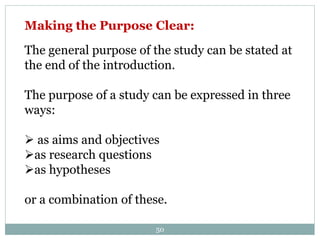
 Demonstrate that you understand how to conduct
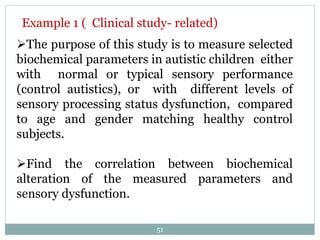
discipline-specific research in an acceptable time-frame.
Audience:
 Your academic advisor and committee
 Understand that the proposal will be negotiated--be
prepared to revise!
 Think of the proposal as an introduction to your thesis or
dissertation.
 Remember that your proposal is not meant to limit ideas,
but to help you think practically.
 Talk to your advisor!
Statement of the Problem
 Answer the question: “What is the gap that needs
to be filled?” and/or “What is the problem that
needs to be solved?”
 State the problem clearly early in a paragraph.
 Limit the variables you address in stating your
problem or question.
 Consider framing the problem as a question.
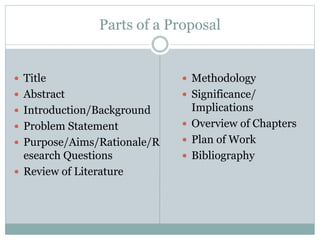
Parts of a Proposal
 Title
 Abstract
 Introduction/Background
 Problem Statement
 Purpose/Aims/Rationale/R
esearch Questions
 Review of Literature
 Methodology
 Significance/
Implications
 Overview of Chapters
 Plan of Work
 Bibliography
10
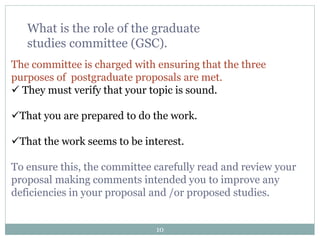
What is the role of the graduate
studies committee (GSC).
The committee is charged with ensuring that the three
purposes of postgraduate proposals are met.
 They must verify that your topic is sound.
That you are prepared to do the work.
That the work seems to be interest.
To ensure this, the committee carefully read and review your
proposal making comments intended you to improve any
deficiencies in your proposal and /or proposed studies.
11
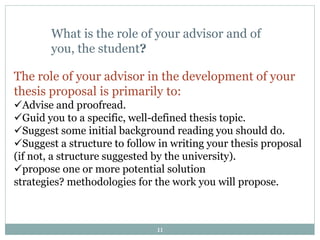
What is the role of your advisor and of
you, the student?
The role of your advisor in the development of your
thesis proposal is primarily to:
Advise and proofread.
Guid you to a specific, well-defined thesis topic.
Suggest some initial background reading you should do.
Suggest a structure to follow in writing your thesis proposal
(if not, a structure suggested by the university).
propose one or more potential solution
strategies? methodologies for the work you will propose.
12
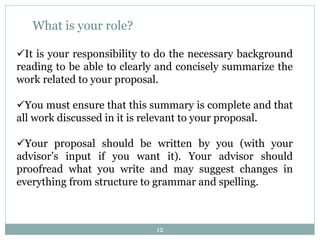
What is your role?
It is your responsibility to do the necessary background
reading to be able to clearly and concisely summarize the
work related to your proposal.
You must ensure that this summary is complete and that
all work discussed in it is relevant to your proposal.
Your proposal should be written by you (with your
advisor’s input if you want it). Your advisor should
proofread what you write and may suggest changes in
everything from structure to grammar and spelling.
13
It is your responsibility to make these
changes.
Your goal is to take your advisor’s advice
and incorporate it to ensure that your
proposal document is as close to perfect as
possible.
14
Before it has been carefully reviewed by your
advisor. Remember that review by your advisor is
always faster than review by the GSC.
Multiple reviews of your proposal by your
advisor prior to submission is the norm.
15
Do a good job and take pride in your proposal
document. Remember that the quality of your
proposal reflects on both you and your advisor
and that the committee will not hesitate to
reject a poorly prepared or incomplete proposal
and certainly will not accept a proposal until
they feel that it is complete, clear and free of
presentation problems.
16
The length of a proposal often varies somewhat
depending on the area of the proposed work and the
topic itself. In general, a proposal is normally between 10
and 20 pages, single column, 1.5 spacing using 12pt font
including figures and references. This is a guideline and
the actual length of your proposal is best discussed with
your advisor.
 Be aware, however, that excessively lengthy documents
may be sent back unread to be revised to provide better
focus. An upper bound of close to 20 pages is a good limit
in practice. Also, please do not use a font size of under
12pt since your proposal should be easy for the committee
members to read!
Guidelines on writing a research proposal
The proposal is, in effect, an intellectual
scholastic (not legal) contract between you and
your committee.
It specifies what you will do, how you will do it,
and how you will interpret the results.
The objective in writing a proposal is to
describe what you will do, why it should be done,
how you will do it and what you expect will result.
17
18
Being clear about these things from
the beginning will help you complete
your thesis in a timely fashion. A
weak proposal can lead to a long,
painful, and often unsuccessful thesis
writing exercise.
Guidelines on writing a research proposal
Methodology
Approach
Data needs
Analytic techniques
 Plan for interpreting results
Expected results
Budget
Bibliography (or References)
19
20
The proposal should have the standard sections of a research paper, each of which
addresses basic questions:
1. Introduction
What is the project about?
Why is this an important research question?
How will you analyze this issue?
2. Literature Review
What do we already know about this issue? (What have others said and provided
evidence for?)
3. Methodology
How will you examine this issue?
21
4. The project time table
What are the main findings of the project?
In what ways do these modify/add to the existing literature?
5. Conclusions
What are the theoretical or policy implications of these
findings? What are the fruitful research directions on this topic.
6. References
Which sources did you consult?
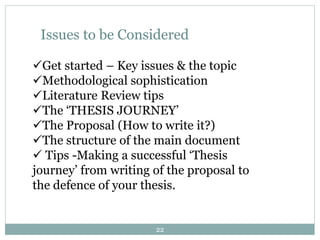
Issues to be Considered
Get started – Key issues & the topic
Methodological sophistication
Literature Review tips
The ‘THESIS JOURNEY’
The Proposal (How to write it?)
The structure of the main document
 Tips -Making a successful ‘Thesis
journey’ from writing of the proposal to
the defence of your thesis.
22
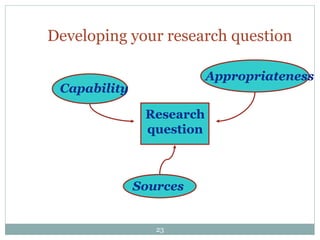
Developing your research question
Research
question
Capability
Appropriateness
Sources
23
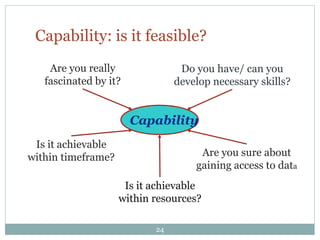
Capability: is it feasible?
Capability
Are you really
fascinated by it?
Do you have/ can you
develop necessary skills?
Is it achievable
within timeframe?
Is it achievable
within resources?
Are you sure about
gaining access to data
24
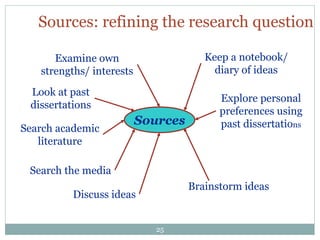
Sources: refining the research question
Sources
Examine own
strengths/ interests
Look at past
dissertations
Search academic
literature
Search the media
Discuss ideas
Keep a notebook/
diary of ideas
Explore personal
preferences using
past dissertations
Brainstorm ideas
25
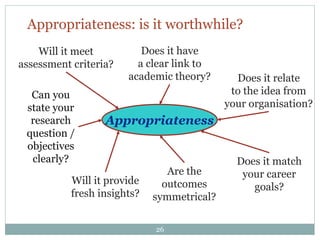
Appropriateness: is it worthwhile?
Appropriateness
Will it meet
assessment criteria?
Does it have
a clear link to
academic theory?
Can you
state your
research
question /
objectives
clearly?
Will it provide
fresh insights?
Does it relate
to the idea from
your organisation?
Are the
outcomes
symmetrical?
Does it match
your career
goals?
26
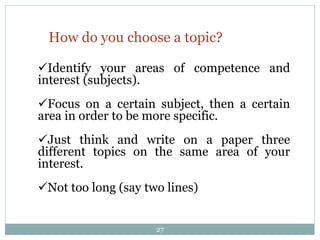
How do you choose a topic?
Identify your areas of competence and
interest (subjects).
Focus on a certain subject, then a certain
area in order to be more specific.
Just think and write on a paper three
different topics on the same area of your
interest.
Not too long (say two lines)
27
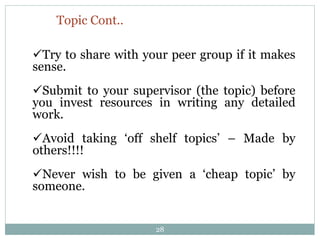
Topic Cont..
Try to share with your peer group if it makes
sense.
Submit to your supervisor (the topic) before
you invest resources in writing any detailed
work.
Avoid taking ‘off shelf topics’ – Made by
others!!!!
Never wish to be given a ‘cheap topic’ by
someone.
28
29
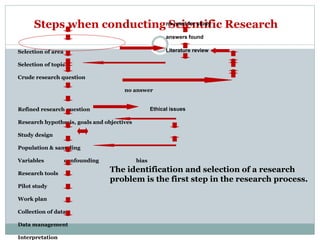
Steps when conducting Scientific Research
Selection of area
Selection of topic
Crude research question
no answer
Refined research question
Research hypothesis, goals and objectives
Study design
Population & sampling
Variables confounding bias
Research tools
Pilot study
Work plan
Collection of data
Data management
Interpretation
no need for study
answers found
Literature review
Ethical issues
The identification and selection of a research
problem is the first step in the research process.
 Based on:
 researcher’s:
Specialty and subspeciality [e.g:
Biochemistry, Enzymology; Botany,
Zoology; Mathematics; Pharmacology;
Nutrition; Pediatrics etc]
Interest
Scientific background
Experience
 Availability of experienced supervisors in the area
 Need for research in this area
 Available resources [interest of funding body]
Selection of Research topic
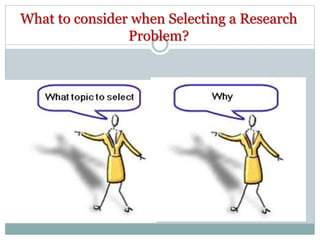
What to consider when Selecting a Research
Problem?
Selecting your project
Study the list of projects listed on the site of the
department:
Make a short-list of projects that interest you.
For each short-listed project, arrange to meet the
supervisor. Use the meeting to:
o ensure that you understand what the project
entails.
o decide whether you have the knowledge and skills
needed to do the project?
o get to know the supervisor.
33
Selecting your project
Ensure that the project is within your
capabilities:
oDo you have some knowledge of the
problem domain?
oDo you have the necessary technical skills?
If not, are you confident that you will acquire
the necessary knowledge and skills before
the project starts?
MSc-IT students should be especially careful
about projects that demand advanced technical
skills.
34
Writing your proposal
Whether you’re limited to 1-2 page pre-proposal or
asked to write a full proposal, the rules about
producing a good research proposal are the same. If
you want to have the best chance of being selected,
your proposal has to be perfect and successfully
written.
This workshop provides tips on how to write a
good research application
35
What to put in your proposal?
Application processes are different for each
University so make sure to follow the guidelines.
Guidelines are provided at the start of the online
application for admissions.
However, if you are not given any guidelines on
how to divide your research proposal, you could
adopt the structure showing later.
36
Writing the proposal:
When drafting the proposal, bear in mind
that individuals reviewing your application will
often have to read a large number of proposals.
So, well-presented and clearly written
proposals are more likely to stick in the
reviewer’s mind. Avoid long and convoluted
titles. You will get an opportunity to give more
detail in your introduction.
37
Plagiarism
Make sure that you acknowledge the authors of
ALL publications you use to write your proposal.
Failure to do so will be considered as plagiarism.
Do not copy word for word what an author has
said. You may think that the original author has
presented the information with the best possible
words in the best format. However, it is best to
analyse it and re-write it in your own words.
If you absolutely have to quote an author ad
verbatim, then make sure that you use quotation
marks and italics to indicate it.
38
What is a research proposal?
Various terminologies are used to mean a research
proposal depending on why the research is carried
out?
Research outline
Synopsis of research
Plan of research
Research/project proposal
Thesis plan
Etc
39
How to write research proposal?
Regardless of your research area and
the methodology you choose, all
research proposals must address the
following questions:
What you plan to accomplish
why you want to do it and
how you are going to do it.
40
Research proposals have a limit on pages so you
won’t be able to analyse the whole existing body of
literature.
Choose key research papers and explain clearly how
your research will either:
o Fill a gap,
o Complete or follow on from previous research.
o Applying a known methodology to a different
field.
Journal articles, books, PhD theses, government and
learned society reports are better than non-peer-
reviewed information you may find on the internet.
41
How to write different components research
proposal?
 The proposal should have sufficient
information to convince your readers that
you have an important research idea, that
you have a good grasp of the relevant
literature and the major issues, and that
your methodology is sound.
42
Sufficient does not mean too
much! ! ! !
43
Title
It should be concise and descriptive. Think of an
informative but catchy title. An effective title not
only pricks the reader's interest, but also
predisposes him/her favorably towards the
proposal.
Abstract
It is a brief summary of approximately 300
words. It should include the research question,
the rationale for the study, the hypothesis (if
any), the method and the main expected findings.
How to write research proposal?
Introduction:
A well-written introduction is the most efficient
way to hook your reader and set the context of your
proposed research.
Get your reader’s attention early on and do no
waste space with obvious and general statements.
44
45 0
The introduction is your opportunity to
demonstrate that your research has not been
done before and that the proposed project will
really add something new to the existing body of
literature.
Your proposal does not have to be worthy of a
Nobel prize but it has to be based on sound
hypotheses and reasoning.
Suggested format for an introduction:
• Introduce the area of research
• Review key publications
• Identify any gap in the knowledge or questions
which have to be answered
• Your hypotheses
• Your aims and objectives, including a brief
description of the methodology
• How is your research beneficial and to whom
46
 Broad information on topic
 Previous research
 Narrower background information
 Need for study
 Focus of paper
 Hypothesis
 Summary of problem (selling point)
47
48
Study
goals:
hypotheses
Broadest scope, designed to appeal
to diverse readers
Progressively narrower
scope: concepts, species,
geographical scale, etc.
with a smooth connection
at each transition to avoid
losing any readers
that we started with
49
Making the Purpose Clear:
The general purpose of the study can be stated at
the end of the introduction.
The purpose of a study can be expressed in three
ways:
 as aims and objectives
as research questions
as hypotheses
or a combination of these.
50
The purpose of this study is to measure selected
biochemical parameters in autistic children either
with normal or typical sensory performance
(control autistics), or with different levels of
sensory processing status dysfunction, compared
to age and gender matching healthy control
subjects.
Find the correlation between biochemical
alteration of the measured parameters and
sensory dysfunction.
Example 1 ( Clinical study- related)
51
Example 2
This research proposes to evaluate the……………………………
Example 3
My research has two aims: firstly to describe the
…………………………. ……………… and secondly to
test……………………………………
Example 4
The objectives of this research are as follows:
1………………………………………………………………………..
2…………………………………………………………………………….
52
How to write research proposal?
Literature Review
most professors prefer a separate section, which
allows a more thorough review of the literature
The literature review serves several important
functions:
Ensures that you are not "reinventing the wheel“
Gives credits to those who have laid the groundwork
for your research
Demonstrates your knowledge of the research
problem
Demonstrates your understanding of the theoretical
and research issues related to your research question
53
54
Shows your ability to critically evaluate relevant
literature information
Indicates your ability to integrate and synthesize the
existing literature
Provides new theoretical insights or develops a new
model as the conceptual framework for your research
Convinces your reader that your proposed research
will make a significant and substantial contribution to
the literature (i.e., resolving an important theoretical
issue or filling a major gap in the literature).
Literature Review
How to write research proposal?
Methods:
The Method section is very important because it
tells your Research Committee how you plan to
tackle your research problem. It will provide your
work plan and describe the activities necessary for
the completion of your project.
The guiding principle for writing the Method
section is that it should contain sufficient
information for the reader to determine whether
methodology is sound
55
56
Furthermore, since there are no well-established
and widely accepted canons in qualitative analysis,
your method section needs to be more elaborate
than what is required for traditional quantitative
research
More importantly, the data collection process in
qualitative research has a far greater impact on the
results as compared to quantitative research.
Methods:
Subjects or participants - Who will take part in
your study ? What kind of sampling procedure do
you use?
Instruments - What kind of measuring
instruments or questionnaires do you use? Why do
you choose them? Are they valid and reliable?
Procedure - How do you plan to carry out your
study? What activities are involved? How long does
it take?
57
How to write research proposal?
Results:
Obviously you do not have results at the
proposal stage. However, you need to have
some idea about what kind of data you
will be collecting, and what statistical
procedures will be used in order to answer
your research question or test you
hypothesis.
58
Discussion
It is important to convince your reader of the
potential impact of your proposed research.
That is why you also need to mention the
limitations and weaknesses of the proposed
research, which may be justified by time and
financial constraints as well as by the early
developmental stage of your research area.
59
60
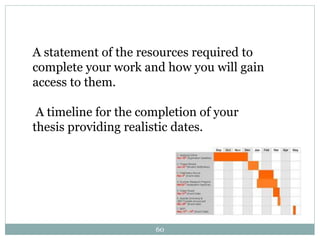
A statement of the resources required to
complete your work and how you will gain
access to them.
A timeline for the completion of your
thesis providing realistic dates.
How to write research proposal?
Common mistakes in proposal writing :
Failure to provide the proper context to frame the
research question
Failure to cite landmark studies
Failure to accurately present the theoretical and
empirical contributions by other researchers
Failure to stay focused on the research question
Too much detail on minor issues, but not enough
detail on major issues
Too much rambling going "all over the map" without
a clear sense of direction.
Too many citation lapses and incorrect references
Too long or too short.
61
DOs and DO NOTs
DO
Produce/prepare a professional looking proposal
Make it interesting
Make it informative, meaningful
Write easy way to read
Present content in a page
Use clear headings/sub-headings
Be concise, precise
Check spelling, grammar
Present in accurate/acceptable format
62
63
DO NOTs
Use no ward which you do not
understand
Use of difficult ward unimpressive to the
readers/supervisor/authoruty
Other resources
-The Postgraduate Companion (2008). Chapters
4-7; Hall G. and Longman J. Eds, Sage
Publications London, UK.
- The PhD Application Handbook (2006). Bentley
PJ. Eds, Open University Press, Maidenhead, UK.
-Vitae (formerly UKGRAD):
http://www.vitae.ac.uk/
-”What do PhDs do”: Link to WDPD; Link to
“What motivates PhD students”; Link to “Getting
the most out of your PhD”
64
How to defend your
proposal like a professional
65
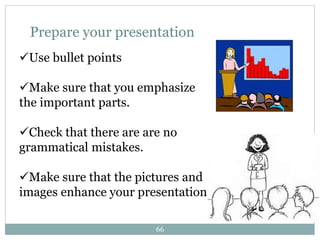
Prepare your presentation
Use bullet points
Make sure that you emphasize
the important parts.
Check that there are are no
grammatical mistakes.
Make sure that the pictures and
images enhance your presentation
66
Be on time
Be sure you are ready to start
on time
Do not let your panel wait for
you
67
Remember to pray
Prepare well but don’t forget
that there are many things that
are beyond your control
68
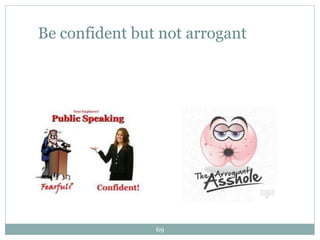
Be confident but not arrogant
69
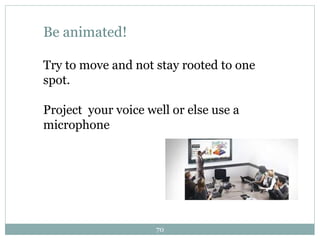
Be animated!
Try to move and not stay rooted to one
spot.
Project your voice well or else use a
microphone
70
Defense does not mean to be defensive.
To defend your proposal means to justify the
decisions you have made in choosing the variables
and methods of your study.
No one can make a perfect study; there is
always something to improve by the committee
Don’t be defensive
71
Don’t go beyond 30 minutes in your
presentation.
Remember, your committee has already
read your proposal.
The most critical point to present and the
essential parts are your conceptual
framework and method of your study.
72
Show your appreciation for the help of the
committee by thanking them after the defense
and giving them a simple snack.
73
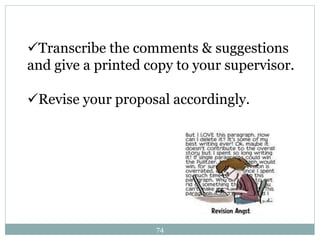
Transcribe the comments & suggestions
and give a printed copy to your supervisor.
Revise your proposal accordingly.
74
Submit final copy of the revised and
approved thesis proposal to your
supervisor.
Once the final version of your revised
proposal has been approved start your
work plan.
75

برنامج مهارات البحث العلمي (10)- محاضره 1

  • 1.
    How to Writea Good Postgraduate Research Proposal Prof. Afaf El-Ansary 1
  • 2.
    A research degree(e.g. Masters and PhD,) can be one of the best experiences of your life. What you gain along the way will serve you for the rest of life, if only to make you a more confident and knowledgeable person. In addition to making friends, meeting researchers and being part of the research community.  It will help you to develop research skills as well as invaluable transferable skills which you can apply to academic life, your current job or a variety of professions. 2
  • 3.
    3 What is athesis proposal? oAn academic document, in which you as a the graduate student exposes your plans for the research project or thesis. oA contract between the student, the supervisor, and the other Committee member(s), stating that the student’s plans would normally lead, upon completion, to the approval of a thesis or research project (based on relevance, originality, feasability). oA plan that might be adjusted and modified throughout the process of the thesis completion
  • 4.
    4 Who is responsiblefor the thesis or research project proposal? oThe thesis proposal is: oWritten by the graduate student only. oOriented and corrected by the supervisor. oOriented and approved by the thesis committee
  • 5.
    Your proposal describesyour proposed plan of work:  What you intend to study (scope and research questions).  How you intend to study your topic (methodology).  Why this topic needs to be studied (significance).  When you will complete this work (timeline).  (Occasionally) Where you will conduct this work.
  • 6.
    Writing Thesis Proposals Purpose: Justify and plan (or contract for) a research project.  Show how your project contributes to existing research.  Demonstrate that you understand how to conduct discipline-specific research in an acceptable time-frame. Audience:  Your academic advisor and committee
  • 7.
     Understand thatthe proposal will be negotiated--be prepared to revise!  Think of the proposal as an introduction to your thesis or dissertation.  Remember that your proposal is not meant to limit ideas, but to help you think practically.  Talk to your advisor!
  • 8.
    Statement of theProblem  Answer the question: “What is the gap that needs to be filled?” and/or “What is the problem that needs to be solved?”  State the problem clearly early in a paragraph.  Limit the variables you address in stating your problem or question.  Consider framing the problem as a question.
  • 9.
    Parts of aProposal  Title  Abstract  Introduction/Background  Problem Statement  Purpose/Aims/Rationale/R esearch Questions  Review of Literature  Methodology  Significance/ Implications  Overview of Chapters  Plan of Work  Bibliography
  • 10.
    10 What is therole of the graduate studies committee (GSC). The committee is charged with ensuring that the three purposes of postgraduate proposals are met.  They must verify that your topic is sound. That you are prepared to do the work. That the work seems to be interest. To ensure this, the committee carefully read and review your proposal making comments intended you to improve any deficiencies in your proposal and /or proposed studies.
  • 11.
    11 What is therole of your advisor and of you, the student? The role of your advisor in the development of your thesis proposal is primarily to: Advise and proofread. Guid you to a specific, well-defined thesis topic. Suggest some initial background reading you should do. Suggest a structure to follow in writing your thesis proposal (if not, a structure suggested by the university). propose one or more potential solution strategies? methodologies for the work you will propose.
  • 12.
    12 What is yourrole? It is your responsibility to do the necessary background reading to be able to clearly and concisely summarize the work related to your proposal. You must ensure that this summary is complete and that all work discussed in it is relevant to your proposal. Your proposal should be written by you (with your advisor’s input if you want it). Your advisor should proofread what you write and may suggest changes in everything from structure to grammar and spelling.
  • 13.
    13 It is yourresponsibility to make these changes. Your goal is to take your advisor’s advice and incorporate it to ensure that your proposal document is as close to perfect as possible.
  • 14.
    14 Before it hasbeen carefully reviewed by your advisor. Remember that review by your advisor is always faster than review by the GSC. Multiple reviews of your proposal by your advisor prior to submission is the norm.
  • 15.
    15 Do a goodjob and take pride in your proposal document. Remember that the quality of your proposal reflects on both you and your advisor and that the committee will not hesitate to reject a poorly prepared or incomplete proposal and certainly will not accept a proposal until they feel that it is complete, clear and free of presentation problems.
  • 16.
    16 The length ofa proposal often varies somewhat depending on the area of the proposed work and the topic itself. In general, a proposal is normally between 10 and 20 pages, single column, 1.5 spacing using 12pt font including figures and references. This is a guideline and the actual length of your proposal is best discussed with your advisor.  Be aware, however, that excessively lengthy documents may be sent back unread to be revised to provide better focus. An upper bound of close to 20 pages is a good limit in practice. Also, please do not use a font size of under 12pt since your proposal should be easy for the committee members to read!
  • 17.
    Guidelines on writinga research proposal The proposal is, in effect, an intellectual scholastic (not legal) contract between you and your committee. It specifies what you will do, how you will do it, and how you will interpret the results. The objective in writing a proposal is to describe what you will do, why it should be done, how you will do it and what you expect will result. 17
  • 18.
    18 Being clear aboutthese things from the beginning will help you complete your thesis in a timely fashion. A weak proposal can lead to a long, painful, and often unsuccessful thesis writing exercise.
  • 19.
    Guidelines on writinga research proposal Methodology Approach Data needs Analytic techniques  Plan for interpreting results Expected results Budget Bibliography (or References) 19
  • 20.
    20 The proposal shouldhave the standard sections of a research paper, each of which addresses basic questions: 1. Introduction What is the project about? Why is this an important research question? How will you analyze this issue? 2. Literature Review What do we already know about this issue? (What have others said and provided evidence for?) 3. Methodology How will you examine this issue?
  • 21.
    21 4. The projecttime table What are the main findings of the project? In what ways do these modify/add to the existing literature? 5. Conclusions What are the theoretical or policy implications of these findings? What are the fruitful research directions on this topic. 6. References Which sources did you consult?
  • 22.
    Issues to beConsidered Get started – Key issues & the topic Methodological sophistication Literature Review tips The ‘THESIS JOURNEY’ The Proposal (How to write it?) The structure of the main document  Tips -Making a successful ‘Thesis journey’ from writing of the proposal to the defence of your thesis. 22
  • 23.
    Developing your researchquestion Research question Capability Appropriateness Sources 23
  • 24.
    Capability: is itfeasible? Capability Are you really fascinated by it? Do you have/ can you develop necessary skills? Is it achievable within timeframe? Is it achievable within resources? Are you sure about gaining access to data 24
  • 25.
    Sources: refining theresearch question Sources Examine own strengths/ interests Look at past dissertations Search academic literature Search the media Discuss ideas Keep a notebook/ diary of ideas Explore personal preferences using past dissertations Brainstorm ideas 25
  • 26.
    Appropriateness: is itworthwhile? Appropriateness Will it meet assessment criteria? Does it have a clear link to academic theory? Can you state your research question / objectives clearly? Will it provide fresh insights? Does it relate to the idea from your organisation? Are the outcomes symmetrical? Does it match your career goals? 26
  • 27.
    How do youchoose a topic? Identify your areas of competence and interest (subjects). Focus on a certain subject, then a certain area in order to be more specific. Just think and write on a paper three different topics on the same area of your interest. Not too long (say two lines) 27
  • 28.
    Topic Cont.. Try toshare with your peer group if it makes sense. Submit to your supervisor (the topic) before you invest resources in writing any detailed work. Avoid taking ‘off shelf topics’ – Made by others!!!! Never wish to be given a ‘cheap topic’ by someone. 28
  • 29.
  • 30.
    Steps when conductingScientific Research Selection of area Selection of topic Crude research question no answer Refined research question Research hypothesis, goals and objectives Study design Population & sampling Variables confounding bias Research tools Pilot study Work plan Collection of data Data management Interpretation no need for study answers found Literature review Ethical issues The identification and selection of a research problem is the first step in the research process.
  • 31.
     Based on: researcher’s: Specialty and subspeciality [e.g: Biochemistry, Enzymology; Botany, Zoology; Mathematics; Pharmacology; Nutrition; Pediatrics etc] Interest Scientific background Experience  Availability of experienced supervisors in the area  Need for research in this area  Available resources [interest of funding body] Selection of Research topic
  • 32.
    What to considerwhen Selecting a Research Problem?
  • 33.
    Selecting your project Studythe list of projects listed on the site of the department: Make a short-list of projects that interest you. For each short-listed project, arrange to meet the supervisor. Use the meeting to: o ensure that you understand what the project entails. o decide whether you have the knowledge and skills needed to do the project? o get to know the supervisor. 33
  • 34.
    Selecting your project Ensurethat the project is within your capabilities: oDo you have some knowledge of the problem domain? oDo you have the necessary technical skills? If not, are you confident that you will acquire the necessary knowledge and skills before the project starts? MSc-IT students should be especially careful about projects that demand advanced technical skills. 34
  • 35.
    Writing your proposal Whetheryou’re limited to 1-2 page pre-proposal or asked to write a full proposal, the rules about producing a good research proposal are the same. If you want to have the best chance of being selected, your proposal has to be perfect and successfully written. This workshop provides tips on how to write a good research application 35
  • 36.
    What to putin your proposal? Application processes are different for each University so make sure to follow the guidelines. Guidelines are provided at the start of the online application for admissions. However, if you are not given any guidelines on how to divide your research proposal, you could adopt the structure showing later. 36
  • 37.
    Writing the proposal: Whendrafting the proposal, bear in mind that individuals reviewing your application will often have to read a large number of proposals. So, well-presented and clearly written proposals are more likely to stick in the reviewer’s mind. Avoid long and convoluted titles. You will get an opportunity to give more detail in your introduction. 37
  • 38.
    Plagiarism Make sure thatyou acknowledge the authors of ALL publications you use to write your proposal. Failure to do so will be considered as plagiarism. Do not copy word for word what an author has said. You may think that the original author has presented the information with the best possible words in the best format. However, it is best to analyse it and re-write it in your own words. If you absolutely have to quote an author ad verbatim, then make sure that you use quotation marks and italics to indicate it. 38
  • 39.
    What is aresearch proposal? Various terminologies are used to mean a research proposal depending on why the research is carried out? Research outline Synopsis of research Plan of research Research/project proposal Thesis plan Etc 39
  • 40.
    How to writeresearch proposal? Regardless of your research area and the methodology you choose, all research proposals must address the following questions: What you plan to accomplish why you want to do it and how you are going to do it. 40
  • 41.
    Research proposals havea limit on pages so you won’t be able to analyse the whole existing body of literature. Choose key research papers and explain clearly how your research will either: o Fill a gap, o Complete or follow on from previous research. o Applying a known methodology to a different field. Journal articles, books, PhD theses, government and learned society reports are better than non-peer- reviewed information you may find on the internet. 41
  • 42.
    How to writedifferent components research proposal?  The proposal should have sufficient information to convince your readers that you have an important research idea, that you have a good grasp of the relevant literature and the major issues, and that your methodology is sound. 42 Sufficient does not mean too much! ! ! !
  • 43.
    43 Title It should beconcise and descriptive. Think of an informative but catchy title. An effective title not only pricks the reader's interest, but also predisposes him/her favorably towards the proposal. Abstract It is a brief summary of approximately 300 words. It should include the research question, the rationale for the study, the hypothesis (if any), the method and the main expected findings.
  • 44.
    How to writeresearch proposal? Introduction: A well-written introduction is the most efficient way to hook your reader and set the context of your proposed research. Get your reader’s attention early on and do no waste space with obvious and general statements. 44
  • 45.
    45 0 The introductionis your opportunity to demonstrate that your research has not been done before and that the proposed project will really add something new to the existing body of literature. Your proposal does not have to be worthy of a Nobel prize but it has to be based on sound hypotheses and reasoning.
  • 46.
    Suggested format foran introduction: • Introduce the area of research • Review key publications • Identify any gap in the knowledge or questions which have to be answered • Your hypotheses • Your aims and objectives, including a brief description of the methodology • How is your research beneficial and to whom 46
  • 47.
     Broad informationon topic  Previous research  Narrower background information  Need for study  Focus of paper  Hypothesis  Summary of problem (selling point) 47
  • 48.
  • 49.
    Study goals: hypotheses Broadest scope, designedto appeal to diverse readers Progressively narrower scope: concepts, species, geographical scale, etc. with a smooth connection at each transition to avoid losing any readers that we started with 49
  • 50.
    Making the PurposeClear: The general purpose of the study can be stated at the end of the introduction. The purpose of a study can be expressed in three ways:  as aims and objectives as research questions as hypotheses or a combination of these. 50
  • 51.
    The purpose ofthis study is to measure selected biochemical parameters in autistic children either with normal or typical sensory performance (control autistics), or with different levels of sensory processing status dysfunction, compared to age and gender matching healthy control subjects. Find the correlation between biochemical alteration of the measured parameters and sensory dysfunction. Example 1 ( Clinical study- related) 51
  • 52.
    Example 2 This researchproposes to evaluate the…………………………… Example 3 My research has two aims: firstly to describe the …………………………. ……………… and secondly to test…………………………………… Example 4 The objectives of this research are as follows: 1……………………………………………………………………….. 2……………………………………………………………………………. 52
  • 53.
    How to writeresearch proposal? Literature Review most professors prefer a separate section, which allows a more thorough review of the literature The literature review serves several important functions: Ensures that you are not "reinventing the wheel“ Gives credits to those who have laid the groundwork for your research Demonstrates your knowledge of the research problem Demonstrates your understanding of the theoretical and research issues related to your research question 53
  • 54.
    54 Shows your abilityto critically evaluate relevant literature information Indicates your ability to integrate and synthesize the existing literature Provides new theoretical insights or develops a new model as the conceptual framework for your research Convinces your reader that your proposed research will make a significant and substantial contribution to the literature (i.e., resolving an important theoretical issue or filling a major gap in the literature). Literature Review
  • 55.
    How to writeresearch proposal? Methods: The Method section is very important because it tells your Research Committee how you plan to tackle your research problem. It will provide your work plan and describe the activities necessary for the completion of your project. The guiding principle for writing the Method section is that it should contain sufficient information for the reader to determine whether methodology is sound 55
  • 56.
    56 Furthermore, since thereare no well-established and widely accepted canons in qualitative analysis, your method section needs to be more elaborate than what is required for traditional quantitative research More importantly, the data collection process in qualitative research has a far greater impact on the results as compared to quantitative research. Methods:
  • 57.
    Subjects or participants- Who will take part in your study ? What kind of sampling procedure do you use? Instruments - What kind of measuring instruments or questionnaires do you use? Why do you choose them? Are they valid and reliable? Procedure - How do you plan to carry out your study? What activities are involved? How long does it take? 57
  • 58.
    How to writeresearch proposal? Results: Obviously you do not have results at the proposal stage. However, you need to have some idea about what kind of data you will be collecting, and what statistical procedures will be used in order to answer your research question or test you hypothesis. 58
  • 59.
    Discussion It is importantto convince your reader of the potential impact of your proposed research. That is why you also need to mention the limitations and weaknesses of the proposed research, which may be justified by time and financial constraints as well as by the early developmental stage of your research area. 59
  • 60.
    60 A statement ofthe resources required to complete your work and how you will gain access to them. A timeline for the completion of your thesis providing realistic dates.
  • 61.
    How to writeresearch proposal? Common mistakes in proposal writing : Failure to provide the proper context to frame the research question Failure to cite landmark studies Failure to accurately present the theoretical and empirical contributions by other researchers Failure to stay focused on the research question Too much detail on minor issues, but not enough detail on major issues Too much rambling going "all over the map" without a clear sense of direction. Too many citation lapses and incorrect references Too long or too short. 61
  • 62.
    DOs and DONOTs DO Produce/prepare a professional looking proposal Make it interesting Make it informative, meaningful Write easy way to read Present content in a page Use clear headings/sub-headings Be concise, precise Check spelling, grammar Present in accurate/acceptable format 62
  • 63.
    63 DO NOTs Use noward which you do not understand Use of difficult ward unimpressive to the readers/supervisor/authoruty
  • 64.
    Other resources -The PostgraduateCompanion (2008). Chapters 4-7; Hall G. and Longman J. Eds, Sage Publications London, UK. - The PhD Application Handbook (2006). Bentley PJ. Eds, Open University Press, Maidenhead, UK. -Vitae (formerly UKGRAD): http://www.vitae.ac.uk/ -”What do PhDs do”: Link to WDPD; Link to “What motivates PhD students”; Link to “Getting the most out of your PhD” 64
  • 65.
    How to defendyour proposal like a professional 65
  • 66.
    Prepare your presentation Usebullet points Make sure that you emphasize the important parts. Check that there are are no grammatical mistakes. Make sure that the pictures and images enhance your presentation 66
  • 67.
    Be on time Besure you are ready to start on time Do not let your panel wait for you 67
  • 68.
    Remember to pray Preparewell but don’t forget that there are many things that are beyond your control 68
  • 69.
    Be confident butnot arrogant 69
  • 70.
    Be animated! Try tomove and not stay rooted to one spot. Project your voice well or else use a microphone 70
  • 71.
    Defense does notmean to be defensive. To defend your proposal means to justify the decisions you have made in choosing the variables and methods of your study. No one can make a perfect study; there is always something to improve by the committee Don’t be defensive 71
  • 72.
    Don’t go beyond30 minutes in your presentation. Remember, your committee has already read your proposal. The most critical point to present and the essential parts are your conceptual framework and method of your study. 72
  • 73.
    Show your appreciationfor the help of the committee by thanking them after the defense and giving them a simple snack. 73
  • 74.
    Transcribe the comments& suggestions and give a printed copy to your supervisor. Revise your proposal accordingly. 74
  • 75.
    Submit final copyof the revised and approved thesis proposal to your supervisor. Once the final version of your revised proposal has been approved start your work plan. 75