

















Sociological Perspectives
Lecturer: Ayesha Yaqoob
Sociological Perspective
o PERSPECTIVE - A way to look at things.
o SOCIOLOGICAL -The study of human social behavior.
o As a whole; a sociological perspective is a broad assumption about society and social
behavior that provides a point of view for the study of specific problems.
o Example: A busy shopping street
Importance of Perspective
Why begin your study of Sociology with a discussion
of perspective?
Uses of Sociological Perspectives
o Enables you to develop the Sociological Imagination.
Example: Divorce; Imagine Sociologically
Level of Analysis in Sociology
o What is level of analysis?
o Major level of analysis;
 Macrosociology
 Microsociology
Major Approaches
1- The Structural Functional Approach
2- The Conflict Perspective
3- The Interactionist Perspective
Structural Functional Approach
Level of Analysis- Macrosociology
According to John. J. Maccionis;
“ a complex system whose parts work together to
promote solidarity and stability”
Examples;
 Working of different social institutions
Comparison between societies and living organisms
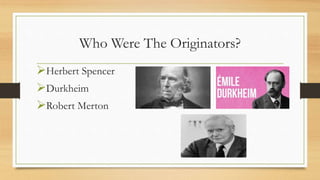
Who Were The Originators?
Herbert Spencer
Durkheim
Robert Merton
Assumptions of Structural Functionalism
The parts of a society as an integrated whole.
Societies tend to return to state of stability.
society exist to promote the society’s survival
and welfare.
Finally, according to functionalism, there is among
most members of a society a consensus on value
Contribution of Function
According to Robert Merton, society contribute through,
Manifest functions
Latent Functions
Does all elements make positive contribution?
Merton’s idea of Dysfunction
Criticism
There are legitimate criticisms of the functionalist
perspective: It tends to legitimatize the status quo, and it
neglects social change.
This approach study society in larger structures.
Social Conflict Perspective
Level of Analysis- Macrosociology
According to John. J. Maccionis;
“Society is an arena of inequality that generates conflict and change”.
Example:
 Marx idea of conflict
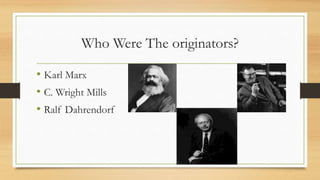
Who Were The originators?
• Karl Marx
• C. Wright Mills
• Ralf Dahrendorf
What are the Assumptions of Conflict
Perspective
This approach highlights inequality and change.
Conflict approach sees how social pattern benefit some people while hurting
other instead of the idea that social structure promotes the operation of
society.
Conflict approach look at the ongoing conflict between dominant and
disadvantaged categories of people.
This approach not just to understand society but to bring about social
change that would reduce inequality.
Criticism
Because this approach focuses on inequality, it largely ignores
how shared values and interdependence unify members of society.
Many critics claims that this approach pursue political goals not
scientific objectivity.
This approach paint society in broad strokes.
How are the Assumptions of Conflict Theory Often the
Reverse of the Functionalist Perspective?
Functionalism emphasizes a basic agreement on values within a society,
concentrating on the ways people cooperate to reach common goals. Conflict
theory, in contrast, focuses on the disagreements between various groups in a
society or between societies.
Which is the Better Perspective Functionalism
or Conflict?
Each perspective emphasizes certain aspects of social life.
Each perspective has captured an essential aspect of society’s
nature.
Both functionalism and conflict theory deal with large social units
and broad social processes.
Symbolic Interactionism
Level of Analysis- Microsociology
According to John. J. Maccionis;
“It’s the broad focus on social structures that shapes society as a whole”
Example
Students at cafe
Symbolic Interaction
This perspective focuses on the actual interaction
between people.
 Basic to the symbolic interactionist perspective is
the concept of a symbol.
What are the Assumptions of Symbolic
Interactionists
 Herbert Blumer, outlined three assumptions central to this perspective
First, according to symbolic interactionism, we learn the meaning of a
symbol from the way we see others reacting to it.
Second, once we learn the meanings of these symbols, we base our behavior
on them.
Finally we use the meanings of symbols to imagine how others will respond
to our behavior.
Who Were The Originators?
• Max Weber
• Charles Horton Cooley
• George Herbert Mead
• Erving Goffman
• Herbert Blumer
Criticism
• Being a micro sociological theoretical perspective, symbolic
interactionism sometimes fails to take the larger social picture into
account.
• Social interaction in everyday life is sometimes affected by
societal forces beyond the control of individuals.
Applying the Approaches…
The Sociology of Sports
The Functions of Sports
Recreation
Getting a physical shape
Building social relationships
Competition
Pursuit of success
Sometimes dysfunction- recruitment on athletic skills rather than academic
skills.
Sports and Conflict
The games people play reflect their social standing.
Throughout history, sports have been oriented mostly towards males.
In America, for decades, big league sports excluded people of color.
Finally sports are a big business that provide big profits for a small number
of people.
Sports as Interaction
Each player understand the game a little
differently.
The behavior of any single player may
change over time.

Sociological Perspectives.2pptx.pptx

  • 1.
  • 2.
    Sociological Perspective o PERSPECTIVE- A way to look at things. o SOCIOLOGICAL -The study of human social behavior. o As a whole; a sociological perspective is a broad assumption about society and social behavior that provides a point of view for the study of specific problems. o Example: A busy shopping street
  • 3.
    Importance of Perspective Whybegin your study of Sociology with a discussion of perspective?
  • 4.
    Uses of SociologicalPerspectives o Enables you to develop the Sociological Imagination. Example: Divorce; Imagine Sociologically
  • 5.
    Level of Analysisin Sociology o What is level of analysis? o Major level of analysis;  Macrosociology  Microsociology
  • 6.
    Major Approaches 1- TheStructural Functional Approach 2- The Conflict Perspective 3- The Interactionist Perspective
  • 7.
    Structural Functional Approach Levelof Analysis- Macrosociology According to John. J. Maccionis; “ a complex system whose parts work together to promote solidarity and stability” Examples;  Working of different social institutions Comparison between societies and living organisms
  • 9.
    Who Were TheOriginators? Herbert Spencer Durkheim Robert Merton
  • 10.
    Assumptions of StructuralFunctionalism The parts of a society as an integrated whole. Societies tend to return to state of stability. society exist to promote the society’s survival and welfare. Finally, according to functionalism, there is among most members of a society a consensus on value
  • 11.
    Contribution of Function Accordingto Robert Merton, society contribute through, Manifest functions Latent Functions Does all elements make positive contribution? Merton’s idea of Dysfunction
  • 12.
    Criticism There are legitimatecriticisms of the functionalist perspective: It tends to legitimatize the status quo, and it neglects social change. This approach study society in larger structures.
  • 13.
    Social Conflict Perspective Levelof Analysis- Macrosociology According to John. J. Maccionis; “Society is an arena of inequality that generates conflict and change”. Example:  Marx idea of conflict
  • 14.
    Who Were Theoriginators? • Karl Marx • C. Wright Mills • Ralf Dahrendorf
  • 15.
    What are theAssumptions of Conflict Perspective This approach highlights inequality and change. Conflict approach sees how social pattern benefit some people while hurting other instead of the idea that social structure promotes the operation of society. Conflict approach look at the ongoing conflict between dominant and disadvantaged categories of people. This approach not just to understand society but to bring about social change that would reduce inequality.
  • 16.
    Criticism Because this approachfocuses on inequality, it largely ignores how shared values and interdependence unify members of society. Many critics claims that this approach pursue political goals not scientific objectivity. This approach paint society in broad strokes.
  • 17.
    How are theAssumptions of Conflict Theory Often the Reverse of the Functionalist Perspective? Functionalism emphasizes a basic agreement on values within a society, concentrating on the ways people cooperate to reach common goals. Conflict theory, in contrast, focuses on the disagreements between various groups in a society or between societies.
  • 18.
    Which is theBetter Perspective Functionalism or Conflict? Each perspective emphasizes certain aspects of social life. Each perspective has captured an essential aspect of society’s nature. Both functionalism and conflict theory deal with large social units and broad social processes.
  • 19.
    Symbolic Interactionism Level ofAnalysis- Microsociology According to John. J. Maccionis; “It’s the broad focus on social structures that shapes society as a whole” Example Students at cafe
  • 20.
    Symbolic Interaction This perspectivefocuses on the actual interaction between people.  Basic to the symbolic interactionist perspective is the concept of a symbol.
  • 21.
    What are theAssumptions of Symbolic Interactionists  Herbert Blumer, outlined three assumptions central to this perspective First, according to symbolic interactionism, we learn the meaning of a symbol from the way we see others reacting to it. Second, once we learn the meanings of these symbols, we base our behavior on them. Finally we use the meanings of symbols to imagine how others will respond to our behavior.
  • 22.
    Who Were TheOriginators? • Max Weber • Charles Horton Cooley • George Herbert Mead • Erving Goffman • Herbert Blumer
  • 23.
    Criticism • Being amicro sociological theoretical perspective, symbolic interactionism sometimes fails to take the larger social picture into account. • Social interaction in everyday life is sometimes affected by societal forces beyond the control of individuals.
  • 24.
    Applying the Approaches… TheSociology of Sports
  • 25.
    The Functions ofSports Recreation Getting a physical shape Building social relationships Competition Pursuit of success Sometimes dysfunction- recruitment on athletic skills rather than academic skills.
  • 26.
    Sports and Conflict Thegames people play reflect their social standing. Throughout history, sports have been oriented mostly towards males. In America, for decades, big league sports excluded people of color. Finally sports are a big business that provide big profits for a small number of people.
  • 27.
    Sports as Interaction Eachplayer understand the game a little differently. The behavior of any single player may change over time.