ORTHOPTERA
Greek ortho= straight, pteron= wing,
World spp. more than 20,000
India spp. 900 sp
grasshopper
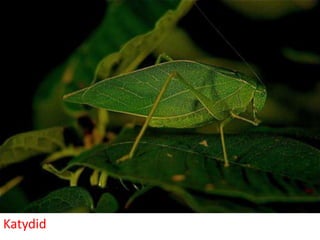
Katydid
Mole cricket
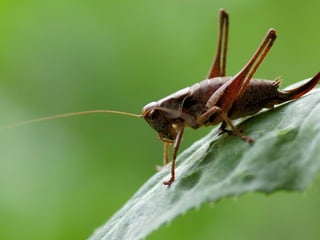
Tree Cricket
Locust
ORDER ORTHOPTERA
• Grasshoppers, Crickets, Mole crickets,
Tree crickets, Katydids, Locusts
Indentifying characters
Orthoptera are moderately small to very large insects,
ranging in body length from 2 to 200 mm.
Most species are moderately elongated and slightly
compressed laterally.
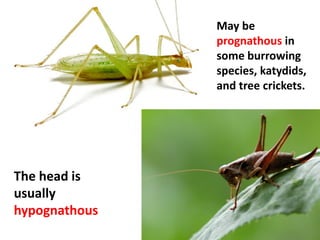
May be
prognathous in
some burrowing
species, katydids,
and tree crickets.
The head is
usually
hypognathous
The compound eyes are typically large
Three ocelli are usually present and arranged in a triangle
on the frontal region
Antennae consist of several segments [15 or more] Filiform,
comparatively short (suborder Caelifera) to very long (suborder
Ensifera).
Mouth part – chewing type
The pronotum is large and extends lateroventrally to
cover the pleural region.
The legs are unequally developed.
Legs are variously modified for digging , walking
or running or jumping in different species.
Tarsal segments vary from zero to four in three
legs.
The forelegs of
primarily digging forms
are short but much
enlarged (Fossorial).
Ex. Mole Cricket
In some predaceous species the fore-femora and/or
tibiae are equipped with rows of long spines.
https://www.youtube.com/watch?v=LQJiTBWc5pw
The hind femora of most species are greatly enlarged
to accommodate the muscles used in jumping
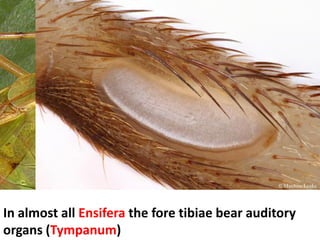
In almost all Ensifera the fore tibiae bear auditory
organs (Tympanum)
Winged [2 pairs], with reduced wings or
wingless.
Forewings elongate, many-veined and
somewhat thickened – called tegmina.
Hind wings membranous, broad and many –
veined and folded fanwise beneath the front
wings while at rest
In several groups, the wings may be modified to resemble leaves,
grass blades, or stems so as to camouflage the insect.
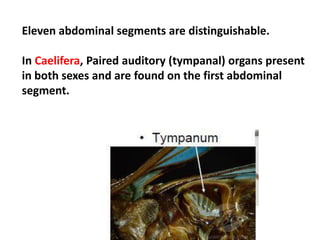
Eleven abdominal segments are distinguishable.
In Caelifera, Paired auditory (tympanal) organs present
in both sexes and are found on the first abdominal
segment.
In females a well-developed ovipositor is usually
found, except in primarily burrowing forms.
It is made up of three pairs of valves, though the
inner pair may be reduced.
Classification
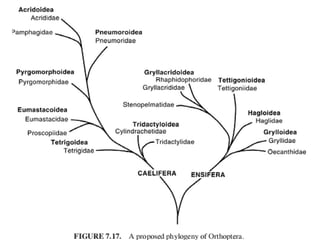
Sub orders Ensifera Caelifera
Antenna Long
(are as long as or longer
than the body)
Short
Tympanum Base of fore tibia Lateral side of 1st
abdominal segment
Ovipositor Sword like
or needle like
Short, lobes triangular
Important
families
Gryllidae,
Gryllotalpidae,
Tettigoniidae,
Schizodactylidae,
Gryllacrididae
Acrididae,
Pyrgomorphidae,
Tridactylidae,
Tetrigidae
Tettigoniidae (Long
horned grasshopper &
katydids)
1. Cryptic colouration
2. Antenna as long as or
longer than the body
3. Tarsus 4 segmented
4. Stridulation - alary
type
5. Mainly herbivorous
but some carnivorous
SUBORDER ENSIFERA
SUBORDER ENSIFERA
Gryllidae (Cricket)
• Antenna is long
• Tarsus 4 segmented
• Ovipositor is slender
and needle like
• Cerci long,
unsegmented
• Stridulation - alary
type
SUBORDER ENSIFERA
Gryllotalpidae (mole crickets)
Brown coloured insects found under burrows.
Eyes are reduced
Forelegs are fossorial.
A humming sound is produced by rubbing the
forewings
SUBORDER CAELIFERA
Acrididae (short horned grasshopper)
1. Antennae filiform shorter than the body with less than 30
segments
2. Pronotum saddle shaped
3. Auditory or tympanal organs situated one on either side of
1st abdominal segment
Acrididae
4. Stridulation femoro – alary type.
5. Tarsus 3 segmented.
6. Ovipositor short and well develpped. Its valves are
short and curved.
SUBORDER CAELIFERA
Habit and Habitat
ORDER ORTHOPTERA
Habit and Habitat
• Most of them are plant feeders; some are crop
pest. (rice grasshopper, locusts etc.)
• Few of them are predaceous on other insects
or scavengers.
• Many species are known for their unique
song. (the sound is produced by ‘stridulation’,
rubbing one body part against another)
• Auditory organs : Singing Orthoptera usually
have– eardrums or tympana (sng. tympanum)
ORDER ORTHOPTERA
Habit and Habitat
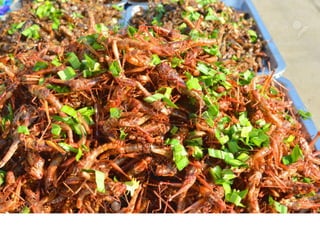
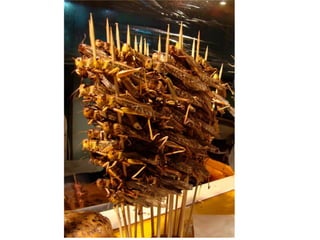
• In China and
Japan insect
sellers were
common in
the markets
and it was
fashionable
to keep
crickets and
katydids as
pets.
1 Orthoptera.pdf
1 Orthoptera.pdf
1 Orthoptera.pdf

1 Orthoptera.pdf

  • 1.
  • 2.
    Greek ortho= straight,pteron= wing, World spp. more than 20,000 India spp. 900 sp
  • 3.
  • 4.
  • 5.
  • 6.
  • 7.
  • 8.
    ORDER ORTHOPTERA • Grasshoppers,Crickets, Mole crickets, Tree crickets, Katydids, Locusts
  • 9.
  • 10.
    Orthoptera are moderatelysmall to very large insects, ranging in body length from 2 to 200 mm. Most species are moderately elongated and slightly compressed laterally.
  • 11.
    May be prognathous in someburrowing species, katydids, and tree crickets. The head is usually hypognathous
  • 13.
    The compound eyesare typically large
  • 14.
    Three ocelli areusually present and arranged in a triangle on the frontal region
  • 15.
    Antennae consist ofseveral segments [15 or more] Filiform, comparatively short (suborder Caelifera) to very long (suborder Ensifera).
  • 16.
    Mouth part –chewing type
  • 18.
    The pronotum islarge and extends lateroventrally to cover the pleural region.
  • 19.
    The legs areunequally developed. Legs are variously modified for digging , walking or running or jumping in different species. Tarsal segments vary from zero to four in three legs.
  • 20.
    The forelegs of primarilydigging forms are short but much enlarged (Fossorial). Ex. Mole Cricket
  • 21.
    In some predaceousspecies the fore-femora and/or tibiae are equipped with rows of long spines. https://www.youtube.com/watch?v=LQJiTBWc5pw
  • 22.
    The hind femoraof most species are greatly enlarged to accommodate the muscles used in jumping
  • 23.
    In almost allEnsifera the fore tibiae bear auditory organs (Tympanum)
  • 24.
    Winged [2 pairs],with reduced wings or wingless. Forewings elongate, many-veined and somewhat thickened – called tegmina. Hind wings membranous, broad and many – veined and folded fanwise beneath the front wings while at rest
  • 26.
    In several groups,the wings may be modified to resemble leaves, grass blades, or stems so as to camouflage the insect.
  • 27.
    Eleven abdominal segmentsare distinguishable. In Caelifera, Paired auditory (tympanal) organs present in both sexes and are found on the first abdominal segment.
  • 29.
    In females awell-developed ovipositor is usually found, except in primarily burrowing forms. It is made up of three pairs of valves, though the inner pair may be reduced.
  • 35.
  • 37.
    Sub orders EnsiferaCaelifera Antenna Long (are as long as or longer than the body) Short Tympanum Base of fore tibia Lateral side of 1st abdominal segment Ovipositor Sword like or needle like Short, lobes triangular Important families Gryllidae, Gryllotalpidae, Tettigoniidae, Schizodactylidae, Gryllacrididae Acrididae, Pyrgomorphidae, Tridactylidae, Tetrigidae
  • 38.
    Tettigoniidae (Long horned grasshopper& katydids) 1. Cryptic colouration 2. Antenna as long as or longer than the body 3. Tarsus 4 segmented 4. Stridulation - alary type 5. Mainly herbivorous but some carnivorous SUBORDER ENSIFERA
  • 39.
    SUBORDER ENSIFERA Gryllidae (Cricket) •Antenna is long • Tarsus 4 segmented • Ovipositor is slender and needle like • Cerci long, unsegmented • Stridulation - alary type
  • 41.
    SUBORDER ENSIFERA Gryllotalpidae (molecrickets) Brown coloured insects found under burrows. Eyes are reduced Forelegs are fossorial. A humming sound is produced by rubbing the forewings
  • 42.
    SUBORDER CAELIFERA Acrididae (shorthorned grasshopper) 1. Antennae filiform shorter than the body with less than 30 segments 2. Pronotum saddle shaped 3. Auditory or tympanal organs situated one on either side of 1st abdominal segment
  • 43.
    Acrididae 4. Stridulation femoro– alary type. 5. Tarsus 3 segmented. 6. Ovipositor short and well develpped. Its valves are short and curved. SUBORDER CAELIFERA
  • 44.
  • 45.
    ORDER ORTHOPTERA Habit andHabitat • Most of them are plant feeders; some are crop pest. (rice grasshopper, locusts etc.) • Few of them are predaceous on other insects or scavengers. • Many species are known for their unique song. (the sound is produced by ‘stridulation’, rubbing one body part against another) • Auditory organs : Singing Orthoptera usually have– eardrums or tympana (sng. tympanum)
  • 46.
    ORDER ORTHOPTERA Habit andHabitat • In China and Japan insect sellers were common in the markets and it was fashionable to keep crickets and katydids as pets.