Presented by :
ZAID ASIF
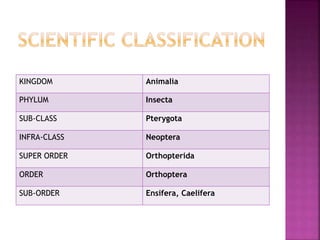
KINGDOM Animalia
PHYLUM Insecta
SUB-CLASS Pterygota
INFRA-CLASS Neoptera
SUPER ORDER Orthopterida
ORDER Orthoptera
SUB-ORDER Ensifera, Caelifera
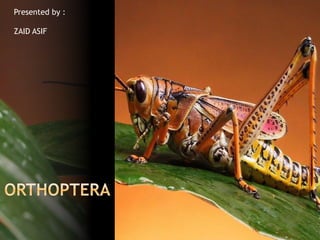
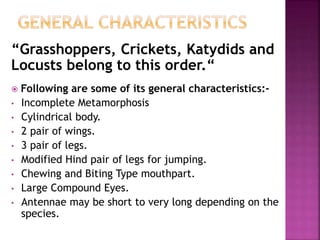
“Grasshoppers, Crickets, Katydids and
Locusts belong to this order.“
 Following are some of its general characteristics:-
• Incomplete Metamorphosis
• Cylindrical body.
• 2 pair of wings.
• 3 pair of legs.
• Modified Hind pair of legs for jumping.
• Chewing and Biting Type mouthpart.
• Large Compound Eyes.
• Antennae may be short to very long depending on the
species.
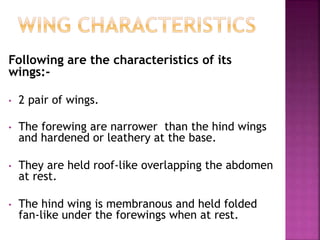
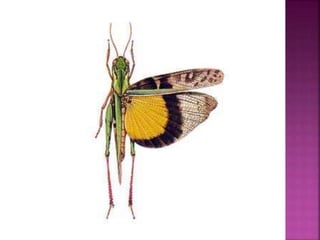
Following are the characteristics of its
wings:-
• 2 pair of wings.
• The forewing are narrower than the hind wings
and hardened or leathery at the base.
• They are held roof-like overlapping the abdomen
at rest.
• The hind wing is membranous and held folded
fan-like under the forewings when at rest.
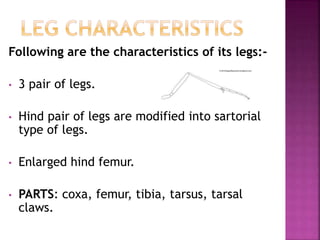
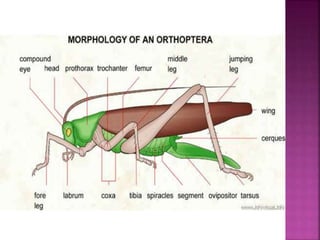
Following are the characteristics of its legs:-
• 3 pair of legs.
• Hind pair of legs are modified into sartorial
type of legs.
• Enlarged hind femur.
• PARTS: coxa, femur, tibia, tarsus, tarsal
claws.
Following are the characteristics of its
antennae:-
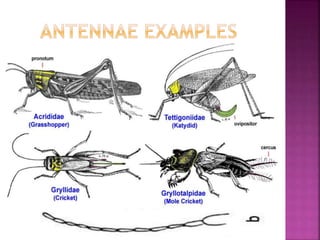
• 1 pair of antennae.
• Filiform type of antennae also known as thread
like.
• Grasshoppers have short antennae also known as
short horned grasshoppers.
• Crickets and Katydids have large antennae while
some grasshoppers known as long horned
grasshoppers also have large antennae.
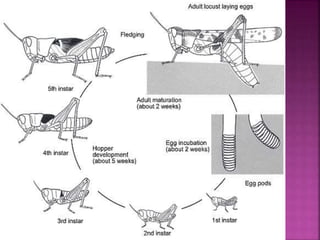
 “Orthoptera have only 3 life stages
(incomplete metamorphosis) .
Egg
Nymph
Adult
• Some species lay eggs in the form of groups while
others lay a single egg at one place.
• Those who lay eggs in group also enclose their eggs
inside an egg pod.
• Number of Nymphal Instars varies from specie to
specie.
• Adults have fully developed wings where as nymphs
don’t have wings or either in developing phase.
 “Since grasshoppers have chewing and
biting type mouthparts, so the damage is
similar to caterpillars.“
• Grasshoppers are herbivorous.
• Cricket are omnivorous.
• Crickets can even eat their mates if hungry.
• Some species are even scavengers or predators.
• Both Nymphs and Adult cause damage.
• The main damage done by them is direct
consumption of plants not by vectoring diseases.
orthoptera-190428124130.pdf

orthoptera-190428124130.pdf

  • 1.
  • 2.
    KINGDOM Animalia PHYLUM Insecta SUB-CLASSPterygota INFRA-CLASS Neoptera SUPER ORDER Orthopterida ORDER Orthoptera SUB-ORDER Ensifera, Caelifera
  • 3.
    “Grasshoppers, Crickets, Katydidsand Locusts belong to this order.“  Following are some of its general characteristics:- • Incomplete Metamorphosis • Cylindrical body. • 2 pair of wings. • 3 pair of legs. • Modified Hind pair of legs for jumping. • Chewing and Biting Type mouthpart. • Large Compound Eyes. • Antennae may be short to very long depending on the species.
  • 4.
    Following are thecharacteristics of its wings:- • 2 pair of wings. • The forewing are narrower than the hind wings and hardened or leathery at the base. • They are held roof-like overlapping the abdomen at rest. • The hind wing is membranous and held folded fan-like under the forewings when at rest.
  • 6.
    Following are thecharacteristics of its legs:- • 3 pair of legs. • Hind pair of legs are modified into sartorial type of legs. • Enlarged hind femur. • PARTS: coxa, femur, tibia, tarsus, tarsal claws.
  • 8.
    Following are thecharacteristics of its antennae:- • 1 pair of antennae. • Filiform type of antennae also known as thread like. • Grasshoppers have short antennae also known as short horned grasshoppers. • Crickets and Katydids have large antennae while some grasshoppers known as long horned grasshoppers also have large antennae.
  • 10.
     “Orthoptera haveonly 3 life stages (incomplete metamorphosis) . Egg Nymph Adult
  • 11.
    • Some specieslay eggs in the form of groups while others lay a single egg at one place. • Those who lay eggs in group also enclose their eggs inside an egg pod. • Number of Nymphal Instars varies from specie to specie. • Adults have fully developed wings where as nymphs don’t have wings or either in developing phase.
  • 13.
     “Since grasshoppershave chewing and biting type mouthparts, so the damage is similar to caterpillars.“ • Grasshoppers are herbivorous. • Cricket are omnivorous. • Crickets can even eat their mates if hungry. • Some species are even scavengers or predators. • Both Nymphs and Adult cause damage. • The main damage done by them is direct consumption of plants not by vectoring diseases.