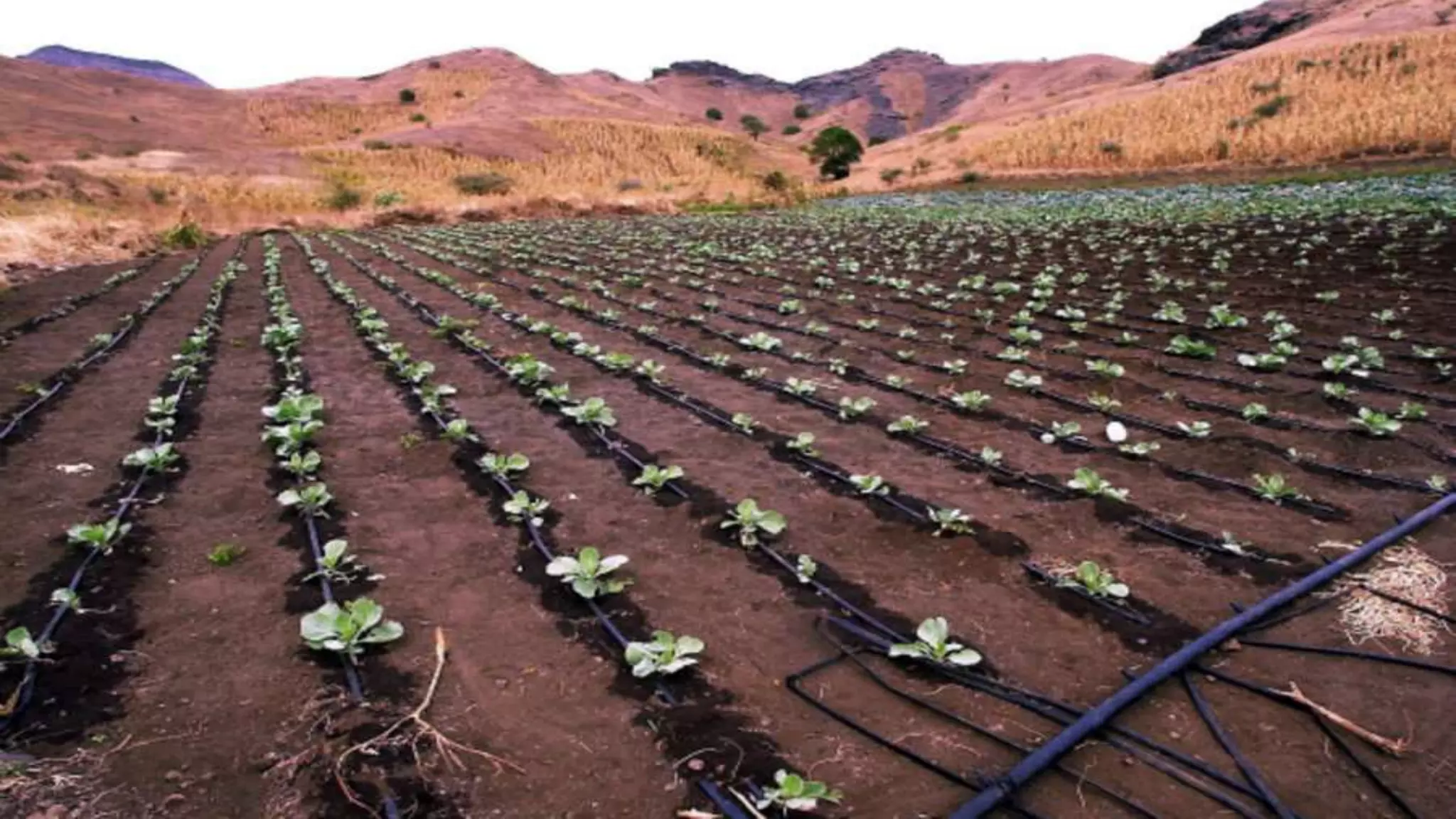
IRRIGATION ENGINEERING
CV2214
UNIT-I INTRODUCTION 9
Irrigation - Need and mode of irrigation - Merits and demerits of irrigation - Crop and crop seasons - consumptive
use of water - Duty - Factors affecting duty - Irrigation efficiencies.
UNIT-II IRRIGATION METHODS 9
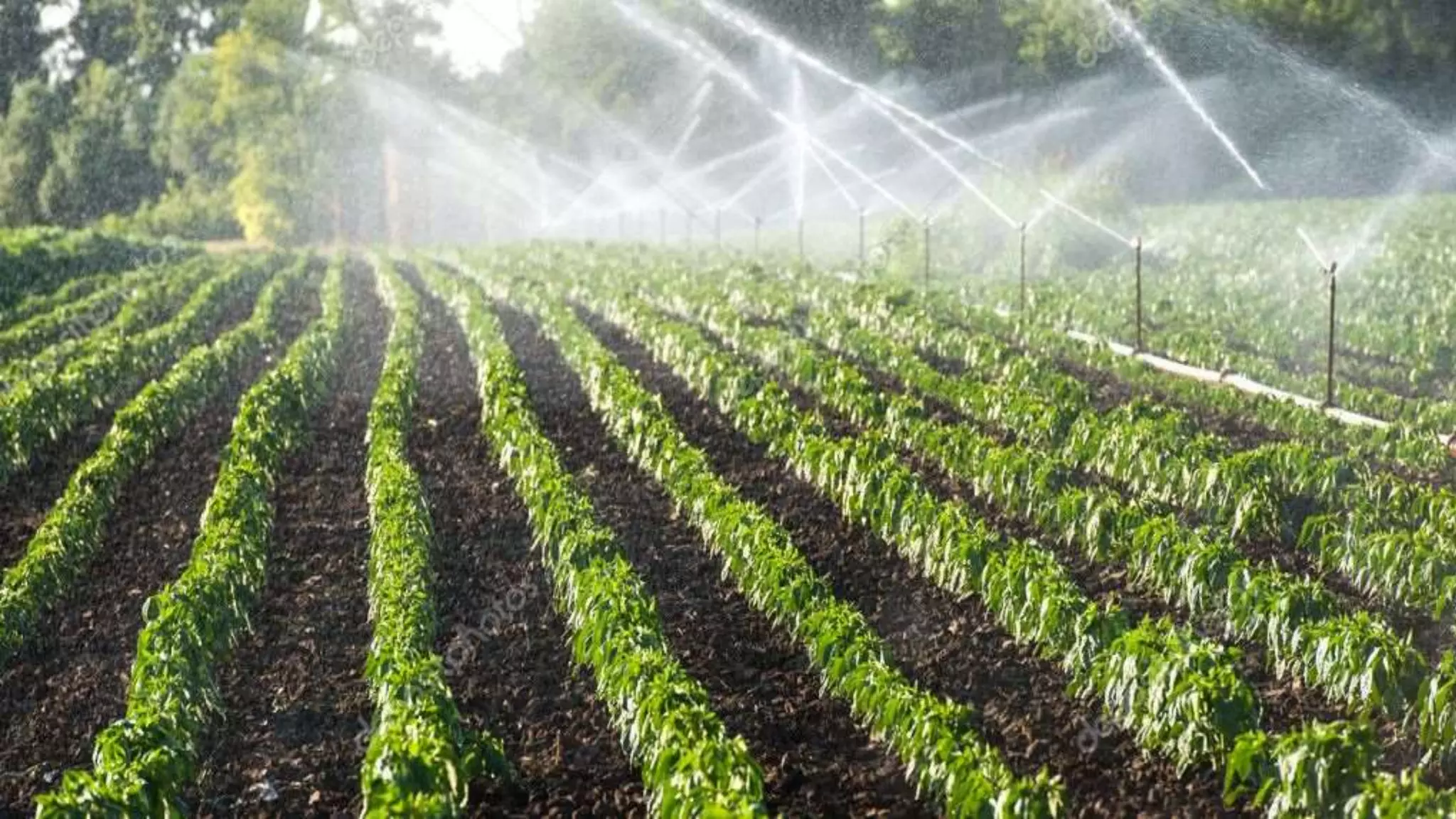
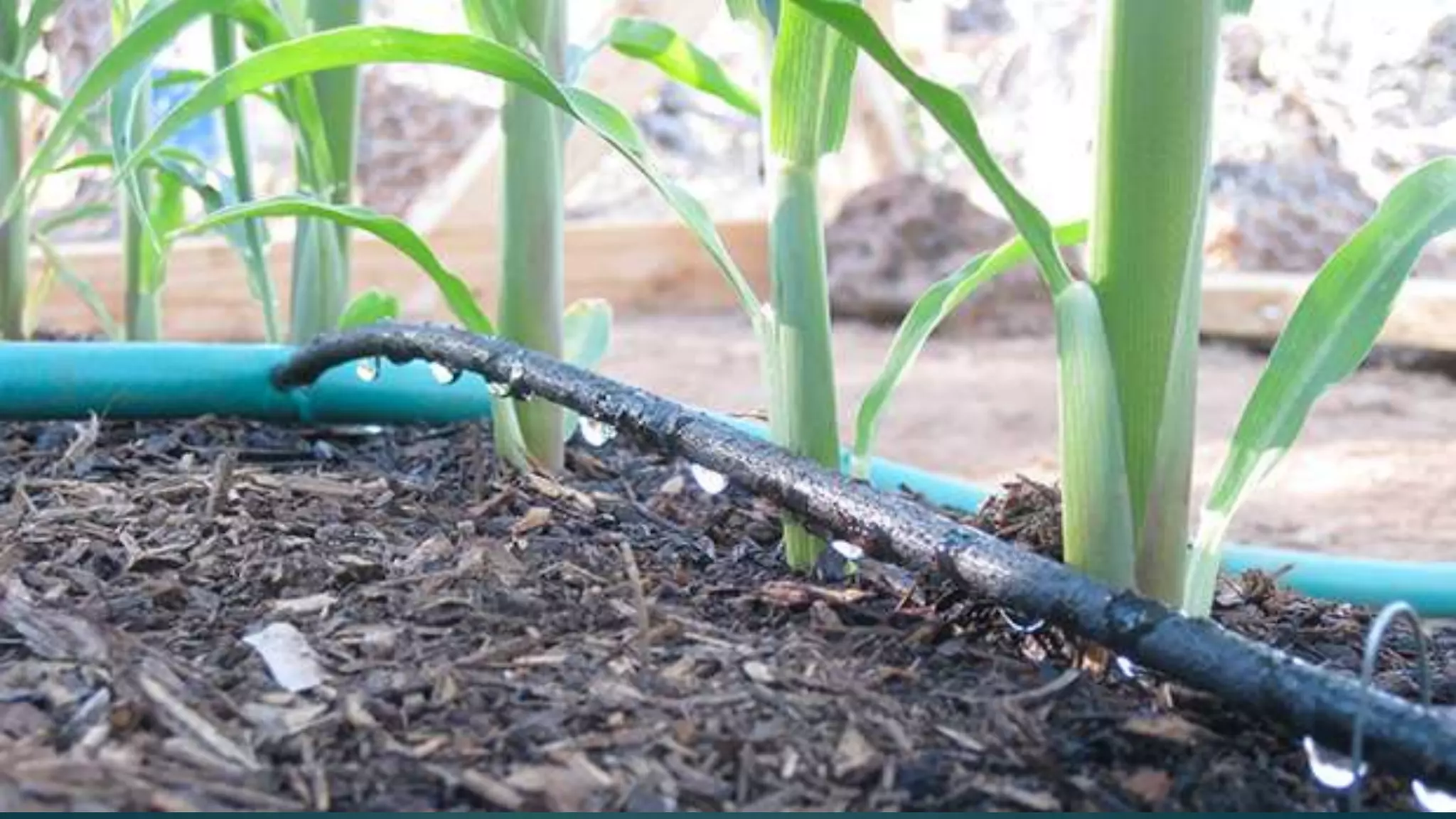
Canal irrigation - Lift irrigation - Tank irrigation - Flooding methods - Merits and demerits - Sprinkler irrigation -
Drip irrigation - Case studies.
UNIT-III DIVERSION AND IMPOUNDING STRUCTURES 9
Weirs - elementary profile of a weir - weirs on pervious foundations - Types of impounding structures - Gravity
dams - Earth dams - Spillways - Factors affecting location and type of dams- Forces on a dam - Case studies.
UNIT-IV CANAL IRRIGATION 9
Alignment of canals - Classification of canals - Canal drops - Cross drainage works - Canal Head works - Canal
regulators - River Training works - Case studies.
UNIT-V IRRIGATION WATER MANAGEMENT 9
Need for optimization of water use - Minimizing irrigation water losses - On farm development works - Percolation
ponds - Participatory irrigation management - Water users associations - Performance evaluation - Case studies.
TOTAL: 45 HOURS
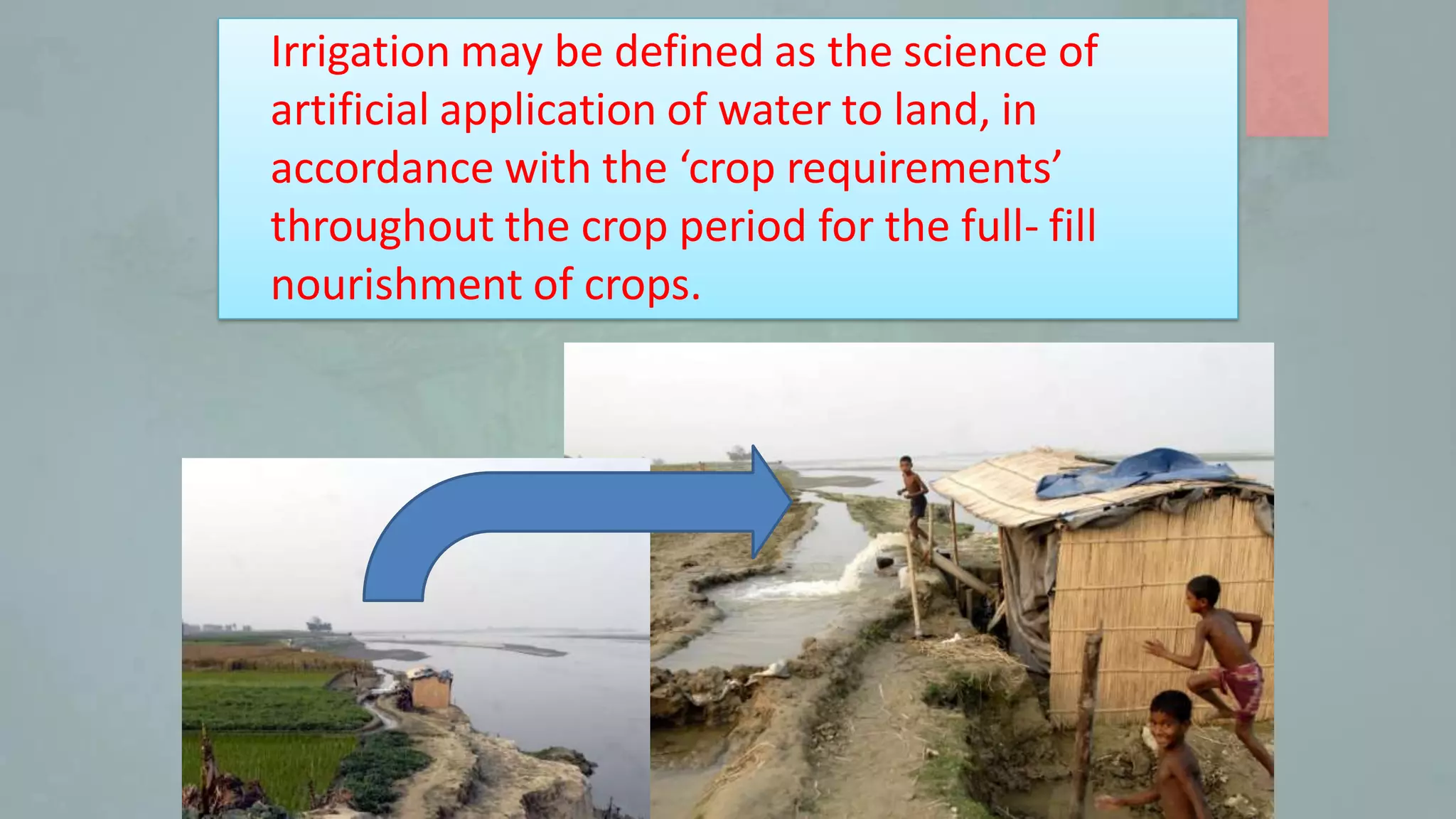
Irrigation may be defined as the science of
artificial application of water to land, in
accordance with the ‘crop requirements’
throughout the crop period for the full- fill
nourishment of crops.
Basic concepts in the development of construction
plans
 In addition to these technical aspects of construction
planning, it may also be necessary to make organizational
decisions about the relationships between project participants
and even which organizations to include in a project.
For example, the extent to which subcontractors will be used
on a project is often determined during construction planning.
A planner begins with a result (i.e. a facility design) and must
synthesize the steps required to yield this result.
IRRIGATION ENGINEERING
It is the branch of applied science, which deals
about the ways and means adopted by the
irrigation.
Definition
Irrigation may be defined as the process of supplying water by
artificial means to agricultural fields for crop production.
If water available to the plants from rainfall is not sufficient, it is
supplemented by irrigation water.
In order to achieve this objective, an irrigation system is required
to be developed that involves planning, design, construction,
operation and maintenance of various irrigation works:
•Source: River, Reservoirs
•Control structure: Barrages, Head Regulators
•Distribution system: Irrigation Canals
HISTORY OF IRRIGATION
• In the Zana Valley of Peru, archaeologists found
remains of three irrigation canals radiocarbon
dated from the 4th millennium BCE, the 3rd
millennium BCE and the 9th century CE.
• These canals are the earliest record of irrigation in
the New World.
Irrigation systems were developedin Indian Sub-
continent by:
• The Indus Valley Civilization in Pakistan and North
India.
• The reservoirs at Girnar in 3000 BCE.
• An early canal irrigation system from circa 2600
BCE.
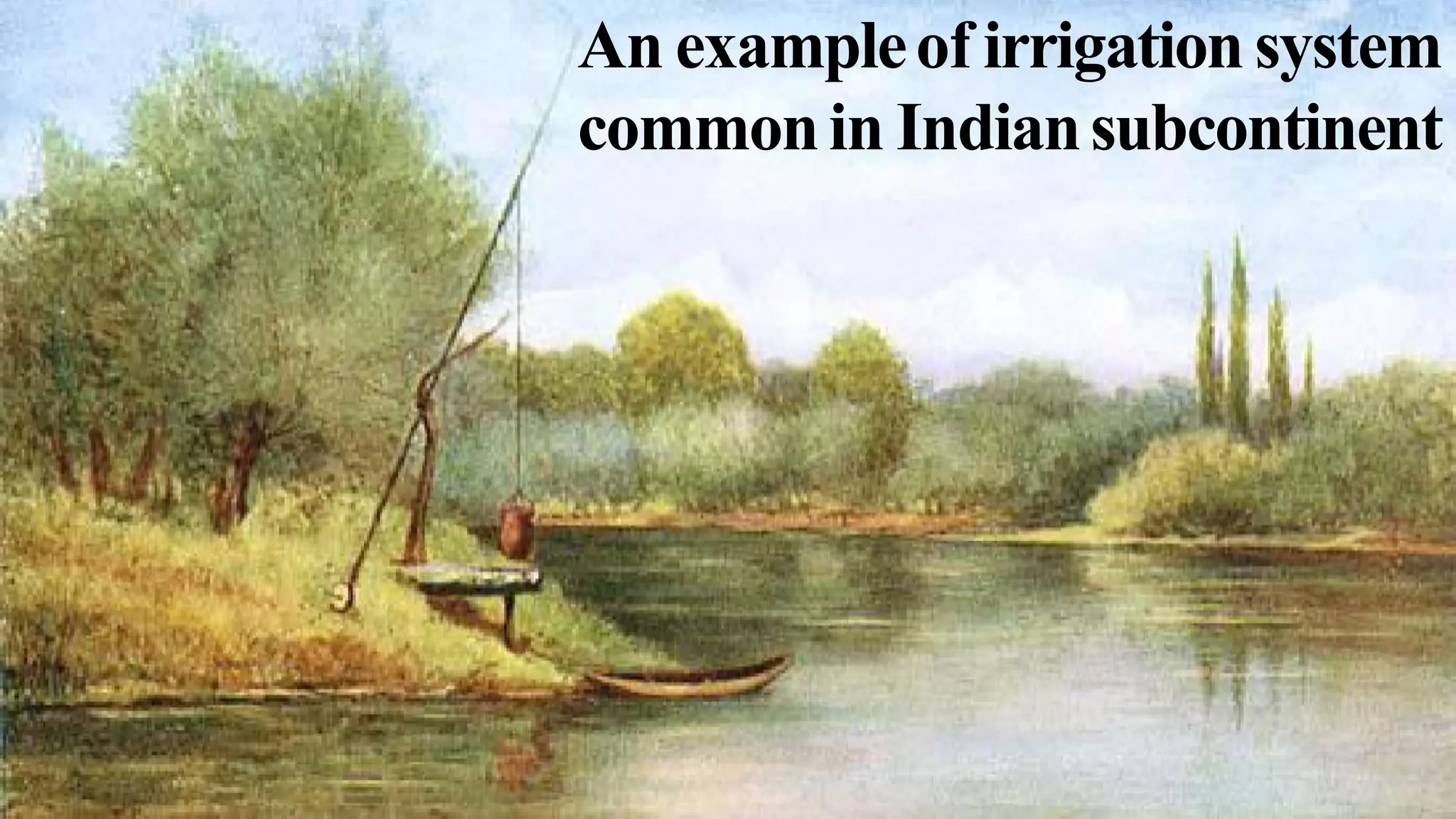
An exampleof irrigationsystem
commonin Indiansubcontinent
PRESENT EXTENT OF IRRIGATION
#2,788,000 km² of agricultural land was equipped with
irrigation infrastructure.
#The largest contiguous areas of high irrigation density are
found in North India and Pakistan along the rivers
Ganges.
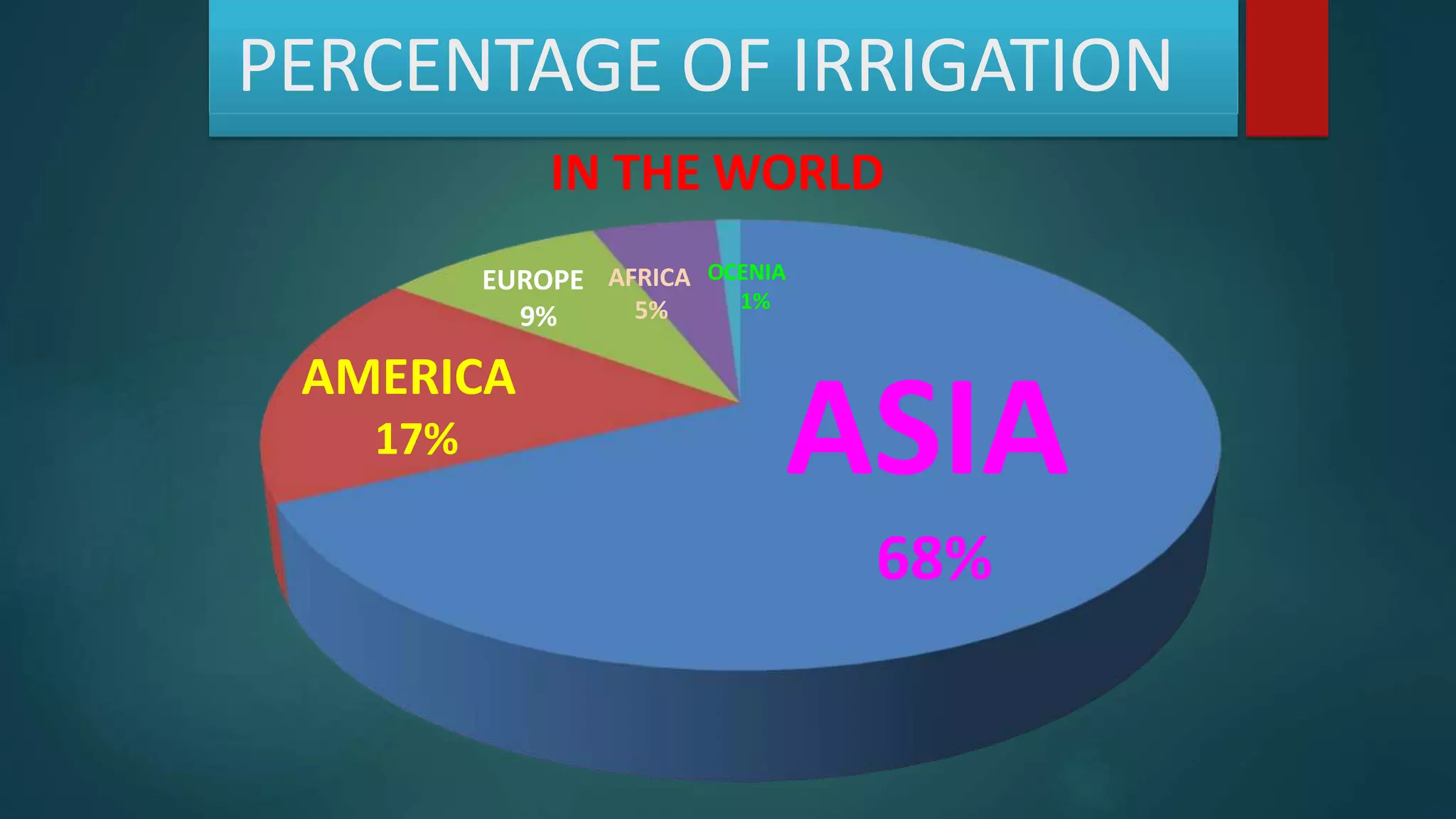
PERCENTAGE OF IRRIGATION
ASIA
68%
EUROPE
9%
AMERICA
17%
AFRICA
5%
OCENIA
1%
IN THE WORLD
How was irrigation used?
Engineers in Mesopotamia built humongous dams, to
create reservoirs and canals that would carry water
across land, so that people without easy access to
water could get water for their needs.
As partof the irrigation system, there were many canals
carrying water to different partsof Mesopotamia.
WHY WAS IRRIGATION INVENTED?
Irrigation was invented so people living not so near
to a water source could drink, water their plants,
cook, clean themselvesand use boats for
transportation.
HOW DID IRRIGATIONMAKE LIFE
EASIER?
Since some people didn’t live so close to a water
source, using irrigation, they could access water
easily, to drink, clean themselves, cook and so on.
The main difference that irrigation made to their
lives was that these people had a regular and
dependable supply of water.
HOW DID IRRIGATIONMAKE LIFE
EASIER?
Since some people didn’t live so close to a water
source, using irrigation, they could access water
easily, to drink, clean themselves, cook and so on.
The main difference that irrigation made to their
lives was that these people had a regular and
dependable supply of water.
HOW HAS THIS INVENTION CHANGED
THE WORLD TODAY?
Irrigation changed the world today because it allows people to
carry out farming which did not depend just on rainfall.
Therefore people are able to farm in more places in the world than they
otherwise would have been able to.
As humans moved away from relying on rainwater, more land became
available for people to grow crops. This has helped man have a more secure
life because he is able to have food regularly.
Our world today would be very different without irrigation - we
might all still be hunter-gatherers!
Levee: holds the water back
Dam: controls the flow of water
Canal: allows the water to be brought to drier areas
NECESSITY OF IRRIGATION
(i) The rainfall is insufficient for the maturity of crops,
(ii) The rainfall is unevenly distributed over the base period,
(iii) Additional water is required to raise some commercial and cash
crops and
(iv) A controlled distribution system is required.
NECESSITY OF IRRIGATION IN INDIA
India is a tropical country with a vast diversity of climate,
topography and vegetation. Rainfall in India, varies
considerably in its place of occurrence, as well as in its
amount. Even at a particular place, the rainfall is highly
erratic and irregular, as it occurs only during a few particular
months of the year. Crops cannot, therefore, be raised
successfully, over the entire land, without providing artificial
irrigation of fields.
NECESSITY OF IRRIGATION IN INDIA
More than seventy percent of our population, directly depends
on agriculture, and the remaining depends indirectly on
agriculture. Out of a total geographical area of about 328 million
hectares, about 184 million hectares is the cultivable area. In
order to save this area from the complete wishes and vagaries of
nature, and to ensure full growth of crops, it is necessary to
provide adequate artificial irrigation facilities. In order to
achieve this, the Indian Government is trying hard and spending
enormously to provide irrigation facilities for the entire
cultivable land.
PURPOSE OF IRRIGATION
 It adds water to the soil to supply moisture to the plant.
 It saves the crops from drying during droughts.
 It cools soil and the atmosphere.
 It dilutes salts in the soil.
 It reduces soil piping.
Basin flood irrigation of
Basin flood irrigation of wheat
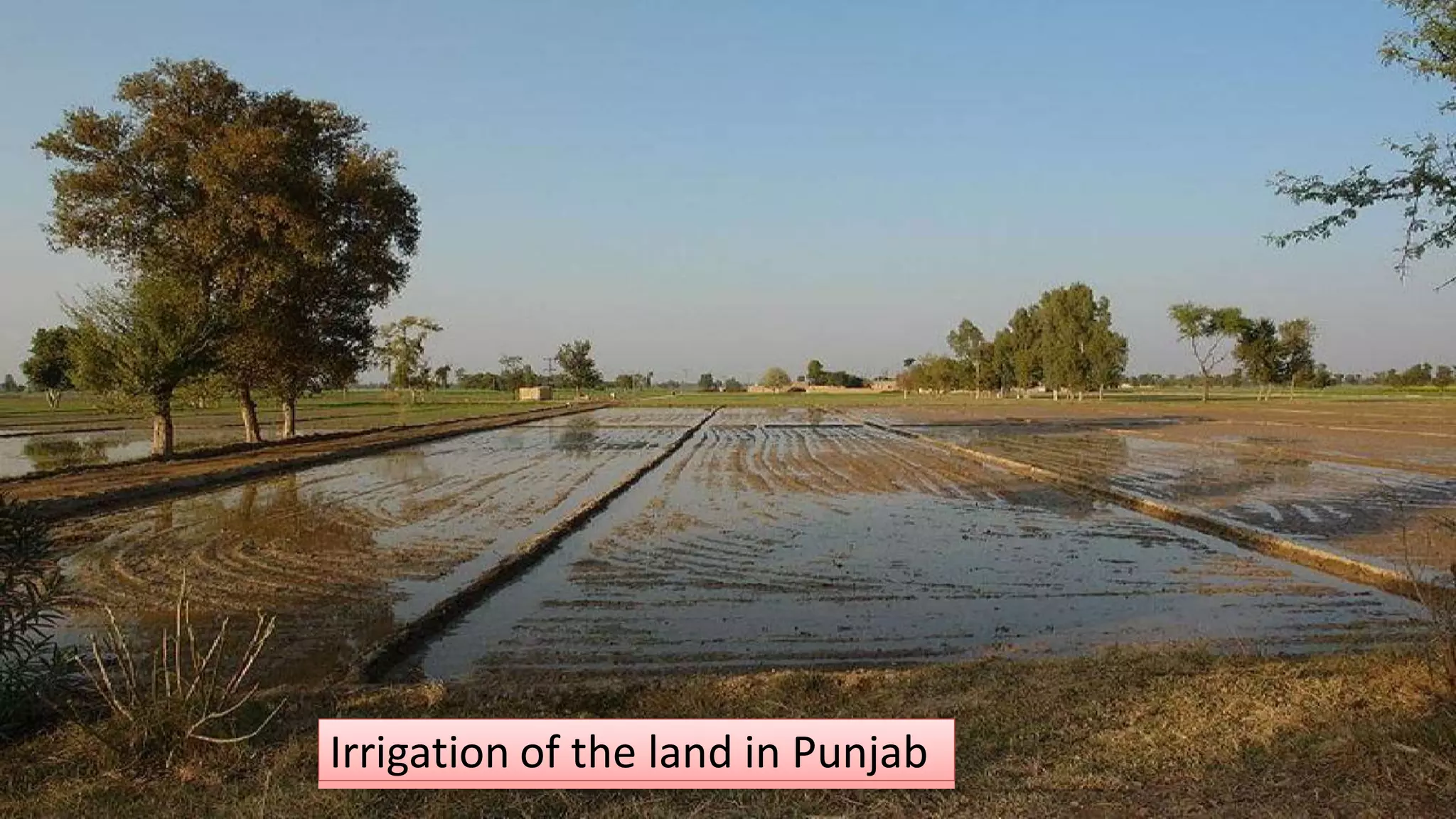
Irrigation of the land in Punjab
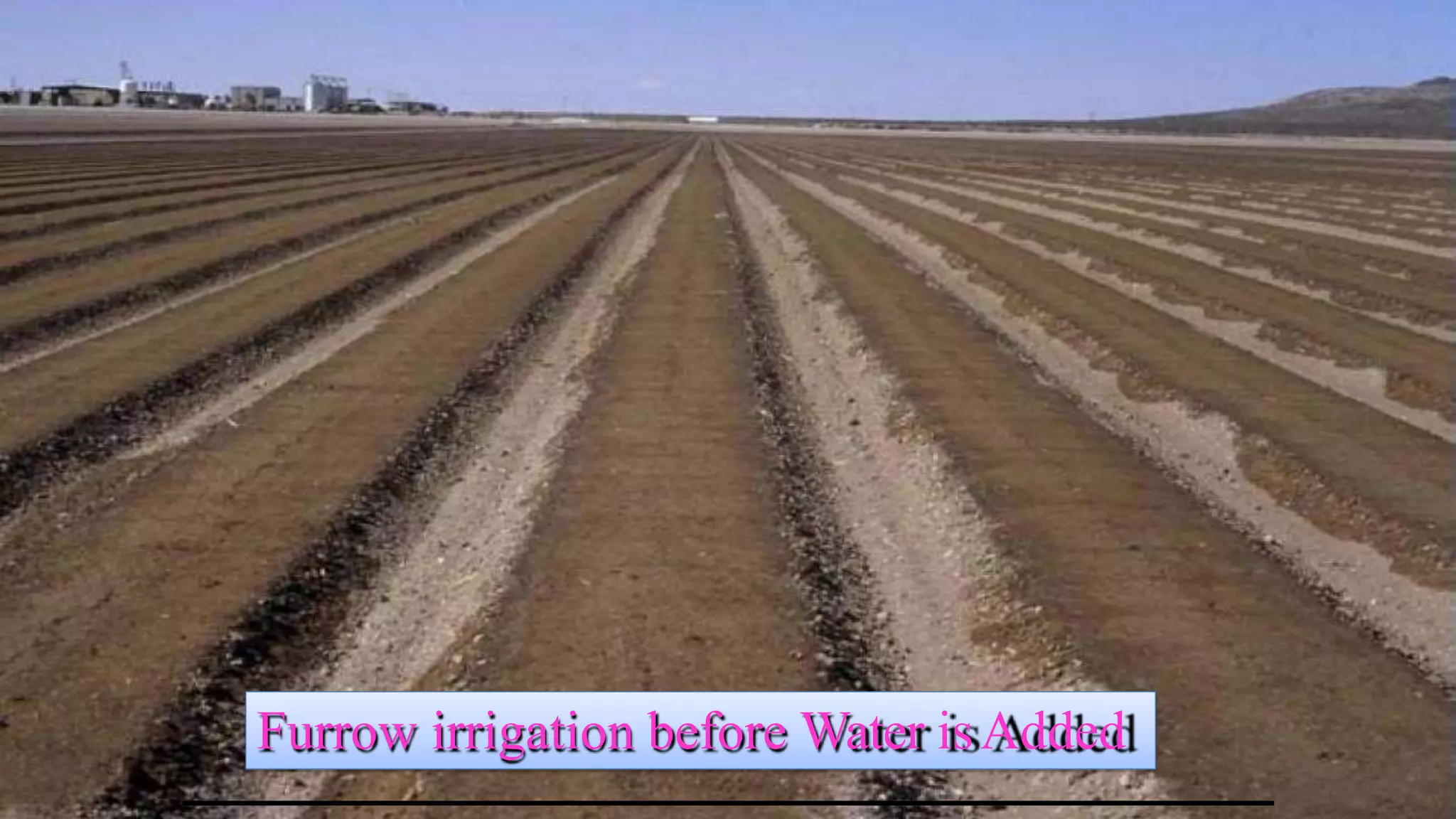
Furrow irrigation before Water isAdded
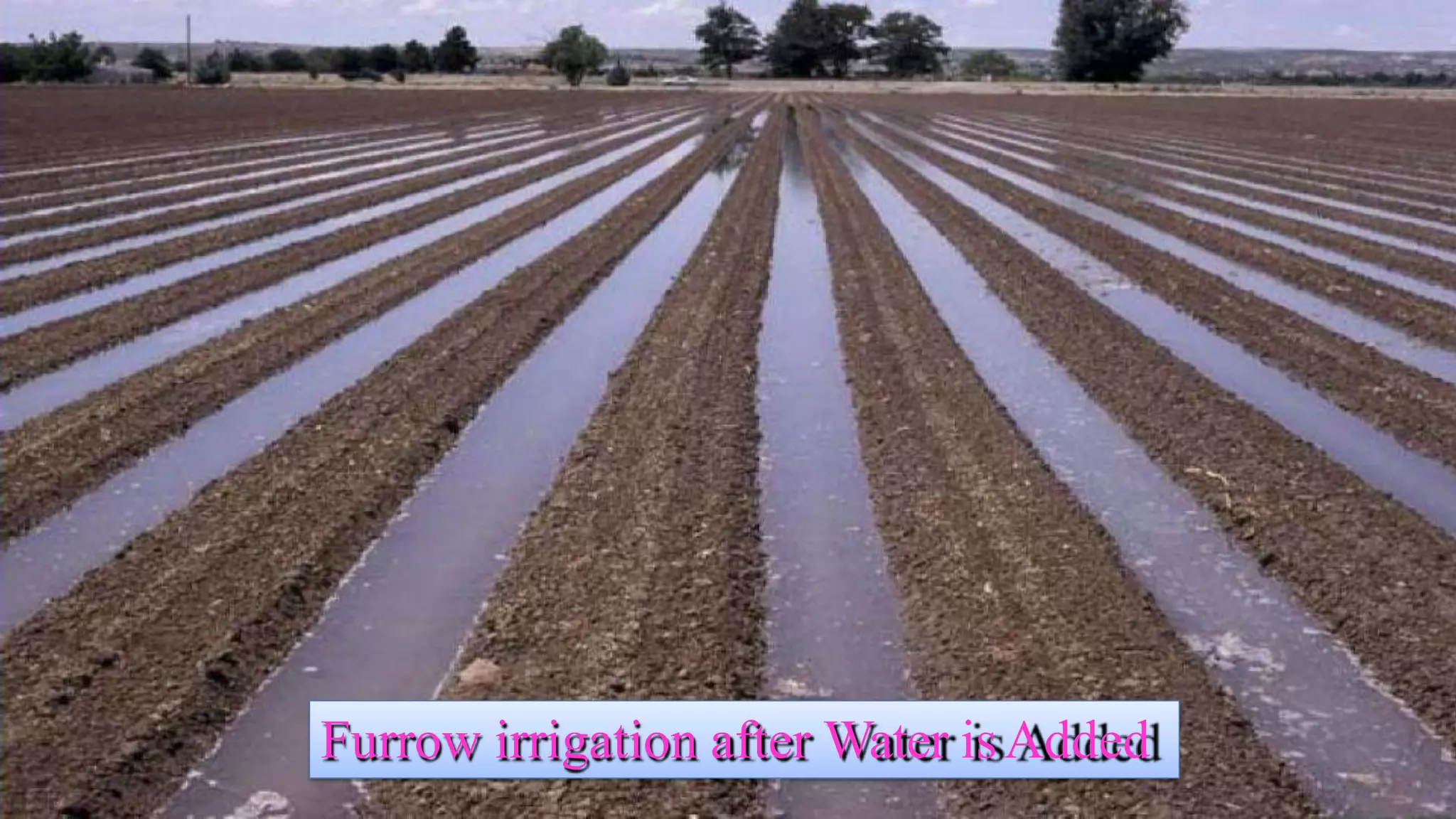
Furrow irrigation after Water isAdded
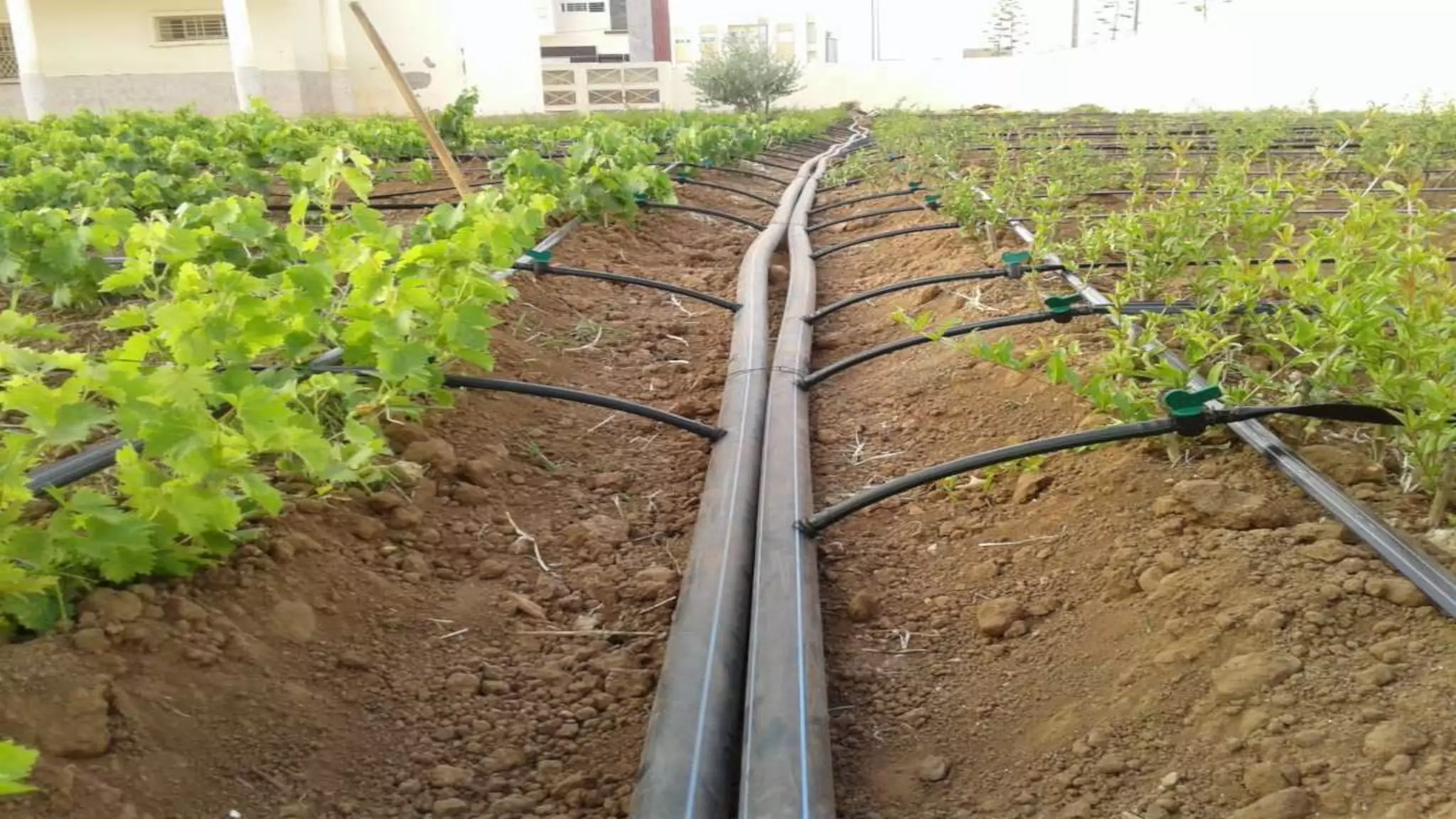
Furrow irrigation of Crops
1. irrigation   need and mode of irrigation

1. irrigation need and mode of irrigation

  • 1.
  • 2.
    UNIT-I INTRODUCTION 9 Irrigation- Need and mode of irrigation - Merits and demerits of irrigation - Crop and crop seasons - consumptive use of water - Duty - Factors affecting duty - Irrigation efficiencies. UNIT-II IRRIGATION METHODS 9 Canal irrigation - Lift irrigation - Tank irrigation - Flooding methods - Merits and demerits - Sprinkler irrigation - Drip irrigation - Case studies. UNIT-III DIVERSION AND IMPOUNDING STRUCTURES 9 Weirs - elementary profile of a weir - weirs on pervious foundations - Types of impounding structures - Gravity dams - Earth dams - Spillways - Factors affecting location and type of dams- Forces on a dam - Case studies. UNIT-IV CANAL IRRIGATION 9 Alignment of canals - Classification of canals - Canal drops - Cross drainage works - Canal Head works - Canal regulators - River Training works - Case studies. UNIT-V IRRIGATION WATER MANAGEMENT 9 Need for optimization of water use - Minimizing irrigation water losses - On farm development works - Percolation ponds - Participatory irrigation management - Water users associations - Performance evaluation - Case studies. TOTAL: 45 HOURS
  • 3.
    Irrigation may bedefined as the science of artificial application of water to land, in accordance with the ‘crop requirements’ throughout the crop period for the full- fill nourishment of crops.
  • 4.
    Basic concepts inthe development of construction plans  In addition to these technical aspects of construction planning, it may also be necessary to make organizational decisions about the relationships between project participants and even which organizations to include in a project. For example, the extent to which subcontractors will be used on a project is often determined during construction planning. A planner begins with a result (i.e. a facility design) and must synthesize the steps required to yield this result.
  • 8.
    IRRIGATION ENGINEERING It isthe branch of applied science, which deals about the ways and means adopted by the irrigation.
  • 9.
    Definition Irrigation may bedefined as the process of supplying water by artificial means to agricultural fields for crop production. If water available to the plants from rainfall is not sufficient, it is supplemented by irrigation water. In order to achieve this objective, an irrigation system is required to be developed that involves planning, design, construction, operation and maintenance of various irrigation works: •Source: River, Reservoirs •Control structure: Barrages, Head Regulators •Distribution system: Irrigation Canals
  • 10.
    HISTORY OF IRRIGATION •In the Zana Valley of Peru, archaeologists found remains of three irrigation canals radiocarbon dated from the 4th millennium BCE, the 3rd millennium BCE and the 9th century CE. • These canals are the earliest record of irrigation in the New World.
  • 12.
    Irrigation systems weredevelopedin Indian Sub- continent by: • The Indus Valley Civilization in Pakistan and North India. • The reservoirs at Girnar in 3000 BCE. • An early canal irrigation system from circa 2600 BCE.
  • 13.
  • 14.
    PRESENT EXTENT OFIRRIGATION #2,788,000 km² of agricultural land was equipped with irrigation infrastructure. #The largest contiguous areas of high irrigation density are found in North India and Pakistan along the rivers Ganges.
  • 15.
  • 16.
    How was irrigationused? Engineers in Mesopotamia built humongous dams, to create reservoirs and canals that would carry water across land, so that people without easy access to water could get water for their needs. As partof the irrigation system, there were many canals carrying water to different partsof Mesopotamia.
  • 17.
    WHY WAS IRRIGATIONINVENTED? Irrigation was invented so people living not so near to a water source could drink, water their plants, cook, clean themselvesand use boats for transportation.
  • 18.
    HOW DID IRRIGATIONMAKELIFE EASIER? Since some people didn’t live so close to a water source, using irrigation, they could access water easily, to drink, clean themselves, cook and so on. The main difference that irrigation made to their lives was that these people had a regular and dependable supply of water.
  • 19.
    HOW DID IRRIGATIONMAKELIFE EASIER? Since some people didn’t live so close to a water source, using irrigation, they could access water easily, to drink, clean themselves, cook and so on. The main difference that irrigation made to their lives was that these people had a regular and dependable supply of water.
  • 20.
    HOW HAS THISINVENTION CHANGED THE WORLD TODAY? Irrigation changed the world today because it allows people to carry out farming which did not depend just on rainfall. Therefore people are able to farm in more places in the world than they otherwise would have been able to. As humans moved away from relying on rainwater, more land became available for people to grow crops. This has helped man have a more secure life because he is able to have food regularly. Our world today would be very different without irrigation - we might all still be hunter-gatherers!
  • 21.
    Levee: holds thewater back
  • 22.
    Dam: controls theflow of water
  • 23.
    Canal: allows thewater to be brought to drier areas
  • 24.
    NECESSITY OF IRRIGATION (i)The rainfall is insufficient for the maturity of crops, (ii) The rainfall is unevenly distributed over the base period, (iii) Additional water is required to raise some commercial and cash crops and (iv) A controlled distribution system is required.
  • 25.
    NECESSITY OF IRRIGATIONIN INDIA India is a tropical country with a vast diversity of climate, topography and vegetation. Rainfall in India, varies considerably in its place of occurrence, as well as in its amount. Even at a particular place, the rainfall is highly erratic and irregular, as it occurs only during a few particular months of the year. Crops cannot, therefore, be raised successfully, over the entire land, without providing artificial irrigation of fields.
  • 26.
    NECESSITY OF IRRIGATIONIN INDIA More than seventy percent of our population, directly depends on agriculture, and the remaining depends indirectly on agriculture. Out of a total geographical area of about 328 million hectares, about 184 million hectares is the cultivable area. In order to save this area from the complete wishes and vagaries of nature, and to ensure full growth of crops, it is necessary to provide adequate artificial irrigation facilities. In order to achieve this, the Indian Government is trying hard and spending enormously to provide irrigation facilities for the entire cultivable land.
  • 27.
    PURPOSE OF IRRIGATION It adds water to the soil to supply moisture to the plant.  It saves the crops from drying during droughts.  It cools soil and the atmosphere.  It dilutes salts in the soil.  It reduces soil piping.
  • 28.
  • 29.
  • 30.
    Irrigation of theland in Punjab
  • 31.
  • 32.
  • 33.