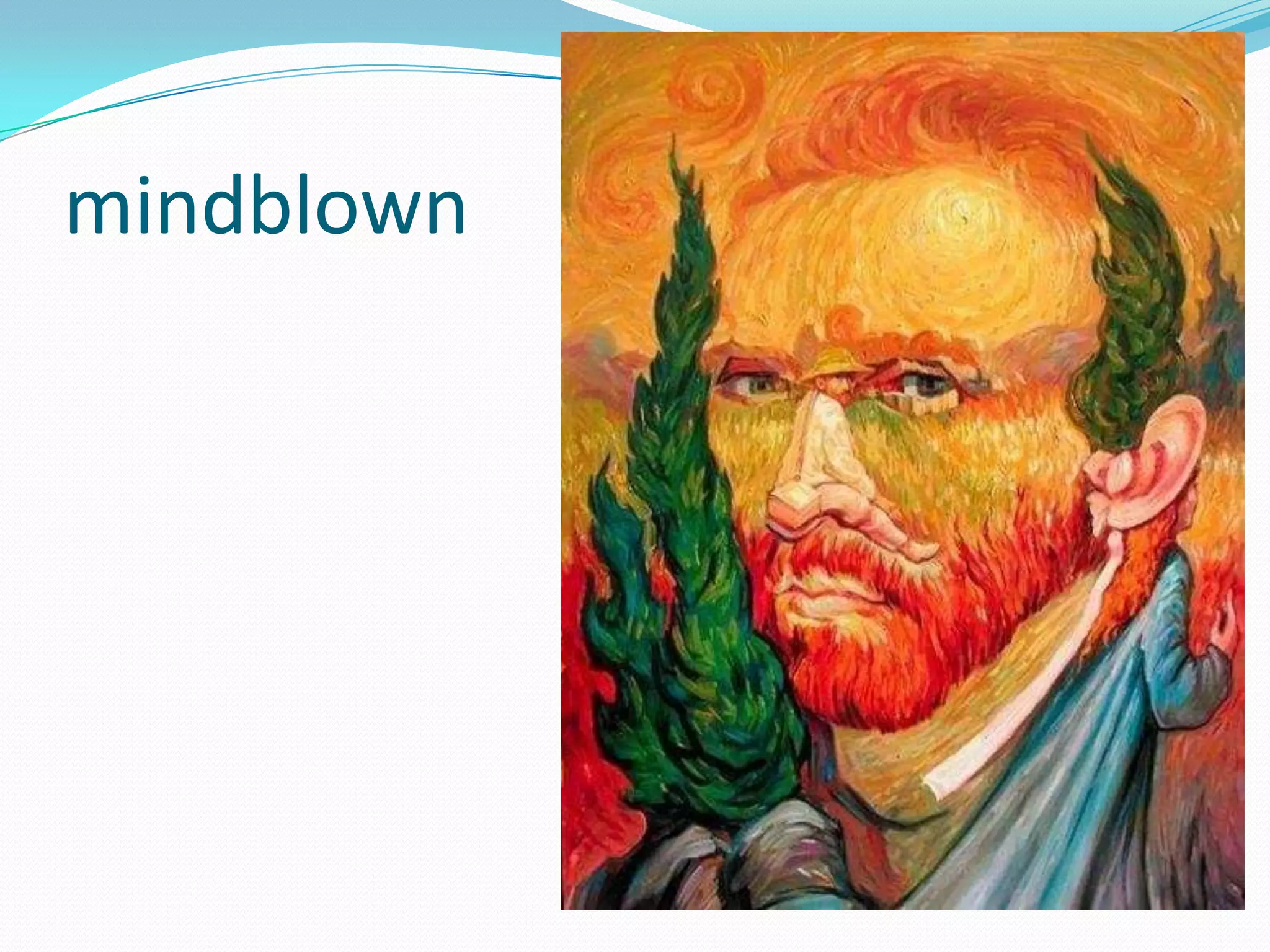
mindblown
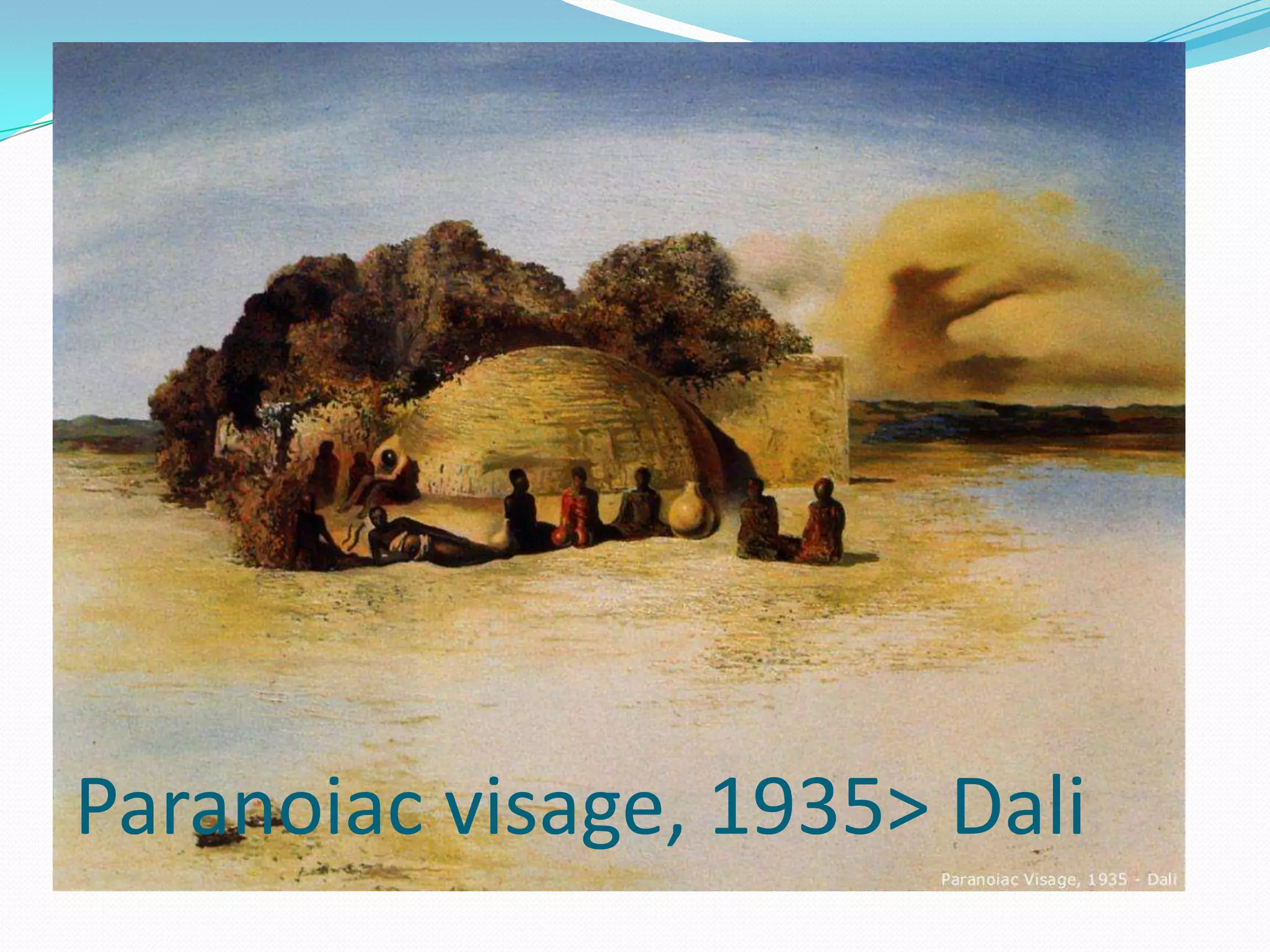
Paranoiac visage, 1935> Dali
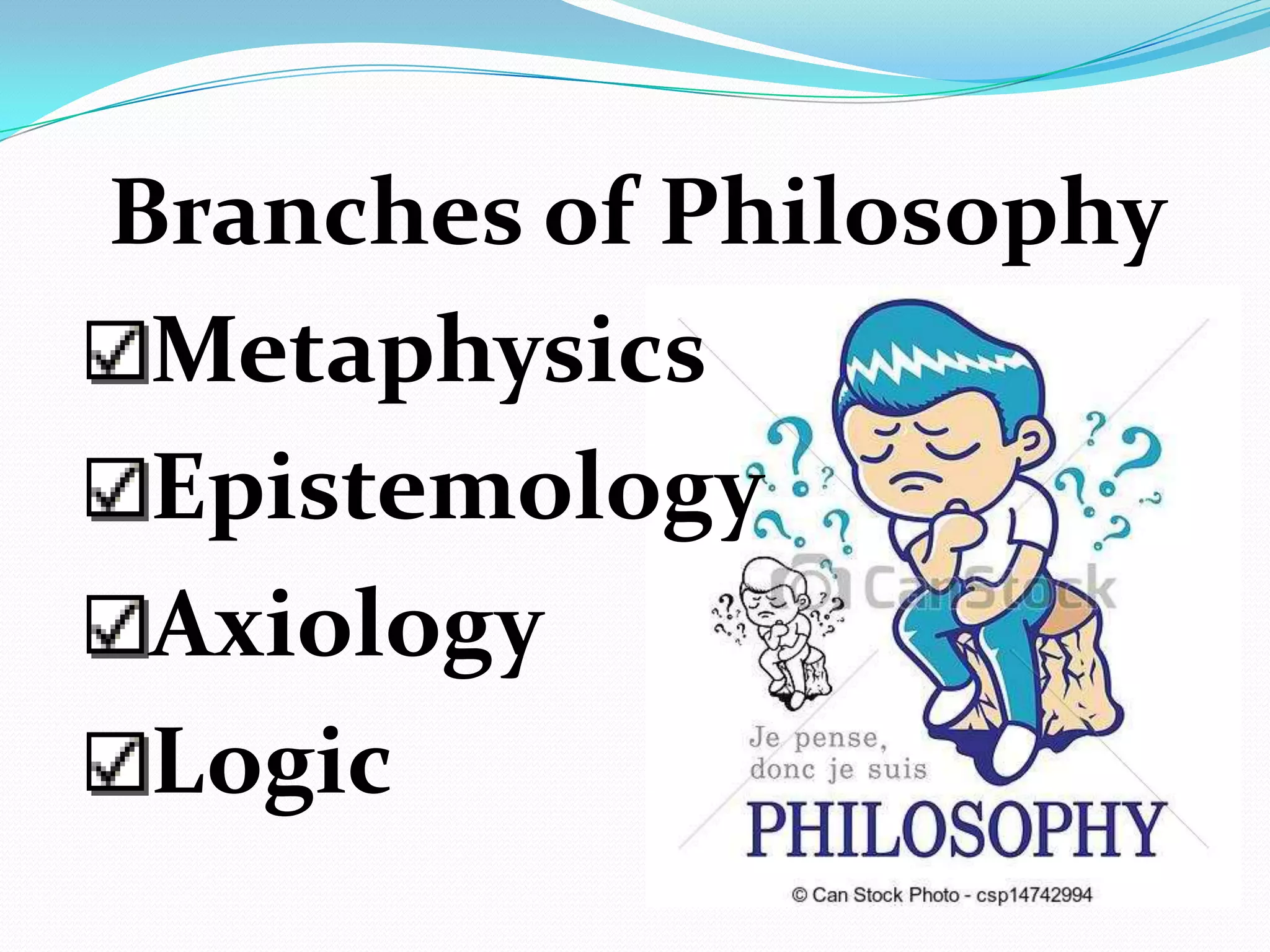
Metaphysics
Epistemology
Axiology
Logic
Branches of Philosophy
Metaphysics
What is Metaphysics?
It encompasses everything that exists, as
well as the nature of existence itself.
It says whether the world is real,
or merely an illusion. It is a
fundamental view of the world
around us.
Why is Metaphysics important?
Metaphysics is the foundation of philosophy.
The degree to which our metaphysical
worldview is correct is the degree to which
we are able to comprehend the world, and act
accordingly.
Without this firm foundation, all
knowledge becomes suspect.
Any flaw in our view of reality will
make it more difficult to live.
What are the key elements of a rational
metaphysics?
Reality is absolute.
It has a specific nature and
it must be consistent to that
nature.
Every action has a cause and
an effect.
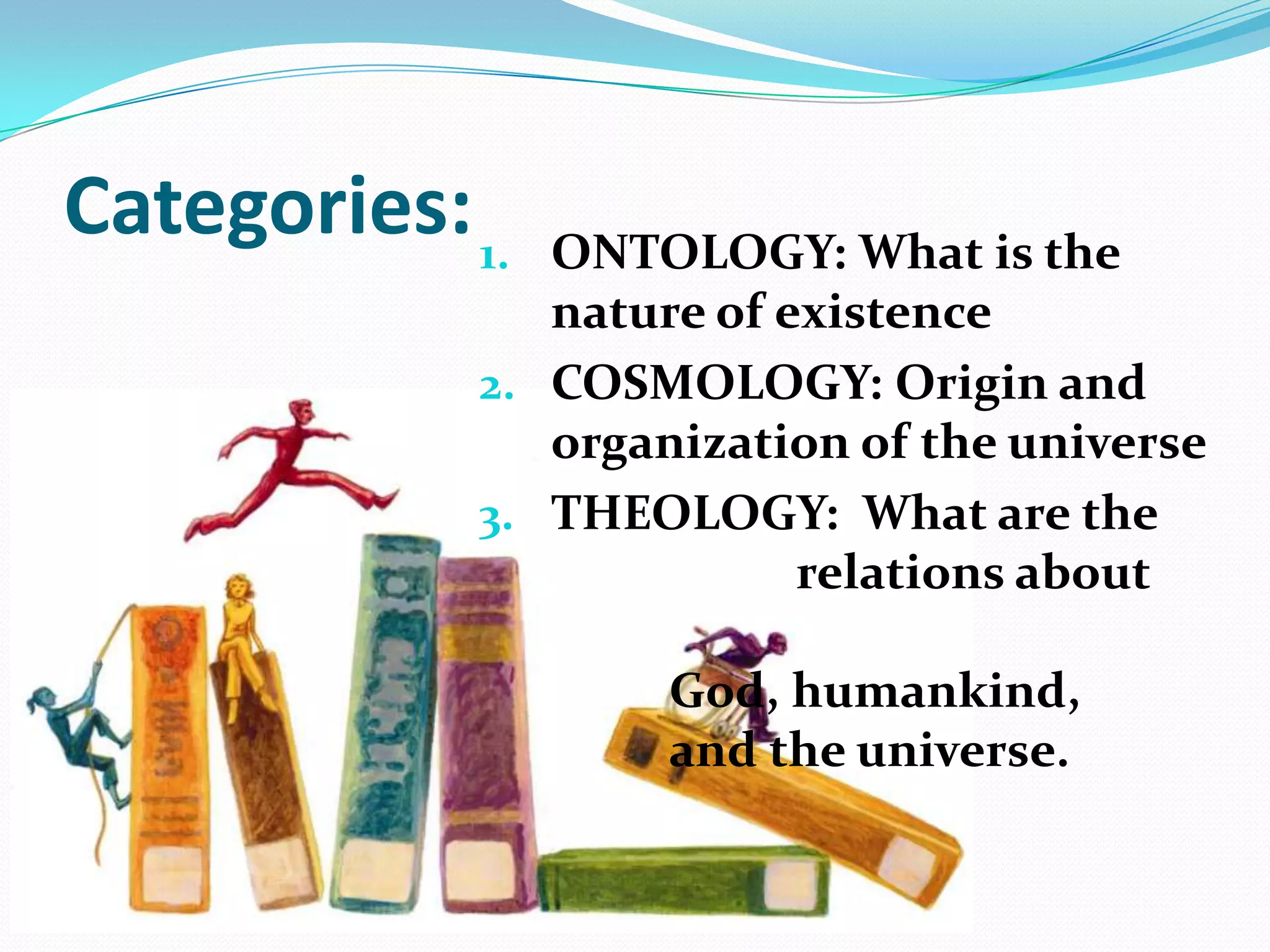
Categories:1. ONTOLOGY: What is the
nature of existence
2. COSMOLOGY: Origin and
organization of the universe
3. THEOLOGY: What are the
relations about
God, humankind,
and the universe.
Philosophical Questions asked in
Metaphysics:
 What is reality?
 Are people basically good or bad?
 What is the nature of the world in which we
live?
 What is the nature of being and of reality?
(ontology)
 What is the origin and what is the structure of
the universe? (cosmology)
 What or who is God? What are the
relations among God, humankind, and the
universe? (theology)
What is Epistemology?
Epistemology is the study of
our method of
acquiring knowledge.
 Epistemology is the study of the
nature of knowledge.
 Generally involves a debate
between rationalism and
empiricism, or the question of
whether
 Knowledge can be acquired a priori
or a posteriori.
Epistemology: Study of Knowledge
a priori (“prior to") - priori
knowledge or justification is
independent of experience
a posteriori (“posterior to") are
used in philosophy (metaphysics)
to distinguish two types of
knowledge. knowledge or
justification is dependent on
experience or empirical evidence.
Epistemology: Study of Knowledge
For Educators:
Epistemology- the
nature of knowledge
and learning
Pedagogy- ways of
teaching
Why is Epistemology important?
 Epistemology is the explanation of how
we think.
 Without epistemology, we could not
think.
 We would have no reason to
believe our thinking was
productive or correct, as
opposed to random images
flashing before our mind.
Importance of Epistemology
distinguish truth from error.
consequences are obvious
flaws in epistemology will
make it harder to
accomplish anything.
Ways of Knowing:
• Empiricism
• Ethical subjectivism
• Moral rationalism
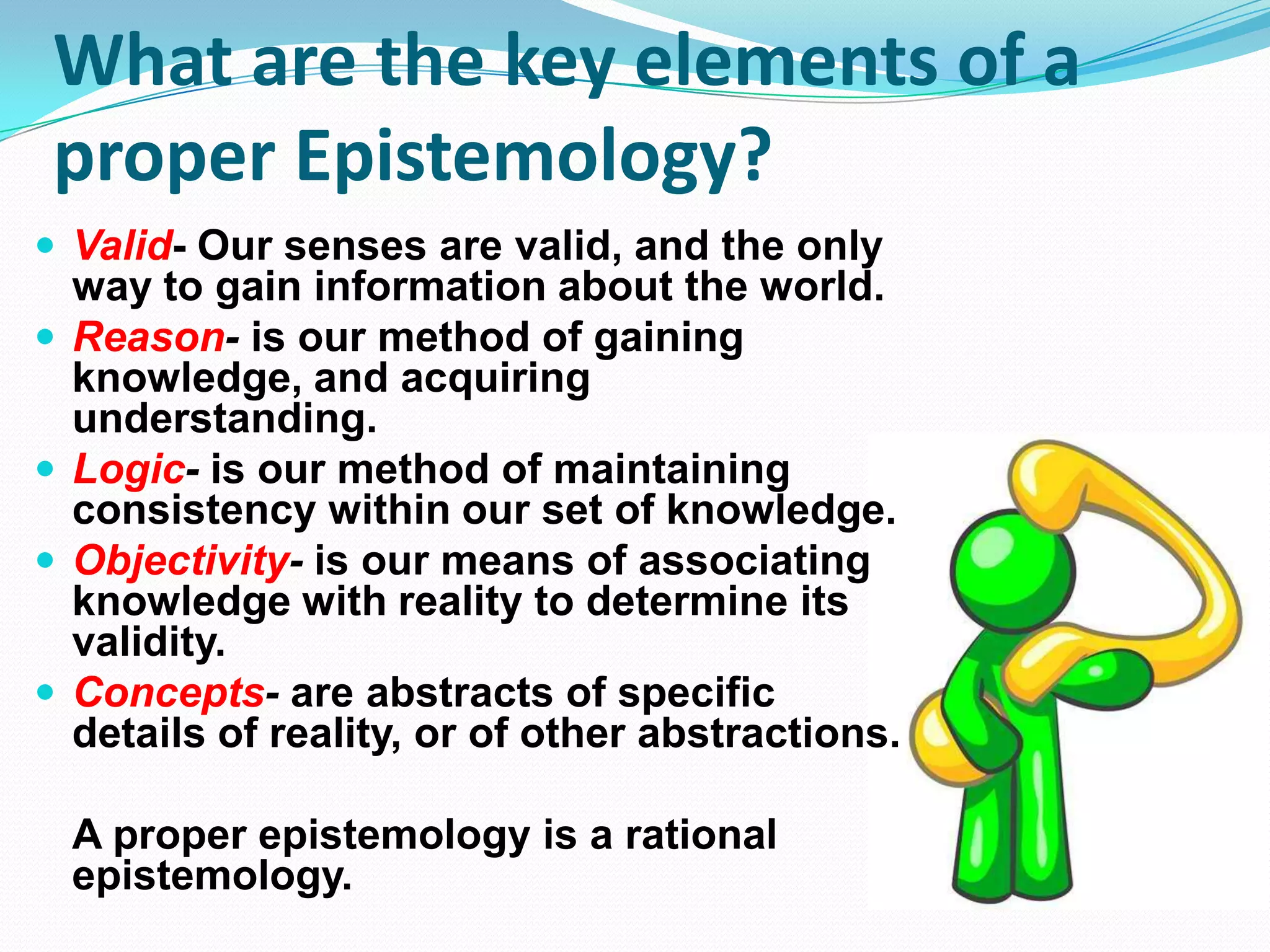
What are the key elements of a
proper Epistemology?
 Valid- Our senses are valid, and the only
way to gain information about the world.
 Reason- is our method of gaining
knowledge, and acquiring
understanding.
 Logic- is our method of maintaining
consistency within our set of knowledge.
 Objectivity- is our means of associating
knowledge with reality to determine its
validity.
 Concepts- are abstracts of specific
details of reality, or of other abstractions.
A proper epistemology is a rational
epistemology.
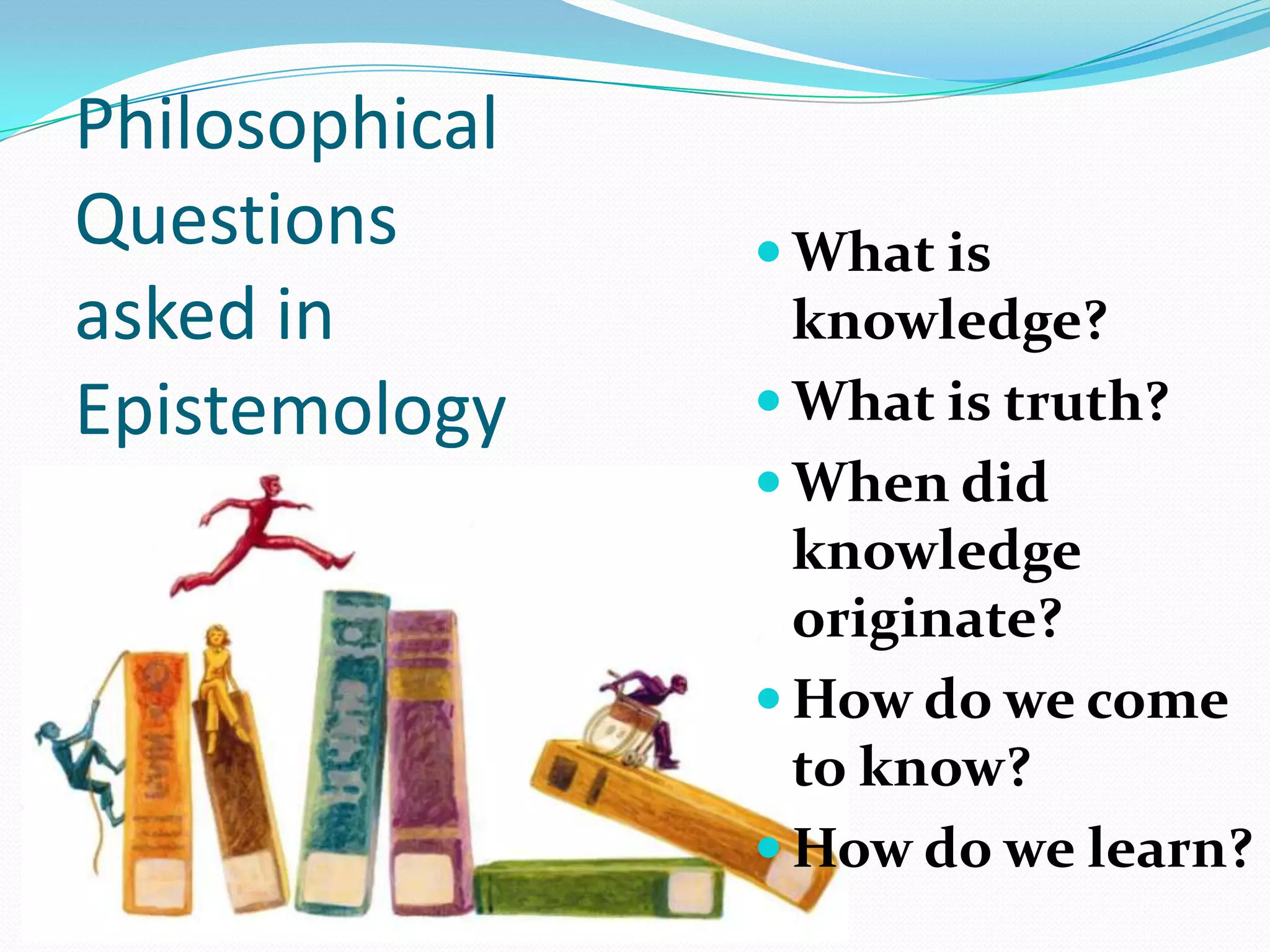
Philosophical
Questions
asked in
Epistemology
 What is
knowledge?
 What is truth?
 When did
knowledge
originate?
 How do we come
to know?
 How do we learn?
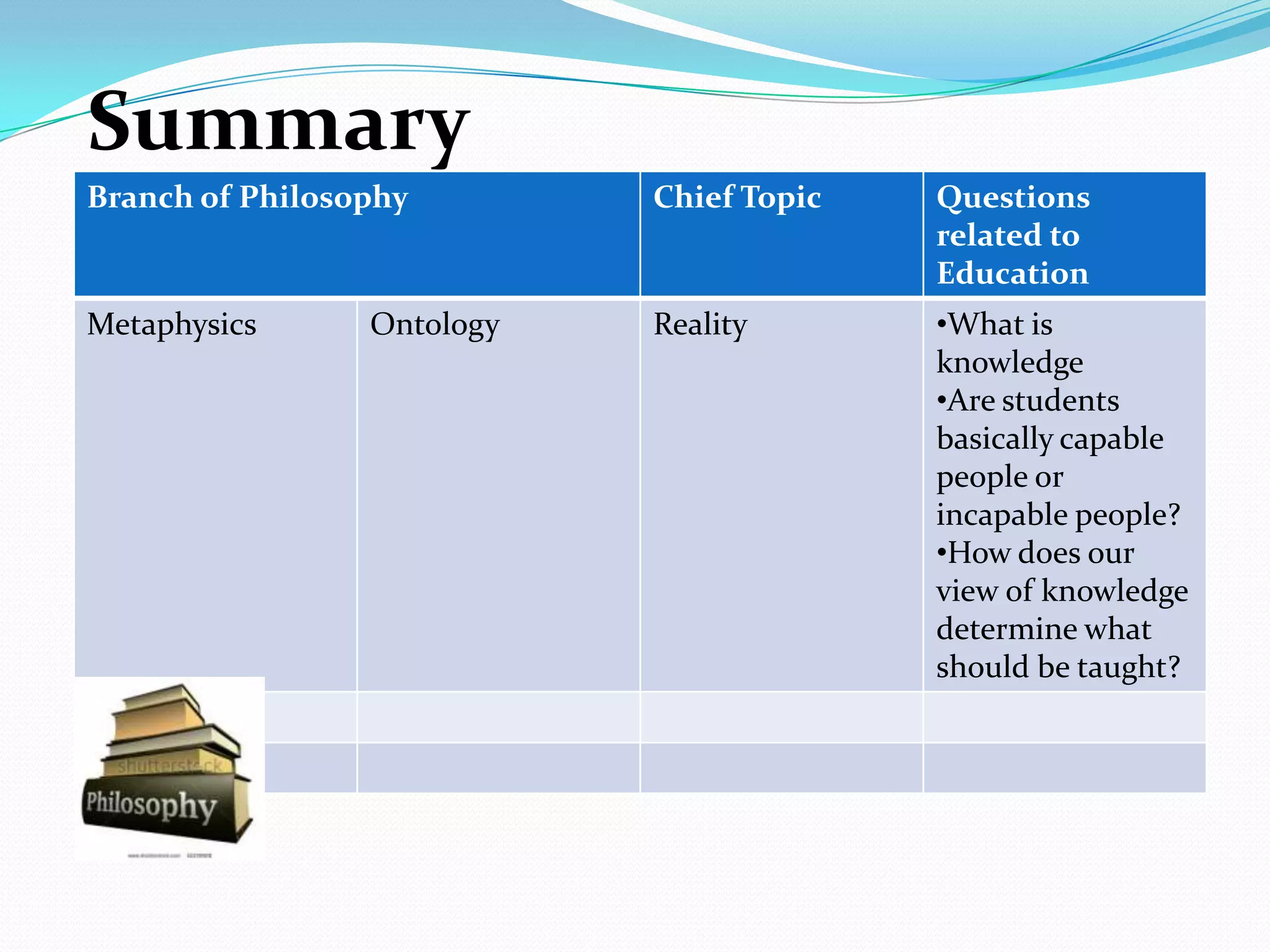
Branch of Philosophy Chief Topic Questions
related to
Education
Metaphysics Ontology Reality •What is
knowledge
•Are students
basically capable
people or
incapable people?
•How does our
view of knowledge
determine what
should be taught?
Summary
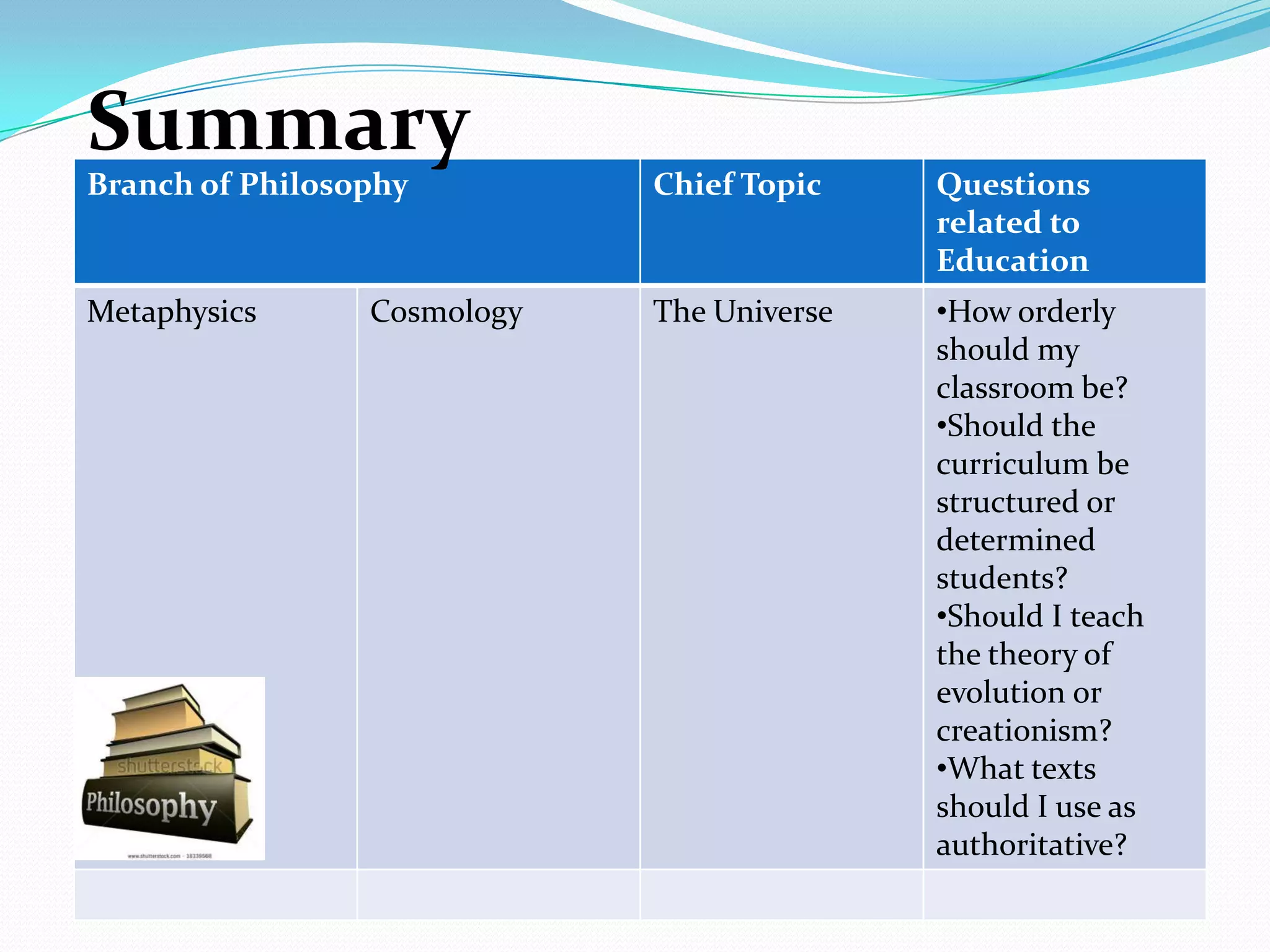
Branch of Philosophy Chief Topic Questions
related to
Education
Metaphysics Cosmology The Universe •How orderly
should my
classroom be?
•Should the
curriculum be
structured or
determined
students?
•Should I teach
the theory of
evolution or
creationism?
•What texts
should I use as
authoritative?
Summary
Branch of Philosophy Chief Topic Questions
related to
Education
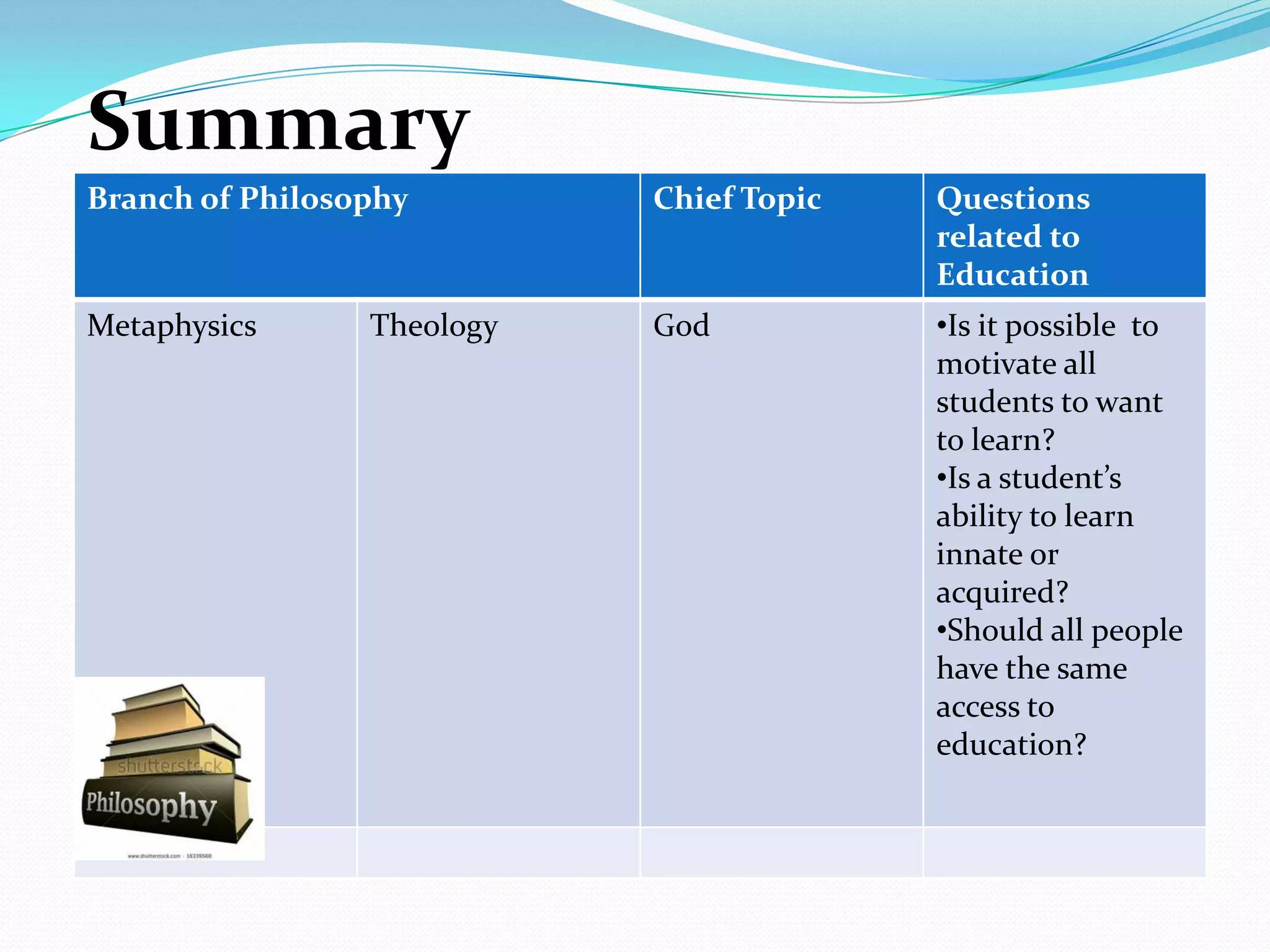
Metaphysics Theology God •Is it possible to
motivate all
students to want
to learn?
•Is a student’s
ability to learn
innate or
acquired?
•Should all people
have the same
access to
education?
Summary
Branch of Philosophy Chief Topic Questions
related to
Education
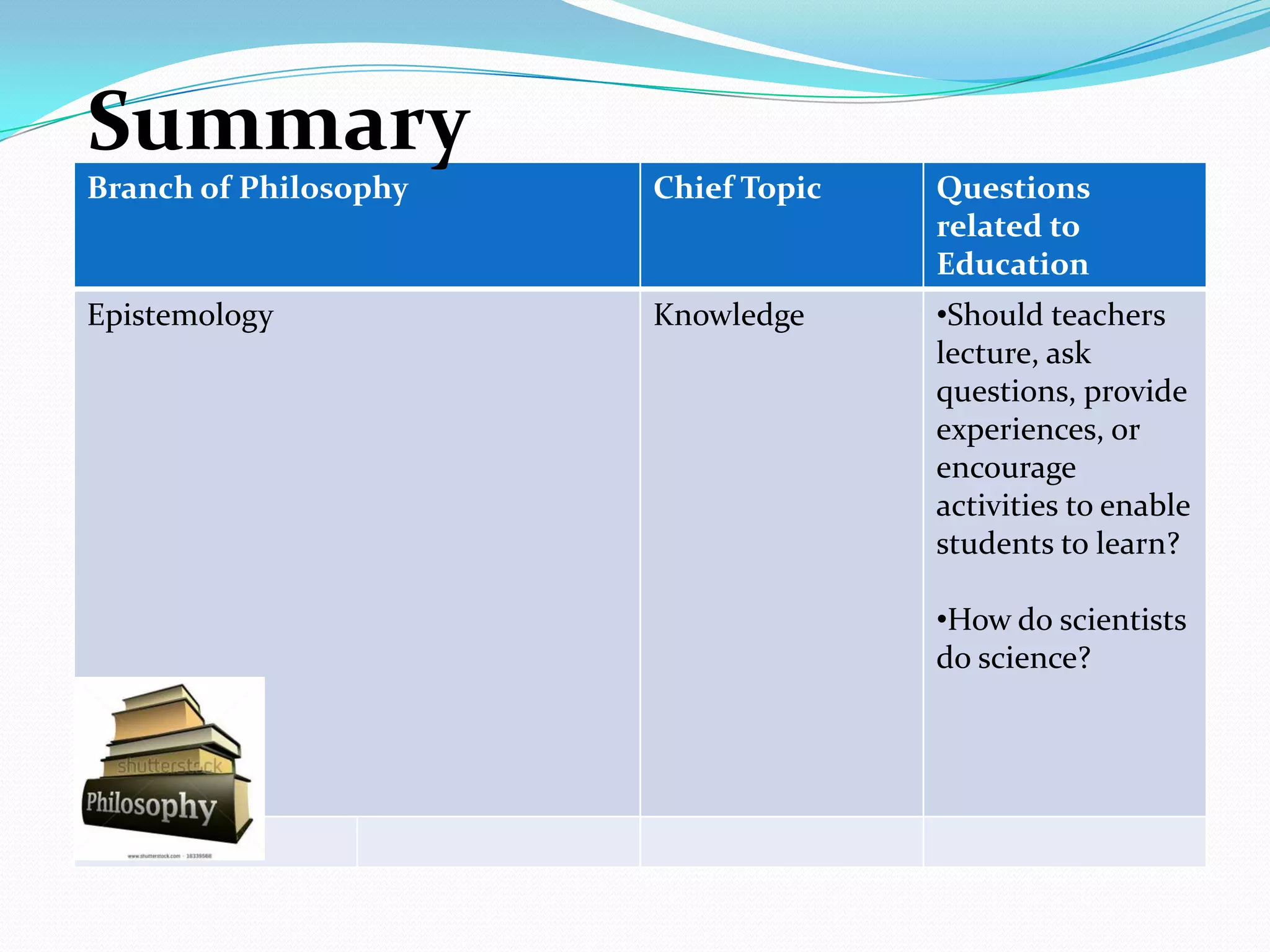
Epistemology Knowledge •Should teachers
lecture, ask
questions, provide
experiences, or
encourage
activities to enable
students to learn?
•How do scientists
do science?
Summary
Guided
Instruction
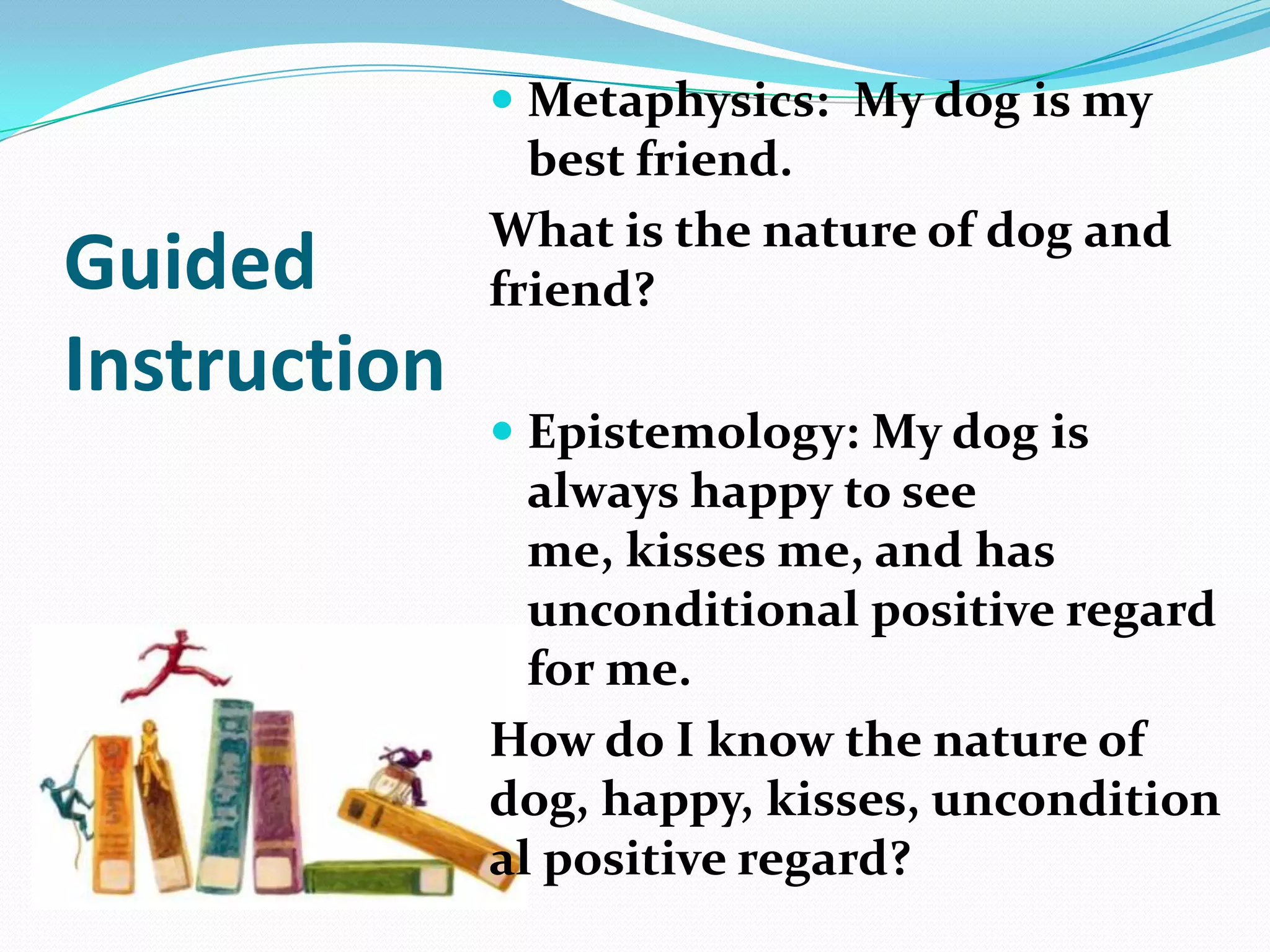
 Metaphysics: My dog is my
best friend.
What is the nature of dog and
friend?
 Epistemology: My dog is
always happy to see
me, kisses me, and has
unconditional positive regard
for me.
How do I know the nature of
dog, happy, kisses, uncondition
al positive regard?
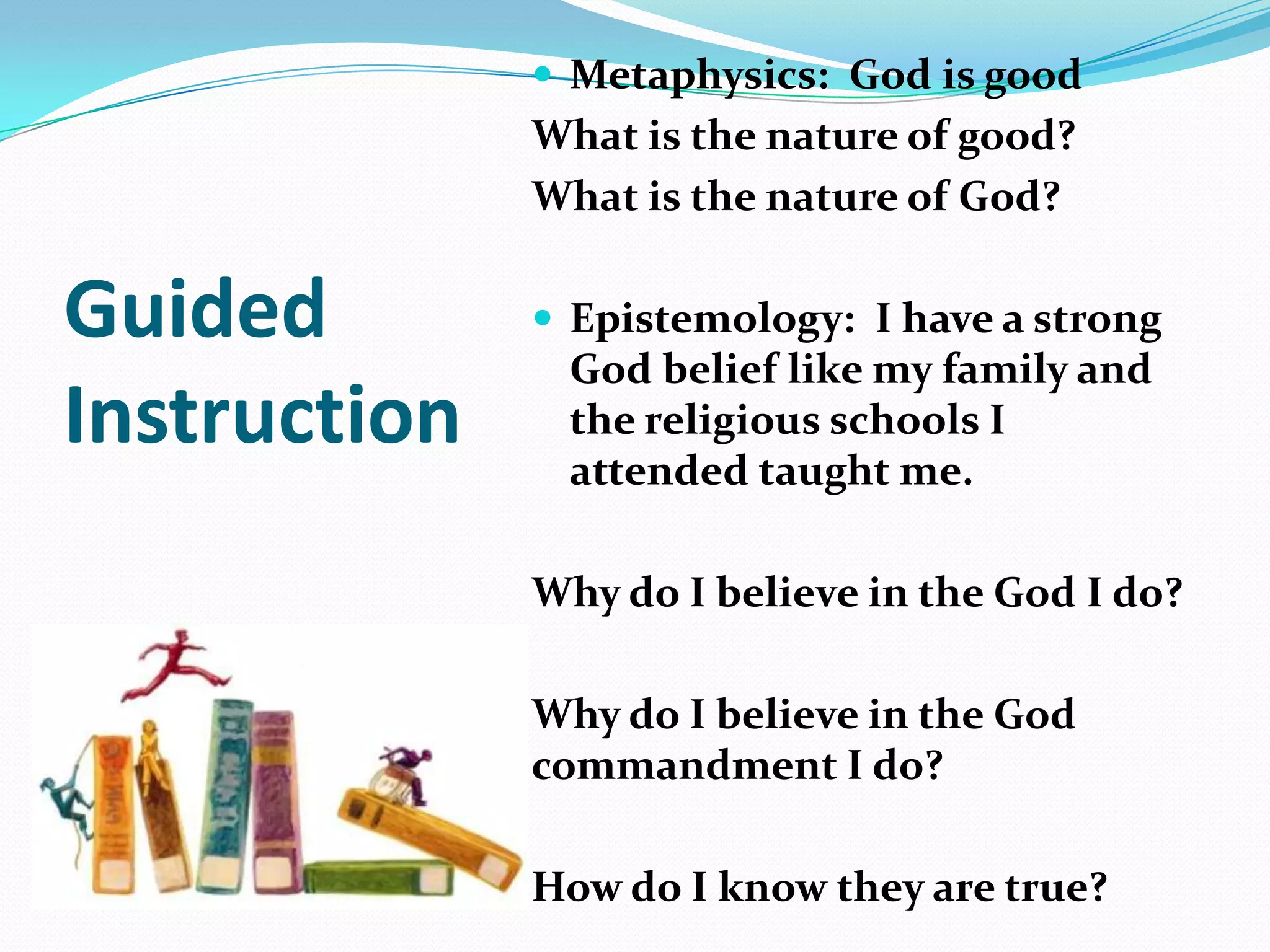
 Metaphysics: God is good
What is the nature of good?
What is the nature of God?
 Epistemology: I have a strong
God belief like my family and
the religious schools I
attended taught me.
Why do I believe in the God I do?
Why do I believe in the God
commandment I do?
How do I know they are true?
Guided
Instruction
Philosophical Quotation of
Education
 Plants are shaped by cultivation and men by
education. .. We are born weak, we need
strength; we are born totally unprovided, we
need aid; we are born stupid, we need
judgment. Everything we do not have at our
birth and which we need when we are grown
is given us by education.
(Jean Jacques Rousseau, Emile, On
Philosophy of Education)
Thank You
for listening..
Have a nice day….
  

2 Major fields of philosophy METAPHYSICS AND EPISTEMOLOGY ONLY

  • 2.
  • 3.
  • 4.
  • 5.
    Metaphysics What is Metaphysics? Itencompasses everything that exists, as well as the nature of existence itself. It says whether the world is real, or merely an illusion. It is a fundamental view of the world around us.
  • 6.
    Why is Metaphysicsimportant? Metaphysics is the foundation of philosophy. The degree to which our metaphysical worldview is correct is the degree to which we are able to comprehend the world, and act accordingly. Without this firm foundation, all knowledge becomes suspect. Any flaw in our view of reality will make it more difficult to live.
  • 7.
    What are thekey elements of a rational metaphysics? Reality is absolute. It has a specific nature and it must be consistent to that nature. Every action has a cause and an effect.
  • 8.
    Categories:1. ONTOLOGY: Whatis the nature of existence 2. COSMOLOGY: Origin and organization of the universe 3. THEOLOGY: What are the relations about God, humankind, and the universe.
  • 9.
    Philosophical Questions askedin Metaphysics:  What is reality?  Are people basically good or bad?  What is the nature of the world in which we live?  What is the nature of being and of reality? (ontology)  What is the origin and what is the structure of the universe? (cosmology)  What or who is God? What are the relations among God, humankind, and the universe? (theology)
  • 10.
    What is Epistemology? Epistemologyis the study of our method of acquiring knowledge.
  • 11.
     Epistemology isthe study of the nature of knowledge.  Generally involves a debate between rationalism and empiricism, or the question of whether  Knowledge can be acquired a priori or a posteriori. Epistemology: Study of Knowledge
  • 12.
    a priori (“priorto") - priori knowledge or justification is independent of experience a posteriori (“posterior to") are used in philosophy (metaphysics) to distinguish two types of knowledge. knowledge or justification is dependent on experience or empirical evidence. Epistemology: Study of Knowledge
  • 13.
    For Educators: Epistemology- the natureof knowledge and learning Pedagogy- ways of teaching
  • 14.
    Why is Epistemologyimportant?  Epistemology is the explanation of how we think.  Without epistemology, we could not think.  We would have no reason to believe our thinking was productive or correct, as opposed to random images flashing before our mind.
  • 15.
    Importance of Epistemology distinguishtruth from error. consequences are obvious flaws in epistemology will make it harder to accomplish anything.
  • 16.
    Ways of Knowing: •Empiricism • Ethical subjectivism • Moral rationalism
  • 17.
    What are thekey elements of a proper Epistemology?  Valid- Our senses are valid, and the only way to gain information about the world.  Reason- is our method of gaining knowledge, and acquiring understanding.  Logic- is our method of maintaining consistency within our set of knowledge.  Objectivity- is our means of associating knowledge with reality to determine its validity.  Concepts- are abstracts of specific details of reality, or of other abstractions. A proper epistemology is a rational epistemology.
  • 18.
    Philosophical Questions asked in Epistemology  Whatis knowledge?  What is truth?  When did knowledge originate?  How do we come to know?  How do we learn?
  • 19.
    Branch of PhilosophyChief Topic Questions related to Education Metaphysics Ontology Reality •What is knowledge •Are students basically capable people or incapable people? •How does our view of knowledge determine what should be taught? Summary
  • 20.
    Branch of PhilosophyChief Topic Questions related to Education Metaphysics Cosmology The Universe •How orderly should my classroom be? •Should the curriculum be structured or determined students? •Should I teach the theory of evolution or creationism? •What texts should I use as authoritative? Summary
  • 21.
    Branch of PhilosophyChief Topic Questions related to Education Metaphysics Theology God •Is it possible to motivate all students to want to learn? •Is a student’s ability to learn innate or acquired? •Should all people have the same access to education? Summary
  • 22.
    Branch of PhilosophyChief Topic Questions related to Education Epistemology Knowledge •Should teachers lecture, ask questions, provide experiences, or encourage activities to enable students to learn? •How do scientists do science? Summary
  • 23.
    Guided Instruction  Metaphysics: Mydog is my best friend. What is the nature of dog and friend?  Epistemology: My dog is always happy to see me, kisses me, and has unconditional positive regard for me. How do I know the nature of dog, happy, kisses, uncondition al positive regard?
  • 24.
     Metaphysics: Godis good What is the nature of good? What is the nature of God?  Epistemology: I have a strong God belief like my family and the religious schools I attended taught me. Why do I believe in the God I do? Why do I believe in the God commandment I do? How do I know they are true? Guided Instruction
  • 25.
    Philosophical Quotation of Education Plants are shaped by cultivation and men by education. .. We are born weak, we need strength; we are born totally unprovided, we need aid; we are born stupid, we need judgment. Everything we do not have at our birth and which we need when we are grown is given us by education. (Jean Jacques Rousseau, Emile, On Philosophy of Education)
  • 26.
    Thank You for listening.. Havea nice day….   