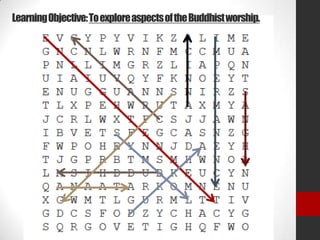
LearningObjective:ToexploreaspectsoftheBuddhistworship.
LearningObjective:Toexplore
aspectsoftheBuddhistworship.
Learning Outcomes:
I will be able to identify three features of a Buddhist temple (L3-L4)
I will be able to explain at least two Buddhist symbols (L3-L5)
I will be able to create a symbolic message and container (L4-L6)
WhichReligion?
• Write down which building belongs to which religion in your
books… 2 Minutes
• Mosque =
• Gurdwara =
• Synagogue =
• Cathedral =
• Mandir =
A C
E
B
A
D
C
E B
D
BuddhistTemples
Buddhist temples are known by many different
names including Stupas and Pagodas.
Some are believed to contain a relic of the
Buddha
They may be small or large,
sometimes beautiful.
Often surrounded by a
monastery and are place of
pilgrimage
Buddhists may
walk around them
as a sign of
respect, chant, me
ditate or make
offerings.
BuddhistTemples…
Buddhist Temples may include the following; Buddhist temples are designed to
symbolise the five elements:
Fire, Air, Earth (symbolised by the base), Water, Wisdom (symbolised by the top)
Draw and label your own small diagram of either a STUPA or a PAGODA temple.
Include at least THREE features.
Once you finish – Write down the differences between the two types of temple.
A Stupa looks like … where as a pagoda temple has …
Buddhistsdon’tjustworshipata
temple…
Theycanalsoworshipathome…
Somewillsetasidearoomasa
SHRINE…Therewillbesomeof
thefollowingthings…
Symbols…
What does the word Symbol mean to you – With the person
next to you … Come up with a list of as many symbols as you
can think of …
Lotus Flower = Purity
Mandala = Existence
Buddha = …
Water = Purity
Fruit = Ultimate fruit of
enlightenment (the goal) Incense = Calm and Peaceful
Candles = Enlightenment
Flowers = Changing nature
Impermanence…
Prayer Wheel = …
What could
these
represent?
Rachelisa15yearoldBuddhist
livinginLondon…
‘We have a shrine room at home. It is a quiet and peaceful
room and I love to go into it. When I go in I bow down to the
Buddha. We have photographs of the Dalai Lama on the walls.
There are lots of statues and images of the Buddha.
We put flowers in the room and there are candles and
incense burning. It is a special place and when I go in, I feel
calm and different.
I sit on one cushion; meditate and worship. I go there at
least once a day. It helps me face the world’
Look at the image of the shrine and imagine you were there.
WRITE
What are the sounds? I can hear …
What are the smells? I can smell the …
What can you see? I can see …
What is the atmosphere like? The atmosphere is …
How do you feel? I feel …
Review
• I can identify the main features of a Buddhist Temple. L3-4
NEXT …
• I can explain why images of Buddha are so varied. L4-5
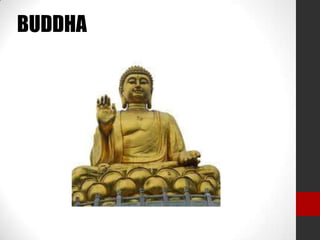
BUDDHA
BUDDHA
BUDDHA
BUDDHA
NotaBuddha…
Buddha
In China he is represented as the fat laughing
Buddha with a friendly face – He represents
wealth…
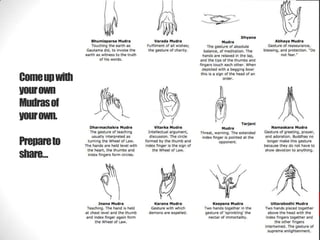
Every image you just saw has symbolic
meanings… The position of the hands in
particular have special meanings.
These are called MUDRAS…
Comeupwith
yourown
Mudrasof
yourown.
Prepareto
share…
Mantras
As part of worship Buddhists chant mantras.
These are a combination of sounds.
These symbolise a particular aspect of enlightenment.
Buddhists sometimes write a mantra on a piece of paper and place it
inside the prayer wheel. The turning of the prayer wheel symbolises
that the spiritual power of the mantra is release into the world.
• What is a mantra?
• Write your own symbolic message for the world…
• What could a modern replacement for the prayer wheel be?
FindtheFiction…
• Write down ONE TRUE statement that you have learnt from
today’s lesson and TWO FALSE statements from todays
lesson.
Buddhist temples always have golden roofs…
Buddhist temples are always square…
One type of Buddhist temple is known as a Pagoda…
Buddha's always have big bellies…
Buddha's hands are always folded…
Buddha's hands positions symbolise many things

0801 - Buddhism

  • 1.
  • 2.
    LearningObjective:Toexplore aspectsoftheBuddhistworship. Learning Outcomes: I willbe able to identify three features of a Buddhist temple (L3-L4) I will be able to explain at least two Buddhist symbols (L3-L5) I will be able to create a symbolic message and container (L4-L6)
  • 3.
    WhichReligion? • Write downwhich building belongs to which religion in your books… 2 Minutes • Mosque = • Gurdwara = • Synagogue = • Cathedral = • Mandir = A C E B A D C E B D
  • 4.
    BuddhistTemples Buddhist temples areknown by many different names including Stupas and Pagodas. Some are believed to contain a relic of the Buddha They may be small or large, sometimes beautiful. Often surrounded by a monastery and are place of pilgrimage Buddhists may walk around them as a sign of respect, chant, me ditate or make offerings.
  • 5.
    BuddhistTemples… Buddhist Temples mayinclude the following; Buddhist temples are designed to symbolise the five elements: Fire, Air, Earth (symbolised by the base), Water, Wisdom (symbolised by the top) Draw and label your own small diagram of either a STUPA or a PAGODA temple. Include at least THREE features. Once you finish – Write down the differences between the two types of temple. A Stupa looks like … where as a pagoda temple has …
  • 6.
  • 7.
    Symbols… What does theword Symbol mean to you – With the person next to you … Come up with a list of as many symbols as you can think of …
  • 8.
    Lotus Flower =Purity Mandala = Existence Buddha = … Water = Purity Fruit = Ultimate fruit of enlightenment (the goal) Incense = Calm and Peaceful Candles = Enlightenment Flowers = Changing nature Impermanence… Prayer Wheel = … What could these represent?
  • 9.
    Rachelisa15yearoldBuddhist livinginLondon… ‘We have ashrine room at home. It is a quiet and peaceful room and I love to go into it. When I go in I bow down to the Buddha. We have photographs of the Dalai Lama on the walls. There are lots of statues and images of the Buddha. We put flowers in the room and there are candles and incense burning. It is a special place and when I go in, I feel calm and different. I sit on one cushion; meditate and worship. I go there at least once a day. It helps me face the world’
  • 10.
    Look at theimage of the shrine and imagine you were there. WRITE What are the sounds? I can hear … What are the smells? I can smell the … What can you see? I can see … What is the atmosphere like? The atmosphere is … How do you feel? I feel …
  • 11.
    Review • I canidentify the main features of a Buddhist Temple. L3-4 NEXT … • I can explain why images of Buddha are so varied. L4-5
  • 12.
  • 13.
  • 14.
  • 15.
  • 17.
  • 18.
    Buddha In China heis represented as the fat laughing Buddha with a friendly face – He represents wealth… Every image you just saw has symbolic meanings… The position of the hands in particular have special meanings. These are called MUDRAS…
  • 19.
  • 20.
    Mantras As part ofworship Buddhists chant mantras. These are a combination of sounds. These symbolise a particular aspect of enlightenment. Buddhists sometimes write a mantra on a piece of paper and place it inside the prayer wheel. The turning of the prayer wheel symbolises that the spiritual power of the mantra is release into the world. • What is a mantra? • Write your own symbolic message for the world… • What could a modern replacement for the prayer wheel be?
  • 21.
    FindtheFiction… • Write downONE TRUE statement that you have learnt from today’s lesson and TWO FALSE statements from todays lesson. Buddhist temples always have golden roofs… Buddhist temples are always square… One type of Buddhist temple is known as a Pagoda… Buddha's always have big bellies… Buddha's hands are always folded… Buddha's hands positions symbolise many things