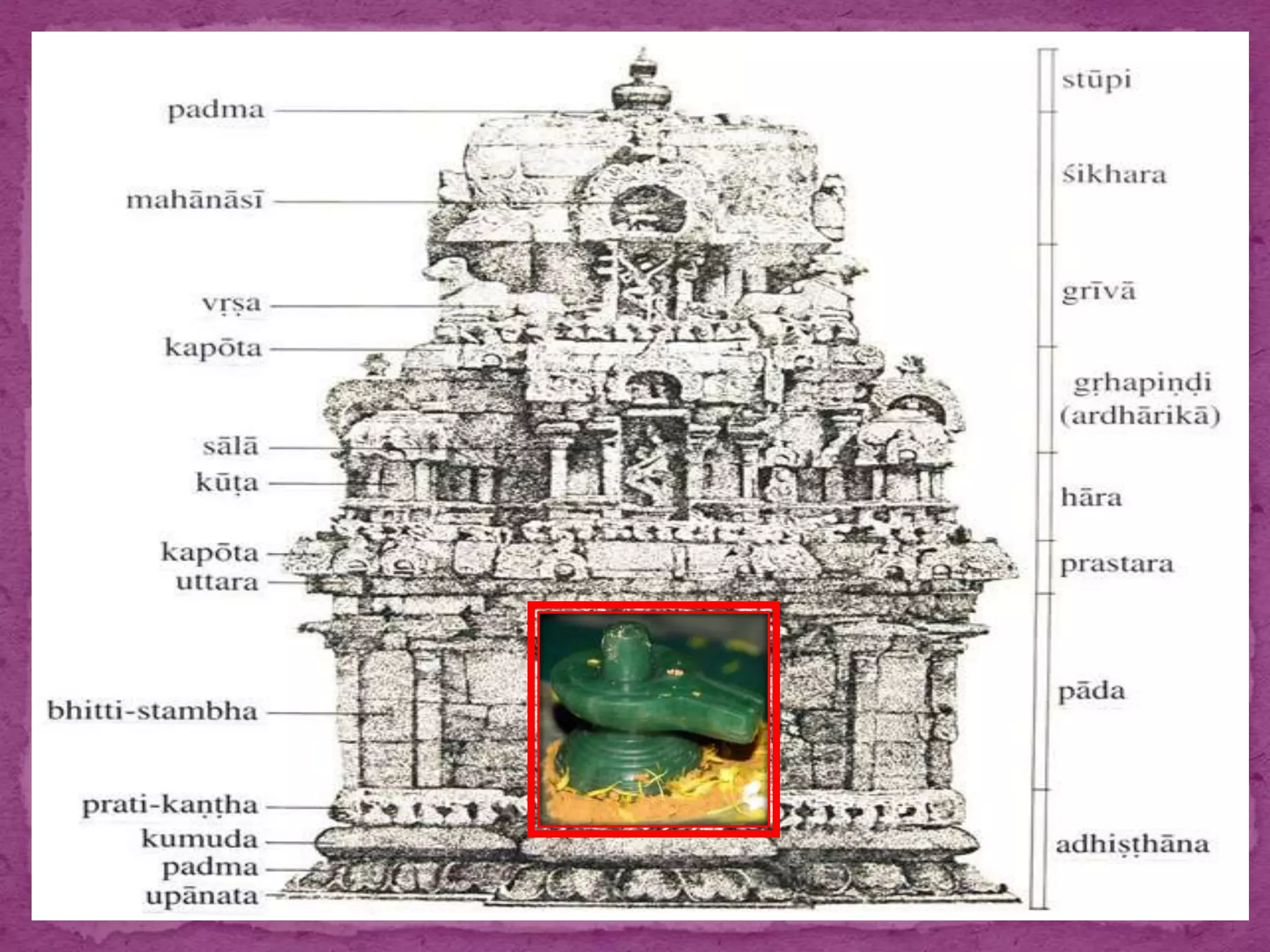
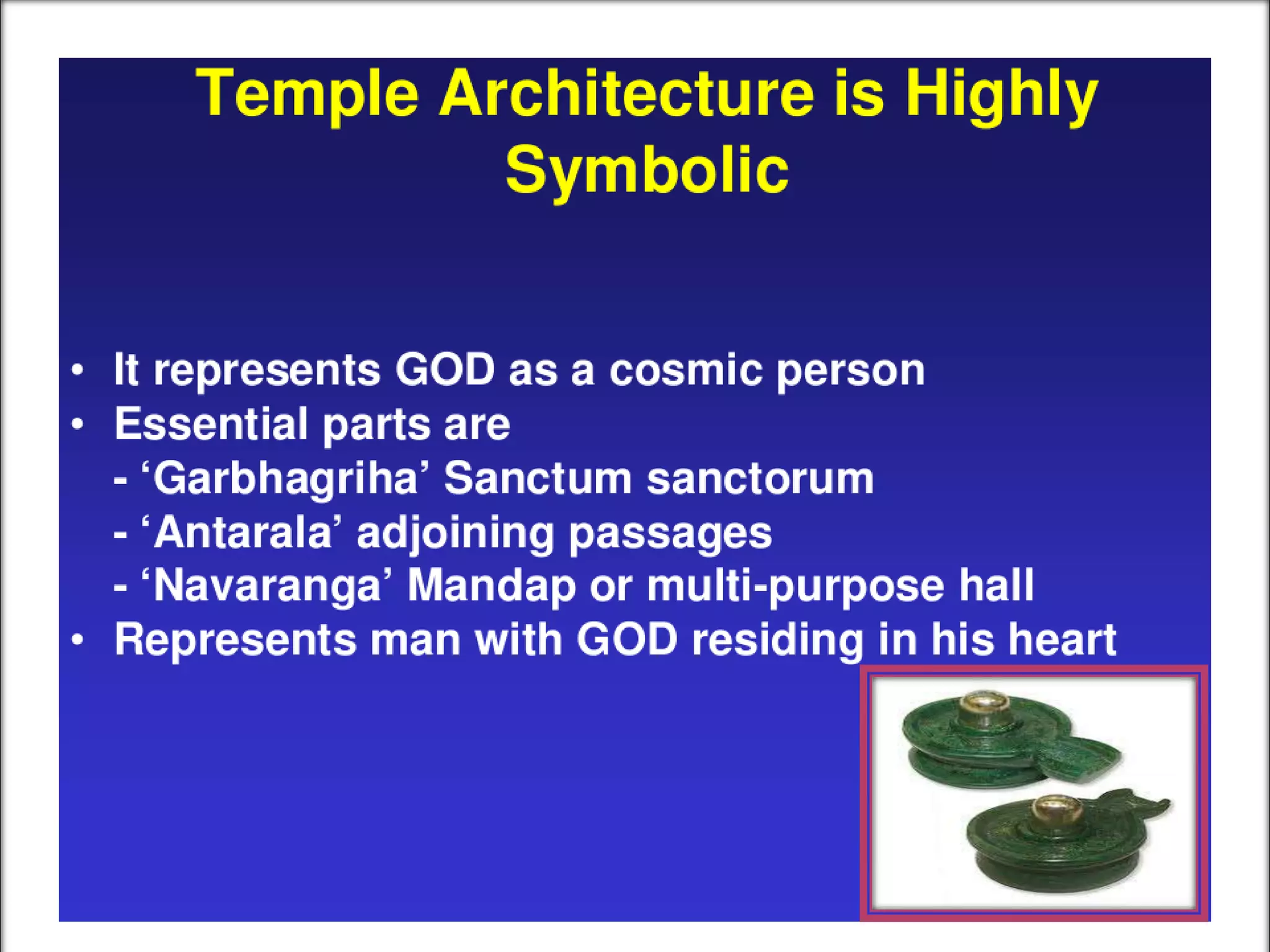
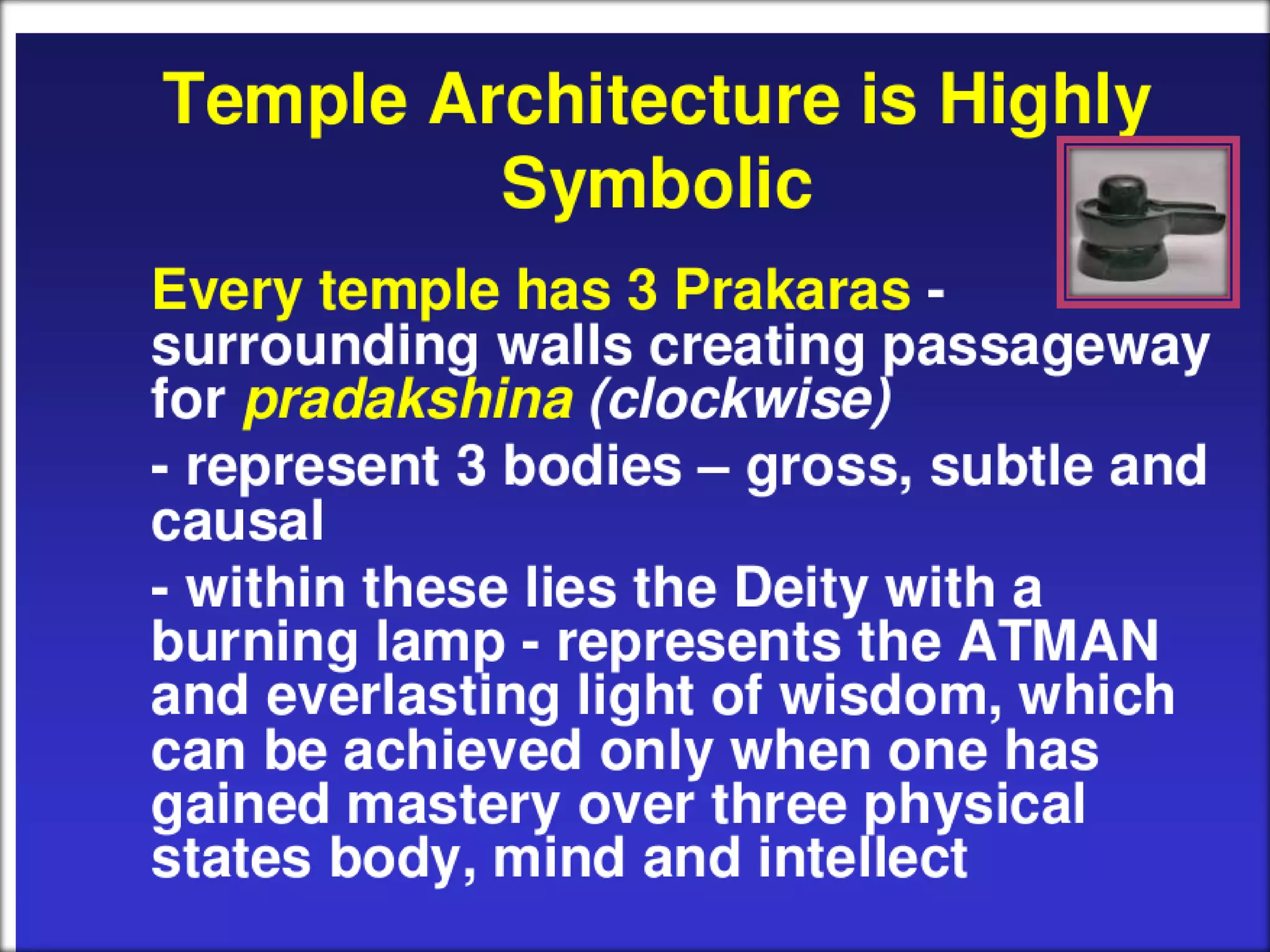
 Let’s start with the temple
complex being looked upon as a
representation of Sri Chakra.
 At the centre of the temple is the
image of divinity and its purity
that generations after generations
have revered and venerated. That
image residing at the heart of the
temple is its life; and is its reason.
One can think of an icon without
a temple; but it is impossible to
think of a temple without an icon
of the divinity. The very purpose
of a temple is its icon. And,
therefore is the most important
structure of the temple is the
Garbagriha where the icon
resides.
SUNBones, Right Eye, Sight, Heart, Stomach
MOON
Mind, Emotions, Body Fluids, Left Eye, Sense of Taste,
Breast, Chest, Loins
MARS
Muscles, Head, Testicles, Bone Marrow, Blood Pressure,
Bile, Vigour
MERCURY
Skin, Sense of Smell, Memory, Intelligence, Speech,
Consciousness, Respiratory Canal, Intestines, Throat
JUPITERFat, Liver, Gall Bladder, Spleen, Sense of Sound, Ears
VENUS
Semen, Sense of Taste, Sexual Organs, Reproductive
System, Face, Beauty of Eyes
SATURN
Sense of Touch, Nerves, Joints (including spine), Legs,
Knees, Ankles
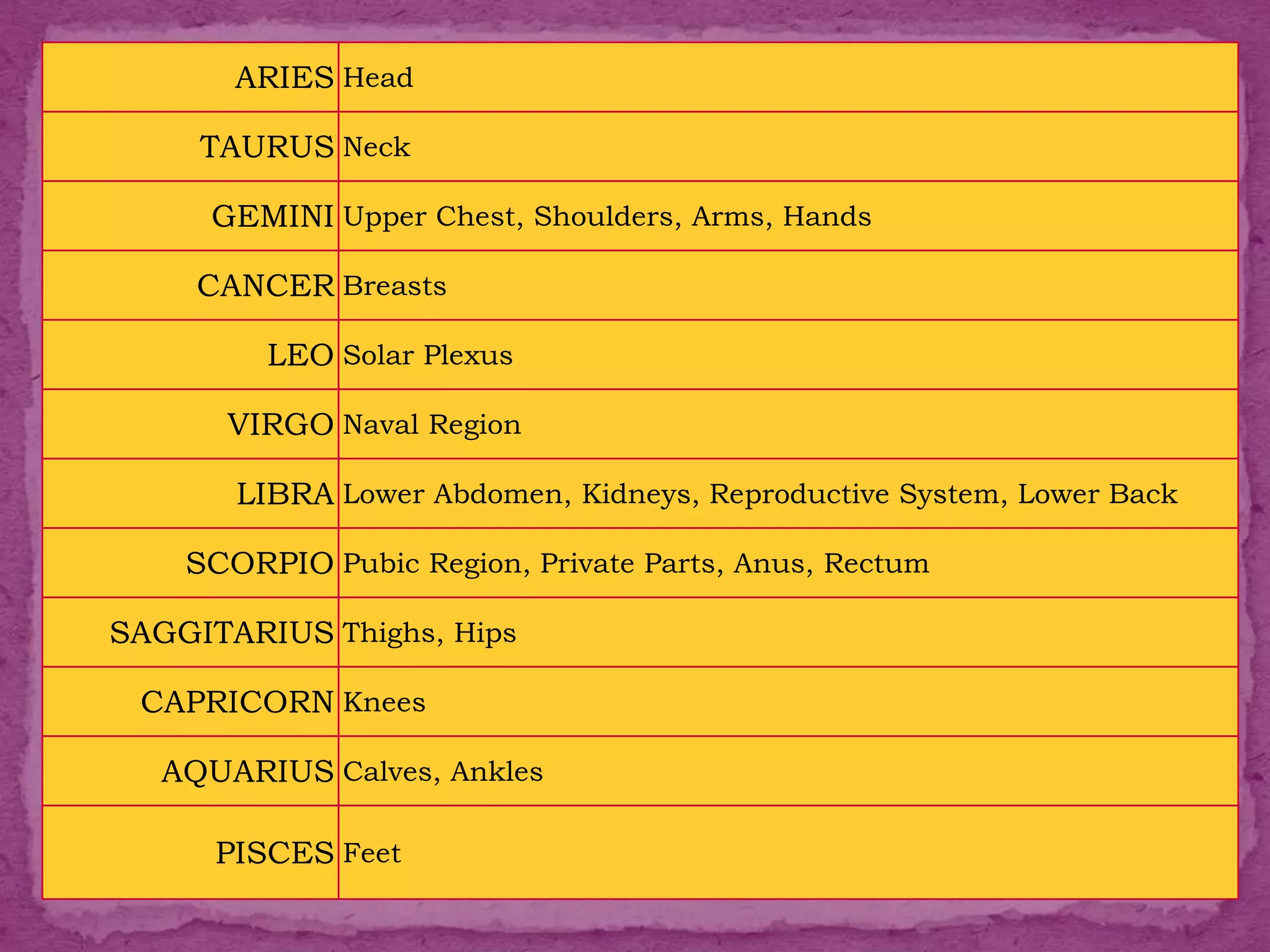
ARIES Head
TAURUS Neck
GEMINI Upper Chest, Shoulders, Arms, Hands
CANCER Breasts
LEO Solar Plexus
VIRGO Naval Region
LIBRA Lower Abdomen, Kidneys, Reproductive System, Lower Back
SCORPIO Pubic Region, Private Parts, Anus, Rectum
SAGGITARIUS Thighs, Hips
CAPRICORN Knees
AQUARIUS Calves, Ankles
PISCES Feet
MESHAM 1ST HOUSE Head, Brain, Hair, Appearance
RISHABAM 2ND HOUSE
Face, Right Eye, Neck, Throat, Teeth, Tongue, Nose, Mouth,
Speech, Nails
MITHUNAM 3RD HOUSE
Ears, Right Ear, Lungs, Shoulders, Arms, Hands, Upper part
of Eusophagus, Clavicles, Mobility
KADAGAM 4TH HOUSE Breasts, Chest, Lungs, Heart, Diaphragm
SIMHAM 5TH HOUSE
Upper Abdomen, Stomach, Liver, Gall Bladder, Spleen,
Pancreas, Duodenum, Mind
KANNI 6TH HOUSE
Intestines, Digestion, Absorption, Appendix, Lowerback,
Injuries, Wounds, Medical
THULAM 7TH HOUSE
Urinary Tract, Kidneys, Sexual Organs, Uterus, Ovaries,
Testicles, Semen, Lower Back
VIRUCHIGAM 8TH HOUSE External Genital Organs, Anus, Perineum
DHANUR 9TH HOUSE Hips, Thighs
MAGARAM 10TH HOUSE Knees, Joints, Legs
KHUMBAM 11TH HOUSE Left Ear, Calves, Ankles, Lower Legs
MEENAM 12TH HOUSE Feet
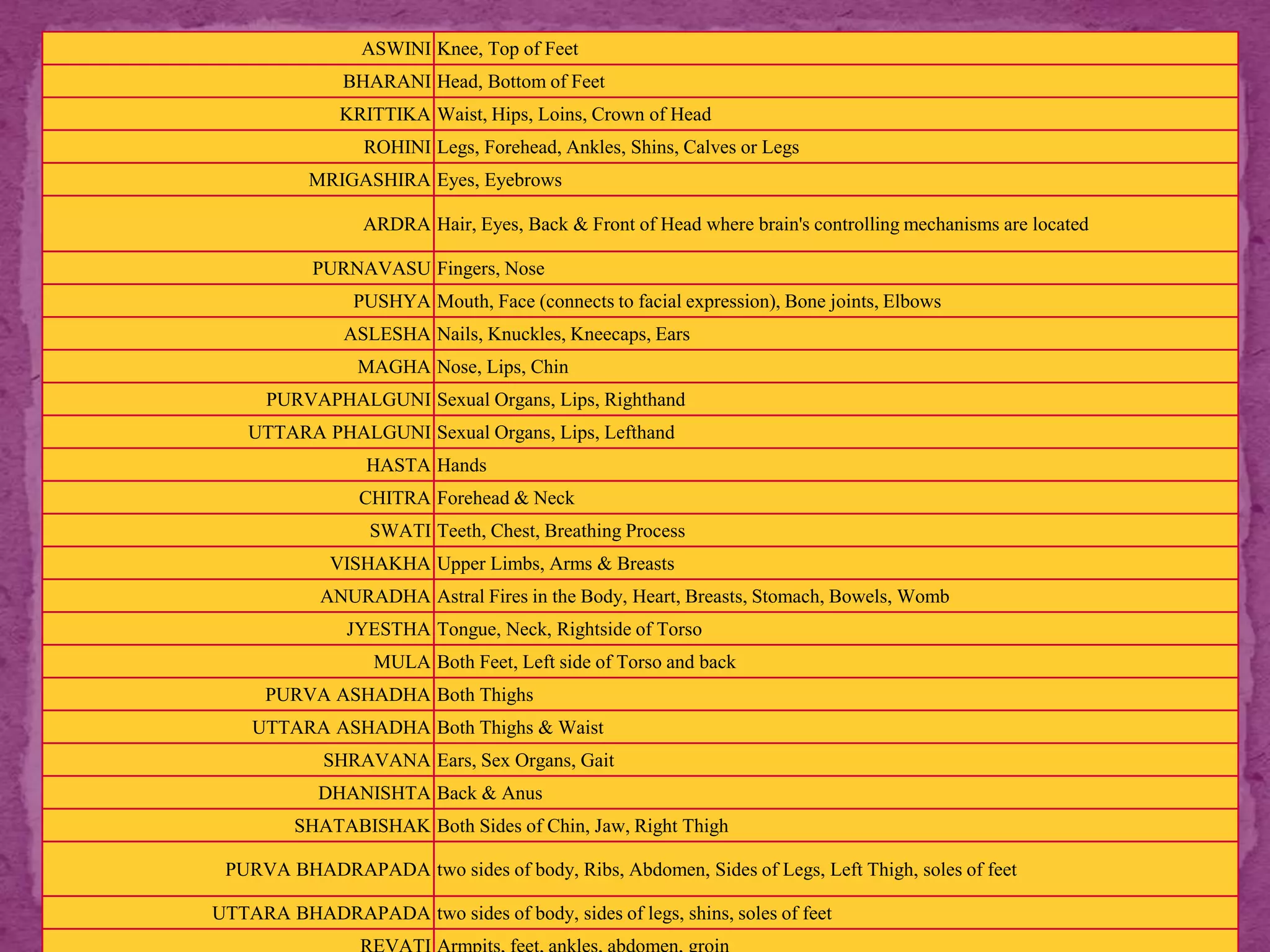
ASWINI Knee, Top of Feet
BHARANI Head, Bottom of Feet
KRITTIKA Waist, Hips, Loins, Crown of Head
ROHINI Legs, Forehead, Ankles, Shins, Calves or Legs
MRIGASHIRA Eyes, Eyebrows
ARDRA Hair, Eyes, Back & Front of Head where brain's controlling mechanisms are located
PURNAVASU Fingers, Nose
PUSHYA Mouth, Face (connects to facial expression), Bone joints, Elbows
ASLESHA Nails, Knuckles, Kneecaps, Ears
MAGHA Nose, Lips, Chin
PURVAPHALGUNI Sexual Organs, Lips, Righthand
UTTARA PHALGUNI Sexual Organs, Lips, Lefthand
HASTA Hands
CHITRA Forehead & Neck
SWATI Teeth, Chest, Breathing Process
VISHAKHA Upper Limbs, Arms & Breasts
ANURADHA Astral Fires in the Body, Heart, Breasts, Stomach, Bowels, Womb
JYESTHA Tongue, Neck, Rightside of Torso
MULA Both Feet, Left side of Torso and back
PURVA ASHADHA Both Thighs
UTTARA ASHADHA Both Thighs & Waist
SHRAVANA Ears, Sex Organs, Gait
DHANISHTA Back & Anus
SHATABISHAK Both Sides of Chin, Jaw, Right Thigh
PURVA BHADRAPADA two sides of body, Ribs, Abdomen, Sides of Legs, Left Thigh, soles of feet
UTTARA BHADRAPADA two sides of body, sides of legs, shins, soles of feet
Consciousness express itself
through Seven Chakras
Muladhar Chakra Body – Karma (action)
Swadhishthan Chakra Senses– Bhoga (sensual enjoyment)
Manipur Chakra Prana – Breath
Anahata Chakra Heart - Love
Vishuddhi Chakra Mind - Thoughts
Angya Chakra Am-ness - Meditation
Sahstrar Chakra Soul - Samadhi
Pipilika Yoga:It is of Six types & are
related to Six Chakras
Muladhar Chakra Karma Yoga
Swadhishthan Chakra Tantra Yoga
Manipur Chakra Hatha Yoga
Anahata Chakra Bhakti Yoga
Vishuddhi Chakra Gyana Yoga
Angya Chakra Dhyan Yoga
Sahstrar Chakra Sankhya Yoga
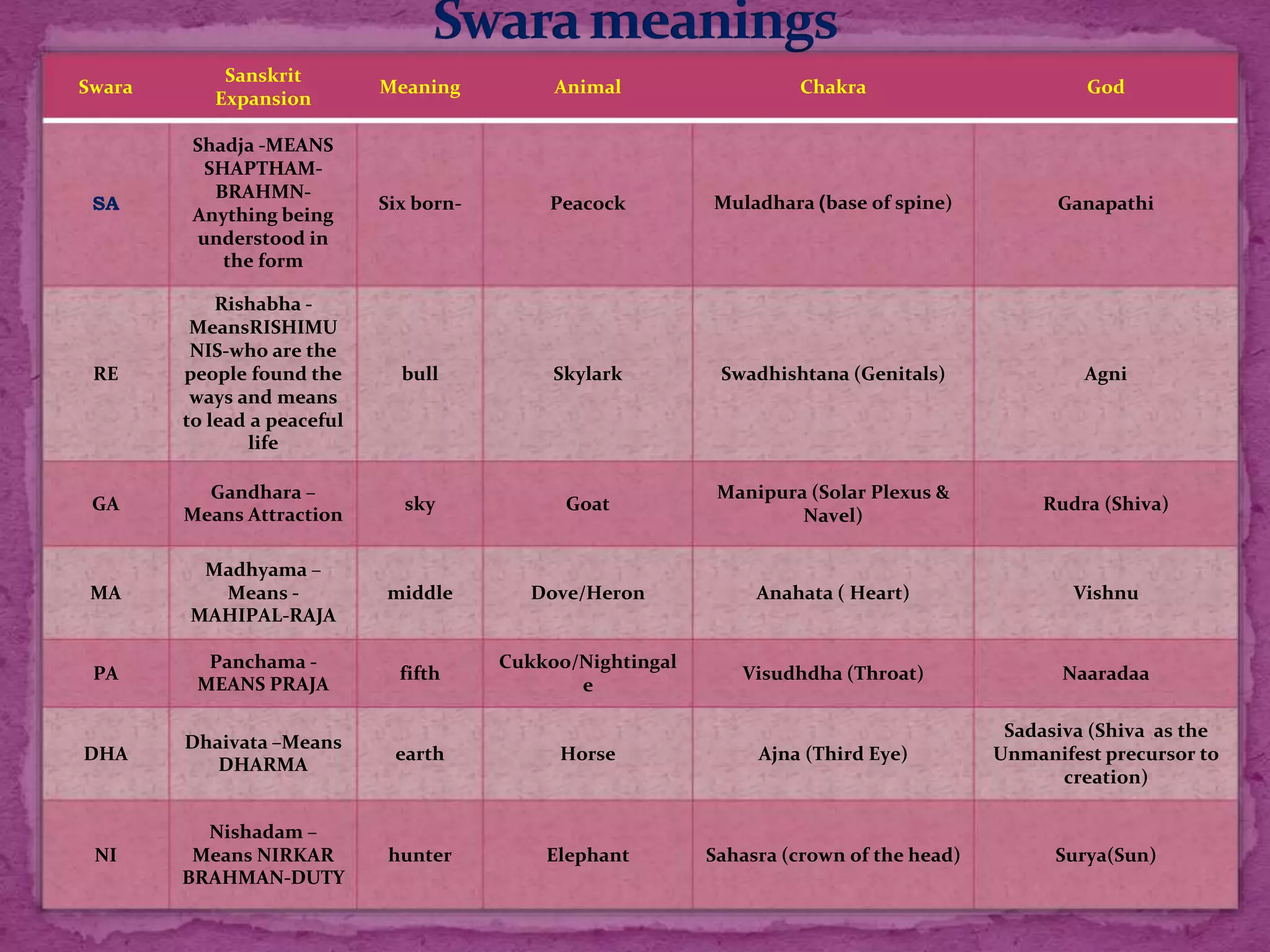
Swara
Sanskrit
Expansion
Meaning Animal Chakra God
SA
Shadja -MEANS
SHAPTHAM-
BRAHMN-
Anything being
understood in
the form
Six born- Peacock Muladhara (base of spine) Ganapathi
RE
Rishabha -
MeansRISHIMU
NIS-who are the
people found the
ways and means
to lead a peaceful
life
bull Skylark Swadhishtana (Genitals) Agni
GA
Gandhara –
Means Attraction
sky Goat
Manipura (Solar Plexus &
Navel)
Rudra (Shiva)
MA
Madhyama –
Means -
MAHIPAL-RAJA
middle Dove/Heron Anahata ( Heart) Vishnu
PA
Panchama -
MEANS PRAJA
fifth
Cukkoo/Nightingal
e
Visudhdha (Throat) Naaradaa
DHA
Dhaivata –Means
DHARMA
earth Horse Ajna (Third Eye)
Sadasiva (Shiva as the
Unmanifest precursor to
creation)
NI
Nishadam –
Means NIRKAR
BRAHMAN-DUTY
hunter Elephant Sahasra (crown of the head) Surya(Sun)
 Chakras represent the energy
centers. The importance of various
chakras in spiritual path is well
known.
 The production of various seed-
sounds in relation to various
chakras starting from Muladhara
at the base are shown.
 In the Vedic tradition, the human
spinal cord is represented as the
musical instrument (Veena).
 The 24 frets of the instrument are
analogous to the 24 cartilages in the
spinal cord. The number 24 also
relates to the 24 syllables in the
VedicGayatriMantra. (Ref:Sriranga
Sadguru, Amaravani
 The divine dance of Lord Nataraja,
Lord of Dance, signifies the yogic
process of self realization.
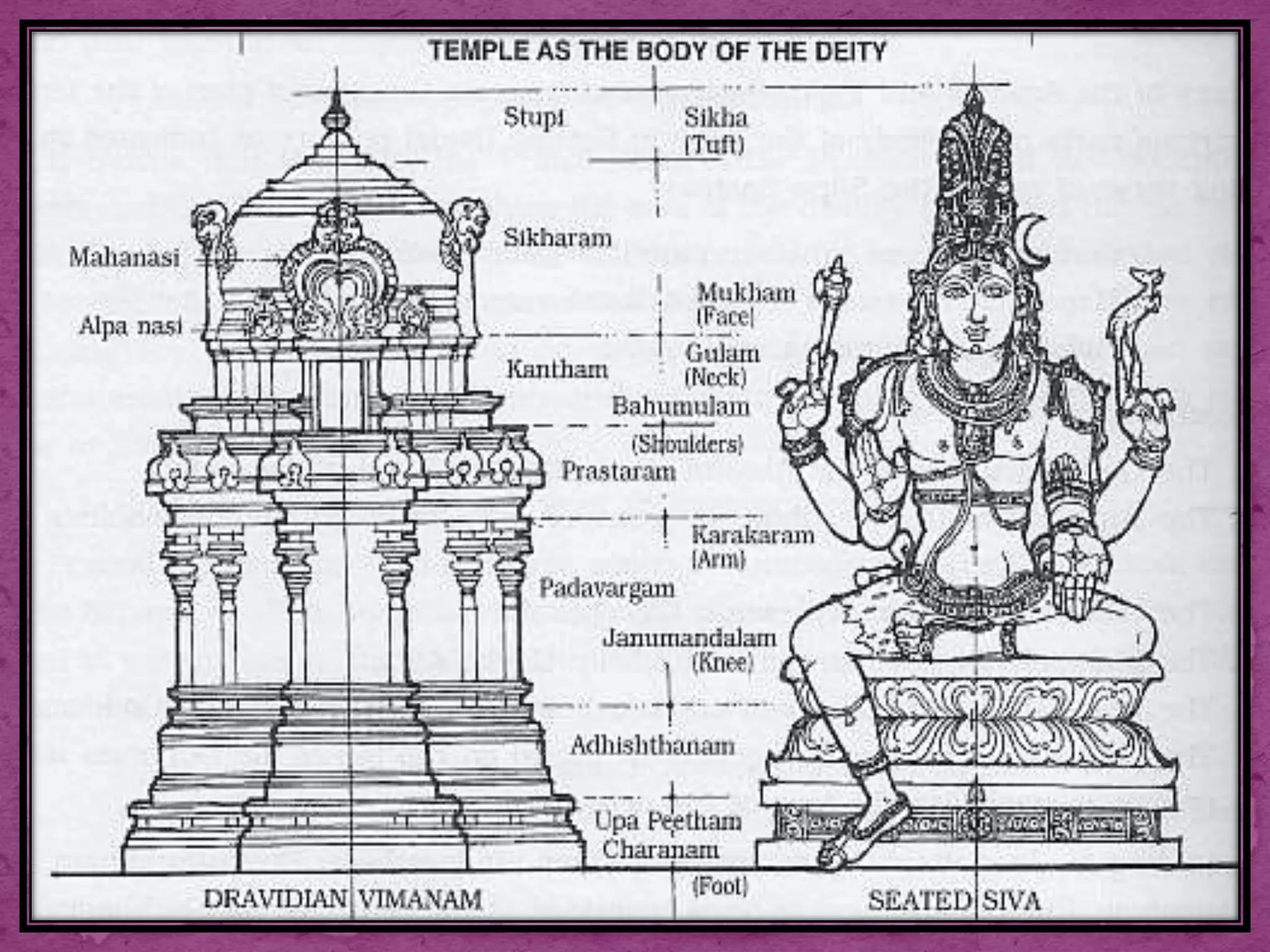
 The other symbolism is that
the human body is a temple
in which the antaryamin
resides. The analogy is
extended to explain the
various parts of the body as
being representations of
the aspects of a temple. In
this process, the forehead is
said to represent the
sanctum; and the top of the
head, the tower. The space
between the eyebrows, the
ajna chakra, is the seat of
the divinity. The finial of
the tower is the unseen the
sahasrara located above the
head.
 Human body with
chakras - (Abode
of God) Devaalaya
 God indwelling in
human being -
(Deity) Murti
 Feet - Rajagopura
 Hands - Prakaara
 Abdomen -
Mandapa
 Heart as
Antaraala
(entrance to
Garbha Griha)
 Crown of the head
- sanctum
sanctorum -
Garbha Griha
 Rituals - a guide to
inner worship
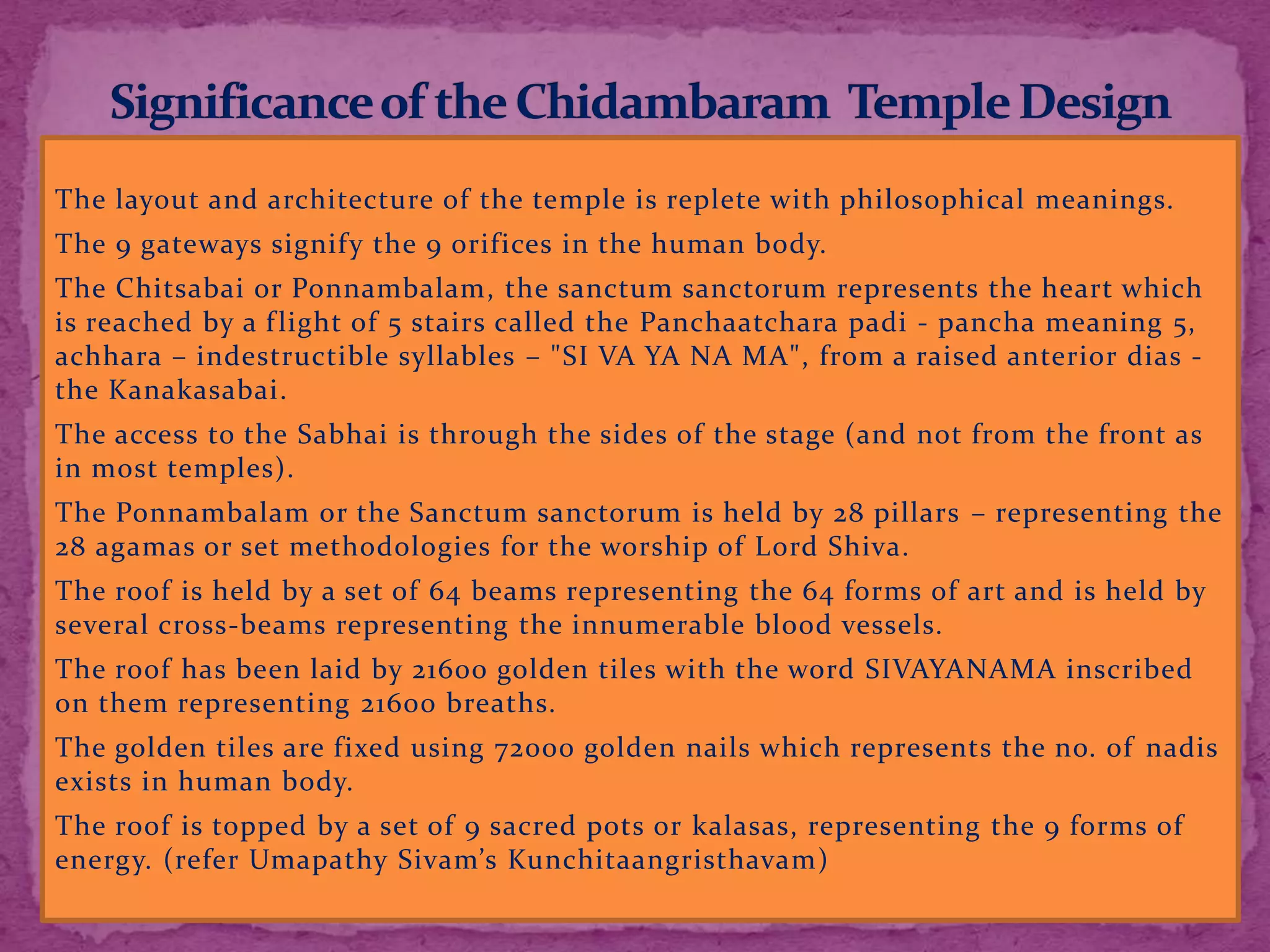
The layout and architecture of the temple is replete with philosophical meanings.
The 9 gateways signify the 9 orifices in the human body.
The Chitsabai or Ponnambalam, the sanctum sanctorum represents the heart which
is reached by a flight of 5 stairs called the Panchaatchara padi - pancha meaning 5,
achhara – indestructible syllables – "SI VA YA NA MA", from a raised anterior dias -
the Kanakasabai.
The access to the Sabhai is through the sides of the stage (and not from the front as
in most temples).
The Ponnambalam or the Sanctum sanctorum is held by 28 pillars – representing the
28 agamas or set methodologies for the worship of Lord Shiva.
The roof is held by a set of 64 beams representing the 64 forms of art and is held by
several cross-beams representing the innumerable blood vessels.
The roof has been laid by 21600 golden tiles with the word SIVAYANAMA inscribed
on them representing 21600 breaths.
The golden tiles are fixed using 72000 golden nails which represents the no. of nadis
exists in human body.
The roof is topped by a set of 9 sacred pots or kalasas, representing the 9 forms of
energy. (refer Umapathy Sivam’s Kunchitaangristhavam)
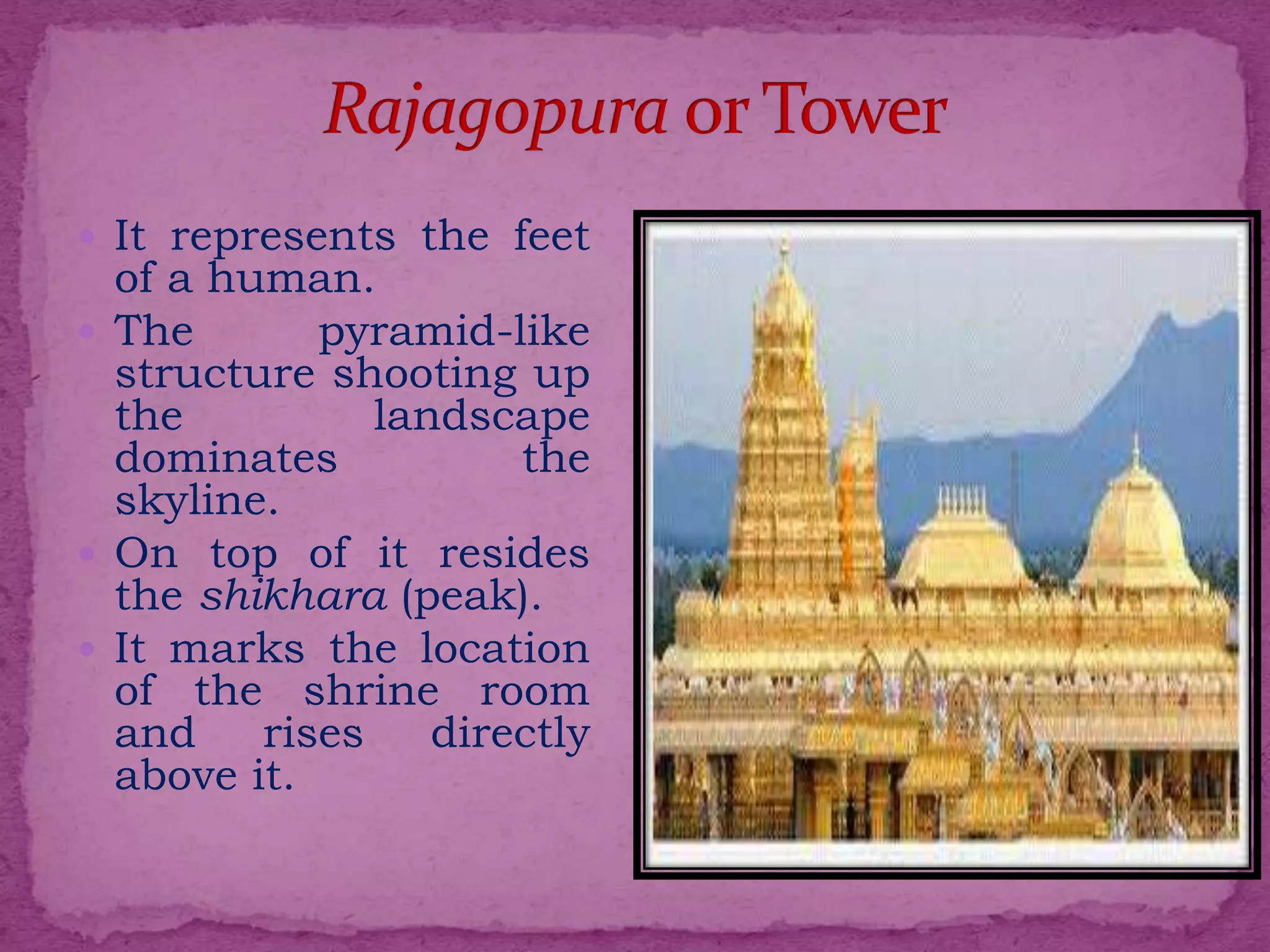
 It represents the feet
of a human.
 The pyramid-like
structure shooting up
the landscape
dominates the
skyline.
 On top of it resides
the shikhara (peak).
 It marks the location
of the shrine room
and rises directly
above it.
The DWAJASTHAMBAM is
inscripted with the
deity of the temple and
is a symbol of the
structure's holiness.
On the human body, the
DWAJASTHAMBAM
represents the loins
(MOOLADHARA
CHKARA).
 The third is the walkway. Most temples have a walkway around the walls of
the inner chamber for circumbulation by devotees around the deity as a
mark of respect to the God in the temple.
 The field enclosures and pavilions through which he must pass to reach
the sanctum are symbolic.
 They represent the phases of progress in a man's journey towards divinity.
 According to the scheme of transition, architectural and sculptural details
vary from phase to phase in the devotee's onward movement, gradually
preparing him for the ultimate experience, which awaits him in the shrine.
 This process mirrors the four-phased spiritual evolution described in yoga:
the waking state (jagrat); dream state (swapna); the state of deep sleep
(sushupti); and finally the highest state of awareness, turiya.
 The prakaram represents the hands.
 Mandapam or the Temple Hall.
 Most large temples have a hall meant for the
devotees to sit.
 This is also called the natya-mandira (hall for
temple-dancing) where, in days of yore, women
dancers used to perform dance rituals.
 Devotees use the hall to sit, meditate, pray, chant or
watch the priests perform rituals.
 The hall is decorated with paintings of deities. On
the human body, the Mandapam is the abdomen
The Front Porch: This area of the temple usually has a big
metallic bell that hangs from the ceiling.
Devotees entering and leaving the porch ring this bell to
declare their arrival and departure.
On reaching the main gateway, the worshipper bends
down and touches the threshold before crossing it.
He is ready to pass into the abode.
Entering the gateway, he is greeted by a host of figures on
the outer walls.
The sculptures carved in sandstone tell stories and
educate members of society on the stories of creation.
 Always in the North-east is the garbha griha (sanctum sanctorum) where in the
murthi or deity resides (representing the head in the human body).
 There are no pillars, windows or ventilators. It is the interior and most sacred
area of worship in the temple. Finally the shrine, devoid of any ornamentation,
and with its plainly adorned entrance, leads the devotee further to the highest
achievable state of consciousness of tranquility (turiya), where all boundaries
vanish and the universe stands forth in its primordial glory. It signifies the
coming to rest of all differentiated, relative existence.
 This utterly quiet, peaceful and blissful state is the ultimate aim of all spiritual
activity. The devotee is now fully-absorbed in the beauty and serenity of the
icon.
 He or she is now in the inner square of Brahma in the vastu- mandala, and in
direct communion with the chief source of power in the temple.
Human body is a holy temple

Human body is a holy temple

  • 13.
     Let’s startwith the temple complex being looked upon as a representation of Sri Chakra.  At the centre of the temple is the image of divinity and its purity that generations after generations have revered and venerated. That image residing at the heart of the temple is its life; and is its reason. One can think of an icon without a temple; but it is impossible to think of a temple without an icon of the divinity. The very purpose of a temple is its icon. And, therefore is the most important structure of the temple is the Garbagriha where the icon resides.
  • 16.
    SUNBones, Right Eye,Sight, Heart, Stomach MOON Mind, Emotions, Body Fluids, Left Eye, Sense of Taste, Breast, Chest, Loins MARS Muscles, Head, Testicles, Bone Marrow, Blood Pressure, Bile, Vigour MERCURY Skin, Sense of Smell, Memory, Intelligence, Speech, Consciousness, Respiratory Canal, Intestines, Throat JUPITERFat, Liver, Gall Bladder, Spleen, Sense of Sound, Ears VENUS Semen, Sense of Taste, Sexual Organs, Reproductive System, Face, Beauty of Eyes SATURN Sense of Touch, Nerves, Joints (including spine), Legs, Knees, Ankles
  • 18.
    ARIES Head TAURUS Neck GEMINIUpper Chest, Shoulders, Arms, Hands CANCER Breasts LEO Solar Plexus VIRGO Naval Region LIBRA Lower Abdomen, Kidneys, Reproductive System, Lower Back SCORPIO Pubic Region, Private Parts, Anus, Rectum SAGGITARIUS Thighs, Hips CAPRICORN Knees AQUARIUS Calves, Ankles PISCES Feet
  • 20.
    MESHAM 1ST HOUSEHead, Brain, Hair, Appearance RISHABAM 2ND HOUSE Face, Right Eye, Neck, Throat, Teeth, Tongue, Nose, Mouth, Speech, Nails MITHUNAM 3RD HOUSE Ears, Right Ear, Lungs, Shoulders, Arms, Hands, Upper part of Eusophagus, Clavicles, Mobility KADAGAM 4TH HOUSE Breasts, Chest, Lungs, Heart, Diaphragm SIMHAM 5TH HOUSE Upper Abdomen, Stomach, Liver, Gall Bladder, Spleen, Pancreas, Duodenum, Mind KANNI 6TH HOUSE Intestines, Digestion, Absorption, Appendix, Lowerback, Injuries, Wounds, Medical THULAM 7TH HOUSE Urinary Tract, Kidneys, Sexual Organs, Uterus, Ovaries, Testicles, Semen, Lower Back VIRUCHIGAM 8TH HOUSE External Genital Organs, Anus, Perineum DHANUR 9TH HOUSE Hips, Thighs MAGARAM 10TH HOUSE Knees, Joints, Legs KHUMBAM 11TH HOUSE Left Ear, Calves, Ankles, Lower Legs MEENAM 12TH HOUSE Feet
  • 21.
    ASWINI Knee, Topof Feet BHARANI Head, Bottom of Feet KRITTIKA Waist, Hips, Loins, Crown of Head ROHINI Legs, Forehead, Ankles, Shins, Calves or Legs MRIGASHIRA Eyes, Eyebrows ARDRA Hair, Eyes, Back & Front of Head where brain's controlling mechanisms are located PURNAVASU Fingers, Nose PUSHYA Mouth, Face (connects to facial expression), Bone joints, Elbows ASLESHA Nails, Knuckles, Kneecaps, Ears MAGHA Nose, Lips, Chin PURVAPHALGUNI Sexual Organs, Lips, Righthand UTTARA PHALGUNI Sexual Organs, Lips, Lefthand HASTA Hands CHITRA Forehead & Neck SWATI Teeth, Chest, Breathing Process VISHAKHA Upper Limbs, Arms & Breasts ANURADHA Astral Fires in the Body, Heart, Breasts, Stomach, Bowels, Womb JYESTHA Tongue, Neck, Rightside of Torso MULA Both Feet, Left side of Torso and back PURVA ASHADHA Both Thighs UTTARA ASHADHA Both Thighs & Waist SHRAVANA Ears, Sex Organs, Gait DHANISHTA Back & Anus SHATABISHAK Both Sides of Chin, Jaw, Right Thigh PURVA BHADRAPADA two sides of body, Ribs, Abdomen, Sides of Legs, Left Thigh, soles of feet UTTARA BHADRAPADA two sides of body, sides of legs, shins, soles of feet
  • 26.
    Consciousness express itself throughSeven Chakras Muladhar Chakra Body – Karma (action) Swadhishthan Chakra Senses– Bhoga (sensual enjoyment) Manipur Chakra Prana – Breath Anahata Chakra Heart - Love Vishuddhi Chakra Mind - Thoughts Angya Chakra Am-ness - Meditation Sahstrar Chakra Soul - Samadhi
  • 27.
    Pipilika Yoga:It isof Six types & are related to Six Chakras Muladhar Chakra Karma Yoga Swadhishthan Chakra Tantra Yoga Manipur Chakra Hatha Yoga Anahata Chakra Bhakti Yoga Vishuddhi Chakra Gyana Yoga Angya Chakra Dhyan Yoga Sahstrar Chakra Sankhya Yoga
  • 32.
    Swara Sanskrit Expansion Meaning Animal ChakraGod SA Shadja -MEANS SHAPTHAM- BRAHMN- Anything being understood in the form Six born- Peacock Muladhara (base of spine) Ganapathi RE Rishabha - MeansRISHIMU NIS-who are the people found the ways and means to lead a peaceful life bull Skylark Swadhishtana (Genitals) Agni GA Gandhara – Means Attraction sky Goat Manipura (Solar Plexus & Navel) Rudra (Shiva) MA Madhyama – Means - MAHIPAL-RAJA middle Dove/Heron Anahata ( Heart) Vishnu PA Panchama - MEANS PRAJA fifth Cukkoo/Nightingal e Visudhdha (Throat) Naaradaa DHA Dhaivata –Means DHARMA earth Horse Ajna (Third Eye) Sadasiva (Shiva as the Unmanifest precursor to creation) NI Nishadam – Means NIRKAR BRAHMAN-DUTY hunter Elephant Sahasra (crown of the head) Surya(Sun)
  • 33.
     Chakras representthe energy centers. The importance of various chakras in spiritual path is well known.  The production of various seed- sounds in relation to various chakras starting from Muladhara at the base are shown.  In the Vedic tradition, the human spinal cord is represented as the musical instrument (Veena).  The 24 frets of the instrument are analogous to the 24 cartilages in the spinal cord. The number 24 also relates to the 24 syllables in the VedicGayatriMantra. (Ref:Sriranga Sadguru, Amaravani  The divine dance of Lord Nataraja, Lord of Dance, signifies the yogic process of self realization.
  • 36.
     The othersymbolism is that the human body is a temple in which the antaryamin resides. The analogy is extended to explain the various parts of the body as being representations of the aspects of a temple. In this process, the forehead is said to represent the sanctum; and the top of the head, the tower. The space between the eyebrows, the ajna chakra, is the seat of the divinity. The finial of the tower is the unseen the sahasrara located above the head.
  • 37.
     Human bodywith chakras - (Abode of God) Devaalaya  God indwelling in human being - (Deity) Murti  Feet - Rajagopura  Hands - Prakaara  Abdomen - Mandapa  Heart as Antaraala (entrance to Garbha Griha)  Crown of the head - sanctum sanctorum - Garbha Griha  Rituals - a guide to inner worship
  • 42.
    The layout andarchitecture of the temple is replete with philosophical meanings. The 9 gateways signify the 9 orifices in the human body. The Chitsabai or Ponnambalam, the sanctum sanctorum represents the heart which is reached by a flight of 5 stairs called the Panchaatchara padi - pancha meaning 5, achhara – indestructible syllables – "SI VA YA NA MA", from a raised anterior dias - the Kanakasabai. The access to the Sabhai is through the sides of the stage (and not from the front as in most temples). The Ponnambalam or the Sanctum sanctorum is held by 28 pillars – representing the 28 agamas or set methodologies for the worship of Lord Shiva. The roof is held by a set of 64 beams representing the 64 forms of art and is held by several cross-beams representing the innumerable blood vessels. The roof has been laid by 21600 golden tiles with the word SIVAYANAMA inscribed on them representing 21600 breaths. The golden tiles are fixed using 72000 golden nails which represents the no. of nadis exists in human body. The roof is topped by a set of 9 sacred pots or kalasas, representing the 9 forms of energy. (refer Umapathy Sivam’s Kunchitaangristhavam)
  • 43.
     It representsthe feet of a human.  The pyramid-like structure shooting up the landscape dominates the skyline.  On top of it resides the shikhara (peak).  It marks the location of the shrine room and rises directly above it.
  • 44.
    The DWAJASTHAMBAM is inscriptedwith the deity of the temple and is a symbol of the structure's holiness. On the human body, the DWAJASTHAMBAM represents the loins (MOOLADHARA CHKARA).
  • 47.
     The thirdis the walkway. Most temples have a walkway around the walls of the inner chamber for circumbulation by devotees around the deity as a mark of respect to the God in the temple.  The field enclosures and pavilions through which he must pass to reach the sanctum are symbolic.  They represent the phases of progress in a man's journey towards divinity.  According to the scheme of transition, architectural and sculptural details vary from phase to phase in the devotee's onward movement, gradually preparing him for the ultimate experience, which awaits him in the shrine.  This process mirrors the four-phased spiritual evolution described in yoga: the waking state (jagrat); dream state (swapna); the state of deep sleep (sushupti); and finally the highest state of awareness, turiya.  The prakaram represents the hands.
  • 48.
     Mandapam orthe Temple Hall.  Most large temples have a hall meant for the devotees to sit.  This is also called the natya-mandira (hall for temple-dancing) where, in days of yore, women dancers used to perform dance rituals.  Devotees use the hall to sit, meditate, pray, chant or watch the priests perform rituals.  The hall is decorated with paintings of deities. On the human body, the Mandapam is the abdomen
  • 49.
    The Front Porch:This area of the temple usually has a big metallic bell that hangs from the ceiling. Devotees entering and leaving the porch ring this bell to declare their arrival and departure. On reaching the main gateway, the worshipper bends down and touches the threshold before crossing it. He is ready to pass into the abode. Entering the gateway, he is greeted by a host of figures on the outer walls. The sculptures carved in sandstone tell stories and educate members of society on the stories of creation.
  • 50.
     Always inthe North-east is the garbha griha (sanctum sanctorum) where in the murthi or deity resides (representing the head in the human body).  There are no pillars, windows or ventilators. It is the interior and most sacred area of worship in the temple. Finally the shrine, devoid of any ornamentation, and with its plainly adorned entrance, leads the devotee further to the highest achievable state of consciousness of tranquility (turiya), where all boundaries vanish and the universe stands forth in its primordial glory. It signifies the coming to rest of all differentiated, relative existence.  This utterly quiet, peaceful and blissful state is the ultimate aim of all spiritual activity. The devotee is now fully-absorbed in the beauty and serenity of the icon.  He or she is now in the inner square of Brahma in the vastu- mandala, and in direct communion with the chief source of power in the temple.