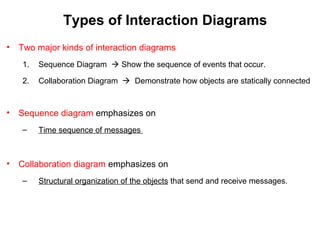
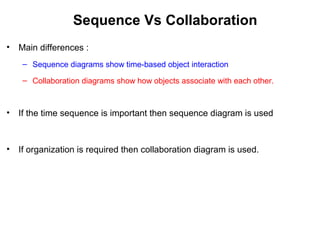
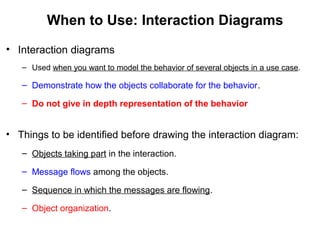
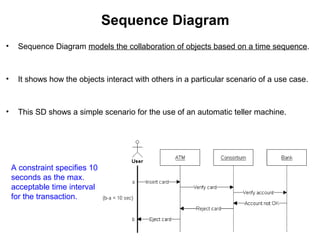
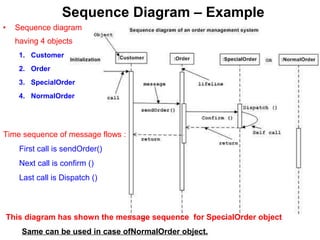
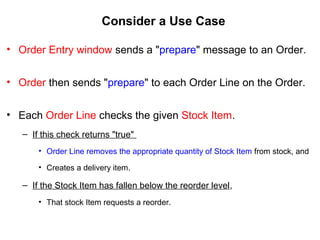
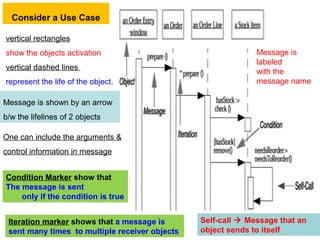
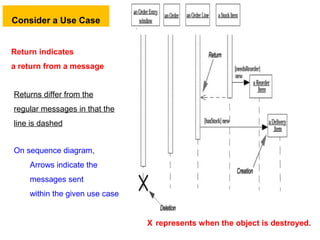
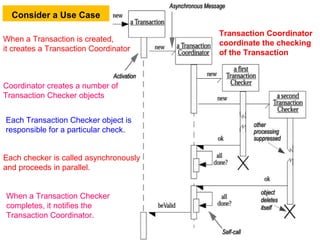
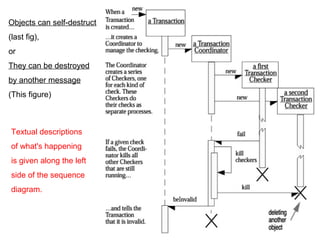
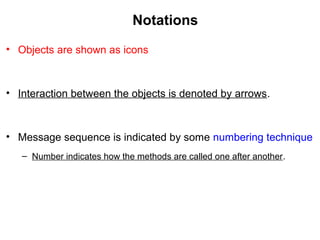
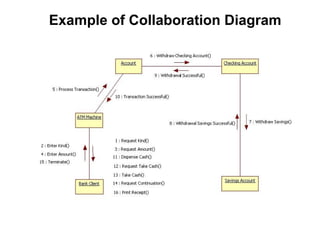
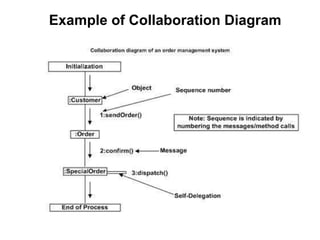
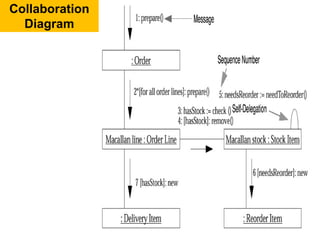
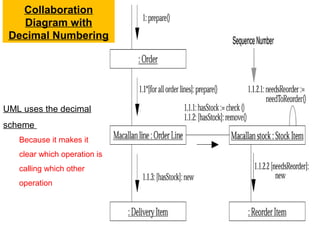
The document discusses UML interaction diagrams, which model how objects collaborate and interact to complete use case tasks. There are two main types: sequence diagrams, which show the time-based sequence of messages between objects, and collaboration diagrams, which emphasize the structural organization and associations between objects. Sequence diagrams use lifelines and messages to represent an object's lifespan and the messages it sends/receives. Collaboration diagrams show objects and their relationships through associations and numbered messages. Both can be used to design and understand complex interactions in object-oriented systems.