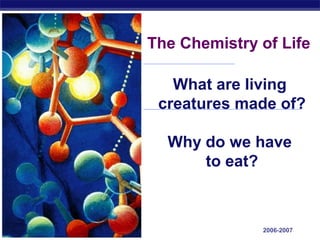
The Chemistry of Life

                     What are living
                   creatures made of?

                    Why do we have
                        to eat?


Regents Biology                 2006-2007
Elements of Life
      96% of living
        organisms is
        made of:
             carbon (C)
             oxygen (O)
             hydrogen (H)
             nitrogen (N)


Regents Biology
Molecules of Life
     Put C, H, O, N together in different
       ways to build living organisms
      What are bodies made of?
             carbohydrates
               sugars & starches
           proteins
           fats (lipids)

           nucleic acids

               DNA, RNA


Regents Biology
Why do we eat?
     We eat to take in more of these chemicals
             Food for building materials
                to make more of us (cells)
                for growth

                                              ATP
                for repair
             Food to make energy
                calories
                to make ATP


Regents Biology
What do we need to eat?
     Foods to give you more building blocks
        & more energy
               for building & running bodies
           carbohydrates
           proteins

           fats

           nucleic acids

           vitamins

           minerals, salts

           water
Regents Biology
Don’t forget water
     Water
             65% of your body is H2O
             water is inorganic
                doesn’t contain carbon
      Rest of you is made of carbon molecules
             organic molecules
                carbohydrates
                proteins
                fats
                nucleic acids
Regents Biology
How do we make these molecules?


                  We build them!


Regents Biology                    2006-2007
Building large molecules of life
     Chain together smaller molecules
             building block molecules = monomers


      Big molecules built from little molecules
             polymers
Regents Biology
Building large organic molecules
     Small molecules = building blocks


      Bond them together = polymers


Regents Biology
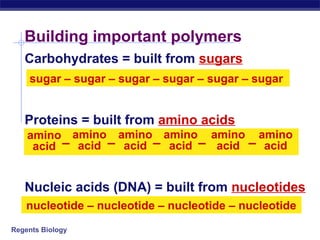
Building important polymers
   Carbohydrates = built from sugars
    sugar – sugar – sugar – sugar – sugar – sugar


   Proteins = built from amino acids
    amino amino amino amino amino amino
     acid – acid – acid – acid – acid – acid


   Nucleic acids (DNA) = built from nucleotides
    nucleotide – nucleotide – nucleotide – nucleotide
Regents Biology
How to build large molecules
     Synthesis
           building bigger molecules
            from smaller molecules
           building cells & bodies

               repair
               growth
               reproduction


                  +
          ATP
Regents Biology
How to take large molecules apart
     Digestion
           taking big molecules apart
           getting raw materials

               for synthesis & growth
             making energy (ATP)
               for synthesis, growth & everyday functions


                                                 +

                                              ATP
Regents Biology
Example of digestion
                                      ATP

                                   ATP      ATP

                                   ATP
                          ATP               ATP
           starch           glucose
                                         ATP
  Starch is digested to glucose
Regents Biology
Example of synthesis


      amino acids                          protein
 Proteins are synthesized by bonding amino acids
                  amino acids = building block
Regents Biology        protein = polymer
Any
                  Questions?


      Penguins
     gone bad!


Regents Biology
Old Food Pyramid


Regents Biology
New Food Pyramid


Regents Biology

BIOCHEMISTRY

  • 1.
    The Chemistry ofLife What are living creatures made of? Why do we have to eat? Regents Biology 2006-2007
  • 2.
    Elements of Life  96% of living organisms is made of:  carbon (C)  oxygen (O)  hydrogen (H)  nitrogen (N) Regents Biology
  • 3.
    Molecules of Life  Put C, H, O, N together in different ways to build living organisms  What are bodies made of?  carbohydrates  sugars & starches  proteins  fats (lipids)  nucleic acids  DNA, RNA Regents Biology
  • 4.
    Why do weeat?  We eat to take in more of these chemicals  Food for building materials  to make more of us (cells)  for growth ATP  for repair  Food to make energy  calories  to make ATP Regents Biology
  • 5.
    What do weneed to eat?  Foods to give you more building blocks & more energy  for building & running bodies  carbohydrates  proteins  fats  nucleic acids  vitamins  minerals, salts  water Regents Biology
  • 6.
    Don’t forget water  Water  65% of your body is H2O  water is inorganic  doesn’t contain carbon  Rest of you is made of carbon molecules  organic molecules  carbohydrates  proteins  fats  nucleic acids Regents Biology
  • 7.
    How do wemake these molecules? We build them! Regents Biology 2006-2007
  • 8.
    Building large moleculesof life  Chain together smaller molecules  building block molecules = monomers  Big molecules built from little molecules  polymers Regents Biology
  • 9.
    Building large organicmolecules  Small molecules = building blocks  Bond them together = polymers Regents Biology
  • 10.
    Building important polymers Carbohydrates = built from sugars sugar – sugar – sugar – sugar – sugar – sugar Proteins = built from amino acids amino amino amino amino amino amino acid – acid – acid – acid – acid – acid Nucleic acids (DNA) = built from nucleotides nucleotide – nucleotide – nucleotide – nucleotide Regents Biology
  • 11.
    How to buildlarge molecules  Synthesis  building bigger molecules from smaller molecules  building cells & bodies  repair  growth  reproduction + ATP Regents Biology
  • 12.
    How to takelarge molecules apart  Digestion  taking big molecules apart  getting raw materials  for synthesis & growth  making energy (ATP)  for synthesis, growth & everyday functions + ATP Regents Biology
  • 13.
    Example of digestion ATP ATP ATP ATP ATP ATP starch glucose ATP  Starch is digested to glucose Regents Biology
  • 14.
    Example of synthesis amino acids protein  Proteins are synthesized by bonding amino acids amino acids = building block Regents Biology protein = polymer
  • 15.
    Any Questions? Penguins gone bad! Regents Biology
  • 16.
  • 17.