Digestive System Terms
             Megan McLeod
    Biology 120, Medical Terminology
            October 10, 2012
      Professor Rashidah Abdullah
Terms

• Vocabulary
  – Hematochezia
• Therapeutic Procedures
  – Hernioplasty
  – Extraction
  – Choledocholithotripsy
Digestive System
• Location
  – From Mouth to Anus, Alimentary Canal
  – Accessory Organs
• Organs
  –   Colon
  –   Esophagus
  –   Gallbladder
  –   Liver
  –   Oral Cavity
  –   Pancreas
  –   Pharynx
  –   Salivary Glands
  –   Small Intestine
  –   Stomach
Terms
Hematochezia

• Vocabulary Term
• Passage of Blood Through Anus
• Blood in the Stool

• Usually Lower Gastrointestinal Bleeding
Hematochezia

• Caused by
  – Hemorrhoids
  – Diverticulosis
  – Colorectal Cancer
  – Inflammatory Bowel Disease
    • Ulcerative Colitis
  – Beeturia
    • False Hemotochezia
    • Harmless Pigment
Hernioplasty

•   Therapeutic Procedure
•   Hernia
•   Hernia Repair
•   Types of Hernias
    – Inguinal
    – Femoral
    – Umbilical
Extraction
• Therapeutic Procedure
• Removing of Teeth
  – Simple Extraction
  – Surgical Extraction
• Reasons
  – Disease
  – Decay
  – Too Many Teeth
  – Cosmetic
Choledocholithotripsy

• Therapeutic Procedure
• Gallstone Crushing
  – Transcutaneous Sonic Energy
  – Endoscopically Directed Laser
• Common Bile Duct
  – Common Hepatic Duct (from liver)
  – Cystic Duct (from gallbladder)
Terms
Thank you - Recap

• Vocabulary
  – Hematochezia
• Therapeutic Procedures
  – Hernioplasty
  – Extraction
  – Choledocholithotripsy

Chapter 8 presentation

  • 1.
    Digestive System Terms Megan McLeod Biology 120, Medical Terminology October 10, 2012 Professor Rashidah Abdullah
  • 2.
    Terms • Vocabulary – Hematochezia • Therapeutic Procedures – Hernioplasty – Extraction – Choledocholithotripsy
  • 3.
    Digestive System • Location – From Mouth to Anus, Alimentary Canal – Accessory Organs • Organs – Colon – Esophagus – Gallbladder – Liver – Oral Cavity – Pancreas – Pharynx – Salivary Glands – Small Intestine – Stomach
  • 4.
  • 5.
    Hematochezia • Vocabulary Term •Passage of Blood Through Anus • Blood in the Stool • Usually Lower Gastrointestinal Bleeding
  • 6.
    Hematochezia • Caused by – Hemorrhoids – Diverticulosis – Colorectal Cancer – Inflammatory Bowel Disease • Ulcerative Colitis – Beeturia • False Hemotochezia • Harmless Pigment
  • 7.
    Hernioplasty • Therapeutic Procedure • Hernia • Hernia Repair • Types of Hernias – Inguinal – Femoral – Umbilical
  • 8.
    Extraction • Therapeutic Procedure •Removing of Teeth – Simple Extraction – Surgical Extraction • Reasons – Disease – Decay – Too Many Teeth – Cosmetic
  • 9.
    Choledocholithotripsy • Therapeutic Procedure •Gallstone Crushing – Transcutaneous Sonic Energy – Endoscopically Directed Laser • Common Bile Duct – Common Hepatic Duct (from liver) – Cystic Duct (from gallbladder)
  • 10.
  • 11.
    Thank you -Recap • Vocabulary – Hematochezia • Therapeutic Procedures – Hernioplasty – Extraction – Choledocholithotripsy

Editor's Notes

  • #2 Welcome to the Presentation of 4 digestive system terms for Biology 120, Medical Terminology.
  • #3 The 4 terms we will be discussing today fall under two categories. The first category is Vocabulary and the term is hematochezia. The second category is therapeutic procedures and the three terms associated with it are hernioplasty, extraction, choledocholithotripsy.
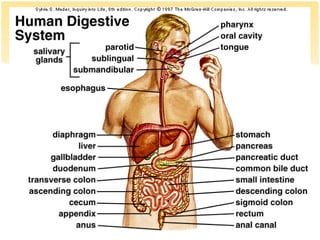
  • #5 This slide shows the many organs of the digestive system and the path of the alimentary canal.
  • #6 Hematochezia is a vocabulary term that describes the passage of fresh blood through the anus either with or without defecation. When stool is involved, the blood is in the stool. More concerning cases of hematochezia originate in the upper alimentary canal, but most occur in the lower gastrointestinal tract.
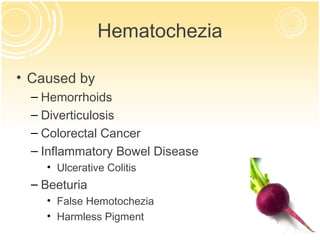
  • #7 The causes of hematochezia include: hemorrhoids, which are swollen and possibly bleeding vascular structures in the anus; diverticulosis, which is a pocketing of the colon wall due to muscle weakness; colorectal cancer, which is cancer of the large intestine; inflammatory bowel disease, which is the inflammation of the small and/or large intestine, of which ulcerative colitis presents most. Beeturia is the presence of beet juice in the stool, which is not really hematochezia, but may be mistaken for it and is harmless.
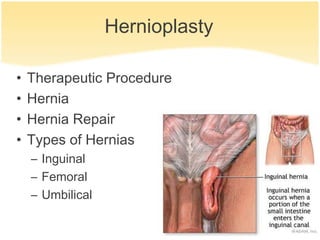
  • #8 A hernioplasty is a therapeutic procedure that corrects the bulging of some kind of tissue through a wall or body cavity. A hernioplasty is a surgical procedure. Hernias can present in many places in the human body, but some of the more typical hernioplastys performed are inguinal, femoral, and umbilical. Inguinal hernias occur when contents of the abdominal cavity, such as the intestines, protrude into the inguinal region. Femoral hernia occur when contents of the abdominal cavity protrude into the femoral region, just below the inguinal region. Umbilical hernias occur when there is a protrusion of the umbilical, or belly button region.
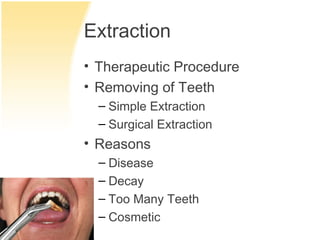
  • #9 Dental extraction is a therapeutic procedure of the removal of a tooth from the oral cavity. A simple extraction involves a visible tooth that can be removed under local anesthetic, using tools such as an elevator and dental forceps. Surgical extraction is the removal of a tooth which is not visible, or is only partially visible. This procedure is usually performed using general anesthetic, and may involve drilling, or more intricate instruments. There are many reasons for dental extractions, including disease of the surrounding gums, decay of a tooth, overcrowding of teeth, and cosmetic restoration of the overall appearance of the teeth.
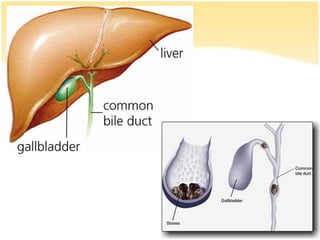
  • #10 A choledocholithotripsy is a therapeutic procedure that destroys gallstones by fracturing or crushing them by way of transcutaneous sonic energy or endoscopically directed laser. Transcutaneous sonic energy is highly concentrated energy beams from an ultrasound. An endoscopically directed laser is a laser attached to an endoscope which is passed down the esophagus, toward the site of the gallstones and targets them close to the source, inside the duodenum. Gallstones are crystalline structures that form in the gallbladder, which is the accessory digestive organ located inferior to the liver and superior to the duodenum. When gallstones move from the gallbladder, they can clog the common bile duct, which is the merging of the hepatic duct from the liver and the cystic duct from the gallbladder.
  • #11 Here are a picture of the liver, common bile duct, and gall bladder and the gallbladder with gallstones shown in the cystic and common bile ducts.