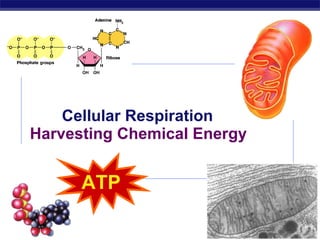
Cellular Respiration Harvesting Chemical Energy 2007-2008 ATP
Energy needs of life Animals are energy consumers What do we need energy for? synthesis (building) reproduction active transport (pumping) movement temperature control (making heat)
Where do we get energy? Energy is stored in organic molecules carbohydrates, fats, proteins Animals eat these organic molecules     food digest food to get fuels for energy (ATP) raw materials for building more molecules carbohydrates, fats, proteins, nucleic acids
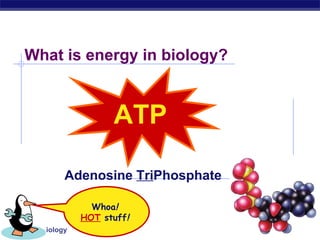
2007-2008 ATP What is energy in biology? Whoa !   HOT  stuff !   Adenosine  Tri Phosphate
Harvesting energy stored in food Cellular respiration breaking down food to produce ATP in mitochondria using oxygen usually digesting glucose but could be other sugars,  fats, or proteins glucose  +  oxygen    carbon  +  water  +  energy dioxide C 6 H 12 O 6 6O 2 6CO 2 6H 2 O ATP  + + + +  heat
What do we need to make energy? The “Furnace” for making energy mitochondria   Fuel food carbohydrates,  fats, proteins The Helpers oxygen “ aerobic” enzymes Make ATP! Make ATP! All I do all day… And no one even notices! enzymes O 2 food ATP
Mitochondria are everywhere!! animal cells plant cells
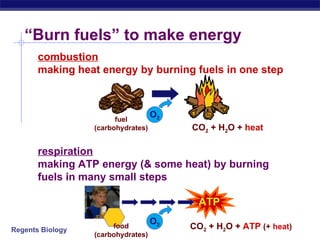
“ Burn fuels” to make energy combustion making heat energy by burning fuels in one step CO 2  + H 2 O +  ATP  (+  heat ) respiration making ATP energy (& some heat) by burning fuels in many small steps CO 2  + H 2 O +  heat fuel (carbohydrates) O 2 ATP food (carbohydrates) O 2
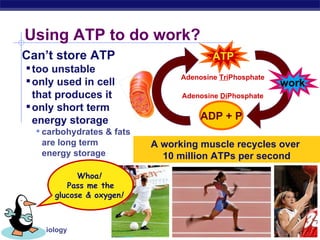
Using ATP to do work? A working muscle recycles over  10 million ATPs per second Can’t store ATP too unstable only used in cell  that produces it only short term energy storage carbohydrates & fats are long term  energy storage ATP ADP + P work Whoa !   Pass me the glucose & oxygen !   Adenosine  Di Phosphate Adenosine  Tri Phosphate
A Body’s Energy Budget eat food synthesis (building) storage ATP •  resting energy (base level) •  activity •  temperature  control { •  growth •  reproduction •  repair { •  glycogen (animal starch) •  fat {
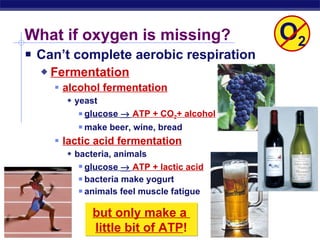
What if oxygen is missing? Can’t complete aerobic respiration Fermentation alcohol fermentation yeast glucose     ATP + CO 2 + alcohol make beer, wine, bread lactic acid fermentation bacteria, animals glucose     ATP +   lactic acid bacteria make yogurt animals feel muscle fatigue but only make a  little bit of ATP ! O 2
2007-2008 Got the energy… Ask Questions !!

15respiration2007

  • 1.
    Cellular Respiration HarvestingChemical Energy 2007-2008 ATP
  • 2.
    Energy needs oflife Animals are energy consumers What do we need energy for? synthesis (building) reproduction active transport (pumping) movement temperature control (making heat)
  • 3.
    Where do weget energy? Energy is stored in organic molecules carbohydrates, fats, proteins Animals eat these organic molecules  food digest food to get fuels for energy (ATP) raw materials for building more molecules carbohydrates, fats, proteins, nucleic acids
  • 4.
    2007-2008 ATP Whatis energy in biology? Whoa ! HOT stuff ! Adenosine Tri Phosphate
  • 5.
    Harvesting energy storedin food Cellular respiration breaking down food to produce ATP in mitochondria using oxygen usually digesting glucose but could be other sugars, fats, or proteins glucose + oxygen  carbon + water + energy dioxide C 6 H 12 O 6 6O 2 6CO 2 6H 2 O ATP  + + + + heat
  • 6.
    What do weneed to make energy? The “Furnace” for making energy mitochondria Fuel food carbohydrates, fats, proteins The Helpers oxygen “ aerobic” enzymes Make ATP! Make ATP! All I do all day… And no one even notices! enzymes O 2 food ATP
  • 7.
    Mitochondria are everywhere!!animal cells plant cells
  • 8.
    “ Burn fuels”to make energy combustion making heat energy by burning fuels in one step CO 2 + H 2 O + ATP (+ heat ) respiration making ATP energy (& some heat) by burning fuels in many small steps CO 2 + H 2 O + heat fuel (carbohydrates) O 2 ATP food (carbohydrates) O 2
  • 9.
    Using ATP todo work? A working muscle recycles over 10 million ATPs per second Can’t store ATP too unstable only used in cell that produces it only short term energy storage carbohydrates & fats are long term energy storage ATP ADP + P work Whoa ! Pass me the glucose & oxygen ! Adenosine Di Phosphate Adenosine Tri Phosphate
  • 10.
    A Body’s EnergyBudget eat food synthesis (building) storage ATP • resting energy (base level) • activity • temperature control { • growth • reproduction • repair { • glycogen (animal starch) • fat {
  • 11.
    What if oxygenis missing? Can’t complete aerobic respiration Fermentation alcohol fermentation yeast glucose  ATP + CO 2 + alcohol make beer, wine, bread lactic acid fermentation bacteria, animals glucose  ATP + lactic acid bacteria make yogurt animals feel muscle fatigue but only make a little bit of ATP ! O 2
  • 12.
    2007-2008 Got theenergy… Ask Questions !!

Editor's Notes

  • #3 Which is to say… if you don’t eat, you die… because you run out of energy. The 2nd Law of Thermodynamics takes over!
  • #4 We eat to take in the fuels to make ATP which will then be used to help us build biomolecules and grow and move and… live! heterotrophs = “fed by others” vs. autotrophs = “self-feeders”
  • #6 Movement of hydrogen atoms from glucose to water
  • #9 Movement of hydrogen atoms from glucose to water