ORAL COMMUNICATION FOR
GRADE 11
MODULE 1:
FUNCTION, NATURE AND PROCESS OF COMMUNICATION
FUNCTION, NATURE AND PROCESS OF
COMMUNICATION
WHAT IS
COMMUNICATION?
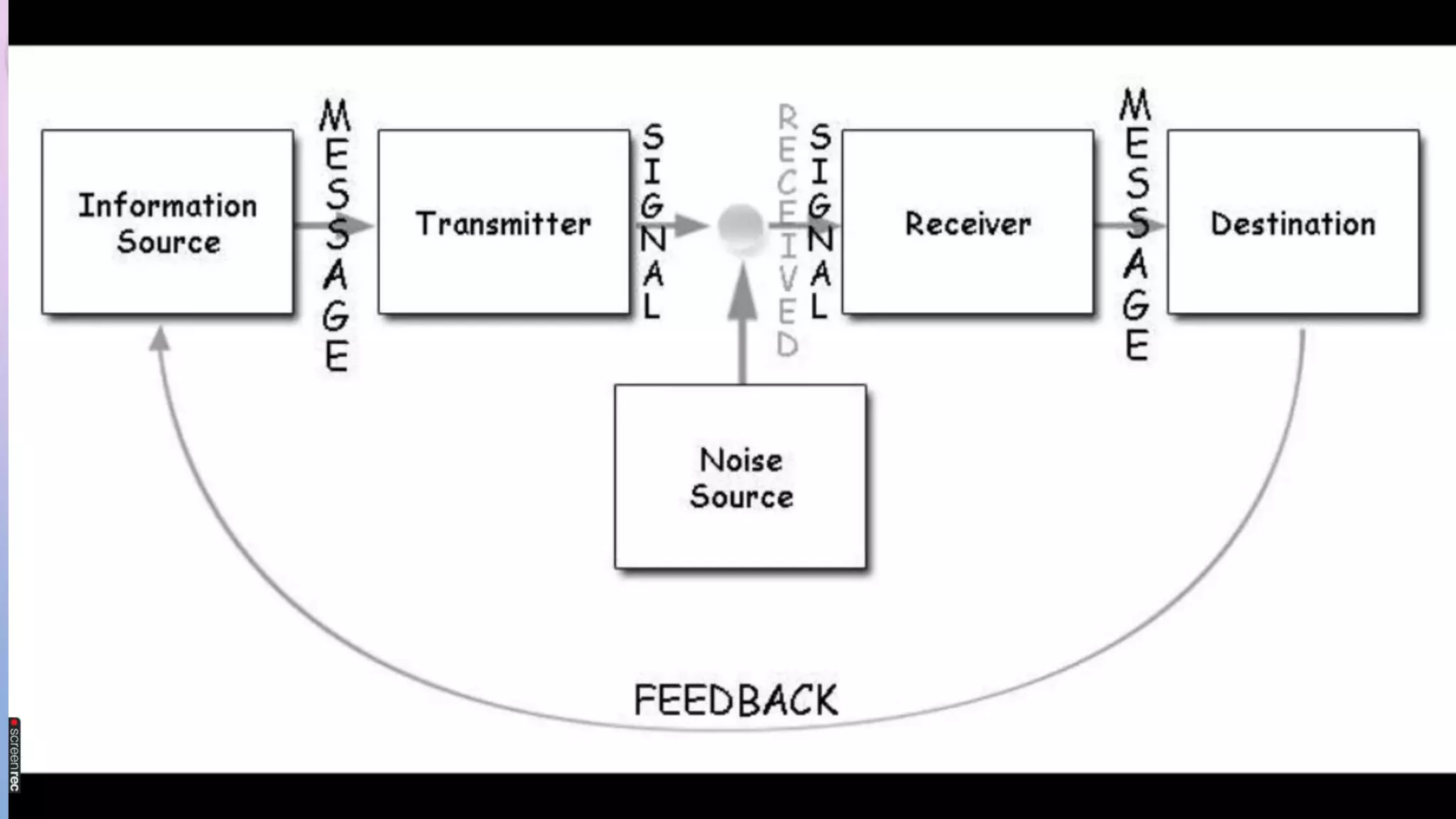
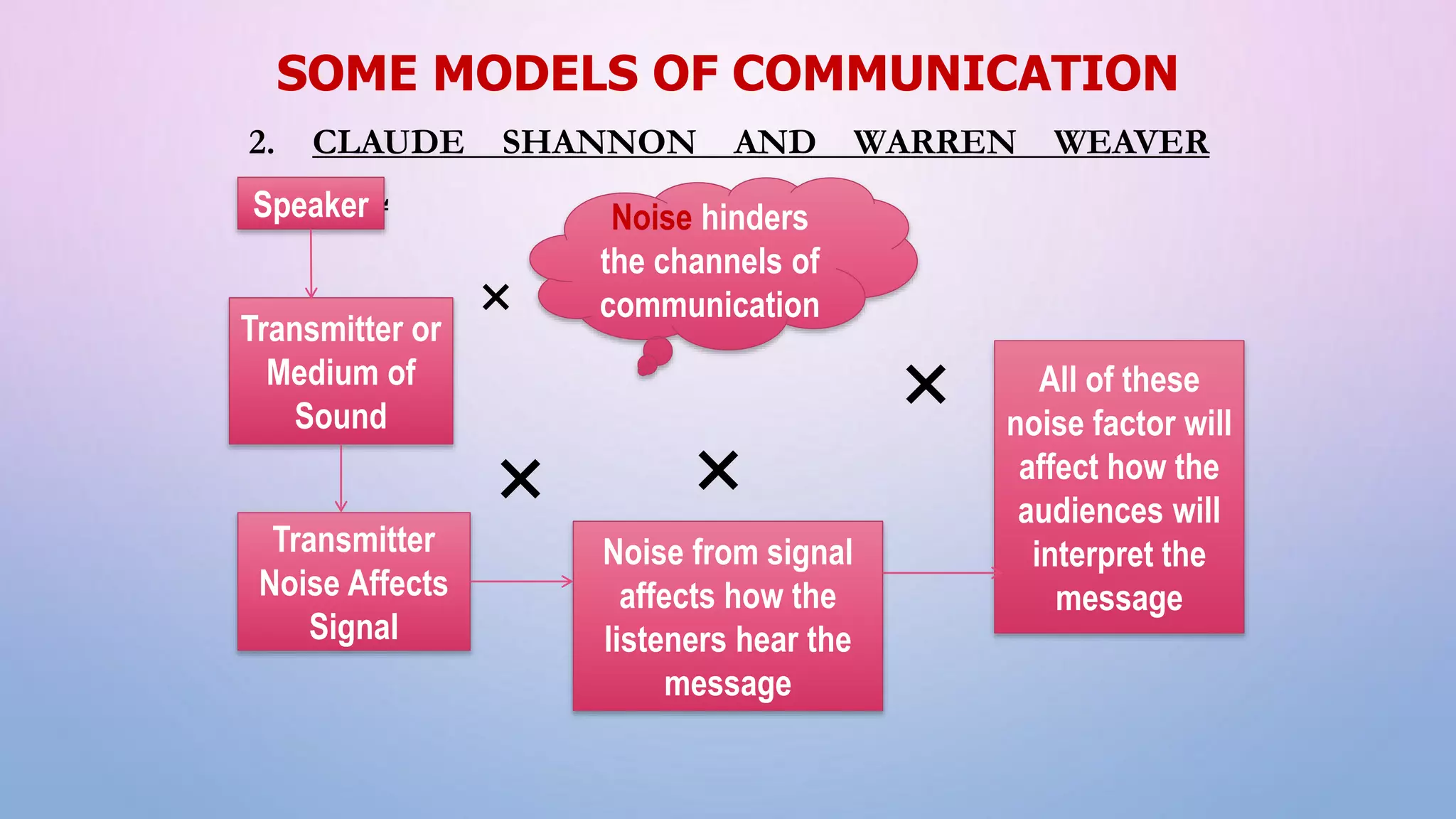
2. CLAUDE SHANNON AND WARREN WEAVER
MODEL
SOME MODELS OF COMMUNICATION
Noise hinders
the channels of
communication
Speaker
Transmitter or
Medium of
Sound
Transmitter
Noise Affects
Signal
Noise from signal
affects how the
listeners hear the
message
All of these
noise factor will
affect how the
audiences will
interpret the
message
✖
✖ ✖
✖
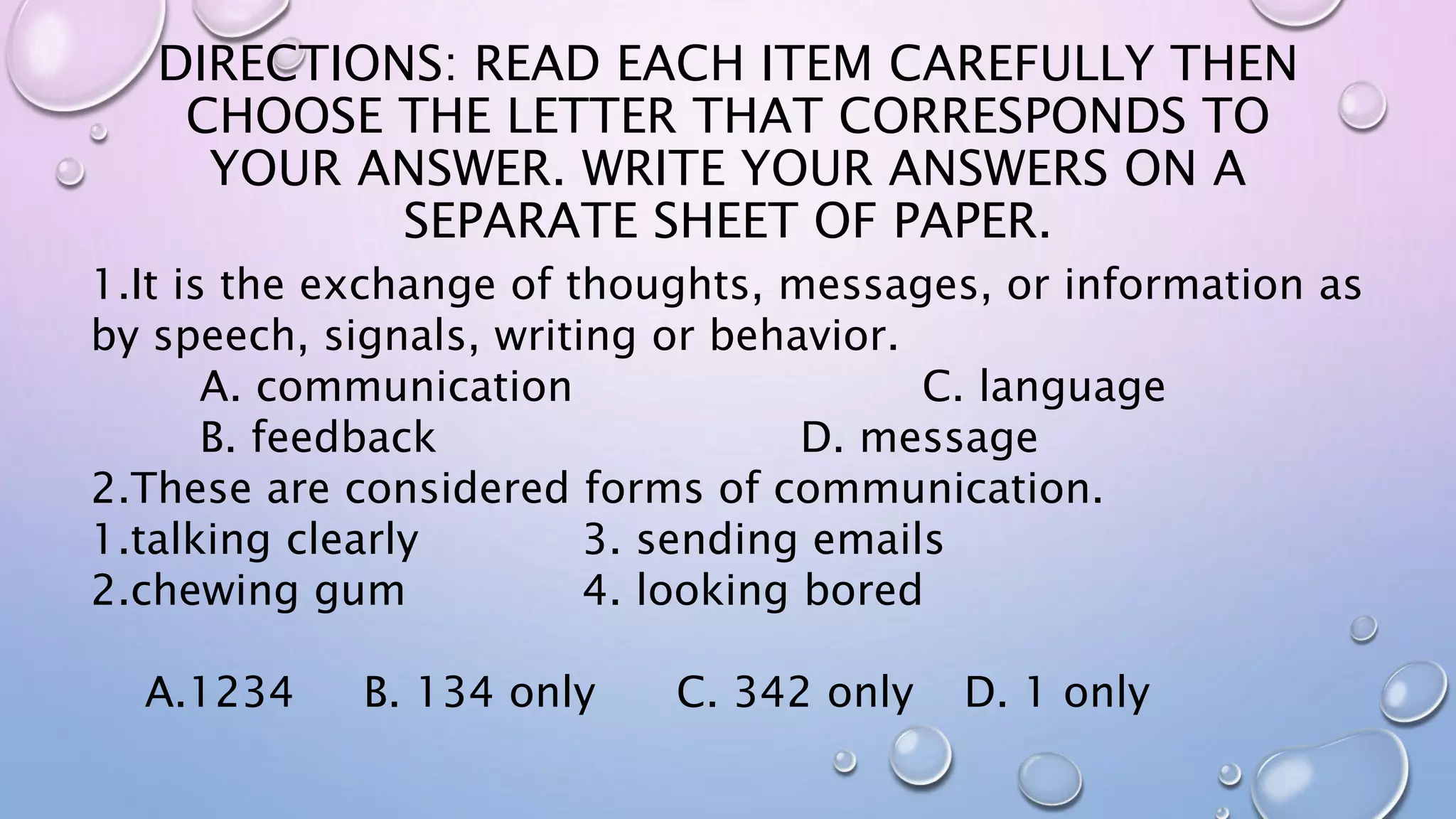
DIRECTIONS: READ EACH ITEM CAREFULLY THEN
CHOOSE THE LETTER THAT CORRESPONDS TO
YOUR ANSWER. WRITE YOUR ANSWERS ON A
SEPARATE SHEET OF PAPER.
1.It is the exchange of thoughts, messages, or information as
by speech, signals, writing or behavior.
A. communication C. language
B. feedback D. message
2.These are considered forms of communication.
1.talking clearly 3. sending emails
2.chewing gum 4. looking bored
A.1234 B. 134 only C. 342 only D. 1 only
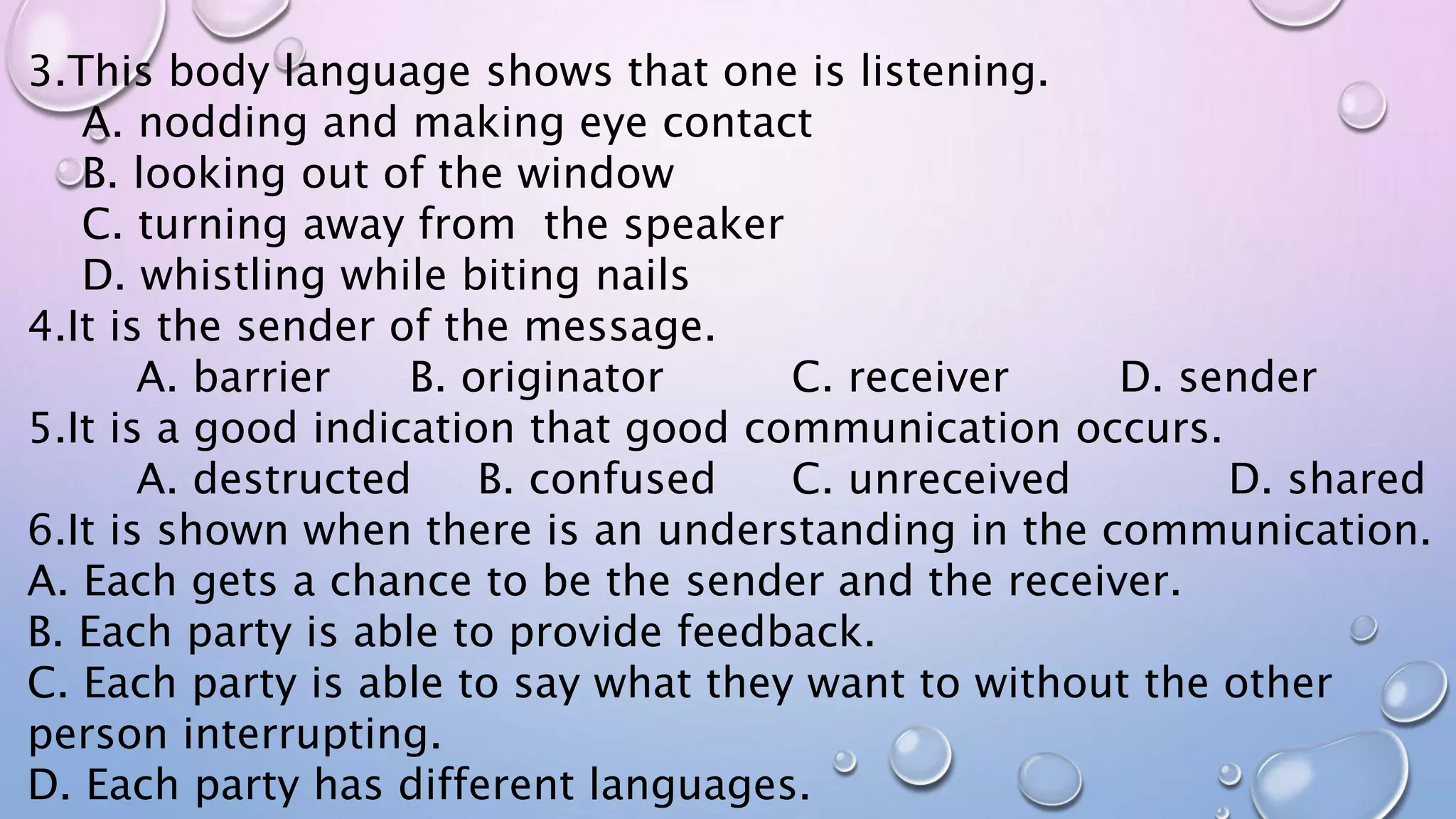
3.This body language shows that one is listening.
A. nodding and making eye contact
B. looking out of the window
C. turning away from the speaker
D. whistling while biting nails
4.It is the sender of the message.
A. barrier B. originator C. receiver D. sender
5.It is a good indication that good communication occurs.
A. destructed B. confused C. unreceived D. shared
6.It is shown when there is an understanding in the communication.
A. Each gets a chance to be the sender and the receiver.
B. Each party is able to provide feedback.
C. Each party is able to say what they want to without the other
person interrupting.
D. Each party has different languages.
7.It is the content of the communication.
A.jargon B.media C. message D. noise
8.This communication type is characterized by a certain look or
gaze.
A.non-verbal Communication B.oral Communication
C.verbal Communication D.written Communication
9.It is the definition of communication.
1.Communication involves a transaction.
2.Communication is sharing of ideas among a group of people.
3.Communication is a confusion of ideas in the mind of the
other.
4.Communication is a transfer of messages from one person to
another.
A.1234 B. 234 only C. 124 only D. 4 only
10.This is the BEST way to continue communication.
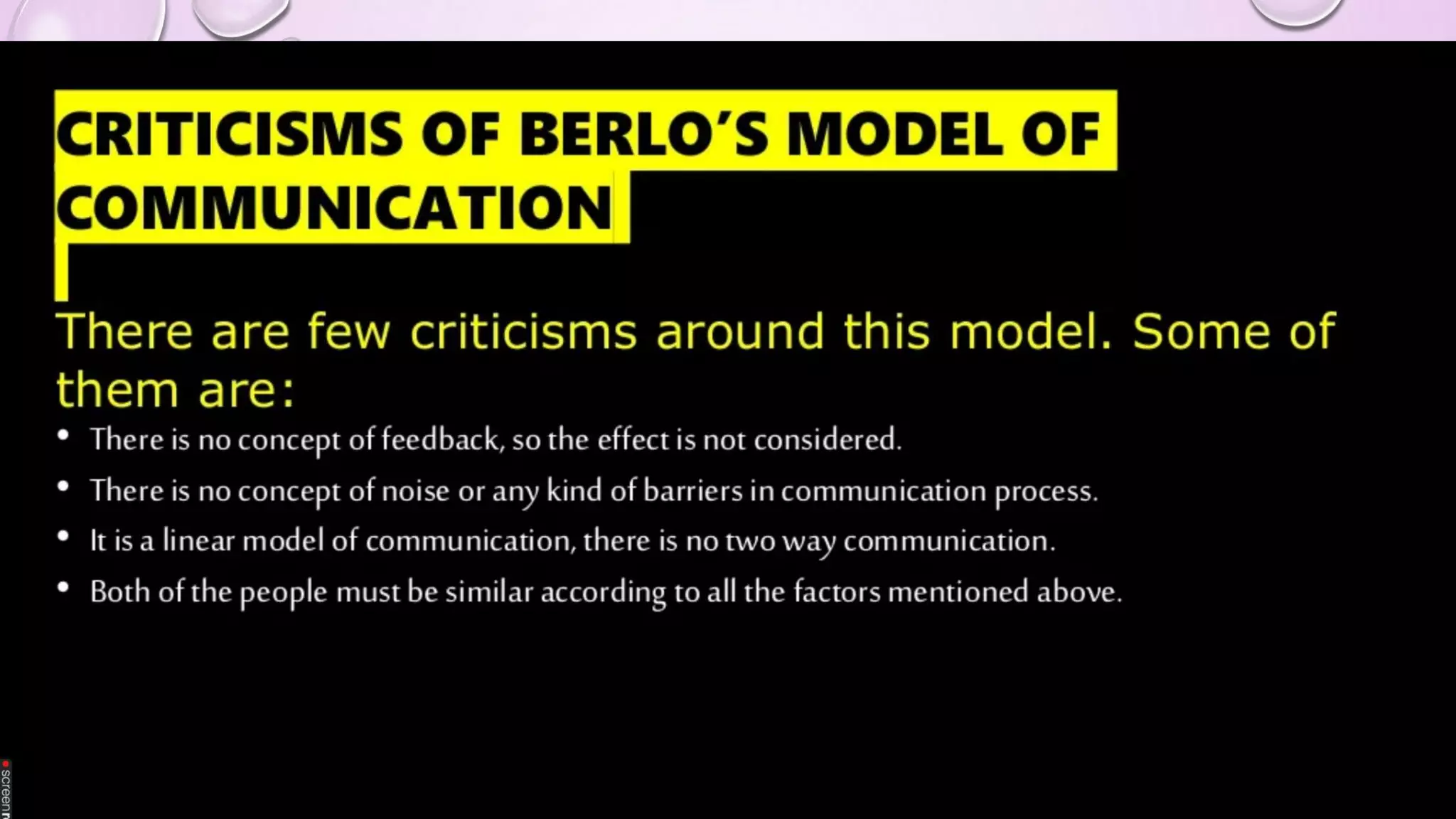
11.It is known when the receiver gives a verbal or non-verbal
message.
A.answer B.feedback C. response D. none given
12.It is an indication that communication really takes place.
A.when the message enters the channel
B.when the message leaves the channel
C.when the receiver understands the message
D.when the sender transmits the message
13.This is to be avoided for effective communication.
A.ambiguity B.listening C. politeness D. sharing of
activity
14.This is essential to an effective communication.
A.three-way process
B.both a one-way and a two-way process
C.one-way process
D.two-way process
15.This refers to the responsibility of the person who
receives the message for communication to take place.
A.feedback B.non-verbal clues C. perception D.
self-concept

ORAL COMMUNICATION FOR GRADE 11.pptx

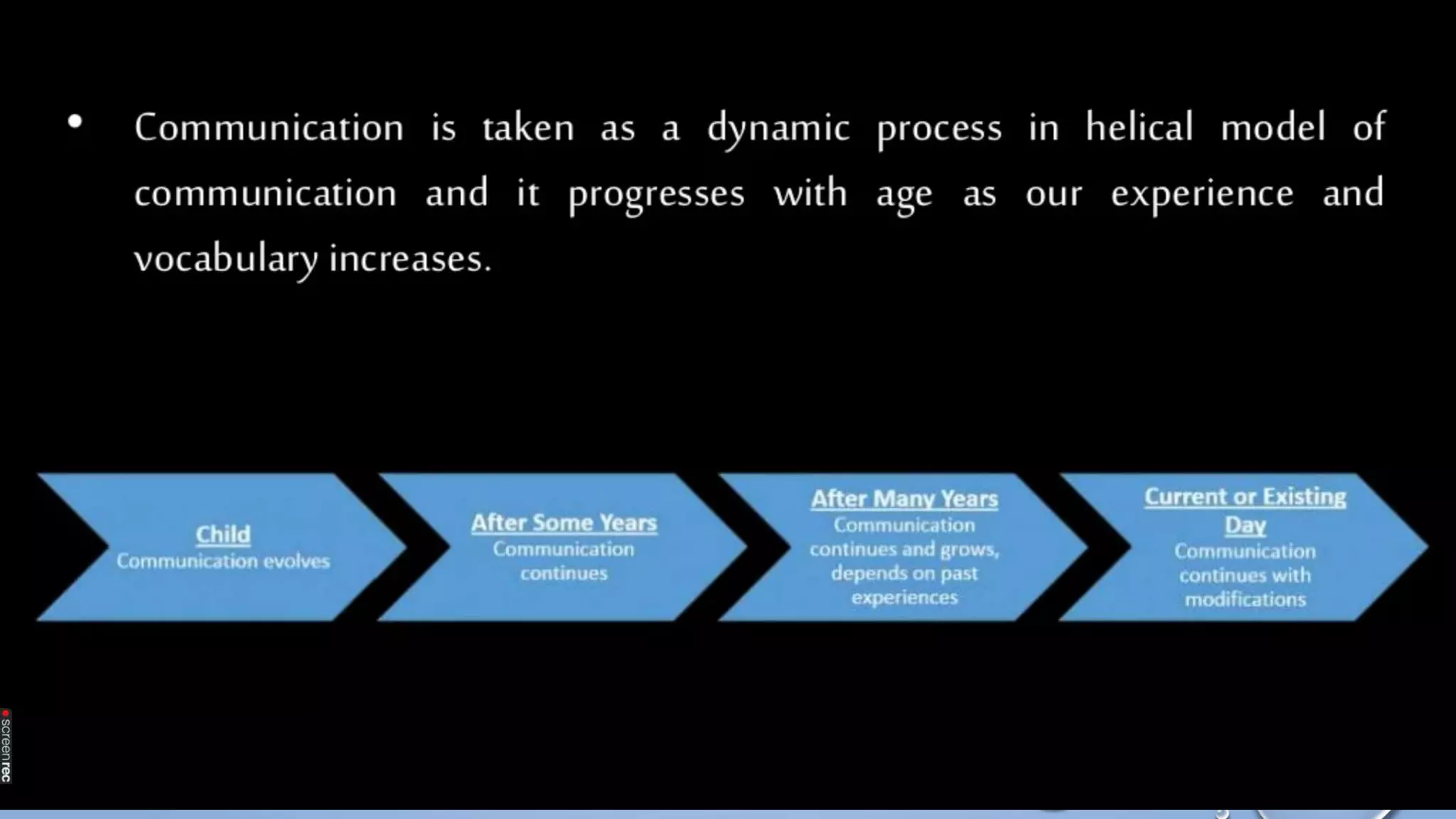
  • 1.
    ORAL COMMUNICATION FOR GRADE11 MODULE 1: FUNCTION, NATURE AND PROCESS OF COMMUNICATION
  • 2.
    FUNCTION, NATURE ANDPROCESS OF COMMUNICATION
  • 4.
  • 15.
    2. CLAUDE SHANNONAND WARREN WEAVER MODEL SOME MODELS OF COMMUNICATION Noise hinders the channels of communication Speaker Transmitter or Medium of Sound Transmitter Noise Affects Signal Noise from signal affects how the listeners hear the message All of these noise factor will affect how the audiences will interpret the message ✖ ✖ ✖ ✖
  • 26.
    DIRECTIONS: READ EACHITEM CAREFULLY THEN CHOOSE THE LETTER THAT CORRESPONDS TO YOUR ANSWER. WRITE YOUR ANSWERS ON A SEPARATE SHEET OF PAPER. 1.It is the exchange of thoughts, messages, or information as by speech, signals, writing or behavior. A. communication C. language B. feedback D. message 2.These are considered forms of communication. 1.talking clearly 3. sending emails 2.chewing gum 4. looking bored A.1234 B. 134 only C. 342 only D. 1 only
  • 27.
    3.This body languageshows that one is listening. A. nodding and making eye contact B. looking out of the window C. turning away from the speaker D. whistling while biting nails 4.It is the sender of the message. A. barrier B. originator C. receiver D. sender 5.It is a good indication that good communication occurs. A. destructed B. confused C. unreceived D. shared 6.It is shown when there is an understanding in the communication. A. Each gets a chance to be the sender and the receiver. B. Each party is able to provide feedback. C. Each party is able to say what they want to without the other person interrupting. D. Each party has different languages.
  • 28.
    7.It is thecontent of the communication. A.jargon B.media C. message D. noise 8.This communication type is characterized by a certain look or gaze. A.non-verbal Communication B.oral Communication C.verbal Communication D.written Communication 9.It is the definition of communication. 1.Communication involves a transaction. 2.Communication is sharing of ideas among a group of people. 3.Communication is a confusion of ideas in the mind of the other. 4.Communication is a transfer of messages from one person to another. A.1234 B. 234 only C. 124 only D. 4 only 10.This is the BEST way to continue communication.
  • 29.
    11.It is knownwhen the receiver gives a verbal or non-verbal message. A.answer B.feedback C. response D. none given 12.It is an indication that communication really takes place. A.when the message enters the channel B.when the message leaves the channel C.when the receiver understands the message D.when the sender transmits the message 13.This is to be avoided for effective communication. A.ambiguity B.listening C. politeness D. sharing of activity
  • 30.
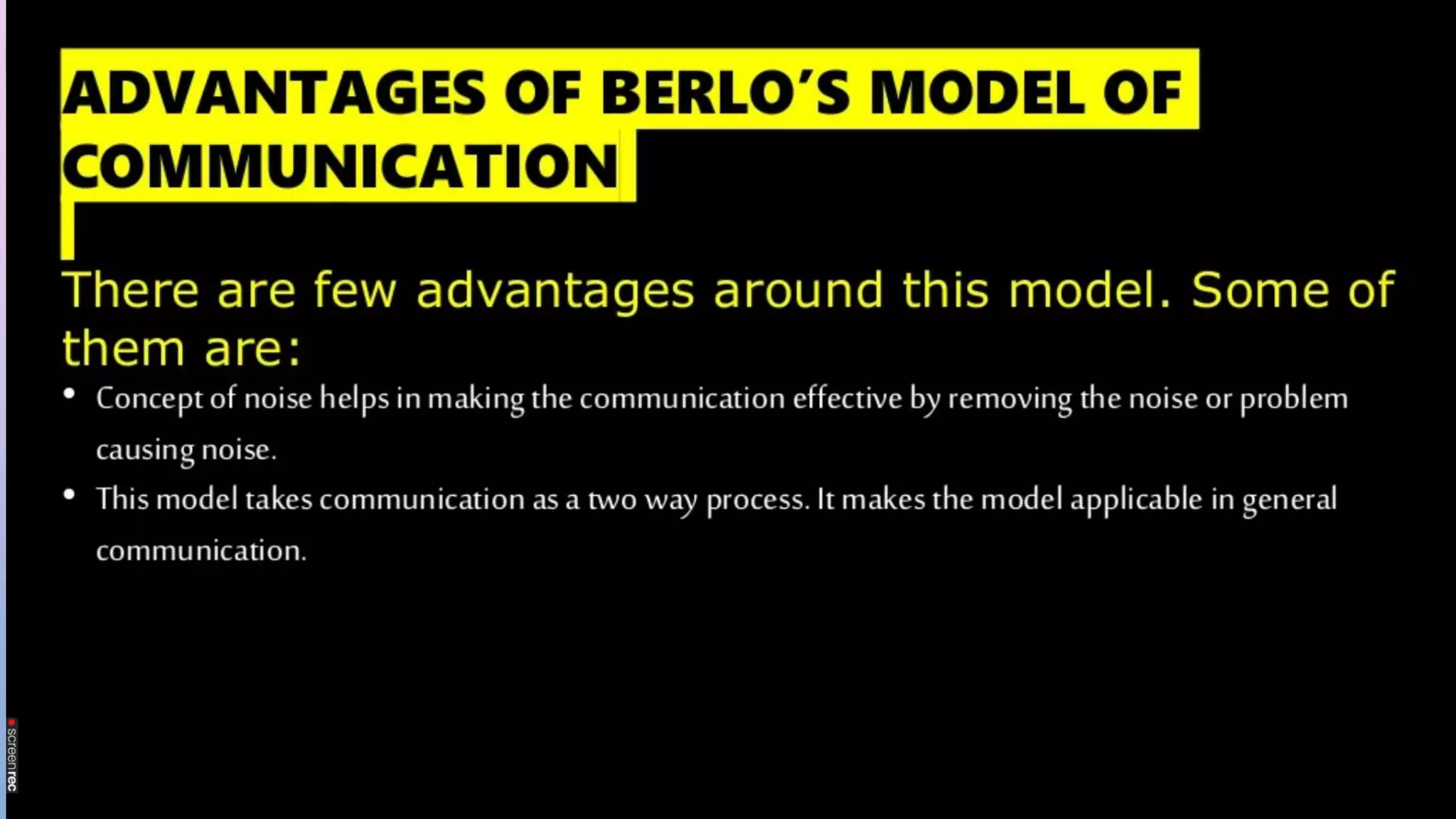
    14.This is essentialto an effective communication. A.three-way process B.both a one-way and a two-way process C.one-way process D.two-way process 15.This refers to the responsibility of the person who receives the message for communication to take place. A.feedback B.non-verbal clues C. perception D. self-concept
Editor's Notes

  • #16 Elaborate on this and ask the students to identify different examples of noises that affect communication. You may then add that there are two other models of communication discussed in the book of Ramona S. Flores’ Oral Communication by Rex Book Store, Inc. among the very many models of communication now accepted by the academic community.