DISORDERS OF LASHES
1. Trichiasis
2. Metaplastic lashes
3. Distichiasis
4. Phthiriasis palpebrarum
6. Poliosis
5. Madarosis
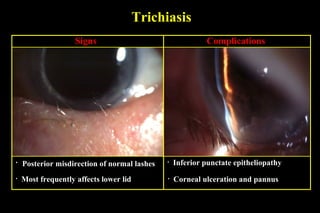
Trichiasis
• Posterior misdirection of normal lashes
• Most frequently affects lower lid
Complications
• Inferior punctate epitheliopathy
• Corneal ulceration and pannus
Signs
Treatment Options for Trichiasis
1. Epilation - but recurrences within few weeks
2. Electrolysis - but frequently repeated treatments required
3. Cryotherapy - for many lashes
4. Laser ablation - for few scattered lashes
5. Surgery - for localized crop resistant to other methods
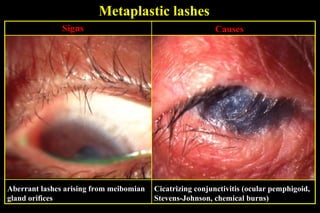
Metaplastic lashes
Cicatrizing conjunctivitis (ocular pemphigoid,
Stevens-Johnson, chemical burns)
Aberrant lashes arising from meibomian
gland orifices
Signs Causes
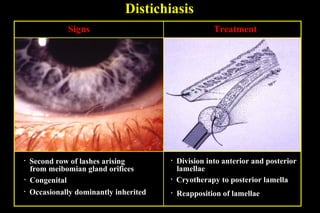
Distichiasis
• Second row of lashes arising
from meibomian gland orifices
• Congenital • Cryotherapy to posterior lamella
• Division into anterior and posterior
lamellae
• Reapposition of lamellae
TreatmentSigns
• Occasionally dominantly inherited
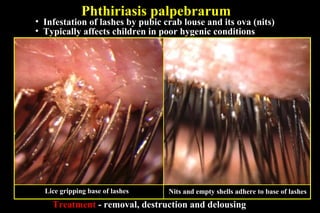
Phthiriasis palpebrarum
• Infestation of lashes by pubic crab louse and its ova (nits)
• Typically affects children in poor hygenic conditions
Treatment - removal, destruction and delousing
Lice gripping base of lashes Nits and empty shells adhere to base of lashes
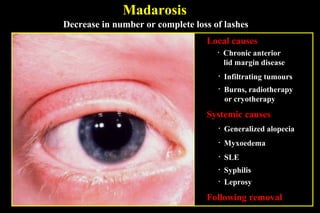
Madarosis
Local causes
• Chronic anterior
lid margin disease
• Infiltrating tumours
• Burns, radiotherapy
or cryotherapy
Systemic causes
• Generalized alopecia
• Myxoedema
• SLE
• Syphilis
• Leprosy
Following removal
Decrease in number or complete loss of lashes
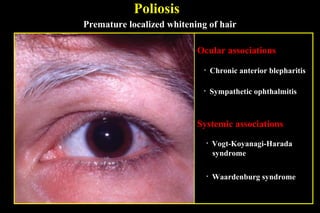
Poliosis
Premature localized whitening of hair
Ocular associations
• Chronic anterior blepharitis
• Sympathetic ophthalmitis
• Vogt-Koyanagi-Harada
syndrome
• Waardenburg syndrome
Systemic associations

01 disorders of lashes

  • 1.
    DISORDERS OF LASHES 1.Trichiasis 2. Metaplastic lashes 3. Distichiasis 4. Phthiriasis palpebrarum 6. Poliosis 5. Madarosis
  • 2.
    Trichiasis • Posterior misdirectionof normal lashes • Most frequently affects lower lid Complications • Inferior punctate epitheliopathy • Corneal ulceration and pannus Signs
  • 3.
    Treatment Options forTrichiasis 1. Epilation - but recurrences within few weeks 2. Electrolysis - but frequently repeated treatments required 3. Cryotherapy - for many lashes 4. Laser ablation - for few scattered lashes 5. Surgery - for localized crop resistant to other methods
  • 4.
    Metaplastic lashes Cicatrizing conjunctivitis(ocular pemphigoid, Stevens-Johnson, chemical burns) Aberrant lashes arising from meibomian gland orifices Signs Causes
  • 5.
    Distichiasis • Second rowof lashes arising from meibomian gland orifices • Congenital • Cryotherapy to posterior lamella • Division into anterior and posterior lamellae • Reapposition of lamellae TreatmentSigns • Occasionally dominantly inherited
  • 6.
    Phthiriasis palpebrarum • Infestationof lashes by pubic crab louse and its ova (nits) • Typically affects children in poor hygenic conditions Treatment - removal, destruction and delousing Lice gripping base of lashes Nits and empty shells adhere to base of lashes
  • 7.
    Madarosis Local causes • Chronicanterior lid margin disease • Infiltrating tumours • Burns, radiotherapy or cryotherapy Systemic causes • Generalized alopecia • Myxoedema • SLE • Syphilis • Leprosy Following removal Decrease in number or complete loss of lashes
  • 8.
    Poliosis Premature localized whiteningof hair Ocular associations • Chronic anterior blepharitis • Sympathetic ophthalmitis • Vogt-Koyanagi-Harada syndrome • Waardenburg syndrome Systemic associations