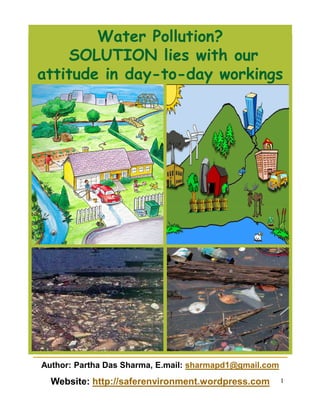
Water Pollution?
    SOLUTION lies with our
attitude in day-to-day workings


Author: Partha Das Sharma, E.mail: sharmapd1@gmail.com

  Website: http://saferenvironment.wordpress.com         1
Storm Water pollution

 Storm water pollution refers to many
 types of harmful materials that are
 carried by water (rain water or wash
 water) through the storm drain system
 to creeks, lakes, rivers and ultimately
 to the ocean.
 Storm water is not treated in any way.
 Storm water pollution has many
 sources.
 One of the most common is the illegal
 dumping or spilling of wastes directly
 into storm drains, like pouring used
 motor oil or paint directly into a storm
 drain.


                                            2
3
Storm
Drain


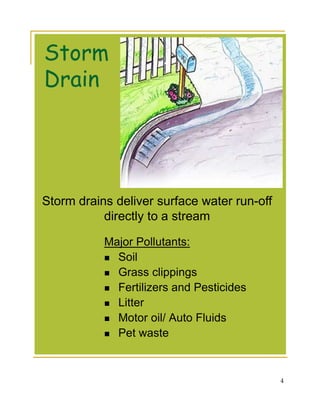
Storm drains deliver surface water run-off
           directly to a stream

           Major Pollutants:
             Soil
             Grass clippings
             Fertilizers and Pesticides
             Litter
             Motor oil/ Auto Fluids
             Pet waste


                                             4
Fertilizer


    Limiting fertilizer use will avoid nutrient
    overload in streams.
·      Plant vegetation native to our area.
    These are suited to the soil type, slope,
    available sunlight, and climate.
·      Prior to fertilizing, test soil to determine
    what nutrients soil may need.
·      Mow lawn 1/3 of the total grass height
    only, mow when dry- with sharp mower
    blades, and leave the clippings on the
    lawn.
·      During summer months, cut grass
    higher to help retain soil moisture.


                                                      5
Erosion


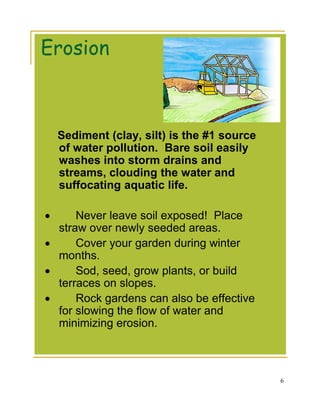
    Sediment (clay, silt) is the #1 source
    of water pollution. Bare soil easily
    washes into storm drains and
    streams, clouding the water and
    suffocating aquatic life.

•     Never leave soil exposed! Place
  straw over newly seeded areas.
•     Cover your garden during winter
  months.
•     Sod, seed, grow plants, or build
  terraces on slopes.
•     Rock gardens can also be effective
  for slowing the flow of water and
  minimizing erosion.


                                             6
Pest
                      Management

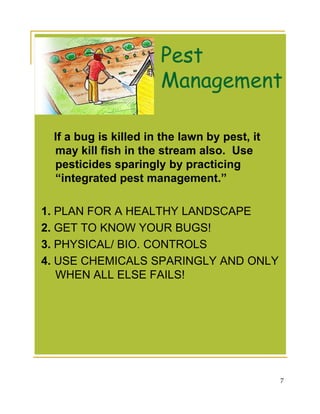
 If a bug is killed in the lawn by pest, it
 may kill fish in the stream also. Use
 pesticides sparingly by practicing
 “integrated pest management.”

1. PLAN FOR A HEALTHY LANDSCAPE
2. GET TO KNOW YOUR BUGS!
3. PHYSICAL/ BIO. CONTROLS
4. USE CHEMICALS SPARINGLY AND ONLY
   WHEN ALL ELSE FAILS!


                                              7
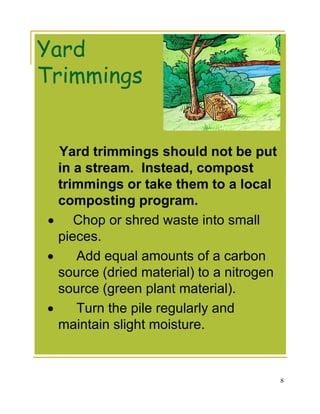
Yard
Trimmings


  Yard trimmings should not be put
  in a stream. Instead, compost
  trimmings or take them to a local
  composting program.
• Chop or shred waste into small
  pieces.
•    Add equal amounts of a carbon
  source (dried material) to a nitrogen
  source (green plant material).
•    Turn the pile regularly and
  maintain slight moisture.


                                          8
Pets


    Scientists believe that fecal matter from
    pets is a major source of bacteria in
    urban waterways.

•   Flush fecal material down the toilet or wrap
    it up and place it in the trash.
•   Restrict pets from streamside area.
•   Control fleas with minimal pesticide use.


                                                   9
Driveway


    Reduce contaminant run-off from your
    driveway!

•   Do not wash oils or other spills down the
  storm drain!
•   Wash your car at a designated car wash
  or (at least) wash with a low-phosphate
  soap in an area where the water will soak
  into the ground.

              NEW CONSTRUCTION:
      Use bricks with sand, stones, or paving
    blocks instead of impermeable
    pavement.


                                                10
Streamside


    Streams should be kept healthy.
    Control run-off contamination.
•      Landscape yard to provide areas
    where water will soak into the
    ground.
•      Leave 25’ buffer strips of thick,
    native vegetation along streams.
•      Pick up litter.
•      Monitor your stream for pollutants
    and help to determine the source.

                                            11
Recycling
and Waste
Disposal


  Do not allow wastes to enter into
  a storm drain or stream.
  Contamination can injure or kill
  fish and wildlife.
•    Do not burn or bury trash.

•      Reuse and recycle everything
    possible.


                                      12
House
                              Hazardous
                              Wastes

  Household Hazardous Wastes (HHW),
  especially auto fluids, are a common
  contaminant found in waterways. Never
  pour products on the ground or down a
  storm drain.
•     Have your vehicle serviced at a garage
  where fluids will be recycled or properly
  disposed.
•     If doing it yourself, recycle auto fluids, oil
  filters, batteries, and tires.


                                                       13
HHW
   (Cont.)

   Other examples of HHWs include:
   Paint products/ fuels/ solvents/
   pesticides/ and mercury-
   containing products. Here’s what
   you can do:
-1st REDUCE: Buy the least hazardous
   and only the quantity that you will
   use.
-2nd REUSE: Give it to someone to
   use for its intended purpose.
-3rd RECYCLE leftover products
   whenever possible.


                                         14
REDUCE, REUSE
and RECYCLE is
the most important
mantra of present
day for
Improvement of
ENVIRONMENT


                     15
Ground Water
Contamination


                16

Water Pollution and Its Solution

  • 1.
    Water Pollution? SOLUTION lies with our attitude in day-to-day workings Author: Partha Das Sharma, E.mail: sharmapd1@gmail.com Website: http://saferenvironment.wordpress.com 1
  • 2.
    Storm Water pollution Storm water pollution refers to many types of harmful materials that are carried by water (rain water or wash water) through the storm drain system to creeks, lakes, rivers and ultimately to the ocean. Storm water is not treated in any way. Storm water pollution has many sources. One of the most common is the illegal dumping or spilling of wastes directly into storm drains, like pouring used motor oil or paint directly into a storm drain. 2
  • 3.
  • 4.
    Storm Drain Storm drains deliversurface water run-off directly to a stream Major Pollutants: Soil Grass clippings Fertilizers and Pesticides Litter Motor oil/ Auto Fluids Pet waste 4
  • 5.
    Fertilizer Limiting fertilizer use will avoid nutrient overload in streams. · Plant vegetation native to our area. These are suited to the soil type, slope, available sunlight, and climate. · Prior to fertilizing, test soil to determine what nutrients soil may need. · Mow lawn 1/3 of the total grass height only, mow when dry- with sharp mower blades, and leave the clippings on the lawn. · During summer months, cut grass higher to help retain soil moisture. 5
  • 6.
    Erosion Sediment (clay, silt) is the #1 source of water pollution. Bare soil easily washes into storm drains and streams, clouding the water and suffocating aquatic life. • Never leave soil exposed! Place straw over newly seeded areas. • Cover your garden during winter months. • Sod, seed, grow plants, or build terraces on slopes. • Rock gardens can also be effective for slowing the flow of water and minimizing erosion. 6
  • 7.
    Pest Management If a bug is killed in the lawn by pest, it may kill fish in the stream also. Use pesticides sparingly by practicing “integrated pest management.” 1. PLAN FOR A HEALTHY LANDSCAPE 2. GET TO KNOW YOUR BUGS! 3. PHYSICAL/ BIO. CONTROLS 4. USE CHEMICALS SPARINGLY AND ONLY WHEN ALL ELSE FAILS! 7
  • 8.
    Yard Trimmings Yardtrimmings should not be put in a stream. Instead, compost trimmings or take them to a local composting program. • Chop or shred waste into small pieces. • Add equal amounts of a carbon source (dried material) to a nitrogen source (green plant material). • Turn the pile regularly and maintain slight moisture. 8
  • 9.
    Pets Scientists believe that fecal matter from pets is a major source of bacteria in urban waterways. • Flush fecal material down the toilet or wrap it up and place it in the trash. • Restrict pets from streamside area. • Control fleas with minimal pesticide use. 9
  • 10.
    Driveway Reduce contaminant run-off from your driveway! • Do not wash oils or other spills down the storm drain! • Wash your car at a designated car wash or (at least) wash with a low-phosphate soap in an area where the water will soak into the ground. NEW CONSTRUCTION: Use bricks with sand, stones, or paving blocks instead of impermeable pavement. 10
  • 11.
    Streamside Streams should be kept healthy. Control run-off contamination. • Landscape yard to provide areas where water will soak into the ground. • Leave 25’ buffer strips of thick, native vegetation along streams. • Pick up litter. • Monitor your stream for pollutants and help to determine the source. 11
  • 12.
    Recycling and Waste Disposal Do not allow wastes to enter into a storm drain or stream. Contamination can injure or kill fish and wildlife. • Do not burn or bury trash. • Reuse and recycle everything possible. 12
  • 13.
    House Hazardous Wastes Household Hazardous Wastes (HHW), especially auto fluids, are a common contaminant found in waterways. Never pour products on the ground or down a storm drain. • Have your vehicle serviced at a garage where fluids will be recycled or properly disposed. • If doing it yourself, recycle auto fluids, oil filters, batteries, and tires. 13
  • 14.
    HHW (Cont.) Other examples of HHWs include: Paint products/ fuels/ solvents/ pesticides/ and mercury- containing products. Here’s what you can do: -1st REDUCE: Buy the least hazardous and only the quantity that you will use. -2nd REUSE: Give it to someone to use for its intended purpose. -3rd RECYCLE leftover products whenever possible. 14
  • 15.
    REDUCE, REUSE and RECYCLEis the most important mantra of present day for Improvement of ENVIRONMENT 15
  • 16.