MS4 Implementation 
NGO Perspective 
Kirsten James, Science & Policy Director, Water Quality
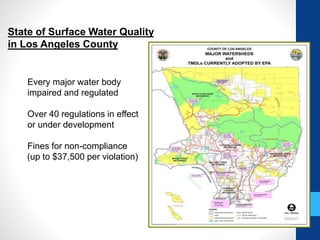
Machado Lake 
-Trash TMDL 
-Nutrients TMDL 
San Gabriel River 
- Metals TMDL 
Los Cerritos Channel 
- Metals TMDL 
State of Surface Water Quality 
in Los Angeles County 
• Every major water body 
impaired and regulated 
• Over 40 regulations in effect 
or under development 
• Fines for non-compliance 
(up to $37,500 per violation)
2012 LA Permit Requirements: 
Permittees may “develop Watershed Management 
Programs to implement the requirements of [the 
Permit] on a watershed scale through customized 
strategies, control measures, and BMPs.” (2012 
Permit, at VI.C.1.a.) 
In a WMP, permittees must “ensure that discharges 
from the Permittee’s MS4 . . . do not cause or 
contribute to exceedances of receiving water 
limitations” or applicable TMDL provisions. (Id. at 
VI.C.1.d.)
Common Concerns with Draft WMPs 
1. Use of non-site specific data for watershed characterization 
2. Insufficient water body-pollutant classification and prioritization 
3. Improper and unsubstantiated Reasonable Assurance Analysis (RAA) 
4. Overreliance on regulatory controls and non-MS4 entities 
5. Proposed projects lack specificity and fail to incorporate multi-benefit 
solutions 
6. Compliance deadlines unreasonably long and extend beyond Permit 
term 
7. Low Impact Development and Green Street requirements 
8. Monitoring plans insufficient to characterize runoff and identify 
responsible parties
Use of Non-Site Specific Data 
for Watershed Characterization 
• Permittees must evaluate existing water quality 
conditions and characterize the current stormwater 
and non-stormwater discharges in their watersheds 
(Permit at VI.C.5.a) 
• Acknowledge that, in some cases, watershed 
characterization data may be limited 
• No quantitative or qualitative adjustments for data 
originating from outside of watershed
Insufficient Water Body-Pollutant 
Classification and Prioritization 
• Permittees are required to classify and 
prioritize pollutants in each sub-watershed 
(2012 Permit, at VI.C.5.a.ii.) 
• Some permittees do not prioritize pollutants 
according to 2012 MS4 permit scheme 
• In general, permittees review of available data 
for water body-pollutant classification and 
prioritization is inadequate
Improper and Unsubstantiated 
Reasonable Assurance Analysis 
(RAA) 
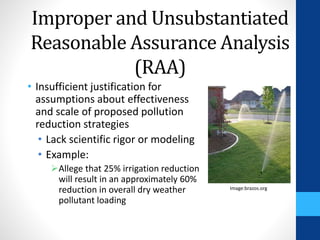
• Insufficient justification for 
assumptions about effectiveness 
and scale of proposed pollution 
reduction strategies 
• Lack scientific rigor or modeling 
• Example: 
Allege that 25% irrigation reduction 
will result in an approximately 60% 
reduction in overall dry weather 
pollutant loading 
Image:brazos.org
Improper and Unsubstantiated 
Reasonable Assurance Analysis 
(RAA) 
• Inappropriately rely on 
future legislation and 
policy changes 
• Over-reliance on future 
adaptive management 
to meet permit 
requirements 
Image:www.copper.org
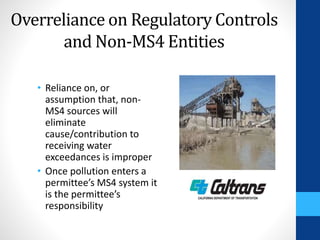
Overreliance on Regulatory Controls 
and Non-MS4 Entities 
• Reliance on, or 
assumption that, non- 
MS4 sources will 
eliminate 
cause/contribution to 
receiving water 
exceedances is improper 
• Once pollution enters a 
permittee’s MS4 system it 
is the permittee’s 
responsibility
Compliance Deadlines 
Unreasonably Long and Extend 
Beyond Permit Term 
• Failure to meet interim and ultimate compliance 
with RWLs in a timely manner 
• Propose interim TMDL compliance milestones for 
TMDLs that are past due and subject to final 
compliance limitations
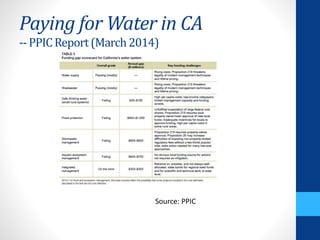
Paying for Water in CA 
-- PPIC Report (March 2014) 
Source: PPIC
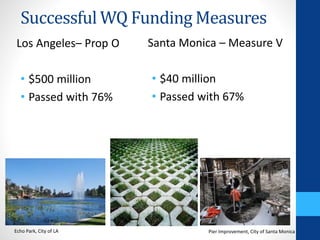
Successful WQ Funding Measures 
Los Angeles– Prop O 
• $500 million 
• Passed with 76% 
Santa Monica – Measure V 
• $40 million 
• Passed with 67% 
Echo Park, City of LA Pier Improvement, City of Santa Monica
AB 2403 
“Water” means any system of public improvements intended to 
provide for the production, storage, supply, treatment, or 
distribution of water from any source.
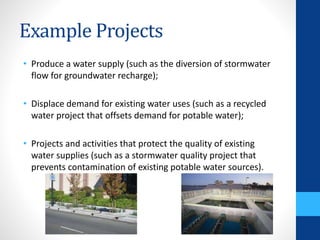
Example Projects 
• Produce a water supply (such as the diversion of stormwater 
flow for groundwater recharge); 
• Displace demand for existing water uses (such as a recycled 
water project that offsets demand for potable water); 
• Projects and activities that protect the quality of existing 
water supplies (such as a stormwater quality project that 
prevents contamination of existing potable water sources).
Prop 218 Reform 
Section 6 of Article XIII D thereof is amended to read: 
(c) Voter Approval for New or Increased Fees and Charges. 
Except for fees or charges for sewer, water, and stormwater and 
urban runoff management, or refuse collection services, no 
property related a property-related fee or charge shall not be 
imposed or increased unless and until that fee or charge is 
submitted and approved by a majority vote of the property owners 
of the property subject to the fee or charge or, at the option of the 
agency, by a two-thirds vote of the electorate residing in the 
affected area. The election shall be conducted not less than 45 days 
after the public hearing. An agency may adopt procedures similar 
to those for increases in assessments in the conduct of elections 
under this subdivision.
Water Bond ($7.545 Billion ) 
Protecting Rivers, Lakes, Coastal Waters and Watersheds ($1.495 
Billion) 
• $327.5 – Multibenefit Watershed Projects by State Conservancies 
• $200 – Enhanced Stream Flows by Wildlife Conservation Board 
• $100 – Urban Creek Restoration (Los Angeles and San Gabriel Rivers) 
• $20 – Multibenefit Urban Watershed Projects by Competitive Grant 
• $475 – Fulfilling State Obligations in Water Settlements 
• $285 – Watershed Restoration Projects by Dept. of Fish & Wildlife 
• $87.5 – Delta Water Quality & Ecosystem Restoration 
• Regional Water Security, Climate, and Drought Preparedness ($810 
Million) 
• $510 – Allocation to Each Hydrologic Region 
• $100 – Urban and Agricultural Water Conservation 
• $200 – Stormwater Management
Steps Forward 
• Encourage your City to move forward under AB 2403 
• Support larger Proposition 218 Reform 
• Weigh-in on Water Bond guidelines, etc. 
• Think creatively 
• Street measures (e.g. METRO Measure X) 
• Public/private partnerships 
• City Manager’s Funding Options Report
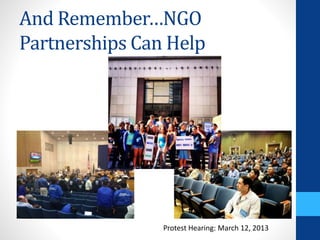
And Remember…NGO 
Partnerships Can Help 
Protest Hearing: March 12, 2013

James Solution to Pollution

  • 1.
    MS4 Implementation NGOPerspective Kirsten James, Science & Policy Director, Water Quality
  • 2.
    Machado Lake -TrashTMDL -Nutrients TMDL San Gabriel River - Metals TMDL Los Cerritos Channel - Metals TMDL State of Surface Water Quality in Los Angeles County • Every major water body impaired and regulated • Over 40 regulations in effect or under development • Fines for non-compliance (up to $37,500 per violation)
  • 3.
    2012 LA PermitRequirements: Permittees may “develop Watershed Management Programs to implement the requirements of [the Permit] on a watershed scale through customized strategies, control measures, and BMPs.” (2012 Permit, at VI.C.1.a.) In a WMP, permittees must “ensure that discharges from the Permittee’s MS4 . . . do not cause or contribute to exceedances of receiving water limitations” or applicable TMDL provisions. (Id. at VI.C.1.d.)
  • 4.
    Common Concerns withDraft WMPs 1. Use of non-site specific data for watershed characterization 2. Insufficient water body-pollutant classification and prioritization 3. Improper and unsubstantiated Reasonable Assurance Analysis (RAA) 4. Overreliance on regulatory controls and non-MS4 entities 5. Proposed projects lack specificity and fail to incorporate multi-benefit solutions 6. Compliance deadlines unreasonably long and extend beyond Permit term 7. Low Impact Development and Green Street requirements 8. Monitoring plans insufficient to characterize runoff and identify responsible parties
  • 5.
    Use of Non-SiteSpecific Data for Watershed Characterization • Permittees must evaluate existing water quality conditions and characterize the current stormwater and non-stormwater discharges in their watersheds (Permit at VI.C.5.a) • Acknowledge that, in some cases, watershed characterization data may be limited • No quantitative or qualitative adjustments for data originating from outside of watershed
  • 6.
    Insufficient Water Body-Pollutant Classification and Prioritization • Permittees are required to classify and prioritize pollutants in each sub-watershed (2012 Permit, at VI.C.5.a.ii.) • Some permittees do not prioritize pollutants according to 2012 MS4 permit scheme • In general, permittees review of available data for water body-pollutant classification and prioritization is inadequate
  • 7.
    Improper and Unsubstantiated Reasonable Assurance Analysis (RAA) • Insufficient justification for assumptions about effectiveness and scale of proposed pollution reduction strategies • Lack scientific rigor or modeling • Example: Allege that 25% irrigation reduction will result in an approximately 60% reduction in overall dry weather pollutant loading Image:brazos.org
  • 8.
    Improper and Unsubstantiated Reasonable Assurance Analysis (RAA) • Inappropriately rely on future legislation and policy changes • Over-reliance on future adaptive management to meet permit requirements Image:www.copper.org
  • 9.
    Overreliance on RegulatoryControls and Non-MS4 Entities • Reliance on, or assumption that, non- MS4 sources will eliminate cause/contribution to receiving water exceedances is improper • Once pollution enters a permittee’s MS4 system it is the permittee’s responsibility
  • 10.
    Compliance Deadlines UnreasonablyLong and Extend Beyond Permit Term • Failure to meet interim and ultimate compliance with RWLs in a timely manner • Propose interim TMDL compliance milestones for TMDLs that are past due and subject to final compliance limitations
  • 11.
    Paying for Waterin CA -- PPIC Report (March 2014) Source: PPIC
  • 12.
    Successful WQ FundingMeasures Los Angeles– Prop O • $500 million • Passed with 76% Santa Monica – Measure V • $40 million • Passed with 67% Echo Park, City of LA Pier Improvement, City of Santa Monica
  • 13.
    AB 2403 “Water”means any system of public improvements intended to provide for the production, storage, supply, treatment, or distribution of water from any source.
  • 14.
    Example Projects •Produce a water supply (such as the diversion of stormwater flow for groundwater recharge); • Displace demand for existing water uses (such as a recycled water project that offsets demand for potable water); • Projects and activities that protect the quality of existing water supplies (such as a stormwater quality project that prevents contamination of existing potable water sources).
  • 15.
    Prop 218 Reform Section 6 of Article XIII D thereof is amended to read: (c) Voter Approval for New or Increased Fees and Charges. Except for fees or charges for sewer, water, and stormwater and urban runoff management, or refuse collection services, no property related a property-related fee or charge shall not be imposed or increased unless and until that fee or charge is submitted and approved by a majority vote of the property owners of the property subject to the fee or charge or, at the option of the agency, by a two-thirds vote of the electorate residing in the affected area. The election shall be conducted not less than 45 days after the public hearing. An agency may adopt procedures similar to those for increases in assessments in the conduct of elections under this subdivision.
  • 16.
    Water Bond ($7.545Billion ) Protecting Rivers, Lakes, Coastal Waters and Watersheds ($1.495 Billion) • $327.5 – Multibenefit Watershed Projects by State Conservancies • $200 – Enhanced Stream Flows by Wildlife Conservation Board • $100 – Urban Creek Restoration (Los Angeles and San Gabriel Rivers) • $20 – Multibenefit Urban Watershed Projects by Competitive Grant • $475 – Fulfilling State Obligations in Water Settlements • $285 – Watershed Restoration Projects by Dept. of Fish & Wildlife • $87.5 – Delta Water Quality & Ecosystem Restoration • Regional Water Security, Climate, and Drought Preparedness ($810 Million) • $510 – Allocation to Each Hydrologic Region • $100 – Urban and Agricultural Water Conservation • $200 – Stormwater Management
  • 17.
    Steps Forward •Encourage your City to move forward under AB 2403 • Support larger Proposition 218 Reform • Weigh-in on Water Bond guidelines, etc. • Think creatively • Street measures (e.g. METRO Measure X) • Public/private partnerships • City Manager’s Funding Options Report
  • 18.
    And Remember…NGO PartnershipsCan Help Protest Hearing: March 12, 2013