
CELL ENERGY 2
Cellular Respiration
ppt. by Robin D. Seamon
VIDEO: Amoeba Sisters Cell
Respiration & Photosynthesis
ATP Energy:
What is it?
ATP / ADP Cycle
• ATP is the universal energy source for all
living things
• “Energy currency”
• Used to store & transport energy
Adenosine triphosphate
Adenosine diphosphate
ADP ATP
- P
Release energy
+ P
Store energy
Low energy:
dead battery
High energy:
charged battery
Energy is stored in phosphate
bonds.
When a cell has energy available it will store small amounts of
it by adding a phosphate group to ADP.
When a cell needs energy, the third phosphate is removed,
releasing energy for the cell.
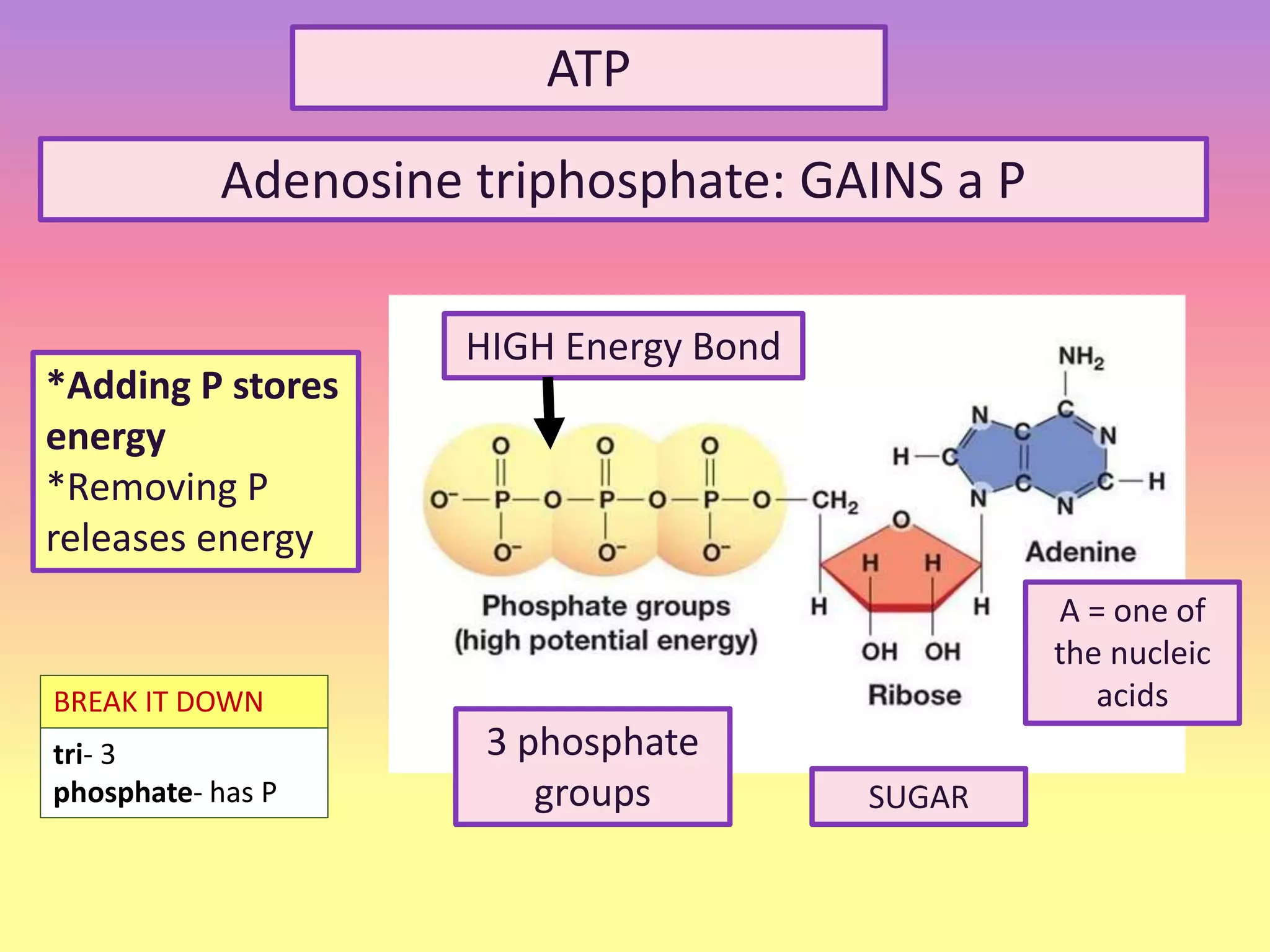
ATP
Adenosine triphosphate: GAINS a P
BREAK IT DOWN
tri- 3
phosphate- has P SUGAR
3 phosphate
groups
A = one of
the nucleic
acids
HIGH Energy Bond
*Adding P stores
energy
*Removing P
releases energy
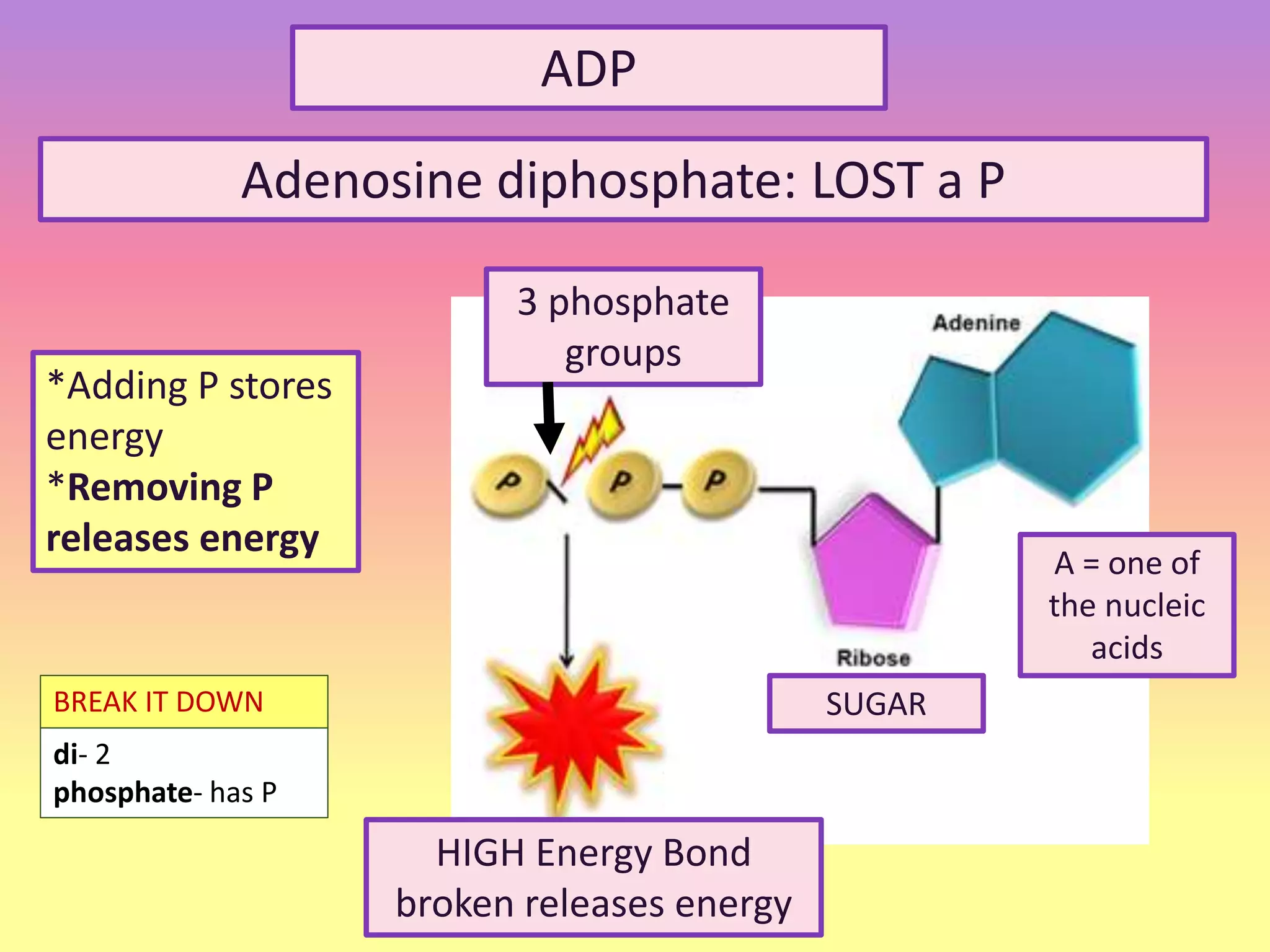
ADP
Adenosine diphosphate: LOST a P
BREAK IT DOWN
di- 2
phosphate- has P
SUGAR
3 phosphate
groups
A = one of
the nucleic
acids
HIGH Energy Bond
broken releases energy
*Adding P stores
energy
*Removing P
releases energy
ATP/ ADP Cycle
ATP / ADP is like a rechargeable battery
1. ATP holds the energy in the phosphate
bonds.
2. Energy is released when the phosphate
bonds are broken.
3. ADP is “recharged” to ATP by replacing the
used phosphate.
ATP is continuously being made & must be
regenerated. A working muscle cell consumes 10
million ATP per second.
ATP
ENERGY
MOVEMENT
VOCABULARY
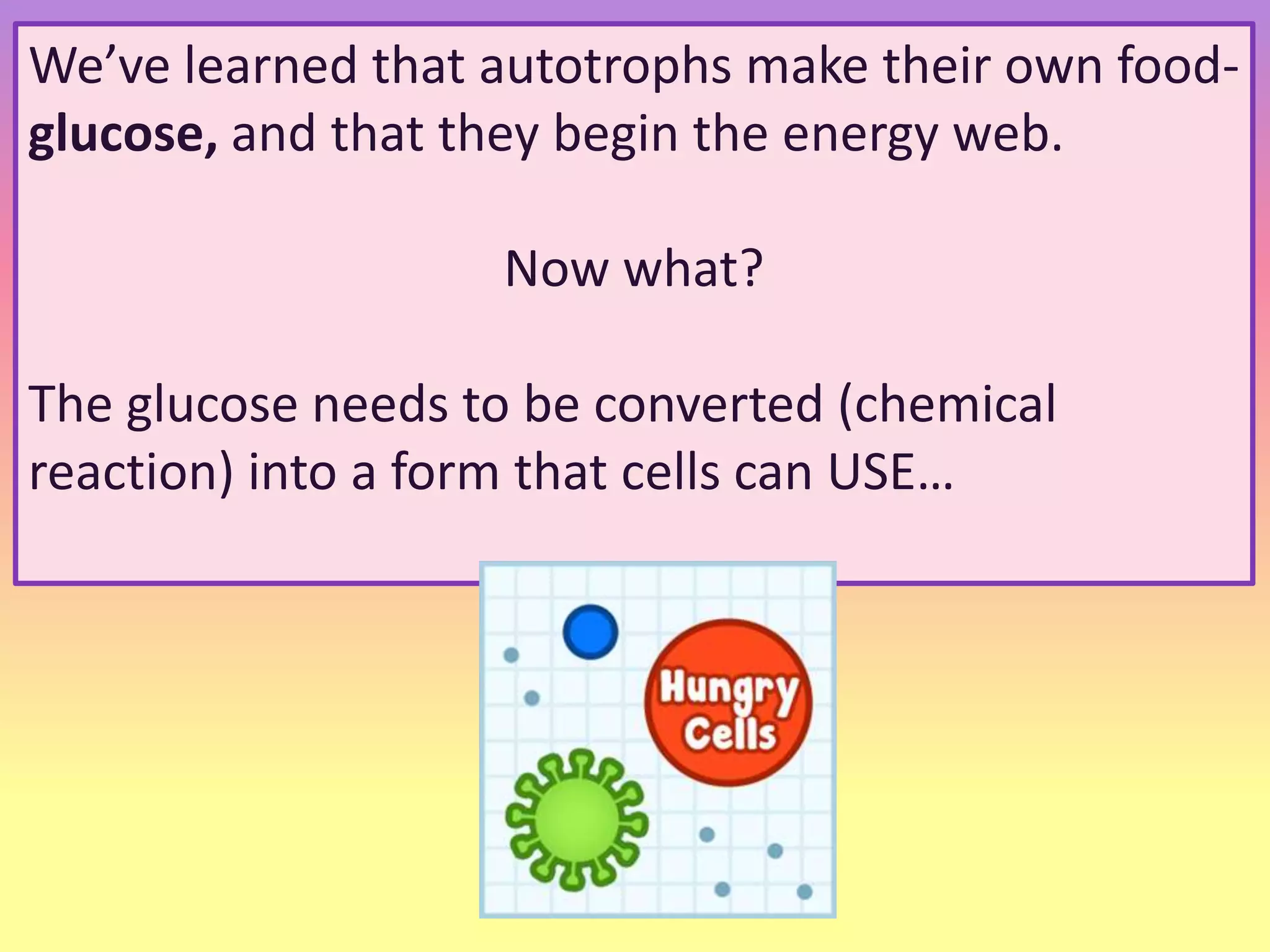
We’ve learned that autotrophs make their own food-
glucose, and that they begin the energy web.
Now what?
The glucose needs to be converted (chemical
reaction) into a form that cells can USE…
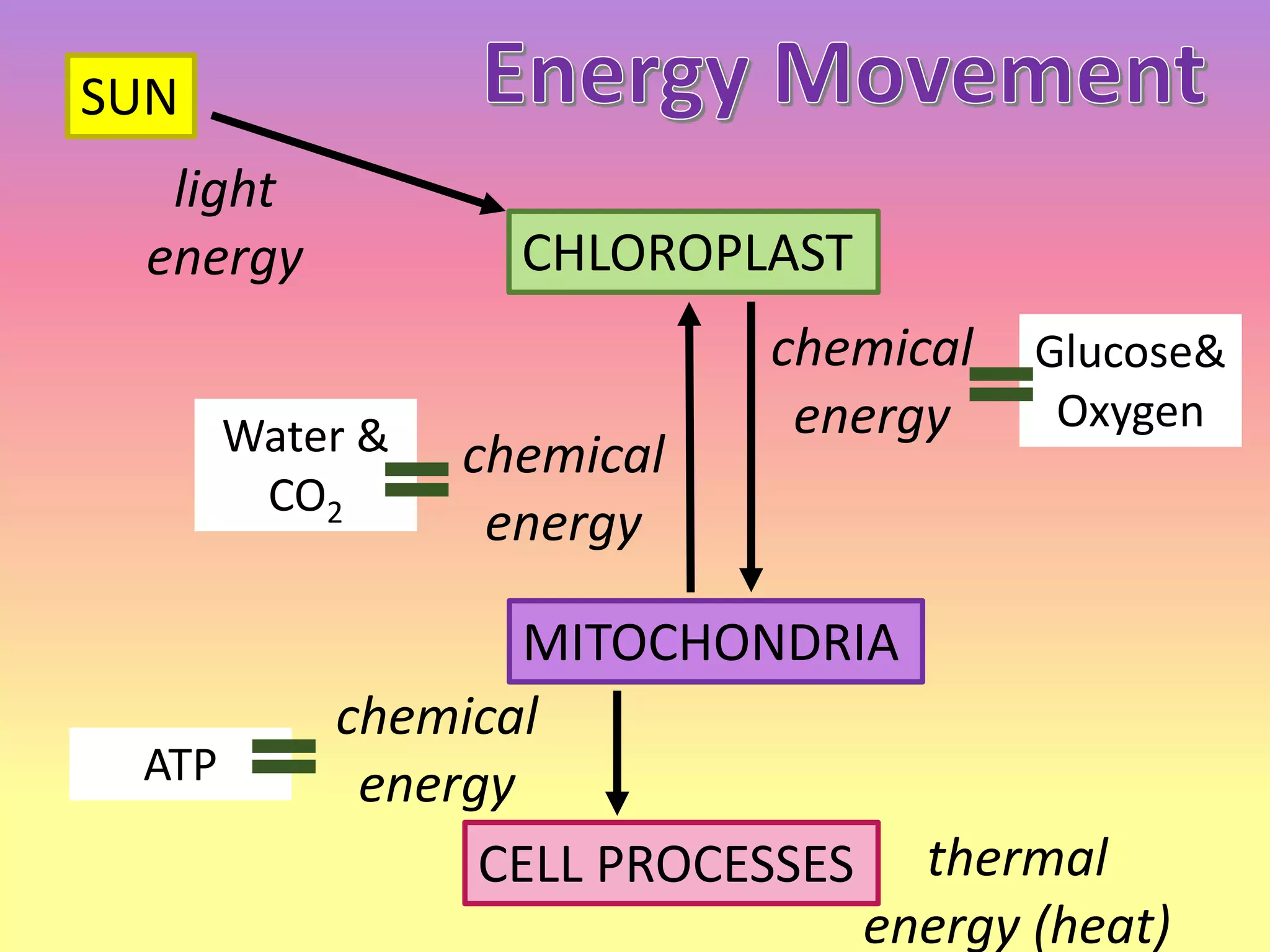
SUN
light
energy CHLOROPLAST
chemical
energy
Glucose&
Oxygen
MITOCHONDRIA
chemical
energy
Water &
CO2
CELL PROCESSES thermal
energy (heat)
ATP
chemical
energy
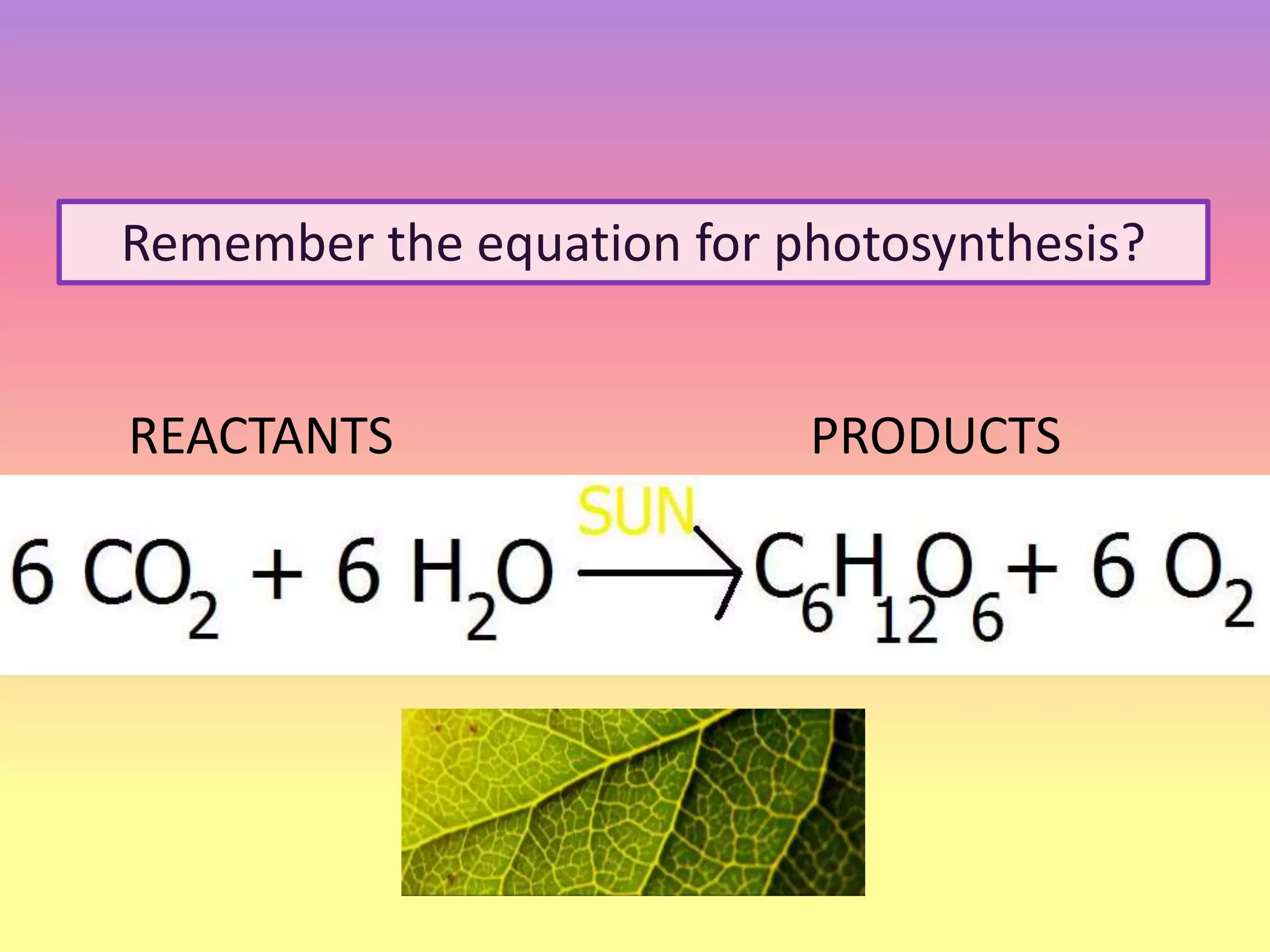
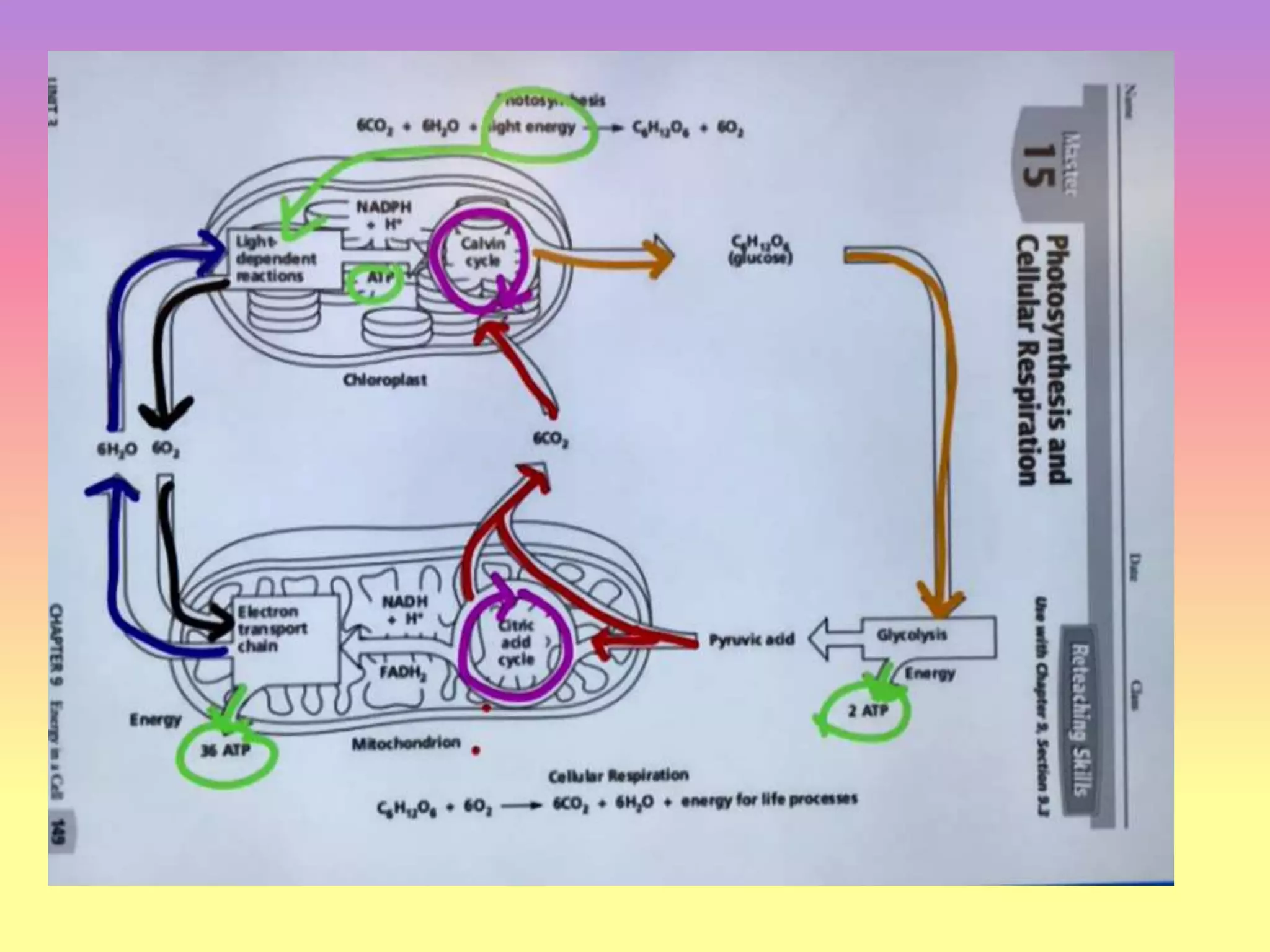
Remember the equation for photosynthesis?
REACTANTS PRODUCTS
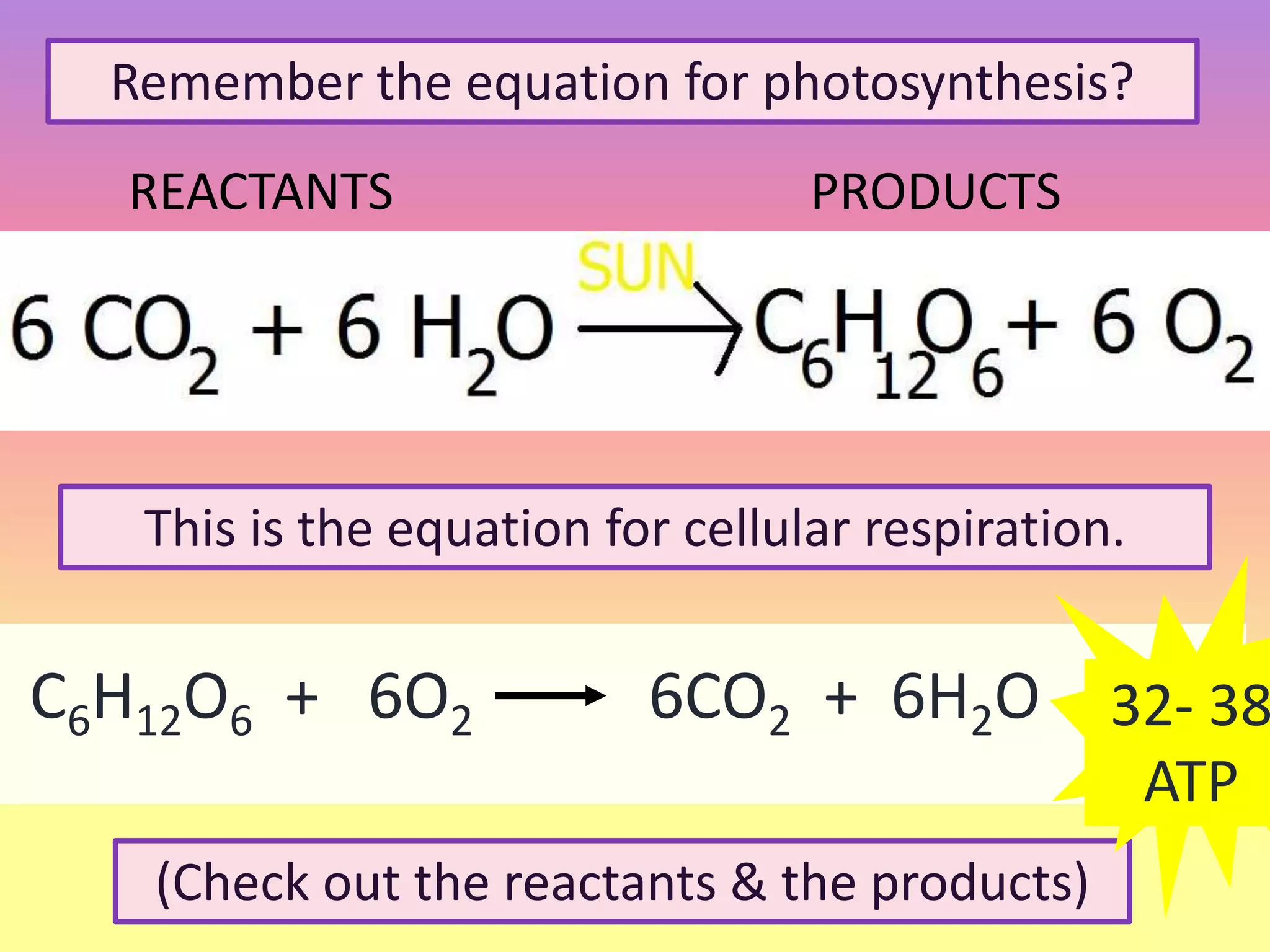
(Check out the reactants & the products)
C6H12O6 + 6O2 6CO2 + 6H2O 32- 38
ATP
This is the equation for cellular respiration.
(ATP is the energy currency
that all organisms can use)
Remember the equation for photosynthesis?
(Check out the reactants & the products)
REACTANTS PRODUCTS
C6H12O6 + 6O2 6CO2 + 6H2O
This is the equation for cellular respiration.
32- 38
ATP
The products of photosynthesis are the reactants
for cellular respiration!
REACTANTS PRODUCTS
C6H12O6 + 6O2 6CO2 + 6H2O
PHOTOSYNTHESIS
CELLULAR RESPIRATION
REACTANTS PRODUCTS
32- 38
ATP
LOOKING CLOSER
C6H12O6 + 6O2 6CO2 + 6H2O
38
ATP
One molecule of glucose supplies 32- 38 ATP
molecules that the cells may use for Energy.
1
glucose
molecule
6
oxygen
molecules
6
water
molecules
6
carbon
dioxide
molecules
YIELDS+ + 38
ATP
LOOKING CLOSER
C6H12O6 + 6O2 6CO2 + 6H2O
38
ATP
1
glucose
molecule
6
oxygen
molecules
6
water
molecules
6
carbon
dioxide
molecules
YIELDS+ + 38
ATP
Where does this occur?
VIDEO Amoeba Sisters Cellular
Respiration
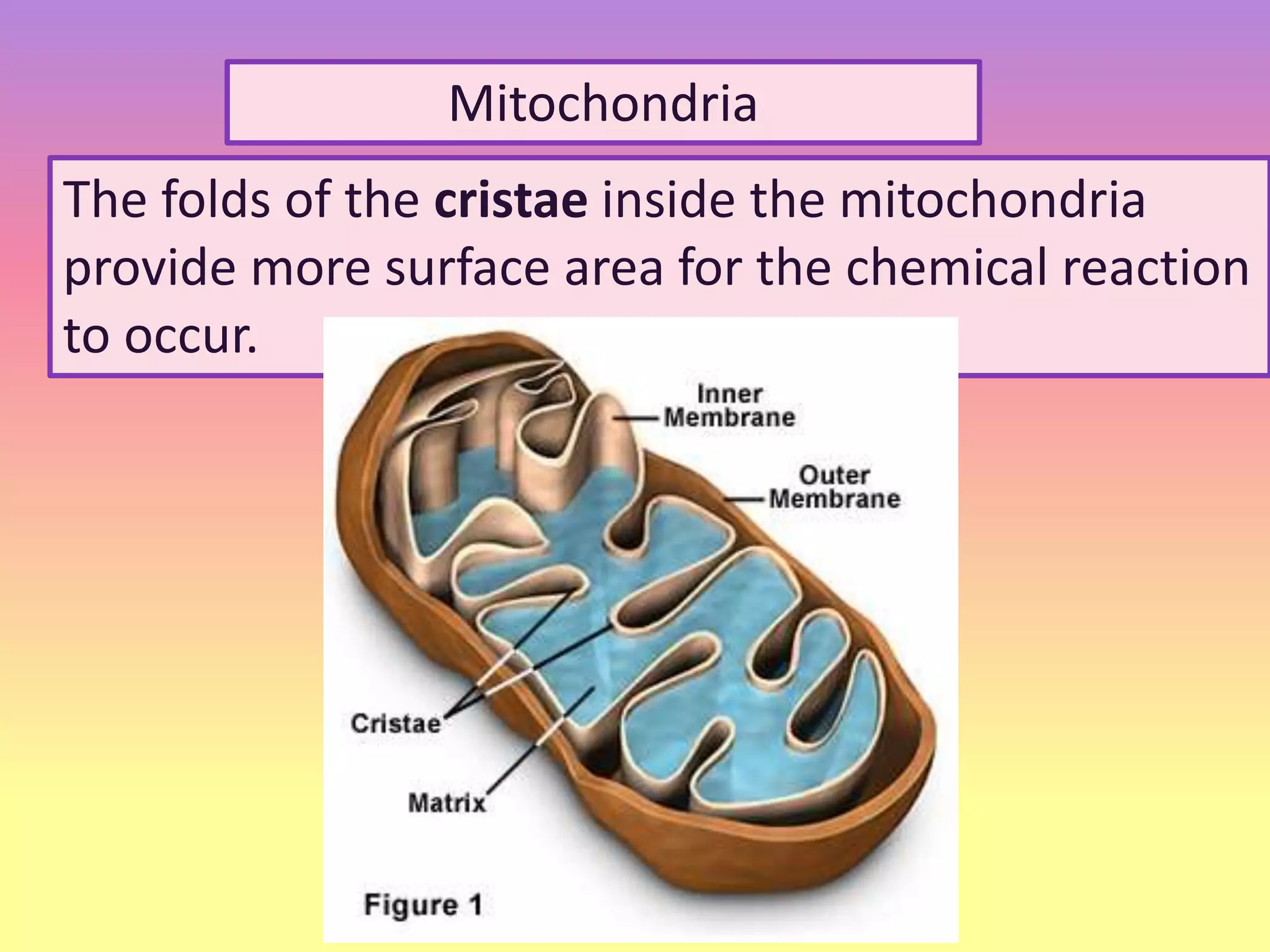
Mitochondria
The folds of the cristae inside the mitochondria
provide more surface area for the chemical reaction
to occur.
Mitochondria Diagram
Cellular Respiration: breaking down glucose in
the presence of oxygen to make ATP
NOT ALL ORGANISMS USE OXYGEN!
(more on that in a minute)
THERE ARE
2 TYPES OF RESPIRATION
1. Aerobic respiration: requires oxygen
2. Anaerobic respiration: does NOT require
oxygen
Cellular Respiration: breaking down glucose in
the presence of oxygen to make ATP
3 MAIN STAGES
1. Glycolysis (anaerobic: no oxygen; some
prokaryotes stop here & begin fermentation)
2. Krebs Cycle (aerobic)
3. Electron Transport Chain (aerobic)
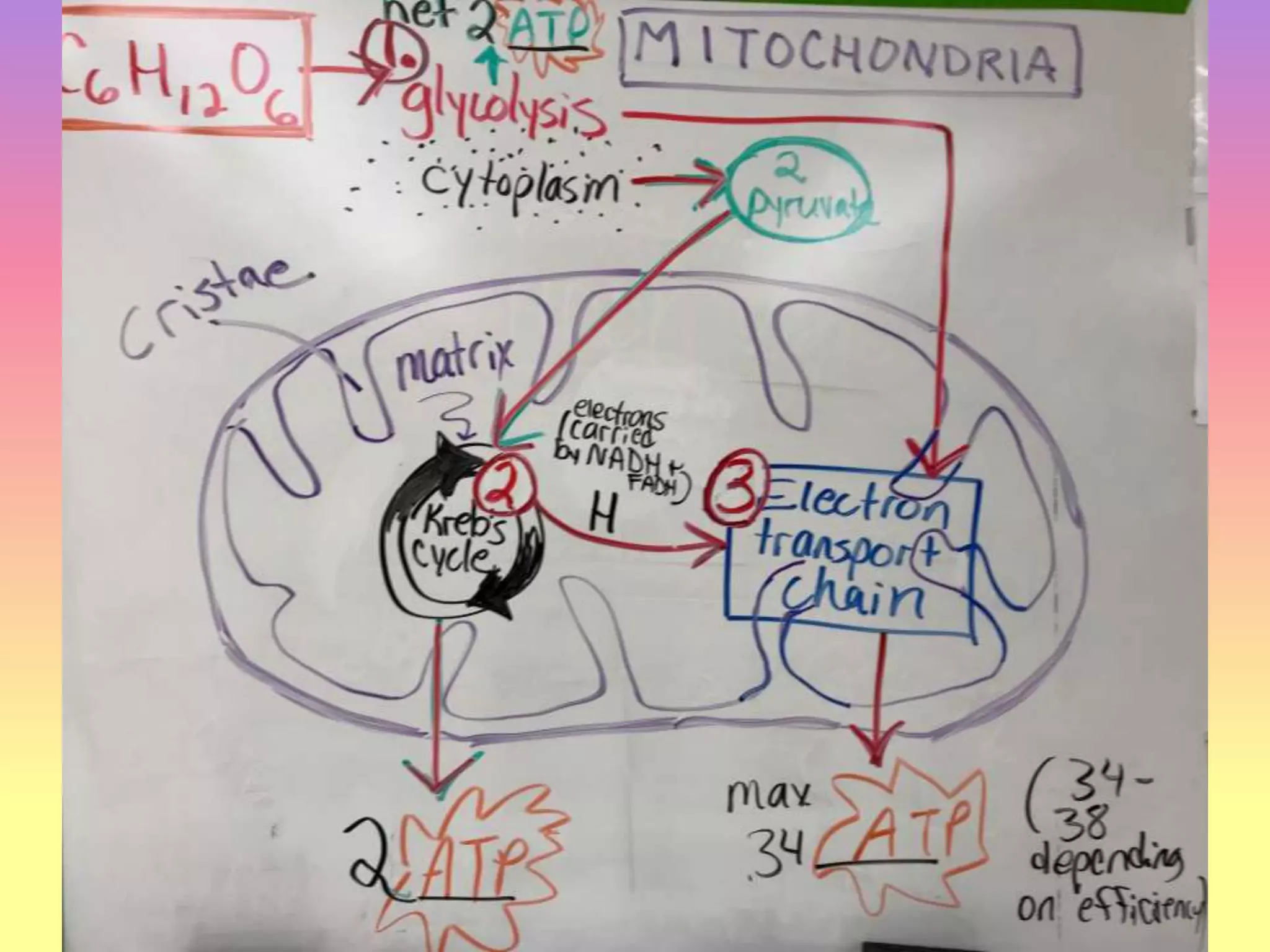
Glycolysis- occurs in
the cytoplasm
Krebs Cycle &
electron
transport chain
occur in the
mitochondria
(VERY simple organisms
can get by with just doing
this)
(More complex
eukaryotes must do
these next two steps
too.)
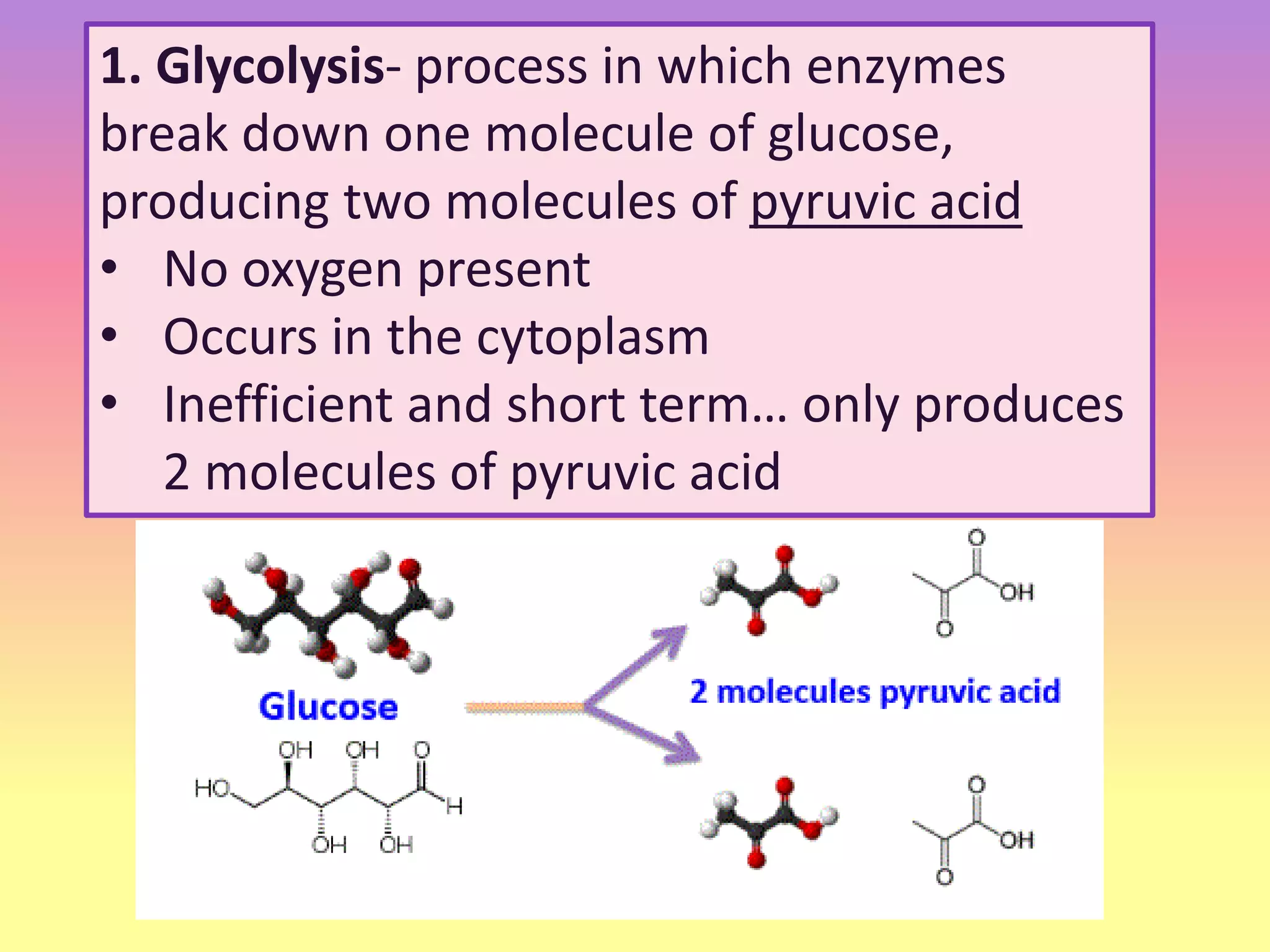
1. Glycolysis- process in which enzymes
break down one molecule of glucose,
producing two molecules of pyruvic acid
• No oxygen present
• Occurs in the cytoplasm
• Inefficient and short term… only produces
2 molecules of pyruvic acid
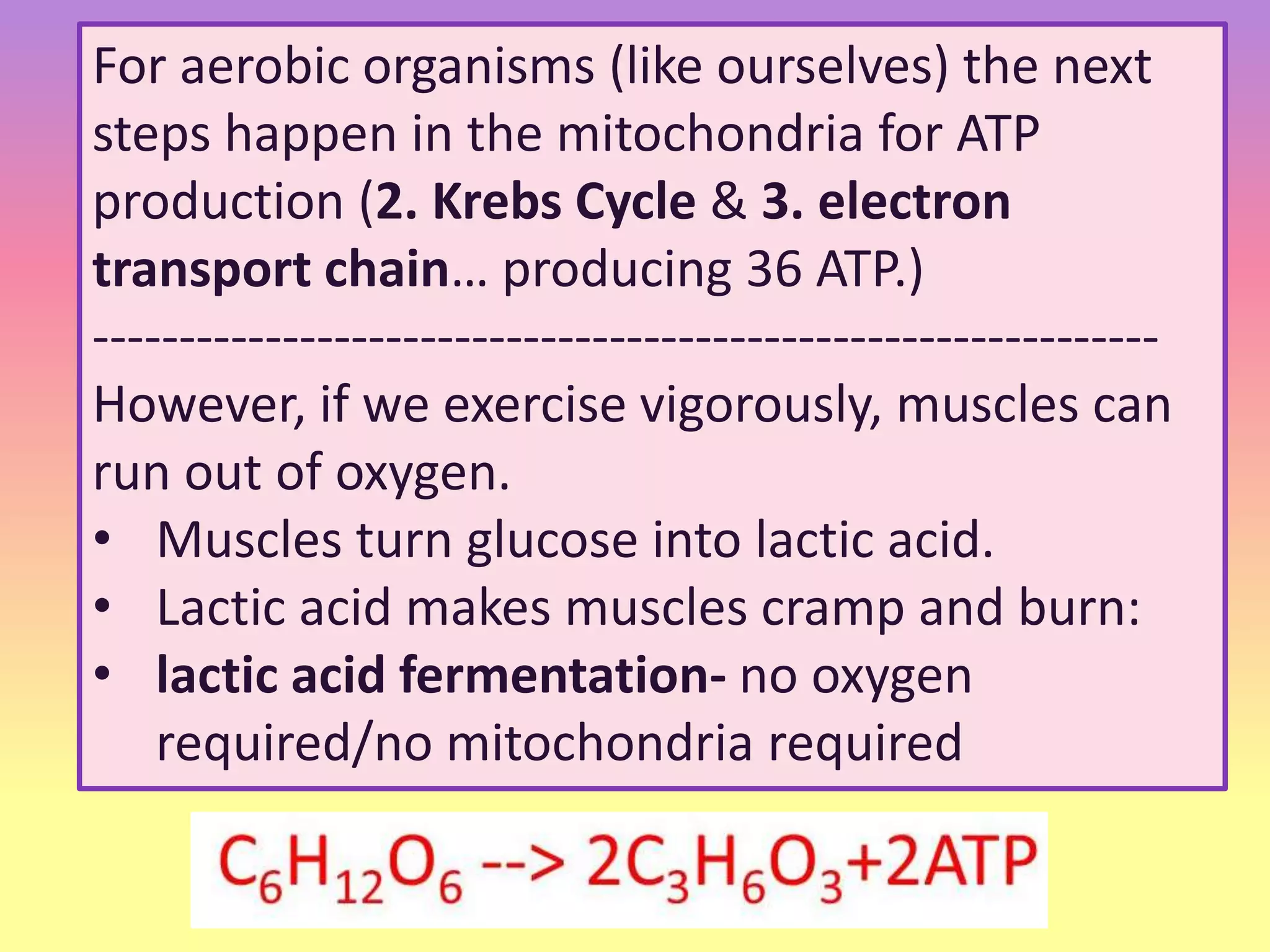
For aerobic organisms (like ourselves) the next
steps happen in the mitochondria for ATP
production (2. Krebs Cycle & 3. electron
transport chain… producing 36 ATP.)
--------------------------------------------------------------
However, if we exercise vigorously, muscles can
run out of oxygen.
• Muscles turn glucose into lactic acid.
• Lactic acid makes muscles cramp and burn:
• lactic acid fermentation- no oxygen
required/no mitochondria required
Lactic Acid Fermentation
How many ATP are produced?
Is this as efficient as aerobic respiration?
Why?
REACTANTS PRODUCTS
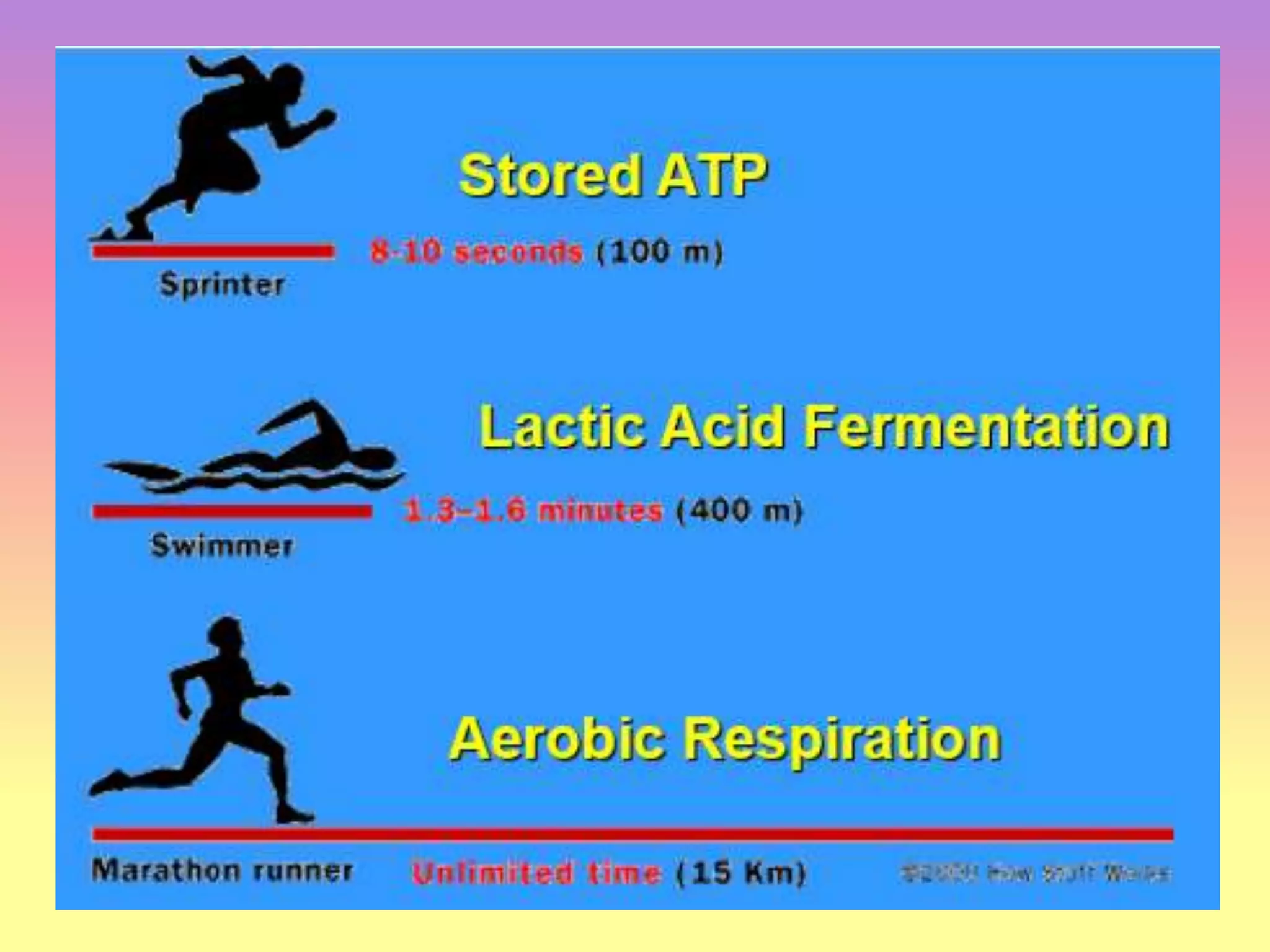
• During exercise or physical work, cells use
ATP first.
• After 90 seconds, lactic acid fermentation
begins to provide ATP
• After longer exertions,
aerobic respiration
takes over (other way
is too inefficient)
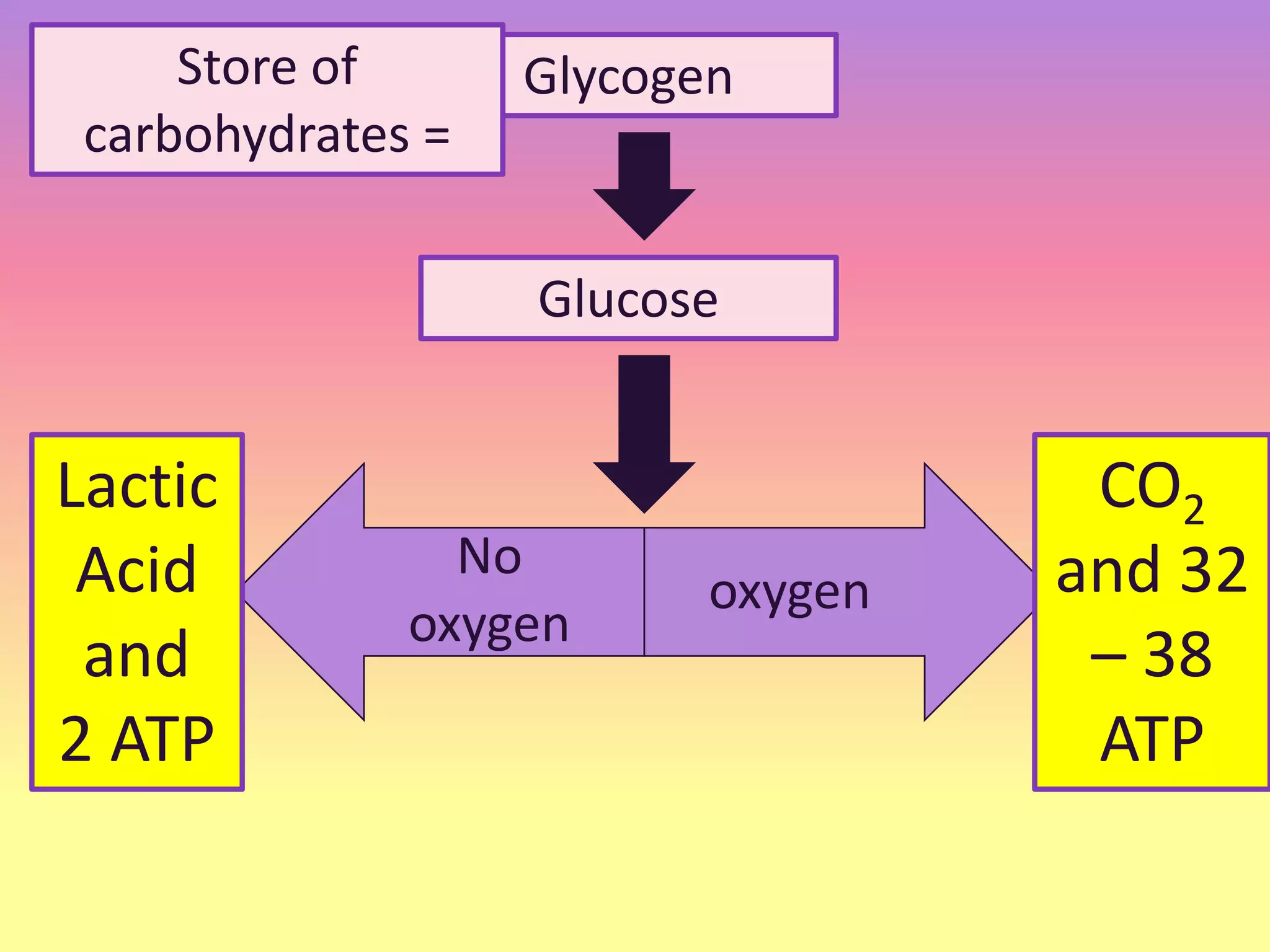
Glycogen
Glucose
No
oxygen
oxygen
Store of
carbohydrates =
Lactic
Acid
and
2 ATP
CO2
and 32
– 38
ATP
REVIEW
Glycolysis
• Anaerobic
• Occurs in the cytosol; 1st step in cellular
respiration
• Simple organisms use glycolysis to produce
pyruvate & ATP
• Only makes 2 ATP so only small yeast,
bacteria, and molds use this to live
Fermentation : small organisms
• Pyruvate is used by these small organisms to
producing alcohol & carbon dioxide
Large animals like us cannot use lactic
fermentation for long.
Smaller microorganisms such as bacteria, mold
and yeast use lactic fermentation (anaerobic) all
the time since they require little ATP to survive
Yogurt & cheese: products of bacterial lactic
fermentation
This chemical reaction produces alcohol and
carbon dioxide
We use it to make beer, liquor, & wine
We use it to make yeast bread (carbon dioxide
bubbles make the “holes” in bread)
Alcoholic Fermentation
Bubble s in bread
Alcohol
Products of yeast
respiration as they
use sugar:
INGREDIENTS…
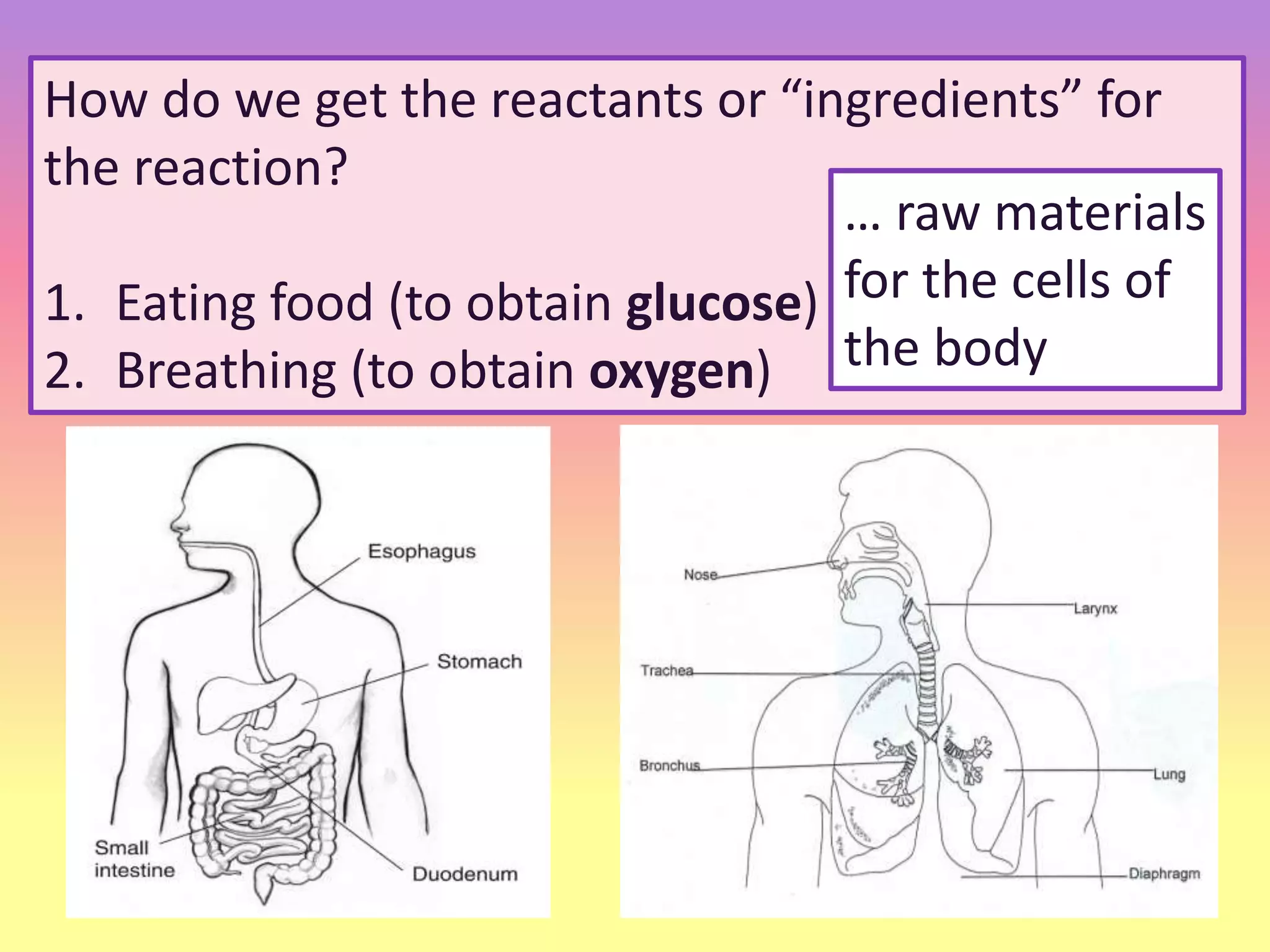
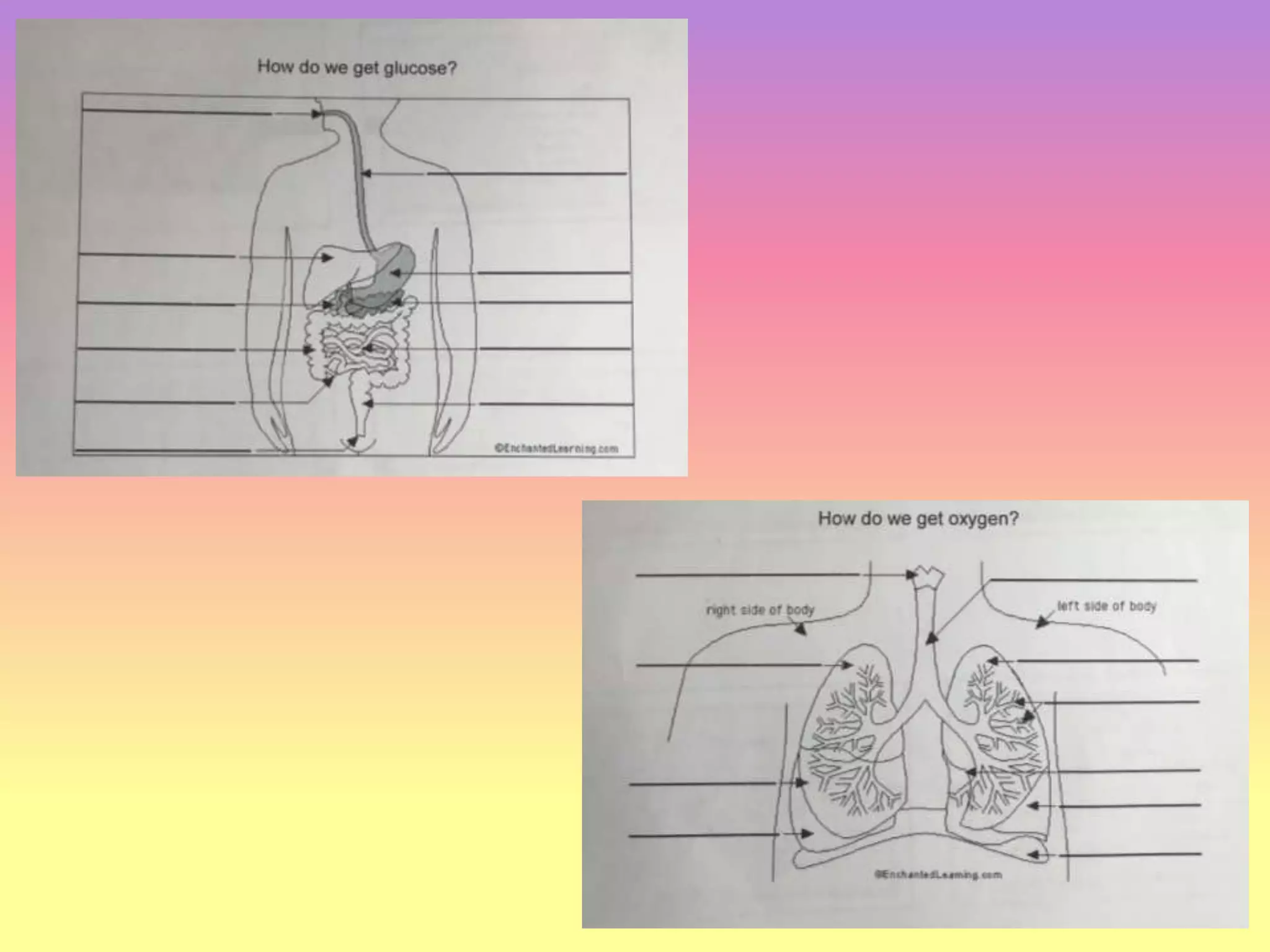
How do we get the reactants or “ingredients” for
the reaction?
1. Eating food (to obtain glucose)
2. Breathing (to obtain oxygen)
… raw materials
for the cells of
the body
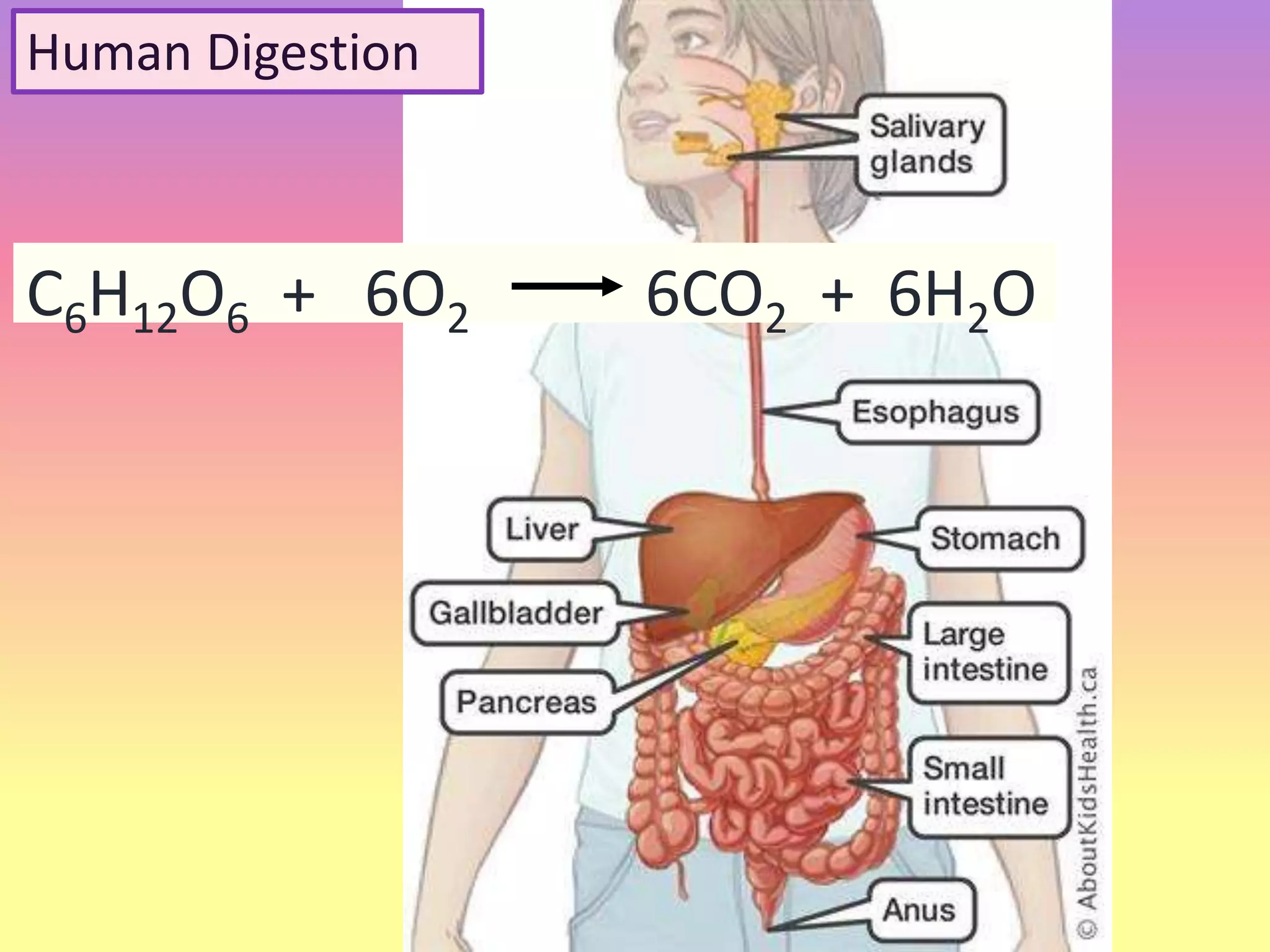
Human Digestion
C6H12O6 + 6O2 6CO2 + 6H2O
Human Respiration
C6H12O6 + 6O2 6CO2 + 6H2O
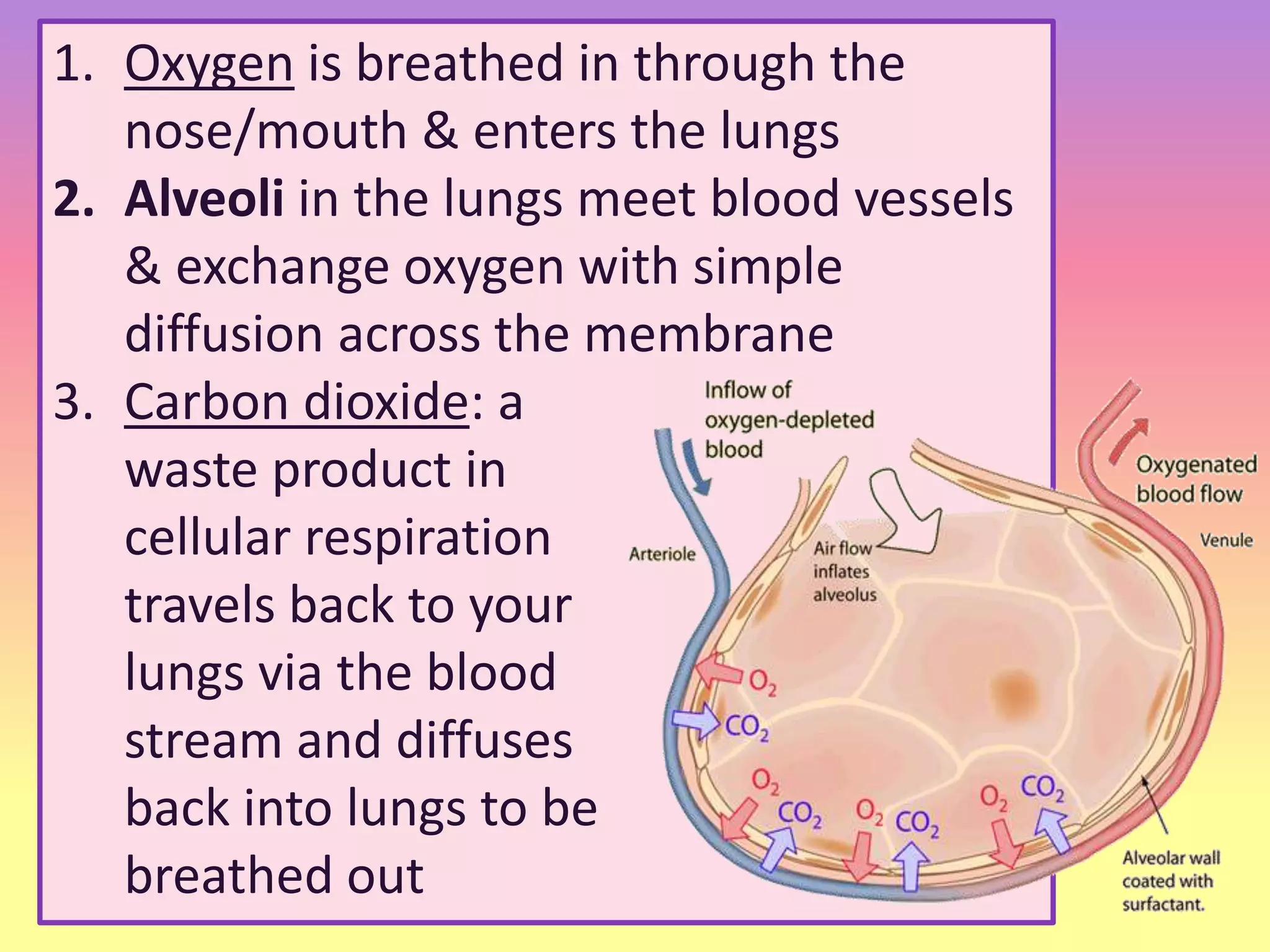
1. Oxygen is breathed in through the
nose/mouth & enters the lungs
2. Alveoli in the lungs meet blood vessels
& exchange oxygen with simple
diffusion across the membrane
3. Carbon dioxide: a
waste product in
cellular respiration
travels back to your
lungs via the blood
stream and diffuses
back into lungs to be
breathed out
DETAIL
Cell energy 2 cellular respiration

Cell energy 2 cellular respiration

  • 1.
    CELL ENERGY 2 CellularRespiration ppt. by Robin D. Seamon VIDEO: Amoeba Sisters Cell Respiration & Photosynthesis
  • 2.
  • 3.
    ATP / ADPCycle • ATP is the universal energy source for all living things • “Energy currency” • Used to store & transport energy Adenosine triphosphate Adenosine diphosphate
  • 4.
    ADP ATP - P Releaseenergy + P Store energy Low energy: dead battery High energy: charged battery Energy is stored in phosphate bonds. When a cell has energy available it will store small amounts of it by adding a phosphate group to ADP. When a cell needs energy, the third phosphate is removed, releasing energy for the cell.
  • 5.
    ATP Adenosine triphosphate: GAINSa P BREAK IT DOWN tri- 3 phosphate- has P SUGAR 3 phosphate groups A = one of the nucleic acids HIGH Energy Bond *Adding P stores energy *Removing P releases energy
  • 6.
    ADP Adenosine diphosphate: LOSTa P BREAK IT DOWN di- 2 phosphate- has P SUGAR 3 phosphate groups A = one of the nucleic acids HIGH Energy Bond broken releases energy *Adding P stores energy *Removing P releases energy
  • 7.
    ATP/ ADP Cycle ATP/ ADP is like a rechargeable battery 1. ATP holds the energy in the phosphate bonds. 2. Energy is released when the phosphate bonds are broken. 3. ADP is “recharged” to ATP by replacing the used phosphate. ATP is continuously being made & must be regenerated. A working muscle cell consumes 10 million ATP per second.
  • 8.
  • 9.
  • 10.
    We’ve learned thatautotrophs make their own food- glucose, and that they begin the energy web. Now what? The glucose needs to be converted (chemical reaction) into a form that cells can USE…
  • 11.
  • 12.
    Remember the equationfor photosynthesis? REACTANTS PRODUCTS
  • 13.
    (Check out thereactants & the products) C6H12O6 + 6O2 6CO2 + 6H2O 32- 38 ATP This is the equation for cellular respiration. (ATP is the energy currency that all organisms can use)
  • 14.
    Remember the equationfor photosynthesis? (Check out the reactants & the products) REACTANTS PRODUCTS C6H12O6 + 6O2 6CO2 + 6H2O This is the equation for cellular respiration. 32- 38 ATP
  • 15.
    The products ofphotosynthesis are the reactants for cellular respiration! REACTANTS PRODUCTS C6H12O6 + 6O2 6CO2 + 6H2O PHOTOSYNTHESIS CELLULAR RESPIRATION REACTANTS PRODUCTS 32- 38 ATP
  • 16.
    LOOKING CLOSER C6H12O6 +6O2 6CO2 + 6H2O 38 ATP One molecule of glucose supplies 32- 38 ATP molecules that the cells may use for Energy. 1 glucose molecule 6 oxygen molecules 6 water molecules 6 carbon dioxide molecules YIELDS+ + 38 ATP
  • 17.
    LOOKING CLOSER C6H12O6 +6O2 6CO2 + 6H2O 38 ATP 1 glucose molecule 6 oxygen molecules 6 water molecules 6 carbon dioxide molecules YIELDS+ + 38 ATP
  • 18.
    Where does thisoccur? VIDEO Amoeba Sisters Cellular Respiration
  • 19.
    Mitochondria The folds ofthe cristae inside the mitochondria provide more surface area for the chemical reaction to occur.
  • 20.
  • 22.
    Cellular Respiration: breakingdown glucose in the presence of oxygen to make ATP NOT ALL ORGANISMS USE OXYGEN! (more on that in a minute) THERE ARE 2 TYPES OF RESPIRATION 1. Aerobic respiration: requires oxygen 2. Anaerobic respiration: does NOT require oxygen
  • 23.
    Cellular Respiration: breakingdown glucose in the presence of oxygen to make ATP 3 MAIN STAGES 1. Glycolysis (anaerobic: no oxygen; some prokaryotes stop here & begin fermentation) 2. Krebs Cycle (aerobic) 3. Electron Transport Chain (aerobic)
  • 24.
    Glycolysis- occurs in thecytoplasm Krebs Cycle & electron transport chain occur in the mitochondria (VERY simple organisms can get by with just doing this) (More complex eukaryotes must do these next two steps too.)
  • 25.
    1. Glycolysis- processin which enzymes break down one molecule of glucose, producing two molecules of pyruvic acid • No oxygen present • Occurs in the cytoplasm • Inefficient and short term… only produces 2 molecules of pyruvic acid
  • 26.
    For aerobic organisms(like ourselves) the next steps happen in the mitochondria for ATP production (2. Krebs Cycle & 3. electron transport chain… producing 36 ATP.) -------------------------------------------------------------- However, if we exercise vigorously, muscles can run out of oxygen. • Muscles turn glucose into lactic acid. • Lactic acid makes muscles cramp and burn: • lactic acid fermentation- no oxygen required/no mitochondria required
  • 27.
    Lactic Acid Fermentation Howmany ATP are produced? Is this as efficient as aerobic respiration? Why? REACTANTS PRODUCTS
  • 28.
    • During exerciseor physical work, cells use ATP first. • After 90 seconds, lactic acid fermentation begins to provide ATP • After longer exertions, aerobic respiration takes over (other way is too inefficient)
  • 30.
  • 33.
  • 34.
    Glycolysis • Anaerobic • Occursin the cytosol; 1st step in cellular respiration • Simple organisms use glycolysis to produce pyruvate & ATP • Only makes 2 ATP so only small yeast, bacteria, and molds use this to live Fermentation : small organisms • Pyruvate is used by these small organisms to producing alcohol & carbon dioxide
  • 35.
    Large animals likeus cannot use lactic fermentation for long. Smaller microorganisms such as bacteria, mold and yeast use lactic fermentation (anaerobic) all the time since they require little ATP to survive Yogurt & cheese: products of bacterial lactic fermentation
  • 36.
    This chemical reactionproduces alcohol and carbon dioxide We use it to make beer, liquor, & wine We use it to make yeast bread (carbon dioxide bubbles make the “holes” in bread) Alcoholic Fermentation Bubble s in bread Alcohol
  • 37.
  • 38.
  • 39.
    How do weget the reactants or “ingredients” for the reaction? 1. Eating food (to obtain glucose) 2. Breathing (to obtain oxygen) … raw materials for the cells of the body
  • 40.
  • 41.
  • 42.
    1. Oxygen isbreathed in through the nose/mouth & enters the lungs 2. Alveoli in the lungs meet blood vessels & exchange oxygen with simple diffusion across the membrane 3. Carbon dioxide: a waste product in cellular respiration travels back to your lungs via the blood stream and diffuses back into lungs to be breathed out
  • 44.