KNOWLEDGE MANAGEMENT
         For Capacity Building, Continuous Learning and Change Management
Dr. N. Sai Bhaskar Reddy, CEO, GEO http://e-geo.org


K   nowledge is a mix of experiences, values, information and insights that originates
    and is applied in the minds of people. KNOWLEDGE MANAGEMENT is the
systematic process of finding, selecting, organizing, distilling and presenting information
in a way that improves an employee's comprehension in a specific area of interest.


O   rganizational       asset     -   Knowledge     management      turns   knowledge
    organizational asset that can be used by a broader set of individuals. Knowledge
management helps an organization to gain insight and understanding from its own
                                                                                        into   an


experience. Specific knowledge management activities help focus the organization on
acquiring, storing and utilizing knowledge for such things as problem solving, dynamic
learning, strategic planning and decision making.

Knowledge can be captured as information in data bases, books and reports, guidelines,
visual aids and other means.


E   ffective knowledge management can
    help in fighting rural poverty; sharing our
knowledge with others will multiply its impact.
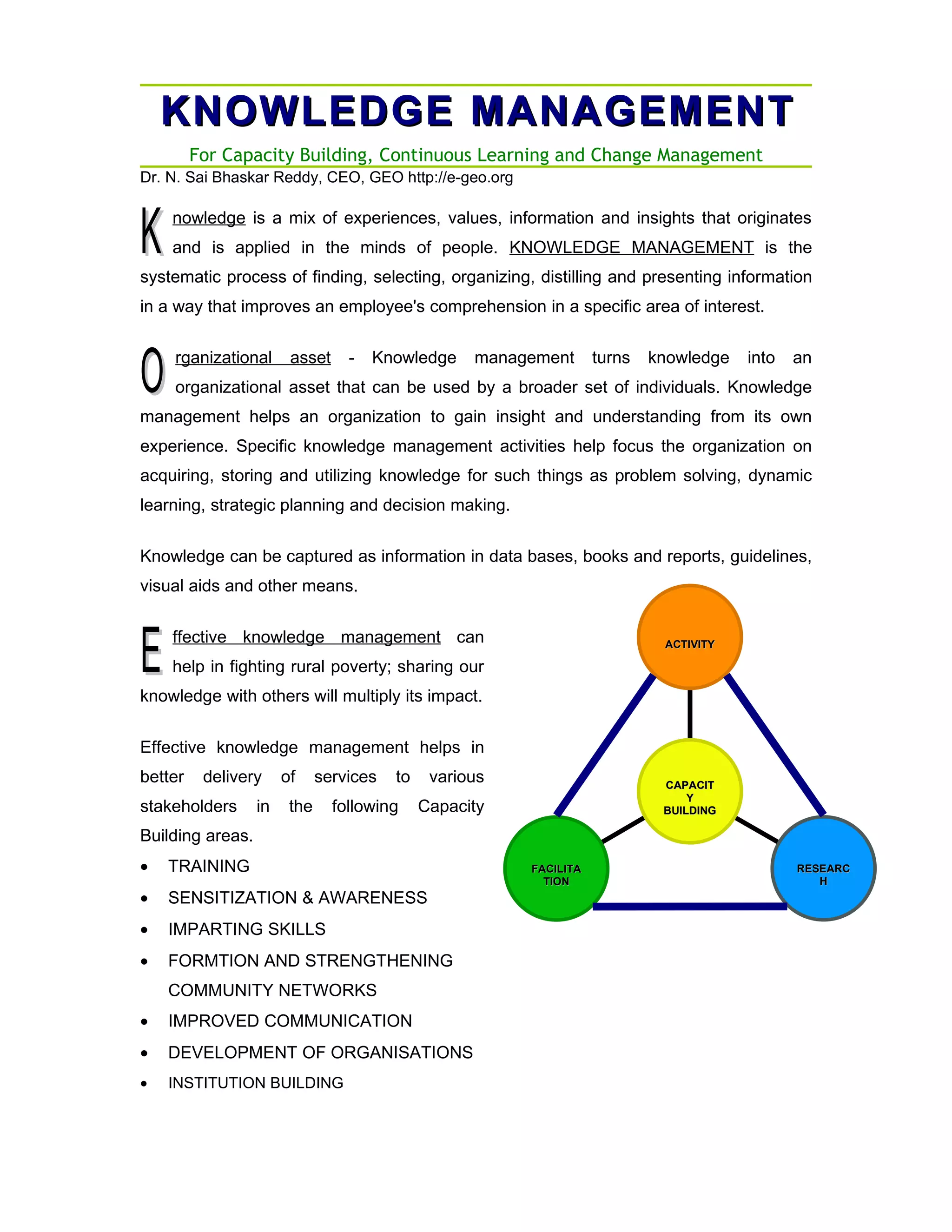
                                                                             ACTIVITY


Effective knowledge management helps in
better    delivery     of     services   to    various                       CAPACIT
                                                                                 Y
stakeholders      in    the     following     Capacity                       BUILDING

Building areas.
•   TRAINING                                             FACILITA                              RESEARC
                                                           TION                                   H
•   SENSITIZATION & AWARENESS
•   IMPARTING SKILLS
•   FORMTION AND STRENGTHENING
    COMMUNITY NETWORKS
•   IMPROVED COMMUNICATION
•   DEVELOPMENT OF ORGANISATIONS
•   INSTITUTION BUILDING
Discussion Paper                                           KNOWLDEGE MANAGEMENT


A    chieving Knowledge Management - Knowledge management involves identifying,
     storing and sharing processes and can be achieved in many ways, ranging from
face-to-face communication to virtual conferences, from data sheets to whole
libraries. It means an organization choosing to manage knowledge depends on the type
of knowledge, its origins and its users.


K    nowledge Management within ORGANISATION can be achieved through some of
     these tools.
            •      Internet based Knowledge Sharing
            •      Open distance learning
            •      Online learning
            •      Technology based learning
            •      Video conferencing
            •      E-groups. etc


* Information technology is one of the many tools that can be used for storing and
sharing knowledge.


M     ethods - The methods are formal and informal learning and training activities,
      processes, and events via the use of all electronic media like Internet, intranet,
extranet, CD-ROM, video tape, DVD, TV, cell phones, personal organizers et cetera.
These tools are to achieve all types of Knowledge Sharing and communication.


    1. one to one
    2. one to many
    3. many to one
    4. many to many


A    ctivities - Knowledge management: KM activities should respond to the demands of
     people and provide relevant knowledge. Mechanisms such as knowledge-sharing
meetings, thematic groups, communities of practice, documents and data bases,
electronic networks, etc. should be used.


I   CT – Knowledge Management - The unit costs of computers, communications and
    transactions are declining towards zero, and electronic transfer is proliferating.
Electronic databases, audio and video recordings, interactive tools and multimedia


                                                                                      2
Discussion Paper                                                       KNOWLDEGE MANAGEMENT


presentations have become available to extend the techniques for capturing and
disseminating content.


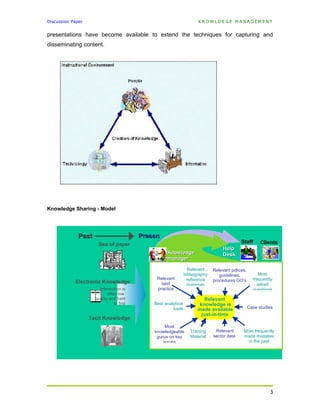
Knowledge Sharing - Model


              Past                        Presen
                                          t                                                  Staff       Clients
                      Sea of paper
                                                                                    Help
                                                     Knowledge                      Desk
                                                     manager

                                                                  Relevant     Relevant polices,
                                                                bibliography      guidelines,           Most
                                               Relevant          reference     procedures,GO’s       frequently
            Electronic Knowledge                 best                                                  asked
                                                                 materials
                       Information is          practice                                              questions
                            often low
                     quality and hard                                     Relevant
                                to find       Best analytical           knowledge is
                                                       tools           made available              Case studies
                                                                         just-in-time
                   Tacit Knowledge
                                                   Most
                                              knowledgeable        Training     Relevant      Most frequently
                                               gurus on key        Material    sector data    made mistakes
                                                  issues                                        in the past


                                                                                                             3

Knowledge management

  • 1.
    KNOWLEDGE MANAGEMENT For Capacity Building, Continuous Learning and Change Management Dr. N. Sai Bhaskar Reddy, CEO, GEO http://e-geo.org K nowledge is a mix of experiences, values, information and insights that originates and is applied in the minds of people. KNOWLEDGE MANAGEMENT is the systematic process of finding, selecting, organizing, distilling and presenting information in a way that improves an employee's comprehension in a specific area of interest. O rganizational asset - Knowledge management turns knowledge organizational asset that can be used by a broader set of individuals. Knowledge management helps an organization to gain insight and understanding from its own into an experience. Specific knowledge management activities help focus the organization on acquiring, storing and utilizing knowledge for such things as problem solving, dynamic learning, strategic planning and decision making. Knowledge can be captured as information in data bases, books and reports, guidelines, visual aids and other means. E ffective knowledge management can help in fighting rural poverty; sharing our knowledge with others will multiply its impact. ACTIVITY Effective knowledge management helps in better delivery of services to various CAPACIT Y stakeholders in the following Capacity BUILDING Building areas. • TRAINING FACILITA RESEARC TION H • SENSITIZATION & AWARENESS • IMPARTING SKILLS • FORMTION AND STRENGTHENING COMMUNITY NETWORKS • IMPROVED COMMUNICATION • DEVELOPMENT OF ORGANISATIONS • INSTITUTION BUILDING
  • 2.
    Discussion Paper KNOWLDEGE MANAGEMENT A chieving Knowledge Management - Knowledge management involves identifying, storing and sharing processes and can be achieved in many ways, ranging from face-to-face communication to virtual conferences, from data sheets to whole libraries. It means an organization choosing to manage knowledge depends on the type of knowledge, its origins and its users. K nowledge Management within ORGANISATION can be achieved through some of these tools. • Internet based Knowledge Sharing • Open distance learning • Online learning • Technology based learning • Video conferencing • E-groups. etc * Information technology is one of the many tools that can be used for storing and sharing knowledge. M ethods - The methods are formal and informal learning and training activities, processes, and events via the use of all electronic media like Internet, intranet, extranet, CD-ROM, video tape, DVD, TV, cell phones, personal organizers et cetera. These tools are to achieve all types of Knowledge Sharing and communication. 1. one to one 2. one to many 3. many to one 4. many to many A ctivities - Knowledge management: KM activities should respond to the demands of people and provide relevant knowledge. Mechanisms such as knowledge-sharing meetings, thematic groups, communities of practice, documents and data bases, electronic networks, etc. should be used. I CT – Knowledge Management - The unit costs of computers, communications and transactions are declining towards zero, and electronic transfer is proliferating. Electronic databases, audio and video recordings, interactive tools and multimedia 2
  • 3.
    Discussion Paper KNOWLDEGE MANAGEMENT presentations have become available to extend the techniques for capturing and disseminating content. Knowledge Sharing - Model Past Presen t Staff Clients Sea of paper Help Knowledge Desk manager Relevant Relevant polices, bibliography guidelines, Most Relevant reference procedures,GO’s frequently Electronic Knowledge best asked materials Information is practice questions often low quality and hard Relevant to find Best analytical knowledge is tools made available Case studies just-in-time Tacit Knowledge Most knowledgeable Training Relevant Most frequently gurus on key Material sector data made mistakes issues in the past 3