Surendran.S.R
M.Sc(N) I Year
Dept. of Medical Surgical Nursing
KGNC
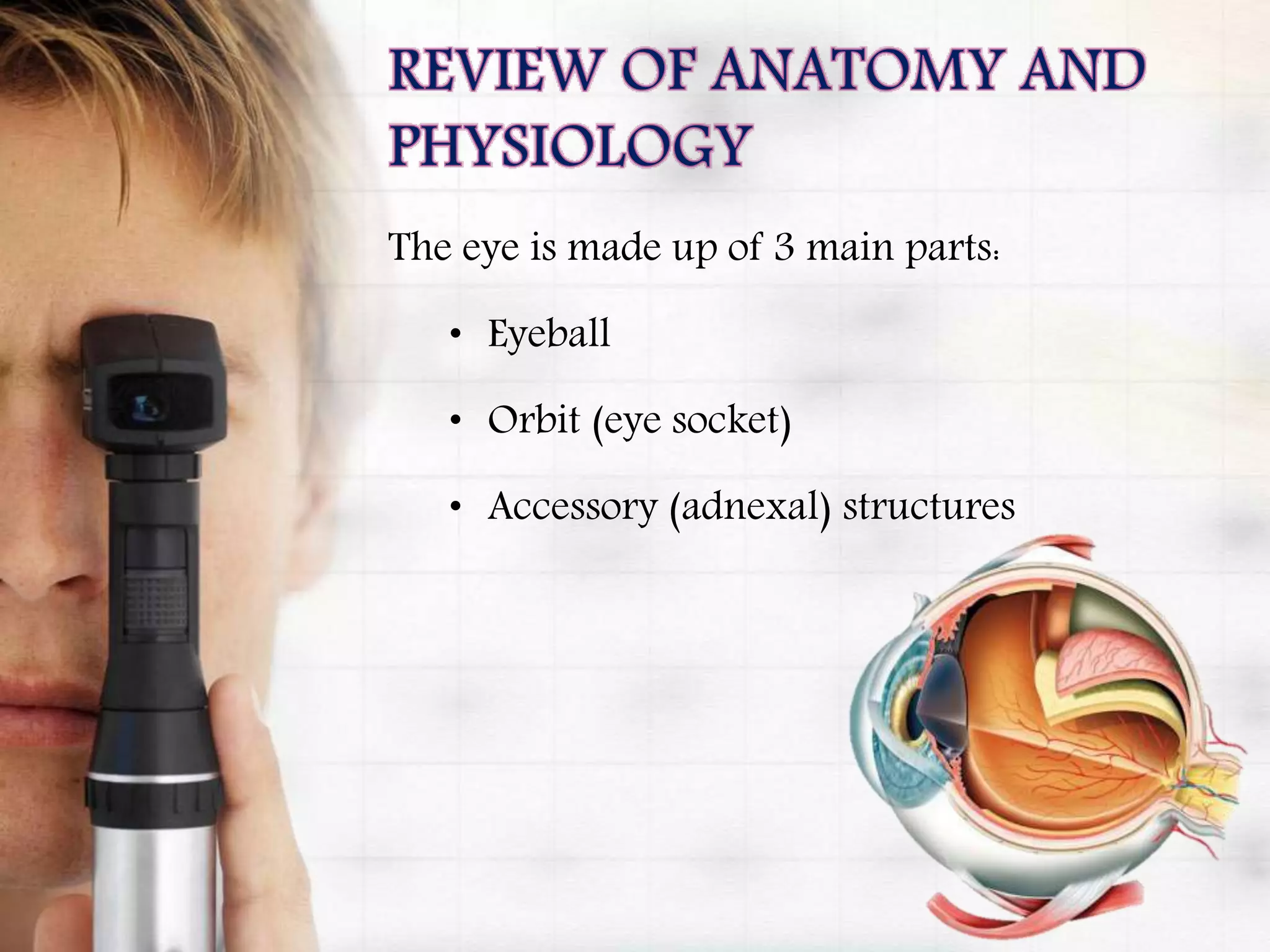
The eye is made up of 3 main parts:
• Eyeball
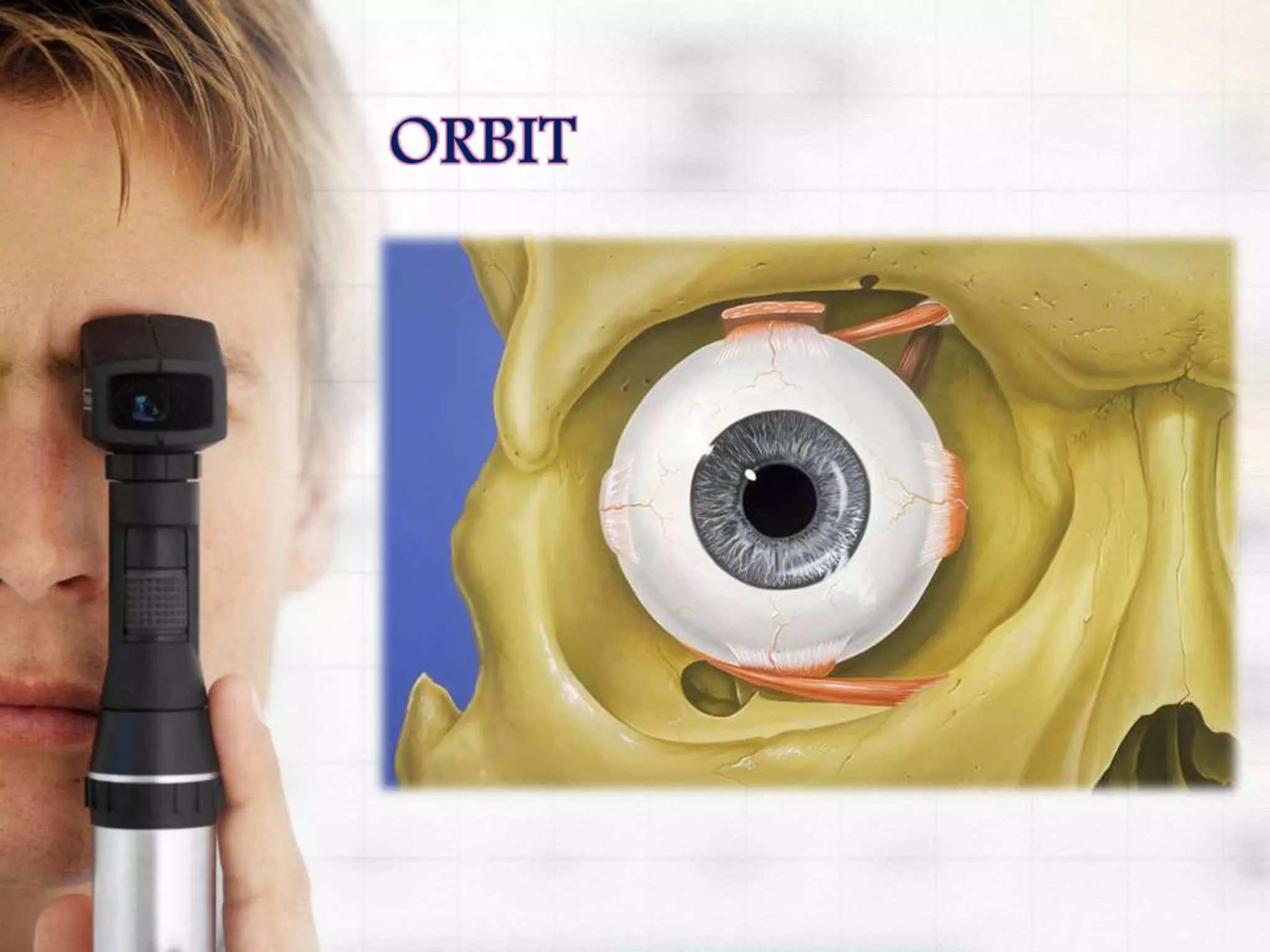
• Orbit (eye socket)
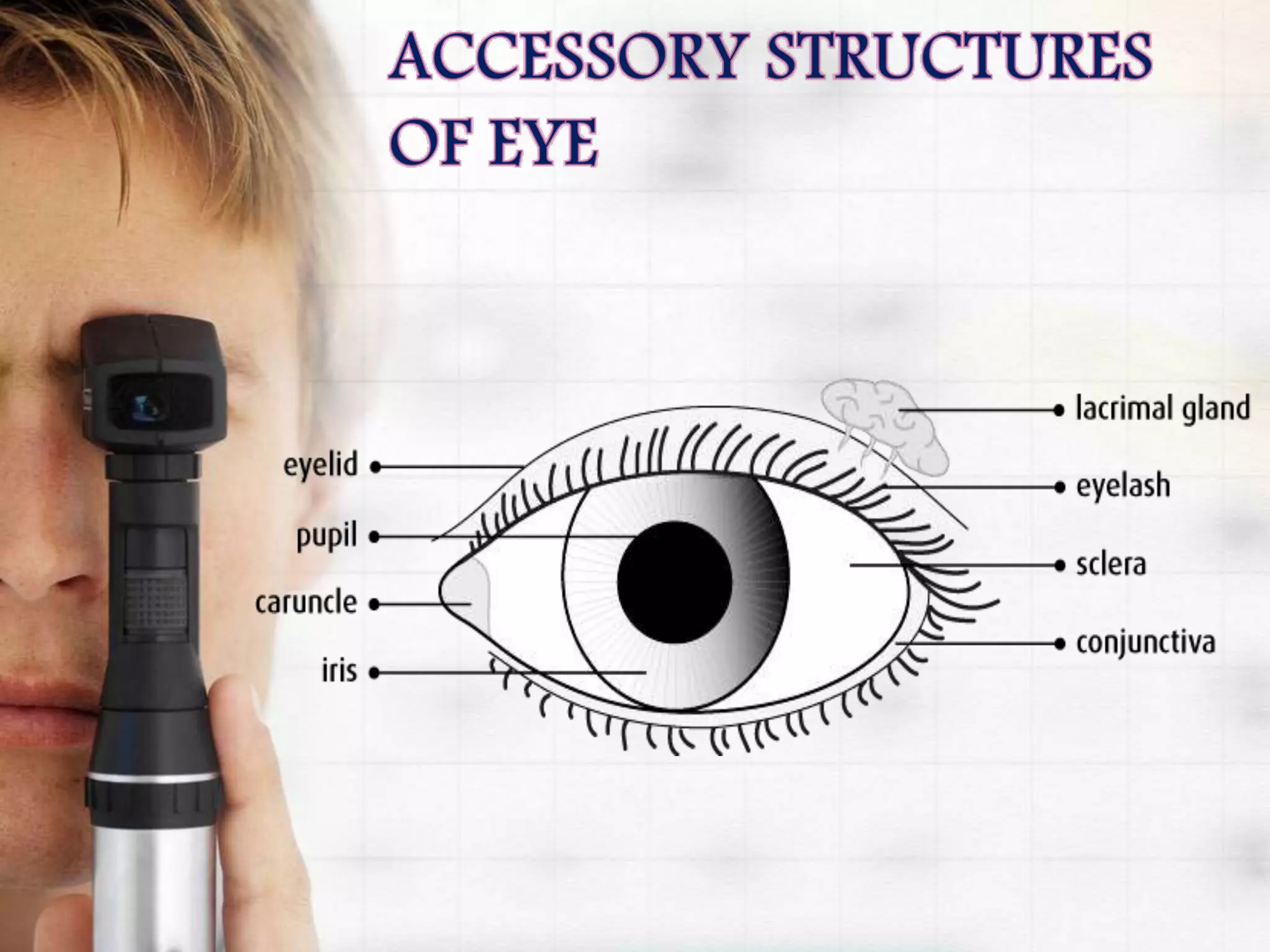
• Accessory (adnexal) structures
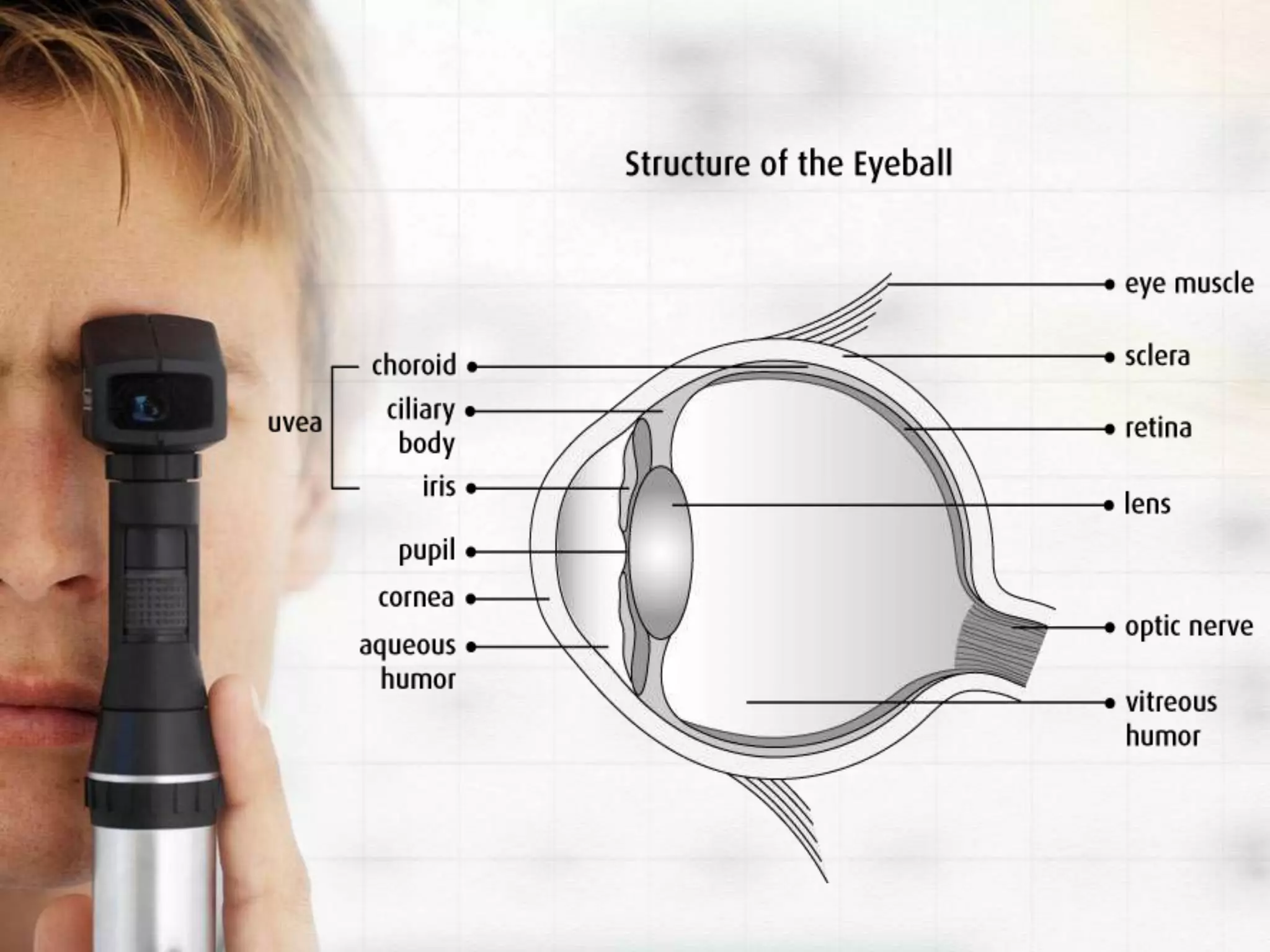
• Outer Layer
• Sclera
• Cornea
• Middle Layer
• Iris
• Choroid
• Ciliary Body
• Inner Layer
• Retina
• Lens
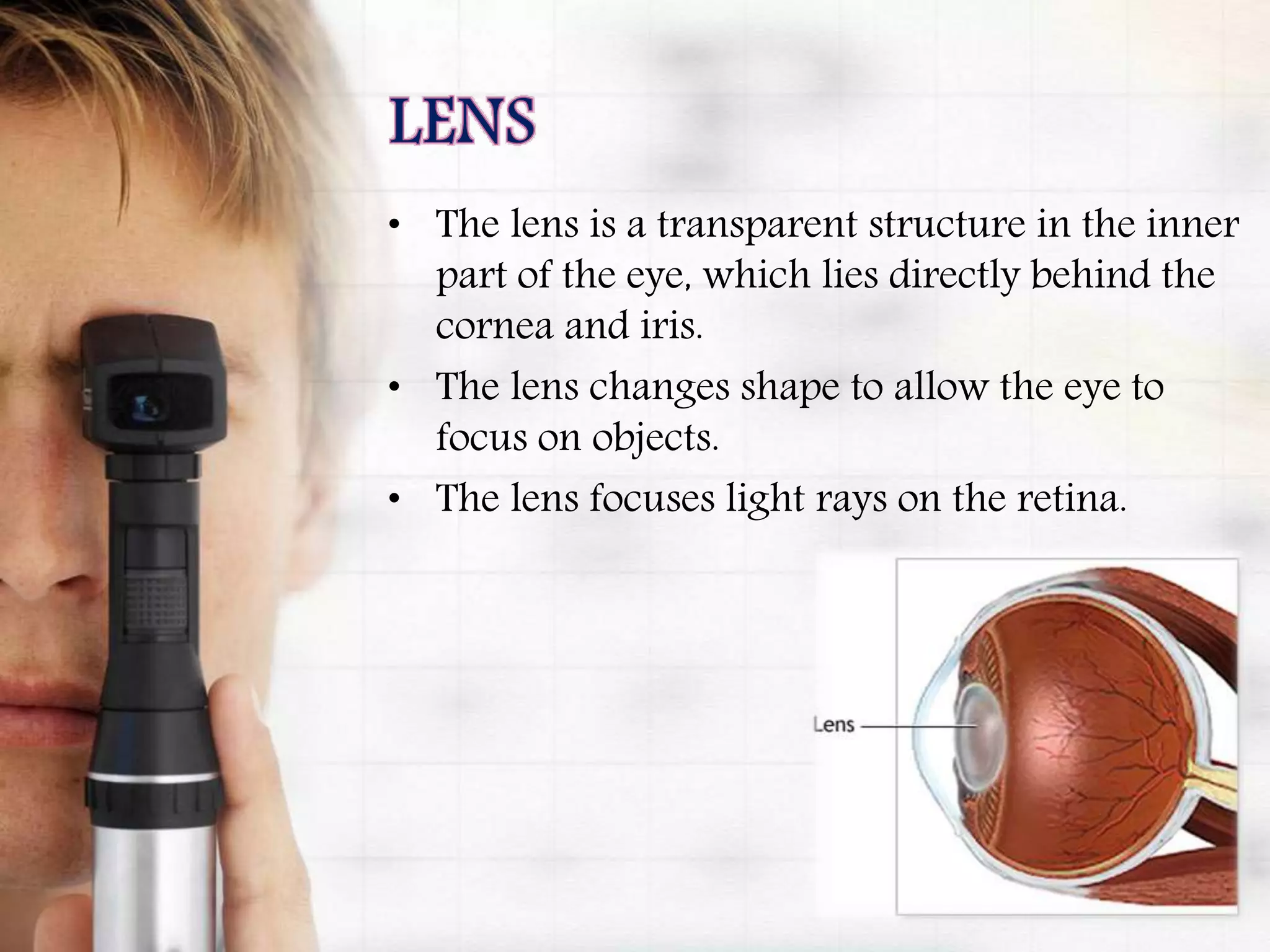
• The lens is a transparent structure in the inner
part of the eye, which lies directly behind the
cornea and iris.
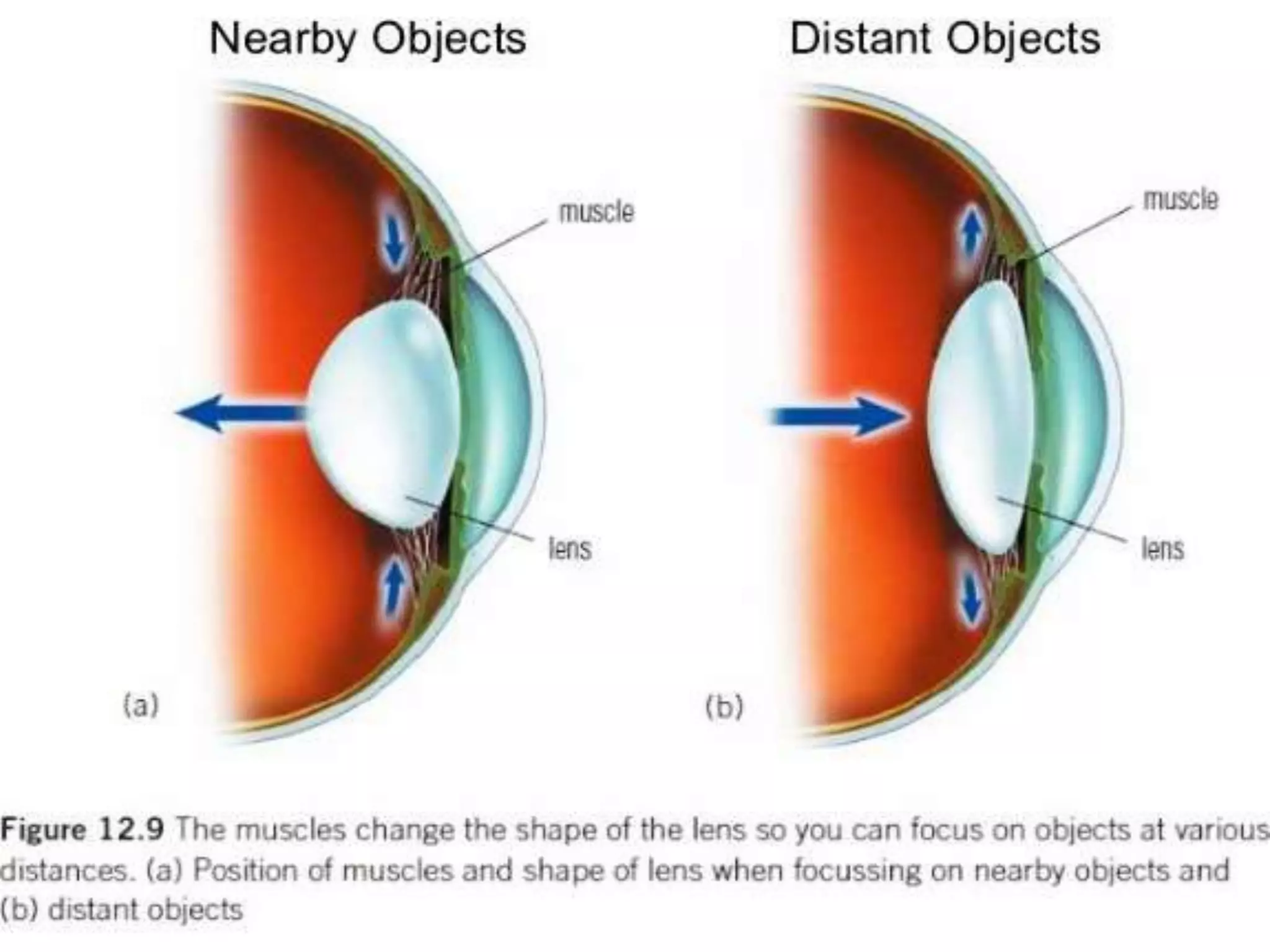
• The lens changes shape to allow the eye to
focus on objects.
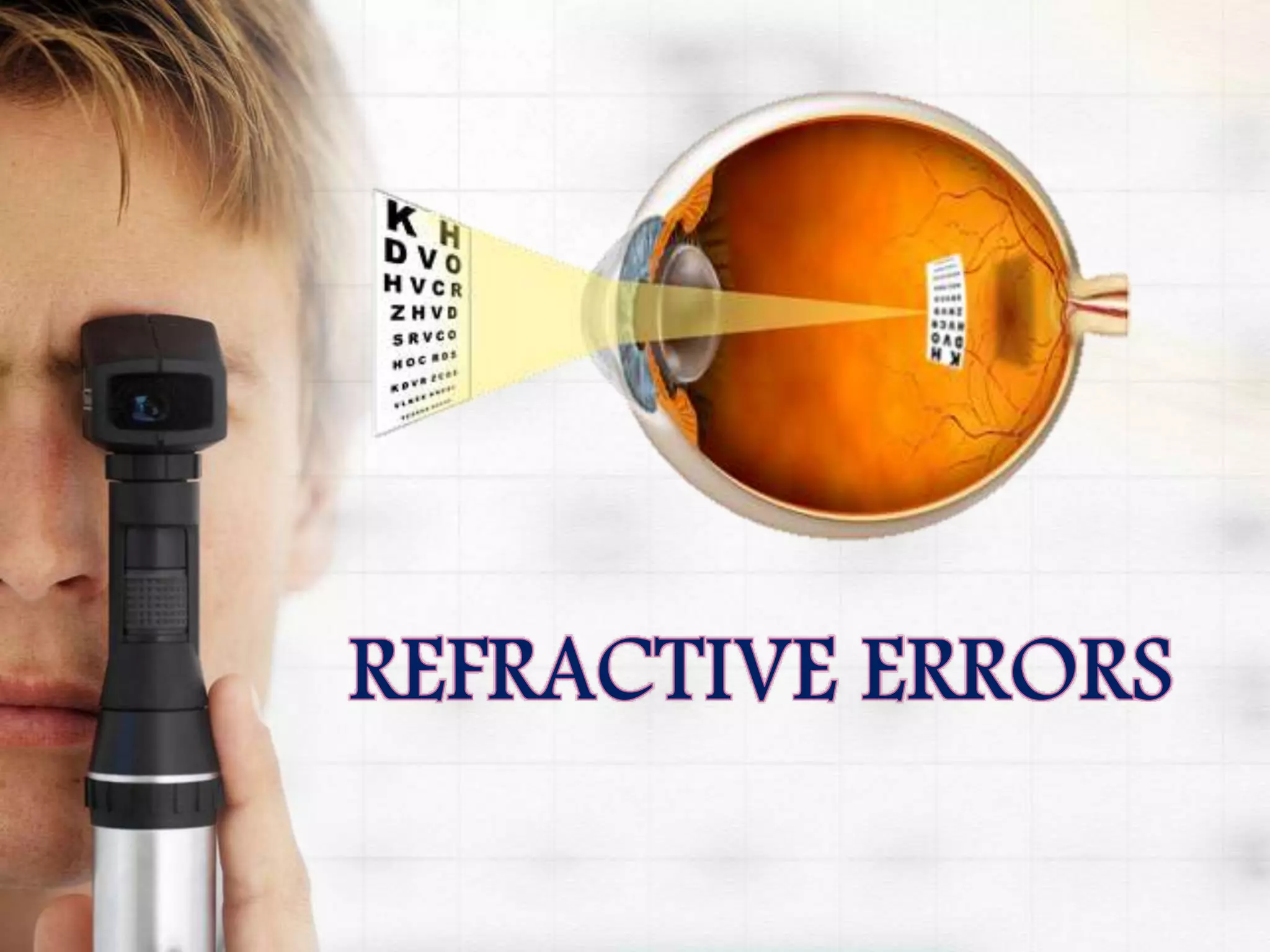
• The lens focuses light rays on the retina.
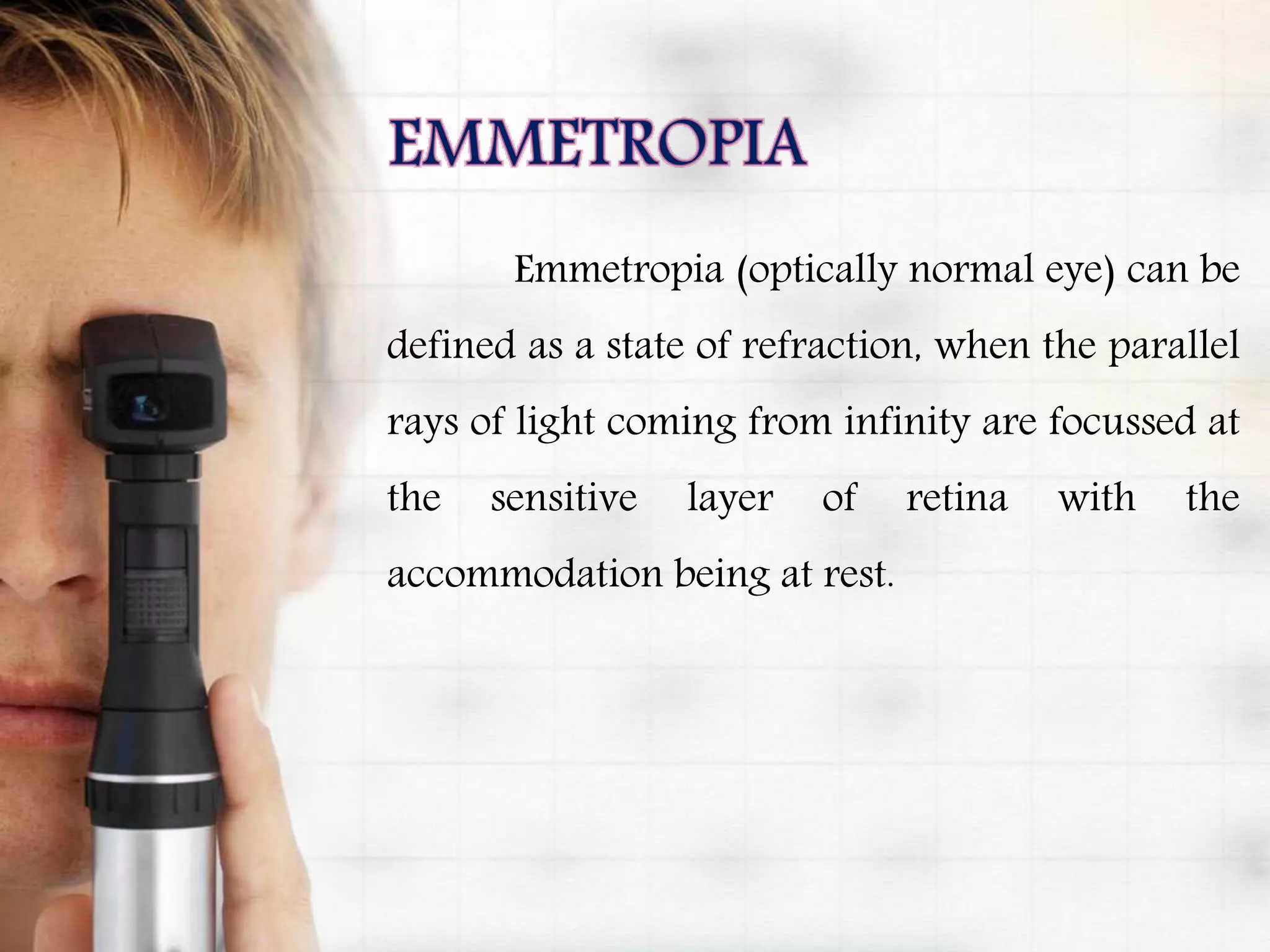
Emmetropia (optically normal eye) can be
defined as a state of refraction, when the parallel
rays of light coming from infinity are focussed at
the sensitive layer of retina with the
accommodation being at rest.
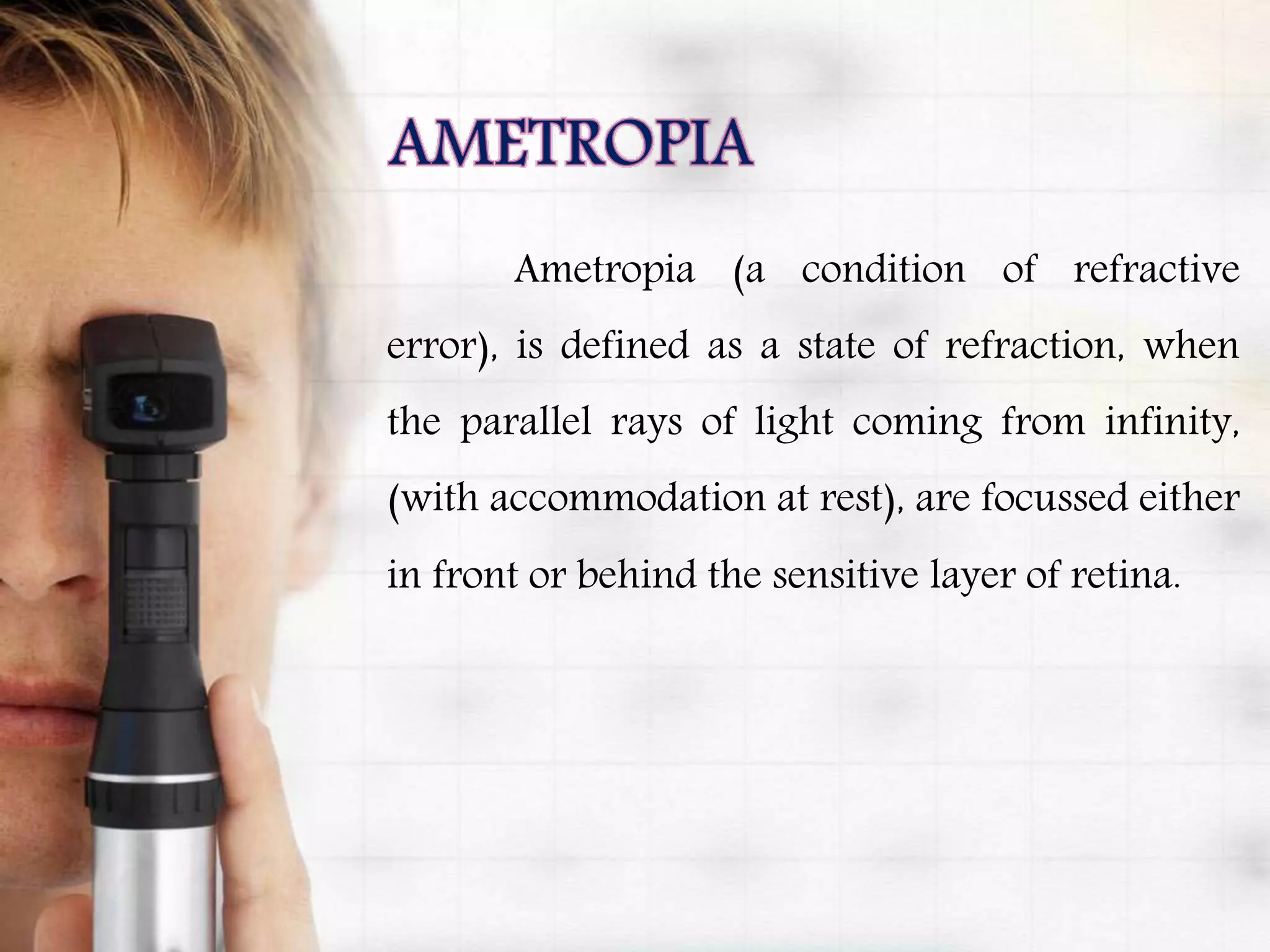
Ametropia (a condition of refractive
error), is defined as a state of refraction, when
the parallel rays of light coming from infinity,
(with accommodation at rest), are focussed either
in front or behind the sensitive layer of retina.
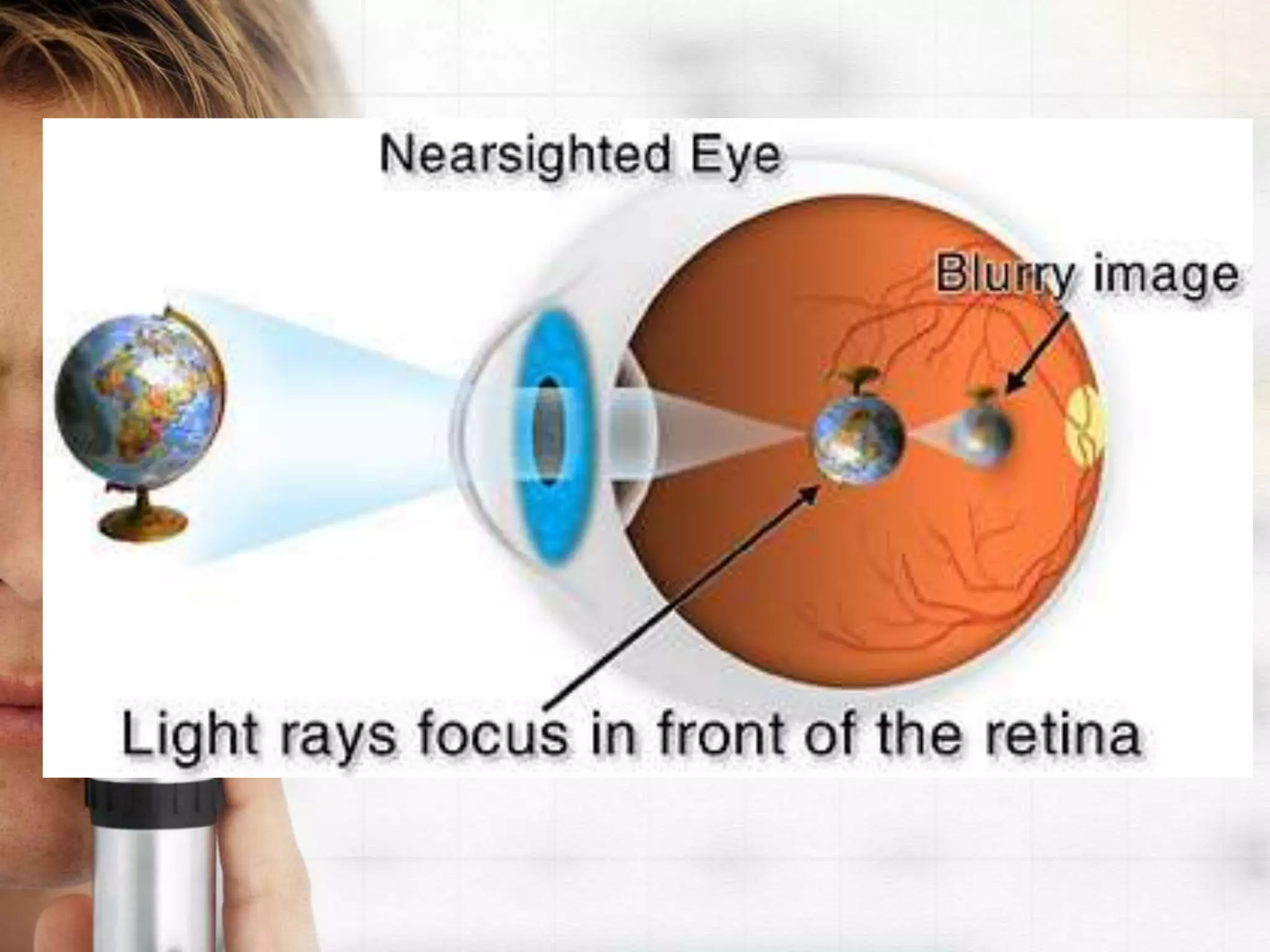
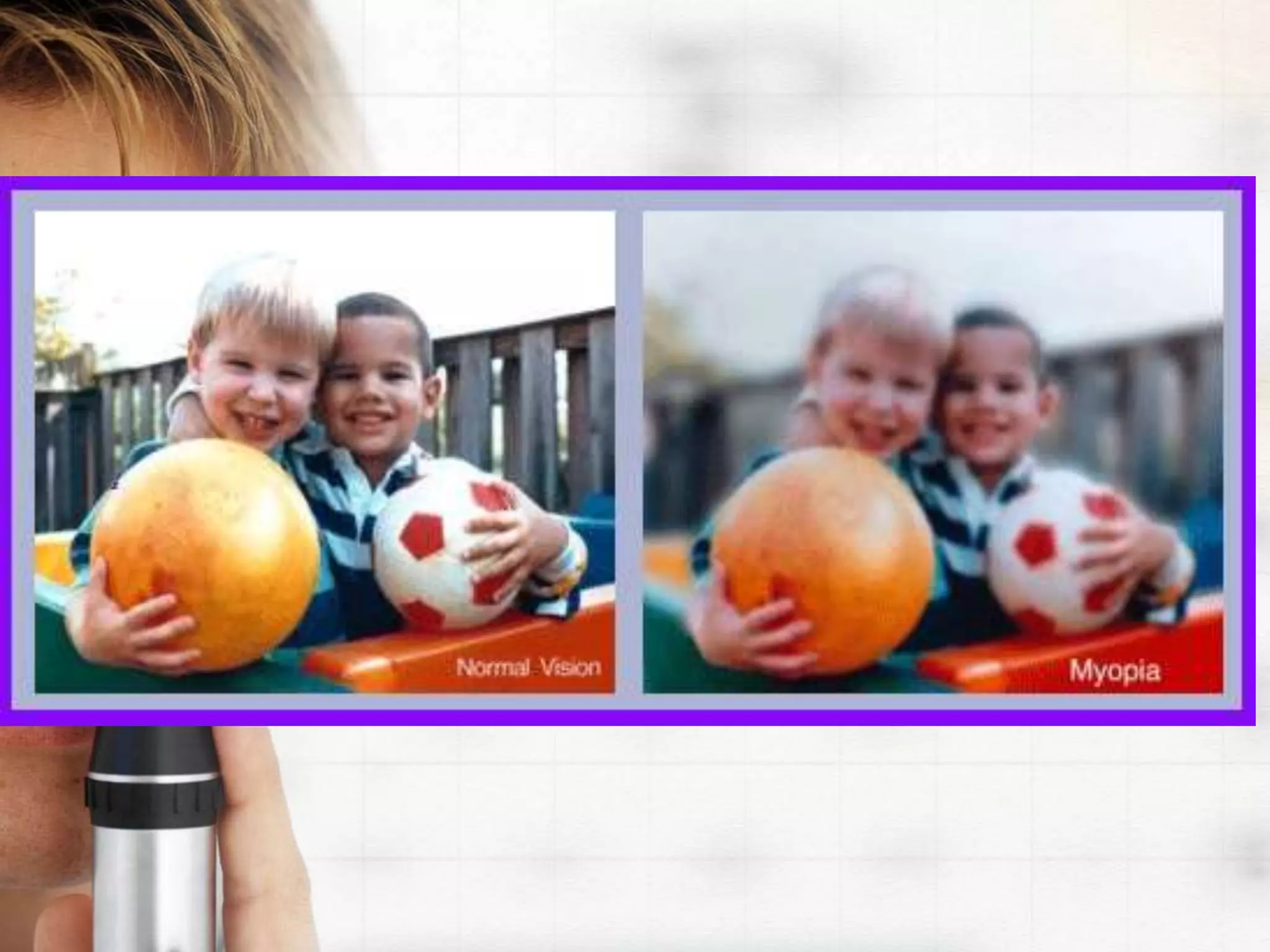
Myopia or short-sightedness is a type of
refractive error in which parallel rays of light
coming from infinity are focussed in front of the
retina when accommodation is at rest
• Axial myopia results from increase in the
antero-posterior length of the eyeball.
• Curvatural myopia occurs due to increased
curvature of the cornea, lens or both.
• Index myopia results from increase in the
refractive index of the crystalline lens
associated with nuclear sclerosis.
Congenital Myopia Simple Myopia
Degenerative
Myopia
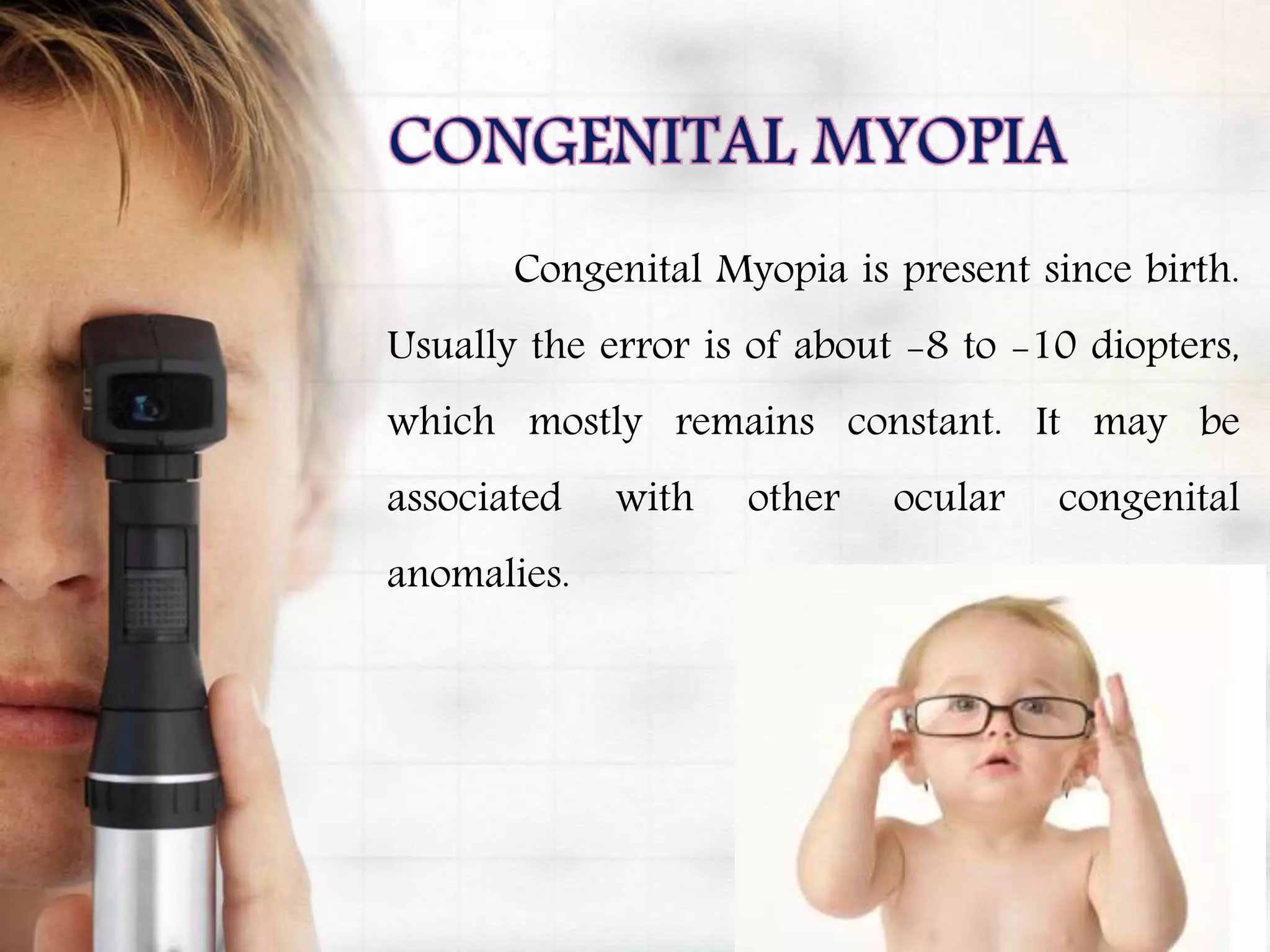
Congenital Myopia is present since birth.
Usually the error is of about -8 to -10 diopters,
which mostly remains constant. It may be
associated with other ocular congenital
anomalies.
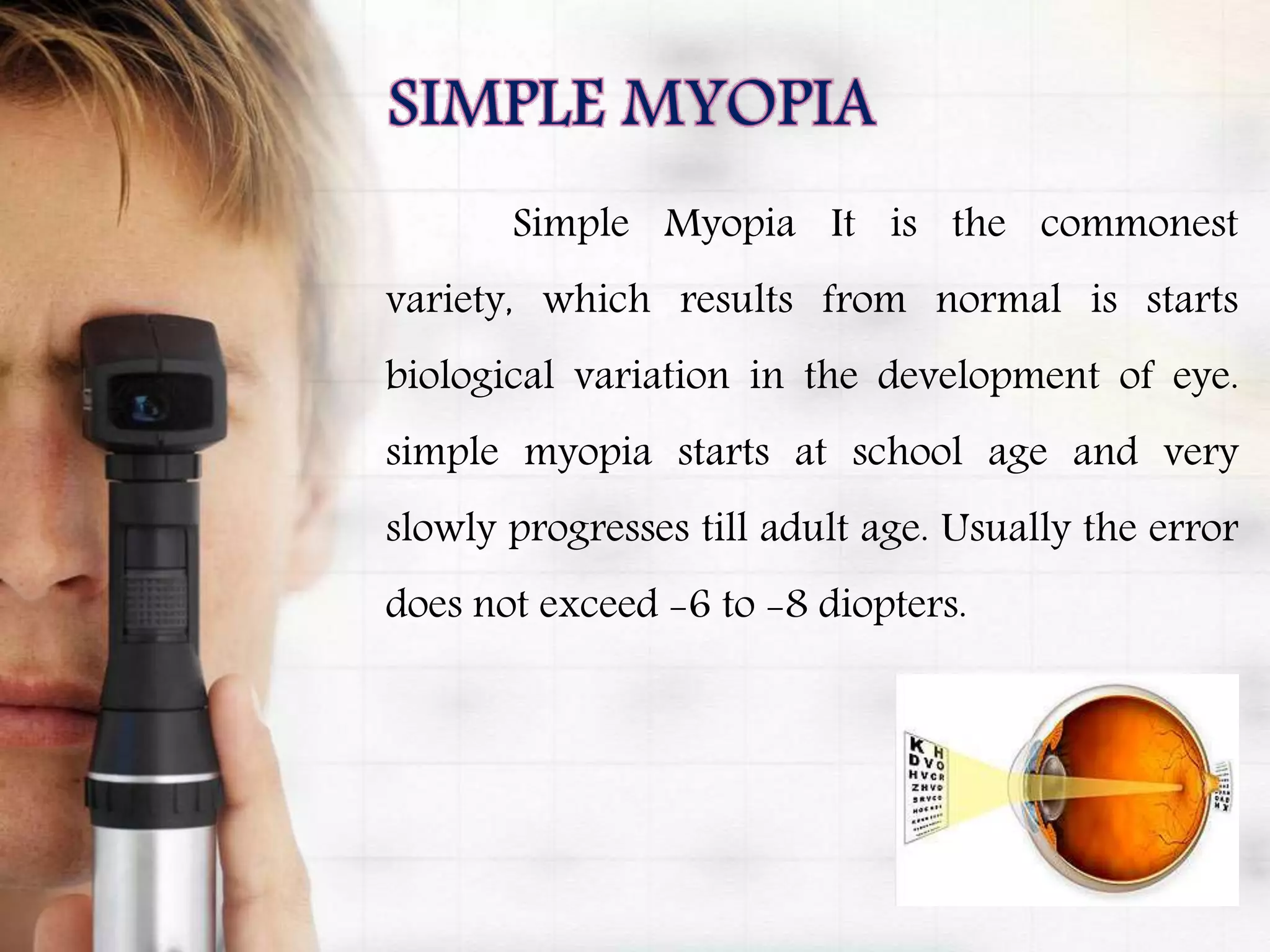
Simple Myopia It is the commonest
variety, which results from normal is starts
biological variation in the development of eye.
simple myopia starts at school age and very
slowly progresses till adult age. Usually the error
does not exceed -6 to -8 diopters.
Pathological Myopia or Degenerative
Myopia is a rapidly progressive error resulting in
high myopia. (more than -8 D) during early
adult life, which is usually associated with
degenerative changes in the retina Genetic
factors play major role in the etiology of
pathological myopia.
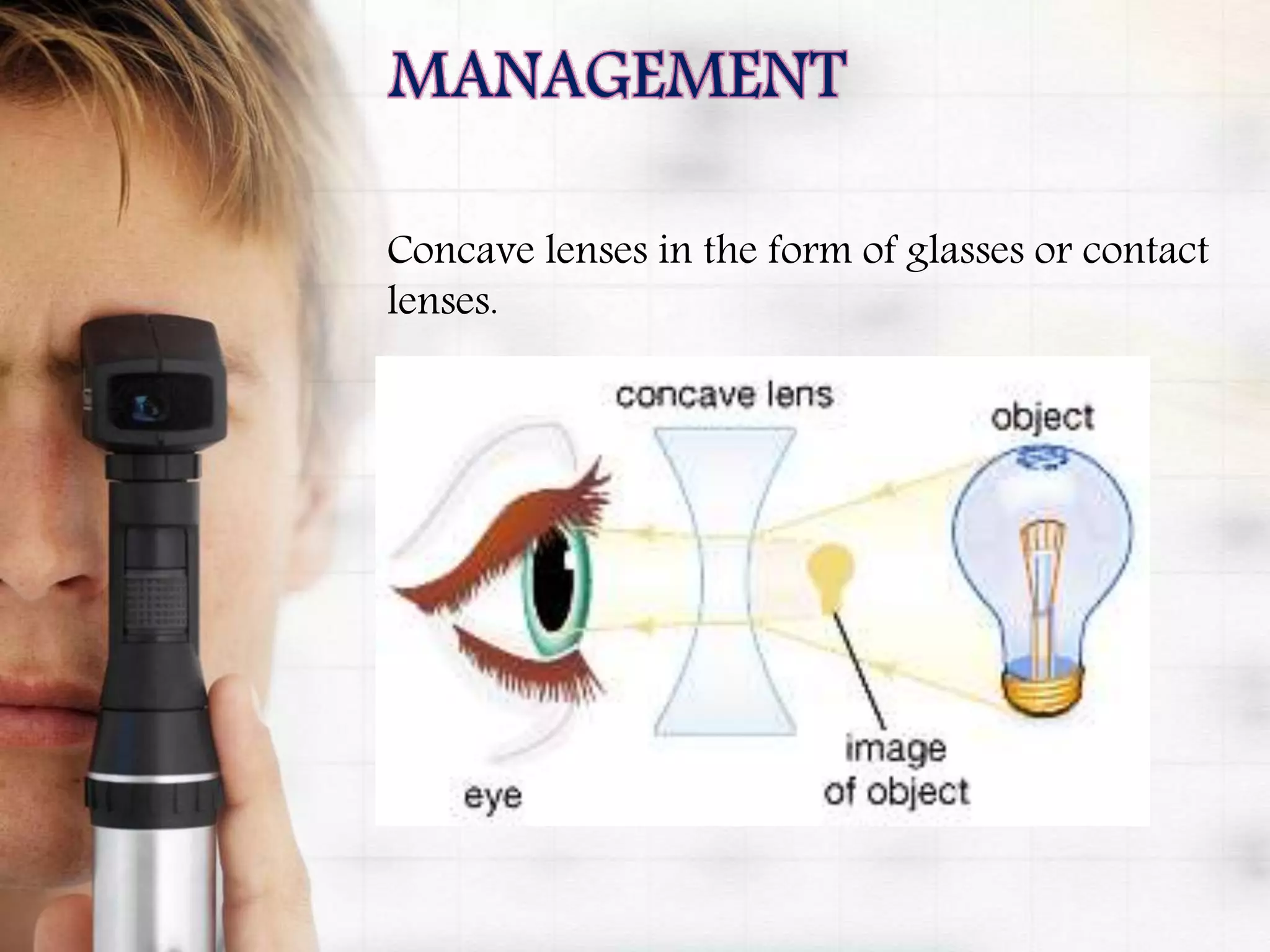
Concave lenses in the form of glasses or contact
lenses.
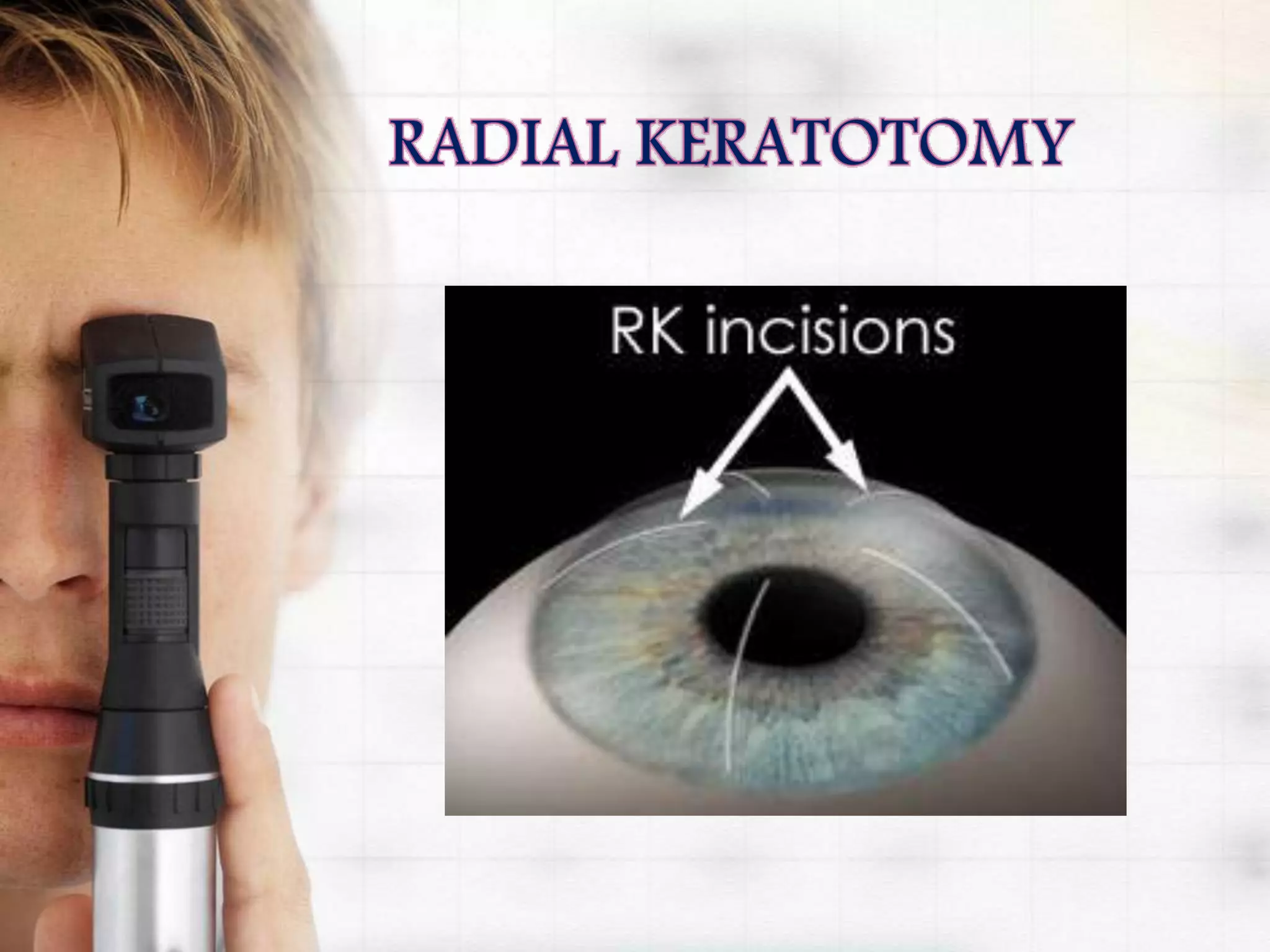
• Radial keratotomy.
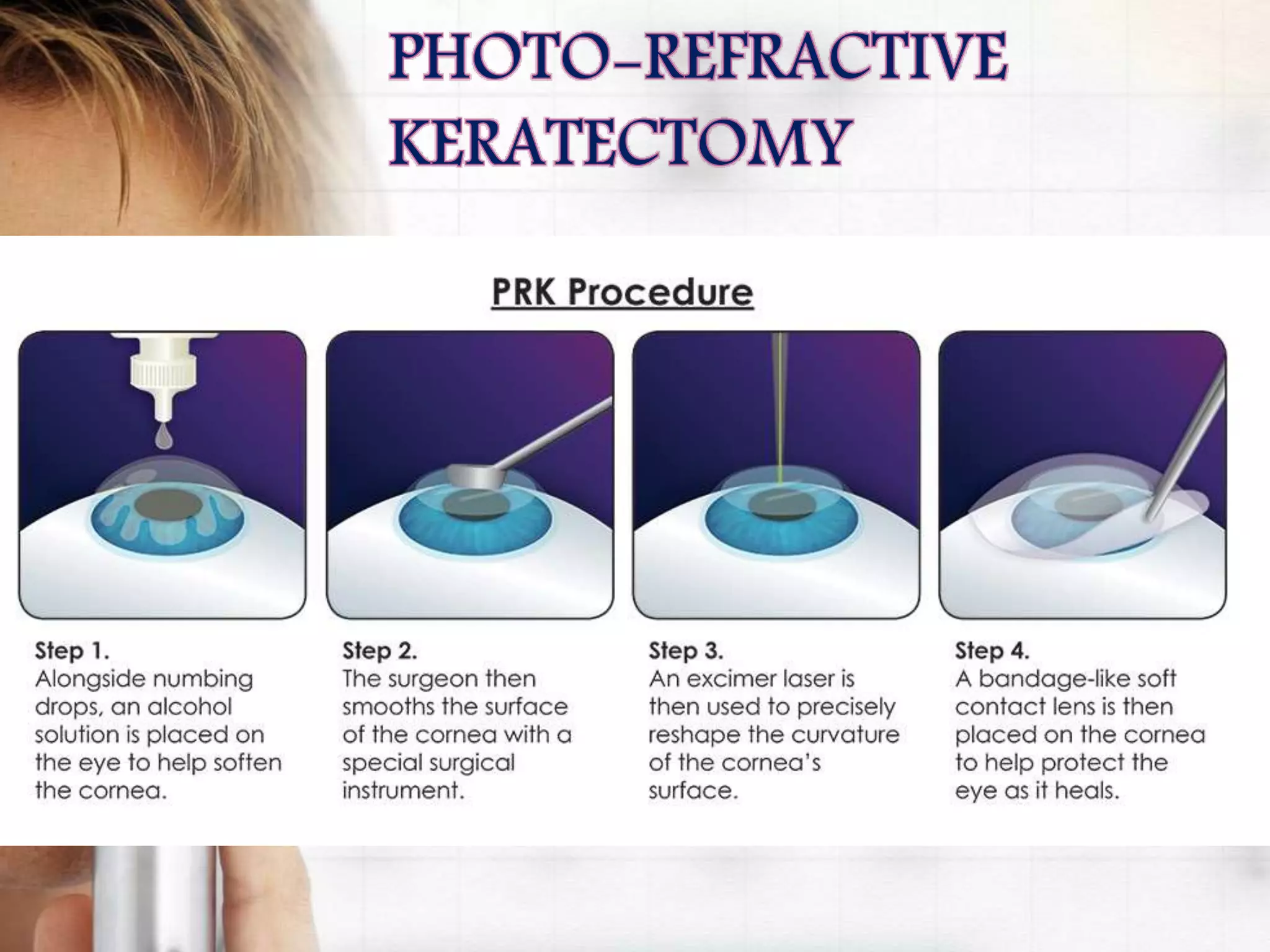
• Photo-refractive keratectomy (PRK).
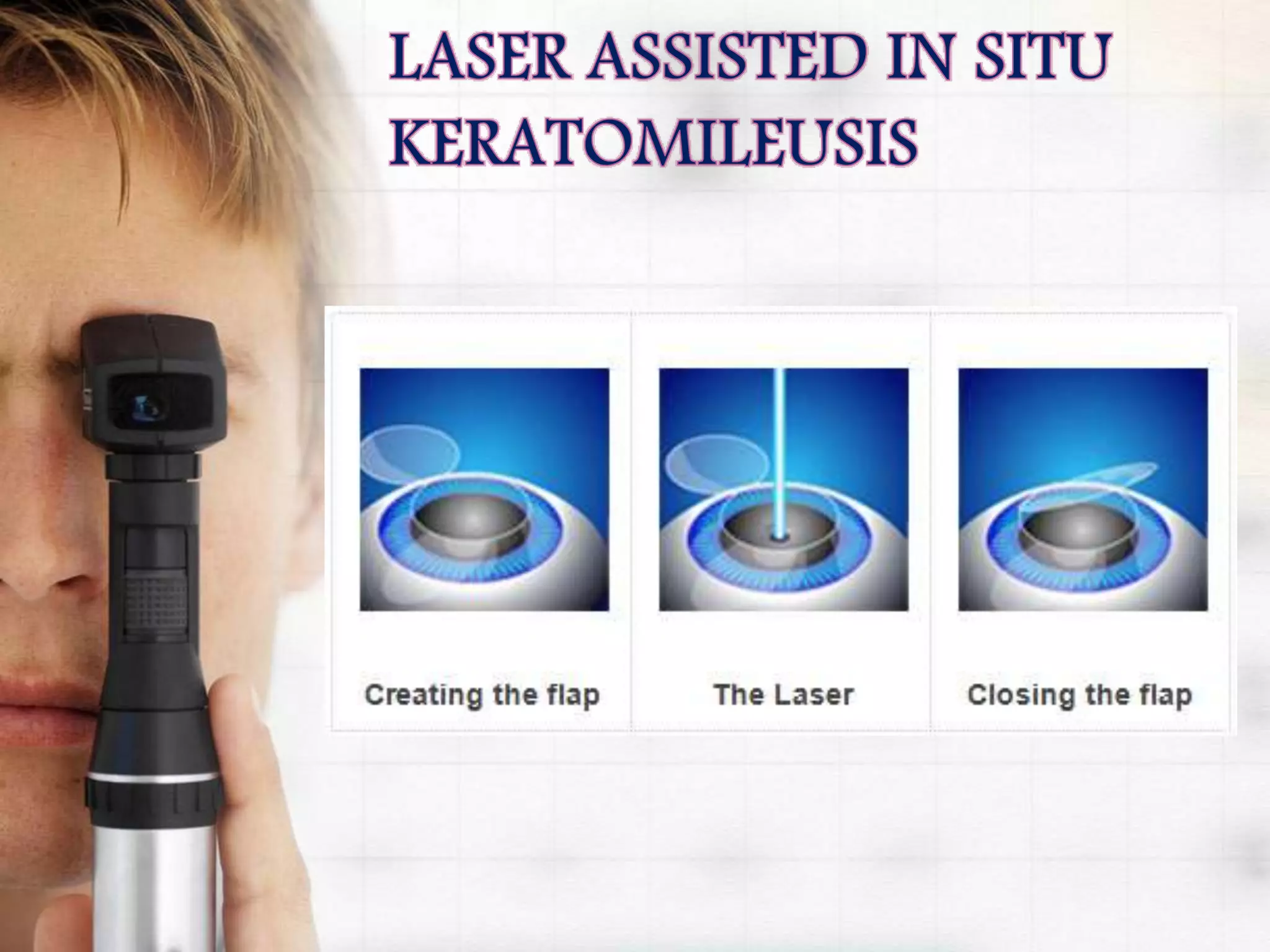
• Laser assisted in situ keratomileusis (LASK).
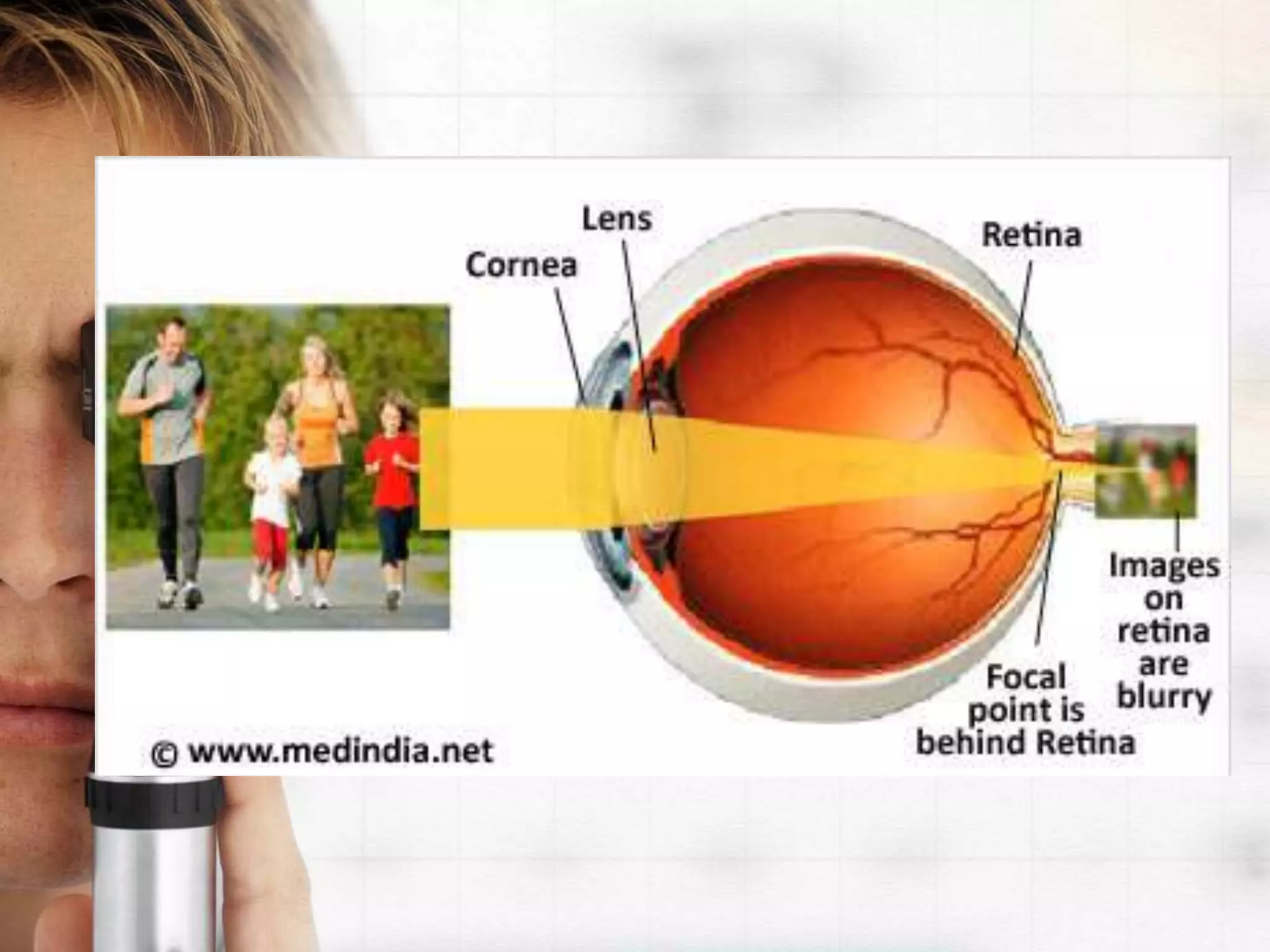
Hypermetropia (hyperopia) or long sightedness
is the refractive state of the eye wherein parallel
rays of light coming from infinity are focussed
behind the retina with accommodation being at
rest. Thus the Posterior focal point is behind the
retina, which therefore receives a blurred image.
• Axial hypermetropia is by far the commonest
form. It occurs due to short axial length of the
eyeball.
• Curvatural hypermetropia occurs due to
comparatively flatter curvature of the cornea
or lens or both.
• Index hypermetropia results due to change in
the refractive index of the lens.
• Absence of the lens (aphakia) either congenital
or acquired (following surgical removal of the
lens) leads to high hypermetropia.
• Tiredness Of Eyes
• Frontal Or Frontotemporal Headache,
• Watering
• Mild Photophobia
ASTHENOPIC
SYMPTOMS
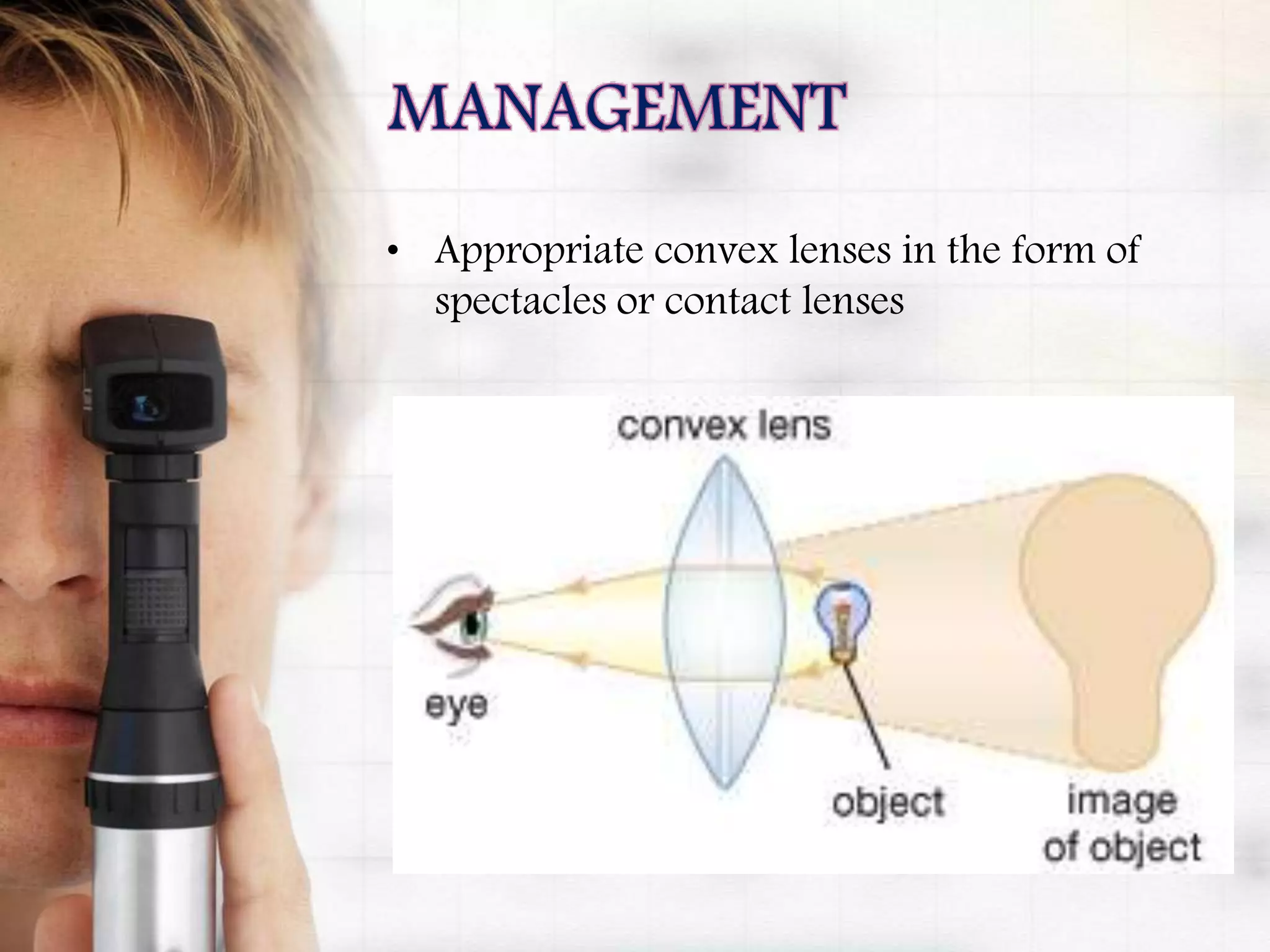
• Appropriate convex lenses in the form of
spectacles or contact lenses
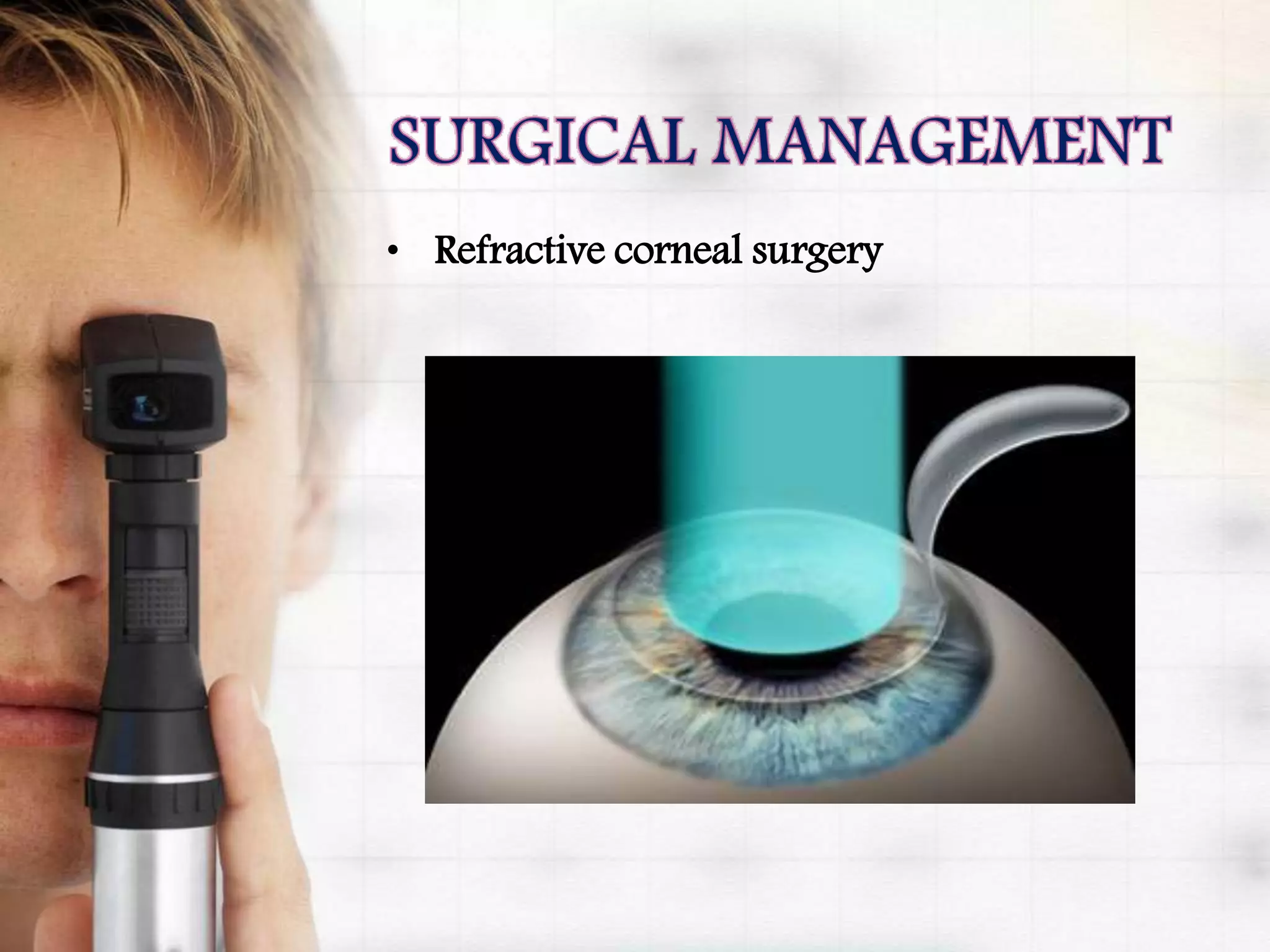
• Refractive corneal surgery
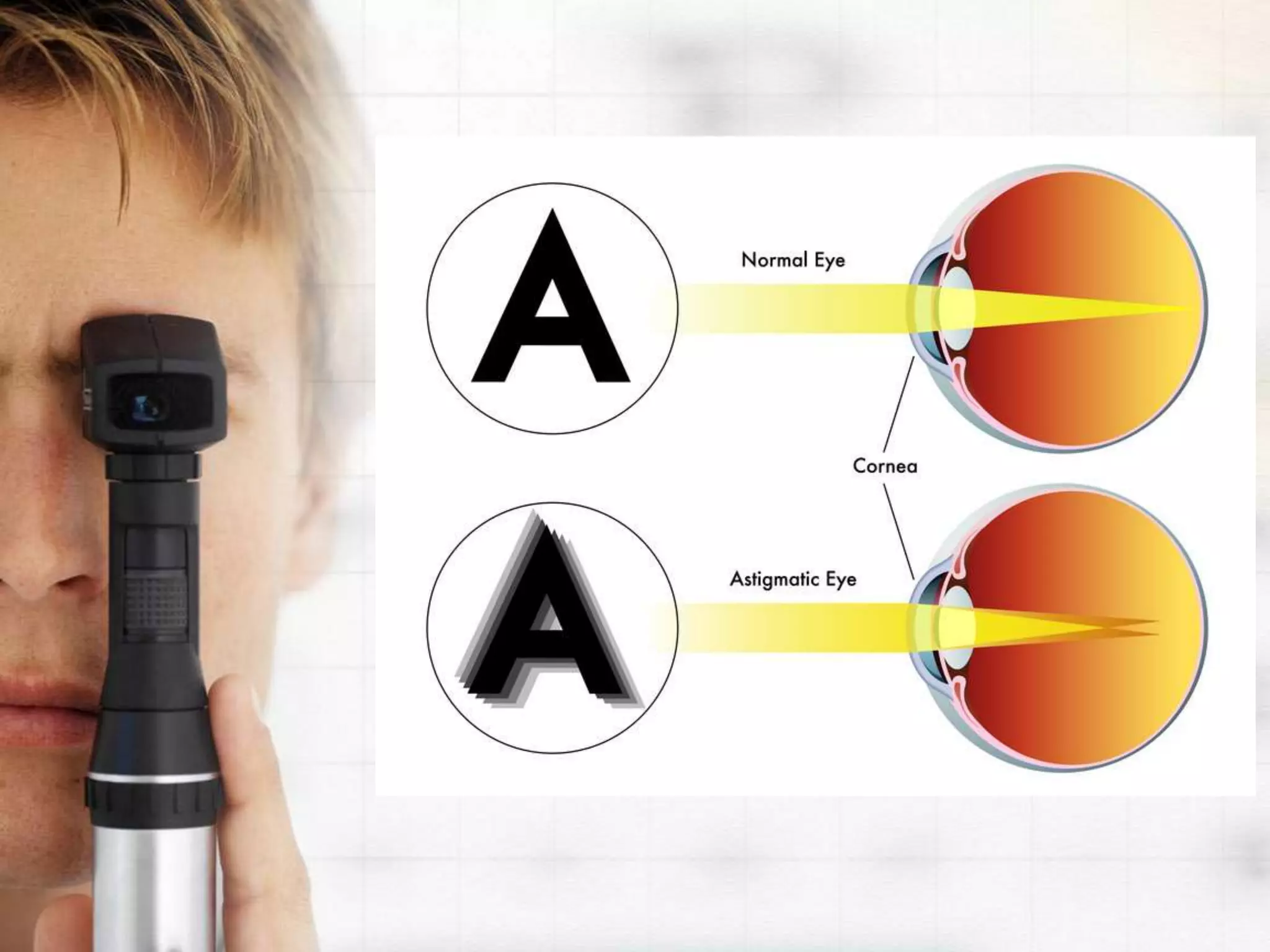
Astigmatism is a type of refractive error
wherein the refraction varies in the different
meridia of the eye Consequently, the ray of light
entering in the eye cannot converge to a point
focus but form focal lines.
• Usually occurs due to unequal curvature of
cornea.
• Rarely it may occur due to subluxation
abnormalities of the curvature of the lens.
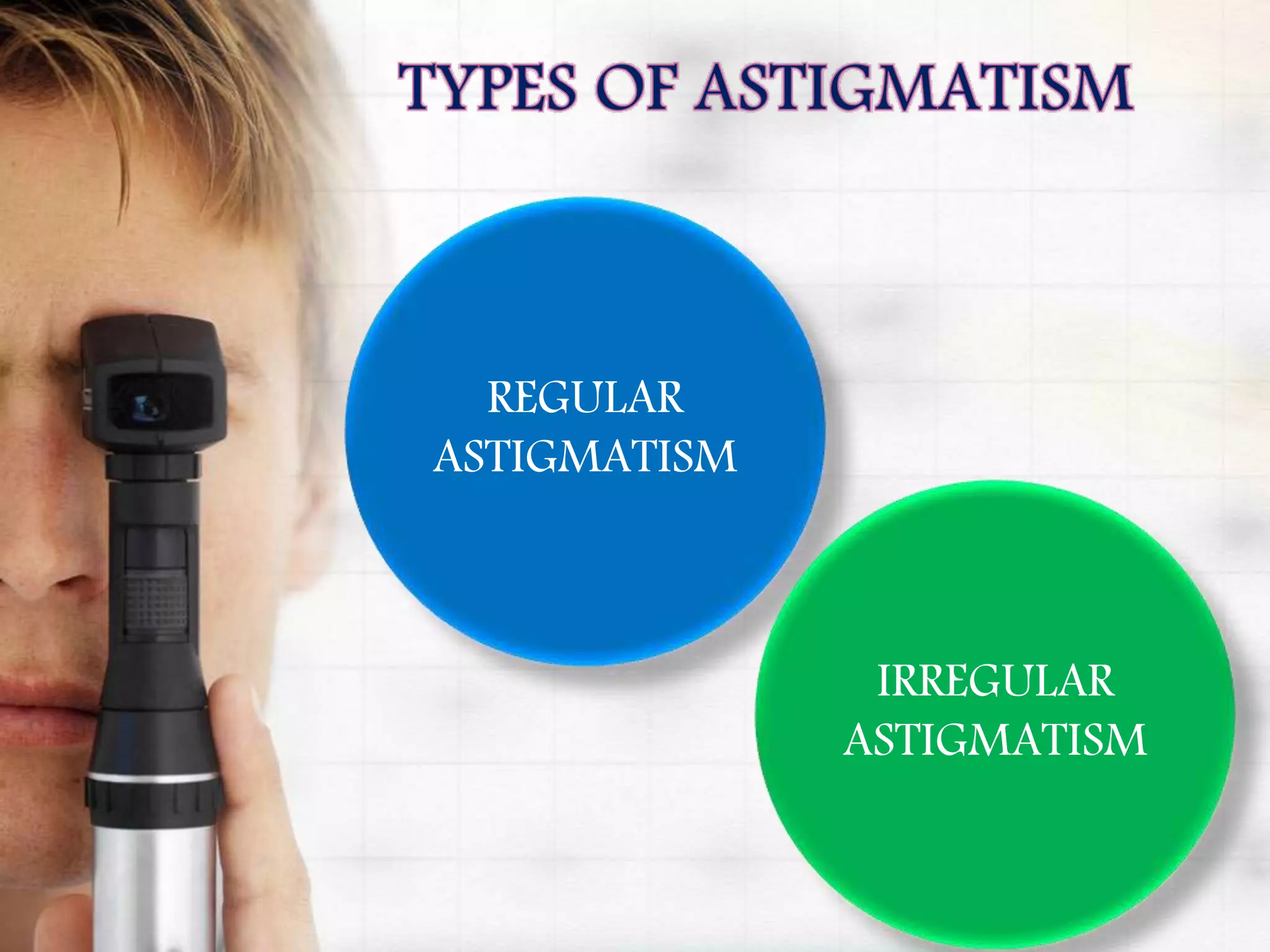
REGULAR
ASTIGMATISM
IRREGULAR
ASTIGMATISM
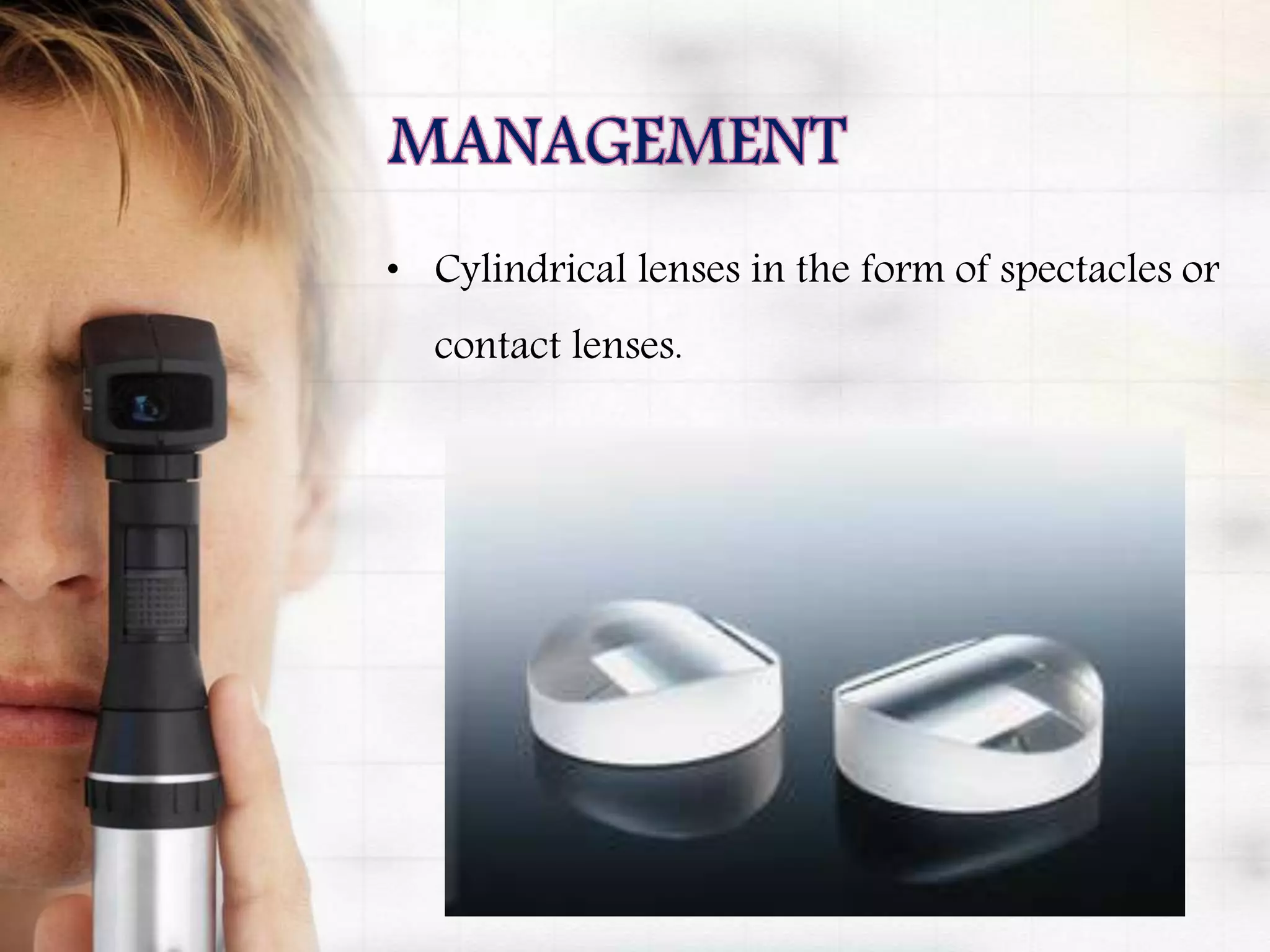
• Cylindrical lenses in the form of spectacles or
contact lenses.
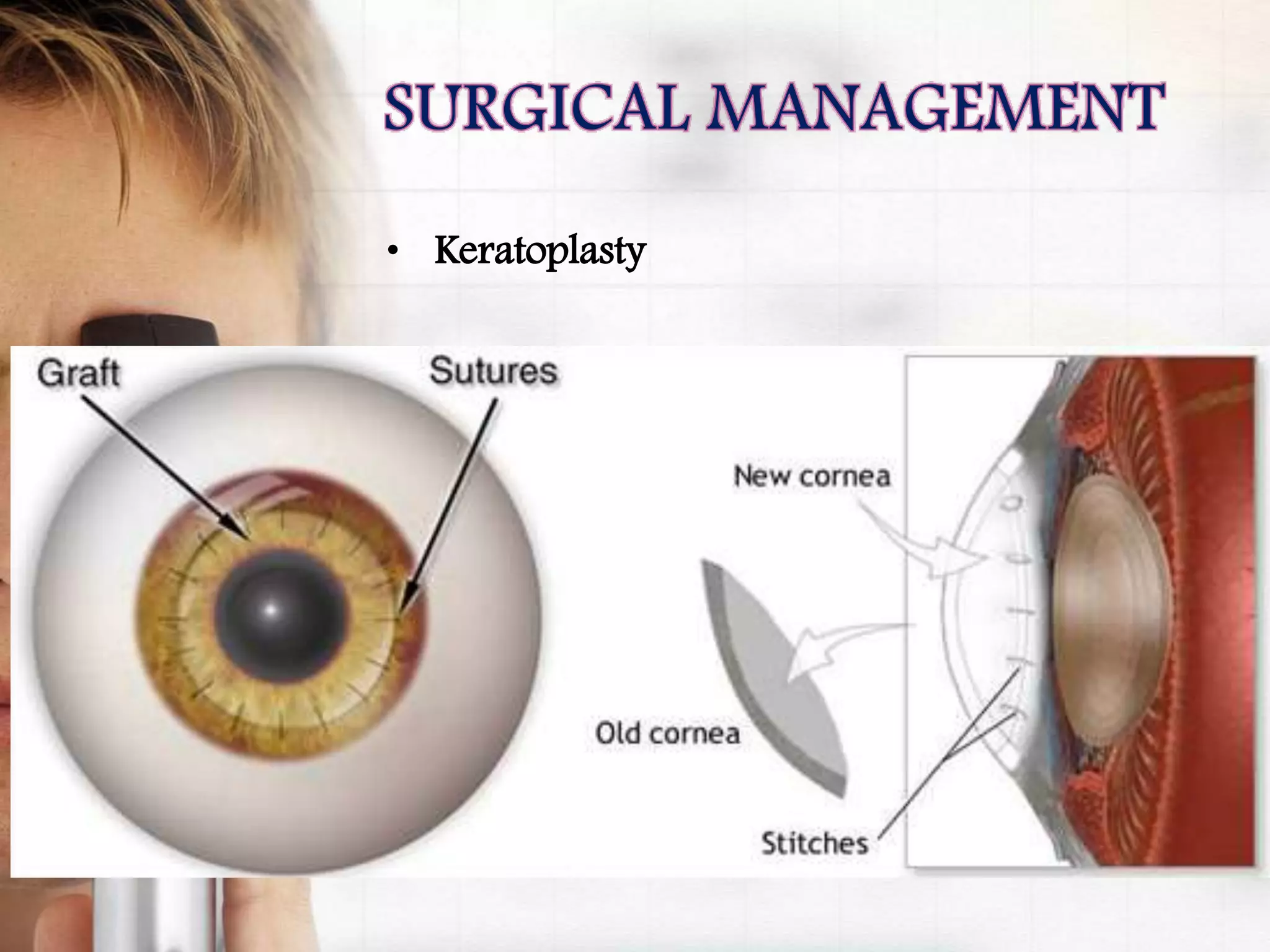
• Keratoplasty
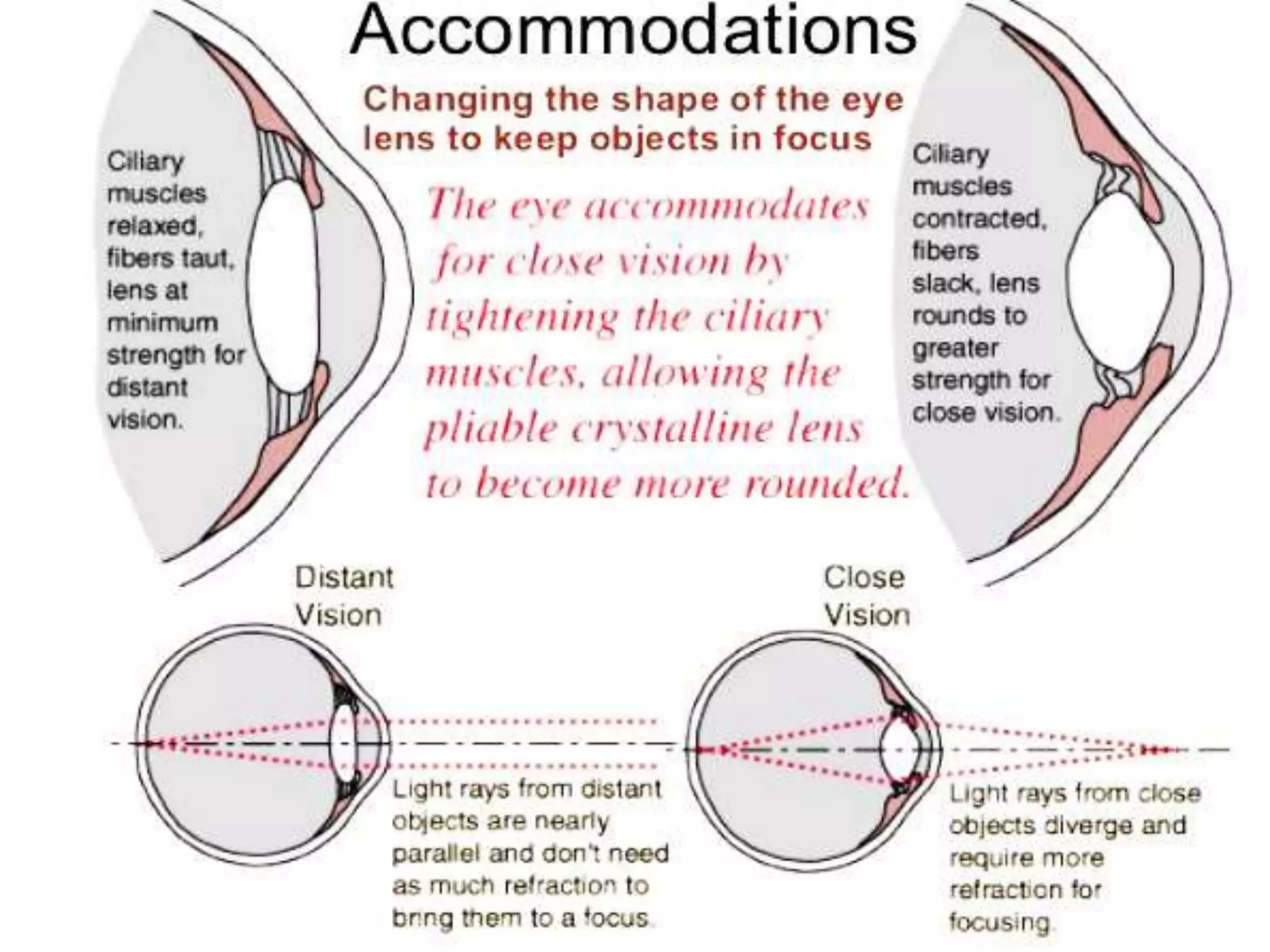
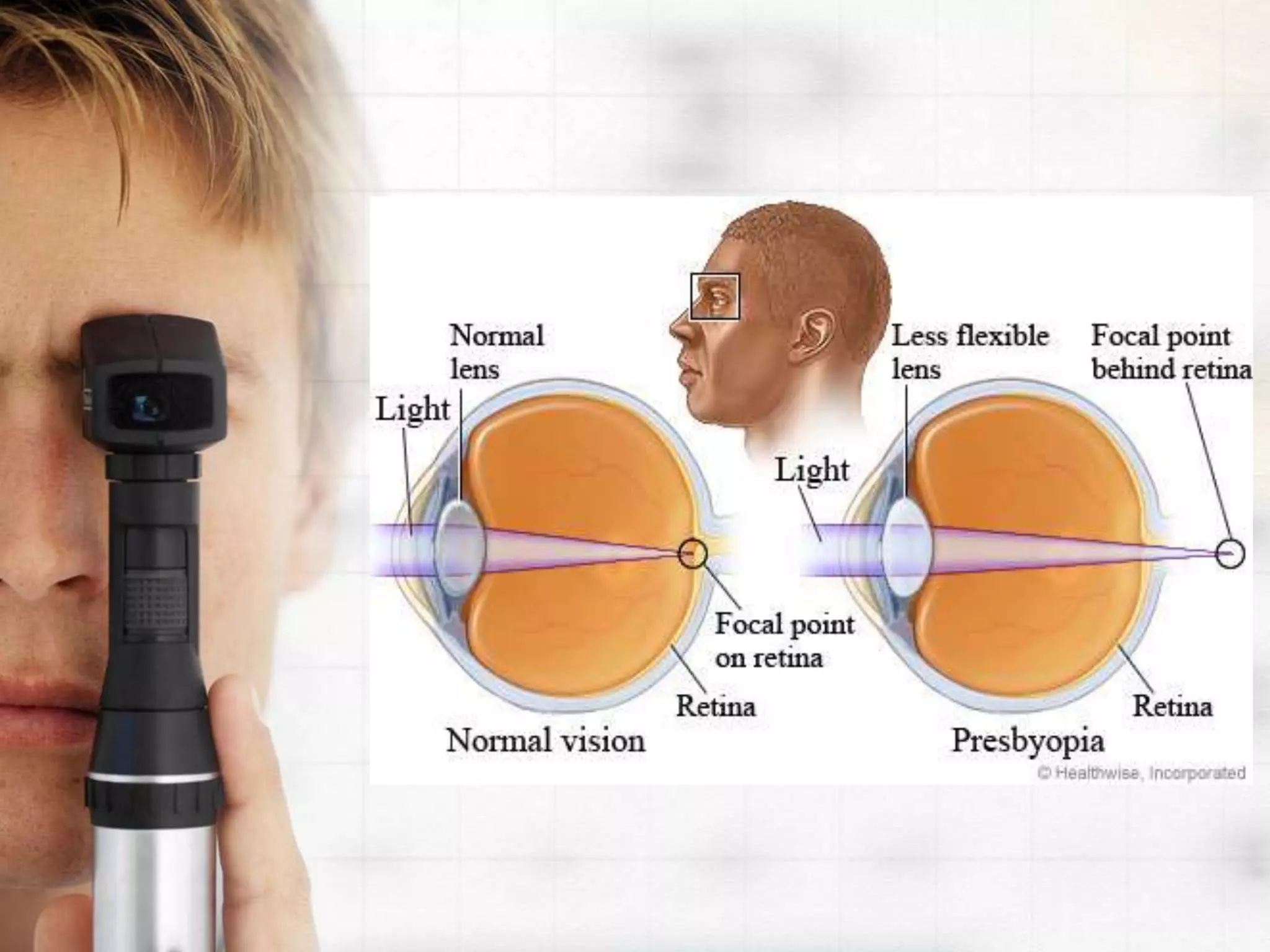
Presbyopia (eyesight of old age) is not an
error of refraction, but a condition of
physiological insufficiency of accommodation,
leading to failing vision for near.
It usually occurs after 40 years of age.
Decrease in the accommodative power of
crystalline lens with increasing age, leading to
presbyopia occur due to:
• Decrease in the elasticity and plasticity of the
crystalline lens
• Age related decrease in the power of ciliary
muscle.
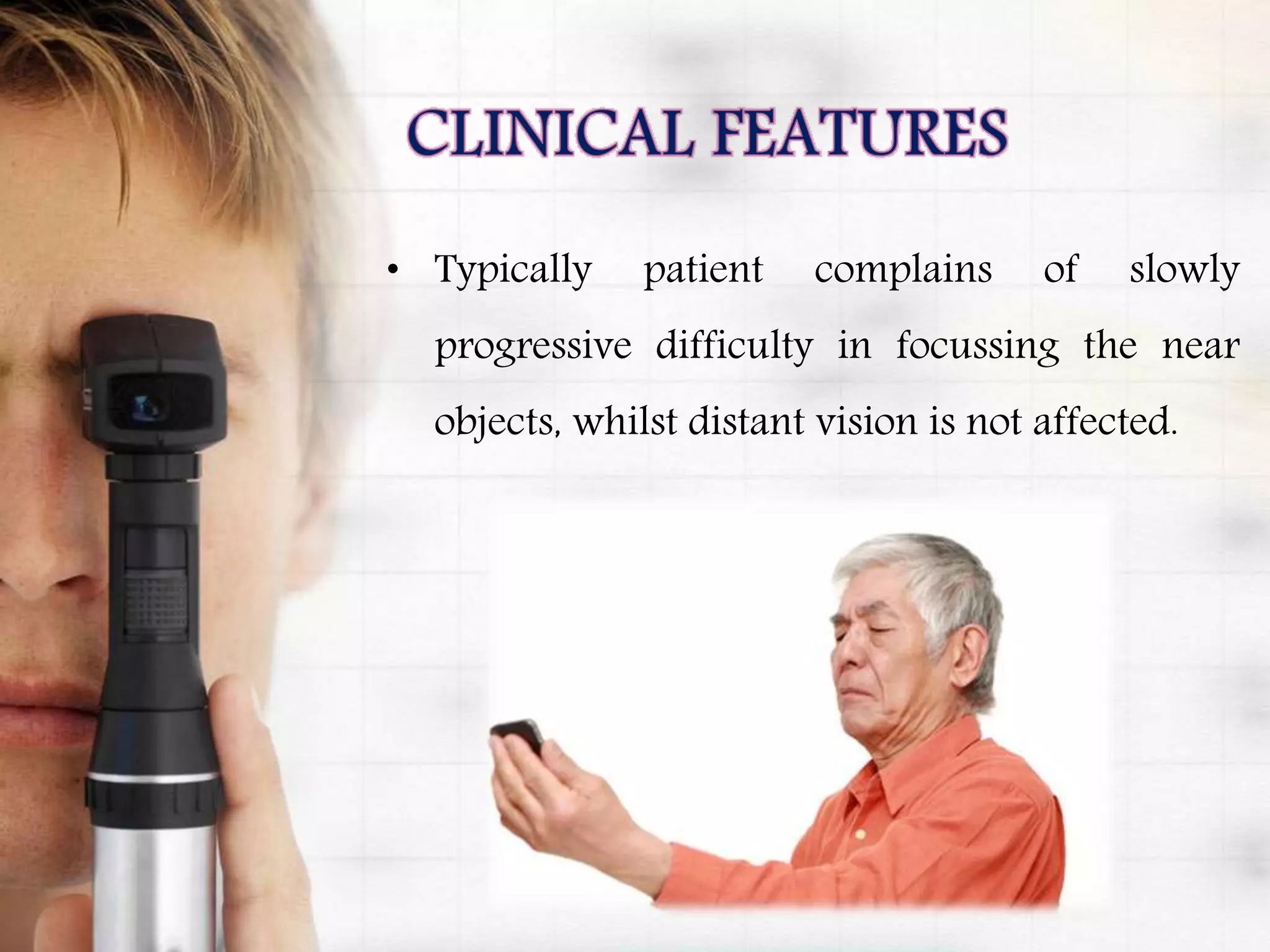
• Typically patient complains of slowly
progressive difficulty in focussing the near
objects, whilst distant vision is not affected.
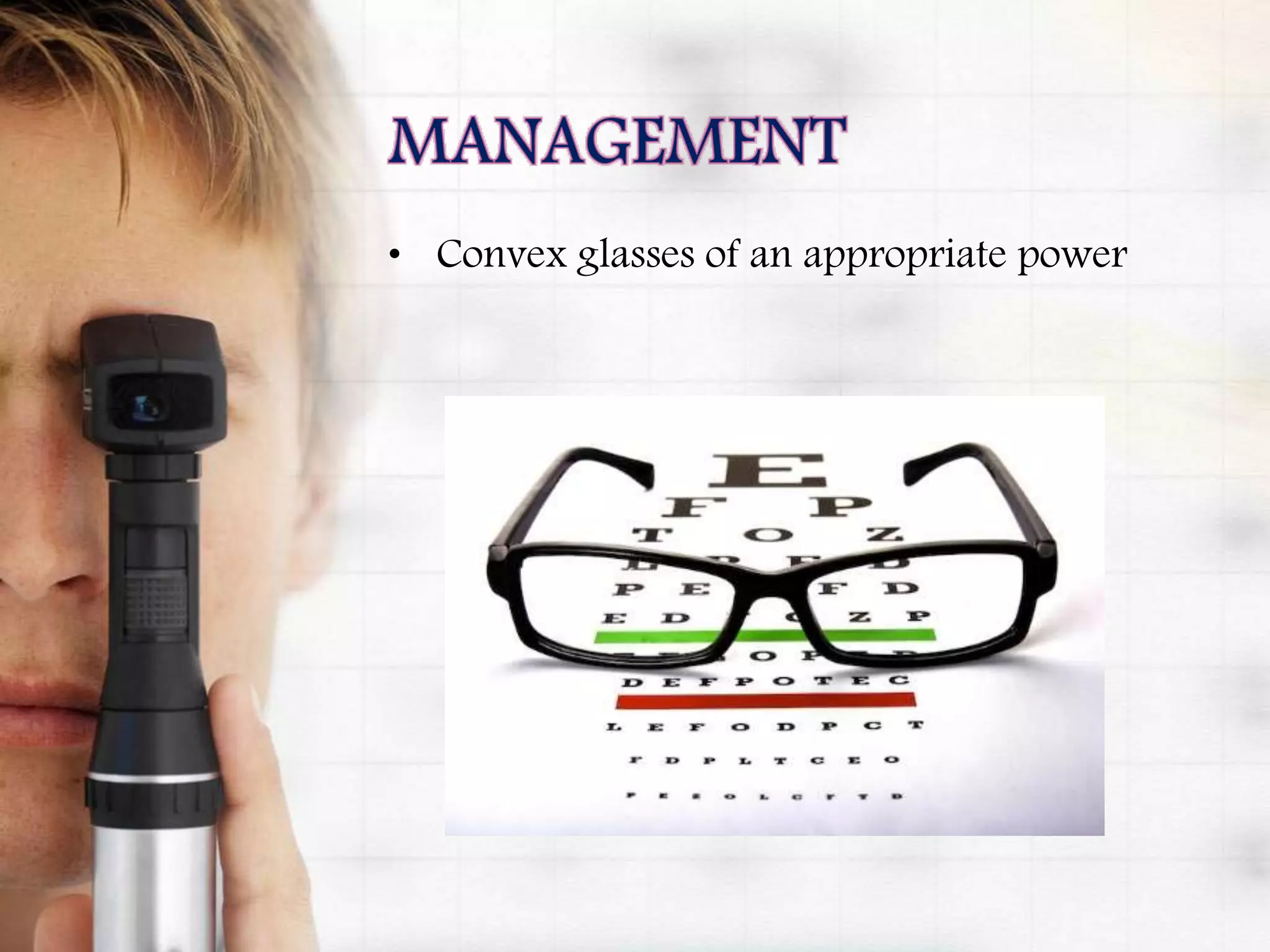
• Convex glasses of an appropriate power
• History Collection
• Physical Examination
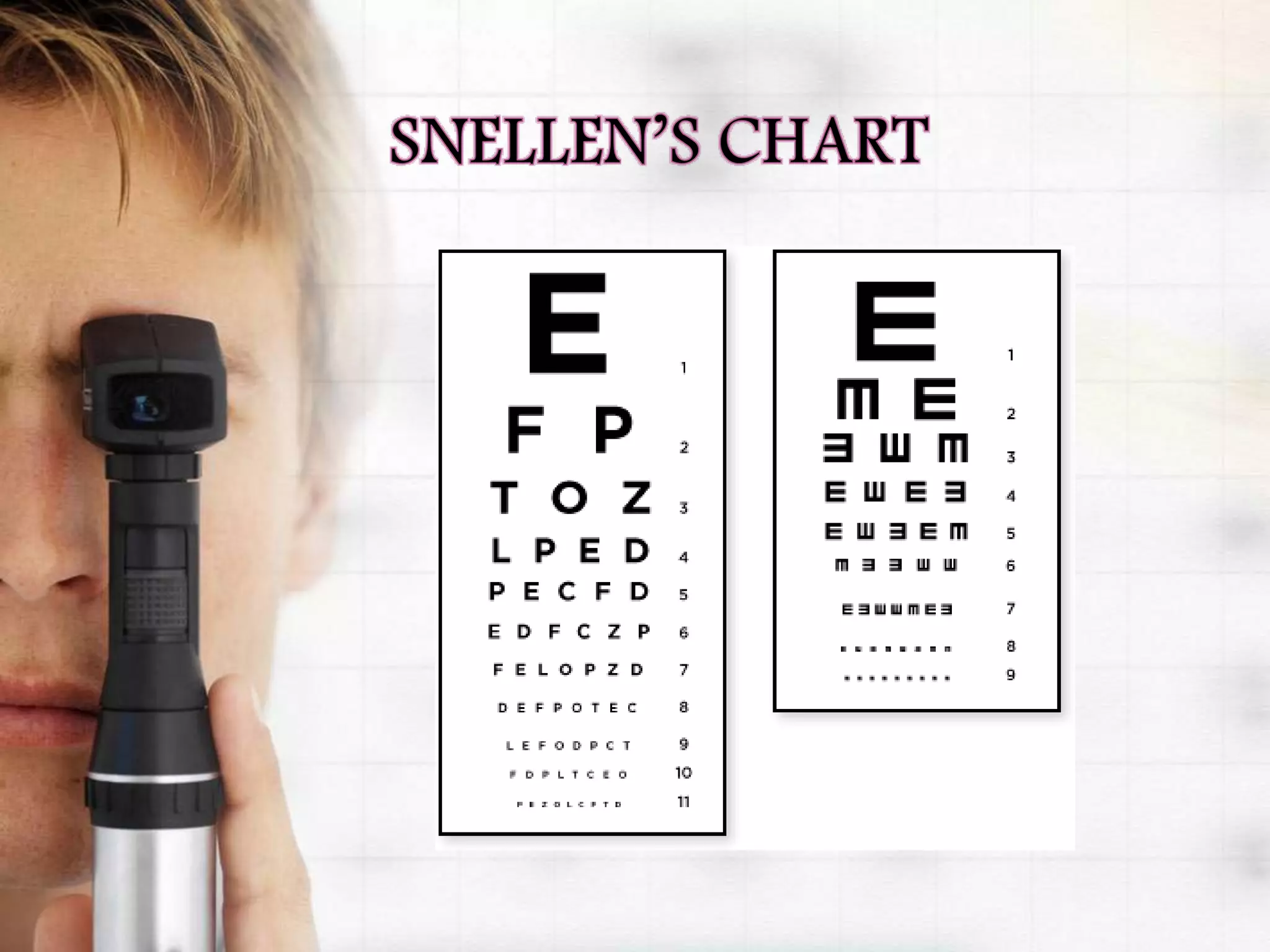
• Snellen’s Chart
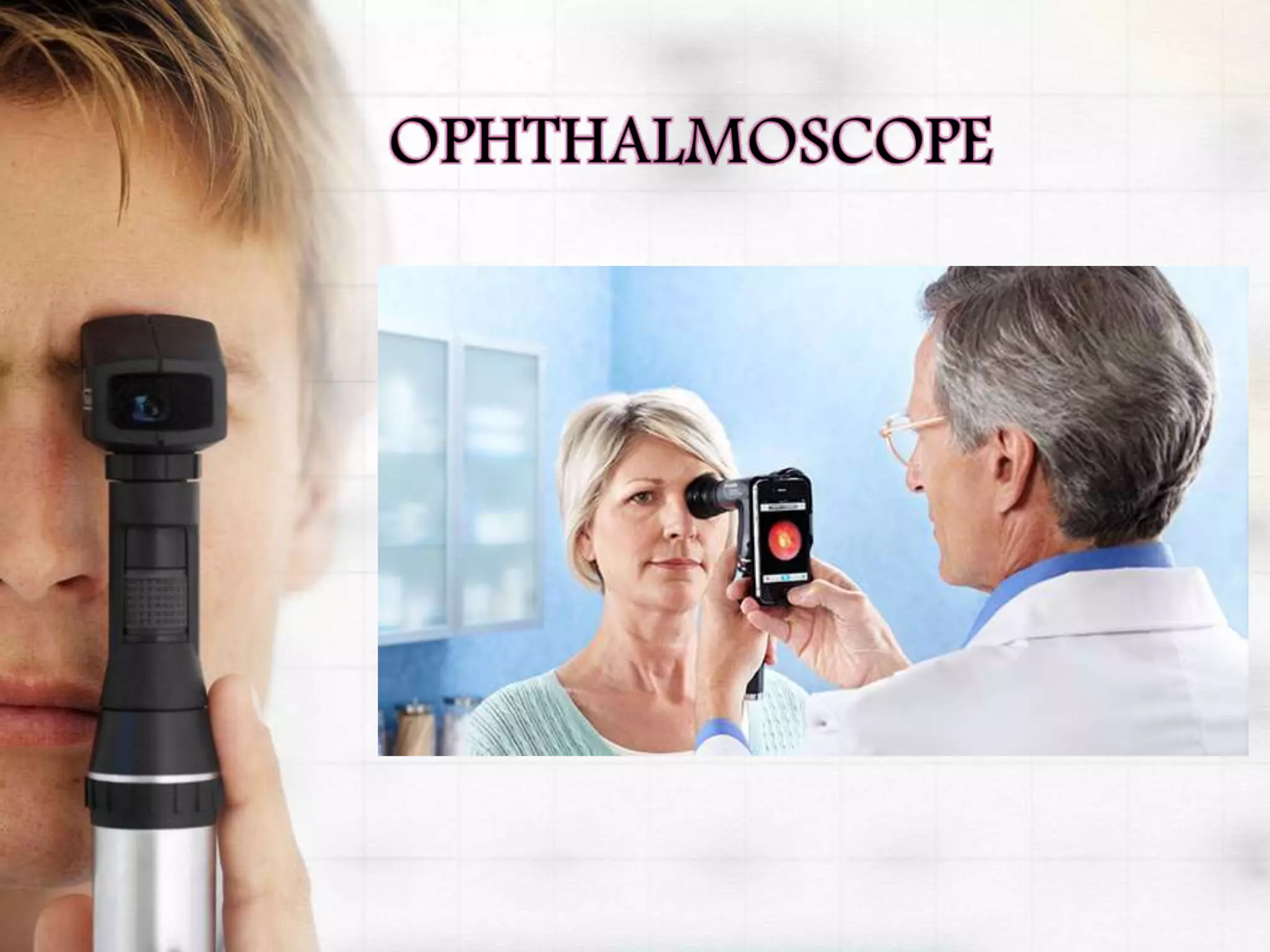
• Ophthalmoscopy
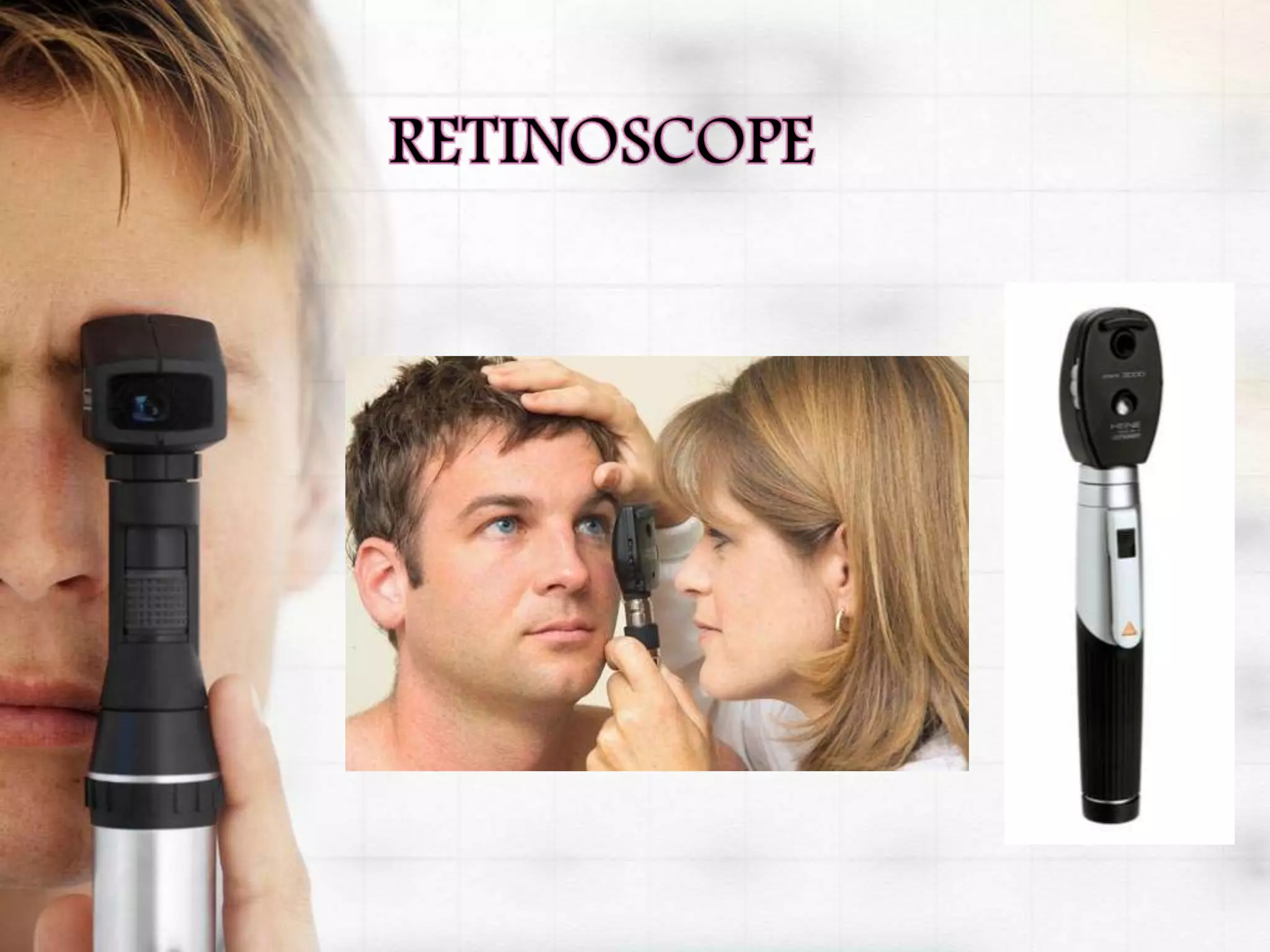
• Retinoscopy
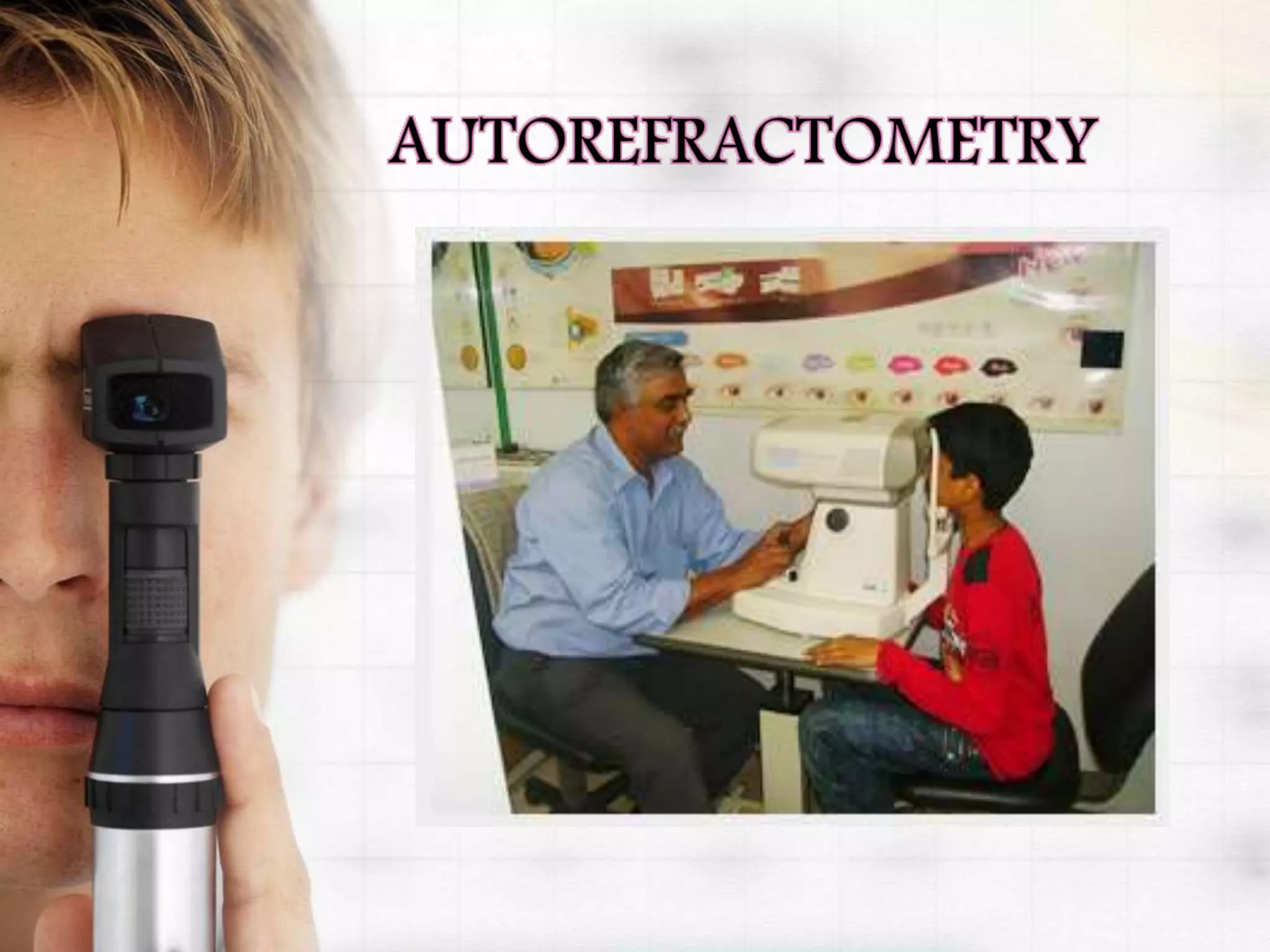
• Autorefractometry
Refractive Errors
Refractive Errors
Refractive Errors
Refractive Errors
Refractive Errors

Refractive Errors

  • 1.
    Surendran.S.R M.Sc(N) I Year Dept.of Medical Surgical Nursing KGNC
  • 2.
    The eye ismade up of 3 main parts: • Eyeball • Orbit (eye socket) • Accessory (adnexal) structures
  • 3.
    • Outer Layer •Sclera • Cornea • Middle Layer • Iris • Choroid • Ciliary Body • Inner Layer • Retina • Lens
  • 5.
    • The lensis a transparent structure in the inner part of the eye, which lies directly behind the cornea and iris. • The lens changes shape to allow the eye to focus on objects. • The lens focuses light rays on the retina.
  • 11.
    Emmetropia (optically normaleye) can be defined as a state of refraction, when the parallel rays of light coming from infinity are focussed at the sensitive layer of retina with the accommodation being at rest.
  • 12.
    Ametropia (a conditionof refractive error), is defined as a state of refraction, when the parallel rays of light coming from infinity, (with accommodation at rest), are focussed either in front or behind the sensitive layer of retina.
  • 14.
    Myopia or short-sightednessis a type of refractive error in which parallel rays of light coming from infinity are focussed in front of the retina when accommodation is at rest
  • 17.
    • Axial myopiaresults from increase in the antero-posterior length of the eyeball. • Curvatural myopia occurs due to increased curvature of the cornea, lens or both. • Index myopia results from increase in the refractive index of the crystalline lens associated with nuclear sclerosis.
  • 18.
    Congenital Myopia SimpleMyopia Degenerative Myopia
  • 19.
    Congenital Myopia ispresent since birth. Usually the error is of about -8 to -10 diopters, which mostly remains constant. It may be associated with other ocular congenital anomalies.
  • 20.
    Simple Myopia Itis the commonest variety, which results from normal is starts biological variation in the development of eye. simple myopia starts at school age and very slowly progresses till adult age. Usually the error does not exceed -6 to -8 diopters.
  • 21.
    Pathological Myopia orDegenerative Myopia is a rapidly progressive error resulting in high myopia. (more than -8 D) during early adult life, which is usually associated with degenerative changes in the retina Genetic factors play major role in the etiology of pathological myopia.
  • 22.
    Concave lenses inthe form of glasses or contact lenses.
  • 23.
    • Radial keratotomy. •Photo-refractive keratectomy (PRK). • Laser assisted in situ keratomileusis (LASK).
  • 27.
    Hypermetropia (hyperopia) orlong sightedness is the refractive state of the eye wherein parallel rays of light coming from infinity are focussed behind the retina with accommodation being at rest. Thus the Posterior focal point is behind the retina, which therefore receives a blurred image.
  • 29.
    • Axial hypermetropiais by far the commonest form. It occurs due to short axial length of the eyeball. • Curvatural hypermetropia occurs due to comparatively flatter curvature of the cornea or lens or both. • Index hypermetropia results due to change in the refractive index of the lens. • Absence of the lens (aphakia) either congenital or acquired (following surgical removal of the lens) leads to high hypermetropia.
  • 30.
    • Tiredness OfEyes • Frontal Or Frontotemporal Headache, • Watering • Mild Photophobia ASTHENOPIC SYMPTOMS
  • 31.
    • Appropriate convexlenses in the form of spectacles or contact lenses
  • 32.
  • 33.
    Astigmatism is atype of refractive error wherein the refraction varies in the different meridia of the eye Consequently, the ray of light entering in the eye cannot converge to a point focus but form focal lines.
  • 35.
    • Usually occursdue to unequal curvature of cornea. • Rarely it may occur due to subluxation abnormalities of the curvature of the lens.
  • 36.
  • 37.
    • Cylindrical lensesin the form of spectacles or contact lenses.
  • 38.
  • 39.
    Presbyopia (eyesight ofold age) is not an error of refraction, but a condition of physiological insufficiency of accommodation, leading to failing vision for near. It usually occurs after 40 years of age.
  • 41.
    Decrease in theaccommodative power of crystalline lens with increasing age, leading to presbyopia occur due to: • Decrease in the elasticity and plasticity of the crystalline lens • Age related decrease in the power of ciliary muscle.
  • 42.
    • Typically patientcomplains of slowly progressive difficulty in focussing the near objects, whilst distant vision is not affected.
  • 43.
    • Convex glassesof an appropriate power
  • 45.
    • History Collection •Physical Examination • Snellen’s Chart • Ophthalmoscopy • Retinoscopy • Autorefractometry