BIOMOLECUL
Content
Enzyme Catalysed Organic Redox Reactions:
Examples of Enzymes catalyzing Oxidation
Reactions
Examples of Enzymes catalyzing Reduction
Reactions
Reactions takes place in our body all the time.
We need enzymes as the enzyme would make the
reaction go faster
Enzymes versus without enzymes
Examples of Enzymes catalyzing
Oxidation Reactions
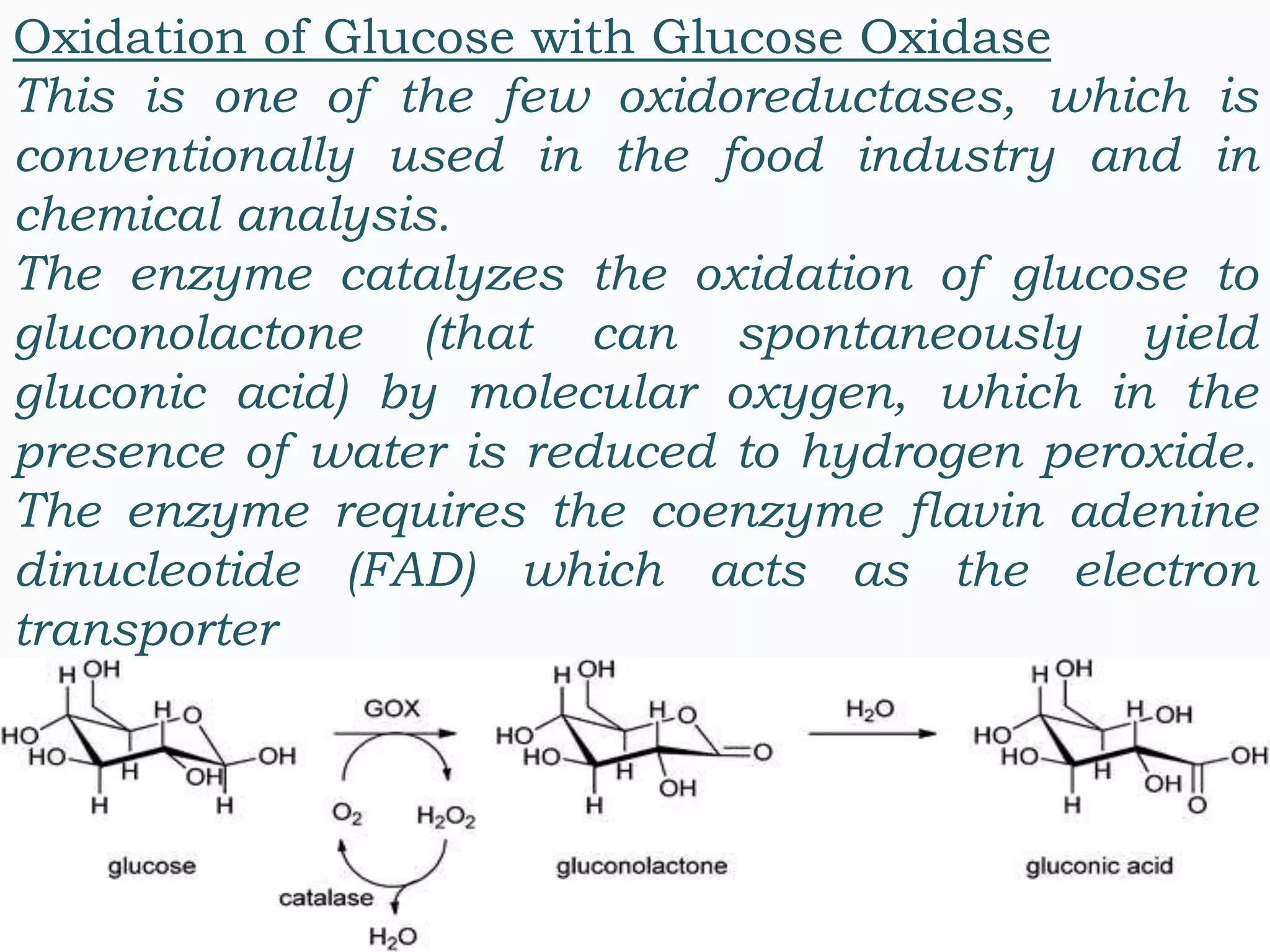
Oxidation of Glucose with Glucose Oxidase
This is one of the few oxidoreductases, which is
conventionally used in the food industry and in
chemical analysis.
The enzyme catalyzes the oxidation of glucose to
gluconolactone (that can spontaneously yield
gluconic acid) by molecular oxygen, which in the
presence of water is reduced to hydrogen peroxide.
The enzyme requires the coenzyme flavin adenine
dinucleotide (FAD) which acts as the electron
transporter
Oxidation of carbohydrate with Pyranose oxidase
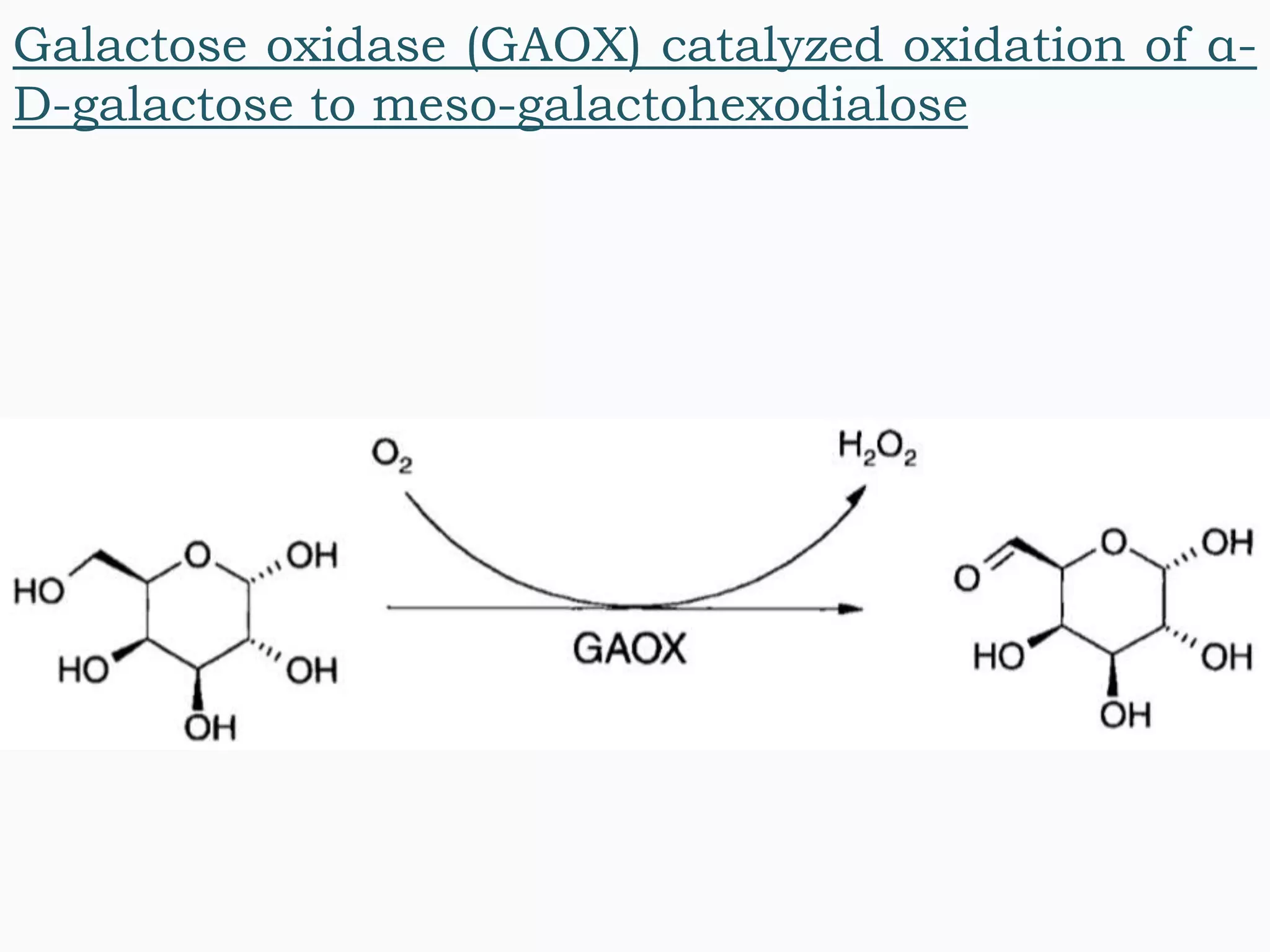
Galactose oxidase (GAOX) catalyzed oxidation of α-
D-galactose to meso-galactohexodialose
Alcohol dehydrogenase catalyzes an oxidation: the
removal of two hydrogen atoms from an alcohol
molecule. The oxidizing agent is called
nicotinamide adenine dinucleotide (NAD+)
Examples of Enzymes catalyzing
Reduction Reactions
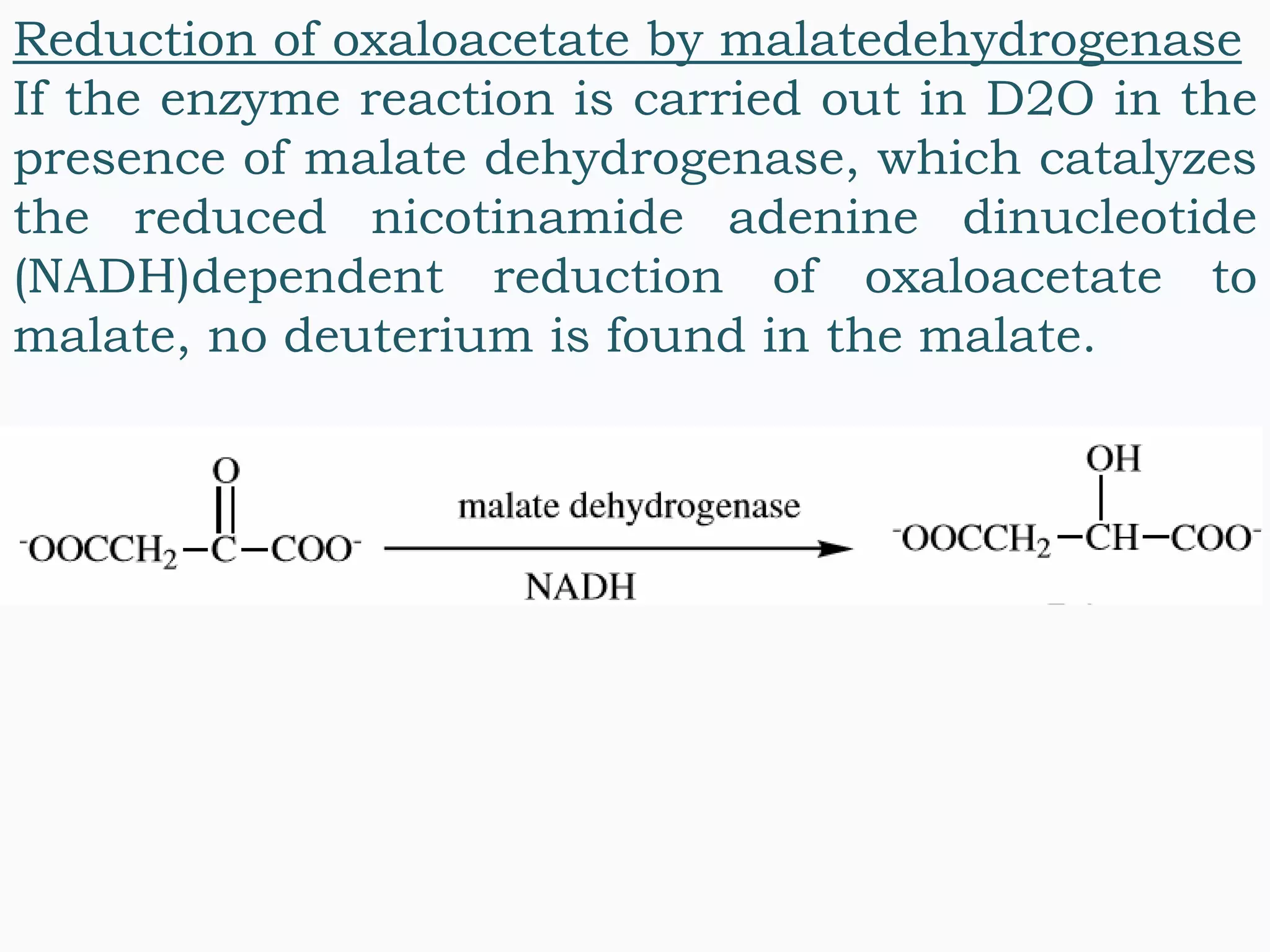
Reduction of oxaloacetate by malatedehydrogenase
If the enzyme reaction is carried out in D2O in the
presence of malate dehydrogenase, which catalyzes
the reduced nicotinamide adenine dinucleotide
(NADH)dependent reduction of oxaloacetate to
malate, no deuterium is found in the malate.
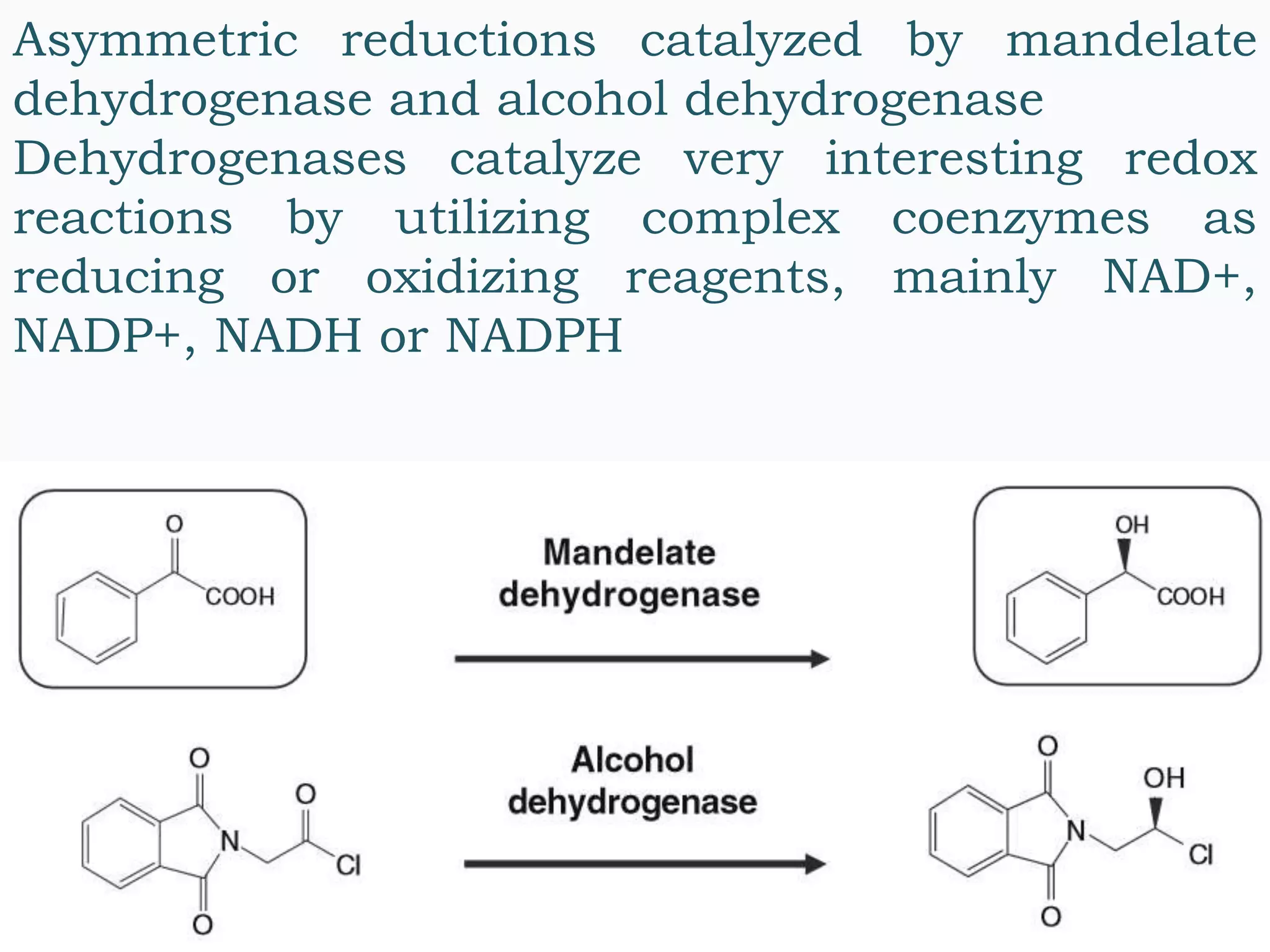
Asymmetric reductions catalyzed by mandelate
dehydrogenase and alcohol dehydrogenase
Dehydrogenases catalyze very interesting redox
reactions by utilizing complex coenzymes as
reducing or oxidizing reagents, mainly NAD+,
NADP+, NADH or NADPH
A dehydrogenase can also be used for the
transformation of an a-keto acid to an amine.
The chiral intermediate for an antihypertensive
drug was prepared by reduction of an α-keto acid
with glutamate dehydrogenase from beef liver.
The cofactor NADH was regenerated using glucose
dehydrogenase from Bacillus sp.
Horse liver alcohol dehydrogenase-catalyzed
reduction of a-haloacetophenones
In the presence of horse liver alcohol
dehydrogenase (HLADH), however, only a trace of
acetophenone was formed. The major products
from a series of α-haloacetophenones were
optically active 1-phenyl-2-haloethanol, suggesting
an enzyme-catalyzed hydride reduction of the
ketone.
References
David E. Metzler. Biochemistry the chemical
reaction of living cells: 2nd edition
Richard B. Silverman. The organic chemistry of
enzyme-catalyzed reactions. Academic Press,
Publishers.
Andr´es Illanes. Enzyme Biocatalysis: Principles
and Applications. Springer, Publishers.
K. Drauz and H. Waldmann. Enzyme Catalysis in
Organic Synthesis: A comprehensive handbook, 2nd
Edition. Wiley-VCH, Publishers.

enzyme catalyzed reactions

  • 1.
  • 2.
    Content Enzyme Catalysed OrganicRedox Reactions: Examples of Enzymes catalyzing Oxidation Reactions Examples of Enzymes catalyzing Reduction Reactions
  • 3.
    Reactions takes placein our body all the time. We need enzymes as the enzyme would make the reaction go faster Enzymes versus without enzymes
  • 4.
    Examples of Enzymescatalyzing Oxidation Reactions
  • 5.
    Oxidation of Glucosewith Glucose Oxidase This is one of the few oxidoreductases, which is conventionally used in the food industry and in chemical analysis. The enzyme catalyzes the oxidation of glucose to gluconolactone (that can spontaneously yield gluconic acid) by molecular oxygen, which in the presence of water is reduced to hydrogen peroxide. The enzyme requires the coenzyme flavin adenine dinucleotide (FAD) which acts as the electron transporter
  • 6.
    Oxidation of carbohydratewith Pyranose oxidase
  • 7.
    Galactose oxidase (GAOX)catalyzed oxidation of α- D-galactose to meso-galactohexodialose
  • 8.
    Alcohol dehydrogenase catalyzesan oxidation: the removal of two hydrogen atoms from an alcohol molecule. The oxidizing agent is called nicotinamide adenine dinucleotide (NAD+)
  • 9.
    Examples of Enzymescatalyzing Reduction Reactions
  • 10.
    Reduction of oxaloacetateby malatedehydrogenase If the enzyme reaction is carried out in D2O in the presence of malate dehydrogenase, which catalyzes the reduced nicotinamide adenine dinucleotide (NADH)dependent reduction of oxaloacetate to malate, no deuterium is found in the malate.
  • 11.
    Asymmetric reductions catalyzedby mandelate dehydrogenase and alcohol dehydrogenase Dehydrogenases catalyze very interesting redox reactions by utilizing complex coenzymes as reducing or oxidizing reagents, mainly NAD+, NADP+, NADH or NADPH
  • 12.
    A dehydrogenase canalso be used for the transformation of an a-keto acid to an amine. The chiral intermediate for an antihypertensive drug was prepared by reduction of an α-keto acid with glutamate dehydrogenase from beef liver. The cofactor NADH was regenerated using glucose dehydrogenase from Bacillus sp.
  • 13.
    Horse liver alcoholdehydrogenase-catalyzed reduction of a-haloacetophenones In the presence of horse liver alcohol dehydrogenase (HLADH), however, only a trace of acetophenone was formed. The major products from a series of α-haloacetophenones were optically active 1-phenyl-2-haloethanol, suggesting an enzyme-catalyzed hydride reduction of the ketone.
  • 14.
    References David E. Metzler.Biochemistry the chemical reaction of living cells: 2nd edition Richard B. Silverman. The organic chemistry of enzyme-catalyzed reactions. Academic Press, Publishers. Andr´es Illanes. Enzyme Biocatalysis: Principles and Applications. Springer, Publishers. K. Drauz and H. Waldmann. Enzyme Catalysis in Organic Synthesis: A comprehensive handbook, 2nd Edition. Wiley-VCH, Publishers.