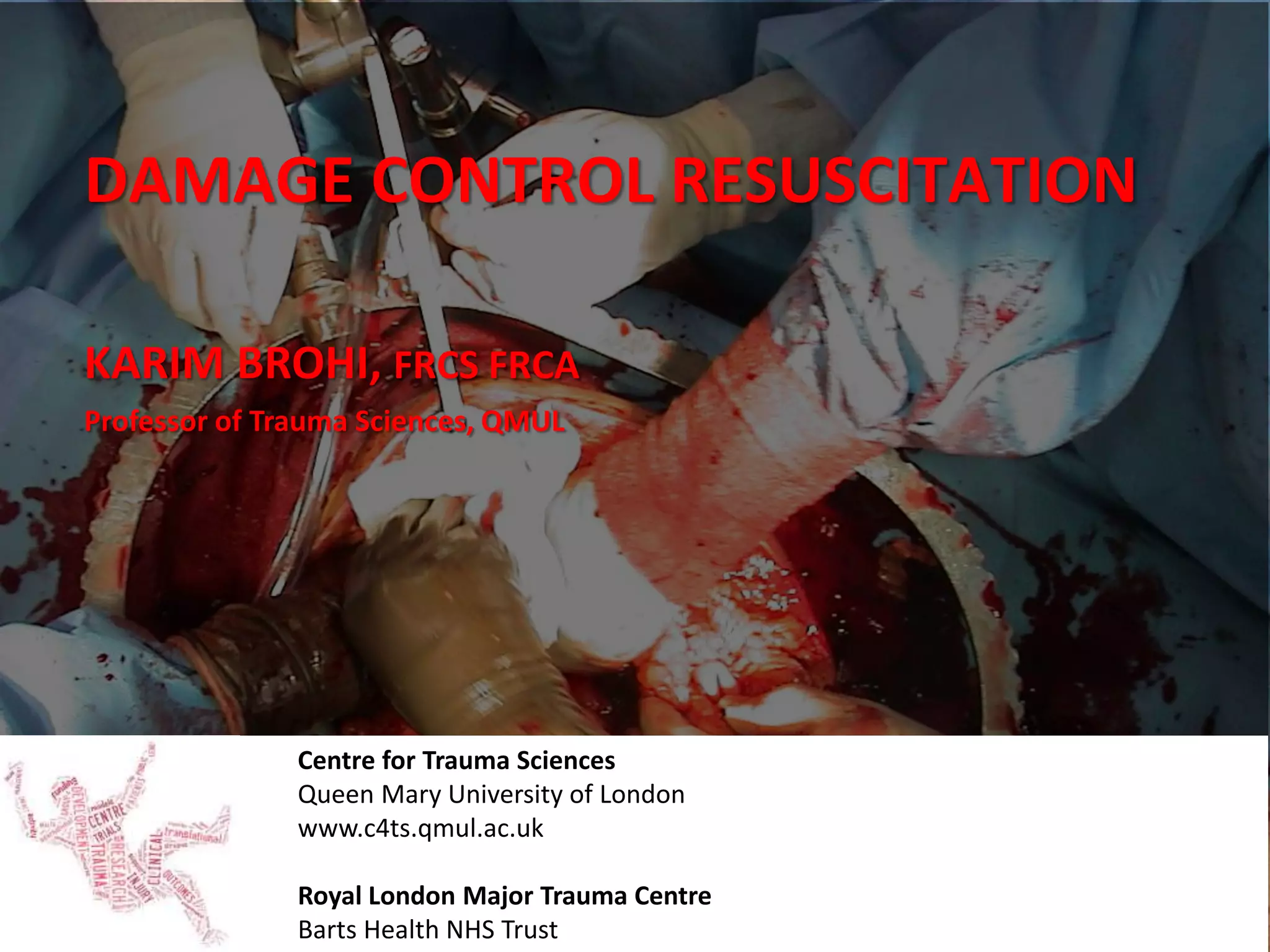
DAMAGE CONTROL RESUSCITATION
Centre for Trauma Sciences
Queen Mary University of London
www.c4ts.qmul.ac.uk
Royal London Major Trauma Centre
Barts Health NHS Trust
KARIM BROHI, FRCS FRCA
Professor of Trauma Sciences, QMUL
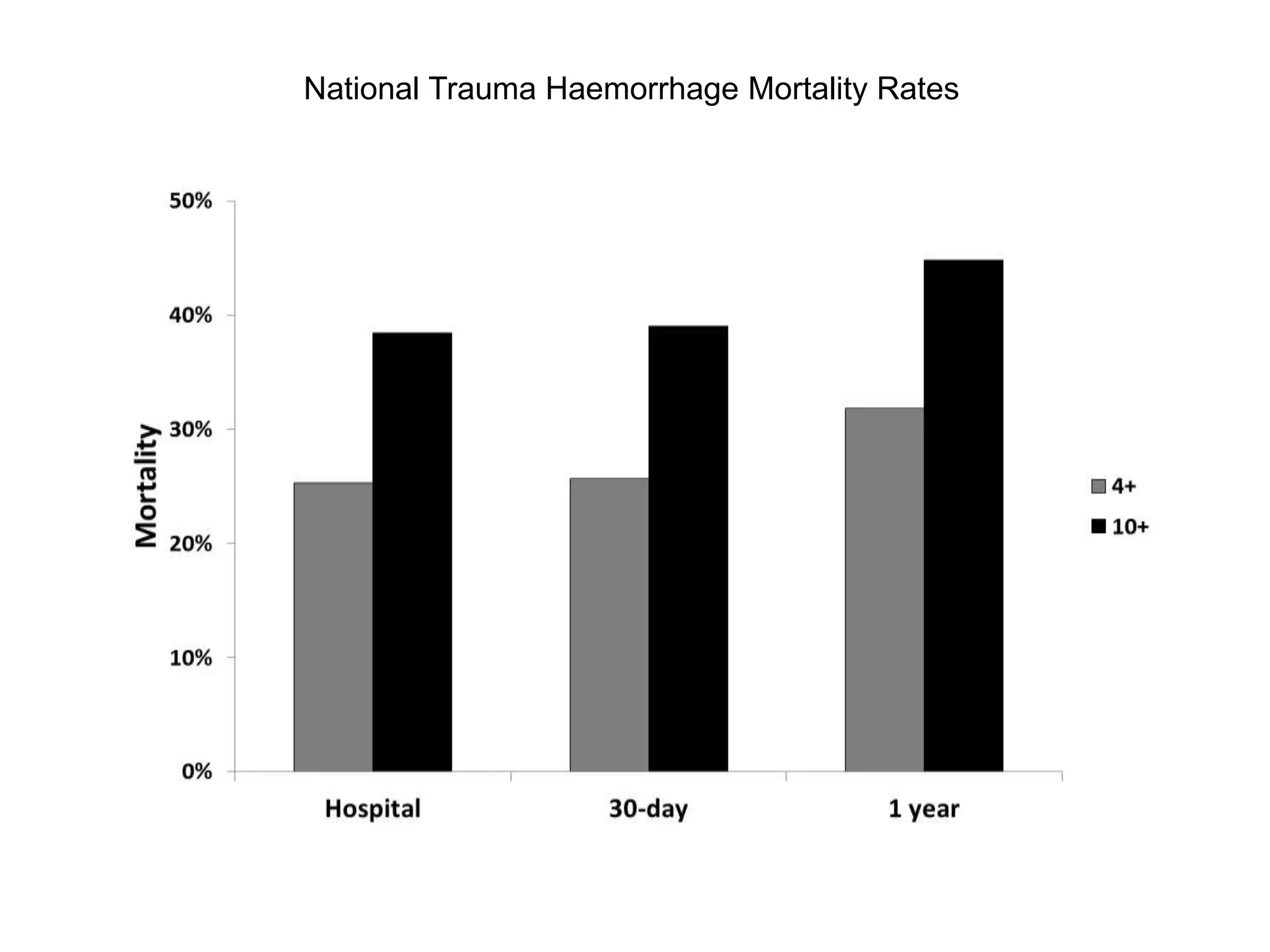
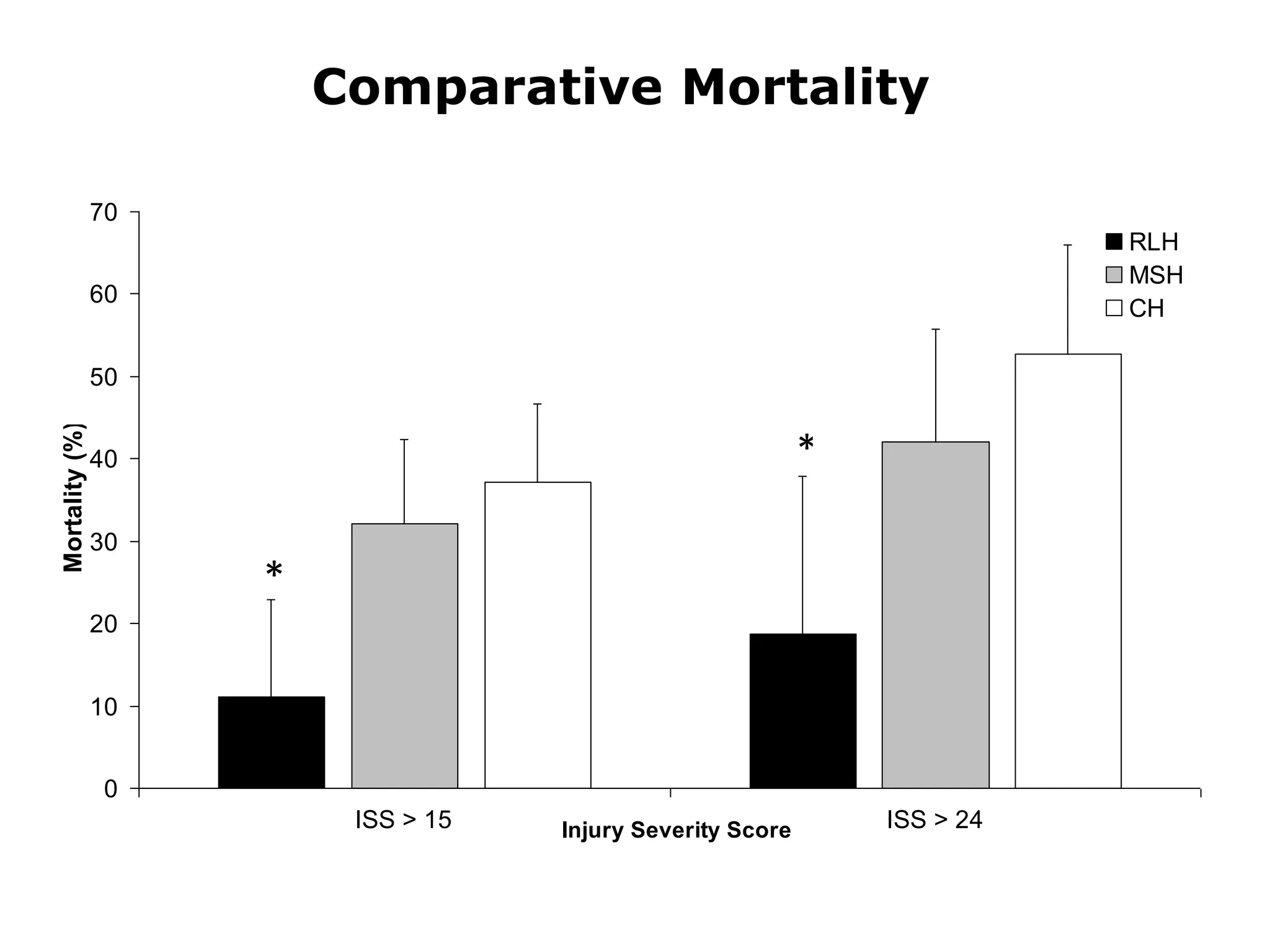
National Trauma Haemorrhage Mortality Rates
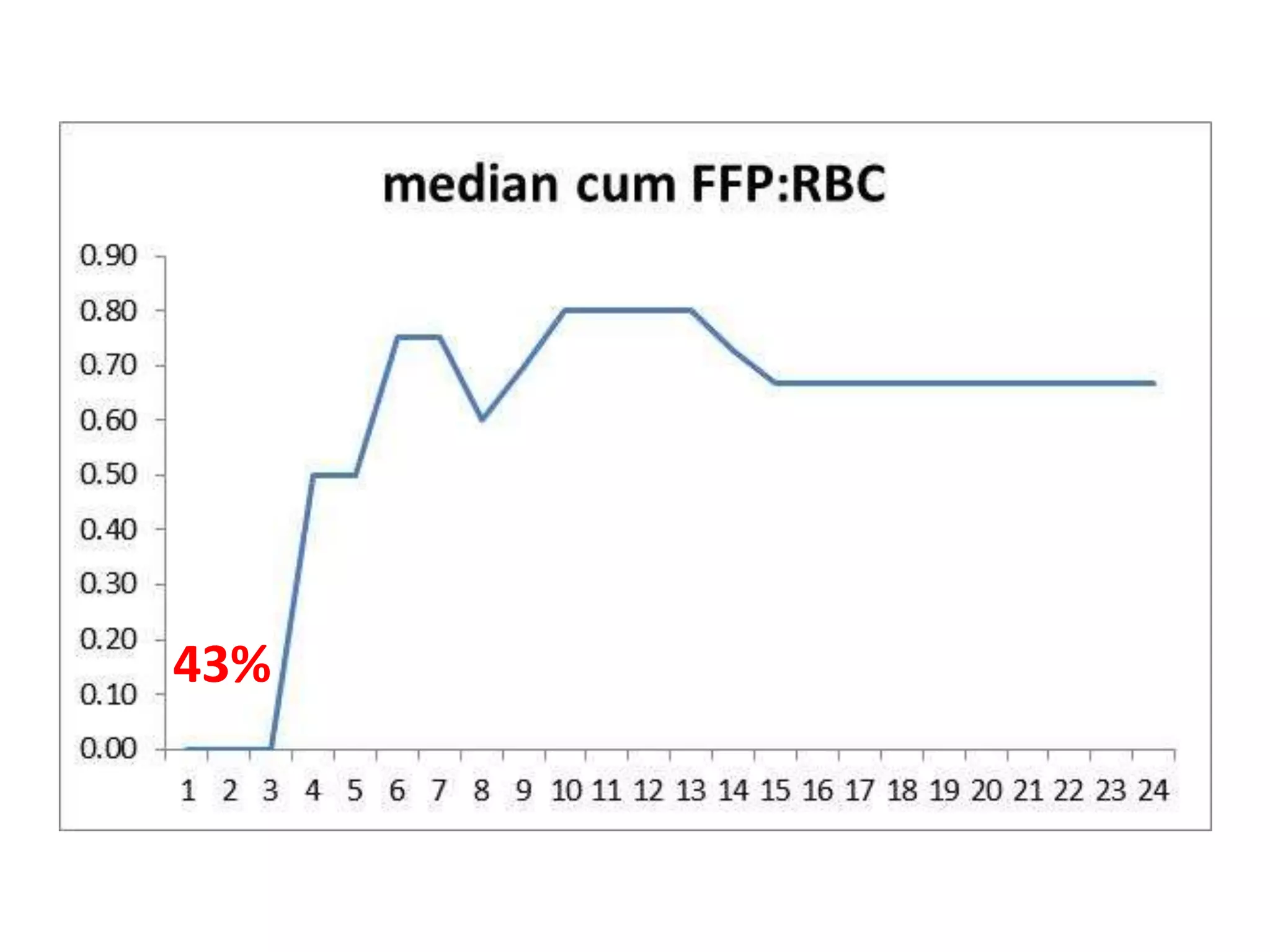
43%
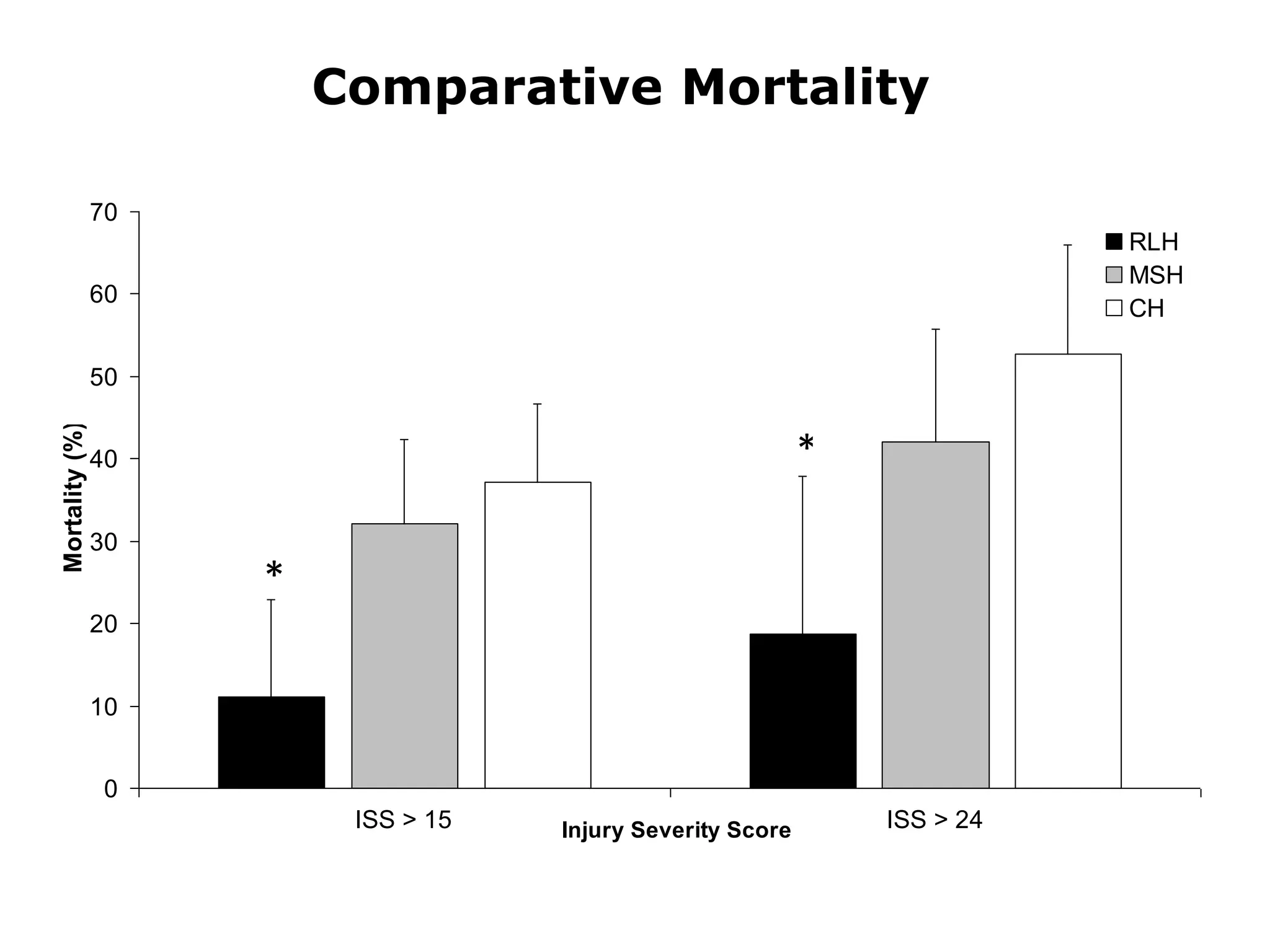
0
10
20
30
40
50
60
70
ISS > 15 ISS > 24Injury Severity Score
Mortality(%)
RLH
MSH
CH
*
*
Comparative Mortality
Damage Control Resuscitation
MAINTAIN HAEMOSTATIC
COMPETENCE
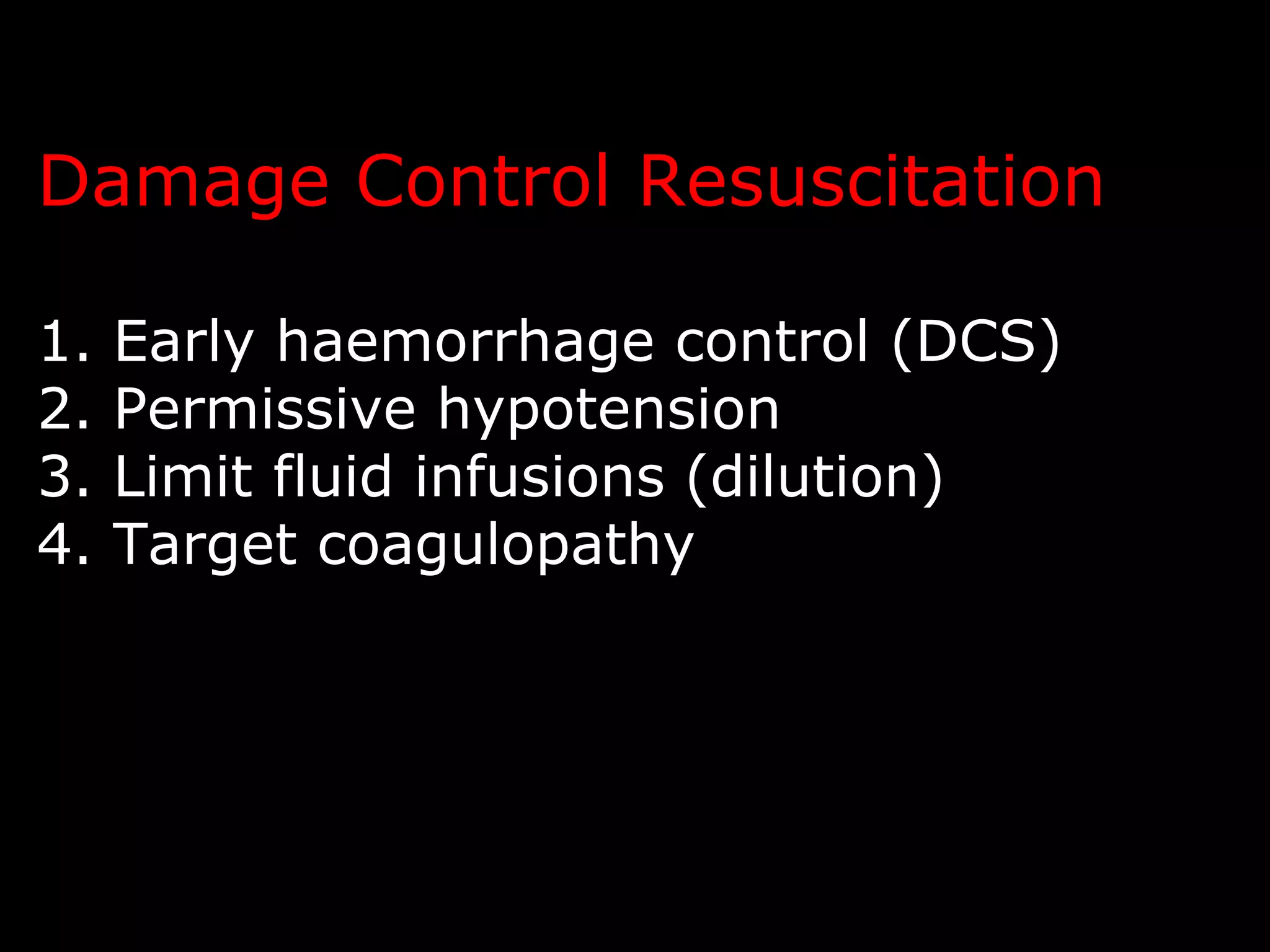
Damage Control Resuscitation
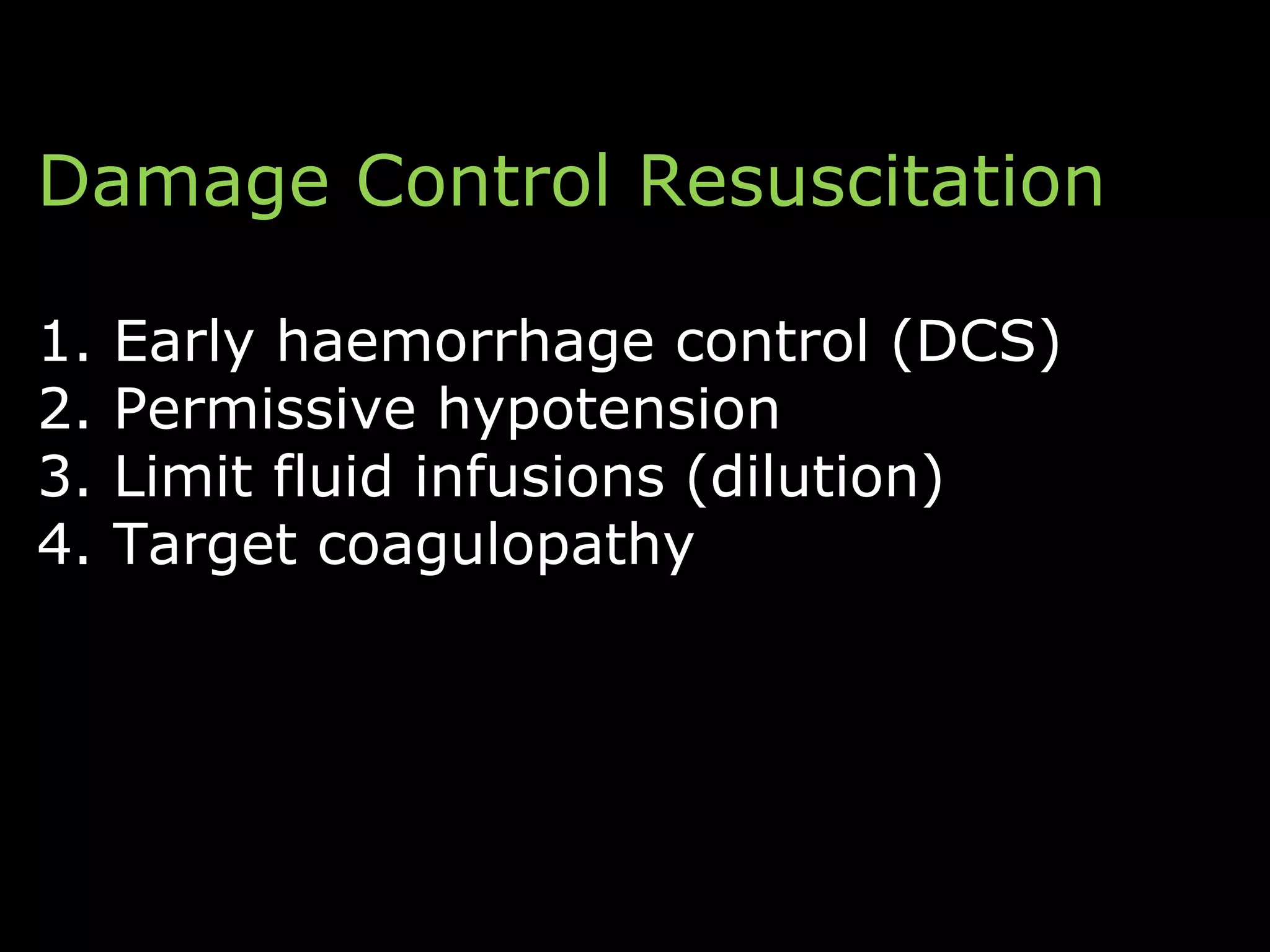
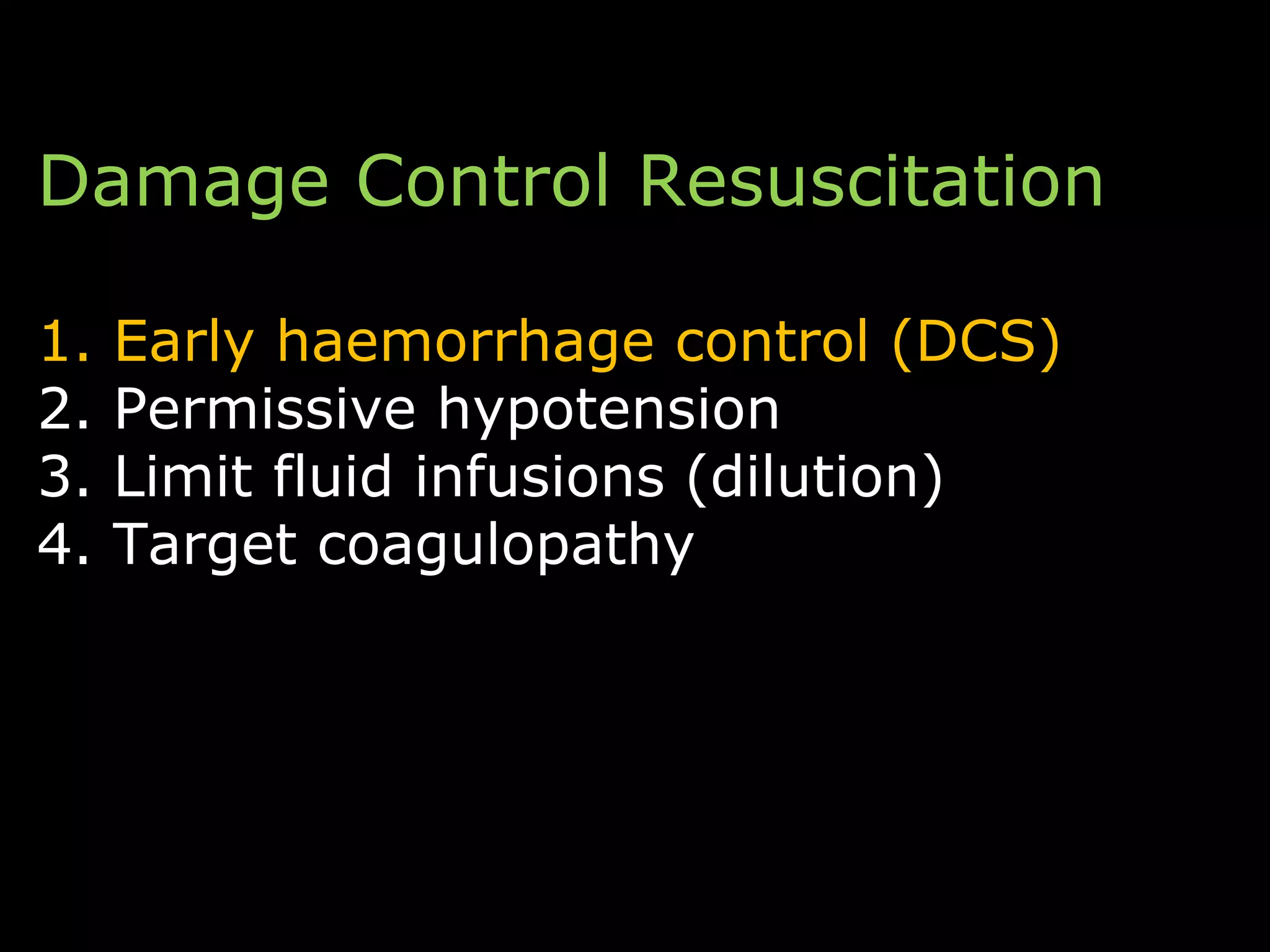
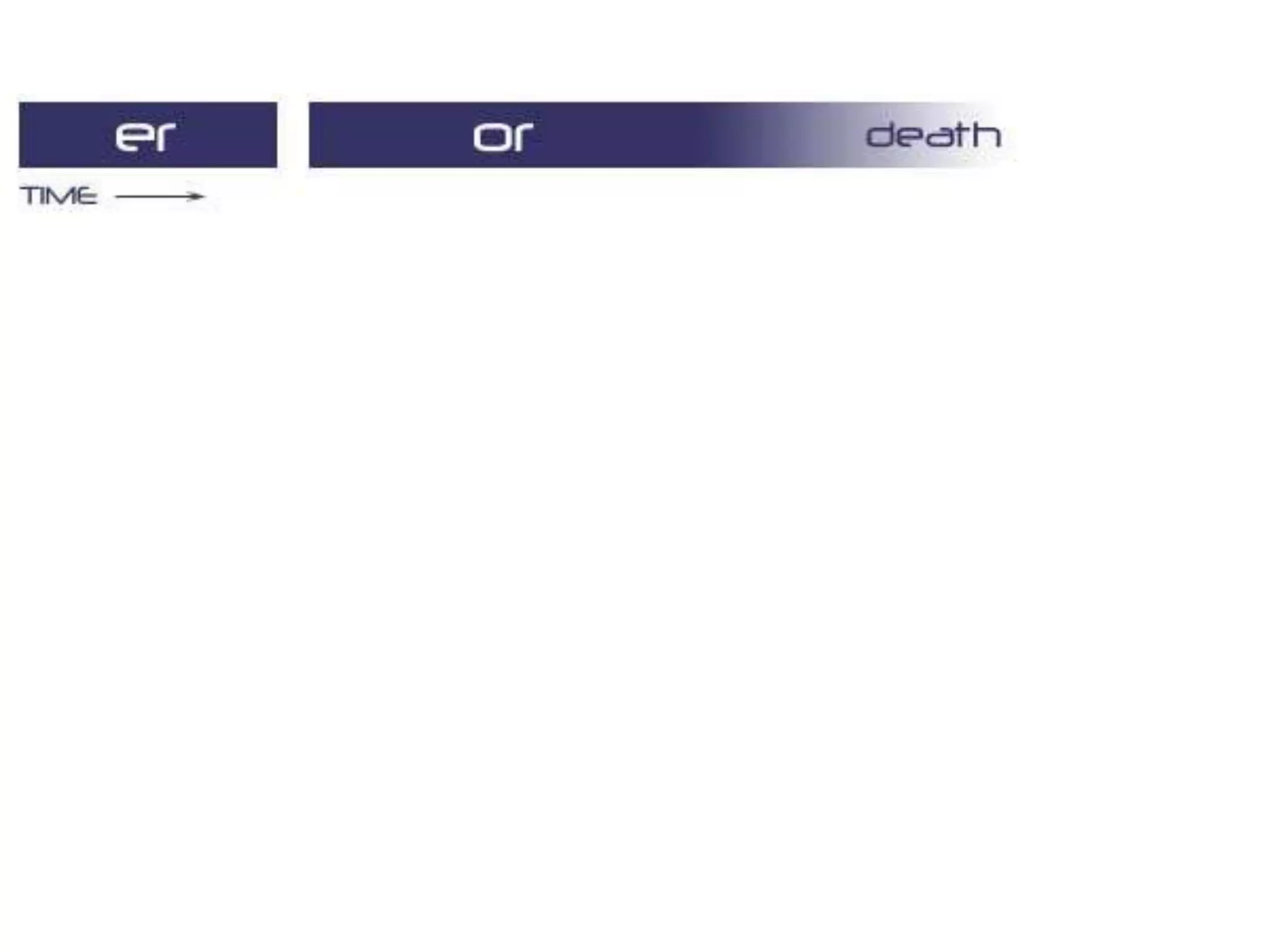
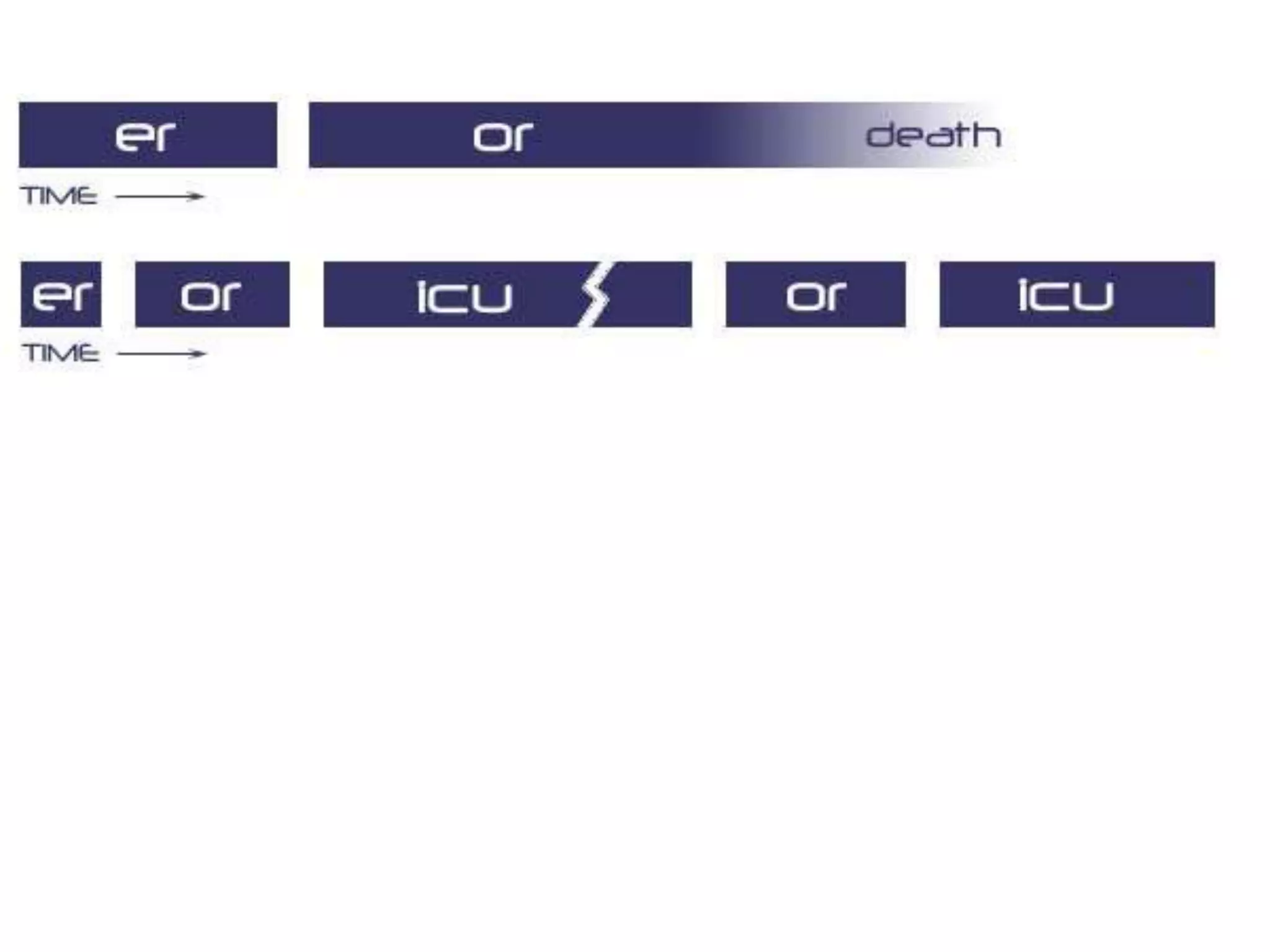
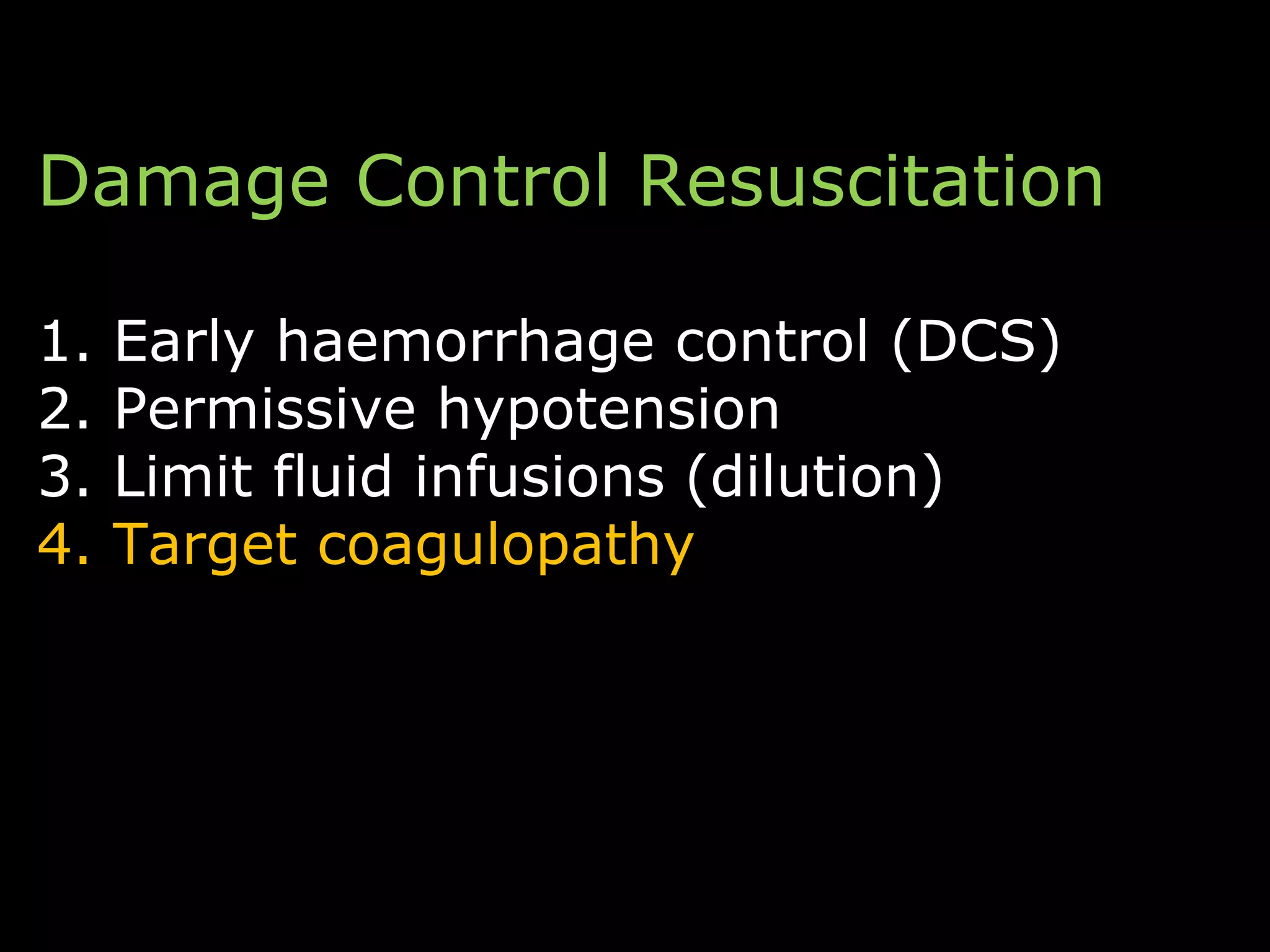
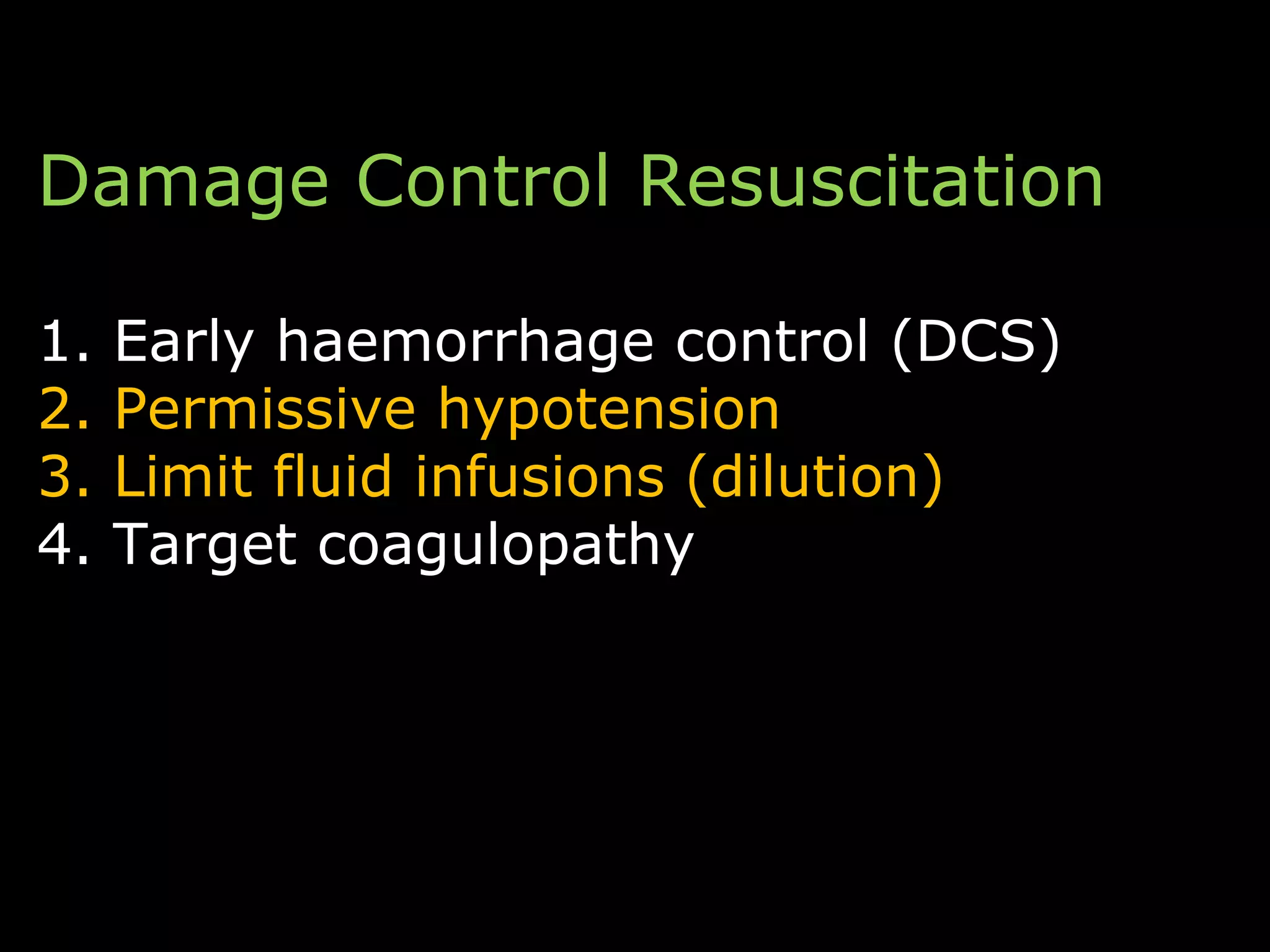
1. Early haemorrhage control (DCS)
2. Permissive hypotension
3. Limit fluid infusions (dilution)
4. Target coagulopathy
Damage Control Resuscitation
1. Early haemorrhage control (DCS)
2. Permissive hypotension
3. Limit fluid infusions (dilution)
4. Target coagulopathy
Trauma patients are more likely to
die from intra-operative metabolic
failure than from a failure to
complete operative repairs.
Trauma patients are more likely to
die from intra-operative metabolic
failure than from a failure to
complete operative repairs.
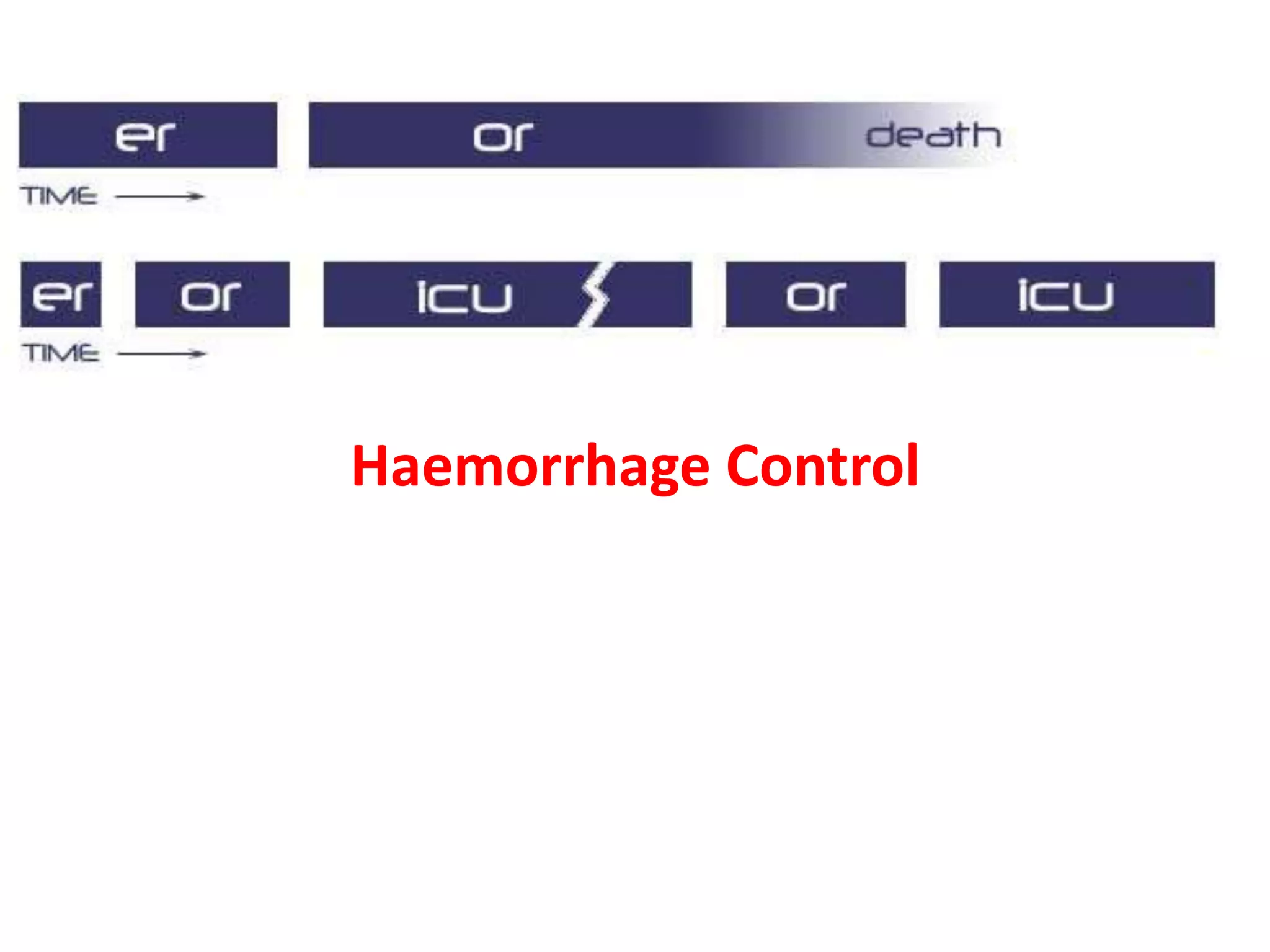
Haemorrhage Control
Trauma patients are more likely to
die from intra-operative metabolic
failure than from a failure to
complete operative repairs.
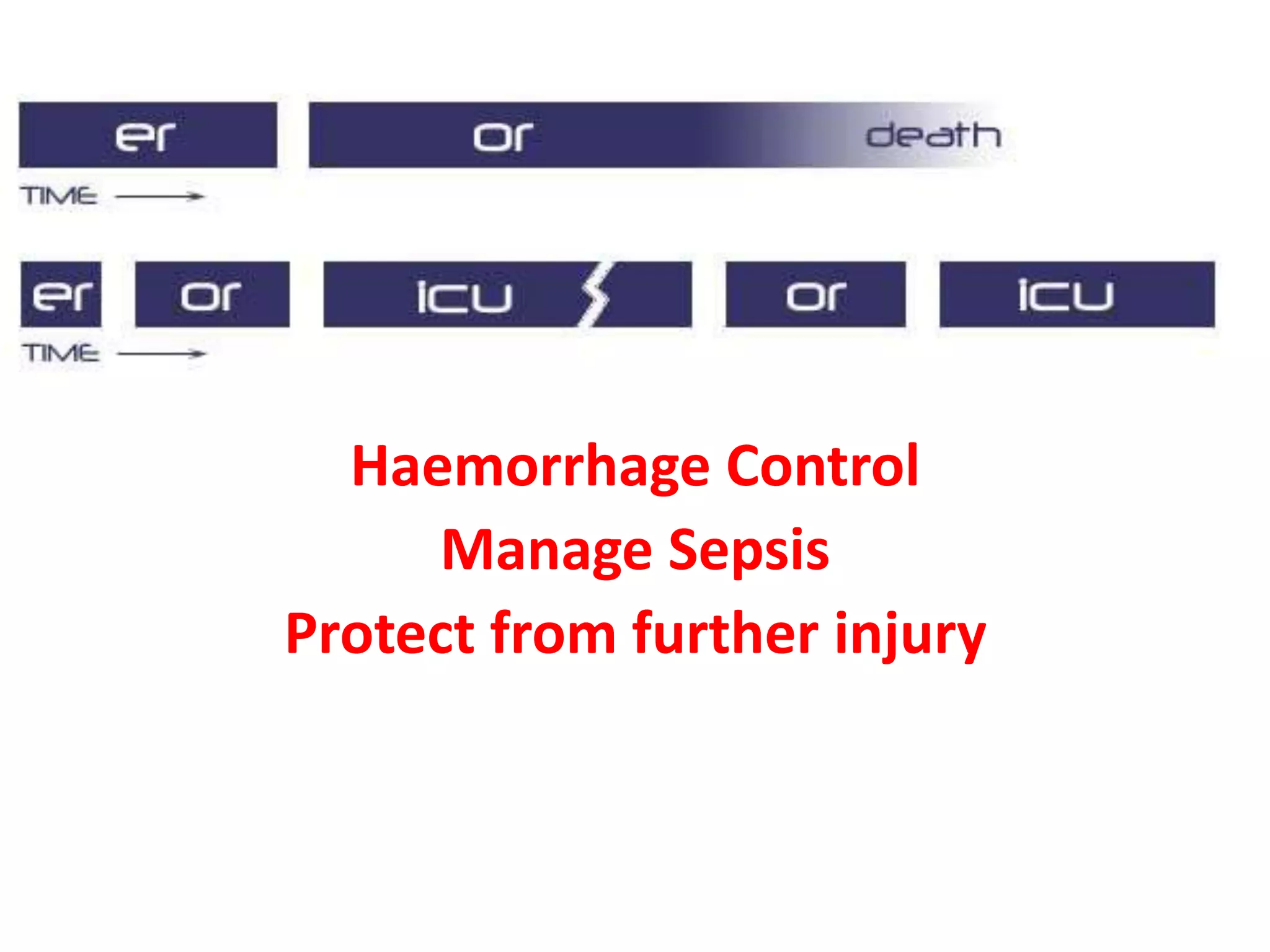
Haemorrhage Control
Manage Sepsis
Protect from further injury
Trauma patients are more likely to
die from intra-operative metabolic
failure than from a failure to
complete operative repairs.
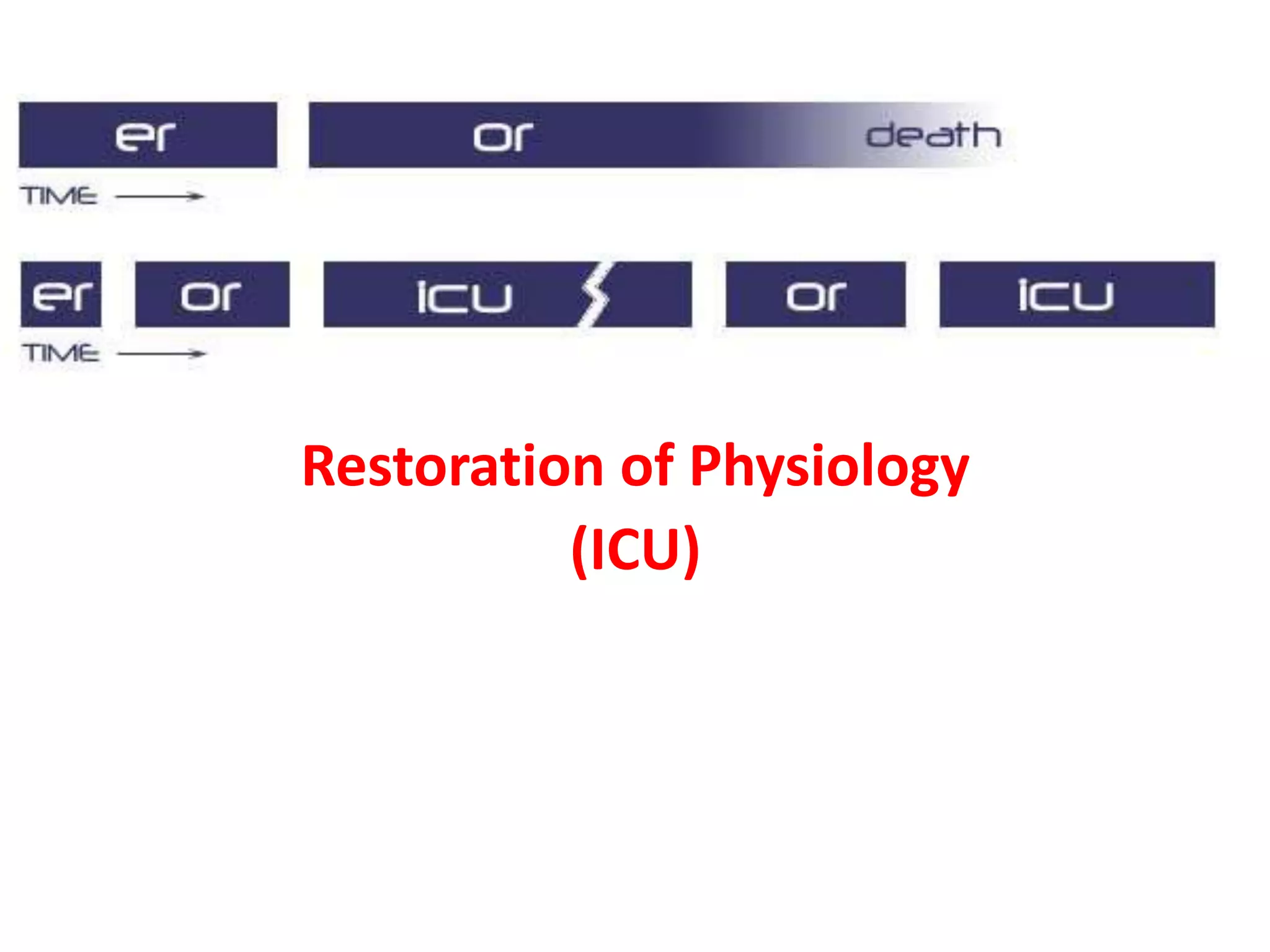
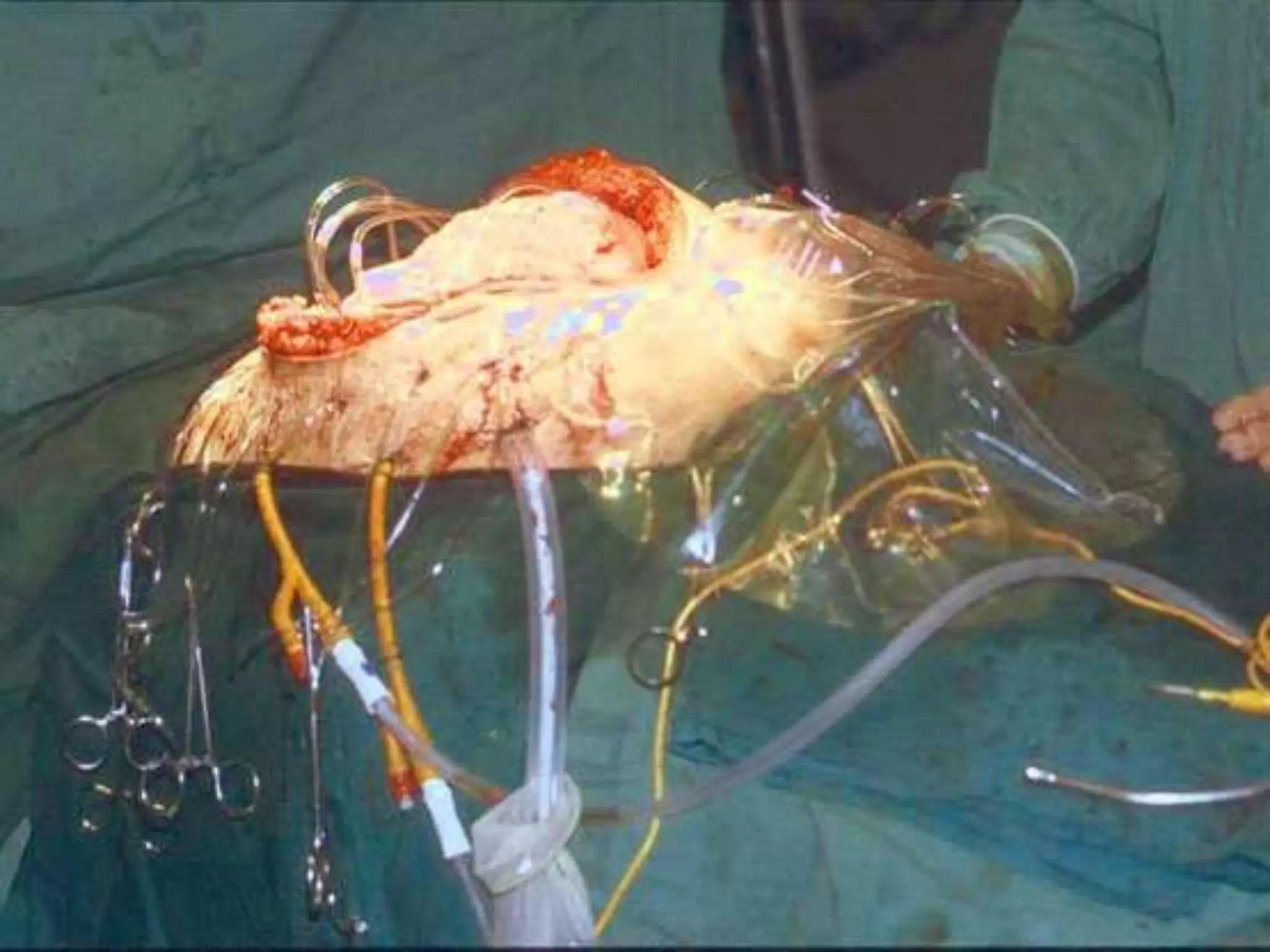
Restoration of Physiology
(ICU)
What is it really?
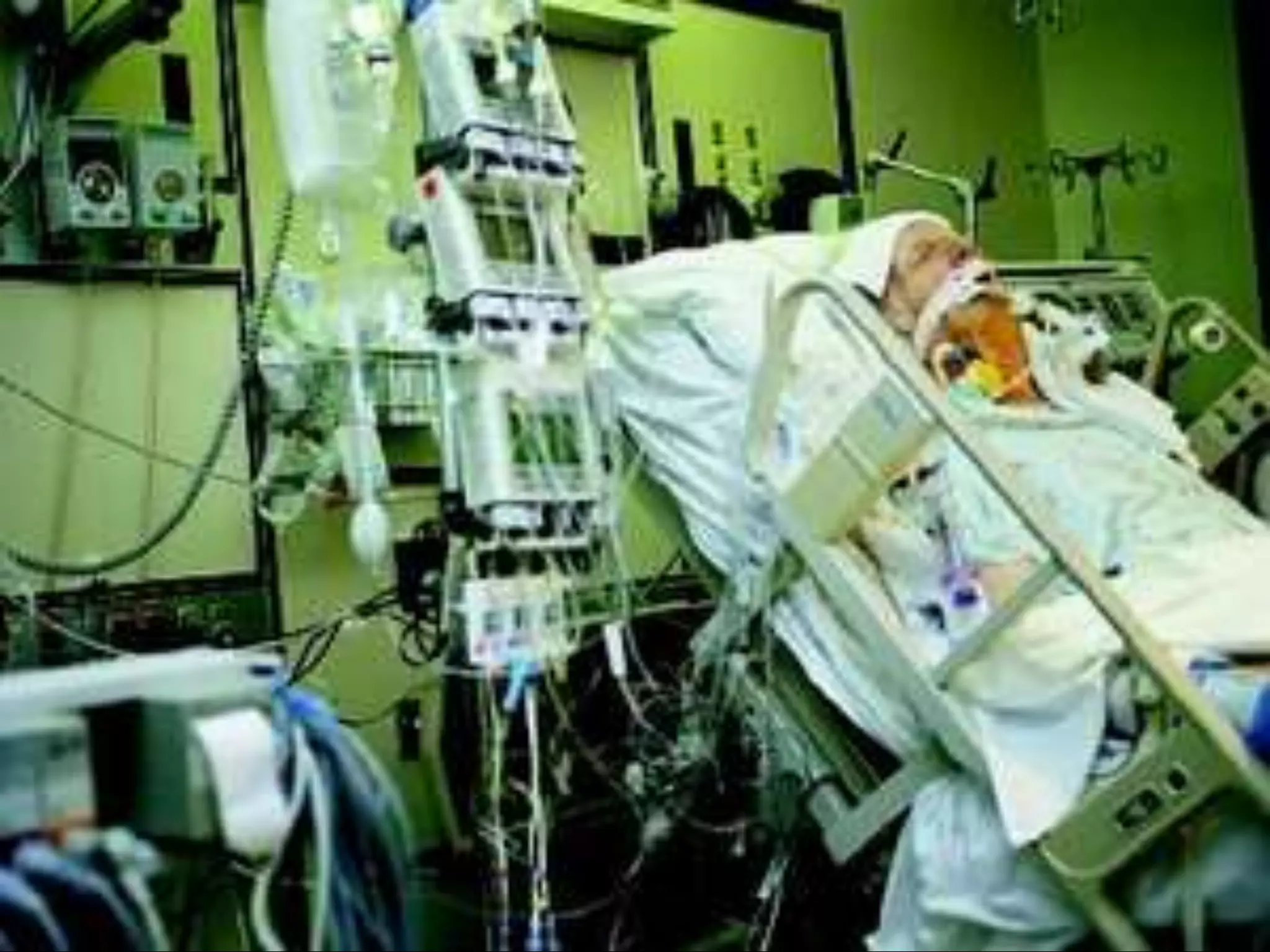
FAILURE:
FAILURE:
to maintain homeostasis
FAILURE:
to protect cells, tissues & organs
FAILURE:
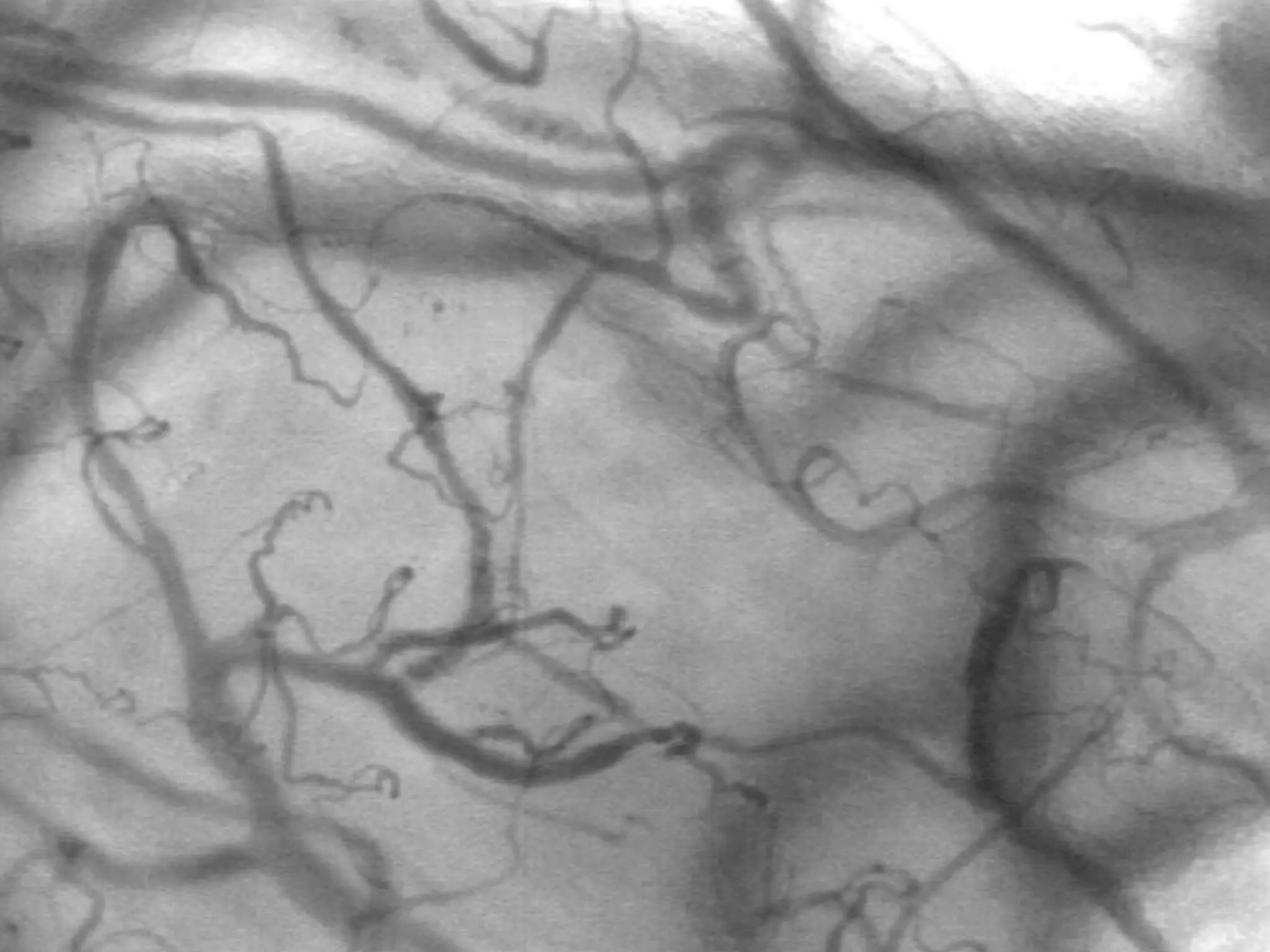
to preserve endothelial integrity
What’s bad about DCS?
Damage Control Resuscitation
1. Early haemorrhage control (DCS)
2. Permissive hypotension
3. Limit fluid infusions (dilution)
4. Target coagulopathy
Damage Control Resuscitation
1. Early haemorrhage control (DCS)
2. Permissive hypotension
3. Limit fluid infusions (dilution)
4. Target coagulopathy
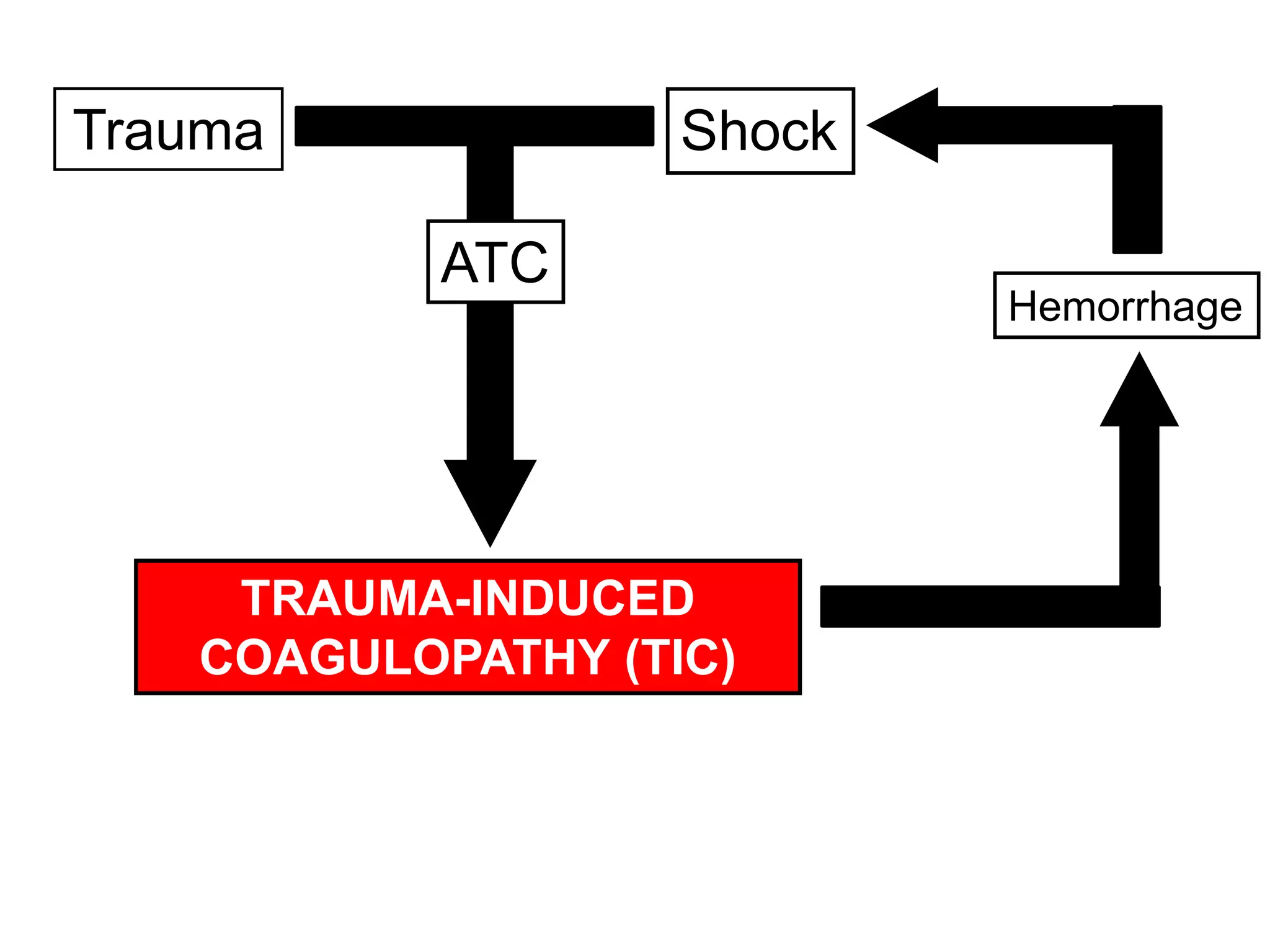
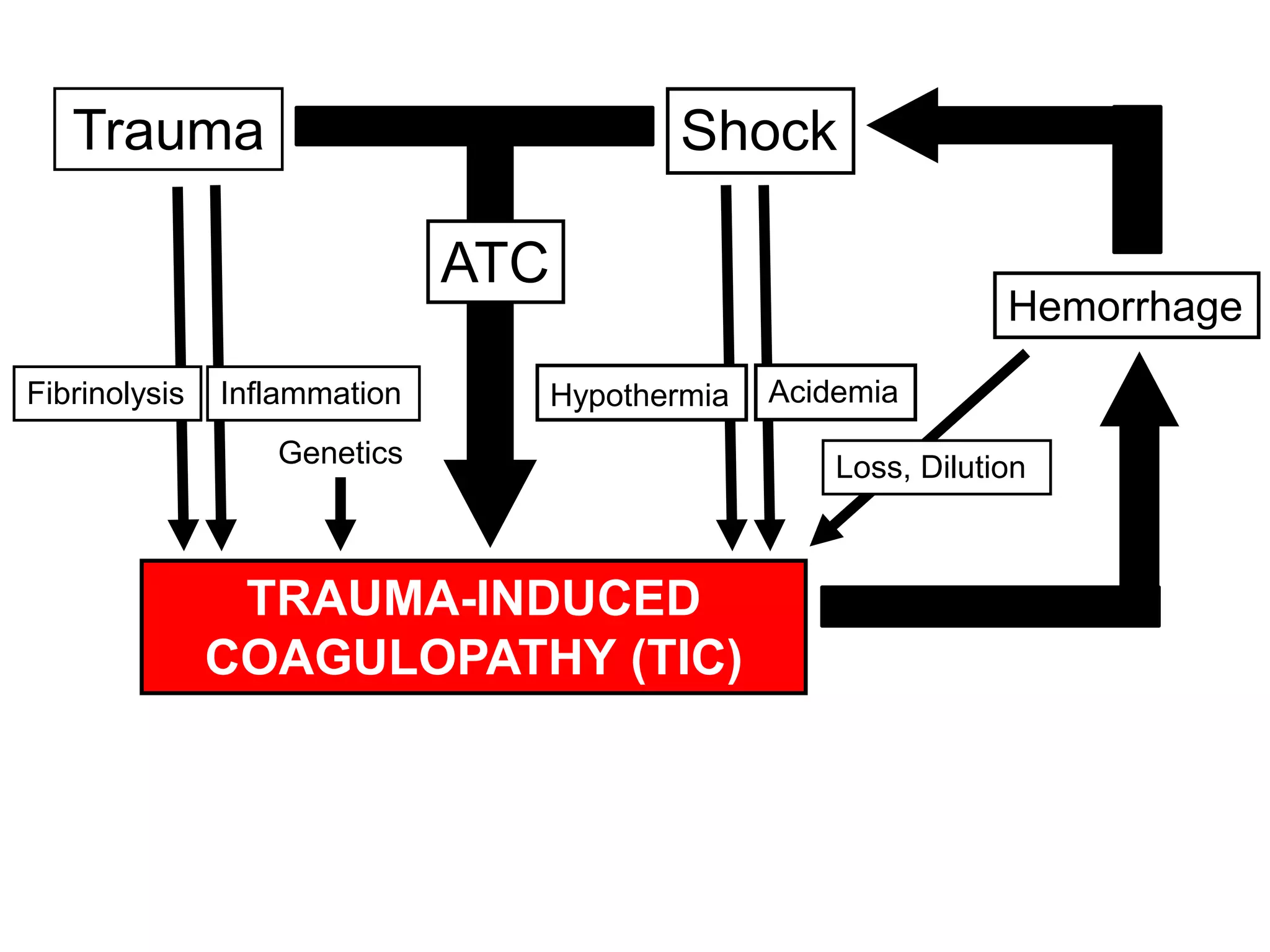
Trauma
Hemorrhage
Shock
ATC
TRAUMA-INDUCED
COAGULOPATHY (TIC)
Trauma
Hemorrhage
Genetics
Shock
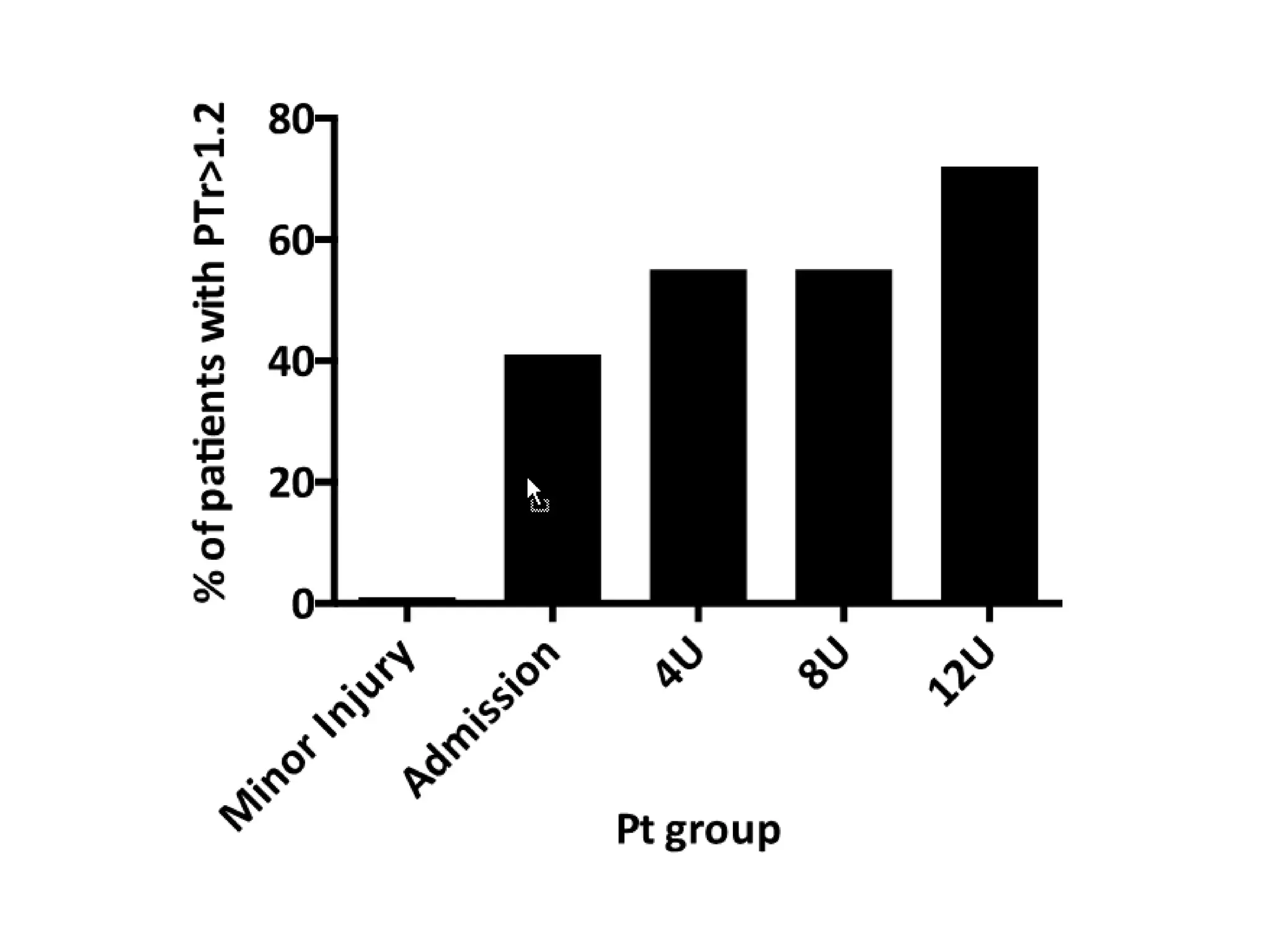
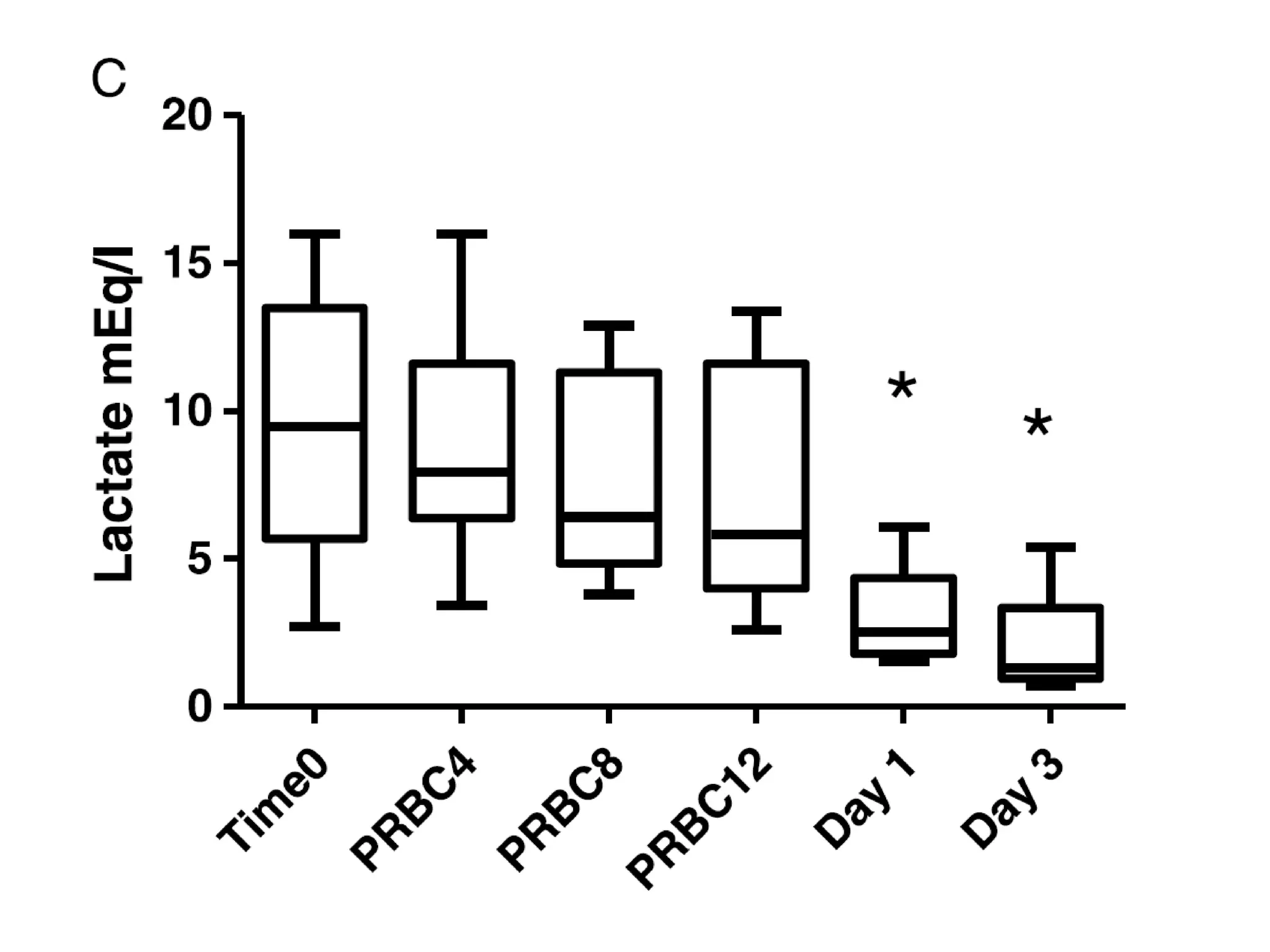
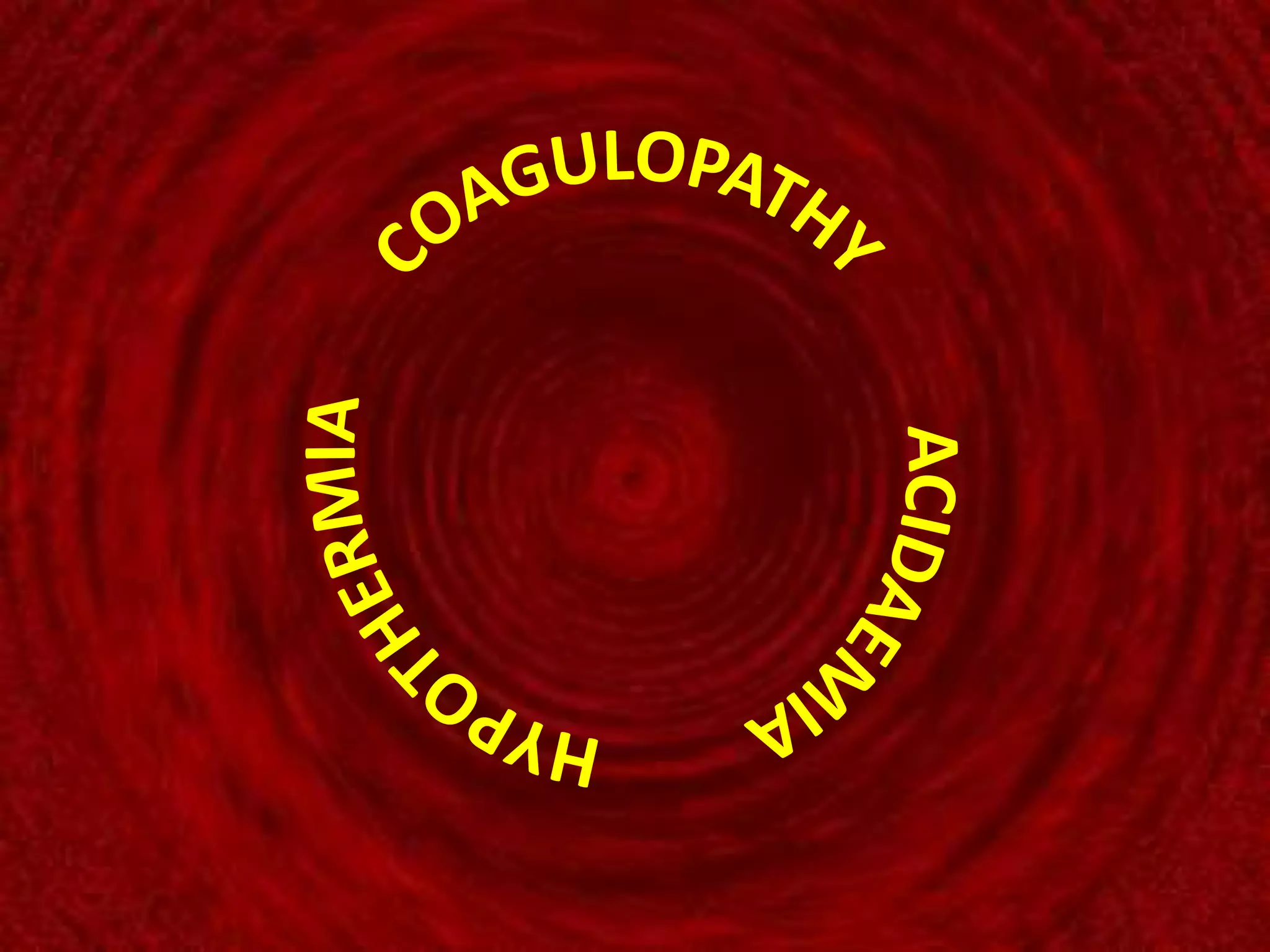
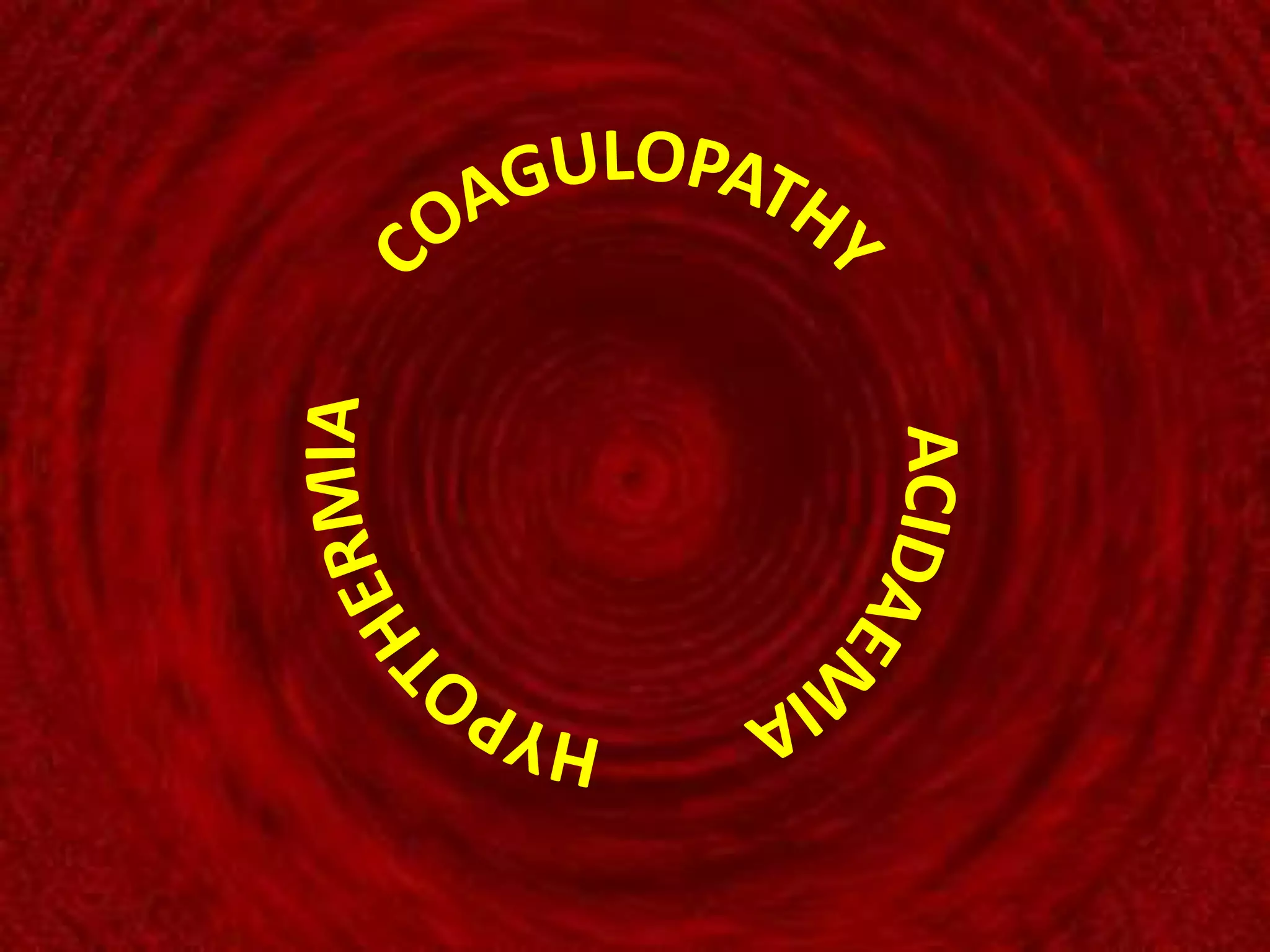
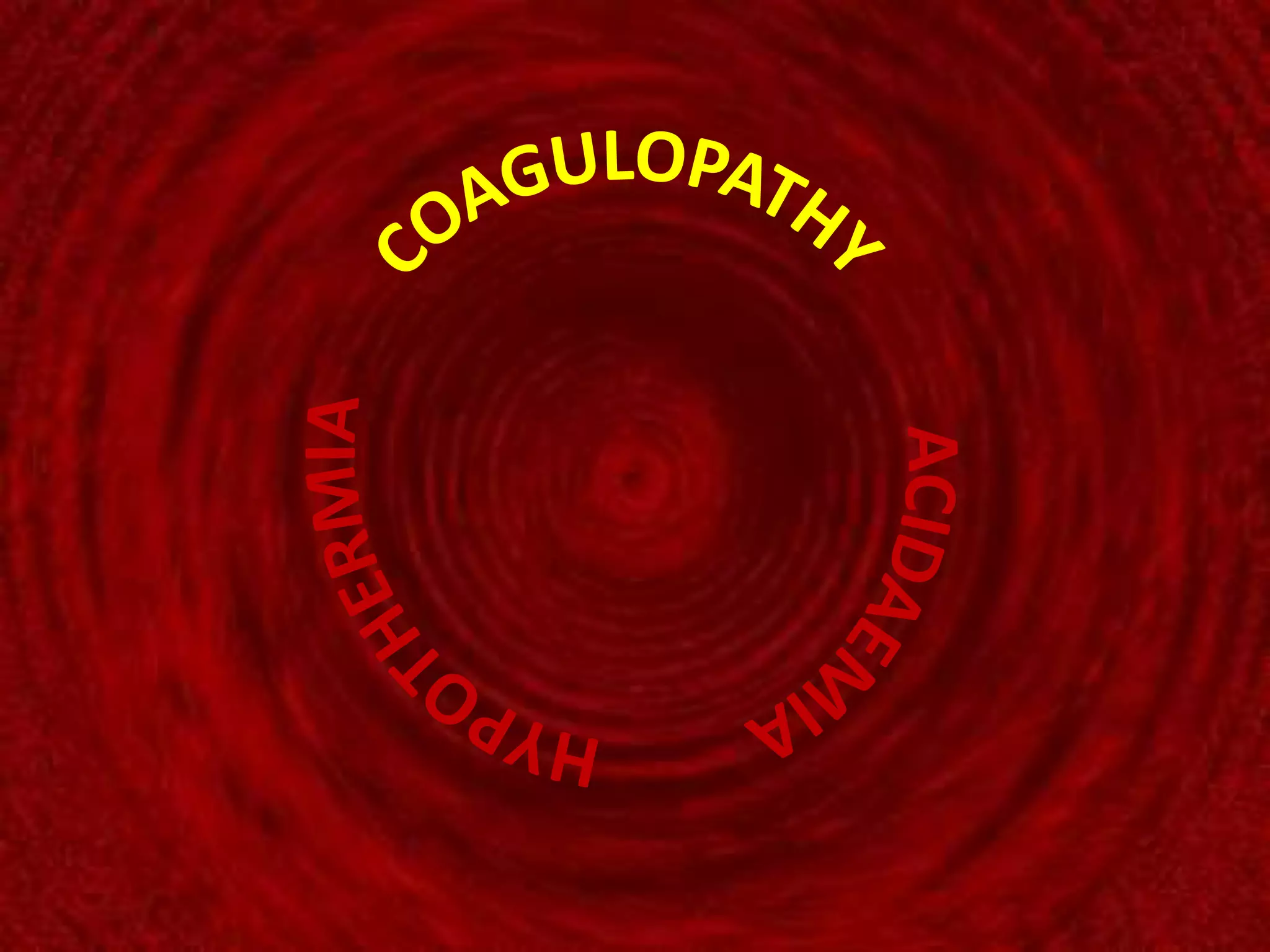
Fibrinolysis Inflammation Hypothermia Acidemia
Loss, Dilution
ATC
TRAUMA-INDUCED
COAGULOPATHY (TIC)
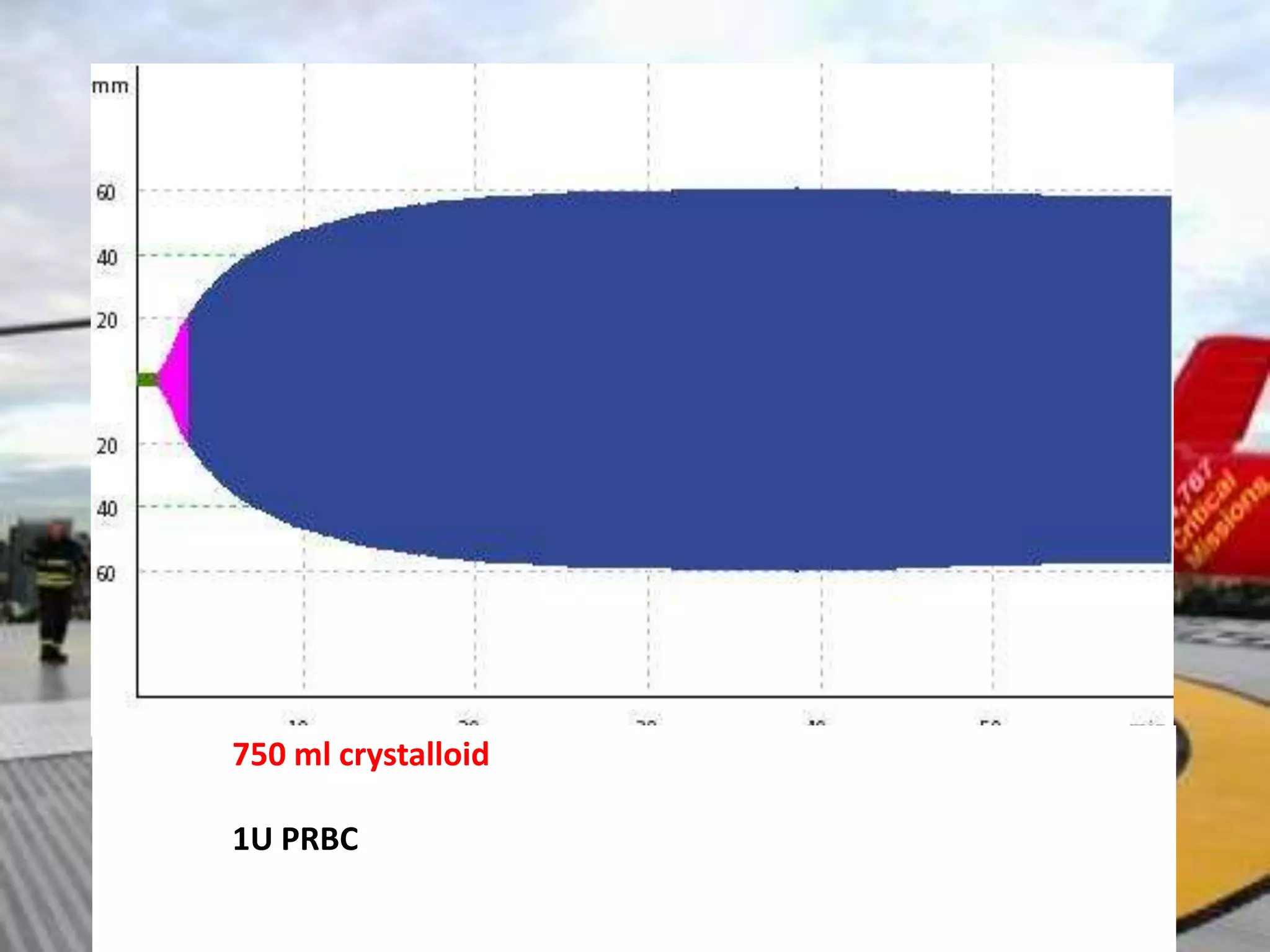
750 ml crystalloid
1U PRBC
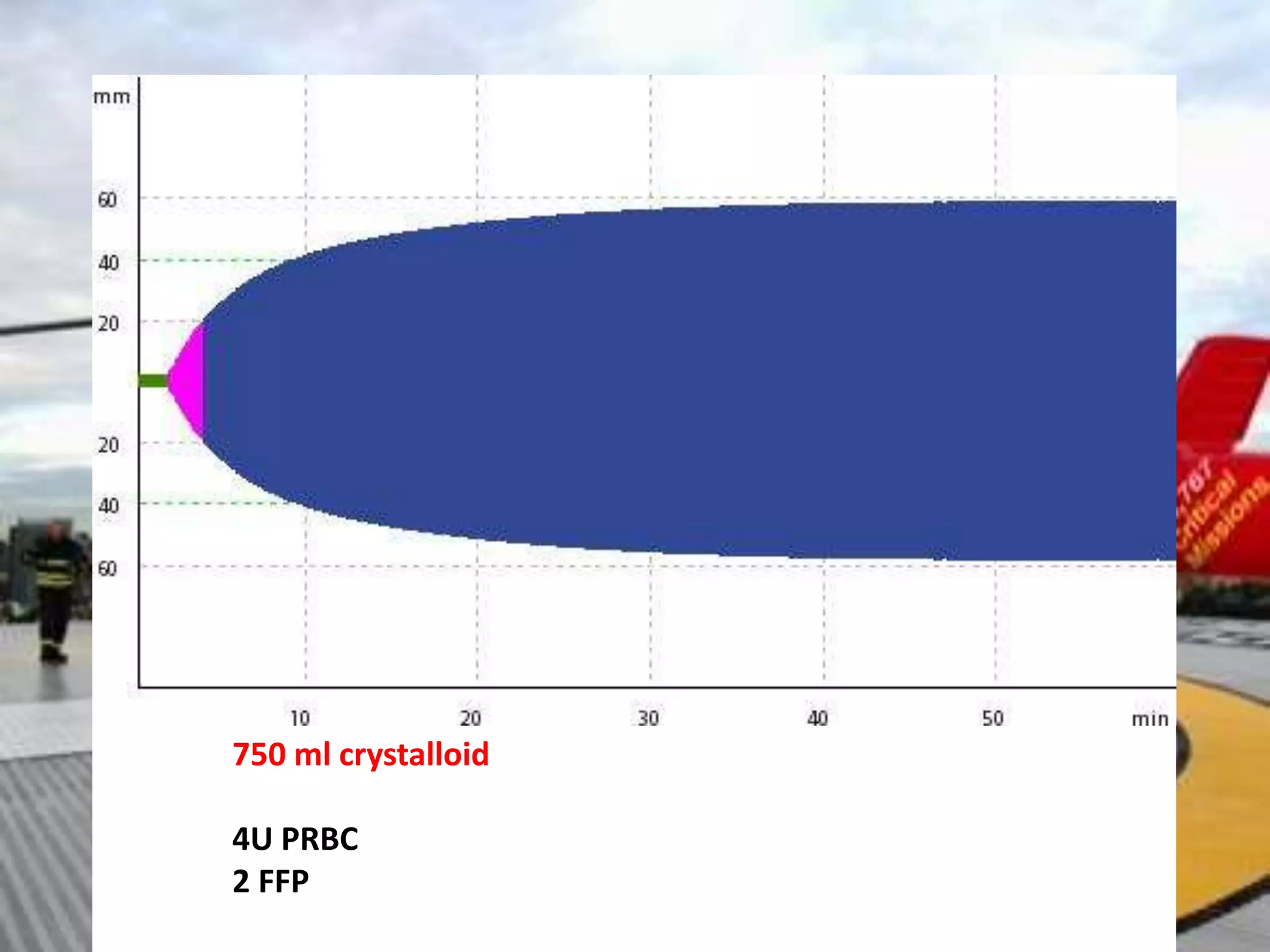
750 ml crystalloid
4U PRBC
2 FFP
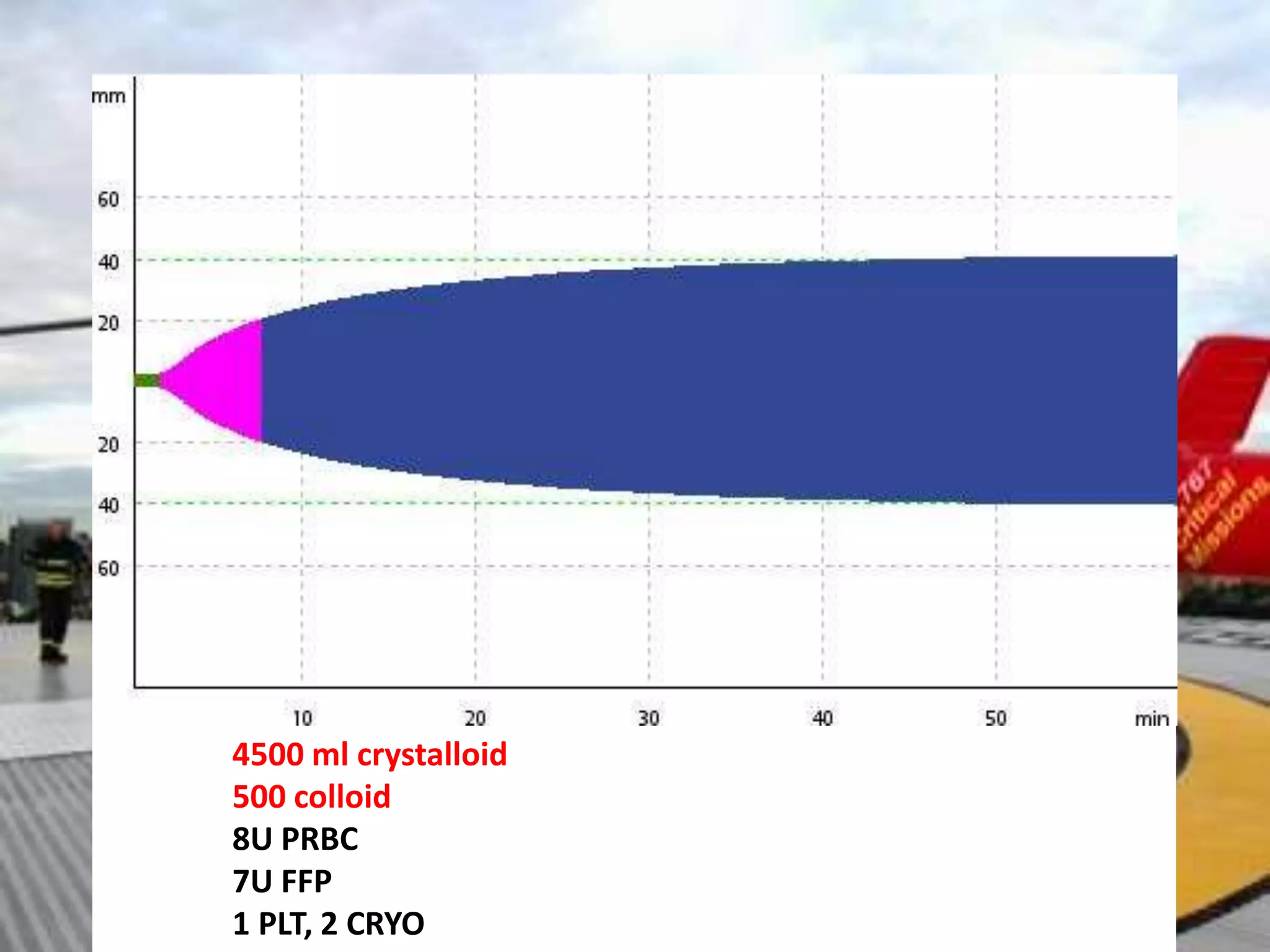
4500 ml crystalloid
500 colloid
8U PRBC
7U FFP
1 PLT, 2 CRYO
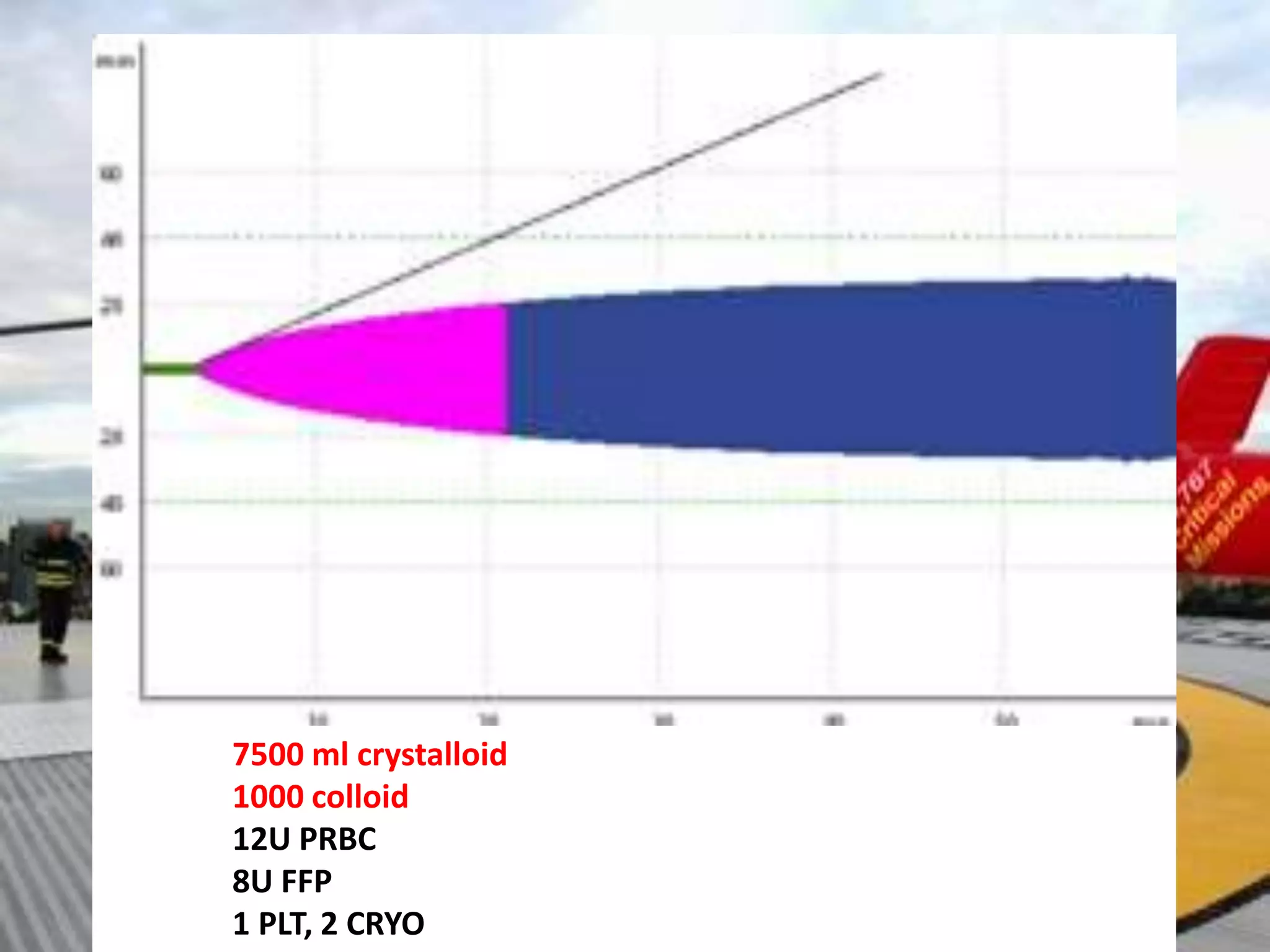
7500 ml crystalloid
1000 colloid
12U PRBC
8U FFP
1 PLT, 2 CRYO
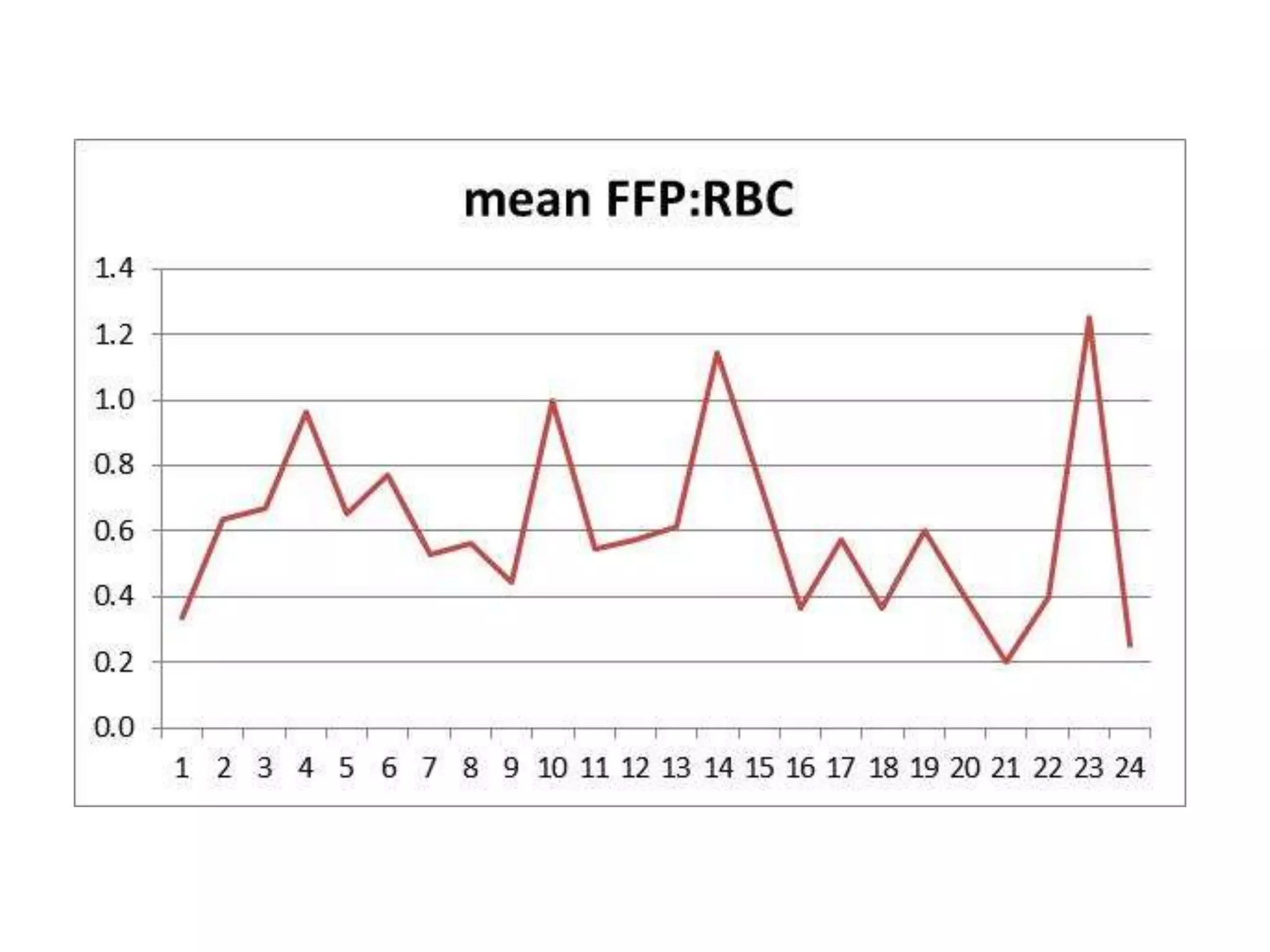
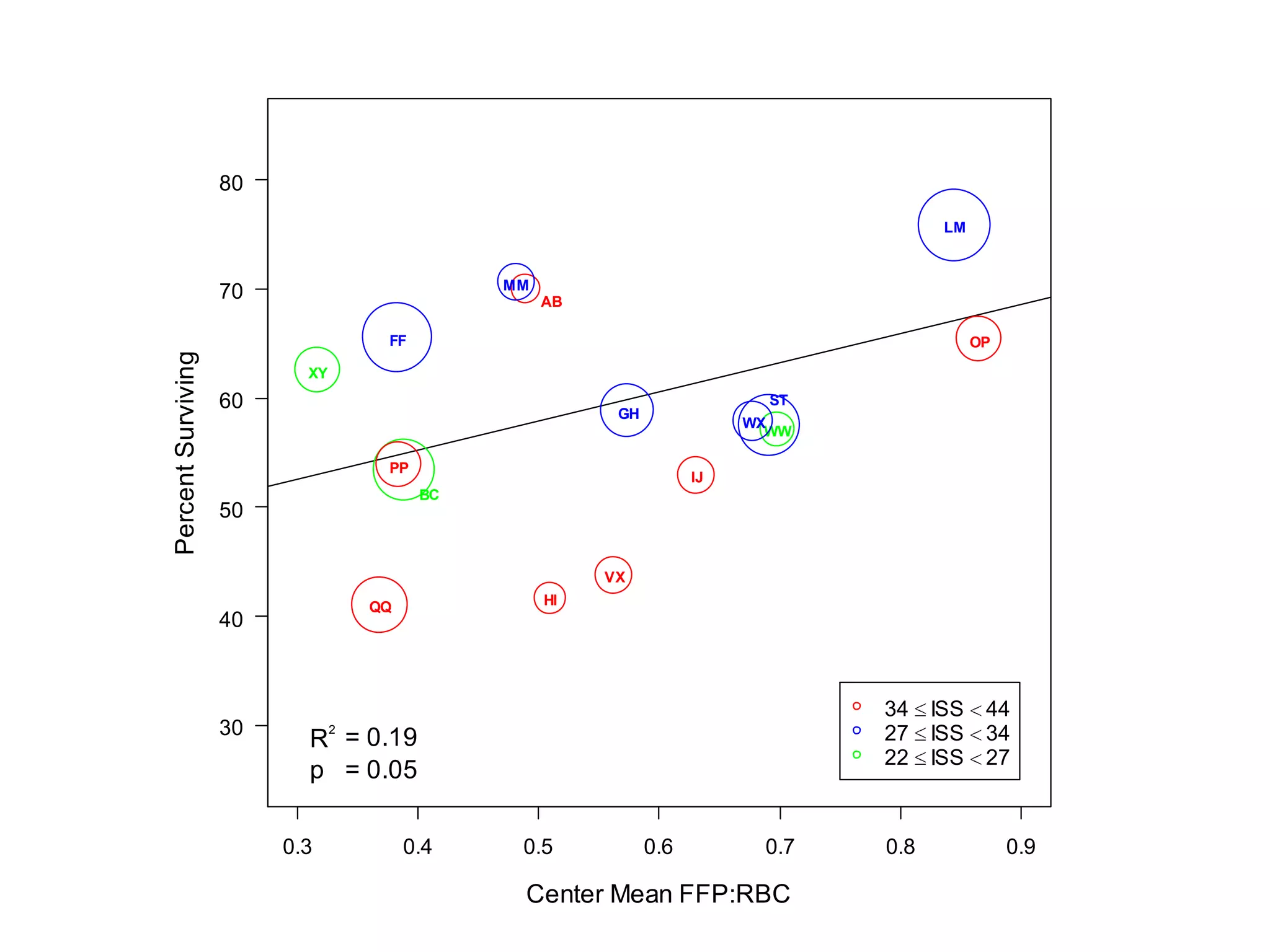
0.3 0.4 0.5 0.6 0.7 0.8 0.9
30
40
50
60
70
80
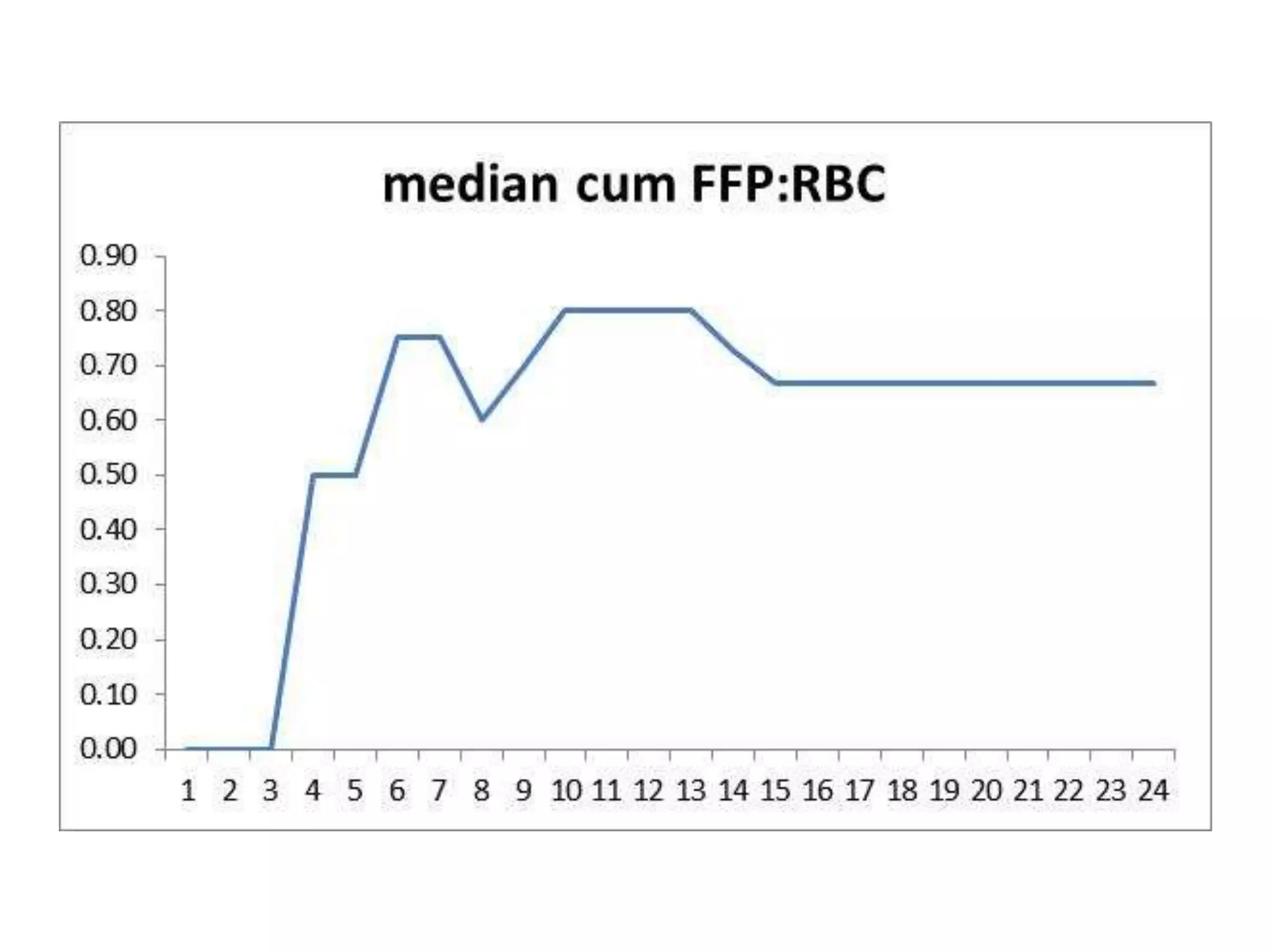
Center Mean FFP:RBC
PercentSurviving
AB
BC
FF
GH
HI
IJ
LM
MM
OP
PP
QQ
ST
VX
WW
WX
XY
p = 0.05
R
2
= 0.19
34 ISS 44
27 ISS 34
22 ISS 27
*
*
0
10
20
30
40
50
60
70
ISS > 15 ISS > 24Injury Severity Score
Mortality(%)
RLH
MSH
CH
*
*
Comparative Mortality
Damage Control Resuscitation
1. Early haemorrhage control (DCS)
2. Permissive hypotension
3. Limit fluid infusions (dilution)
4. Target coagulopathy
Damage Control in Trauma by Brohi

Damage Control in Trauma by Brohi

Editor's Notes

  • #8 Newham staff trained with Royal London staff. Rapidly identify cardiac injury. Call for transfer.