Presenting by :
Nagendra P
16PBT204
M.Tech Pharmaceutical Biotechnology
Department of Pharmaceutical Sciences and Technology
INSTITUTE OF CHEMICAL TECHNOLOGY
Matunga, Mumbai
Rabies Vaccines : Prospects & Challenges
Under the guidance of :
Prof. Vandana B Patravale1
Rabies
 Rabies is a zoonotic disease which is caused by a virus.
 Rabies virus (RABV) belongs to the type species of the genus Lyssavirus
within the family Rhabdoviridae.
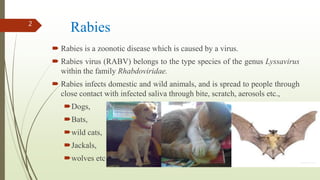
 Rabies infects domestic and wild animals, and is spread to people through
close contact with infected saliva through bite, scratch, aerosols etc.,
Dogs,
Bats,
wild cats,
Jackals,
wolves etc
2
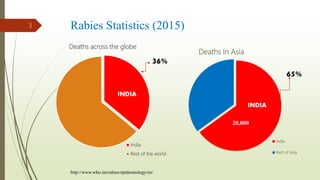
Rabies Statistics (2015)
Deaths across the globe
India
Rest of the world
INDIA
36%
Deaths In Asia
India
Rest of Asia
INDIA
65%
3
http://www.who.int/rabies/epidemiology/en/
20,000
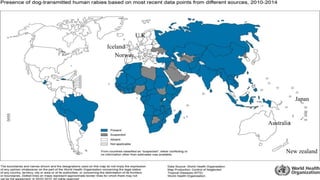
4
Australia
New zealand
Japan
U.K.
Iceland
Norway
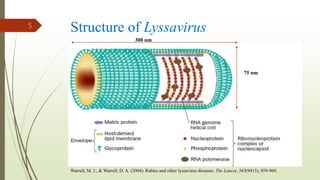
Structure of Lyssavirus5
Warrell, M. J., & Warrell, D. A. (2004). Rabies and other lyssavirus diseases. The Lancet, 363(9413), 959-969.
75 nm
300 nm
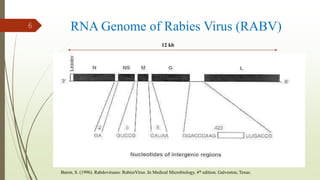
RNA Genome of Rabies Virus (RABV)6
12 kb
Baron, S. (1996). Rabdoviruses: RabiesVirus .In Medical Microbiology, 4th edition. Galveston, Texas.
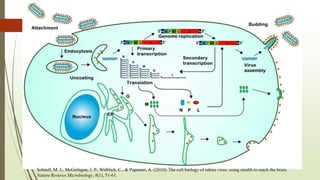
7
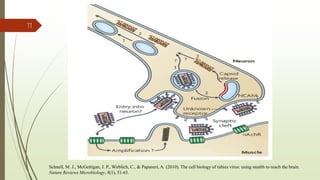
Schnell, M. J., McGettigan, J. P., Wirblich, C., & Papaneri, A. (2010). The cell biology of rabies virus: using stealth to reach the brain.
Nature Reviews Microbiology, 8(1), 51-61.
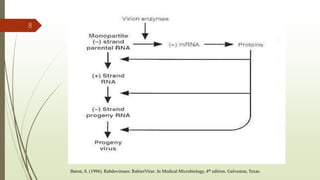
8
Baron, S. (1996). Rabdoviruses: RabiesVirus .In Medical Microbiology, 4th edition. Galveston, Texas.
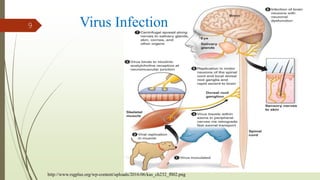
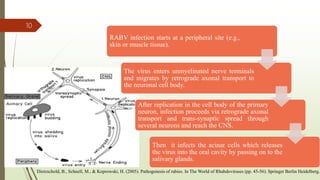
Virus Infection9
http://www.rsgplus.org/wp-content/uploads/2016/06/kas_ch232_f002.png
RABV infection starts at a peripheral site (e.g.,
skin or muscle tissue).
The virus enters unmyelinated nerve terminals
and migrates by retrograde axonal transport to
the neuronal cell body.
After replication in the cell body of the primary
neuron, infection proceeds via retrograde axonal
transport and trans-synaptic spread through
several neurons and reach the CNS.
Then it infects the acinar cells which releases
the virus into the oral cavity by passing on to the
salivary glands.
10
Dietzschold, B., Schnell, M., & Koprowski, H. (2005). Pathogenesis of rabies. In The World of Rhabdoviruses (pp. 45-56). Springer Berlin Heidelberg.
11
Schnell, M. J., McGettigan, J. P., Wirblich, C., & Papaneri, A. (2010). The cell biology of rabies virus: using stealth to reach the brain.
Nature Reviews Microbiology, 8(1), 51-61.
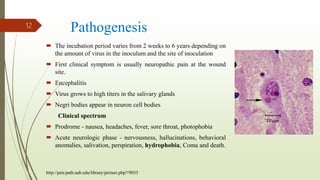
Pathogenesis
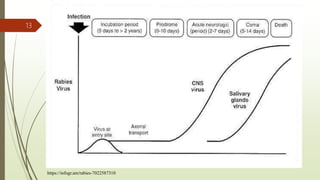
 The incubation period varies from 2 weeks to 6 years depending on
the amount of virus in the inoculum and the site of inoculation
 First clinical symptom is usually neuropathic pain at the wound
site.
 Encephalitis
 Virus grows to high titers in the salivary glands
 Negri bodies appear in neuron cell bodies
Clinical spectrum
 Prodrome - nausea, headaches, fever, sore throat, photophobia
 Acute neurologic phase - nervousness, hallucinations, behavioral
anomalies, salivation, perspiration, hydrophobia, Coma and death.
12
http://peir.path.uab.edu/library/picture.php?/9055
13
https://infogr.am/rabies-7022587310
Diagnosis
 Based on the history
 Signs and symptoms
 Clinical examination
 Detection of antigen by taking skin biopsy using immunofluorescence.
 Virus isolation from saliva & other secretions.
 CSF analysis, MRI and CT scan.
 ELISA
 RT-PCR
 direct Fluorescent Antibody (DFA) testing
 Negri bodies
14
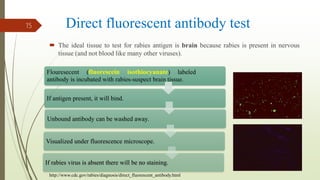
Direct fluorescent antibody test
 The ideal tissue to test for rabies antigen is brain because rabies is present in nervous
tissue (and not blood like many other viruses).
Flouresecent (fluorescein isothiocyanate) labeled
antibody is incubated with rabies-suspect brain tissue.
If antigen present, it will bind.
Unbound antibody can be washed away.
Visualized under fluorescence microscope.
If rabies virus is absent there will be no staining.
15
http://www.cdc.gov/rabies/diagnosis/direct_fluorescent_antibody.html
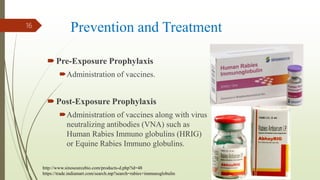
Prevention and Treatment
Pre-Exposure Prophylaxis
Administration of vaccines.
Post-Exposure Prophylaxis
Administration of vaccines along with virus
neutralizing antibodies (VNA) such as
Human Rabies Immuno globulins (HRIG)
or Equine Rabies Immuno globulins.
16
http://www.sinosourcebio.com/products-d.php?id=48
https://trade.indiamart.com/search.mp?search=rabies+immunoglobulin
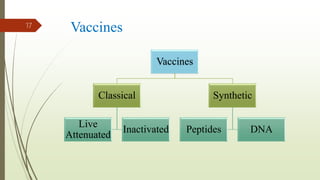
Vaccines
Vaccines
Classical
Live
Attenuated
Inactivated
Synthetic
Peptides DNA
17
18
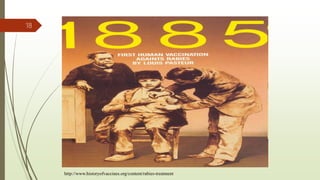
http://www.historyofvaccines.org/content/rabies-treatment
History of Rabies Vaccine
1885
• Louis Pasteur developed the earliest effective vaccine (on 6 July 1885).
• He used the homogenates of RABV infected rabbit spinal cord as innoculates.
1930’s
• Then they inactivated infected sheep or goat brain with chemical agents such as phenol
and used them as vaccines.
• Alternatively, they also used inactivated infected chick embryos and infected suckling
mouse brain.
1970’s
• Development of cell culture for virus propagation was initiated.
• Growth of fixed RABV in a human diploid cell line such as MRC-5. These were termed
as Human Diploid Cell Vaccines (HDCV) .
• An alternative to HDCV is the use of purified chick embryo cells (PCEC).
19
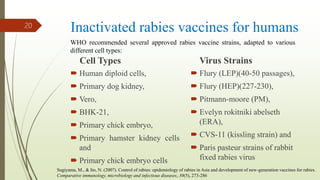
Inactivated rabies vaccines for humans
Cell Types
 Human diploid cells,
 Primary dog kidney,
 Vero,
 BHK-21,
 Primary chick embryo,
 Primary hamster kidney cells
and
 Primary chick embryo cells
Virus Strains
 Flury (LEP)(40-50 passages),
 Flury (HEP)(227-230),
 Pitmann-moore (PM),
 Evelyn rokitniki abelseth
(ERA),
 CVS-11 (kissling strain) and
 Paris pasteur strains of rabbit
fixed rabies virus
WHO recommended several approved rabies vaccine strains, adapted to various
different cell types:
20
Sugiyama, M., & Ito, N. (2007). Control of rabies: epidemiology of rabies in Asia and development of new-generation vaccines for rabies.
Comparative immunology, microbiology and infectious diseases, 30(5), 273-286
Administration of Rabies Vaccines
Pre-exposure vaccination
 Include for travellers travelling to rabies endemic regions,
veterinarians and researchers working with the virus.
 Consists of an intramuscular injection of 1 ml vaccine on days 0, 7,
21 and 28. boosting may be recommended at an interval of 3–5years
Post-exposure vaccination
 Typically given as an intra-muscular injection on days 0, 3, 7, 14
and 30. HRIG or ERIG against viral glycoprotein G is given on day
0, unless the recipient has received previous vaccination against
rabies.
21
World Health Organization. (2005). WHO expert consultation on rabies: first report.
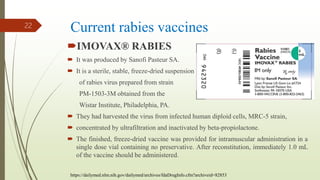
Current rabies vaccines
IMOVAX® RABIES
 It was produced by Sanofi Pasteur SA.
 It is a sterile, stable, freeze-dried suspension
of rabies virus prepared from strain
PM-1503-3M obtained from the
Wistar Institute, Philadelphia, PA.
 They had harvested the virus from infected human diploid cells, MRC-5 strain,
 concentrated by ultrafiltration and inactivated by beta-propiolactone.
 The finished, freeze-dried vaccine was provided for intramuscular administration in a
single dose vial containing no preservative. After reconstitution, immediately 1.0 mL
of the vaccine should be administered.
22
https://dailymed.nlm.nih.gov/dailymed/archives/fdaDrugInfo.cfm?archiveid=82853
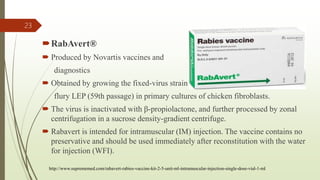
RabAvert®
 Produced by Novartis vaccines and
diagnostics
 Obtained by growing the fixed-virus strain
flury LEP (59th passage) in primary cultures of chicken fibroblasts.
 The virus is inactivated with β-propiolactone, and further processed by zonal
centrifugation in a sucrose density-gradient centrifuge.
 Rabavert is intended for intramuscular (IM) injection. The vaccine contains no
preservative and should be used immediately after reconstitution with the water
for injection (WFI).
23
http://www.suprememed.com/rabavert-rabies-vaccine-kit-2-5-unit-ml-intramuscular-injection-single-dose-vial-1-ml
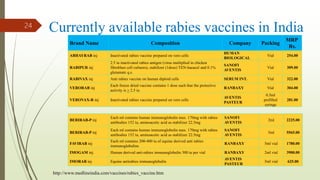
Currently available rabies vaccines in India24
http://www.medlineindia.com/vaccines/rabies_vaccine.htm
Brand Name Composition Company Packing
MRP
Rs.
ABHAYRAB inj Inactivated rabies vaccine prepared on vero cells
HUMAN
BIOLOGICAL
Vial 254.00
RABIPUR inj
2.5 iu inactivated rabies antigen (virus multiplied in chicken
fibroblast cell cultures), stabilizer (1dose) TEN-haeacel and 0.1%
glutamate q.s.
SANOFI
AVENTIS
Vial 309.00
RABIVAX inj Anti rabies vaccine on human diploid cells SERUM INT. Vial 322.00
VERORAB inj
Each freeze dried vaccine contains 1 dose such that the protective
activity is > 2.5 iu
RANBAXY Vial 304.00
VEROVAX-R inj Inactivated rabies vaccine prepared on vero cells
AVENTIS
PASTEUR
0.5ml
prefilled
syringe
281.00
BERIRAB-P inj
Each ml contains human immunoglobulin max. 170mg with rabies
antibodies 152 iu, aminoacetic acid as stabilizer 22.5mg
SANOFI
AVENTIS
2ml 2225.00
BERIRAB-P inj
Each ml contains human immunoglobulin max. 170mg with rabies
antibodies 152 iu, aminoacetic acid as stabilizer 22.5mg
SANOFI
AVENTIS
5ml 5565.00
FAVIRAB inj
Each ml contains 200-400 iu of equine derived anti rabies
immunoglobulins
RANBAXY 5ml vial 1780.00
IMOGAM inj Human derived anti-rabies immunoglobulin 300 iu per vial RANBAXY 2ml vial 3900.00
IMORAB inj Equine antirabies immunoglobulin
AVENTIS
PASTEUR
5ml vial 625.00
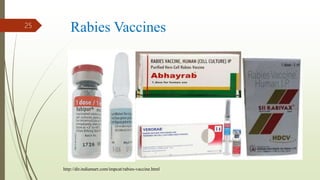
Rabies Vaccines25
http://dir.indiamart.com/impcat/rabies-vaccine.html
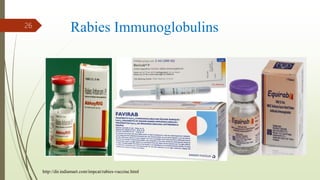
Rabies Immunoglobulins26
http://dir.indiamart.com/impcat/rabies-vaccine.html
Adverse Reactions to Rabies Vaccines and
RIG’s
Most common side-effects of rabies vaccines:
Systemic reactions such as headache, myalgia, malaise (5-
40%)
Mild to moderate local reactions and allergies at injection
site (30-74%)
27
World Health Organization. (2005). WHO expert consultation on rabies: first report.
Challenges
 Live attenuated viral vaccines sometimes causes rabies in the inoculated
animal by its residual virulence or pathogenic mutation during viral
propagation in the body.
 Development of attenuated live vaccines needs longer time because the virus
vaccine is generally established through serial passages
 Inactivated RABV vaccines are generally poor immunogens since they do
induce poor potent inflammatory responses needed for effective T-cell and B-
cell activation.
 Intradermal (ID) injection of vaccine inoculation appears to require less
vaccine to be effective than intramuscular (IM), which reduces the cost of
treatment. A disadvantage of this method is the increased difficulty in
administering successful intradermal injections.
28
 Parenteral vaccination with tissue culture derived vaccines has been
in application since the 1970s, and has been followed extensively in
all continents of the world.
 They have low levels of side effects, and they can be produced at
low cost which have found application in both human and veterinary
medicine.
29
 The major disadvantage for post-exposure prophylaxis is the need
for compliance with repeated injections to ensure that treatment is
successful.
 In practice, this requires multiple trips to vaccination centre which,
if not followed, can lead to vaccine failure.
 The cost of a full course of vaccination, particularly in parts of Asia
and Africa, also remains a problem.
30
Alternate development of Rabies
vaccines
 To date, replication-deficient RABV vectors have been generated in which the
RABV M, P, or G genes have been deleted,
 The ability to clone the gene coding for the RABV glycoprotein into a plasmid
and then expressing the protein in a range of host systems had led to a number of
alternative approaches with the potential for new vaccines against rabies such as
 RABV glycoprotein expressed on the surface of the vaccinia virus.
 RABV glycoprotein expressed on the surface of the pox virus.
 RABV glycoprotein expressed by canine adenovirus.
31
Phosphoprotein gene-deleted rabv
vaccines
 The rabies P serves as a cofactor and regulator protein of the polymerase (L).
 P gene-deleted vectors did not spread from the periphery to the CNS in rag-2
mice, demonstrating their safety due to their inability to invade neuronal tissue.
 P gene-deleted RABV induced a tenfold increase in protective efficiency
compared with an inactivated rabies vaccine.
 In addition, the P gene-deleted vector induced a more balanced IgG antibody
response.
 But their primary drawback was the relatively slow induction of immunity
making it less appropriate for post-exposure prophylaxis .
32
Modified P gene-deleted RV-based
vaccines
 Mice immunized with a recombinant RABV expressing two G genes showed an
eightfold higher protection compared with protection elicited by a single G gene-
expressing vaccine.
 The potential exists that the increase gene G expression level by two G genes was the
cause of the higher VNA and protection detected
 The approach to express two copies of the G gene by a P gene-deleted RABV proved
to be beneficial in increasing the speed and magnitude of the anti-RABV G and -
RABV N responses
 However, gene G expression did not exceed that of the replication-competent RV, even
with the additional RV G gene.
 Nonetheless, this strategy significantly increased the efficacy of P-deleted vectors for
use in both pre- and post-exposure.
33
Matrix protein gene-deleted RV-based
vaccines
 M gene-deleted RABV contains all of the necessary viral machinery
to complete viral gene transcription and genome replication
 M gene-deleted RABV is able to express antigen over a longer
period of time.
 M gene-deleted RV was also more immunogenic and provided
superior protection when compared with protection elicited by
inactivated vaccines.
34
Generation of highly attenuated rabies
recombinant viruses using modified G genes
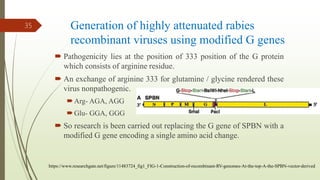
 Pathogenicity lies at the position of 333 position of the G protein
which consists of arginine residue.
 An exchange of arginine 333 for glutamine / glycine rendered these
virus nonpathogenic.
Arg- AGA, AGG
Glu- GGA, GGG
 So research is been carried out replacing the G gene of SPBN with a
modified G gene encoding a single amino acid change.
35
https://www.researchgate.net/figure/11483724_fig1_FIG-1-Construction-of-recombinant-RV-genomes-At-the-top-A-the-SPBN-vector-derived
Intracerebral (IC) Administration of
Recombinant Rabies Virus
 Recombinant rabies virus (RABV) expressing granulocyte-macrophage
colony-stimulating factor (GM-CSF) (LBNSE-GM-CSF) resulted in high
innate/adaptive immune responses and protection against challenge with
virulent rabies.
 It was found that intracerebral administration of LBNSE-GM-CSF,
protected mice from developing rabies as late as day 5 after infection.
 It resulted in significantly higher levels of chemokine/cytokine expression,
infiltration of more inflammatory and immune cells into the CNS .
 Enhanced blood-brain barrier (BBB) permeability and increase in virus
neutralizing antibodies (VNA).
36
Expression of Interferon Gamma by a
Recombinant Rabies Virus
 Using reverse engineering mouse IFN-γ gene was cloned into a
pathogenic rabies virus backbone, SPBN, to produce the
recombinant rabies virus designated SPBNγ.
 Incorporation of IFN-γ into the rabies virus genome highly
attenuated the virus.
 In vitro and in vivo mouse experiments show that SPBNγ infection
enhanced the production of type I interferons suggesting that IFN-γ
production has antiviral effects in rabies.
37
38
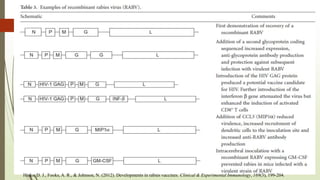
Hicks, D. J., Fooks, A. R., & Johnson, N. (2012). Developments in rabies vaccines. Clinical & Experimental Immunology, 169(3), 199-204.
 World Rabies Day is a
cooperative global event
planned to reduce the
suffering from rabies.
This day celebrates Dr.
Louis Pasteur’s vision
of a rabies free world.
39
References
 Wang, H., Zhang, G., Wen, Y., Yang, S., Xia, X., & Fu, Z. F. (2011). Intracerebral
administration of recombinant rabies virus expressing GM-CSF prevents the development
of rabies after infection with street virus. PloS one, 6(9), e25414.
 Hicks, D. J., Fooks, A. R., & Johnson, N. (2012). Developments in rabies vaccines. Clinical
& Experimental Immunology, 169(3), 199-204.
 McGettigan, J. (2010). Experimental rabies vaccines for humans. Expert Rev Vaccines,
9(10),1177-1186.
 Dietzschold, B., Schnell, M., & Koprowski, H. (2005). Pathogenesis of rabies. In The
World of Rhabdoviruses (pp. 45-56). Springer Berlin Heidelberg.
 Schnell, M. J., McGettigan, J. P., Wirblich, C., & Papaneri, A. (2010). The cell biology of
rabies virus: using stealth to reach the brain. Nature Reviews Microbiology, 8(1), 51-61.
 Sugiyama, M., & Ito, N. (2007). Control of rabies: epidemiology of rabies in Asia and
development of new-generation vaccines for rabies. Comparative immunology,
microbiology and infectious diseases, 30(5), 273-286.
40
41

Rabies vaccines

  • 1.
    Presenting by : NagendraP 16PBT204 M.Tech Pharmaceutical Biotechnology Department of Pharmaceutical Sciences and Technology INSTITUTE OF CHEMICAL TECHNOLOGY Matunga, Mumbai Rabies Vaccines : Prospects & Challenges Under the guidance of : Prof. Vandana B Patravale1
  • 2.
    Rabies  Rabies isa zoonotic disease which is caused by a virus.  Rabies virus (RABV) belongs to the type species of the genus Lyssavirus within the family Rhabdoviridae.  Rabies infects domestic and wild animals, and is spread to people through close contact with infected saliva through bite, scratch, aerosols etc., Dogs, Bats, wild cats, Jackals, wolves etc 2
  • 3.
    Rabies Statistics (2015) Deathsacross the globe India Rest of the world INDIA 36% Deaths In Asia India Rest of Asia INDIA 65% 3 http://www.who.int/rabies/epidemiology/en/ 20,000
  • 4.
  • 5.
    Structure of Lyssavirus5 Warrell,M. J., & Warrell, D. A. (2004). Rabies and other lyssavirus diseases. The Lancet, 363(9413), 959-969. 75 nm 300 nm
  • 6.
    RNA Genome ofRabies Virus (RABV)6 12 kb Baron, S. (1996). Rabdoviruses: RabiesVirus .In Medical Microbiology, 4th edition. Galveston, Texas.
  • 7.
    7 Schnell, M. J.,McGettigan, J. P., Wirblich, C., & Papaneri, A. (2010). The cell biology of rabies virus: using stealth to reach the brain. Nature Reviews Microbiology, 8(1), 51-61.
  • 8.
    8 Baron, S. (1996).Rabdoviruses: RabiesVirus .In Medical Microbiology, 4th edition. Galveston, Texas.
  • 9.
  • 10.
    RABV infection startsat a peripheral site (e.g., skin or muscle tissue). The virus enters unmyelinated nerve terminals and migrates by retrograde axonal transport to the neuronal cell body. After replication in the cell body of the primary neuron, infection proceeds via retrograde axonal transport and trans-synaptic spread through several neurons and reach the CNS. Then it infects the acinar cells which releases the virus into the oral cavity by passing on to the salivary glands. 10 Dietzschold, B., Schnell, M., & Koprowski, H. (2005). Pathogenesis of rabies. In The World of Rhabdoviruses (pp. 45-56). Springer Berlin Heidelberg.
  • 11.
    11 Schnell, M. J.,McGettigan, J. P., Wirblich, C., & Papaneri, A. (2010). The cell biology of rabies virus: using stealth to reach the brain. Nature Reviews Microbiology, 8(1), 51-61.
  • 12.
    Pathogenesis  The incubationperiod varies from 2 weeks to 6 years depending on the amount of virus in the inoculum and the site of inoculation  First clinical symptom is usually neuropathic pain at the wound site.  Encephalitis  Virus grows to high titers in the salivary glands  Negri bodies appear in neuron cell bodies Clinical spectrum  Prodrome - nausea, headaches, fever, sore throat, photophobia  Acute neurologic phase - nervousness, hallucinations, behavioral anomalies, salivation, perspiration, hydrophobia, Coma and death. 12 http://peir.path.uab.edu/library/picture.php?/9055
  • 13.
  • 14.
    Diagnosis  Based onthe history  Signs and symptoms  Clinical examination  Detection of antigen by taking skin biopsy using immunofluorescence.  Virus isolation from saliva & other secretions.  CSF analysis, MRI and CT scan.  ELISA  RT-PCR  direct Fluorescent Antibody (DFA) testing  Negri bodies 14
  • 15.
    Direct fluorescent antibodytest  The ideal tissue to test for rabies antigen is brain because rabies is present in nervous tissue (and not blood like many other viruses). Flouresecent (fluorescein isothiocyanate) labeled antibody is incubated with rabies-suspect brain tissue. If antigen present, it will bind. Unbound antibody can be washed away. Visualized under fluorescence microscope. If rabies virus is absent there will be no staining. 15 http://www.cdc.gov/rabies/diagnosis/direct_fluorescent_antibody.html
  • 16.
    Prevention and Treatment Pre-ExposureProphylaxis Administration of vaccines. Post-Exposure Prophylaxis Administration of vaccines along with virus neutralizing antibodies (VNA) such as Human Rabies Immuno globulins (HRIG) or Equine Rabies Immuno globulins. 16 http://www.sinosourcebio.com/products-d.php?id=48 https://trade.indiamart.com/search.mp?search=rabies+immunoglobulin
  • 17.
  • 18.
  • 19.
    History of RabiesVaccine 1885 • Louis Pasteur developed the earliest effective vaccine (on 6 July 1885). • He used the homogenates of RABV infected rabbit spinal cord as innoculates. 1930’s • Then they inactivated infected sheep or goat brain with chemical agents such as phenol and used them as vaccines. • Alternatively, they also used inactivated infected chick embryos and infected suckling mouse brain. 1970’s • Development of cell culture for virus propagation was initiated. • Growth of fixed RABV in a human diploid cell line such as MRC-5. These were termed as Human Diploid Cell Vaccines (HDCV) . • An alternative to HDCV is the use of purified chick embryo cells (PCEC). 19
  • 20.
    Inactivated rabies vaccinesfor humans Cell Types  Human diploid cells,  Primary dog kidney,  Vero,  BHK-21,  Primary chick embryo,  Primary hamster kidney cells and  Primary chick embryo cells Virus Strains  Flury (LEP)(40-50 passages),  Flury (HEP)(227-230),  Pitmann-moore (PM),  Evelyn rokitniki abelseth (ERA),  CVS-11 (kissling strain) and  Paris pasteur strains of rabbit fixed rabies virus WHO recommended several approved rabies vaccine strains, adapted to various different cell types: 20 Sugiyama, M., & Ito, N. (2007). Control of rabies: epidemiology of rabies in Asia and development of new-generation vaccines for rabies. Comparative immunology, microbiology and infectious diseases, 30(5), 273-286
  • 21.
    Administration of RabiesVaccines Pre-exposure vaccination  Include for travellers travelling to rabies endemic regions, veterinarians and researchers working with the virus.  Consists of an intramuscular injection of 1 ml vaccine on days 0, 7, 21 and 28. boosting may be recommended at an interval of 3–5years Post-exposure vaccination  Typically given as an intra-muscular injection on days 0, 3, 7, 14 and 30. HRIG or ERIG against viral glycoprotein G is given on day 0, unless the recipient has received previous vaccination against rabies. 21 World Health Organization. (2005). WHO expert consultation on rabies: first report.
  • 22.
    Current rabies vaccines IMOVAX®RABIES  It was produced by Sanofi Pasteur SA.  It is a sterile, stable, freeze-dried suspension of rabies virus prepared from strain PM-1503-3M obtained from the Wistar Institute, Philadelphia, PA.  They had harvested the virus from infected human diploid cells, MRC-5 strain,  concentrated by ultrafiltration and inactivated by beta-propiolactone.  The finished, freeze-dried vaccine was provided for intramuscular administration in a single dose vial containing no preservative. After reconstitution, immediately 1.0 mL of the vaccine should be administered. 22 https://dailymed.nlm.nih.gov/dailymed/archives/fdaDrugInfo.cfm?archiveid=82853
  • 23.
    RabAvert®  Produced byNovartis vaccines and diagnostics  Obtained by growing the fixed-virus strain flury LEP (59th passage) in primary cultures of chicken fibroblasts.  The virus is inactivated with β-propiolactone, and further processed by zonal centrifugation in a sucrose density-gradient centrifuge.  Rabavert is intended for intramuscular (IM) injection. The vaccine contains no preservative and should be used immediately after reconstitution with the water for injection (WFI). 23 http://www.suprememed.com/rabavert-rabies-vaccine-kit-2-5-unit-ml-intramuscular-injection-single-dose-vial-1-ml
  • 24.
    Currently available rabiesvaccines in India24 http://www.medlineindia.com/vaccines/rabies_vaccine.htm Brand Name Composition Company Packing MRP Rs. ABHAYRAB inj Inactivated rabies vaccine prepared on vero cells HUMAN BIOLOGICAL Vial 254.00 RABIPUR inj 2.5 iu inactivated rabies antigen (virus multiplied in chicken fibroblast cell cultures), stabilizer (1dose) TEN-haeacel and 0.1% glutamate q.s. SANOFI AVENTIS Vial 309.00 RABIVAX inj Anti rabies vaccine on human diploid cells SERUM INT. Vial 322.00 VERORAB inj Each freeze dried vaccine contains 1 dose such that the protective activity is > 2.5 iu RANBAXY Vial 304.00 VEROVAX-R inj Inactivated rabies vaccine prepared on vero cells AVENTIS PASTEUR 0.5ml prefilled syringe 281.00 BERIRAB-P inj Each ml contains human immunoglobulin max. 170mg with rabies antibodies 152 iu, aminoacetic acid as stabilizer 22.5mg SANOFI AVENTIS 2ml 2225.00 BERIRAB-P inj Each ml contains human immunoglobulin max. 170mg with rabies antibodies 152 iu, aminoacetic acid as stabilizer 22.5mg SANOFI AVENTIS 5ml 5565.00 FAVIRAB inj Each ml contains 200-400 iu of equine derived anti rabies immunoglobulins RANBAXY 5ml vial 1780.00 IMOGAM inj Human derived anti-rabies immunoglobulin 300 iu per vial RANBAXY 2ml vial 3900.00 IMORAB inj Equine antirabies immunoglobulin AVENTIS PASTEUR 5ml vial 625.00
  • 25.
  • 26.
  • 27.
    Adverse Reactions toRabies Vaccines and RIG’s Most common side-effects of rabies vaccines: Systemic reactions such as headache, myalgia, malaise (5- 40%) Mild to moderate local reactions and allergies at injection site (30-74%) 27 World Health Organization. (2005). WHO expert consultation on rabies: first report.
  • 28.
    Challenges  Live attenuatedviral vaccines sometimes causes rabies in the inoculated animal by its residual virulence or pathogenic mutation during viral propagation in the body.  Development of attenuated live vaccines needs longer time because the virus vaccine is generally established through serial passages  Inactivated RABV vaccines are generally poor immunogens since they do induce poor potent inflammatory responses needed for effective T-cell and B- cell activation.  Intradermal (ID) injection of vaccine inoculation appears to require less vaccine to be effective than intramuscular (IM), which reduces the cost of treatment. A disadvantage of this method is the increased difficulty in administering successful intradermal injections. 28
  • 29.
     Parenteral vaccinationwith tissue culture derived vaccines has been in application since the 1970s, and has been followed extensively in all continents of the world.  They have low levels of side effects, and they can be produced at low cost which have found application in both human and veterinary medicine. 29
  • 30.
     The majordisadvantage for post-exposure prophylaxis is the need for compliance with repeated injections to ensure that treatment is successful.  In practice, this requires multiple trips to vaccination centre which, if not followed, can lead to vaccine failure.  The cost of a full course of vaccination, particularly in parts of Asia and Africa, also remains a problem. 30
  • 31.
    Alternate development ofRabies vaccines  To date, replication-deficient RABV vectors have been generated in which the RABV M, P, or G genes have been deleted,  The ability to clone the gene coding for the RABV glycoprotein into a plasmid and then expressing the protein in a range of host systems had led to a number of alternative approaches with the potential for new vaccines against rabies such as  RABV glycoprotein expressed on the surface of the vaccinia virus.  RABV glycoprotein expressed on the surface of the pox virus.  RABV glycoprotein expressed by canine adenovirus. 31
  • 32.
    Phosphoprotein gene-deleted rabv vaccines The rabies P serves as a cofactor and regulator protein of the polymerase (L).  P gene-deleted vectors did not spread from the periphery to the CNS in rag-2 mice, demonstrating their safety due to their inability to invade neuronal tissue.  P gene-deleted RABV induced a tenfold increase in protective efficiency compared with an inactivated rabies vaccine.  In addition, the P gene-deleted vector induced a more balanced IgG antibody response.  But their primary drawback was the relatively slow induction of immunity making it less appropriate for post-exposure prophylaxis . 32
  • 33.
    Modified P gene-deletedRV-based vaccines  Mice immunized with a recombinant RABV expressing two G genes showed an eightfold higher protection compared with protection elicited by a single G gene- expressing vaccine.  The potential exists that the increase gene G expression level by two G genes was the cause of the higher VNA and protection detected  The approach to express two copies of the G gene by a P gene-deleted RABV proved to be beneficial in increasing the speed and magnitude of the anti-RABV G and - RABV N responses  However, gene G expression did not exceed that of the replication-competent RV, even with the additional RV G gene.  Nonetheless, this strategy significantly increased the efficacy of P-deleted vectors for use in both pre- and post-exposure. 33
  • 34.
    Matrix protein gene-deletedRV-based vaccines  M gene-deleted RABV contains all of the necessary viral machinery to complete viral gene transcription and genome replication  M gene-deleted RABV is able to express antigen over a longer period of time.  M gene-deleted RV was also more immunogenic and provided superior protection when compared with protection elicited by inactivated vaccines. 34
  • 35.
    Generation of highlyattenuated rabies recombinant viruses using modified G genes  Pathogenicity lies at the position of 333 position of the G protein which consists of arginine residue.  An exchange of arginine 333 for glutamine / glycine rendered these virus nonpathogenic. Arg- AGA, AGG Glu- GGA, GGG  So research is been carried out replacing the G gene of SPBN with a modified G gene encoding a single amino acid change. 35 https://www.researchgate.net/figure/11483724_fig1_FIG-1-Construction-of-recombinant-RV-genomes-At-the-top-A-the-SPBN-vector-derived
  • 36.
    Intracerebral (IC) Administrationof Recombinant Rabies Virus  Recombinant rabies virus (RABV) expressing granulocyte-macrophage colony-stimulating factor (GM-CSF) (LBNSE-GM-CSF) resulted in high innate/adaptive immune responses and protection against challenge with virulent rabies.  It was found that intracerebral administration of LBNSE-GM-CSF, protected mice from developing rabies as late as day 5 after infection.  It resulted in significantly higher levels of chemokine/cytokine expression, infiltration of more inflammatory and immune cells into the CNS .  Enhanced blood-brain barrier (BBB) permeability and increase in virus neutralizing antibodies (VNA). 36
  • 37.
    Expression of InterferonGamma by a Recombinant Rabies Virus  Using reverse engineering mouse IFN-γ gene was cloned into a pathogenic rabies virus backbone, SPBN, to produce the recombinant rabies virus designated SPBNγ.  Incorporation of IFN-γ into the rabies virus genome highly attenuated the virus.  In vitro and in vivo mouse experiments show that SPBNγ infection enhanced the production of type I interferons suggesting that IFN-γ production has antiviral effects in rabies. 37
  • 38.
    38 Hicks, D. J.,Fooks, A. R., & Johnson, N. (2012). Developments in rabies vaccines. Clinical & Experimental Immunology, 169(3), 199-204.
  • 39.
     World RabiesDay is a cooperative global event planned to reduce the suffering from rabies. This day celebrates Dr. Louis Pasteur’s vision of a rabies free world. 39
  • 40.
    References  Wang, H.,Zhang, G., Wen, Y., Yang, S., Xia, X., & Fu, Z. F. (2011). Intracerebral administration of recombinant rabies virus expressing GM-CSF prevents the development of rabies after infection with street virus. PloS one, 6(9), e25414.  Hicks, D. J., Fooks, A. R., & Johnson, N. (2012). Developments in rabies vaccines. Clinical & Experimental Immunology, 169(3), 199-204.  McGettigan, J. (2010). Experimental rabies vaccines for humans. Expert Rev Vaccines, 9(10),1177-1186.  Dietzschold, B., Schnell, M., & Koprowski, H. (2005). Pathogenesis of rabies. In The World of Rhabdoviruses (pp. 45-56). Springer Berlin Heidelberg.  Schnell, M. J., McGettigan, J. P., Wirblich, C., & Papaneri, A. (2010). The cell biology of rabies virus: using stealth to reach the brain. Nature Reviews Microbiology, 8(1), 51-61.  Sugiyama, M., & Ito, N. (2007). Control of rabies: epidemiology of rabies in Asia and development of new-generation vaccines for rabies. Comparative immunology, microbiology and infectious diseases, 30(5), 273-286. 40
  • 41.