Downloaded 3,778 times


![Calculus:
*Dental calculus can be considered as an ectopic
mineralized structure.2
Dental Calculus consists of mineralized bacterial
plaque that forms on the surfaces of natural teeth and
dental prosthesis. [Carranza ]2](https://image.slidesharecdn.com/dentalcalculusseminar-150429060316-conversion-gate01/75/Dental-Calculus-5-2048.jpg)
![*Calculus can be defined as a hard concretion that forms on
teeth or dental prostheses through calcification of bacterial
plaque [GPT 4th
ed.].3
A deposit of inorganic salts composed primarily of calcium
carbonate and phosphate mixed with food debris bacteria and
desquamated epithelial cells. (Greene 1967)4
Mineralized dental plaque that is permeated with crystals of
various calcium phosphates (Schroeder,1969)5
Calculus is also known as odontolithiasis or tartar. It is also
called fossilized plaque.1](https://image.slidesharecdn.com/dentalcalculusseminar-150429060316-conversion-gate01/75/Dental-Calculus-6-2048.jpg)




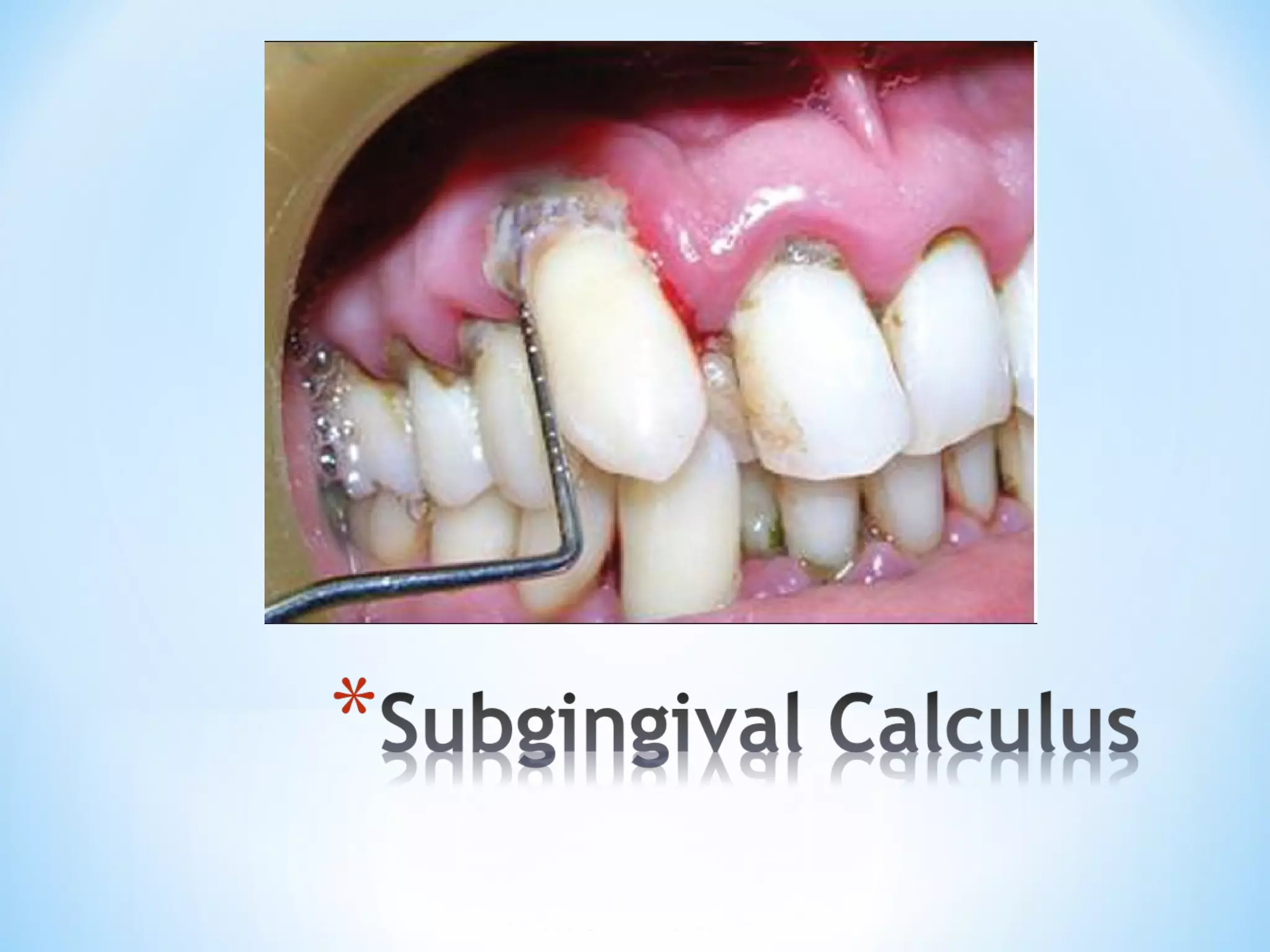


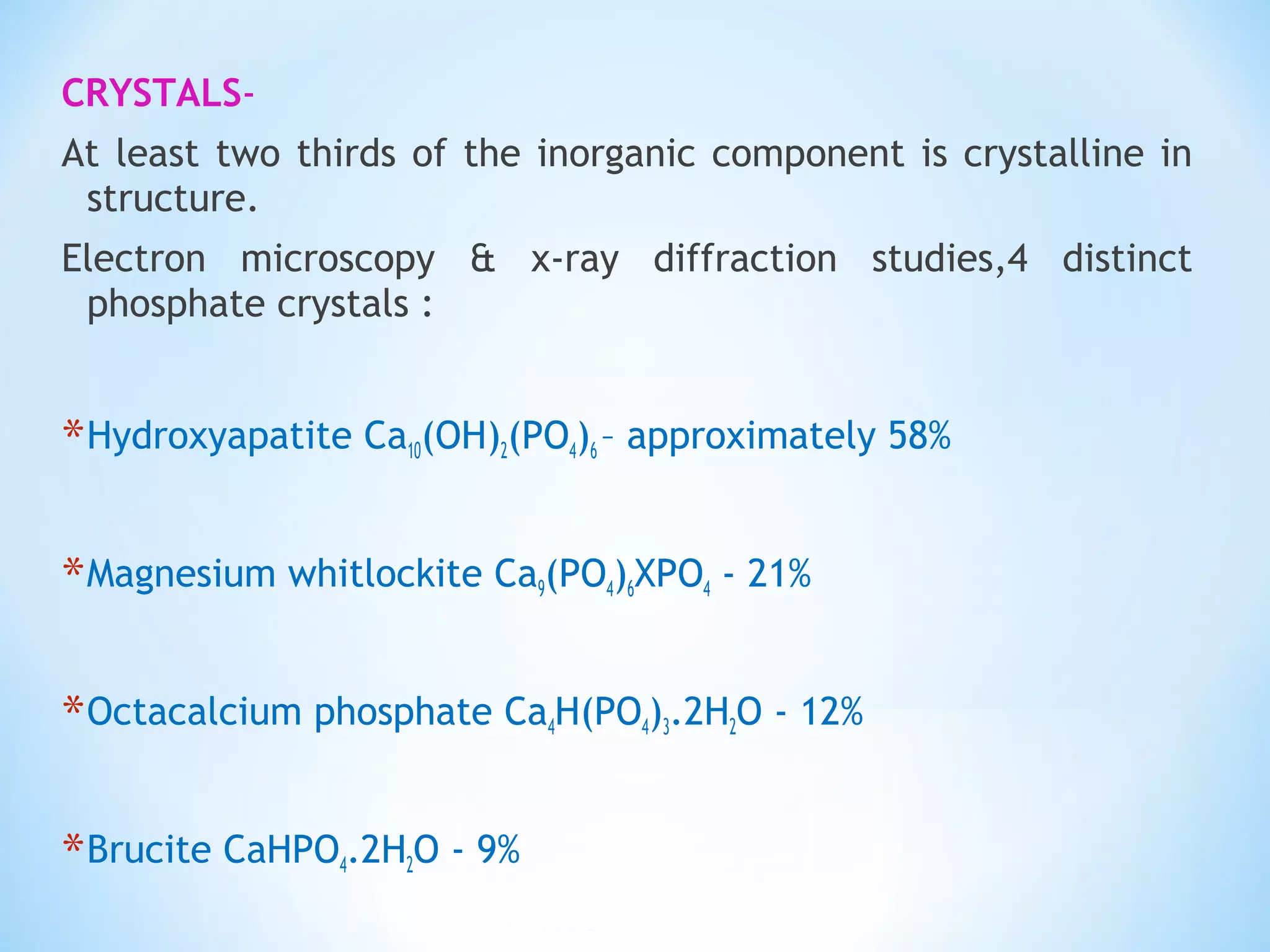








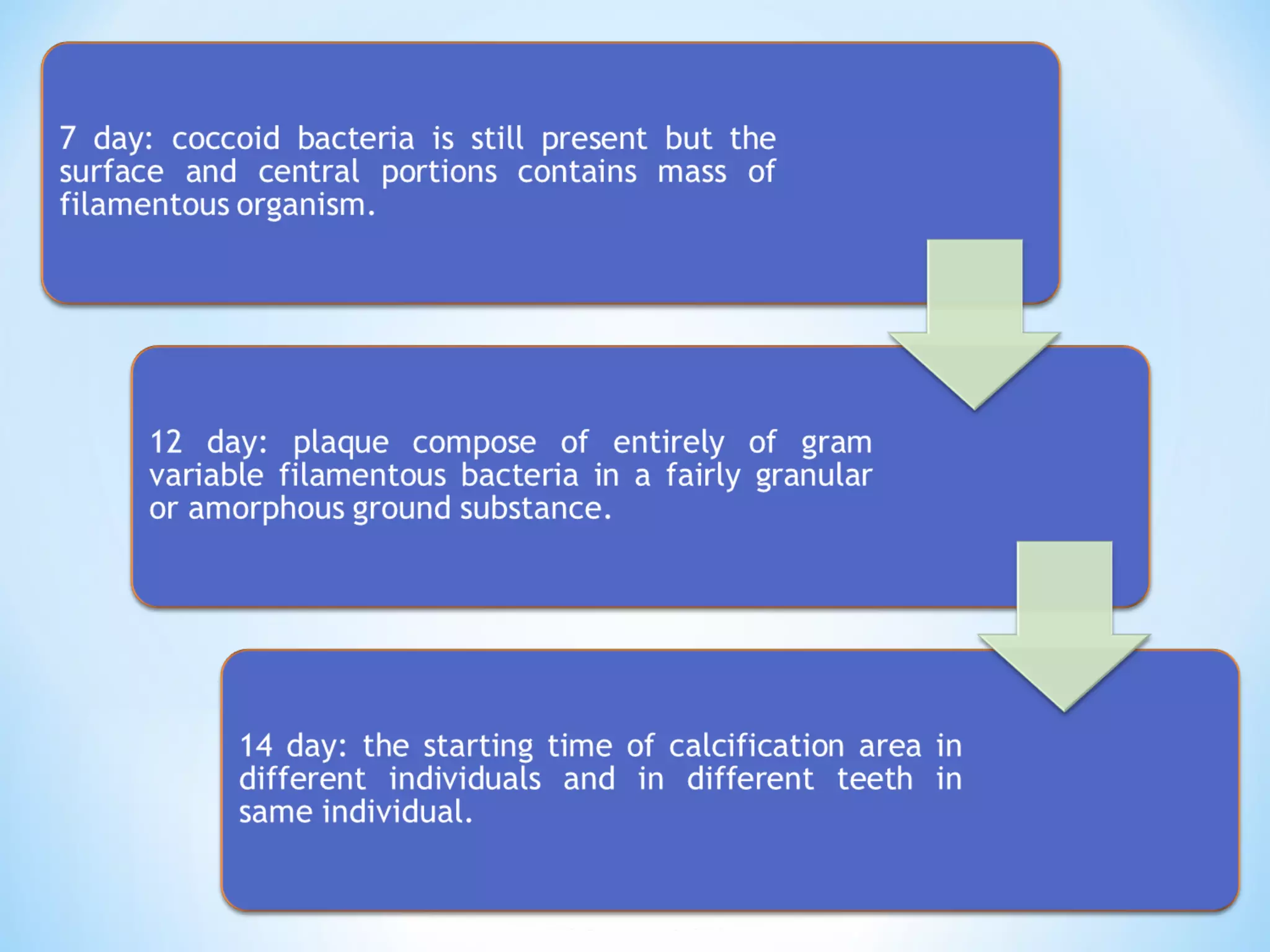



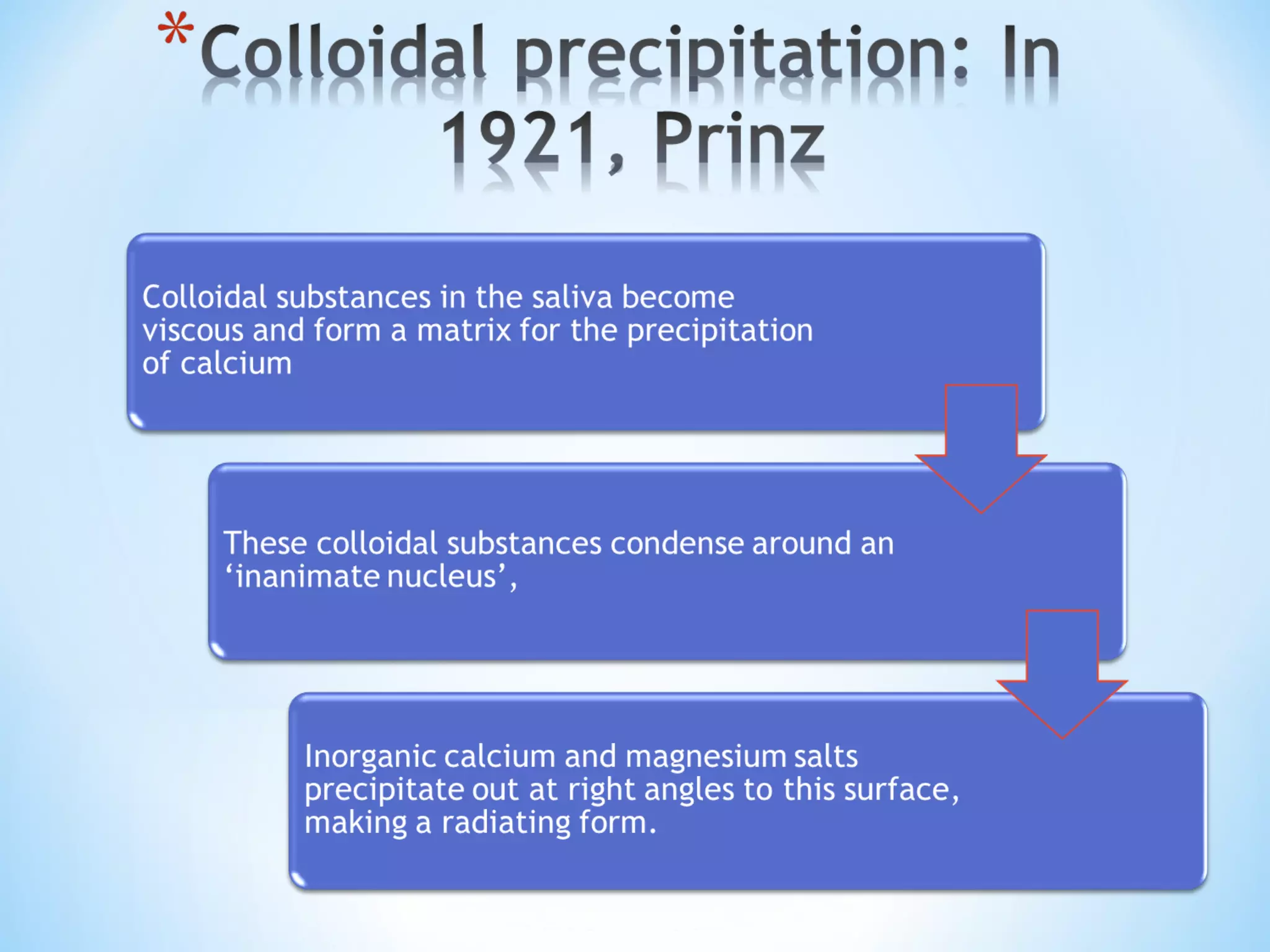


























Calculus forms in layers on teeth through the mineralization of dental plaque. It consists of inorganic minerals like hydroxyapatite and organic components from bacteria and saliva. Factors like diet, age, habits, and saliva composition can affect the rate of calculus formation. Calculus is classified as supragingival or subgingival based on its location relative to the gingiva. Both types consist of calcium phosphate crystals embedded in an organic matrix but subgingival calculus has a higher mineral content. Calculus formation occurs through the precipitation and accumulation of minerals within the matrix over time.


