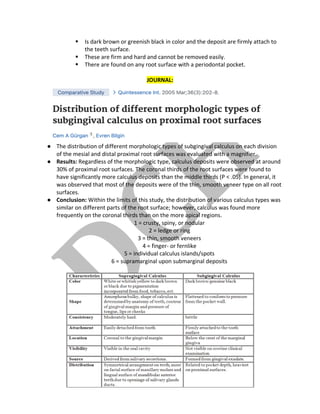
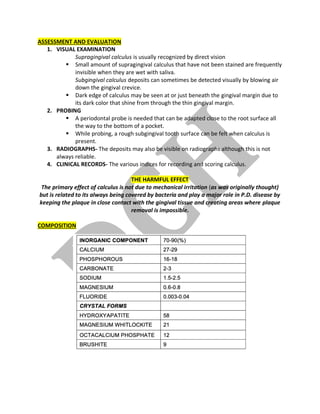
Dental calculus, or tartar, is a hardened deposit that forms on teeth. It begins as dental plaque, which mineralizes on the tooth surface. Calculus forms in two locations: supragingival calculus forms above the gumline and is whitish in color, while subgingival calculus forms below the gumline and is dark in color. Several factors influence calculus formation, including saliva composition and bacterial activity. Calculus promotes the retention of dental plaque and can contribute to periodontal disease if not removed.