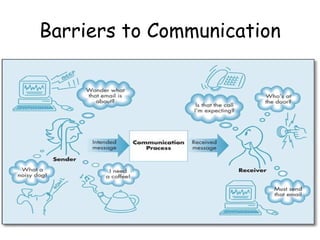
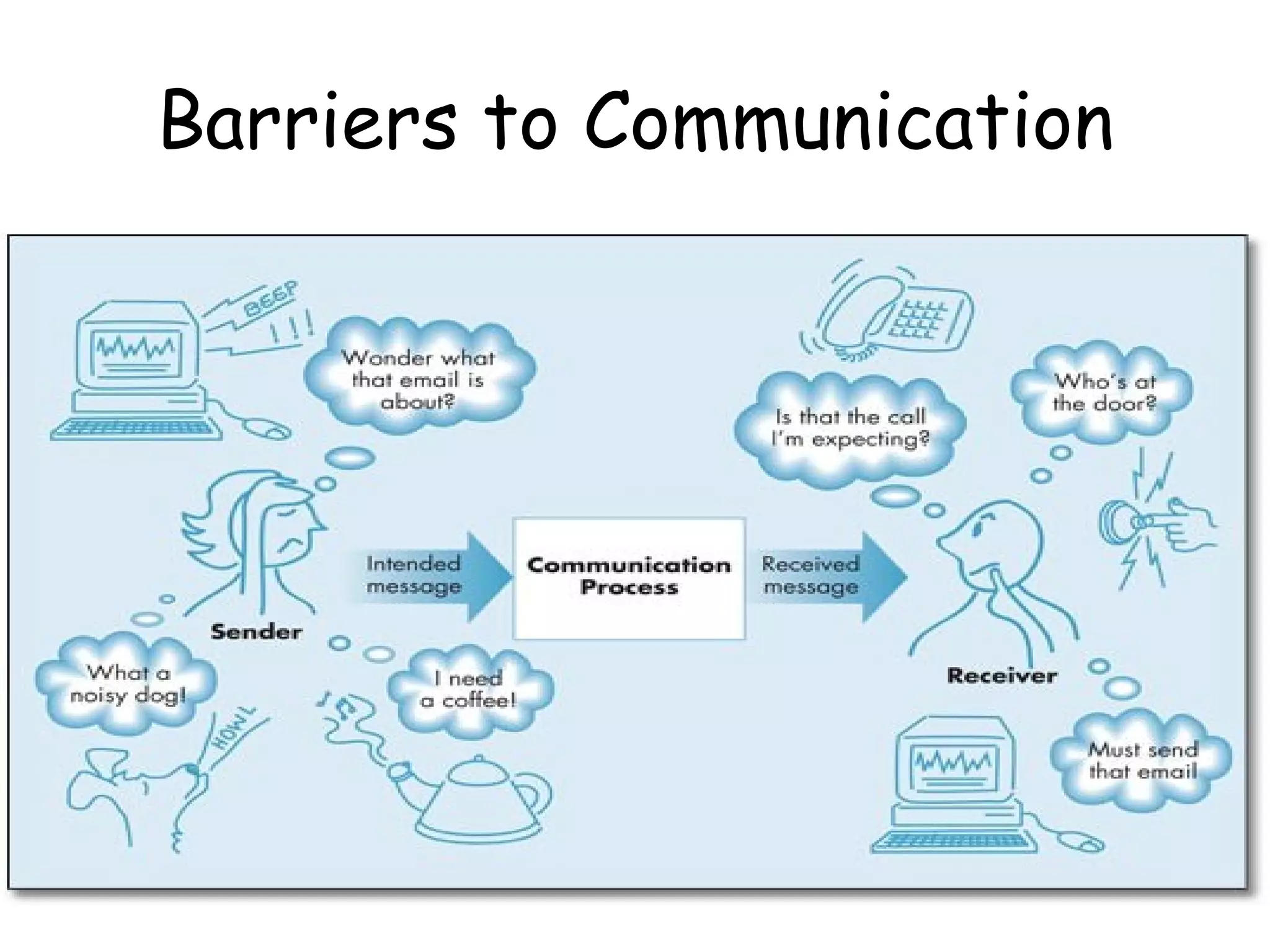
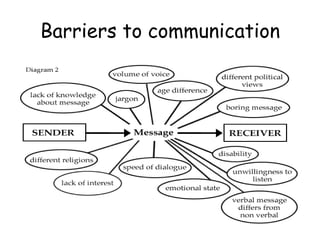
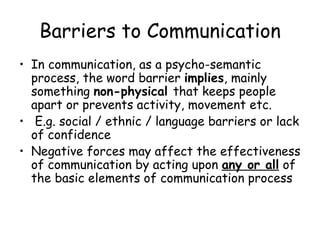
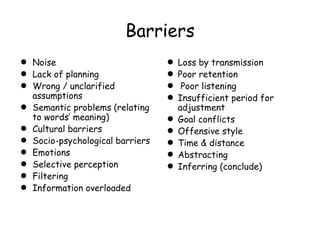
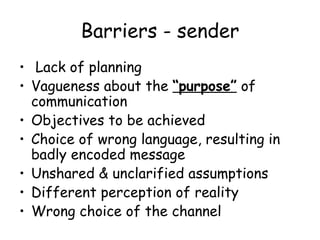
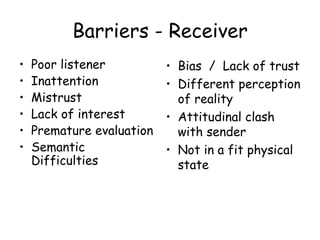
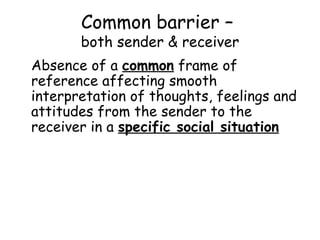
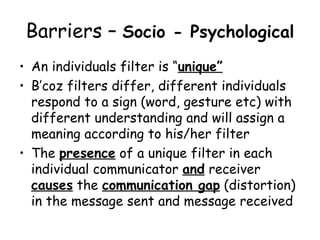
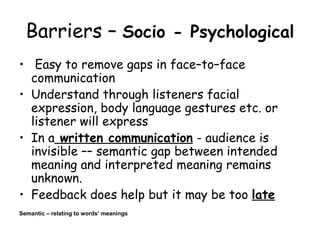
There are many potential barriers to effective communication, including noise, lack of planning, wrong assumptions, semantic problems, cultural barriers, emotions, selective perception, filtering of information, information overload, loss during transmission, poor retention, poor listening skills, insufficient time for adjustment, goal conflicts, offensive communication styles, issues of time and distance, making wrong inferences, and various socio-psychological barriers between individuals. These barriers can occur at the stages of both sending and receiving messages and can result from differences in perception, experiences, and frames of reference between communicators. Overcoming these barriers requires awareness of potential issues and planning effective communication strategies.