By
Dr KHALED ALGARIRI
CAMS- QASSIM UNIVERSITY
March 2023
INTRODUCTION
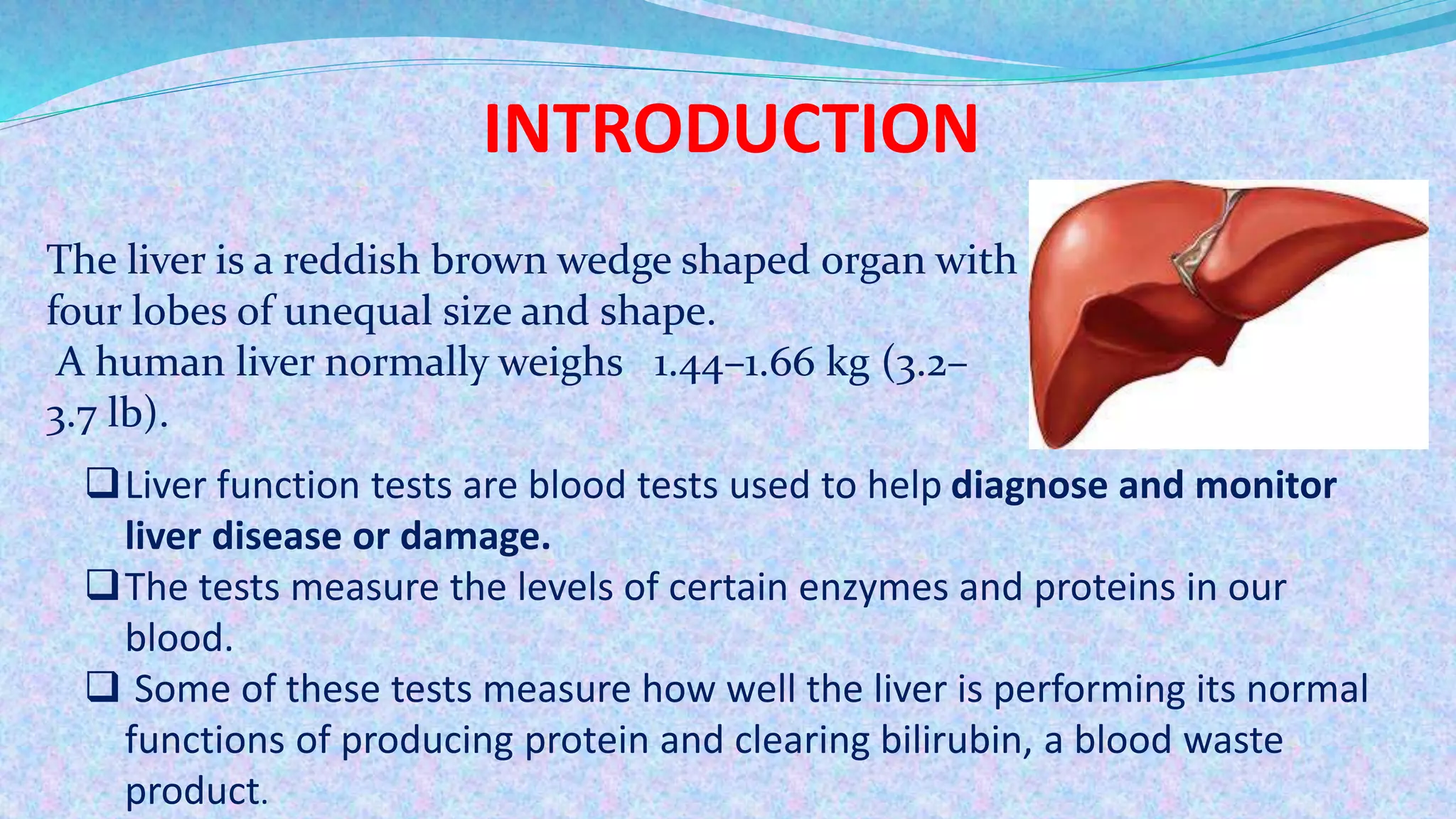
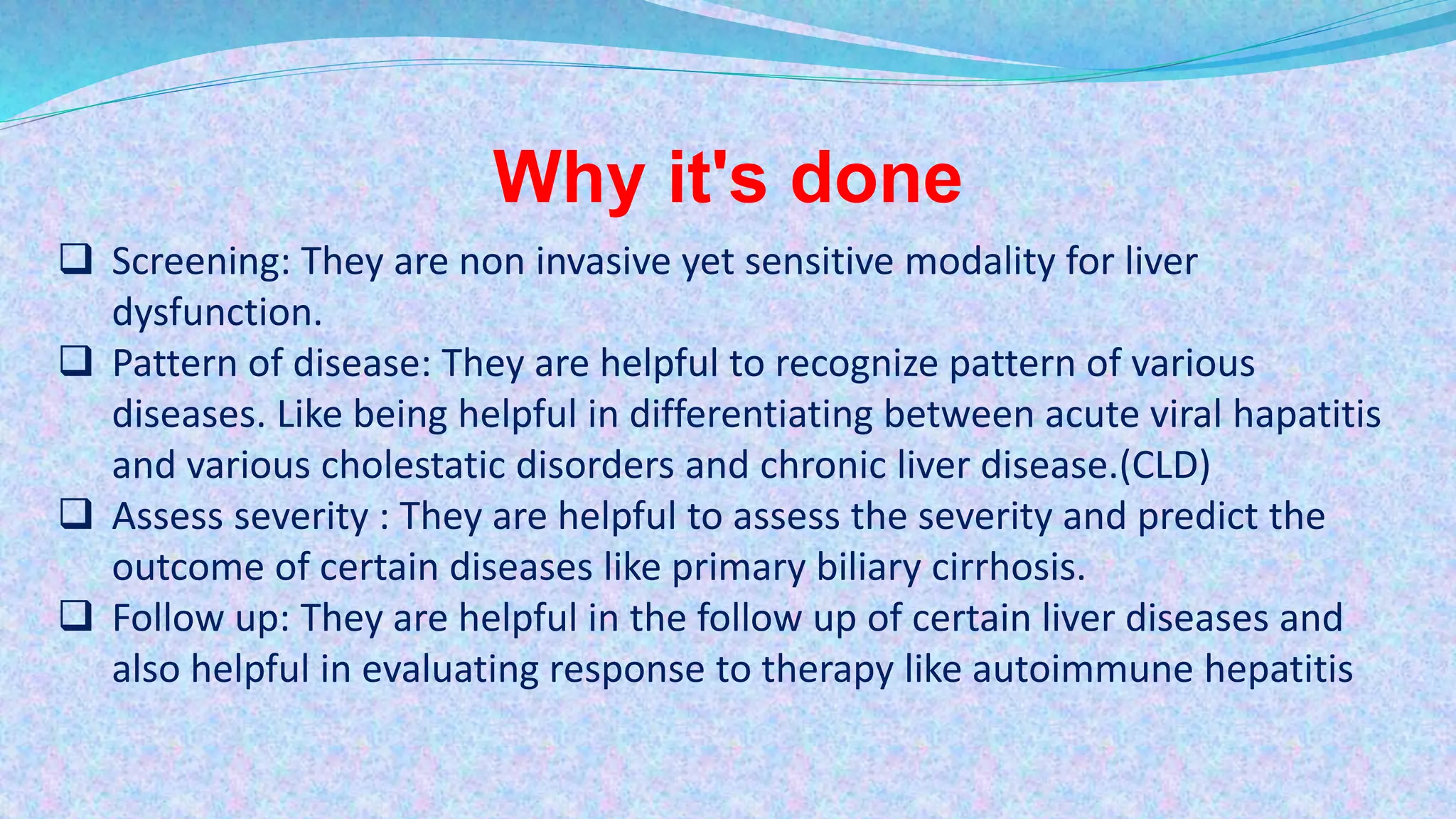
The liver is a reddish brown wedge shaped organ with
four lobes of unequal size and shape.
A human liver normally weighs 1.44–1.66 kg (3.2–
3.7 lb).
Liver function tests are blood tests used to help diagnose and monitor
liver disease or damage.
The tests measure the levels of certain enzymes and proteins in our

blood.
 Some of these tests measure how well the liver is performing its normal
functions of producing protein and clearing bilirubin, a blood waste
product.
FUNCTIONS OF THE LIVER
1-Synthetic functions : synthesis of plasma proteins,cholesterol,
triacylglycerol and lipoprotein
2-Metabolic function: protein metabolism, ketogenesis, TCA cycle,
production of ATP
3-Detoxification & excretion: ammonia to urea, bilirubin,
cholesterol, drug metabolites.
4- Homeostasis : blood glucose regulation
5-Storage function: Vitamin A,D,K,B12
6-Production of bile salts
Why it's done
 Screening: They are non invasive yet sensitive modality for liver
dysfunction.
 Pattern of disease: They are helpful to recognize pattern of various
diseases. Like being helpful in differentiating between acute viral hapatitis
and various cholestatic disorders and chronic liver disease.(CLD)
 Assess severity : They are helpful to assess the severity and predict the
outcome of certain diseases like primary biliary cirrhosis.
 Follow up: They are helpful in the follow up of certain liver diseases and
also helpful in evaluating response to therapy like autoimmune hepatitis
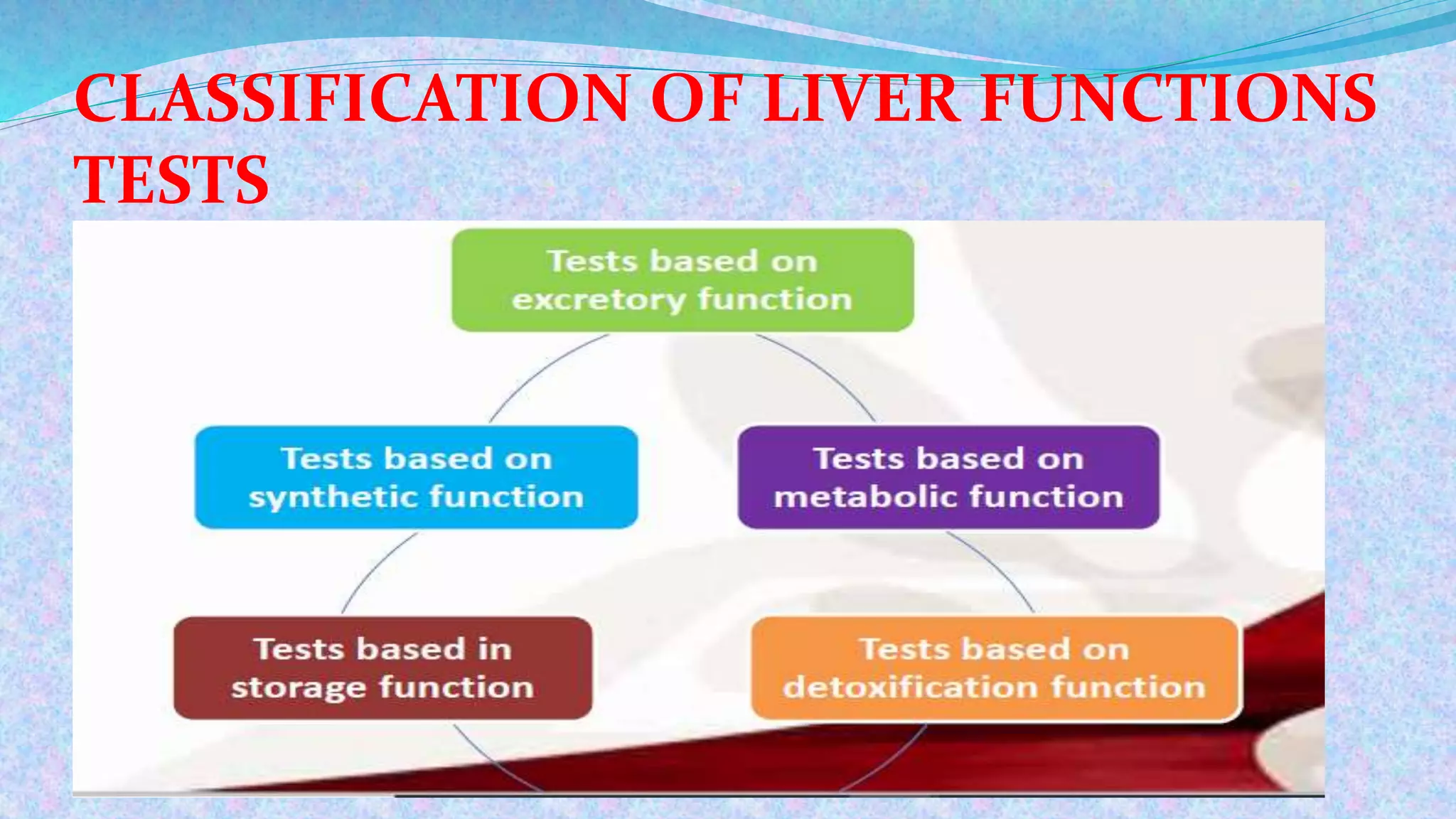
CLASSIFICATION OF LIVER FUNCTIONS
TESTS
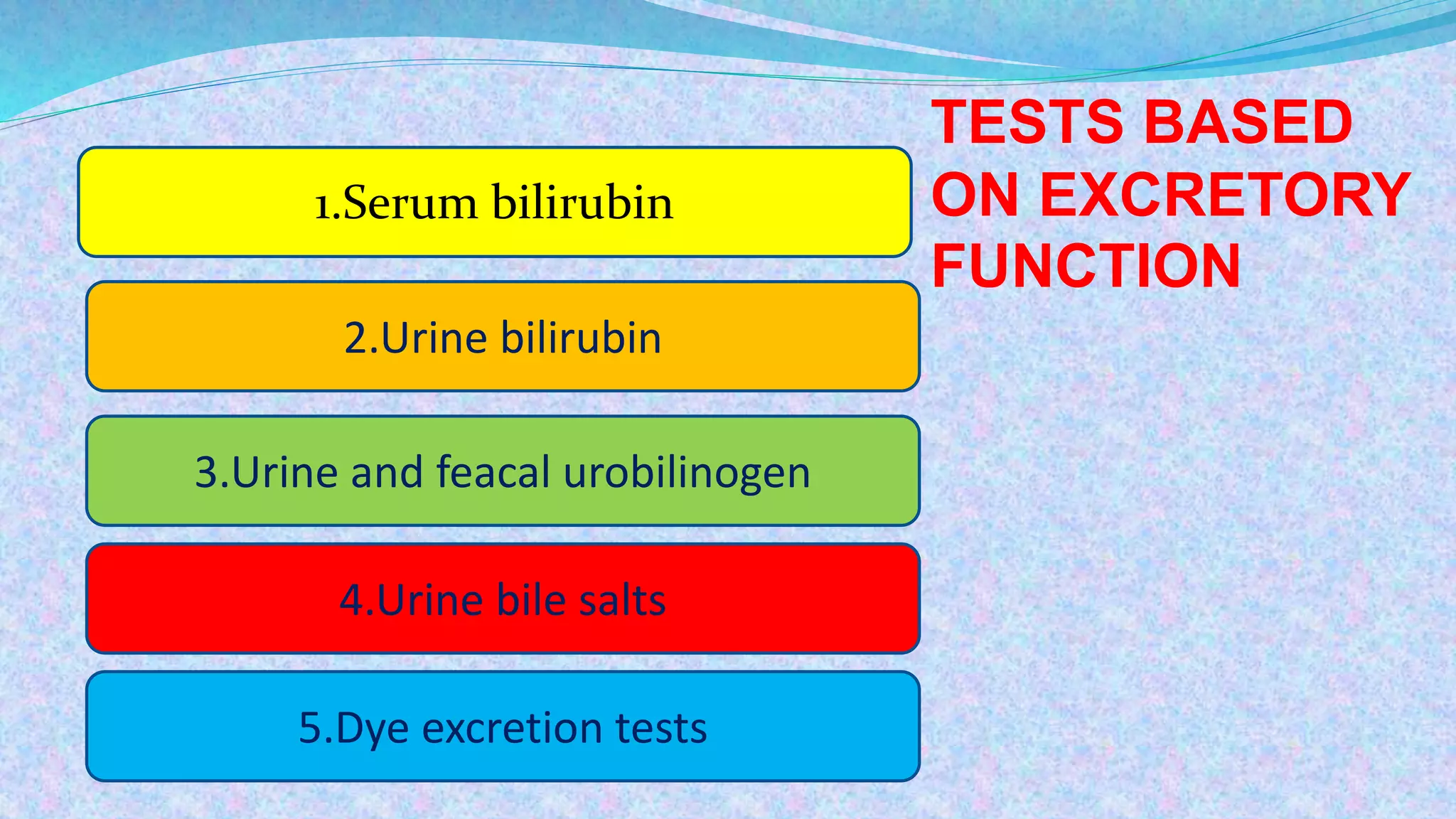
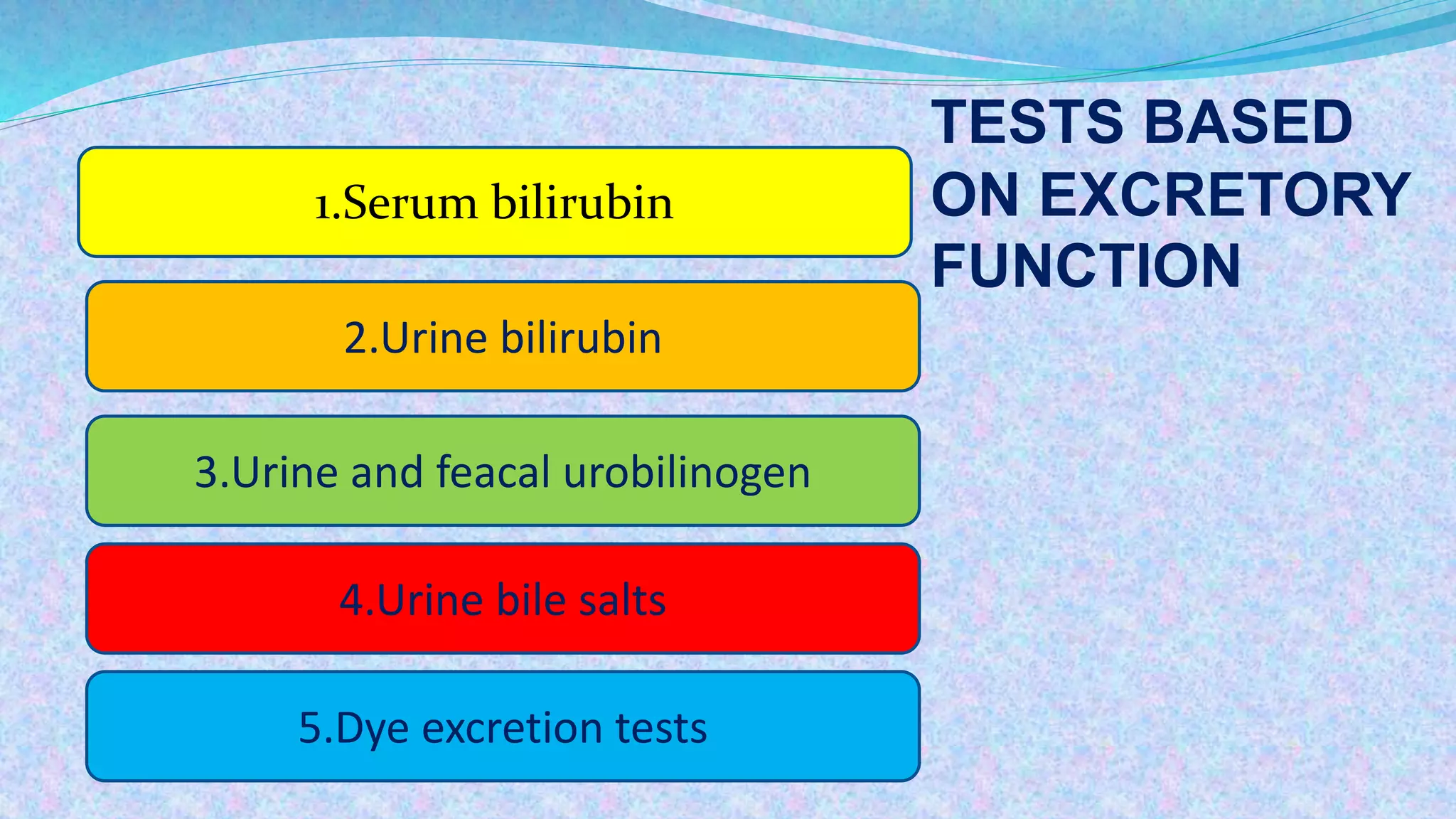
1.Serum bilirubin
2.Urine bilirubin
3.Urine and feacal urobilinogen
4.Urine bile salts
5.Dye excretion tests
TESTS BASED
ON EXCRETORY
FUNCTION
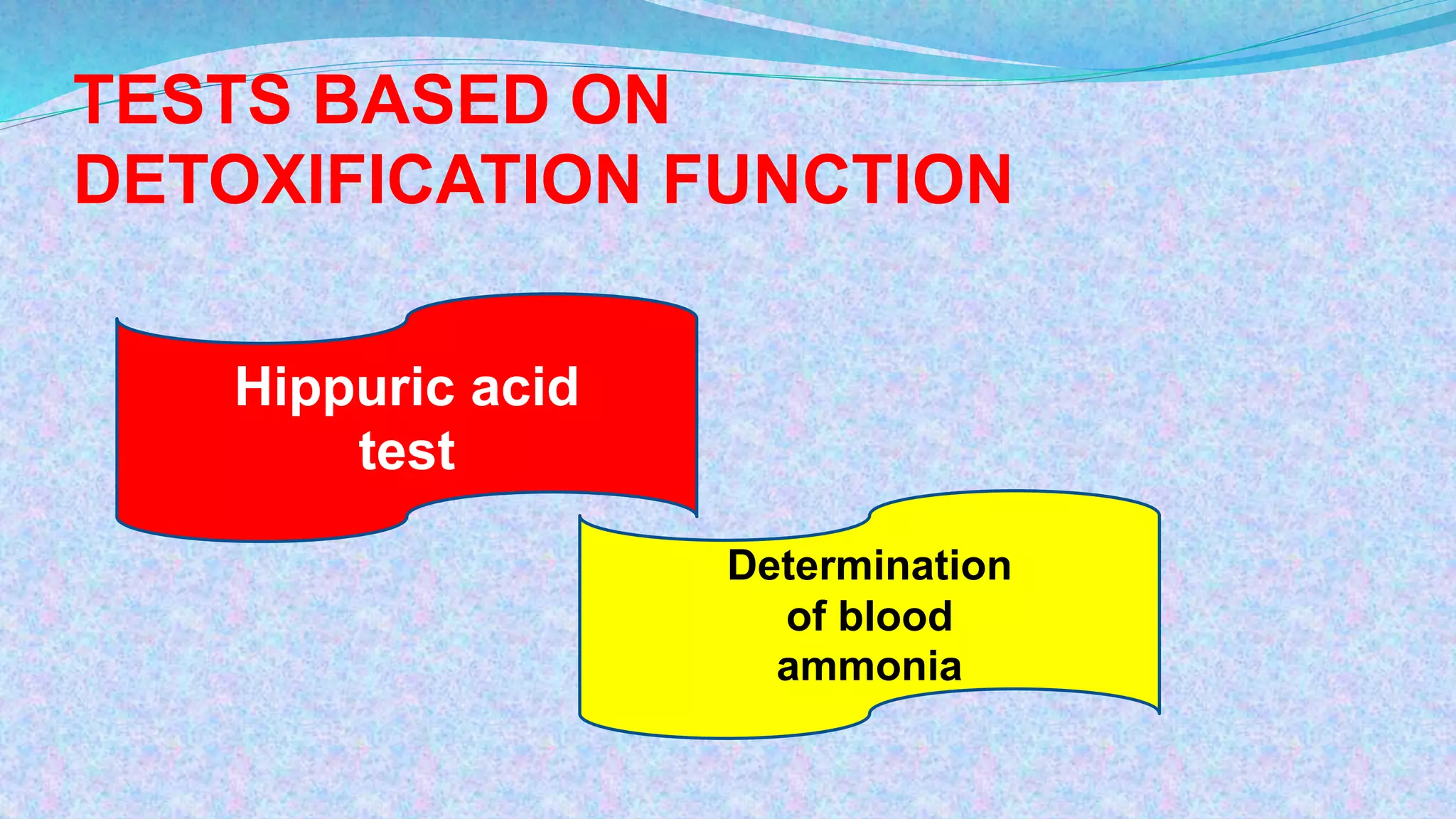
TESTS BASED ON
DETOXIFICATION FUNCTION
Hippuric acid
test
Determination
of blood
ammonia
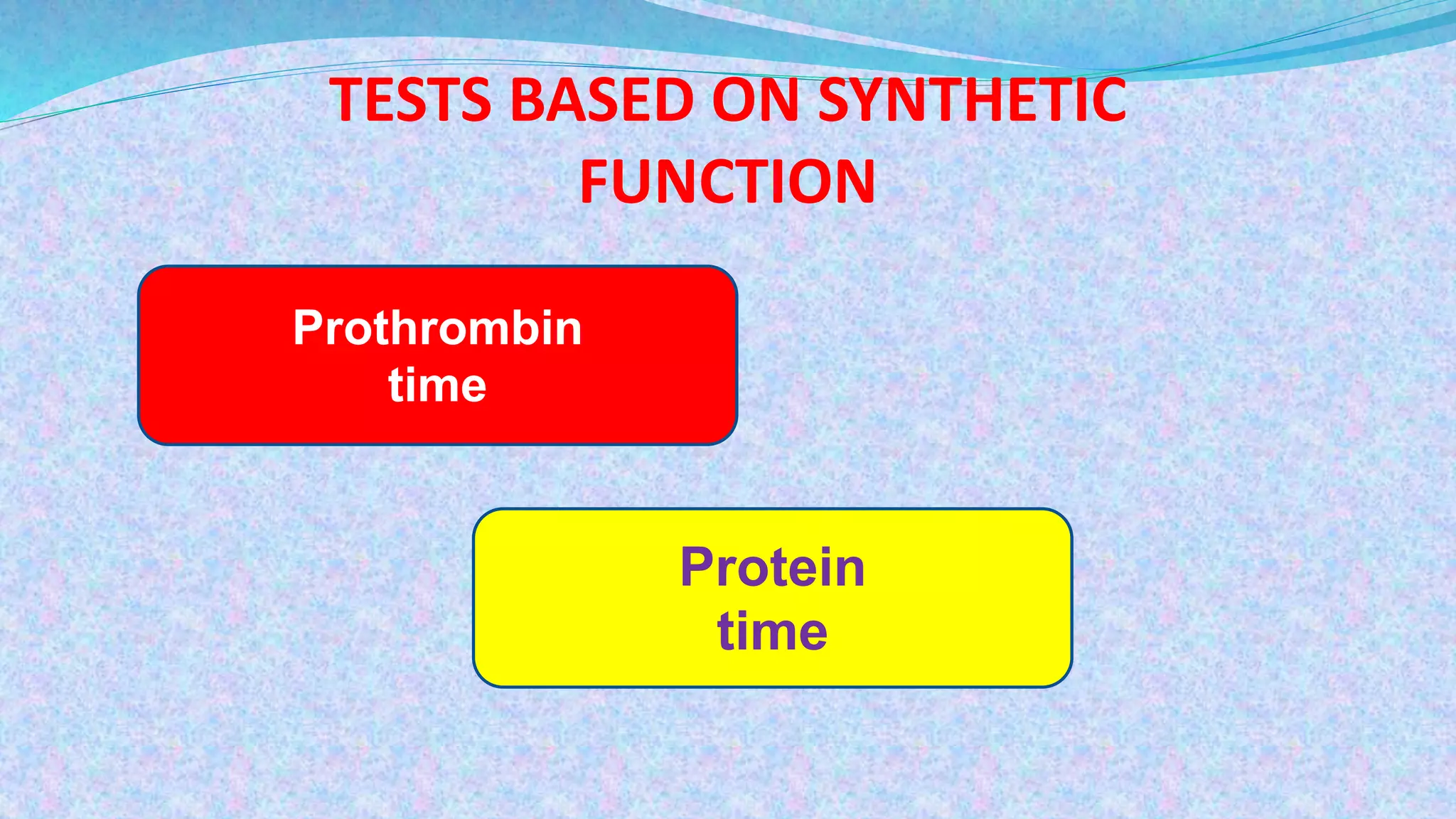
TESTS BASED ON SYNTHETIC
FUNCTION
Prothrombin
time
Protein
time
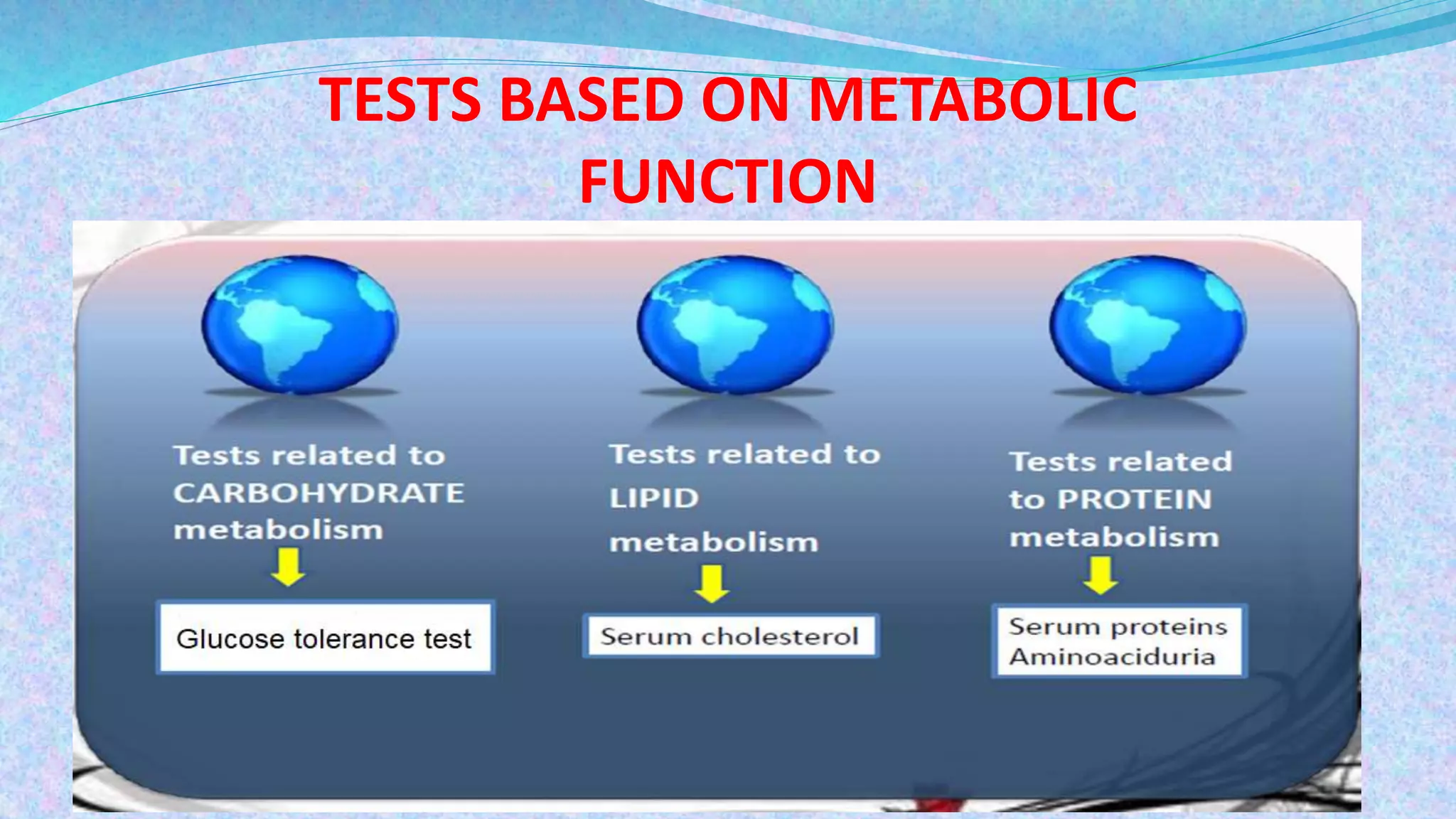
TESTS BASED ON METABOLIC
FUNCTION
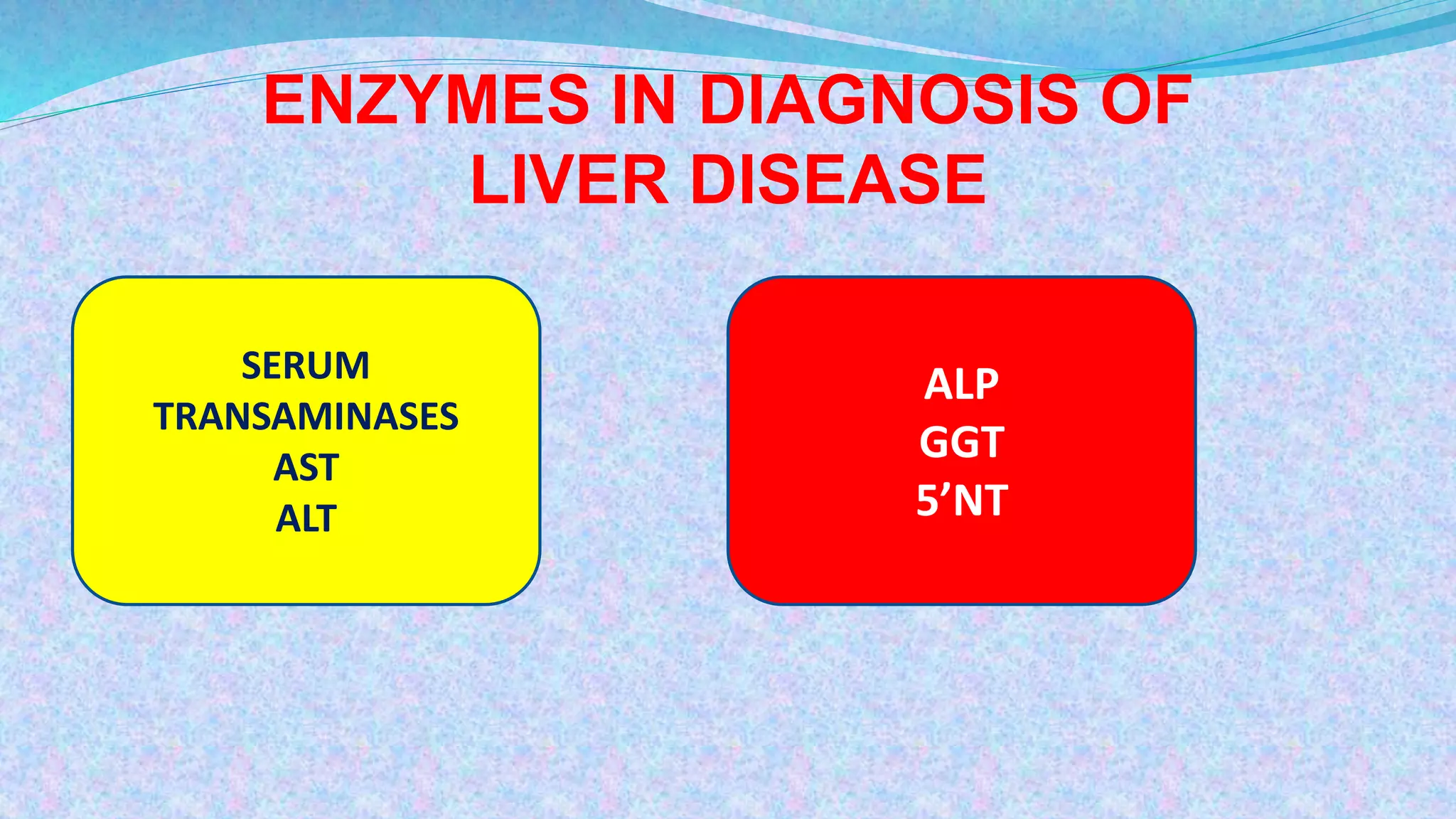
ENZYMES IN DIAGNOSIS OF
LIVER DISEASE
SERUM
TRANSAMINASES
AST
ALT
ALP
GGT
5’NT
1.Serum bilirubin
2.Urine bilirubin
3.Urine and feacal urobilinogen
4.Urine bile salts
5.Dye excretion tests
TESTS BASED
ON EXCRETORY
FUNCTION
Serum bilirubin
Bilirubin: is the end product of heme degradation
derived from breakdown senescent (aging) erythrocytes
by mononuclear phagocytes system specially in the
spleen, liver and bone marrow.
The major pigment present in bile is the orange
compound bilirubin.
Serum bilirubin
It is highly soluble in all cell membranes (hydrophobic) and is
also very toxic. Therefore, its excretion in the bile is one of the
very important functions of the liver.
Classification of bilirubin into direct & indirect bilirubin is
based on original van den bergh method of measuring
bilirubin.
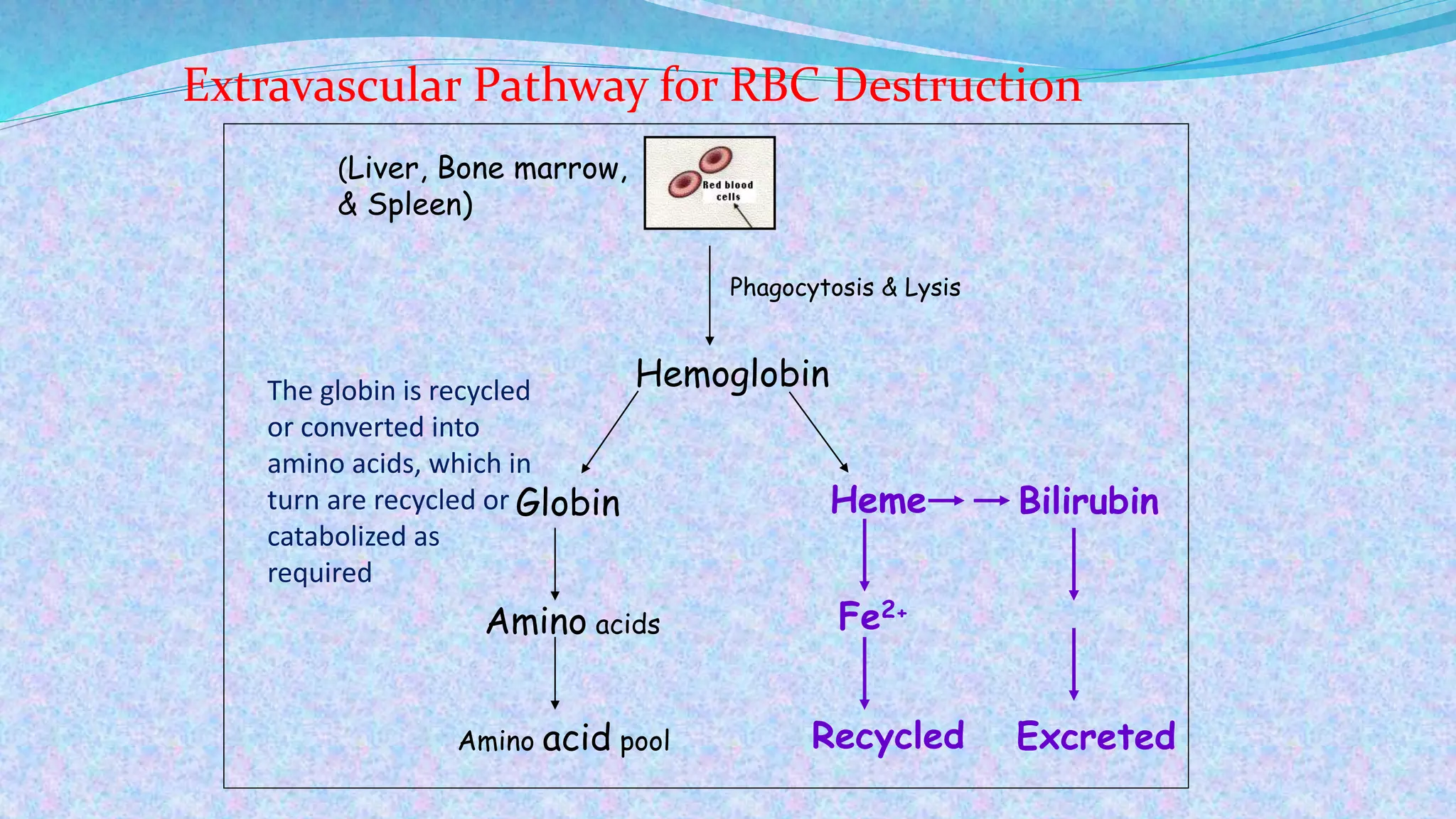
Extravascular Pathway for RBC Destruction
(Liver, Bone marrow,
& Spleen)
Hemoglobin
Globin
Amino acids
Amino acid pool
Heme Bilirubin
Fe2+
Excreted
Phagocytosis & Lysis
Recycled
The globin is recycled
or converted into
amino acids, which in
turn are recycled or
catabolized as
required
BILIRUBIN METABOLISM
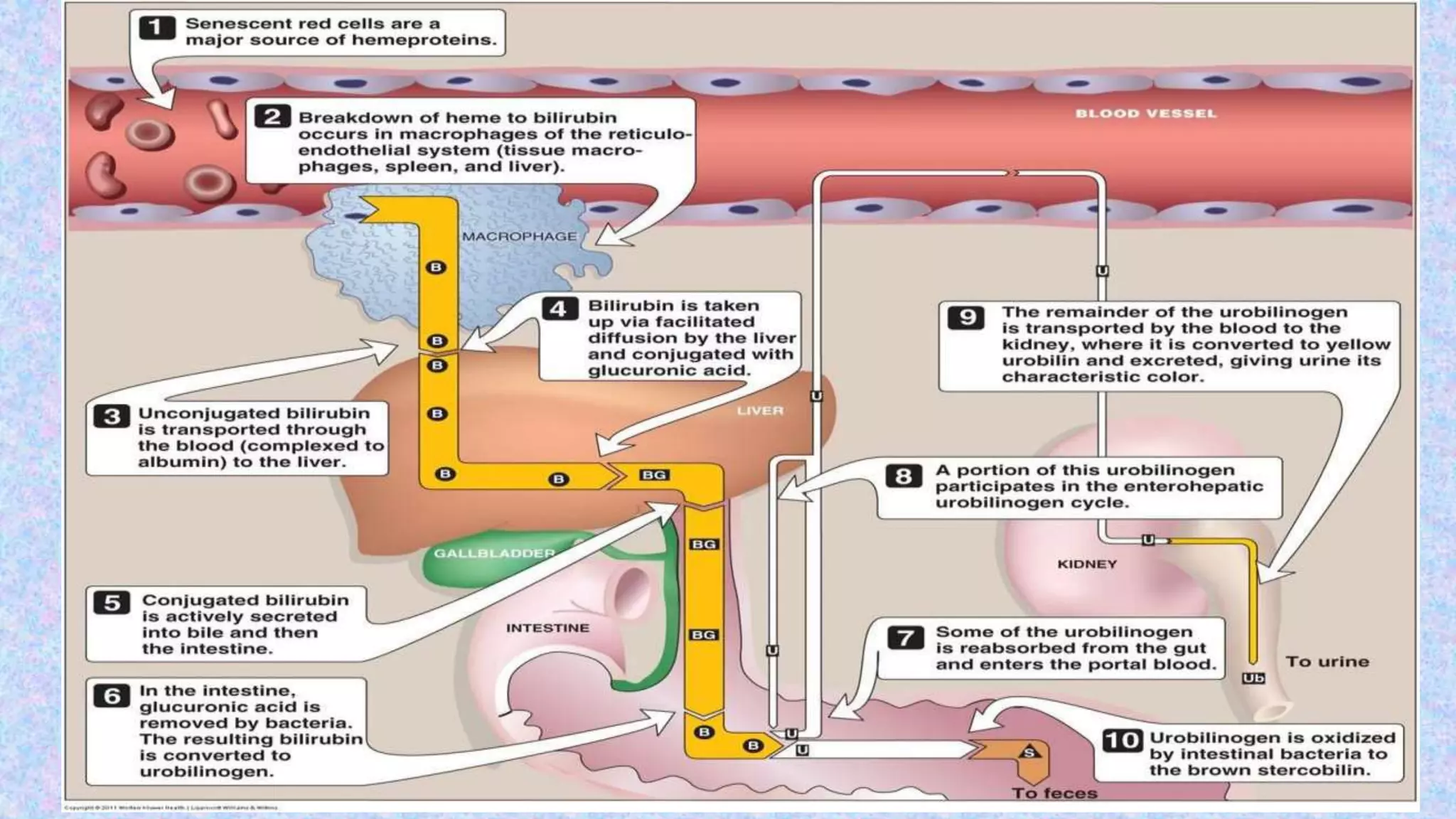
 Bilirubin is the excretory product formed by the catabolism of heme part of
hemoglobin.
 Porphyrin part of heme are converted to bilirubin in reticuloendothelial cells
of liver, spleen, bone marrow.
 Unconjugated bilirubin is bound to serum albumin &transferred to liver
where it is conjugated to glucuronate by UDP GLUCURONYL TRANSFERASE.
 Conjugated bilirubin is excreted into bile. A fraction of bilirubin from stool is
reabsorbed into blood via portal circulation (enterohepatic circulation)
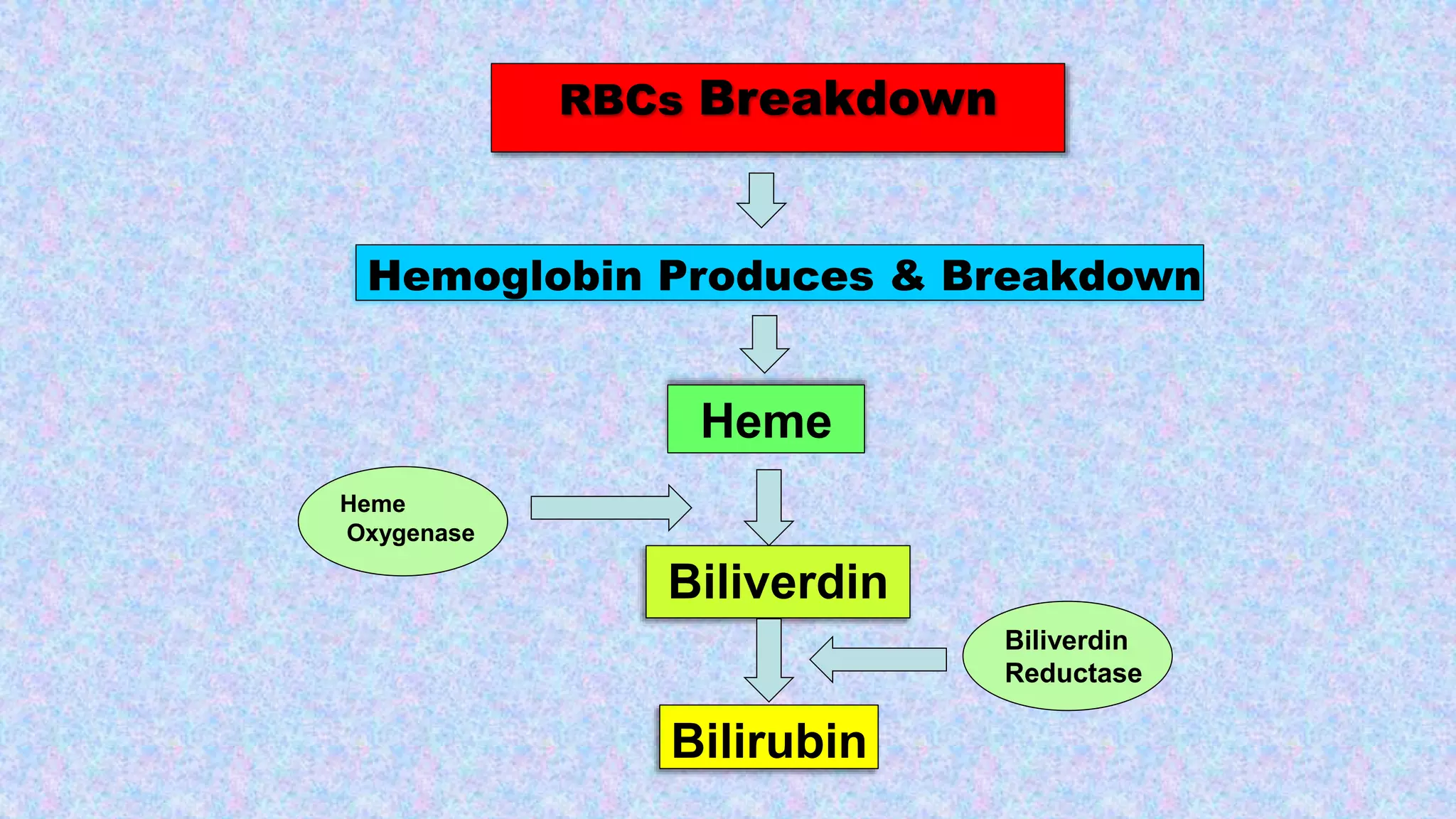
RBCs Breakdown
Hemoglobin Produces & Breakdown
Heme
Biliverdin
Bilirubin
Heme
Oxygenase
Biliverdin
Reductase
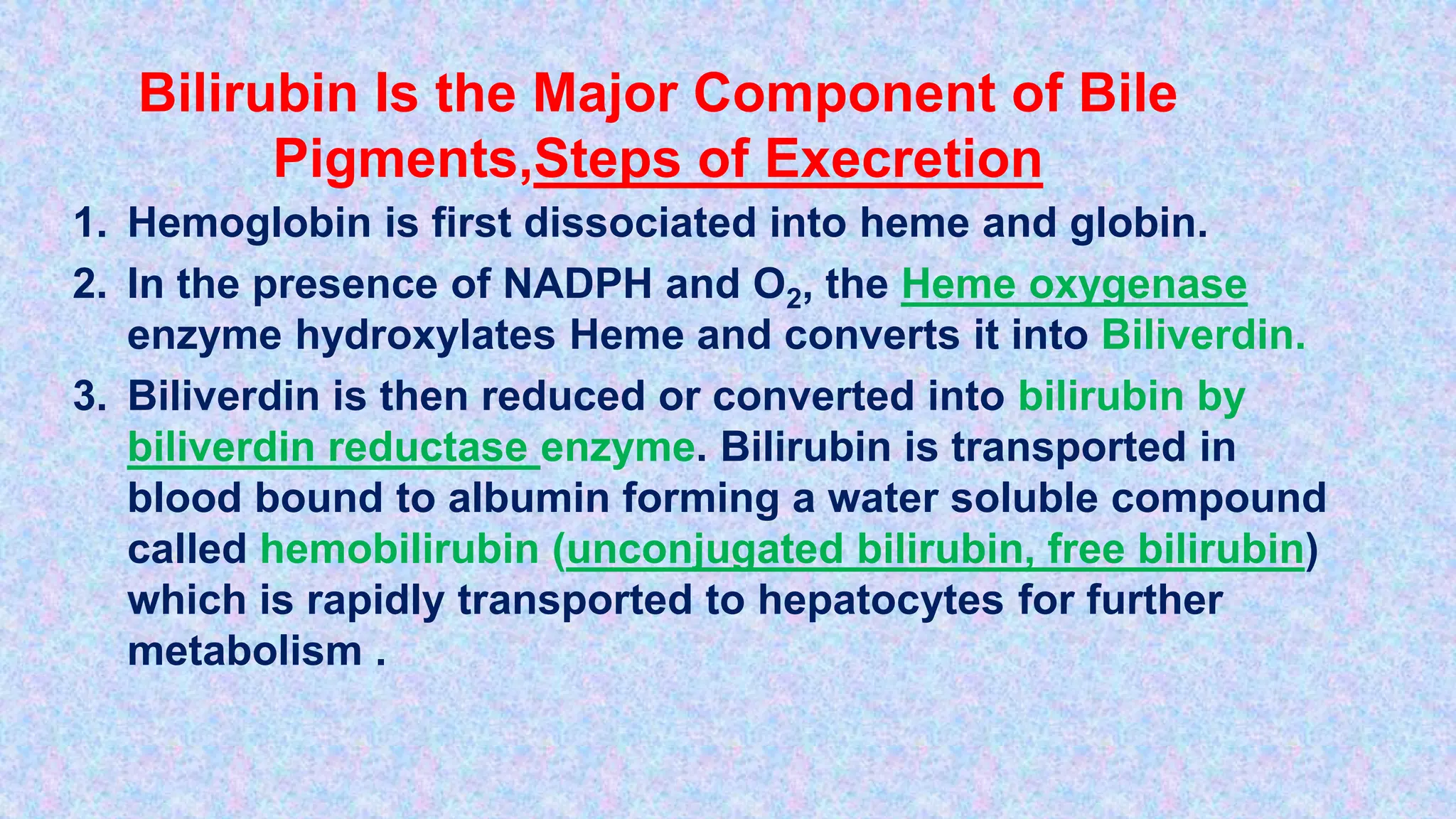
Bilirubin Is the Major Component of Bile
Pigments,Steps of Execretion
1. Hemoglobin is first dissociated into heme and globin.
2. In the presence of NADPH and O2, the Heme oxygenase
enzyme hydroxylates Heme and converts it into Biliverdin.
3. Biliverdin is then reduced or converted into bilirubin by
biliverdin reductase enzyme. Bilirubin is transported in
blood bound to albumin forming a water soluble compound
called hemobilirubin (unconjugated bilirubin, free bilirubin)
which is rapidly transported to hepatocytes for further
metabolism .
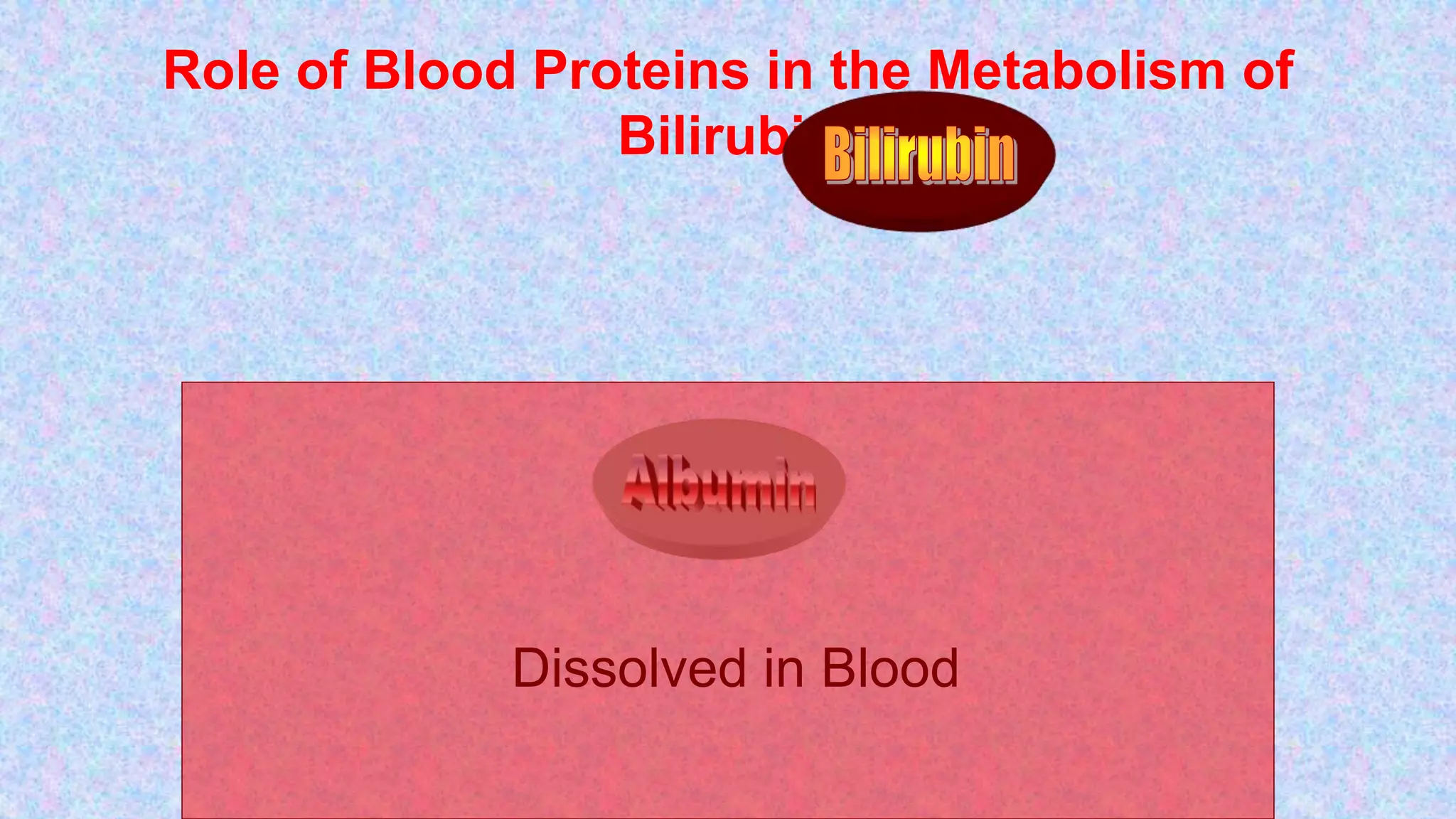
Role of Blood Proteins in the Metabolism of
Bilirubin
1. Albumin
Dissolved in Blood
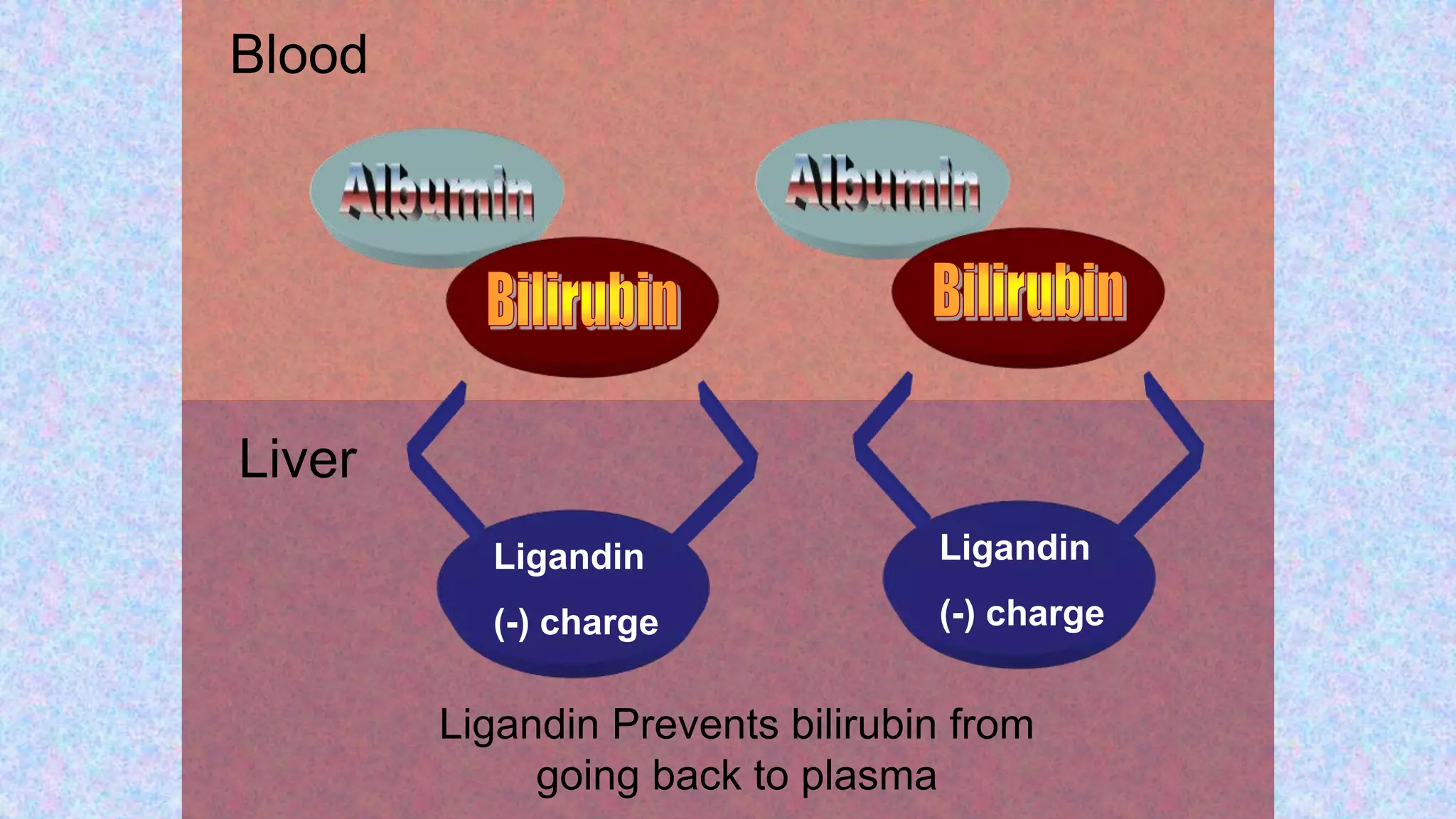
Blood
Liver
Ligandin
(-) charge
Ligandin
(-) charge
Ligandin Prevents bilirubin from
going back to plasma
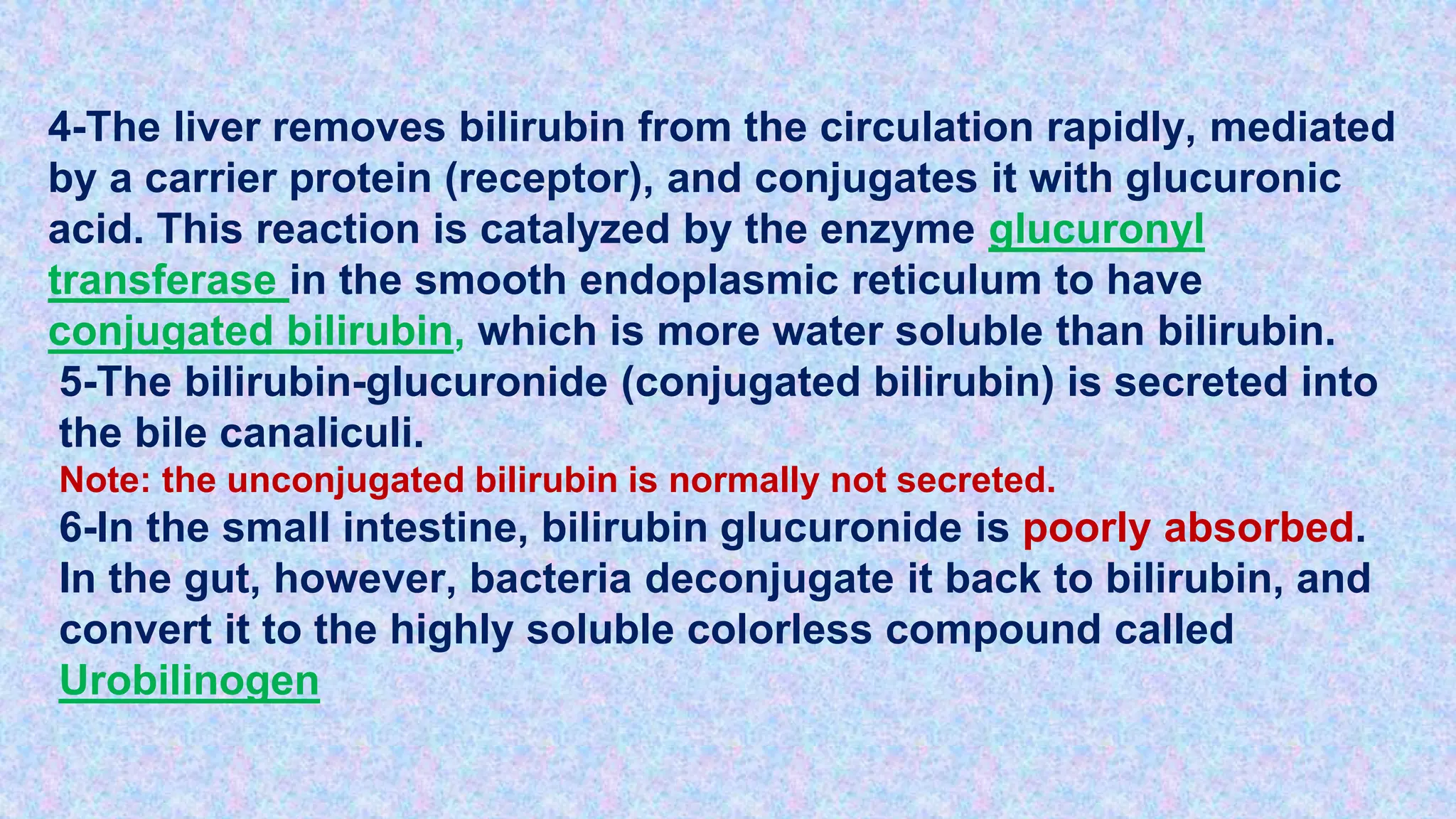
4-The liver removes bilirubin from the circulation rapidly, mediated
by a carrier protein (receptor), and conjugates it with glucuronic
acid. This reaction is catalyzed by the enzyme glucuronyl
transferase in the smooth endoplasmic reticulum to have
conjugated bilirubin, which is more water soluble than bilirubin.
5-The bilirubin-glucuronide (conjugated bilirubin) is secreted into
the bile canaliculi.
Note: the unconjugated bilirubin is normally not secreted.
6-In the small intestine, bilirubin glucuronide is poorly absorbed.
In the gut, however, bacteria deconjugate it back to bilirubin, and
convert it to the highly soluble colorless compound called
Urobilinogen
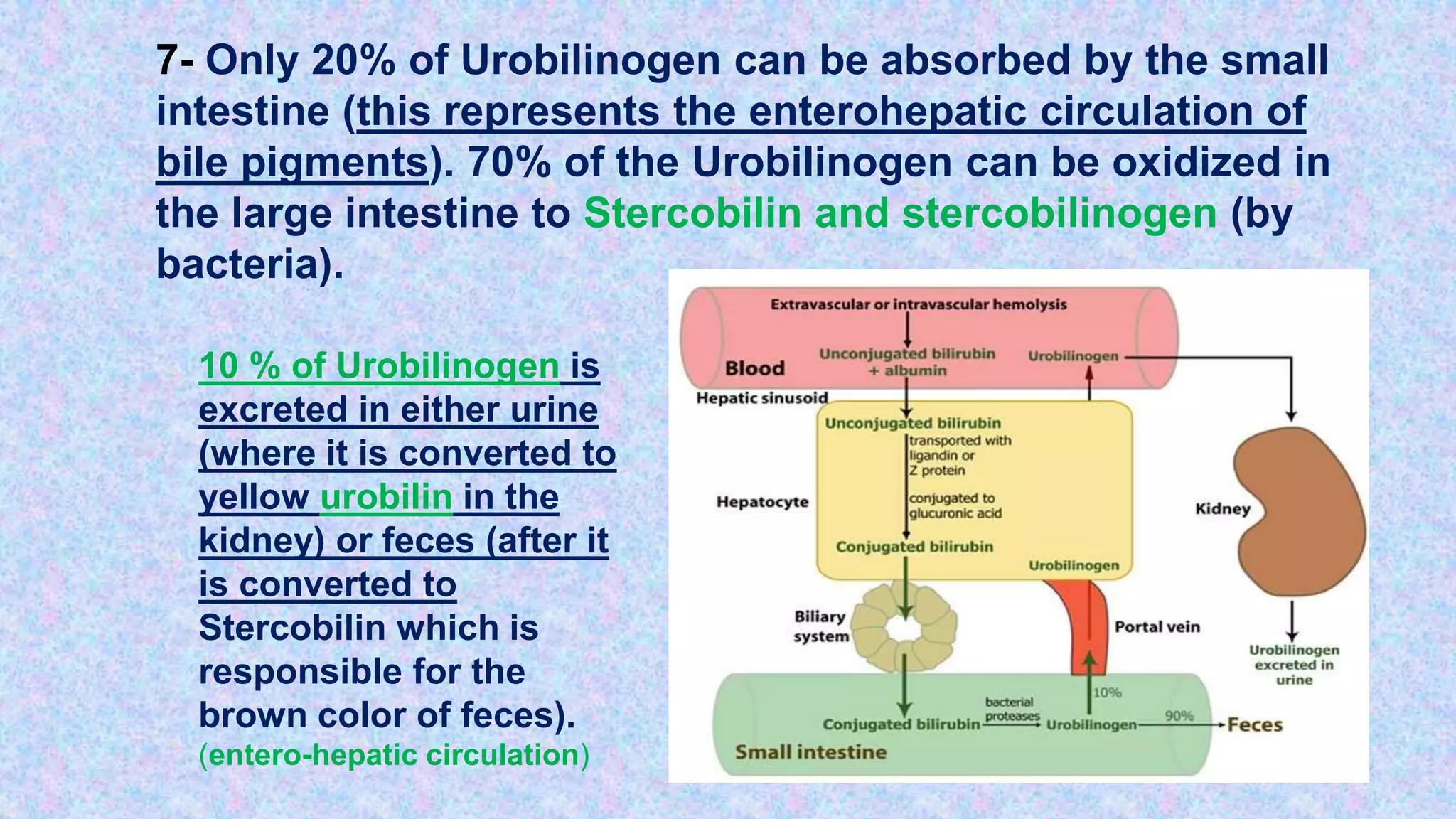
7- Only 20% of Urobilinogen can be absorbed by the small
intestine (this represents the enterohepatic circulation of
bile pigments). 70% of the Urobilinogen can be oxidized in
the large intestine to Stercobilin and stercobilinogen (by
bacteria).
10 % of Urobilinogen is
excreted in either urine
(where it is converted to
yellow urobilin in the
kidney) or feces (after it
is converted to
Stercobilin which is
responsible for the
brown color of feces).
(entero-hepatic circulation)
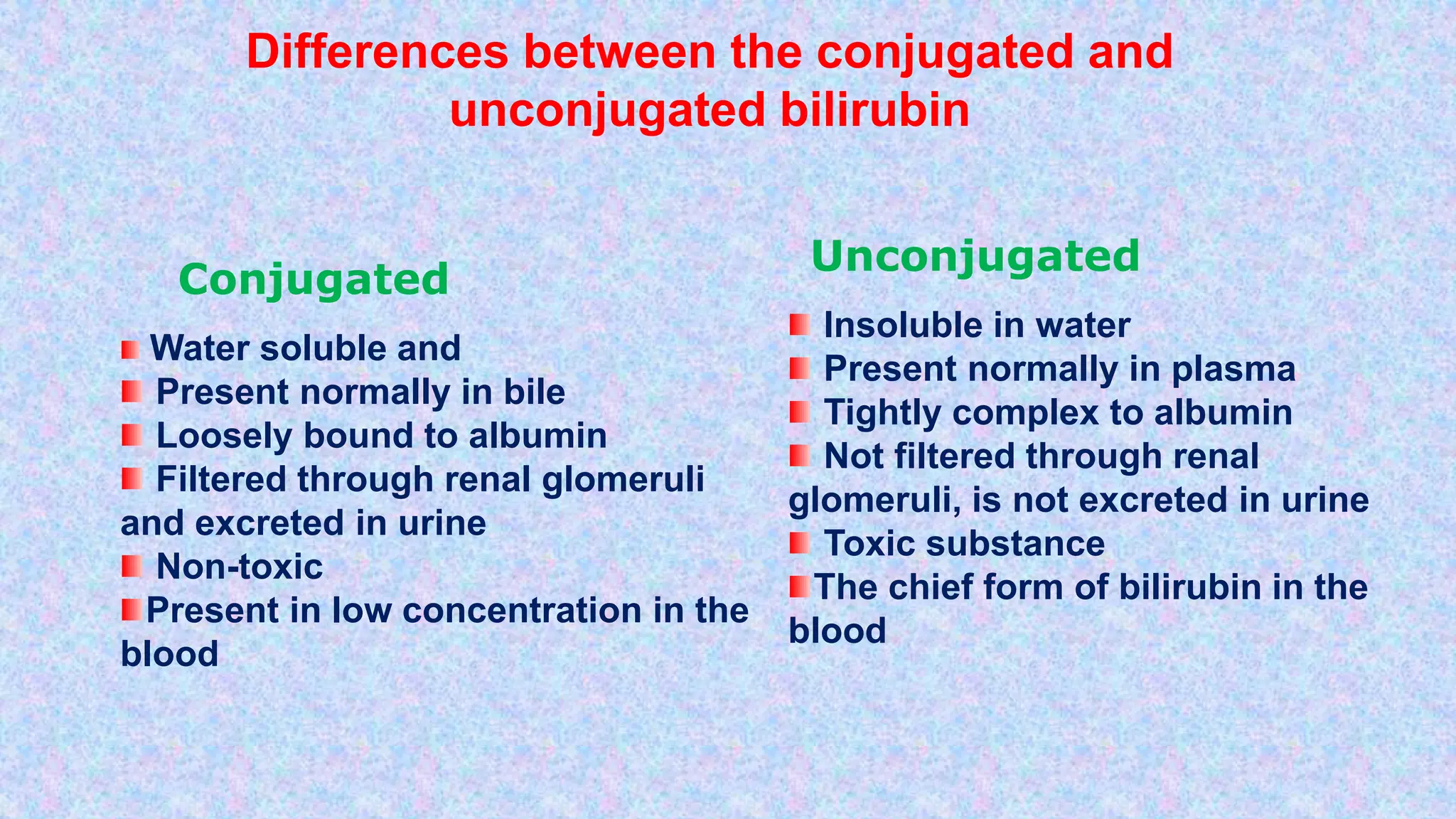
Insoluble in water
Present normally in plasma
Tightly complex to albumin
Not filtered through renal
glomeruli, is not excreted in urine
Toxic substance
The chief form of bilirubin in the
blood
Unconjugated
Water soluble and
Present normally in bile
Loosely bound to albumin
Filtered through renal glomeruli
and excreted in urine
Non-toxic
Present in low concentration in the
blood
Conjugated
Differences between the conjugated and
unconjugated bilirubin
Diagnostic Importance of Bilirubin
• Disruption of bilirubin metabolism and excretion can cause
hyperbilirubinaemia and subsequent jaundice
• Hyperbilirubinaemia maybe unconjugated (indirect) or
conjugated (direct) depending on the type of bilirubin present in
plasma.
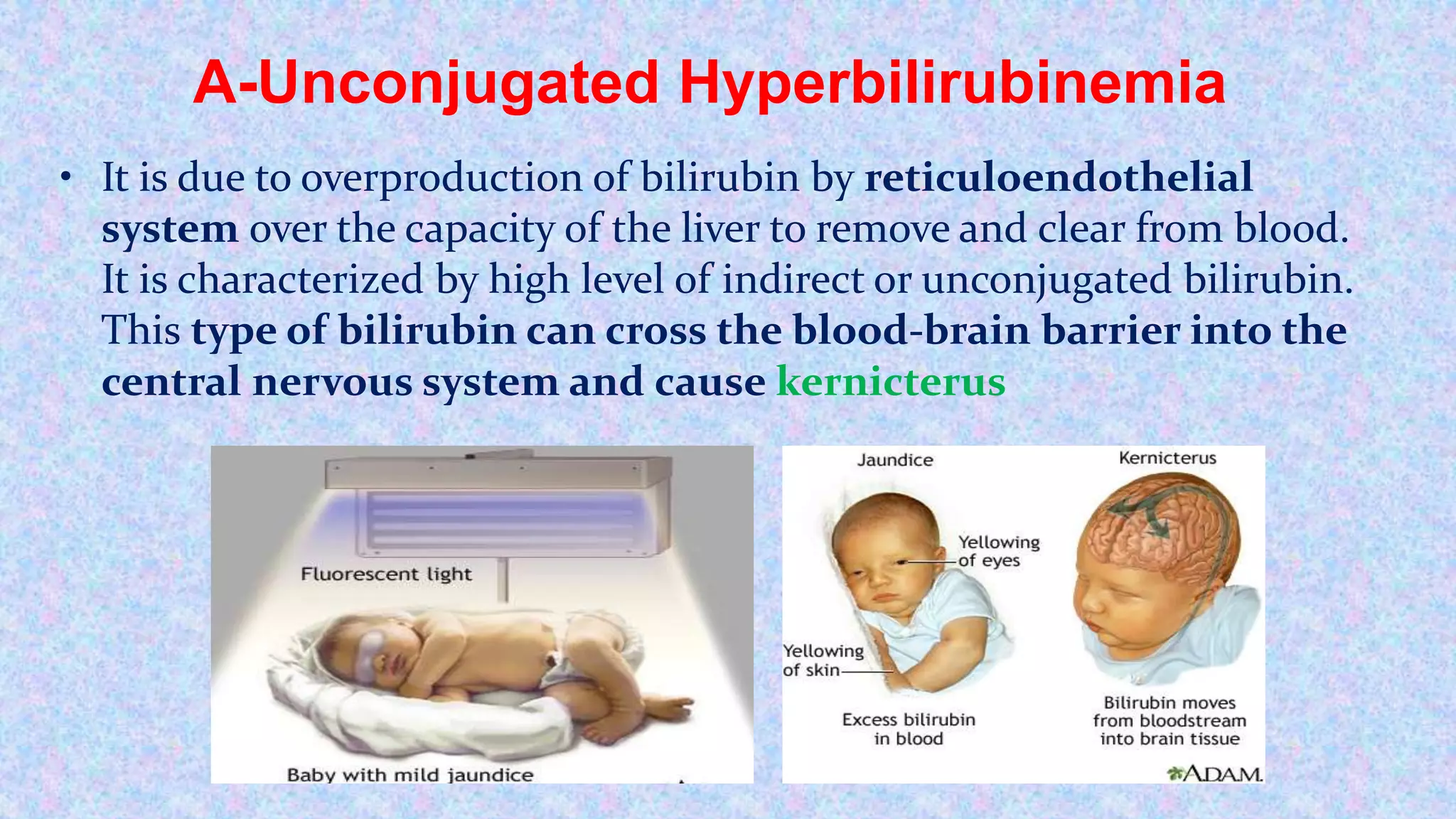
A-Unconjugated Hyperbilirubinemia
• It is due to overproduction of bilirubin by reticuloendothelial
system over the capacity of the liver to remove and clear from blood.
It is characterized by high level of indirect or unconjugated bilirubin.
This type of bilirubin can cross the blood-brain barrier into the
central nervous system and cause kernicterus
Unconjugated hyperbilirubinemia occurs in the
following conditions
I-Neonatal or Physiologic Jaundice: This is the most
common cause of jaundice in neonatal age. It results from
accelerated hemolysis and immature hepatic system for
uptake, conjugation and secretion of bilirubin.
II-Hemolytic jaundice (Anemia)
III-Congenital Syndromes related to uptake and
conjugation of bilirubin as follow :
1- Crigler-Najjar Syndrome
 Type 1: Due to severe decrease in the activity of UDP- glucuronyl
transferase.
 Type II: Due to decreased activity of UDP-glucuronyl transferase that
adds the second glucuronide group.
2- Gilbert Disease
 It is mainly due to hepatic defect in the uptake of bilirubin by
liver cells.
3-Toxic Hyperbilirubinemia
 This is due to toxin-induced liver dysfunctions e.g.
chloroform, carbon tetrachloride and mushroom poisoning.
B-Conjugated Hyperbilirubinemia
• Conjugated hyperbilirubinemia is due to reflux
of direct or conjugated bilirubin into blood due to
biliary obstruction, conjugated bilirubin is water
soluble, so it is excreted in urine and darken its
color.
Conjugated hyperbilirubinemia occurs in the following
conditions
1-Obstructive Jaundice (Cholestatic Jaundice)
Conjugated hyperbilirubinemia results from blockage of hepatic or
common bile duct (stones and tumors).
2- Micro-obstruction of intrahepatic biliary ductules by
swollen damaged hepatocytes e.g. viral hepatitis and liver cirrhosis.
Both cases are associated with marked increase of conjugated
bilirubin and slight to moderate increase of unconjugated bilirubin
(mixed hyperbilirubinemia)
3- Rotor’s/Dubin-Johnson syndrome – defective excretion of
conjugated bilirubin into the biliary cannaliculi therefore elevated conjugated
bilirubin
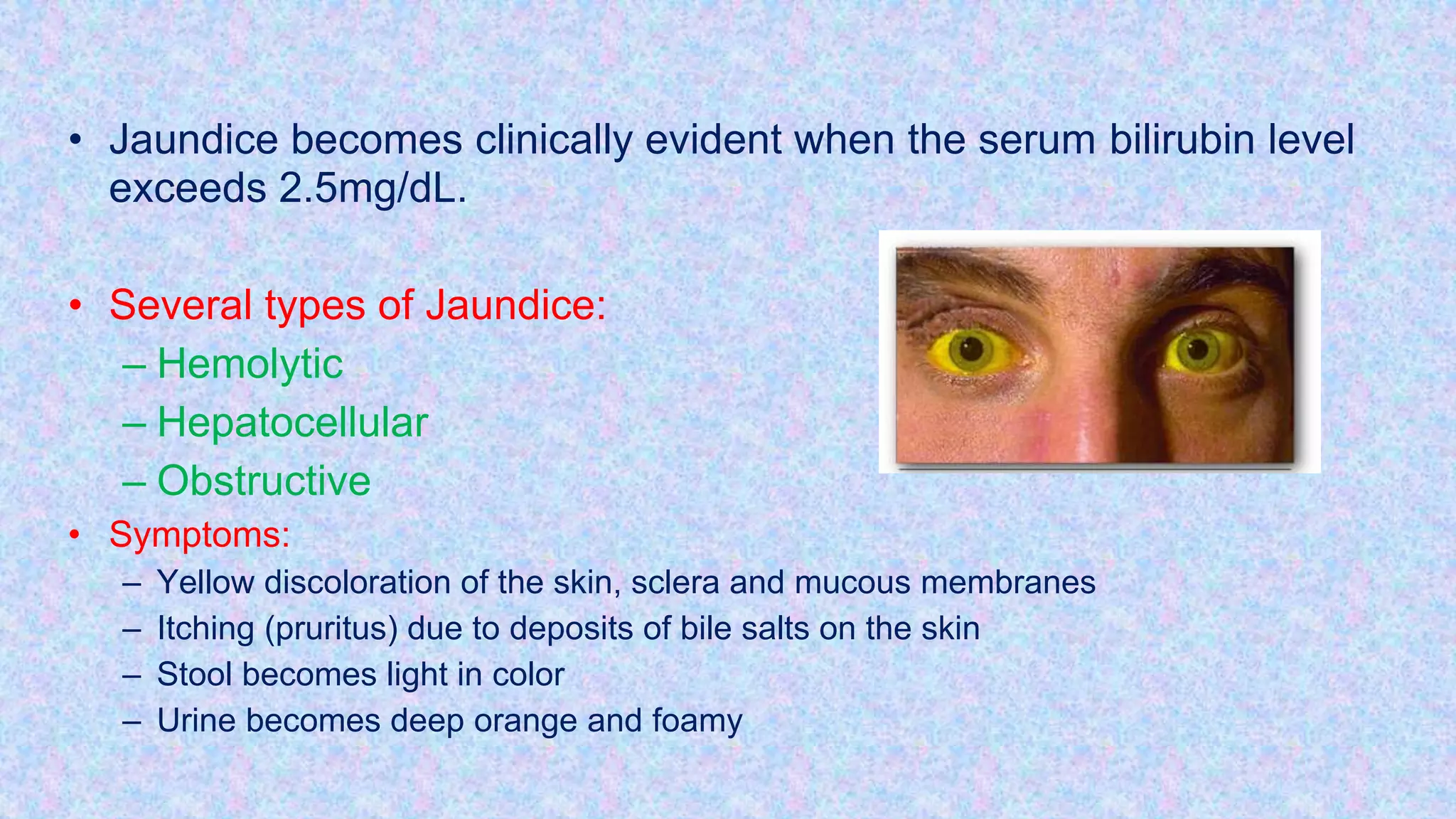
• Jaundice becomes clinically evident when the serum bilirubin level
exceeds 2.5mg/dL.
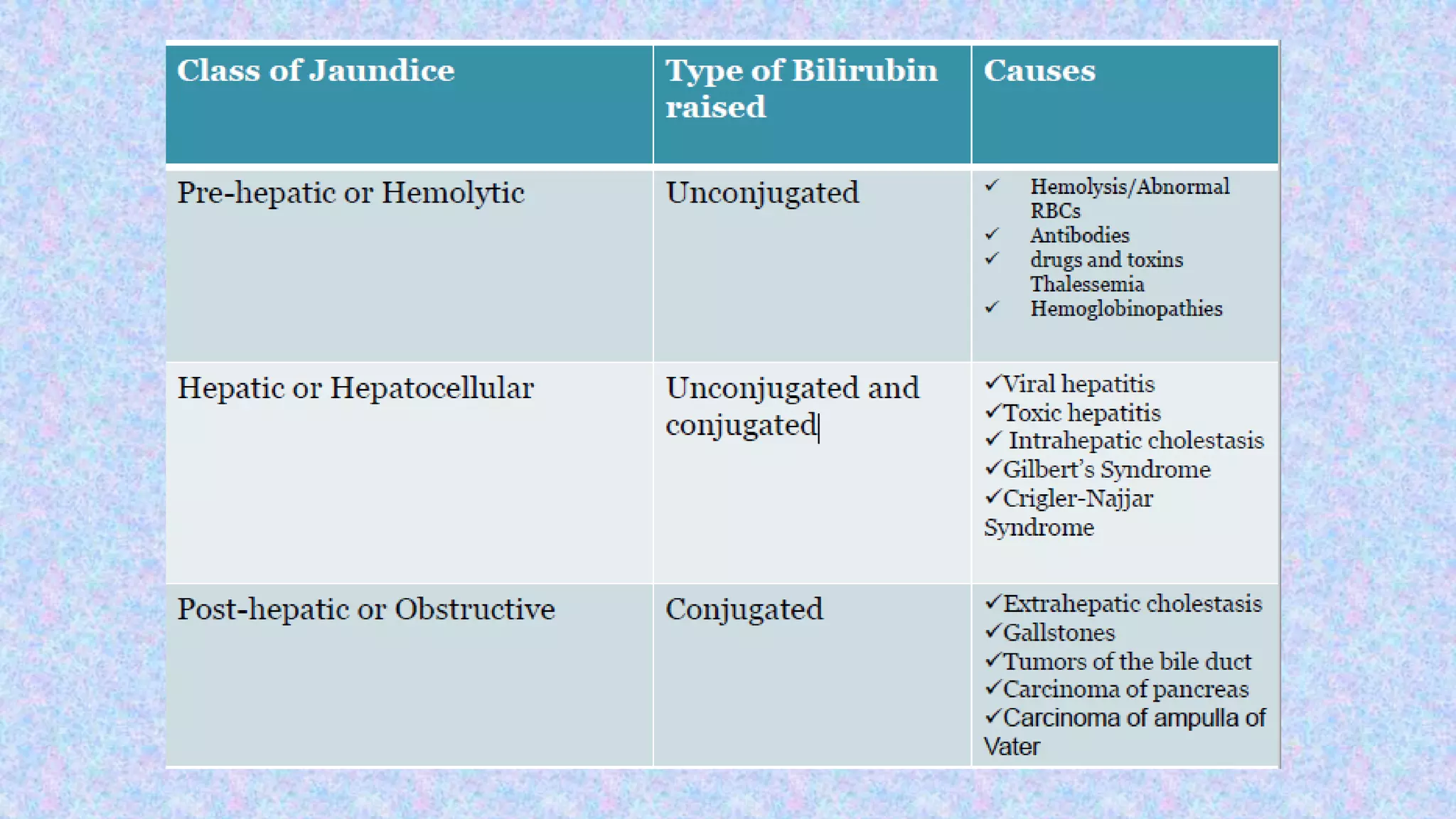
• Several types of Jaundice:
– Hemolytic
– Hepatocellular
– Obstructive
• Symptoms:
– Yellow discoloration of the skin, sclera and mucous membranes
– Itching (pruritus) due to deposits of bile salts on the skin
– Stool becomes light in color
– Urine becomes deep orange and foamy
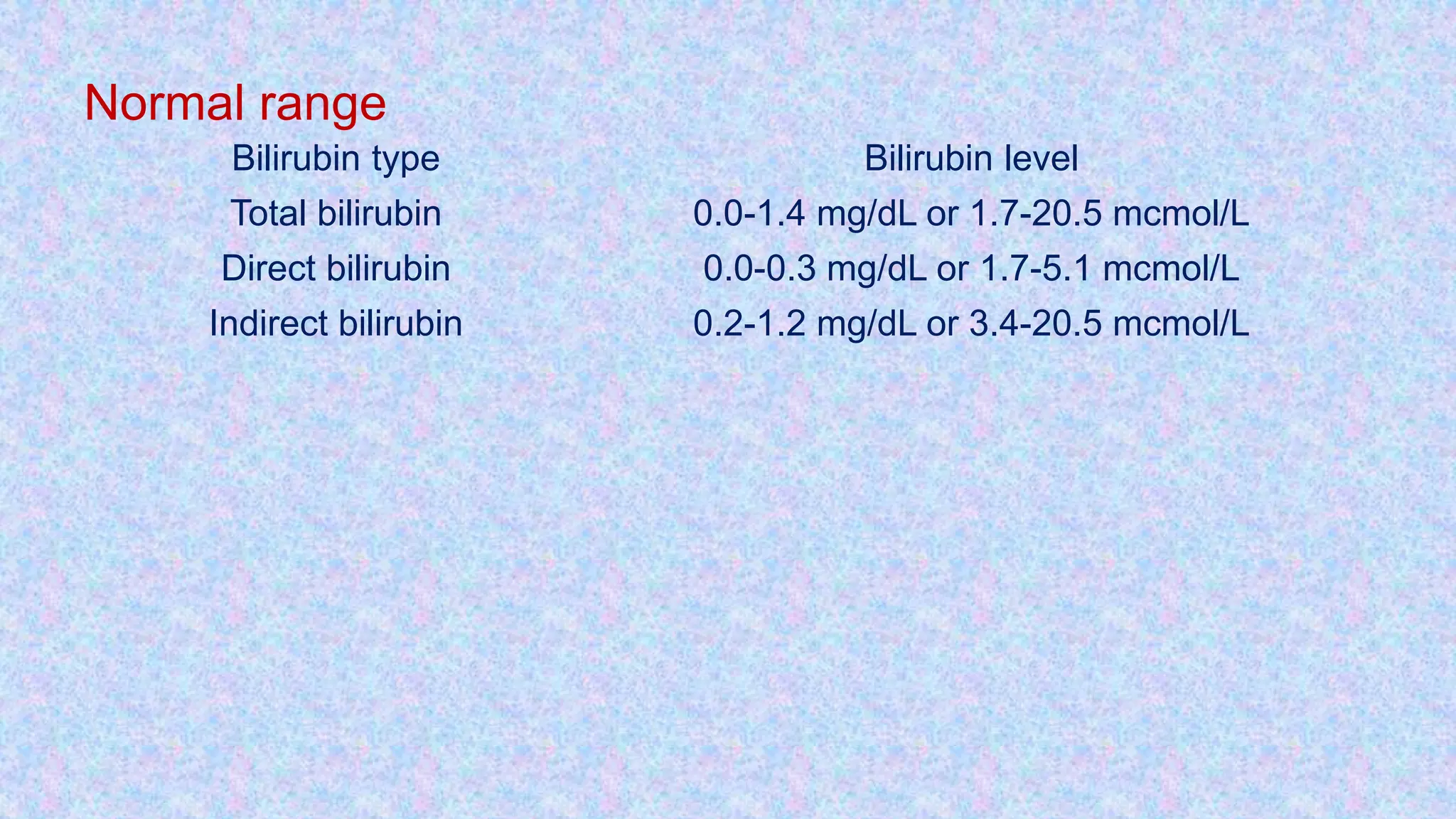
Normal range
Bilirubin type Bilirubin level
Total bilirubin 0.0-1.4 mg/dL or 1.7-20.5 mcmol/L
Direct bilirubin 0.0-0.3 mg/dL or 1.7-5.1 mcmol/L
Indirect bilirubin 0.2-1.2 mg/dL or 3.4-20.5 mcmol/L
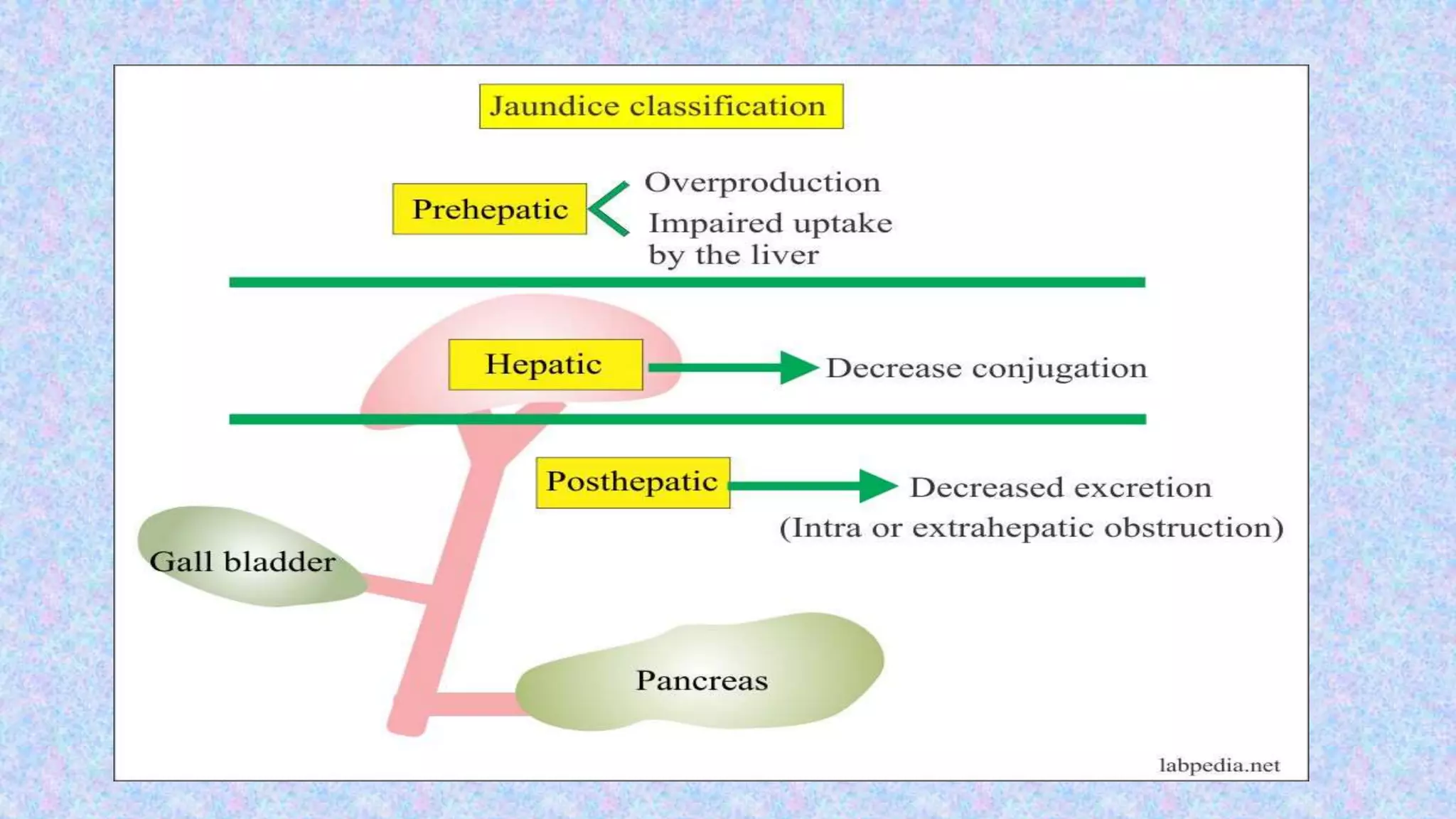
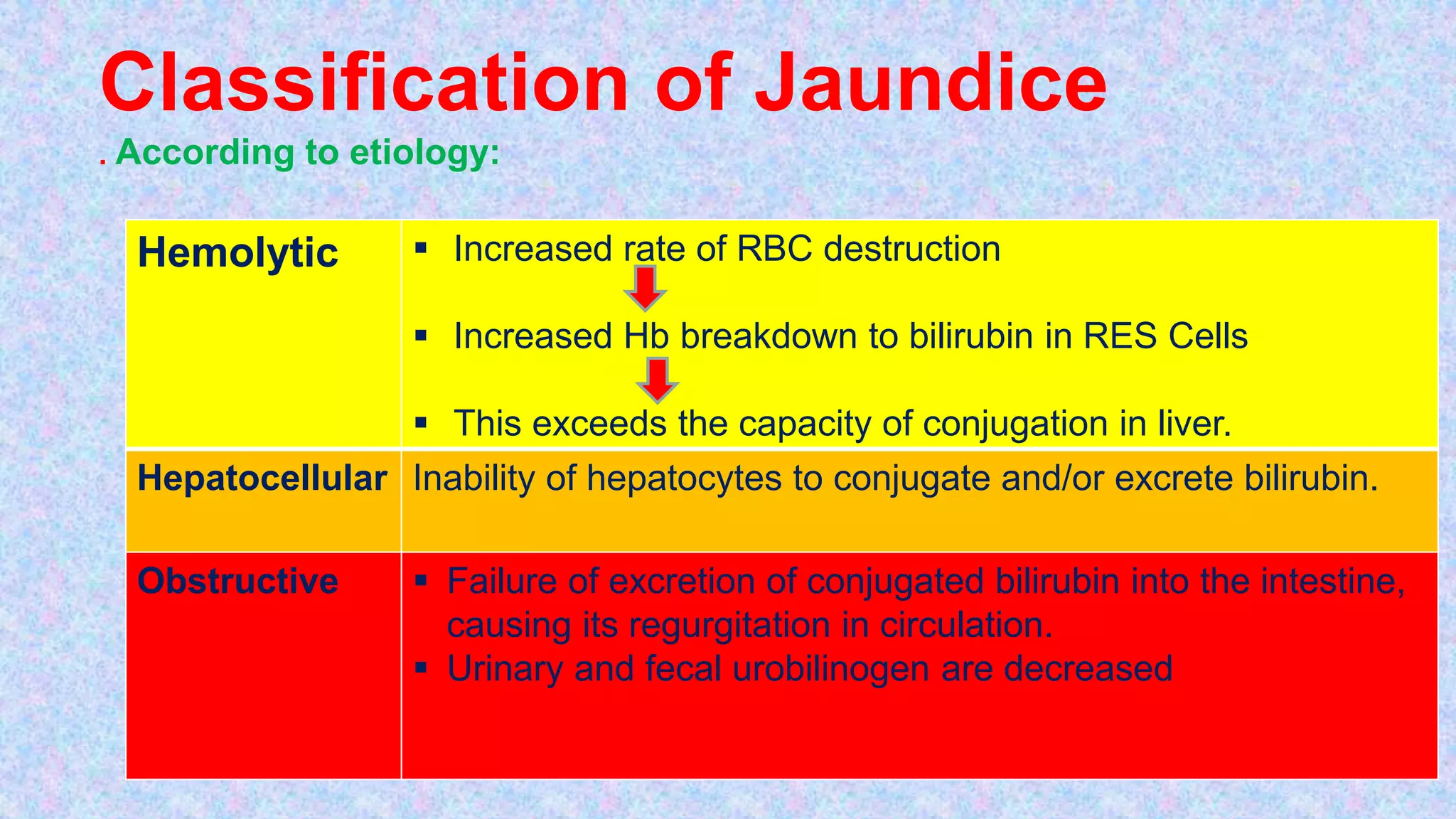
Hemolytic  Increased rate of RBC destruction
 Increased Hb breakdown to bilirubin in RES Cells
 This exceeds the capacity of conjugation in liver.
Hepatocellular Inability of hepatocytes to conjugate and/or excrete bilirubin.
Obstructive  Failure of excretion of conjugated bilirubin into the intestine,
causing its regurgitation in circulation.
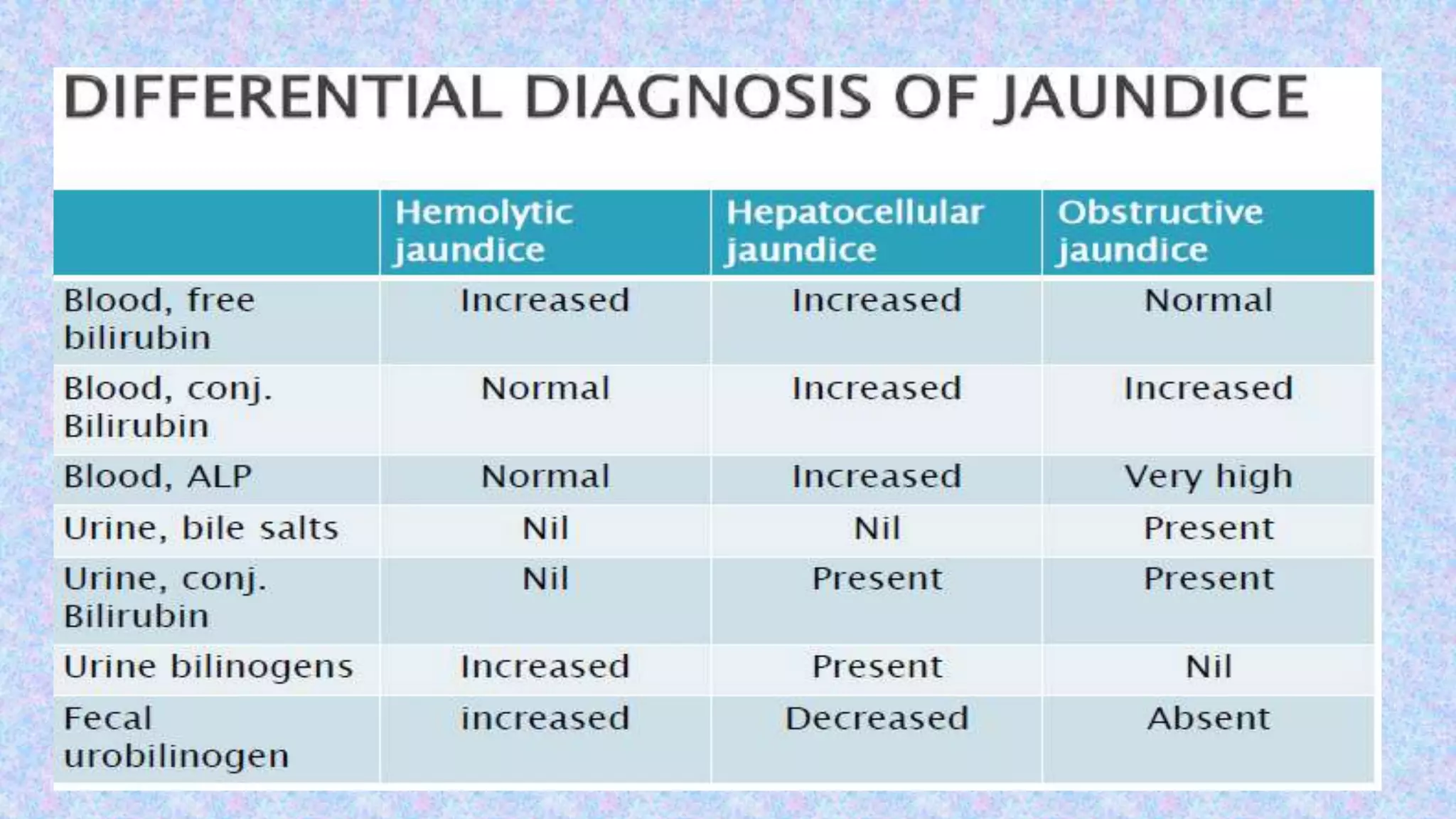
 Urinary and fecal urobilinogen are decreased
Classification of Jaundice
. According to etiology:
THANK YOU

LIVER FUNCTIONS TESTS -1-

  • 1.
    By Dr KHALED ALGARIRI CAMS-QASSIM UNIVERSITY March 2023
  • 2.
    INTRODUCTION The liver isa reddish brown wedge shaped organ with four lobes of unequal size and shape. A human liver normally weighs 1.44–1.66 kg (3.2– 3.7 lb). Liver function tests are blood tests used to help diagnose and monitor liver disease or damage. The tests measure the levels of certain enzymes and proteins in our blood.  Some of these tests measure how well the liver is performing its normal functions of producing protein and clearing bilirubin, a blood waste product.
  • 3.
    FUNCTIONS OF THELIVER 1-Synthetic functions : synthesis of plasma proteins,cholesterol, triacylglycerol and lipoprotein 2-Metabolic function: protein metabolism, ketogenesis, TCA cycle, production of ATP 3-Detoxification & excretion: ammonia to urea, bilirubin, cholesterol, drug metabolites. 4- Homeostasis : blood glucose regulation 5-Storage function: Vitamin A,D,K,B12 6-Production of bile salts
  • 4.
    Why it's done Screening: They are non invasive yet sensitive modality for liver dysfunction.  Pattern of disease: They are helpful to recognize pattern of various diseases. Like being helpful in differentiating between acute viral hapatitis and various cholestatic disorders and chronic liver disease.(CLD)  Assess severity : They are helpful to assess the severity and predict the outcome of certain diseases like primary biliary cirrhosis.  Follow up: They are helpful in the follow up of certain liver diseases and also helpful in evaluating response to therapy like autoimmune hepatitis
  • 5.
    CLASSIFICATION OF LIVERFUNCTIONS TESTS
  • 6.
    1.Serum bilirubin 2.Urine bilirubin 3.Urineand feacal urobilinogen 4.Urine bile salts 5.Dye excretion tests TESTS BASED ON EXCRETORY FUNCTION
  • 7.
    TESTS BASED ON DETOXIFICATIONFUNCTION Hippuric acid test Determination of blood ammonia
  • 8.
    TESTS BASED ONSYNTHETIC FUNCTION Prothrombin time Protein time
  • 9.
    TESTS BASED ONMETABOLIC FUNCTION
  • 10.
    ENZYMES IN DIAGNOSISOF LIVER DISEASE SERUM TRANSAMINASES AST ALT ALP GGT 5’NT
  • 11.
    1.Serum bilirubin 2.Urine bilirubin 3.Urineand feacal urobilinogen 4.Urine bile salts 5.Dye excretion tests TESTS BASED ON EXCRETORY FUNCTION
  • 12.
    Serum bilirubin Bilirubin: isthe end product of heme degradation derived from breakdown senescent (aging) erythrocytes by mononuclear phagocytes system specially in the spleen, liver and bone marrow. The major pigment present in bile is the orange compound bilirubin.
  • 13.
    Serum bilirubin It ishighly soluble in all cell membranes (hydrophobic) and is also very toxic. Therefore, its excretion in the bile is one of the very important functions of the liver. Classification of bilirubin into direct & indirect bilirubin is based on original van den bergh method of measuring bilirubin.
  • 14.
    Extravascular Pathway forRBC Destruction (Liver, Bone marrow, & Spleen) Hemoglobin Globin Amino acids Amino acid pool Heme Bilirubin Fe2+ Excreted Phagocytosis & Lysis Recycled The globin is recycled or converted into amino acids, which in turn are recycled or catabolized as required
  • 15.
    BILIRUBIN METABOLISM  Bilirubinis the excretory product formed by the catabolism of heme part of hemoglobin.  Porphyrin part of heme are converted to bilirubin in reticuloendothelial cells of liver, spleen, bone marrow.  Unconjugated bilirubin is bound to serum albumin &transferred to liver where it is conjugated to glucuronate by UDP GLUCURONYL TRANSFERASE.  Conjugated bilirubin is excreted into bile. A fraction of bilirubin from stool is reabsorbed into blood via portal circulation (enterohepatic circulation)
  • 16.
    RBCs Breakdown Hemoglobin Produces& Breakdown Heme Biliverdin Bilirubin Heme Oxygenase Biliverdin Reductase
  • 17.
    Bilirubin Is theMajor Component of Bile Pigments,Steps of Execretion 1. Hemoglobin is first dissociated into heme and globin. 2. In the presence of NADPH and O2, the Heme oxygenase enzyme hydroxylates Heme and converts it into Biliverdin. 3. Biliverdin is then reduced or converted into bilirubin by biliverdin reductase enzyme. Bilirubin is transported in blood bound to albumin forming a water soluble compound called hemobilirubin (unconjugated bilirubin, free bilirubin) which is rapidly transported to hepatocytes for further metabolism .
  • 18.
    Role of BloodProteins in the Metabolism of Bilirubin 1. Albumin Dissolved in Blood
  • 19.
    Blood Liver Ligandin (-) charge Ligandin (-) charge LigandinPrevents bilirubin from going back to plasma
  • 20.
    4-The liver removesbilirubin from the circulation rapidly, mediated by a carrier protein (receptor), and conjugates it with glucuronic acid. This reaction is catalyzed by the enzyme glucuronyl transferase in the smooth endoplasmic reticulum to have conjugated bilirubin, which is more water soluble than bilirubin. 5-The bilirubin-glucuronide (conjugated bilirubin) is secreted into the bile canaliculi. Note: the unconjugated bilirubin is normally not secreted. 6-In the small intestine, bilirubin glucuronide is poorly absorbed. In the gut, however, bacteria deconjugate it back to bilirubin, and convert it to the highly soluble colorless compound called Urobilinogen
  • 21.
    7- Only 20%of Urobilinogen can be absorbed by the small intestine (this represents the enterohepatic circulation of bile pigments). 70% of the Urobilinogen can be oxidized in the large intestine to Stercobilin and stercobilinogen (by bacteria). 10 % of Urobilinogen is excreted in either urine (where it is converted to yellow urobilin in the kidney) or feces (after it is converted to Stercobilin which is responsible for the brown color of feces). (entero-hepatic circulation)
  • 23.
    Insoluble in water Presentnormally in plasma Tightly complex to albumin Not filtered through renal glomeruli, is not excreted in urine Toxic substance The chief form of bilirubin in the blood Unconjugated Water soluble and Present normally in bile Loosely bound to albumin Filtered through renal glomeruli and excreted in urine Non-toxic Present in low concentration in the blood Conjugated Differences between the conjugated and unconjugated bilirubin
  • 24.
    Diagnostic Importance ofBilirubin • Disruption of bilirubin metabolism and excretion can cause hyperbilirubinaemia and subsequent jaundice • Hyperbilirubinaemia maybe unconjugated (indirect) or conjugated (direct) depending on the type of bilirubin present in plasma.
  • 25.
    A-Unconjugated Hyperbilirubinemia • Itis due to overproduction of bilirubin by reticuloendothelial system over the capacity of the liver to remove and clear from blood. It is characterized by high level of indirect or unconjugated bilirubin. This type of bilirubin can cross the blood-brain barrier into the central nervous system and cause kernicterus
  • 26.
    Unconjugated hyperbilirubinemia occursin the following conditions I-Neonatal or Physiologic Jaundice: This is the most common cause of jaundice in neonatal age. It results from accelerated hemolysis and immature hepatic system for uptake, conjugation and secretion of bilirubin. II-Hemolytic jaundice (Anemia)
  • 27.
    III-Congenital Syndromes relatedto uptake and conjugation of bilirubin as follow : 1- Crigler-Najjar Syndrome  Type 1: Due to severe decrease in the activity of UDP- glucuronyl transferase.  Type II: Due to decreased activity of UDP-glucuronyl transferase that adds the second glucuronide group. 2- Gilbert Disease  It is mainly due to hepatic defect in the uptake of bilirubin by liver cells. 3-Toxic Hyperbilirubinemia  This is due to toxin-induced liver dysfunctions e.g. chloroform, carbon tetrachloride and mushroom poisoning.
  • 28.
    B-Conjugated Hyperbilirubinemia • Conjugatedhyperbilirubinemia is due to reflux of direct or conjugated bilirubin into blood due to biliary obstruction, conjugated bilirubin is water soluble, so it is excreted in urine and darken its color.
  • 29.
    Conjugated hyperbilirubinemia occursin the following conditions 1-Obstructive Jaundice (Cholestatic Jaundice) Conjugated hyperbilirubinemia results from blockage of hepatic or common bile duct (stones and tumors). 2- Micro-obstruction of intrahepatic biliary ductules by swollen damaged hepatocytes e.g. viral hepatitis and liver cirrhosis. Both cases are associated with marked increase of conjugated bilirubin and slight to moderate increase of unconjugated bilirubin (mixed hyperbilirubinemia)
  • 30.
    3- Rotor’s/Dubin-Johnson syndrome– defective excretion of conjugated bilirubin into the biliary cannaliculi therefore elevated conjugated bilirubin
  • 31.
    • Jaundice becomesclinically evident when the serum bilirubin level exceeds 2.5mg/dL. • Several types of Jaundice: – Hemolytic – Hepatocellular – Obstructive • Symptoms: – Yellow discoloration of the skin, sclera and mucous membranes – Itching (pruritus) due to deposits of bile salts on the skin – Stool becomes light in color – Urine becomes deep orange and foamy
  • 33.
    Normal range Bilirubin typeBilirubin level Total bilirubin 0.0-1.4 mg/dL or 1.7-20.5 mcmol/L Direct bilirubin 0.0-0.3 mg/dL or 1.7-5.1 mcmol/L Indirect bilirubin 0.2-1.2 mg/dL or 3.4-20.5 mcmol/L
  • 34.
    Hemolytic  Increasedrate of RBC destruction  Increased Hb breakdown to bilirubin in RES Cells  This exceeds the capacity of conjugation in liver. Hepatocellular Inability of hepatocytes to conjugate and/or excrete bilirubin. Obstructive  Failure of excretion of conjugated bilirubin into the intestine, causing its regurgitation in circulation.  Urinary and fecal urobilinogen are decreased Classification of Jaundice . According to etiology:
  • 37.