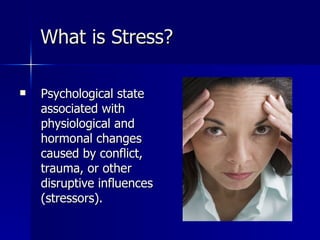
What is Stress? Psychological state associated with physiological and hormonal changes caused by conflict, trauma, or other disruptive influences (stressors).
Stressors Traumatic events outside the usual range of human experience Uncontrollable events Unpredictable events Events that challenge the limits of our capabilities & self-concept Internal conflicts
Finals exams are a good example: They challenge the limits of our intellectual capabilities. They carry the possibility of failure Highly Challenging Events
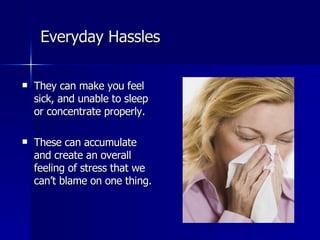
Everyday Hassles They can make you feel sick, and unable to sleep or concentrate properly. These can accumulate and create an overall feeling of stress that we can’t blame on one thing.
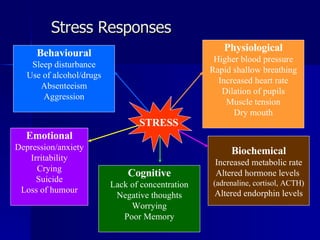
Stress Responses STRESS Behavioural Sleep disturbance Use of alcohol/drugs Absenteeism Aggression Emotional Depression/anxiety Irritability Crying Suicide Loss of humour Cognitive Lack of concentration Negative thoughts Worrying Poor Memory Biochemical Increased metabolic rate Altered hormone levels  (adrenaline, cortisol, ACTH) Altered endorphin levels Physiological Higher blood pressure Rapid shallow breathing Increased heart rate Dilation of pupils Muscle tension Dry mouth
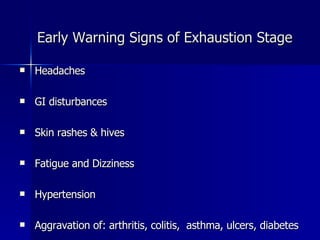
Early Warning Signs of Exhaustion Stage Headaches GI disturbances Skin rashes & hives Fatigue and Dizziness Hypertension Aggravation of: arthritis, colitis,  asthma, ulcers, diabetes
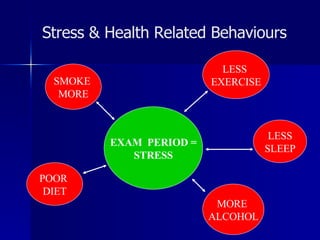
Stress & Health Related Behaviours EXAM  PERIOD = STRESS SMOKE  MORE POOR  DIET MORE  ALCOHOL LESS SLEEP LESS  EXERCISE
Personality & Stress Type A Competitive, achievement-oriented, sense of time urgency, difficulty relaxing, impatient, angry, hostile, outwardly confident but full of self-doubt Type B Relaxed, easy-going, unpressured
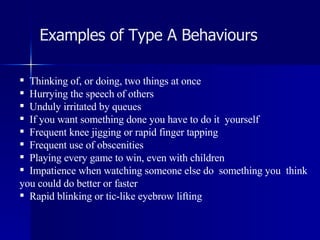
Examples of Type A Behaviours Thinking of, or doing, two things at once Hurrying the speech of others Unduly irritated by queues If you want something done you have to do it  yourself Frequent knee jigging or rapid finger tapping Frequent use of obscenities Playing every game to win, even with children Impatience when watching someone else do  something you  think you could do better or faster Rapid blinking or tic-like eyebrow lifting
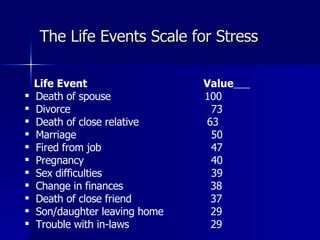
The Life Events Scale for Stress Life Event  Value   Death of spouse   100 Divorce   73 Death of close relative  63 Marriage   50 Fired from job   47 Pregnancy   40 Sex difficulties   39 Change in finances   38 Death of close friend   37 Son/daughter leaving home   29 Trouble with in-laws   29
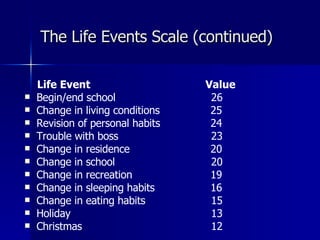
The Life Events Scale (continued) Life Event   Value Begin/end school   26 Change in living conditions   25 Revision of personal habits   24 Trouble with boss   23 Change in residence   20 Change in school   20 Change in recreation   19 Change in sleeping habits   16 Change in eating habits   15 Holiday   13 Christmas   12
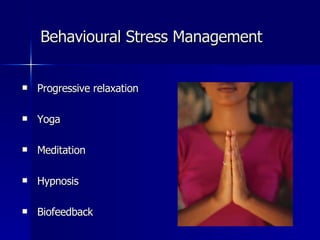
Behavioural Stress Management Progressive relaxation Yoga Meditation Hypnosis Biofeedback
Personal Coping Strategies Trust in time Do not isolate yourself Think positively Keep a sense of humour Think of yourself as relaxed Exercise and Get a pet
Stress can be a positive thing Stress is likely to be detrimental to health only if it is unresolved & long-lasting

What Is Stress

  • 1.
    What is Stress?Psychological state associated with physiological and hormonal changes caused by conflict, trauma, or other disruptive influences (stressors).
  • 2.
    Stressors Traumatic eventsoutside the usual range of human experience Uncontrollable events Unpredictable events Events that challenge the limits of our capabilities & self-concept Internal conflicts
  • 3.
    Finals exams area good example: They challenge the limits of our intellectual capabilities. They carry the possibility of failure Highly Challenging Events
  • 4.
    Everyday Hassles Theycan make you feel sick, and unable to sleep or concentrate properly. These can accumulate and create an overall feeling of stress that we can’t blame on one thing.
  • 5.
    Stress Responses STRESSBehavioural Sleep disturbance Use of alcohol/drugs Absenteeism Aggression Emotional Depression/anxiety Irritability Crying Suicide Loss of humour Cognitive Lack of concentration Negative thoughts Worrying Poor Memory Biochemical Increased metabolic rate Altered hormone levels (adrenaline, cortisol, ACTH) Altered endorphin levels Physiological Higher blood pressure Rapid shallow breathing Increased heart rate Dilation of pupils Muscle tension Dry mouth
  • 6.
    Early Warning Signsof Exhaustion Stage Headaches GI disturbances Skin rashes & hives Fatigue and Dizziness Hypertension Aggravation of: arthritis, colitis, asthma, ulcers, diabetes
  • 7.
    Stress & HealthRelated Behaviours EXAM PERIOD = STRESS SMOKE MORE POOR DIET MORE ALCOHOL LESS SLEEP LESS EXERCISE
  • 8.
    Personality & StressType A Competitive, achievement-oriented, sense of time urgency, difficulty relaxing, impatient, angry, hostile, outwardly confident but full of self-doubt Type B Relaxed, easy-going, unpressured
  • 9.
    Examples of TypeA Behaviours Thinking of, or doing, two things at once Hurrying the speech of others Unduly irritated by queues If you want something done you have to do it yourself Frequent knee jigging or rapid finger tapping Frequent use of obscenities Playing every game to win, even with children Impatience when watching someone else do something you think you could do better or faster Rapid blinking or tic-like eyebrow lifting
  • 10.
    The Life EventsScale for Stress Life Event Value Death of spouse 100 Divorce 73 Death of close relative 63 Marriage 50 Fired from job 47 Pregnancy 40 Sex difficulties 39 Change in finances 38 Death of close friend 37 Son/daughter leaving home 29 Trouble with in-laws 29
  • 11.
    The Life EventsScale (continued) Life Event Value Begin/end school 26 Change in living conditions 25 Revision of personal habits 24 Trouble with boss 23 Change in residence 20 Change in school 20 Change in recreation 19 Change in sleeping habits 16 Change in eating habits 15 Holiday 13 Christmas 12
  • 12.
    Behavioural Stress ManagementProgressive relaxation Yoga Meditation Hypnosis Biofeedback
  • 13.
    Personal Coping StrategiesTrust in time Do not isolate yourself Think positively Keep a sense of humour Think of yourself as relaxed Exercise and Get a pet
  • 14.
    Stress can bea positive thing Stress is likely to be detrimental to health only if it is unresolved & long-lasting