Difference between 
Problem Based Learning 
(PBL) and 
Case Based Learning (CBL) 
By: Dr. Izza Umbrin
LEARNING OBJECTIVES: 
 Understand Case Based Learning CBL 
 Understand Problem Based Learning PBL 
 Elaborate differences between CBL and PBL
Academic Medicine, Vol. 82, No. 1 / January 2007 
Comparing Problem-Based Learning with 
Case-Based Learning: Effects of a Major 
Curricular Shift at Two Institutions 
 Shift of PBL to CBL in The University of California, Davis, School of Medicine 
(UCD) and the University of California, Los Angeles, David Geffen School of 
Medicine at UCLA (UCLA) 
 10 months research and then shifted to other model, over 2 to 3 years 
 Learners had at least 1 year experience with PBL
 286/348 students responded 
 31 faculty members responded 
 Each group had 7 to 9 learners, and 2 faculty members; a clinical faculty and a 
mental health faculty 
 Faculty was trained for both PBL and CBL 
 2-3 hours session,15 to 25 total sessions. (30 mins for SP) 
 24-item questionnaire
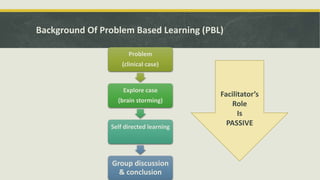
Background Of Problem Based Learning (PBL) 
Problem 
(clinical case) 
Explore case 
(brain storming) 
Self directed learning 
Group discussion 
& conclusion 
Facilitator’s 
Role 
Is 
PASSIVE
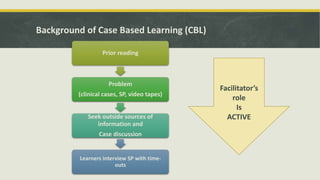
Background of Case Based Learning (CBL) 
Prior reading 
Problem 
(clinical cases, SP, video tapes) 
Seek outside sources of 
information and 
Case discussion 
Learners interview SP with time-outs 
Facilitator’s 
role 
Is 
ACTIVE
Differences between CBL & PBL 
CBL PBL 
Method Guided inquiry Open inquiry 
Pre reading material Provided Not provided 
Faculty advance 
yes Yes 
preparation 
Role of facilitator Active 
Uses guiding questions 
Moderate loud learners 
Provide feedback 
Passive 
Don't guide discussion even 
when learner explore 
tangents 
Interaction with faculty less more 
Skills learned clinical Problem solving
Differences between CBL & PBL 
CBL PBL 
Post session work Less More (include work 
without benefit) 
Learning curiosity No yes 
conclusion Correct May be false 
Self directed learning Less More ( may not be 
relevant) 
Listening skills less more
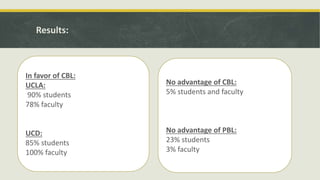
Results: 
No advantage of CBL: 
5% students and faculty 
No advantage of PBL: 
23% students 
3% faculty 
In favor of CBL: 
UCLA: 
90% students 
78% faculty 
UCD: 
85% students 
100% faculty
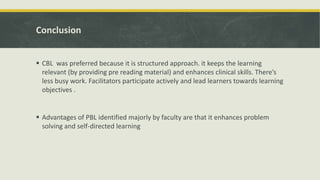
Conclusion 
 CBL was preferred because it is structured approach. it keeps the learning 
relevant (by providing pre reading material) and enhances clinical skills. There’s 
less busy work. Facilitators participate actively and lead learners towards learning 
objectives . 
 Advantages of PBL identified majorly by faculty are that it enhances problem 
solving and self-directed learning
Which method produces 
better physicians?????
THANKYOU
QUESTIONS?????

Difference between Problem Based Learning PBL and Case Based Learning CBL

  • 1.
    Difference between ProblemBased Learning (PBL) and Case Based Learning (CBL) By: Dr. Izza Umbrin
  • 2.
    LEARNING OBJECTIVES: Understand Case Based Learning CBL  Understand Problem Based Learning PBL  Elaborate differences between CBL and PBL
  • 3.
    Academic Medicine, Vol.82, No. 1 / January 2007 Comparing Problem-Based Learning with Case-Based Learning: Effects of a Major Curricular Shift at Two Institutions  Shift of PBL to CBL in The University of California, Davis, School of Medicine (UCD) and the University of California, Los Angeles, David Geffen School of Medicine at UCLA (UCLA)  10 months research and then shifted to other model, over 2 to 3 years  Learners had at least 1 year experience with PBL
  • 4.
     286/348 studentsresponded  31 faculty members responded  Each group had 7 to 9 learners, and 2 faculty members; a clinical faculty and a mental health faculty  Faculty was trained for both PBL and CBL  2-3 hours session,15 to 25 total sessions. (30 mins for SP)  24-item questionnaire
  • 5.
    Background Of ProblemBased Learning (PBL) Problem (clinical case) Explore case (brain storming) Self directed learning Group discussion & conclusion Facilitator’s Role Is PASSIVE
  • 6.
    Background of CaseBased Learning (CBL) Prior reading Problem (clinical cases, SP, video tapes) Seek outside sources of information and Case discussion Learners interview SP with time-outs Facilitator’s role Is ACTIVE
  • 7.
    Differences between CBL& PBL CBL PBL Method Guided inquiry Open inquiry Pre reading material Provided Not provided Faculty advance yes Yes preparation Role of facilitator Active Uses guiding questions Moderate loud learners Provide feedback Passive Don't guide discussion even when learner explore tangents Interaction with faculty less more Skills learned clinical Problem solving
  • 8.
    Differences between CBL& PBL CBL PBL Post session work Less More (include work without benefit) Learning curiosity No yes conclusion Correct May be false Self directed learning Less More ( may not be relevant) Listening skills less more
  • 9.
    Results: No advantageof CBL: 5% students and faculty No advantage of PBL: 23% students 3% faculty In favor of CBL: UCLA: 90% students 78% faculty UCD: 85% students 100% faculty
  • 10.
    Conclusion  CBLwas preferred because it is structured approach. it keeps the learning relevant (by providing pre reading material) and enhances clinical skills. There’s less busy work. Facilitators participate actively and lead learners towards learning objectives .  Advantages of PBL identified majorly by faculty are that it enhances problem solving and self-directed learning
  • 11.
    Which method produces better physicians?????
  • 12.
  • 13.