PROBLEM-BASED
LEARNING
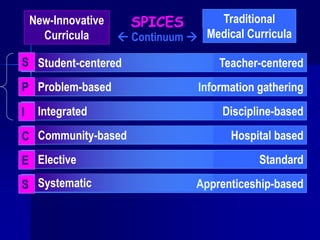
Teacher-centered
Student-centered
New-Innovative
Curricula
Traditional
Medical Curricula
Information gathering
Problem-based
Discipline-based
Integrated
Hospital based
Community-based
Standard
Elective
Apprenticeship-based
Systematic
 Continuum 
S
P
I
C
E
S
SPICES
what is it?
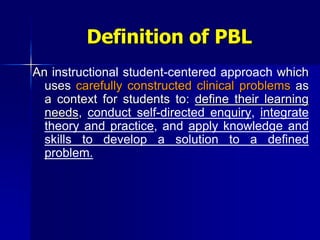
Definition of PBL
An instructional student-centered approach which
uses carefully constructed clinical problems as
a context for students to: define their learning
needs, conduct self-directed enquiry, integrate
theory and practice, and apply knowledge and
skills to develop a solution to a defined
problem.
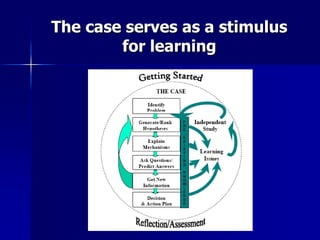
The case serves as a stimulus
for learning
WHAT IS PROBLEM-BASED
LEARNING, AND HOW
DOES IT DIFFER FROM
PROBLEM SOLVING?
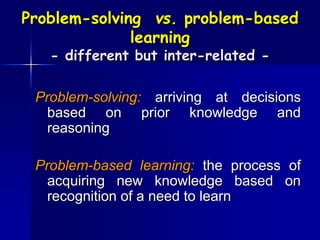
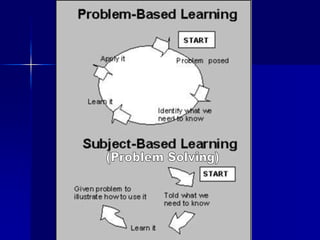
Problem-solving vs. problem-based
learning
- different but inter-related -
Problem-solving: arriving at decisions
based on prior knowledge and
reasoning
Problem-based learning: the process of
acquiring new knowledge based on
recognition of a need to learn
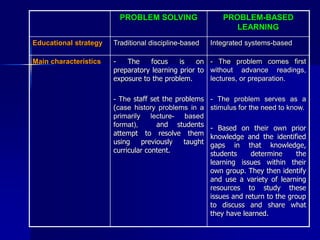
PROBLEM SOLVING PROBLEM-BASED
LEARNING
Educational strategy Traditional discipline-based Integrated systems-based
Main characteristics - The focus is on
preparatory learning prior to
exposure to the problem.
- The staff set the problems
(case history problems in a
primarily lecture- based
format), and students
attempt to resolve them
using previously taught
curricular content.
- The problem comes first
without advance readings,
lectures, or preparation.
- The problem serves as a
stimulus for the need to know.
- Based on their own prior
knowledge and the identified
gaps in that knowledge,
students determine the
learning issues within their
own group. They then identify
and use a variety of learning
resources to study these
issues and return to the group
to discuss and share what
they have learned.
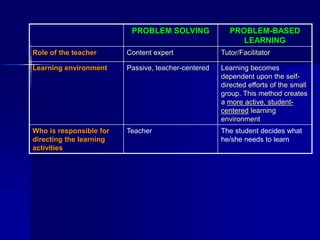
PROBLEM SOLVING PROBLEM-BASED
LEARNING
Role of the teacher Content expert Tutor/Facilitator
Learning environment Passive, teacher-centered Learning becomes
dependent upon the self-
directed efforts of the small
group. This method creates
a more active, student-
centered learning
environment
Who is responsible for
directing the learning
activities
Teacher The student decides what
he/she needs to learn
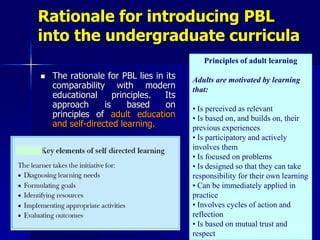
Rationale for introducing PBL
into the undergraduate curricula
 The rationale for PBL lies in its
comparability with modern
educational principles. Its
approach is based on
principles of adult education
and self-directed learning.
Principles of adult learning
Adults are motivated by learning
that:
• Is perceived as relevant
• Is based on, and builds on, their
previous experiences
• Is participatory and actively
involves them
• Is focused on problems
• Is designed so that they can take
responsibility for their own learning
• Can be immediately applied in
practice
• Involves cycles of action and
reflection
• Is based on mutual trust and
respect
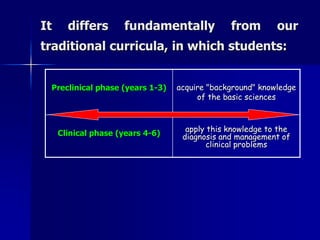
It differs fundamentally from our
traditional curricula, in which students:
Preclinical phase (years 1-3) acquire "background" knowledge
of the basic sciences
Clinical phase (years 4-6)
apply this knowledge to the
diagnosis and management of
clinical problems
This traditional approach has been
criticised for a number of reasons:
 Many existing curricula fail to meet the needs of
current and future doctors
 It creates an artificial divide between the basic and
clinical sciences
 Time is wasted in acquiring knowledge that is
subsequently forgotten or found to be irrelevant
(The acquisition and retention of information that
has no apparent relevance can be boring and even
demoralising for students)
 Application of the acquired knowledge can be
difficult
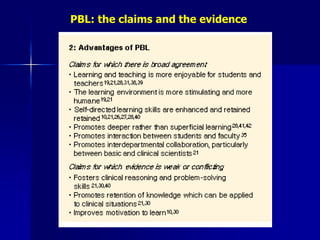
 The educational objectives of PBL address
many of the perceived problems in
traditional medical curricula
 Its possible advantages over traditional
approaches include: its greater relevance to
the practice of medicine, its ability to
promote retention and application of
knowledge, and its encouragement of self-
directed life-long learning
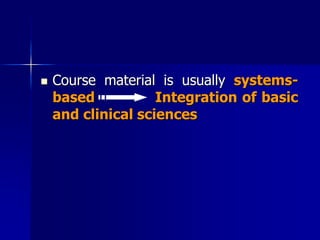
 Course material is usually systems-
based Integration of basic
and clinical sciences
Example
When studying PBL cases relating to CVS,
students learn about:
 Normal bodily structure and function
 The clinical features, diagnosis and management of
common CVDs
 Furthermore, they learn to take a relevant clinical
history and to physically examine the CVS
 Knowledge is acquired in context and builds on
what is already known
 These facets aid knowledge retention, add interest
and increase motivation to learn
 Students continually explore their knowledge,
identify both their personal learning needs and
strategies required to address them. This process
helps to develop skills for life-long learning
Efficacy and advantages of PBL
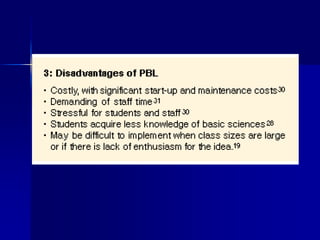
PBL: the claims and the evidence
Problem Based learning.ppt

Problem Based learning.ppt

  • 1.
  • 2.
    Teacher-centered Student-centered New-Innovative Curricula Traditional Medical Curricula Information gathering Problem-based Discipline-based Integrated Hospitalbased Community-based Standard Elective Apprenticeship-based Systematic  Continuum  S P I C E S SPICES
  • 3.
  • 4.
    Definition of PBL Aninstructional student-centered approach which uses carefully constructed clinical problems as a context for students to: define their learning needs, conduct self-directed enquiry, integrate theory and practice, and apply knowledge and skills to develop a solution to a defined problem.
  • 5.
    The case servesas a stimulus for learning
  • 6.
    WHAT IS PROBLEM-BASED LEARNING,AND HOW DOES IT DIFFER FROM PROBLEM SOLVING?
  • 7.
    Problem-solving vs. problem-based learning -different but inter-related - Problem-solving: arriving at decisions based on prior knowledge and reasoning Problem-based learning: the process of acquiring new knowledge based on recognition of a need to learn
  • 9.
    PROBLEM SOLVING PROBLEM-BASED LEARNING Educationalstrategy Traditional discipline-based Integrated systems-based Main characteristics - The focus is on preparatory learning prior to exposure to the problem. - The staff set the problems (case history problems in a primarily lecture- based format), and students attempt to resolve them using previously taught curricular content. - The problem comes first without advance readings, lectures, or preparation. - The problem serves as a stimulus for the need to know. - Based on their own prior knowledge and the identified gaps in that knowledge, students determine the learning issues within their own group. They then identify and use a variety of learning resources to study these issues and return to the group to discuss and share what they have learned.
  • 10.
    PROBLEM SOLVING PROBLEM-BASED LEARNING Roleof the teacher Content expert Tutor/Facilitator Learning environment Passive, teacher-centered Learning becomes dependent upon the self- directed efforts of the small group. This method creates a more active, student- centered learning environment Who is responsible for directing the learning activities Teacher The student decides what he/she needs to learn
  • 11.
    Rationale for introducingPBL into the undergraduate curricula  The rationale for PBL lies in its comparability with modern educational principles. Its approach is based on principles of adult education and self-directed learning. Principles of adult learning Adults are motivated by learning that: • Is perceived as relevant • Is based on, and builds on, their previous experiences • Is participatory and actively involves them • Is focused on problems • Is designed so that they can take responsibility for their own learning • Can be immediately applied in practice • Involves cycles of action and reflection • Is based on mutual trust and respect
  • 12.
    It differs fundamentallyfrom our traditional curricula, in which students: Preclinical phase (years 1-3) acquire "background" knowledge of the basic sciences Clinical phase (years 4-6) apply this knowledge to the diagnosis and management of clinical problems
  • 13.
    This traditional approachhas been criticised for a number of reasons:  Many existing curricula fail to meet the needs of current and future doctors  It creates an artificial divide between the basic and clinical sciences  Time is wasted in acquiring knowledge that is subsequently forgotten or found to be irrelevant (The acquisition and retention of information that has no apparent relevance can be boring and even demoralising for students)  Application of the acquired knowledge can be difficult
  • 14.
     The educationalobjectives of PBL address many of the perceived problems in traditional medical curricula  Its possible advantages over traditional approaches include: its greater relevance to the practice of medicine, its ability to promote retention and application of knowledge, and its encouragement of self- directed life-long learning
  • 15.
     Course materialis usually systems- based Integration of basic and clinical sciences
  • 16.
    Example When studying PBLcases relating to CVS, students learn about:  Normal bodily structure and function  The clinical features, diagnosis and management of common CVDs  Furthermore, they learn to take a relevant clinical history and to physically examine the CVS
  • 17.
     Knowledge isacquired in context and builds on what is already known  These facets aid knowledge retention, add interest and increase motivation to learn  Students continually explore their knowledge, identify both their personal learning needs and strategies required to address them. This process helps to develop skills for life-long learning
  • 18.
  • 20.
    PBL: the claimsand the evidence