CHAPTER 14 SECTION 2
SOUND
–a wave of vibrations that spreads from
its source.
• Vibration is the back-and-forth motion of
an object.
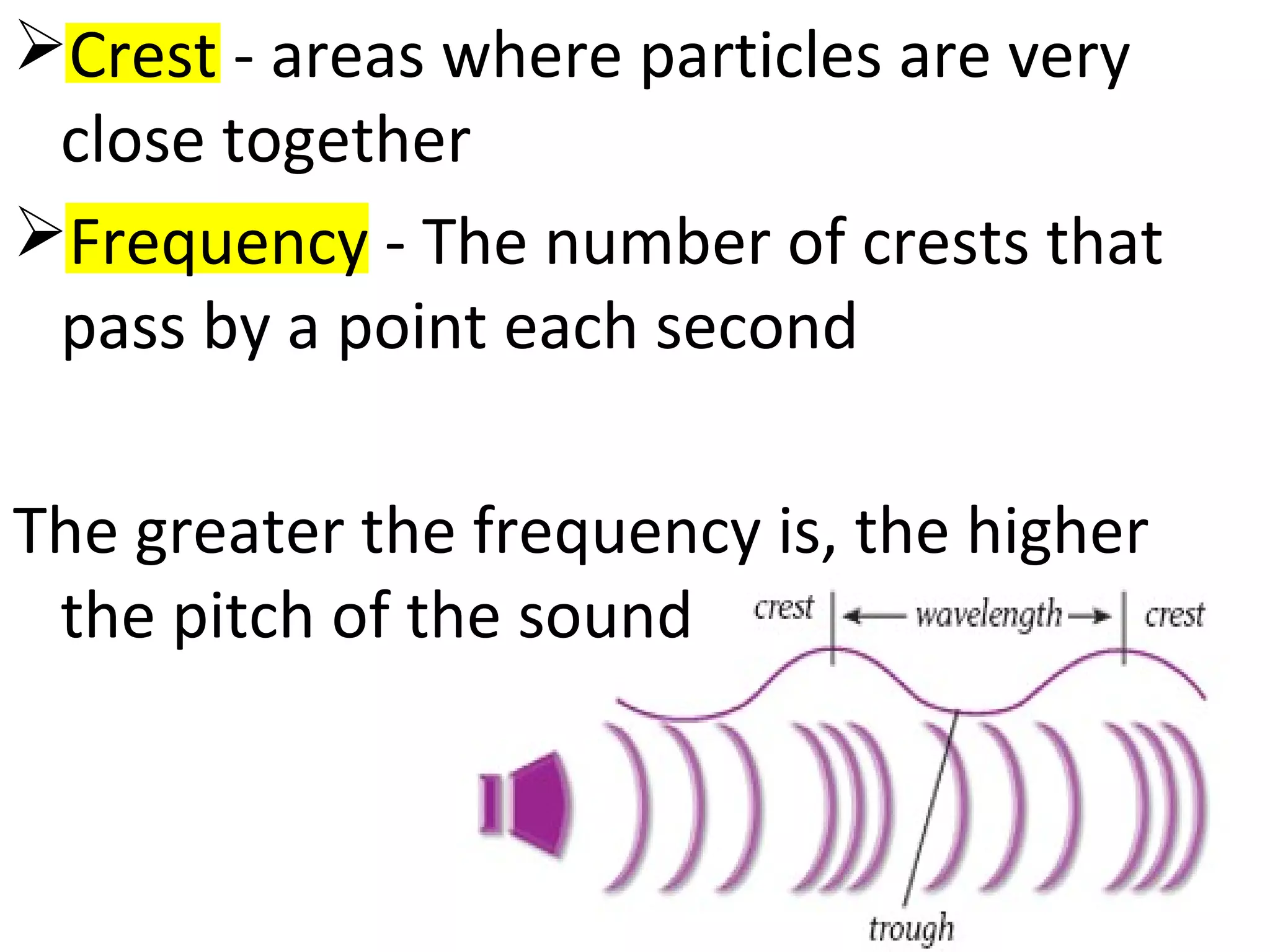
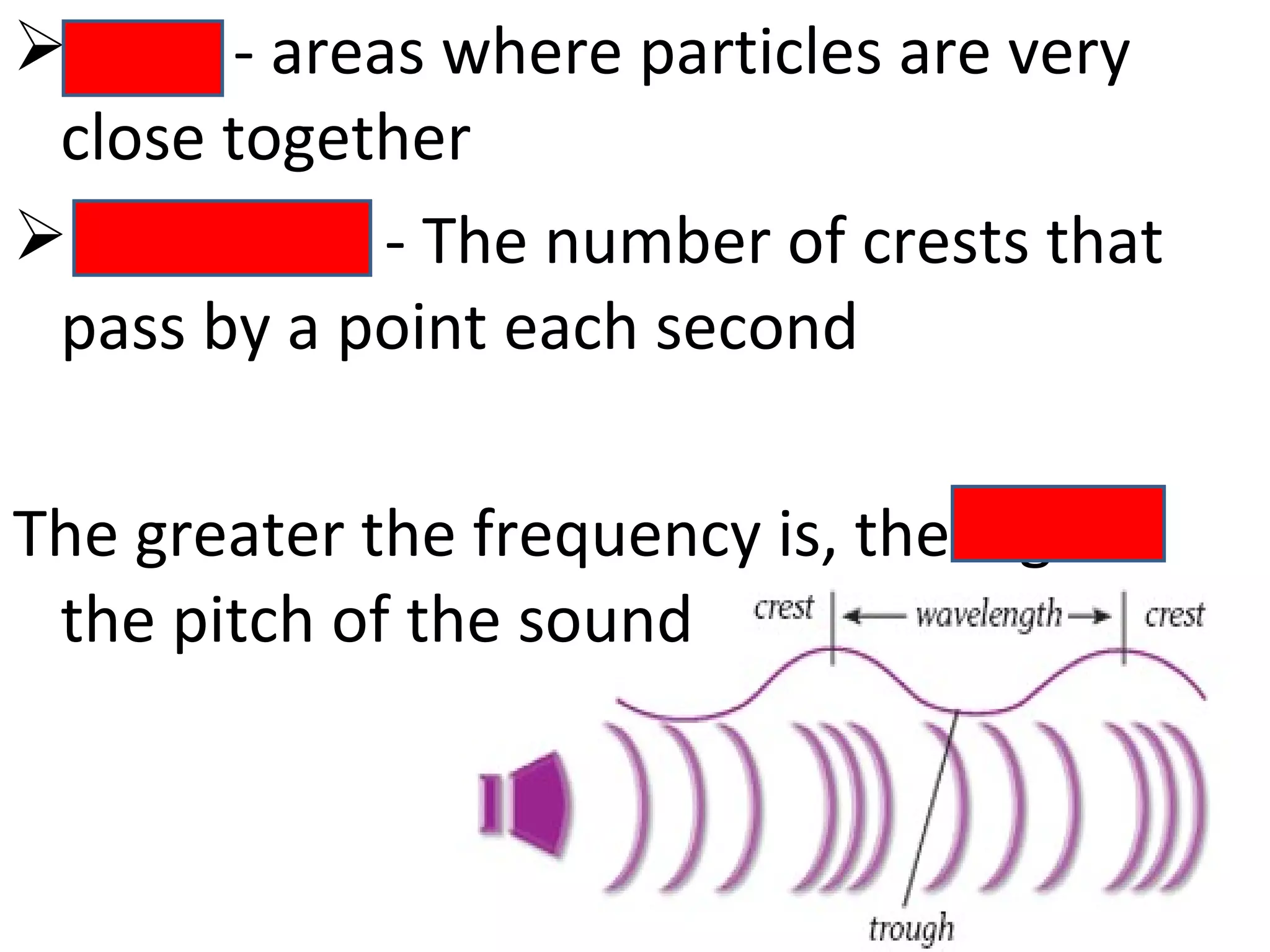
Crest - areas where particles are very
close together
Frequency - The number of crests that
pass by a point each second
The greater the frequency is, the higher
the pitch of the sound
Why Are Some Sounds Louder
Than Others?
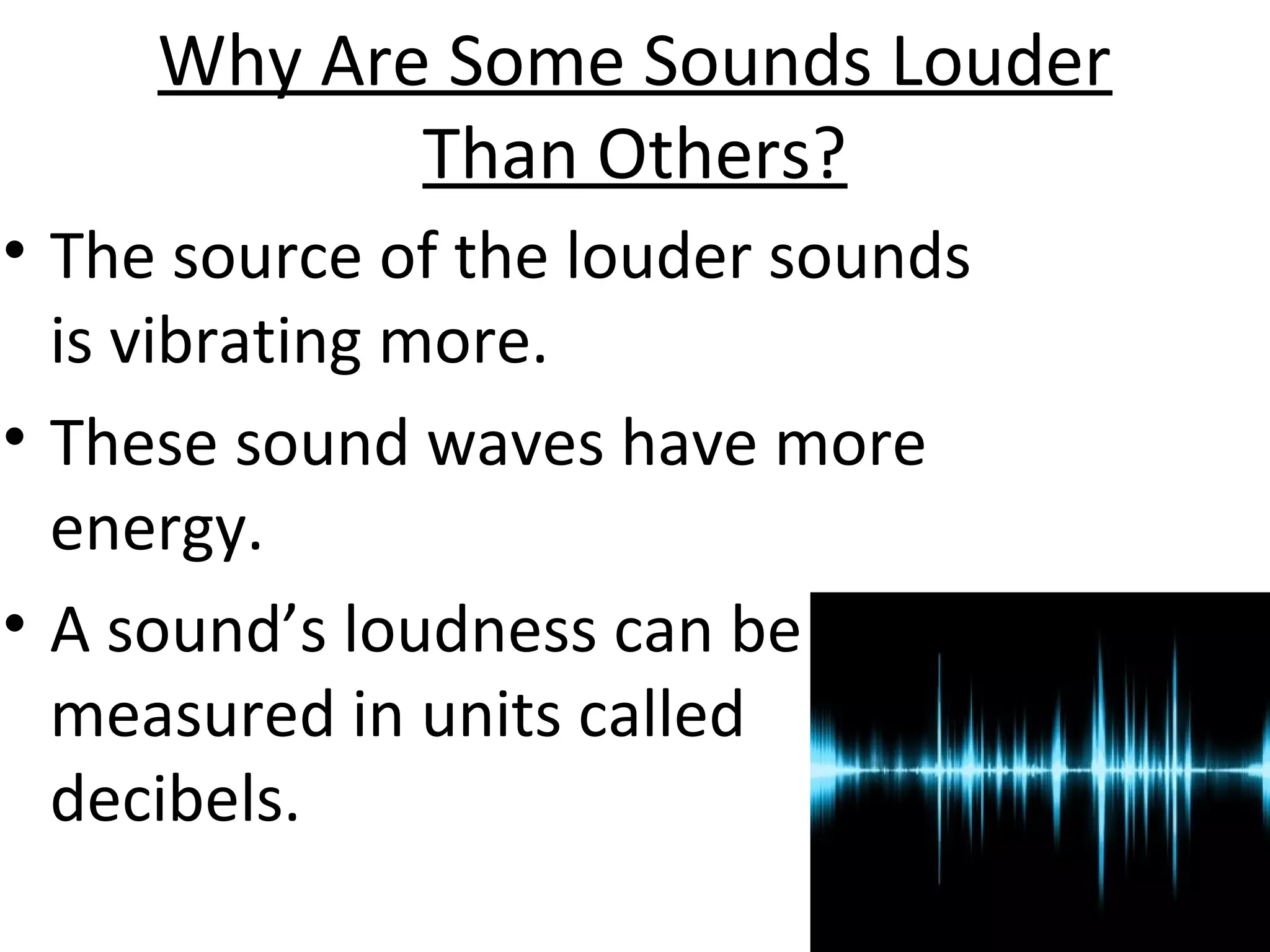
• The source of the louder sounds
is vibrating more.
• These sound waves have more
energy.
• A sound’s loudness can be
measured in units called
decibels.
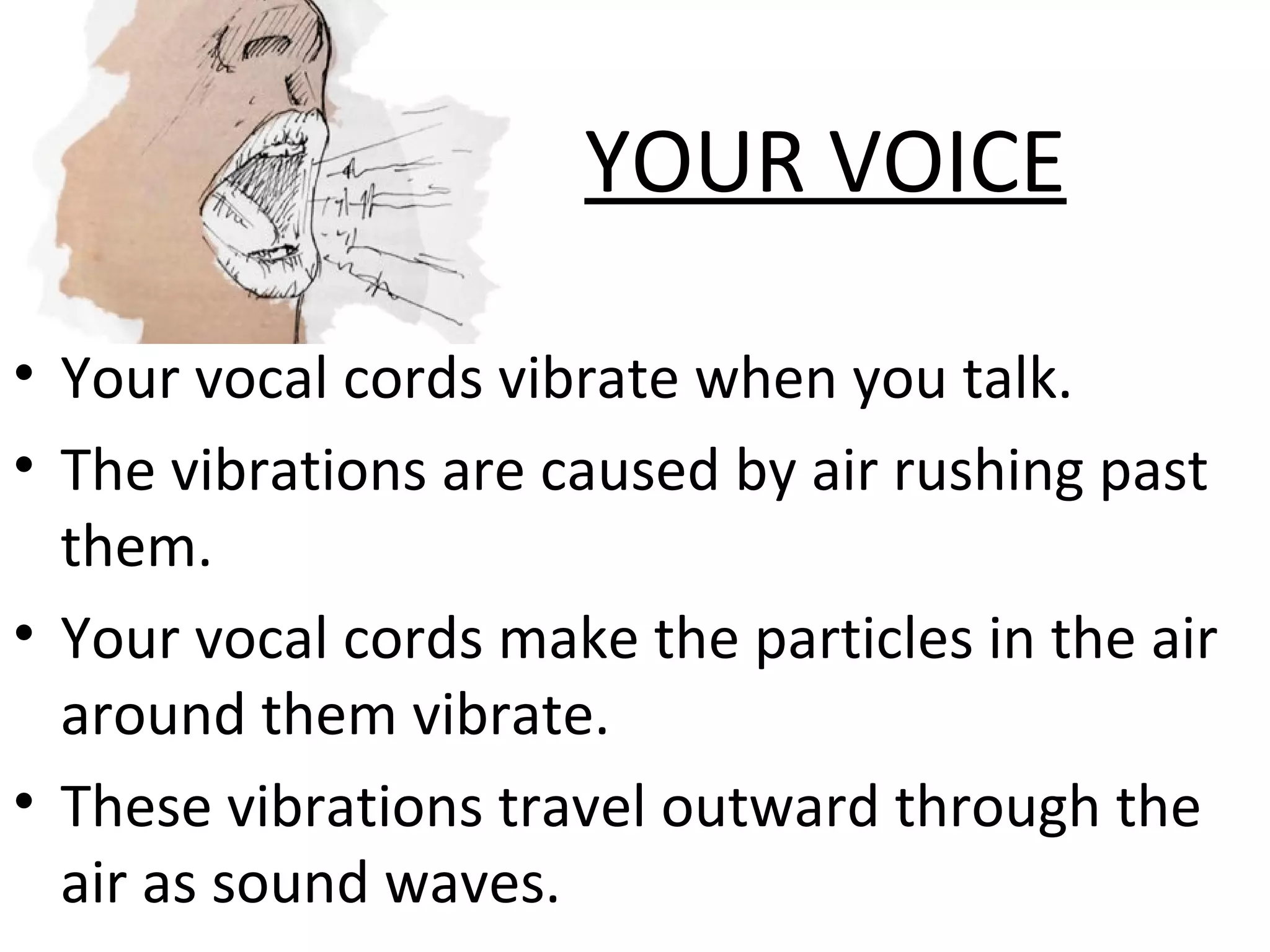
YOUR VOICE
• Your vocal cords vibrate when you talk.
• The vibrations are caused by air rushing past
them.
• Your vocal cords make the particles in the air
around them vibrate.
• These vibrations travel outward through the
air as sound waves.
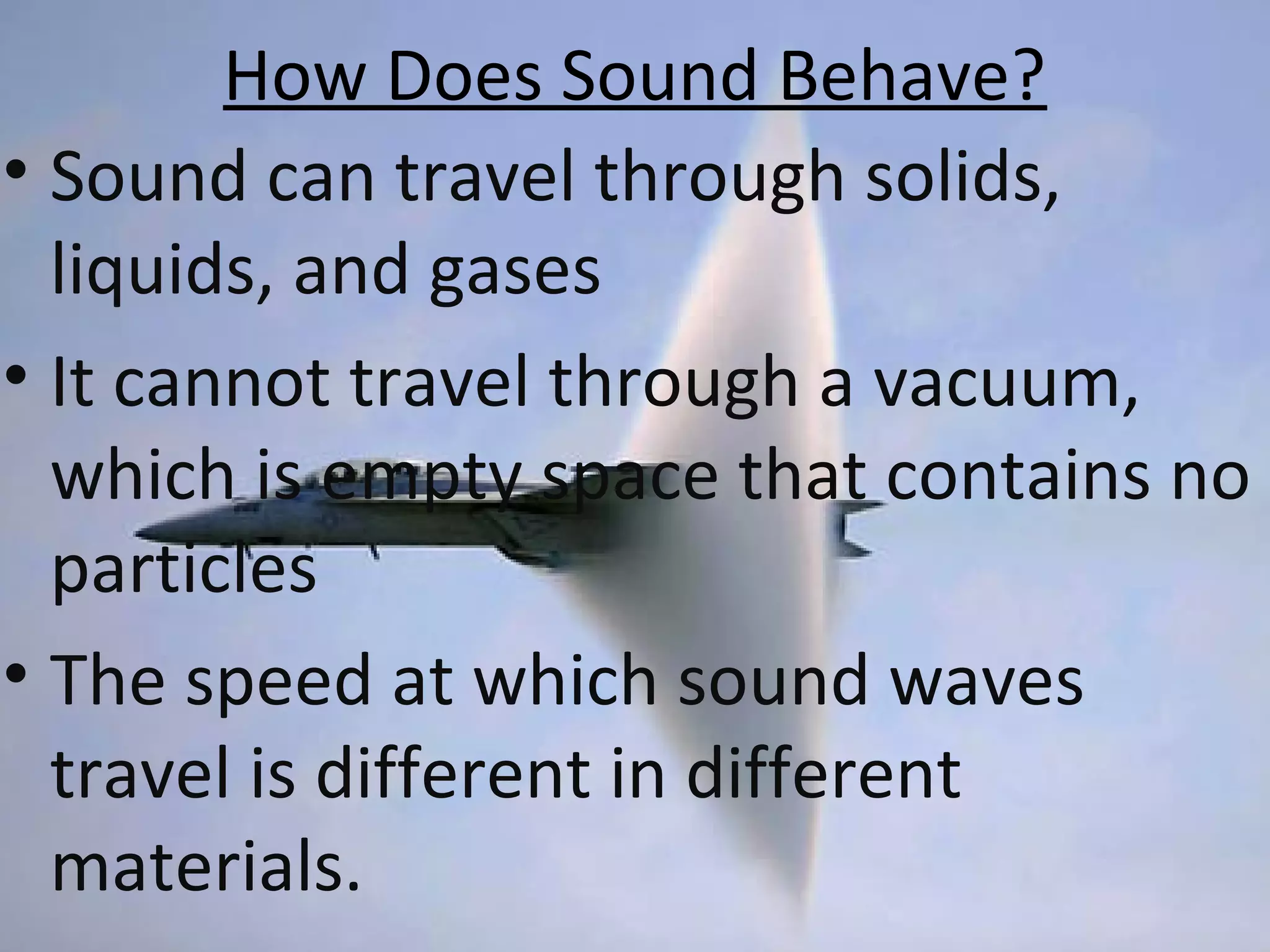
How Does Sound Behave?
• Sound can travel through solids,
liquids, and gases
• It cannot travel through a vacuum,
which is empty space that contains no
particles
• The speed at which sound waves
travel is different in different
materials.
Sound Transfers Energy
• For a sound to be heard, energy must first cause
an
object to vibrate.
• Vibrating objects give off energy in sound waves in
air.
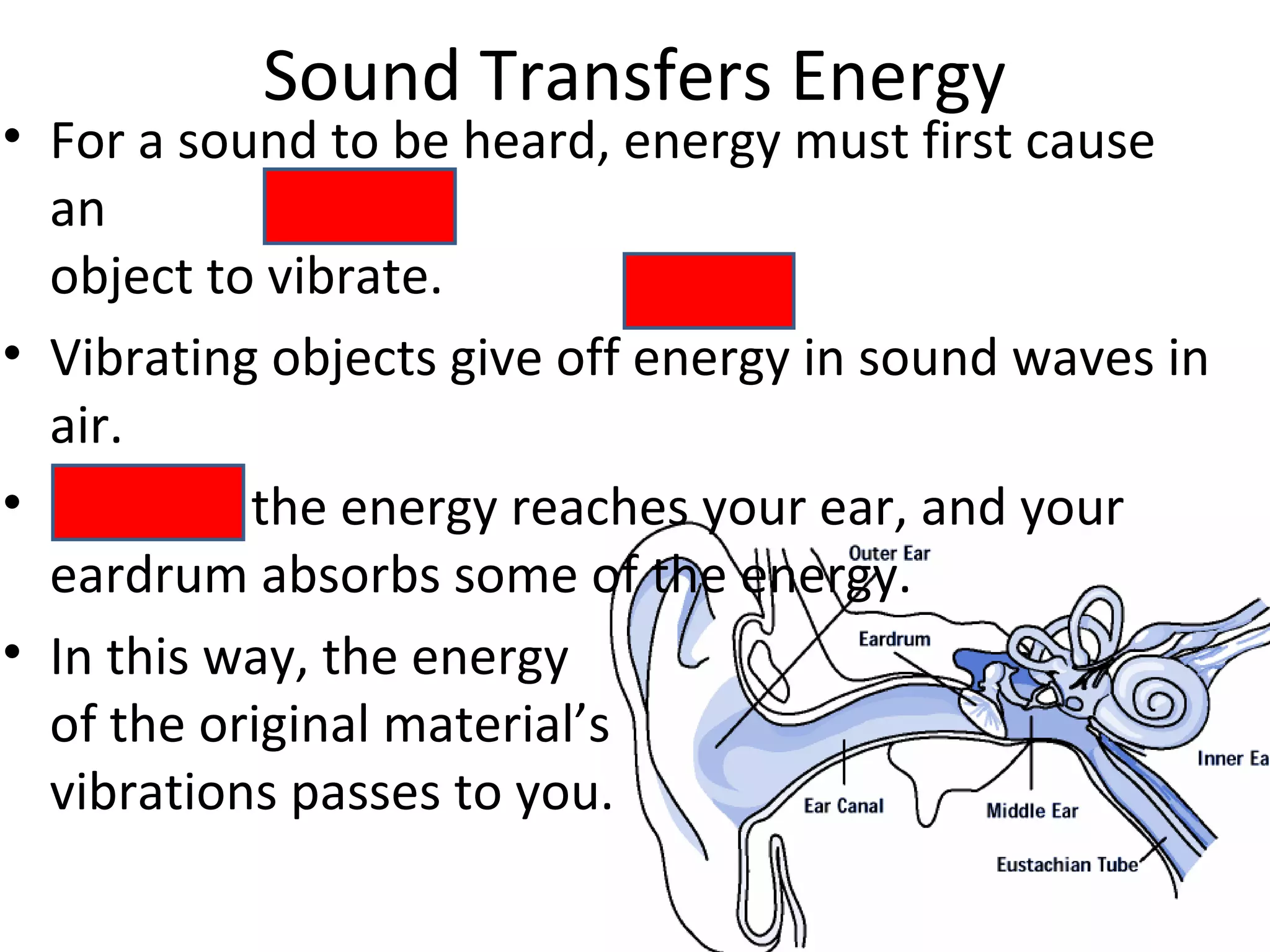
• Some of the energy reaches your ear, and your
eardrum absorbs some of the energy.
• In this way, the energy
of the original material’s
vibrations passes to you.
SOUND
–a wave of vibrations that spreads from
its source.
• Vibration is the back-and-forth motion of
an object.
Crest - areas where particles are very
close together
Frequency - The number of crests that
pass by a point each second
The greater the frequency is, the higher
the pitch of the sound
Why Are Some Sounds Louder
Than Others?
• The source of the louder sounds
is vibrating more.
• These sound waves have more
energy.
• A sound’s loudness can be
measured in units called
decibels.
YOUR VOICE
• Your vocal cords vibrate when you talk.
• The vibrations are caused by air rushing past
them.
• Your vocal cords make the particles in the air
around them vibrate.
• These vibrations travel outward through the
air as sound waves.
How Does Sound Behave?
• Sound can travel through solids,
liquids, and gases
• It cannot travel through a vacuum,
which is empty space that contains no
particles
• The speed at which sound waves
travel is different in different
materials.
Sound Transfers Energy
• For a sound to be heard, energy must first cause
an
object to vibrate.
• Vibrating objects give off energy in sound waves in
air.
• Some of the energy reaches your ear, and your
eardrum absorbs some of the energy.
• In this way, the energy
of the original material’s
vibrations passes to you.

5th grade chapter 14 section 2 - what is sound energy

  • 1.
  • 2.
    SOUND –a wave ofvibrations that spreads from its source. • Vibration is the back-and-forth motion of an object.
  • 3.
    Crest - areaswhere particles are very close together Frequency - The number of crests that pass by a point each second The greater the frequency is, the higher the pitch of the sound
  • 4.
    Why Are SomeSounds Louder Than Others? • The source of the louder sounds is vibrating more. • These sound waves have more energy. • A sound’s loudness can be measured in units called decibels.
  • 5.
    YOUR VOICE • Yourvocal cords vibrate when you talk. • The vibrations are caused by air rushing past them. • Your vocal cords make the particles in the air around them vibrate. • These vibrations travel outward through the air as sound waves.
  • 7.
    How Does SoundBehave? • Sound can travel through solids, liquids, and gases • It cannot travel through a vacuum, which is empty space that contains no particles • The speed at which sound waves travel is different in different materials.
  • 8.
    Sound Transfers Energy •For a sound to be heard, energy must first cause an object to vibrate. • Vibrating objects give off energy in sound waves in air. • Some of the energy reaches your ear, and your eardrum absorbs some of the energy. • In this way, the energy of the original material’s vibrations passes to you.
  • 10.
    SOUND –a wave ofvibrations that spreads from its source. • Vibration is the back-and-forth motion of an object.
  • 11.
    Crest - areaswhere particles are very close together Frequency - The number of crests that pass by a point each second The greater the frequency is, the higher the pitch of the sound
  • 12.
    Why Are SomeSounds Louder Than Others? • The source of the louder sounds is vibrating more. • These sound waves have more energy. • A sound’s loudness can be measured in units called decibels.
  • 13.
    YOUR VOICE • Yourvocal cords vibrate when you talk. • The vibrations are caused by air rushing past them. • Your vocal cords make the particles in the air around them vibrate. • These vibrations travel outward through the air as sound waves.
  • 14.
    How Does SoundBehave? • Sound can travel through solids, liquids, and gases • It cannot travel through a vacuum, which is empty space that contains no particles • The speed at which sound waves travel is different in different materials.
  • 15.
    Sound Transfers Energy •For a sound to be heard, energy must first cause an object to vibrate. • Vibrating objects give off energy in sound waves in air. • Some of the energy reaches your ear, and your eardrum absorbs some of the energy. • In this way, the energy of the original material’s vibrations passes to you.