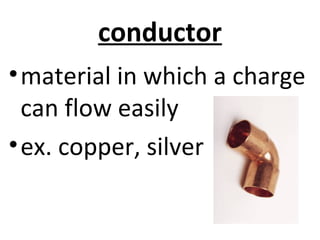
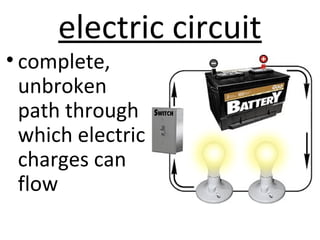
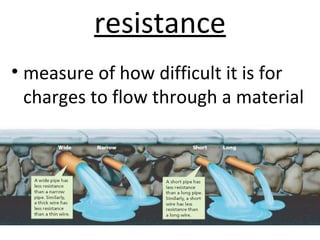
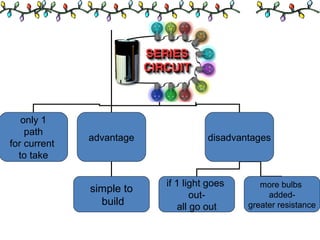
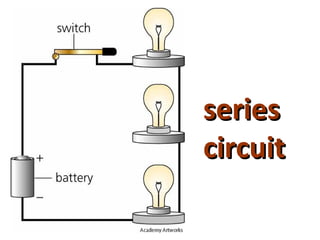
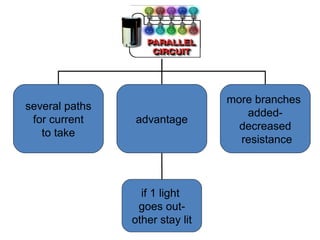
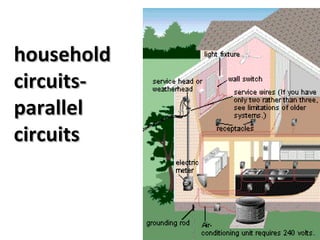
Electric current is the continuous flow of electric charges through a material. It can only exist in a complete electric circuit, which provides an unbroken path for charges to flow. Conductors are materials that allow easy flow of charges, while insulators do not allow charges to move freely. Resistance measures how difficult it is for charges to flow through a material. Series circuits have one path for current, while parallel circuits have several paths and decreased resistance.




![Getting Started with Apache Spark: Big Data Made Simple [Free Meetup]](https://cdn.slidesharecdn.com/ss_thumbnails/apachesparkgettingstarted-260203175547-8361bcc3-thumbnail.jpg?width=640&height=640&fit=bounds)


