Downloaded 3,592 times
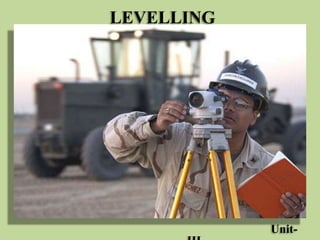
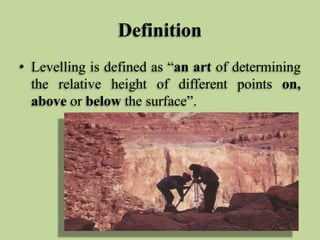
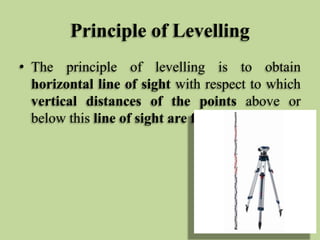
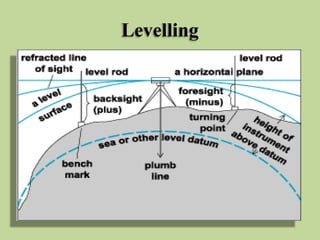
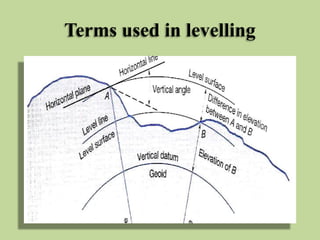
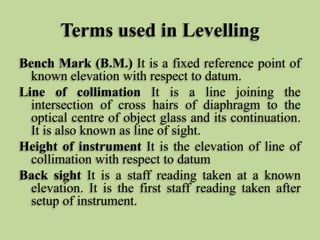
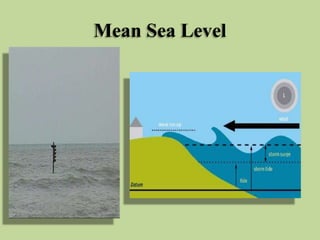
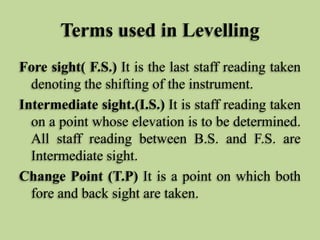
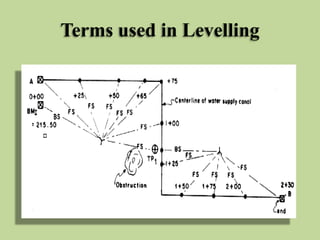
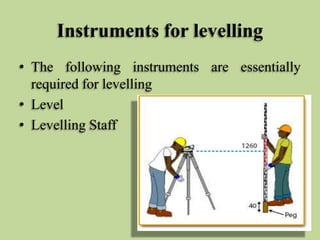
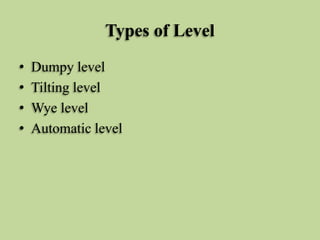
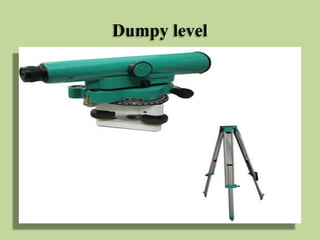
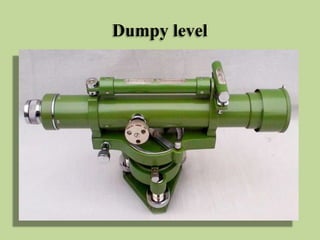
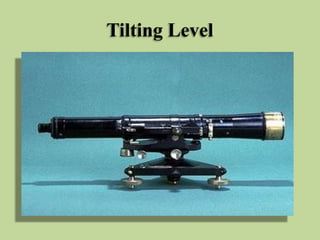
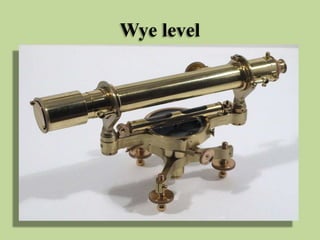
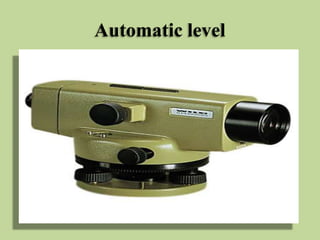
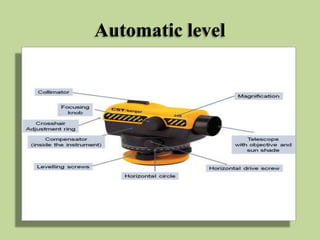
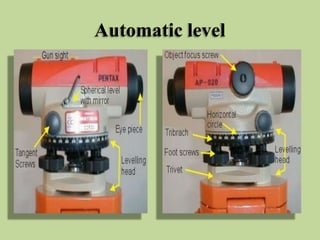
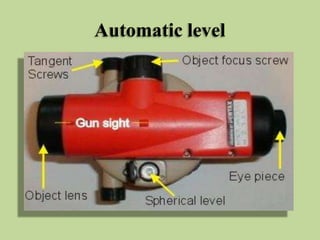
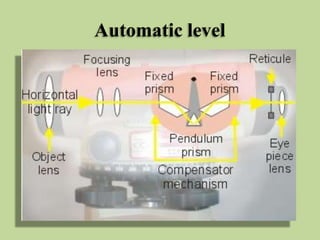
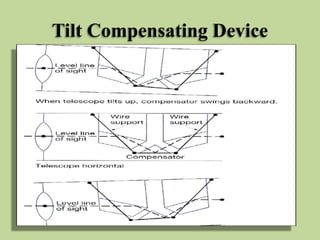
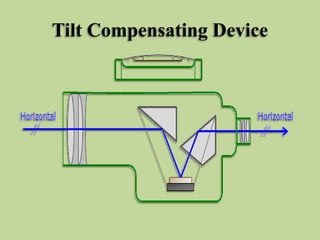
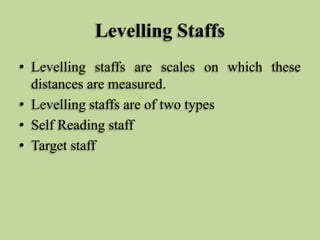
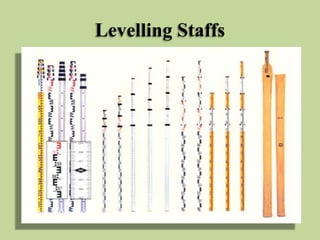



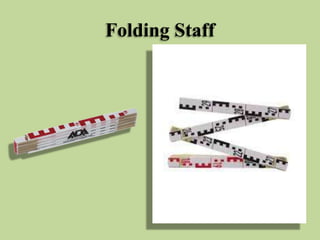
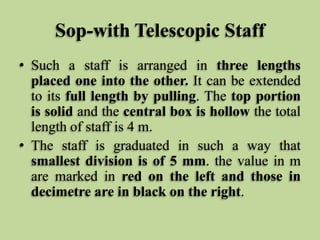
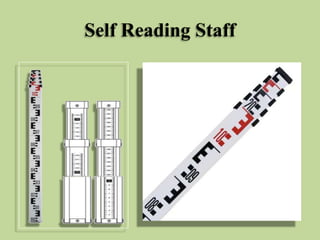
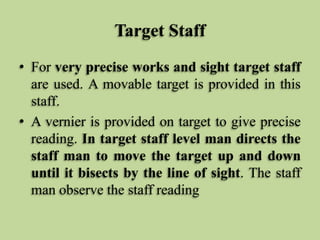
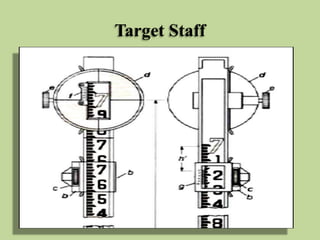
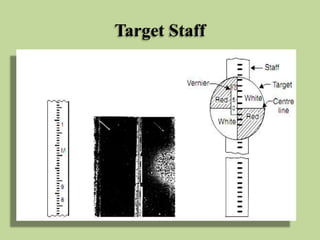

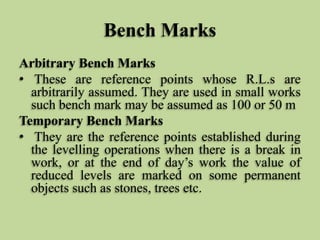
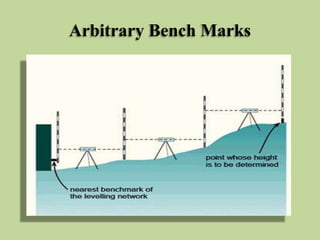
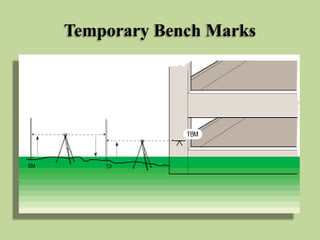
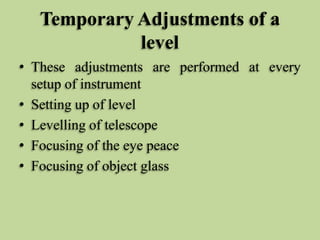
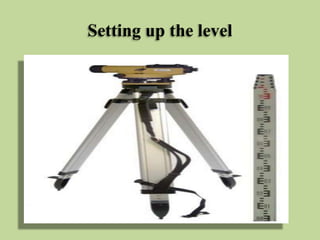
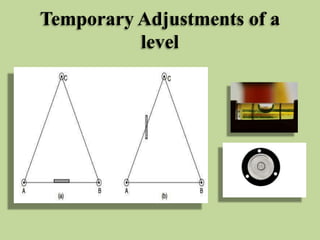
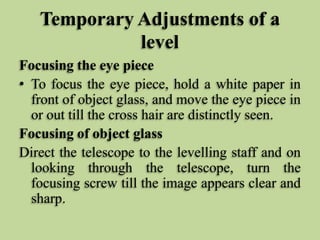
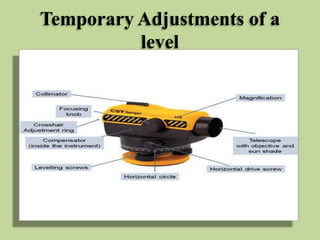
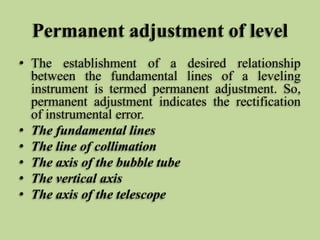
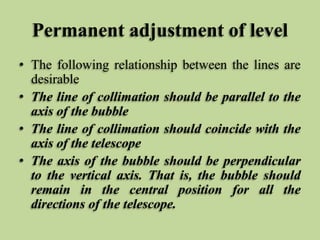
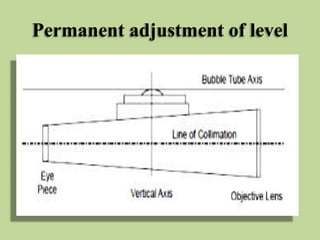
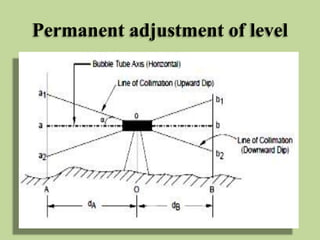
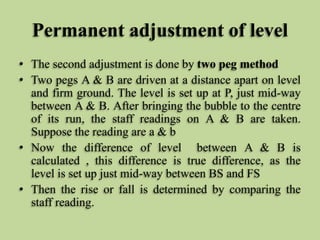
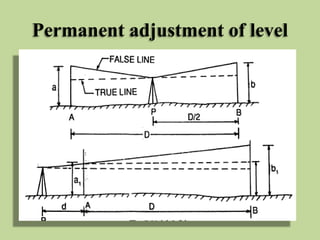
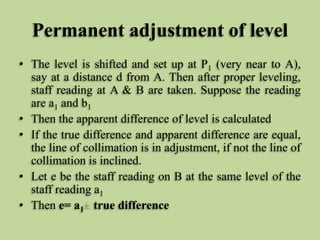
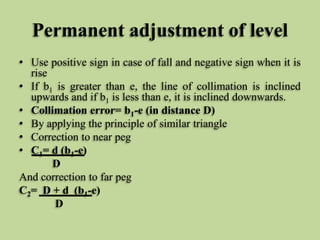
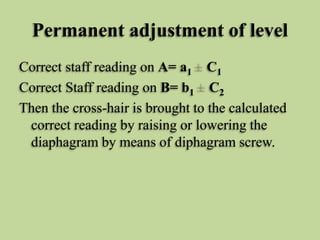
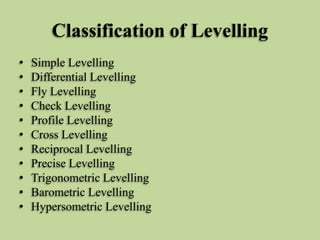
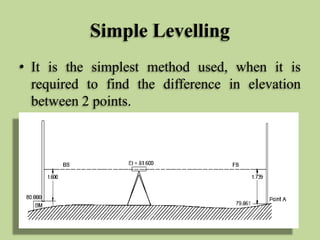
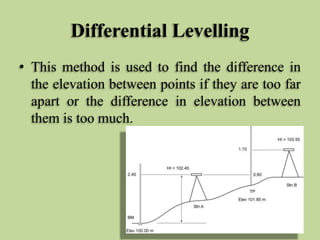
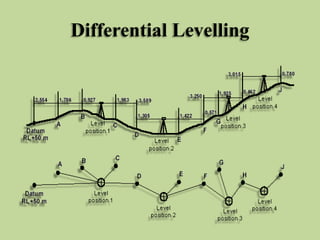
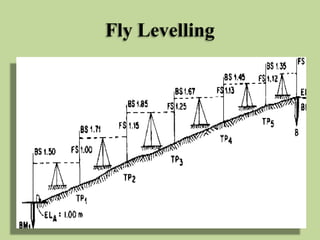
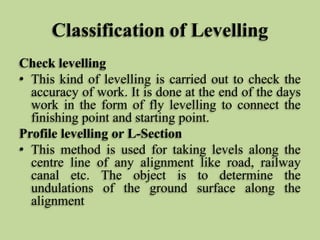
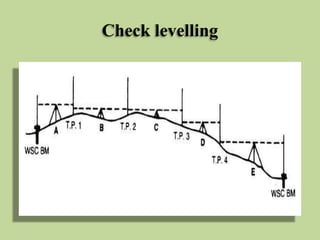
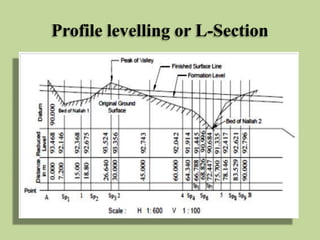
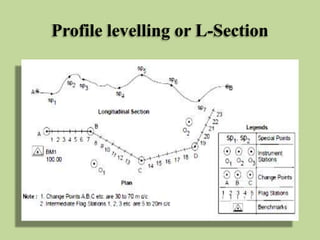
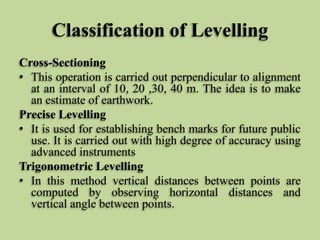
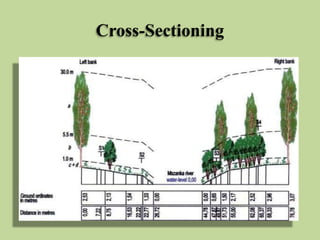

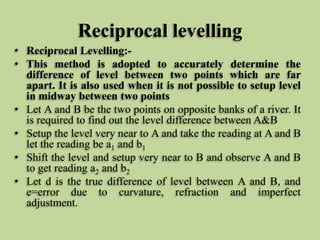
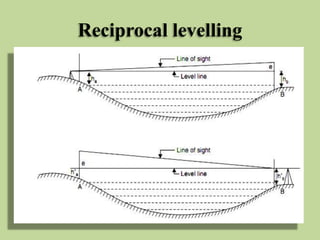
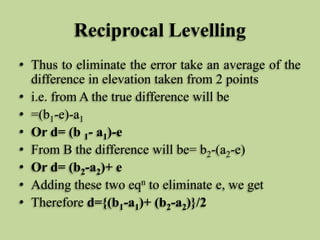
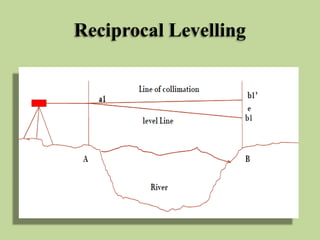
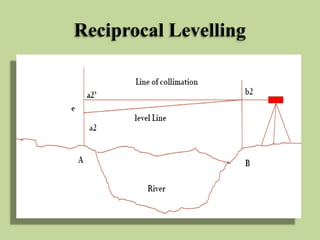
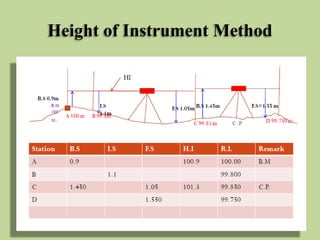
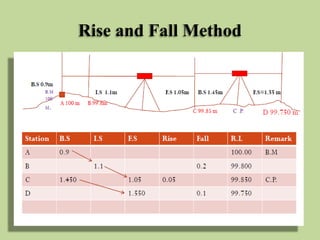
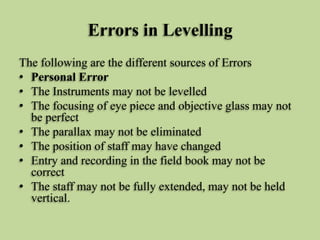
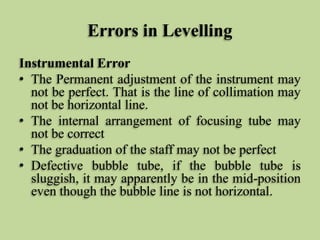
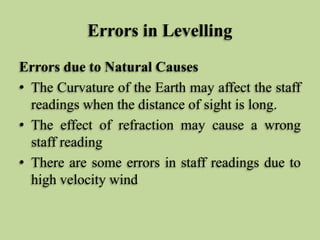
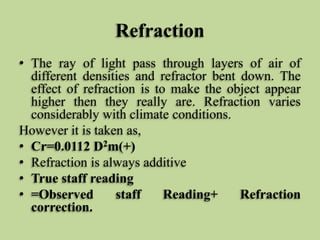
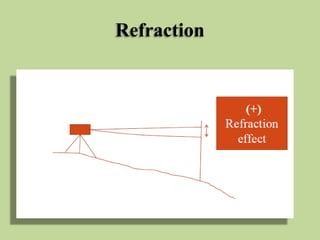
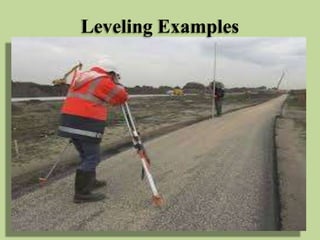
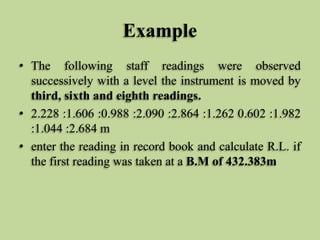
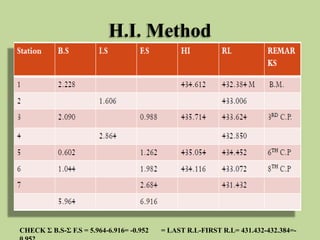
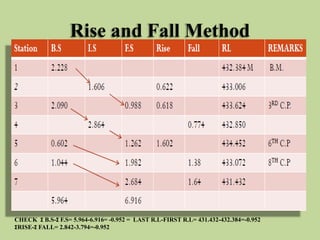
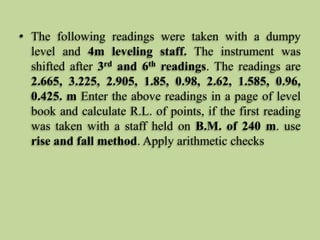
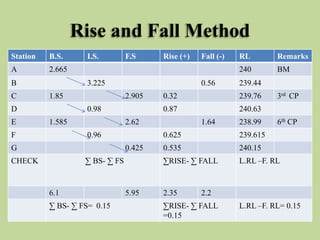
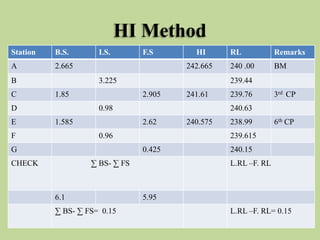
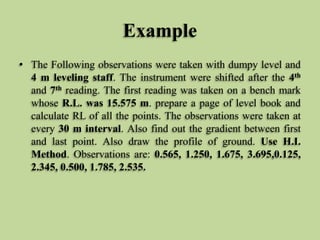
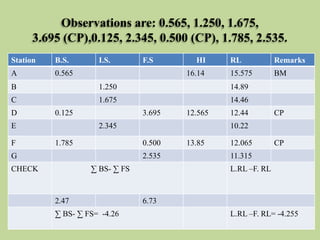
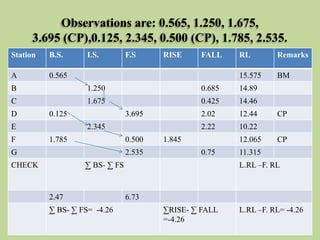
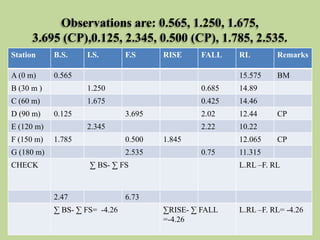
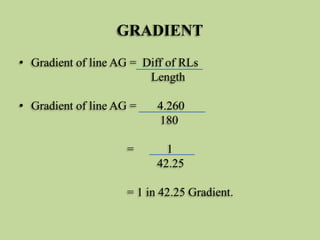
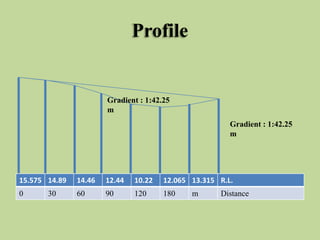
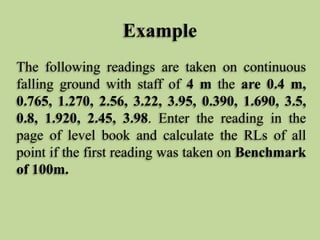
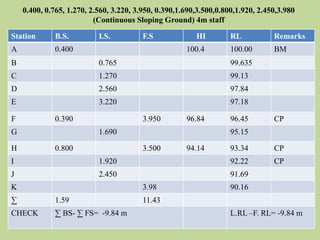
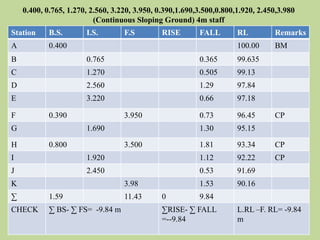
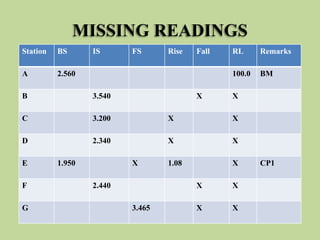
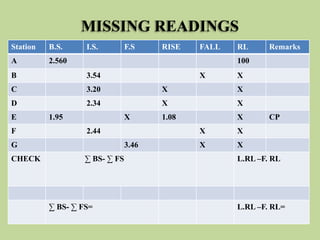
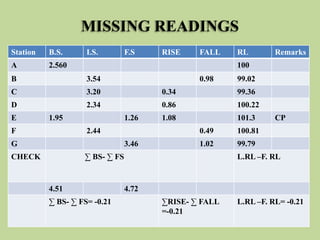
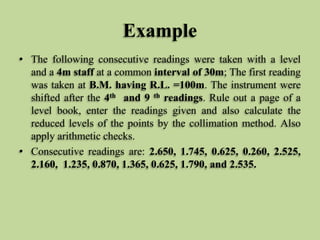
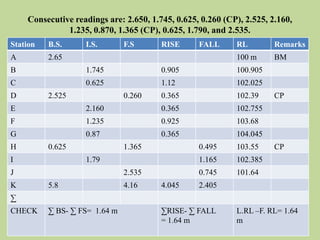
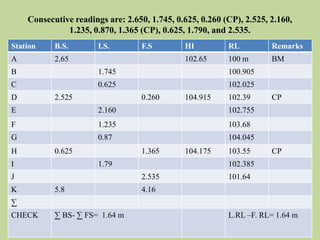
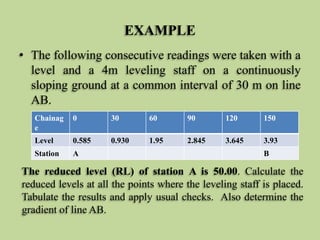
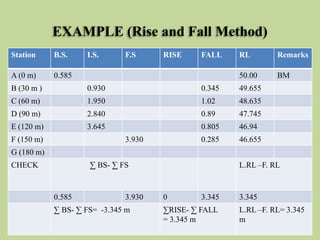
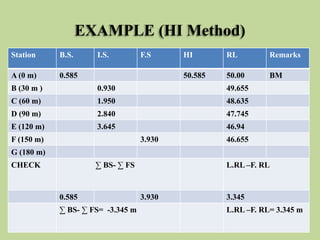


1. Levelling is used to determine relative heights and elevations of points and establish points at required elevations. It involves using instruments like levels and staffs. 2. There are different types of levels (dumpy, tilting, wye, automatic) and staffs (self-reading, target). Precise levelling is done to establish permanent benchmarks. 3. Adjustments must be made to level instruments during setup and permanently. Methods like differential, profile and cross levelling are used depending on the task. Reciprocal levelling involves backsight-foresight exchange to check for errors.


