Content
Company profile
PEST analysis
Five forces analysis
Value chain
Canvas model
Core problem
Differentiation matrix
Canvas model +5
Strategy
Mission & Vision
Google's mission is to organize the world's information and make
it universally accessible and useful.

Google's vision is to make search engines so powerful that they
‘understand everything in the world’
Company profile
Started in 1996 by Brin and Page, founded as Google in 1998
57% American kids say Google as their first word
620 Mln visitors daily
2013 consolidated revenu 50 bln, double digit growth every year
PEST analysis
Political

Social

Political stability

Entrepreneurial spirit

Intellectual property protection

Culture (gender roles)

Anit-trust laws

Demographics

Taxes

Skill of workforce

Growth market due to more and more internet usage
Economical
Level of education/Skill of workforce

Technological

Exchange rates

Innovation

Financial market stability

High costs

Government intervention free market

Rate of technological diffusion
Impact on VP in value chain
Five forces analysis
Threat of new entrants – MODERATE (high cash and infrastructure)
Threat of substitutes – LOW (no substitute for the internet)

Bargaining power of customers – STRONG (threat of substitutes in search and software)
Bargaining power of suppliers – LOW (strong market dominance)
Intensity of rivalry – MODERATE (Yahoo, MSN, IOS/Apple)
Complementors – LOW (Google is a self developer, Licensing)
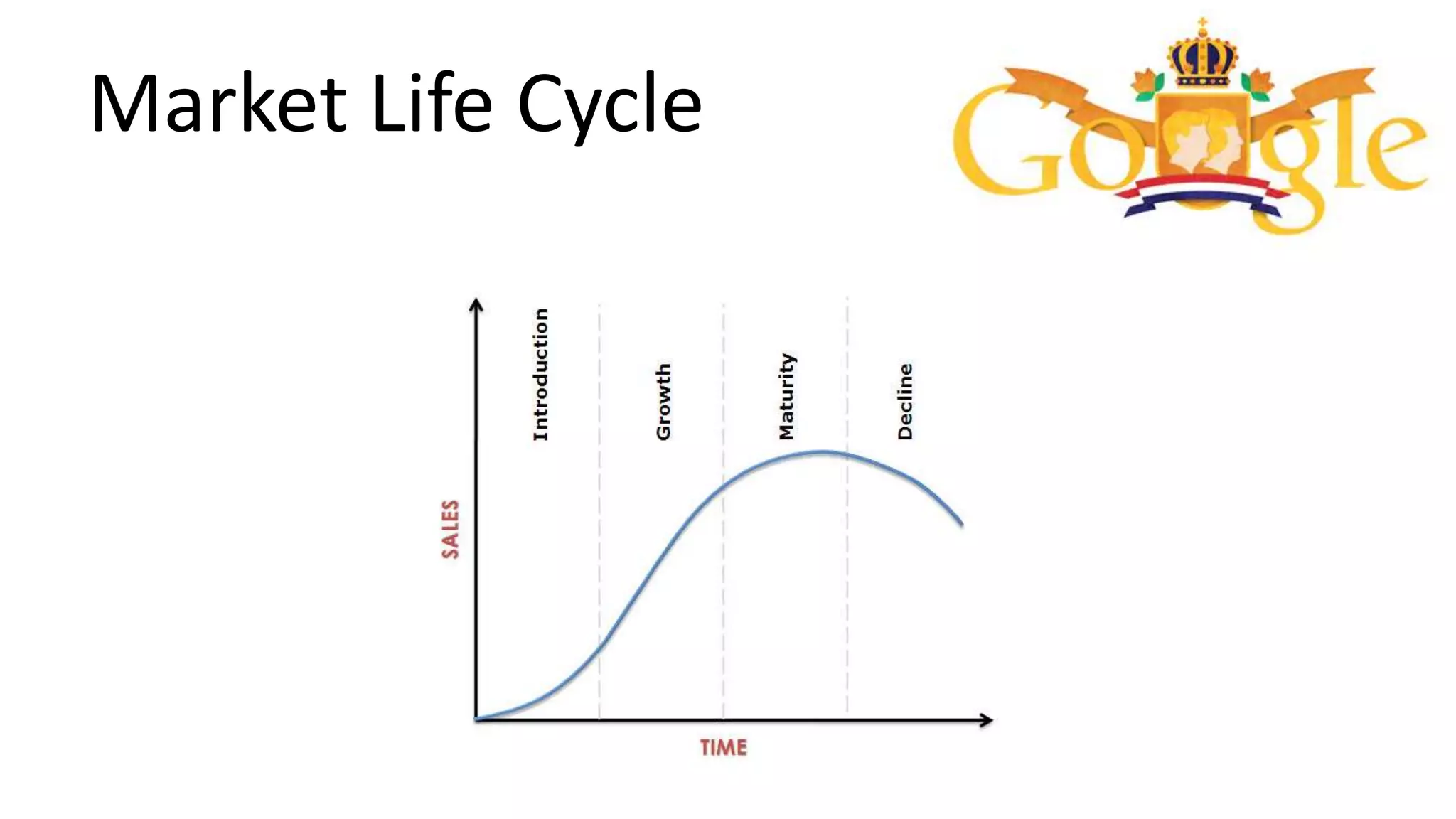
Market Life Cycle
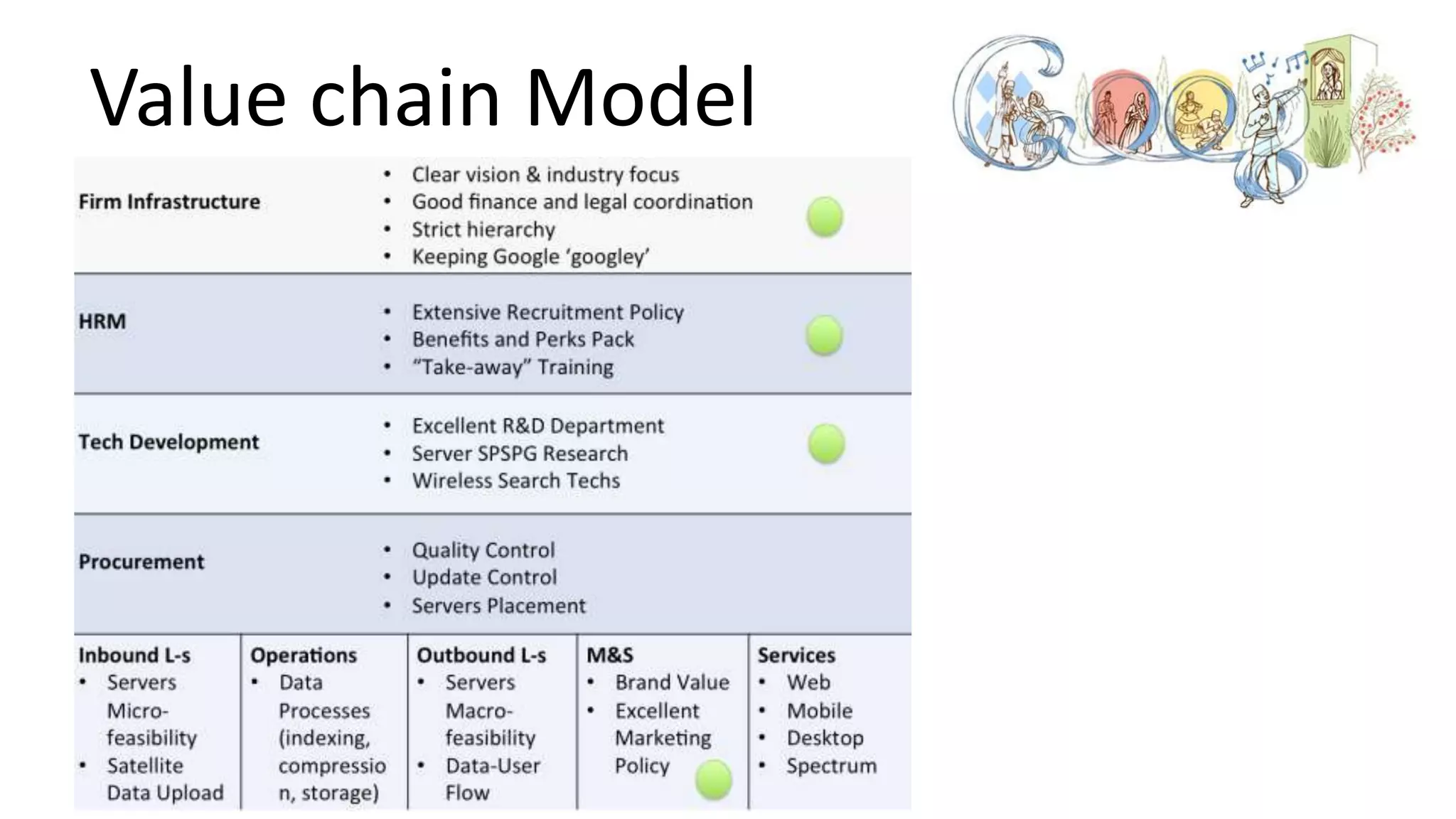
Value chain Model
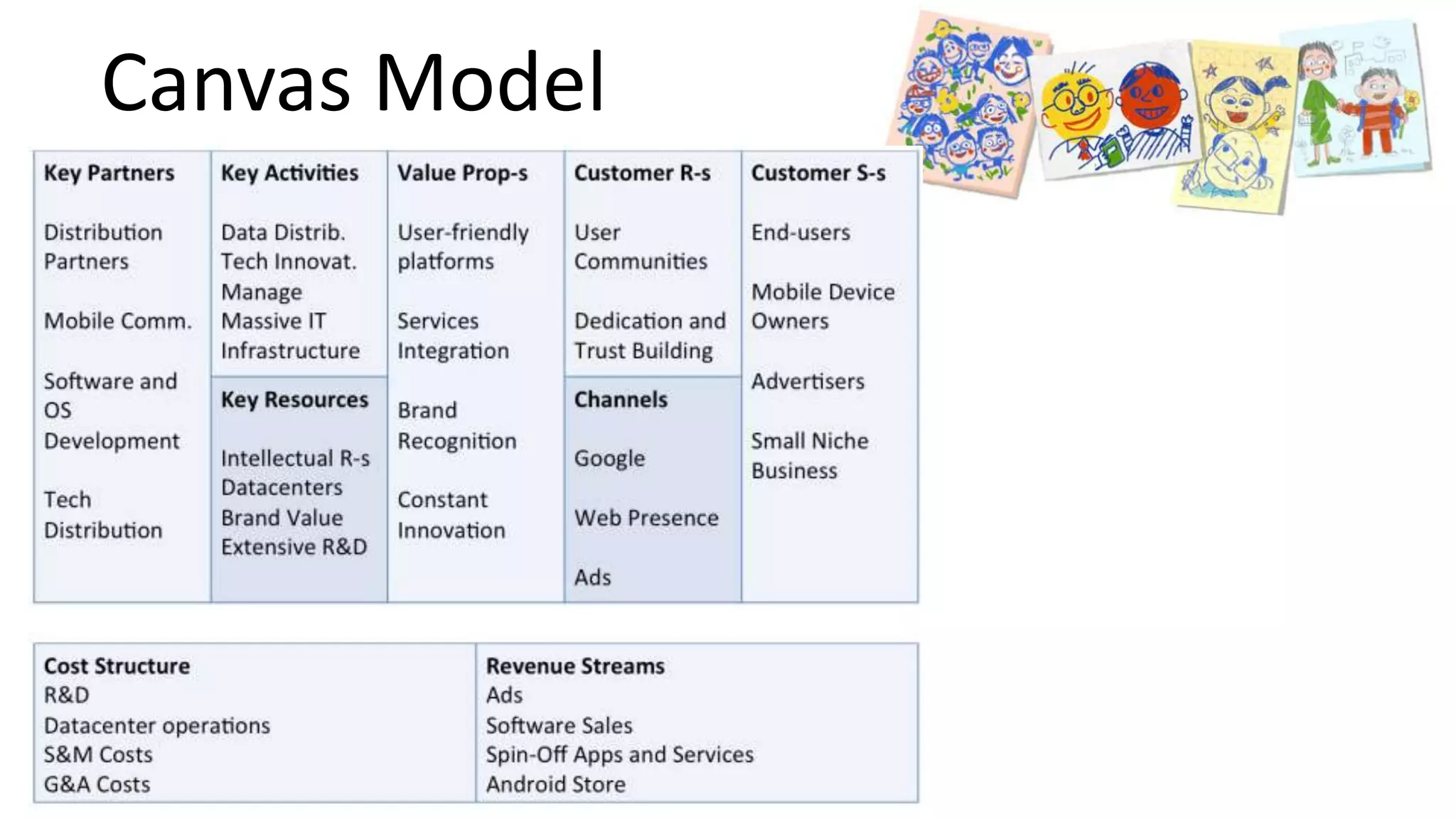
Canvas Model
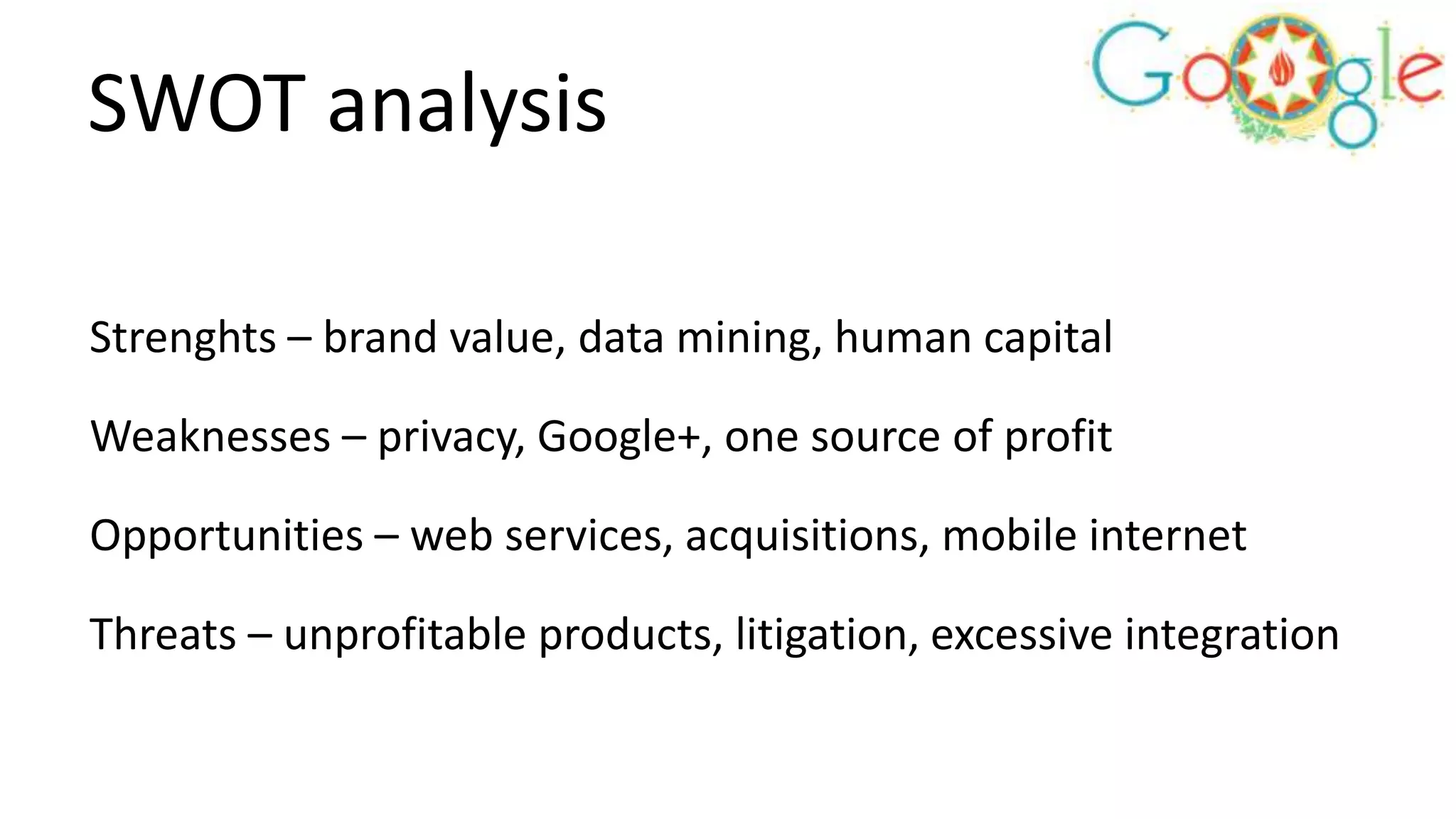
SWOT analysis
Strenghts – brand value, data mining, human capital
Weaknesses – privacy, Google+, one source of profit

Opportunities – web services, acquisitions, mobile internet
Threats – unprofitable products, litigation, excessive integration
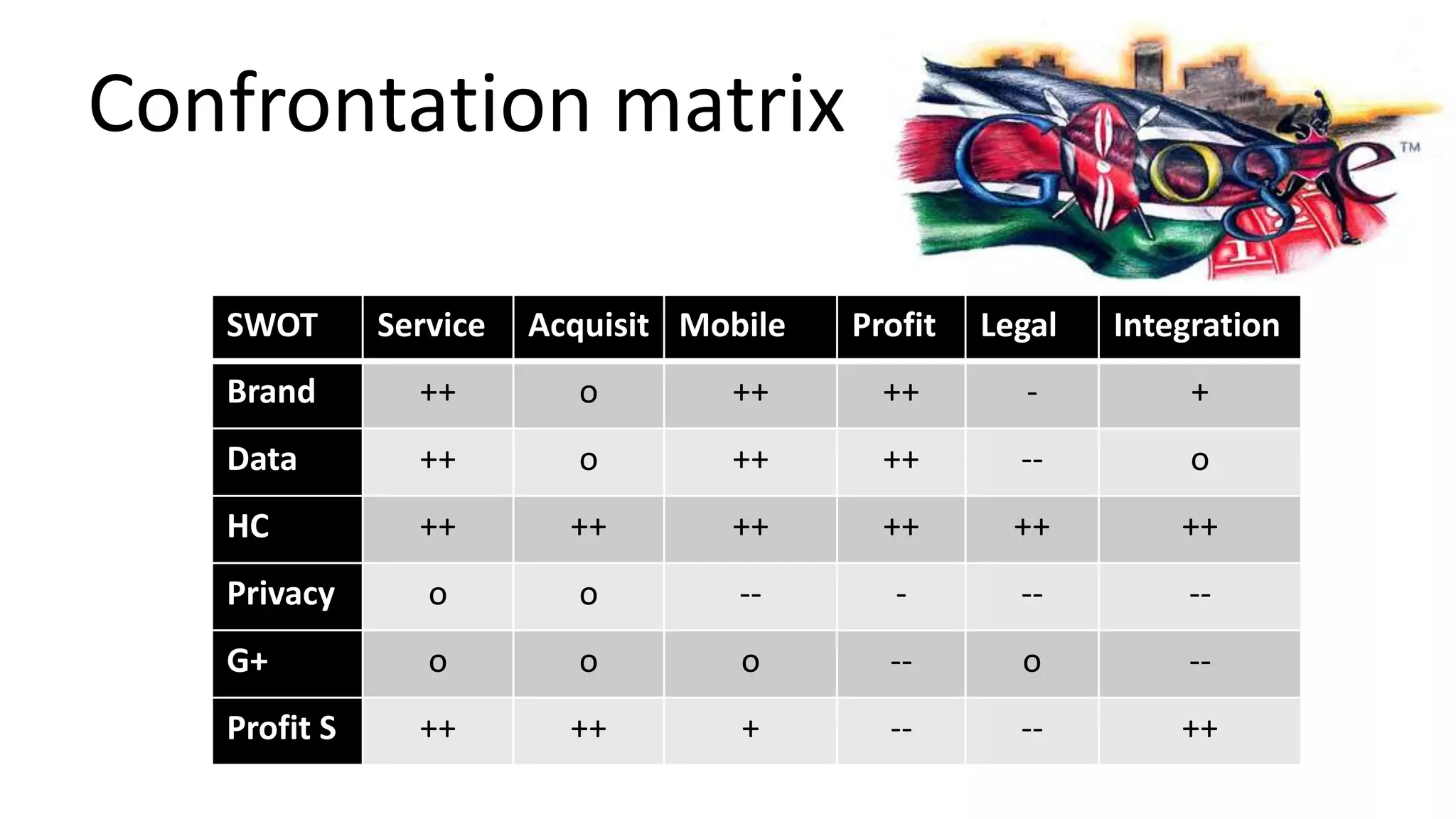
Confrontation matrix
SWOT

Service

Acquisit Mobile

Profit

Legal

Integration

Brand

++

o

++

++

-

+

Data

++

o

++

++

--

o

HC

++

++

++

++

++

++

Privacy

o

o

--

-

--

--

G+

o

o

o

--

o

--

Profit S

++

++

+

--

--

++
Core problem
Some of its core strengths
(data mining, product integration)

are making Google
more and more unpopular. People do not like monopolies
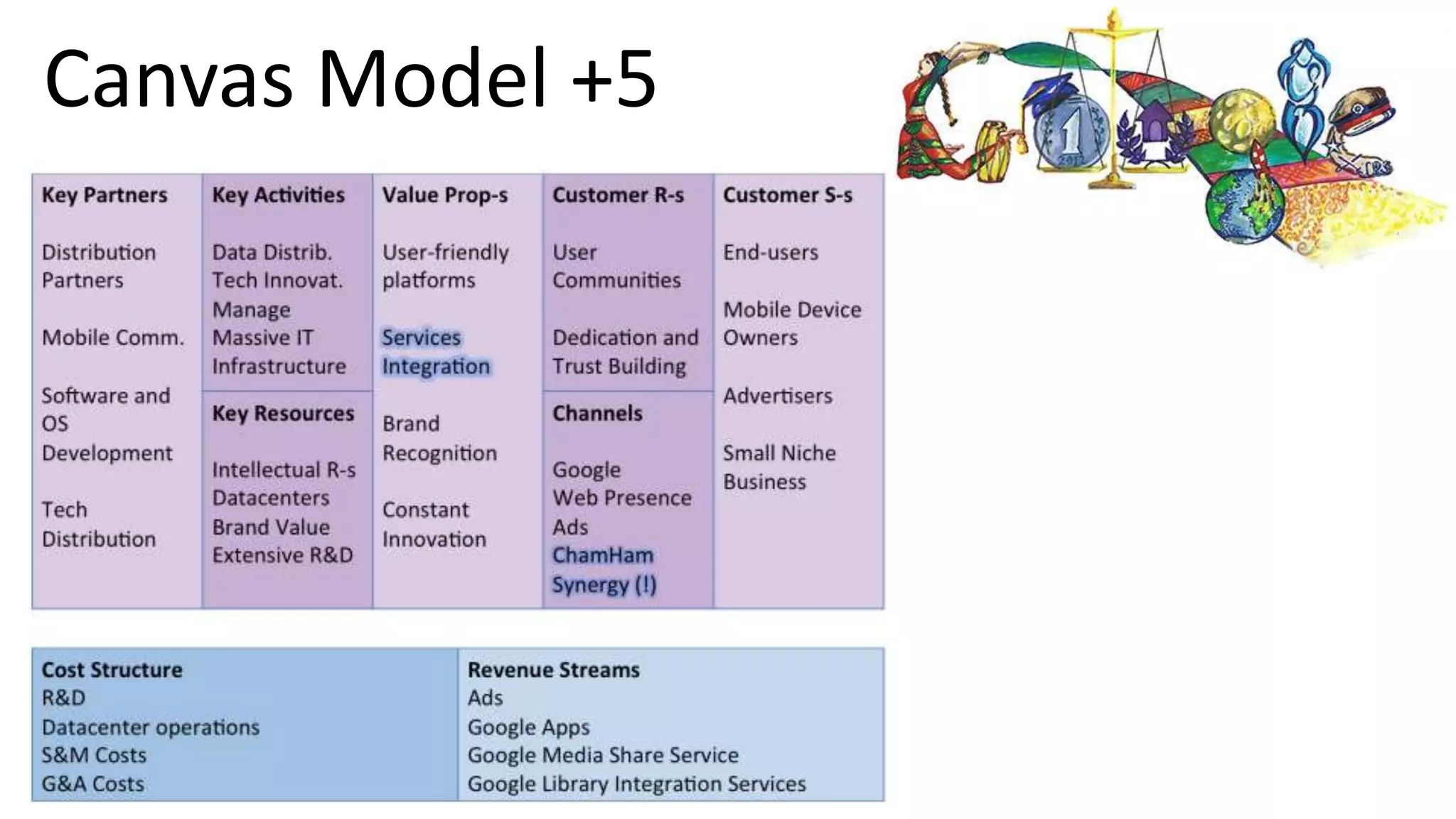
Canvas Model +5
Strategy
Google must continue its position as market leader
Google Must cancel unprofitable and unpopular products (hardware?)
Google must develop new sources of income (web services)

Google must fight of any attack made by rivals
Google must make adds usefull (comparing prices, etc.)
Google must oppose intelligence agencies openly

Google must reduce legal expenses by 11% by 2016
Google must continue its acquisition strategy
Google must invest heavily to keep and acquire human capital
Google must maintain shareholder voting rights (80%) to keep strategic advantage

Google Strategy & Business Model

  • 2.
    Content Company profile PEST analysis Fiveforces analysis Value chain Canvas model Core problem Differentiation matrix Canvas model +5 Strategy
  • 3.
    Mission & Vision Google'smission is to organize the world's information and make it universally accessible and useful. Google's vision is to make search engines so powerful that they ‘understand everything in the world’
  • 4.
    Company profile Started in1996 by Brin and Page, founded as Google in 1998 57% American kids say Google as their first word 620 Mln visitors daily 2013 consolidated revenu 50 bln, double digit growth every year
  • 5.
    PEST analysis Political Social Political stability Entrepreneurialspirit Intellectual property protection Culture (gender roles) Anit-trust laws Demographics Taxes Skill of workforce Growth market due to more and more internet usage Economical Level of education/Skill of workforce Technological Exchange rates Innovation Financial market stability High costs Government intervention free market Rate of technological diffusion Impact on VP in value chain
  • 6.
    Five forces analysis Threatof new entrants – MODERATE (high cash and infrastructure) Threat of substitutes – LOW (no substitute for the internet) Bargaining power of customers – STRONG (threat of substitutes in search and software) Bargaining power of suppliers – LOW (strong market dominance) Intensity of rivalry – MODERATE (Yahoo, MSN, IOS/Apple) Complementors – LOW (Google is a self developer, Licensing)
  • 7.
  • 8.
  • 9.
  • 10.
    SWOT analysis Strenghts –brand value, data mining, human capital Weaknesses – privacy, Google+, one source of profit Opportunities – web services, acquisitions, mobile internet Threats – unprofitable products, litigation, excessive integration
  • 11.
  • 12.
    Core problem Some ofits core strengths (data mining, product integration) are making Google more and more unpopular. People do not like monopolies
  • 13.
  • 14.
    Strategy Google must continueits position as market leader Google Must cancel unprofitable and unpopular products (hardware?) Google must develop new sources of income (web services) Google must fight of any attack made by rivals Google must make adds usefull (comparing prices, etc.) Google must oppose intelligence agencies openly Google must reduce legal expenses by 11% by 2016 Google must continue its acquisition strategy Google must invest heavily to keep and acquire human capital Google must maintain shareholder voting rights (80%) to keep strategic advantage