The Sun
Our Heat Source
Insolation

 Insolation is incoming solar radiation that heats our
  planet.

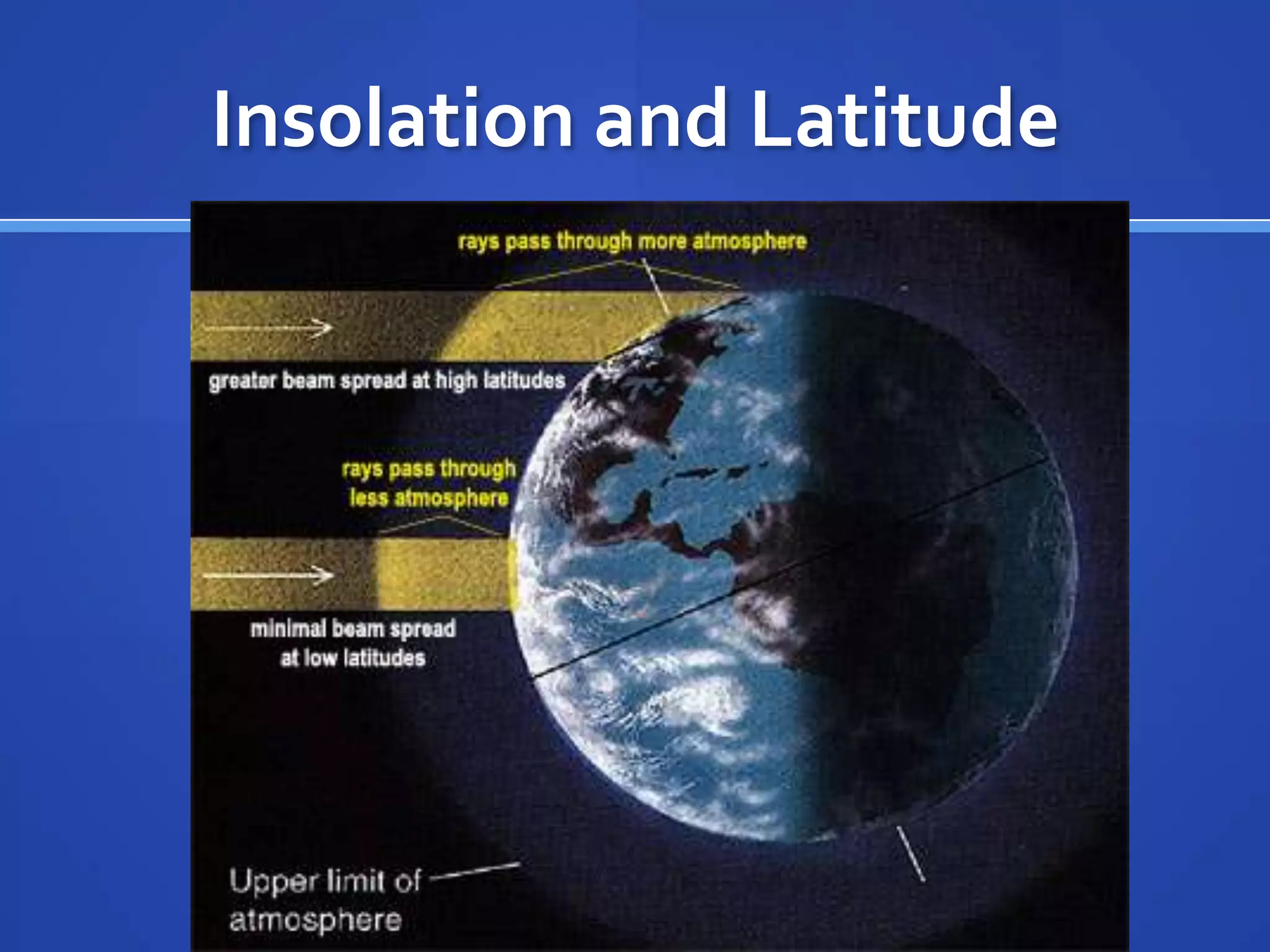
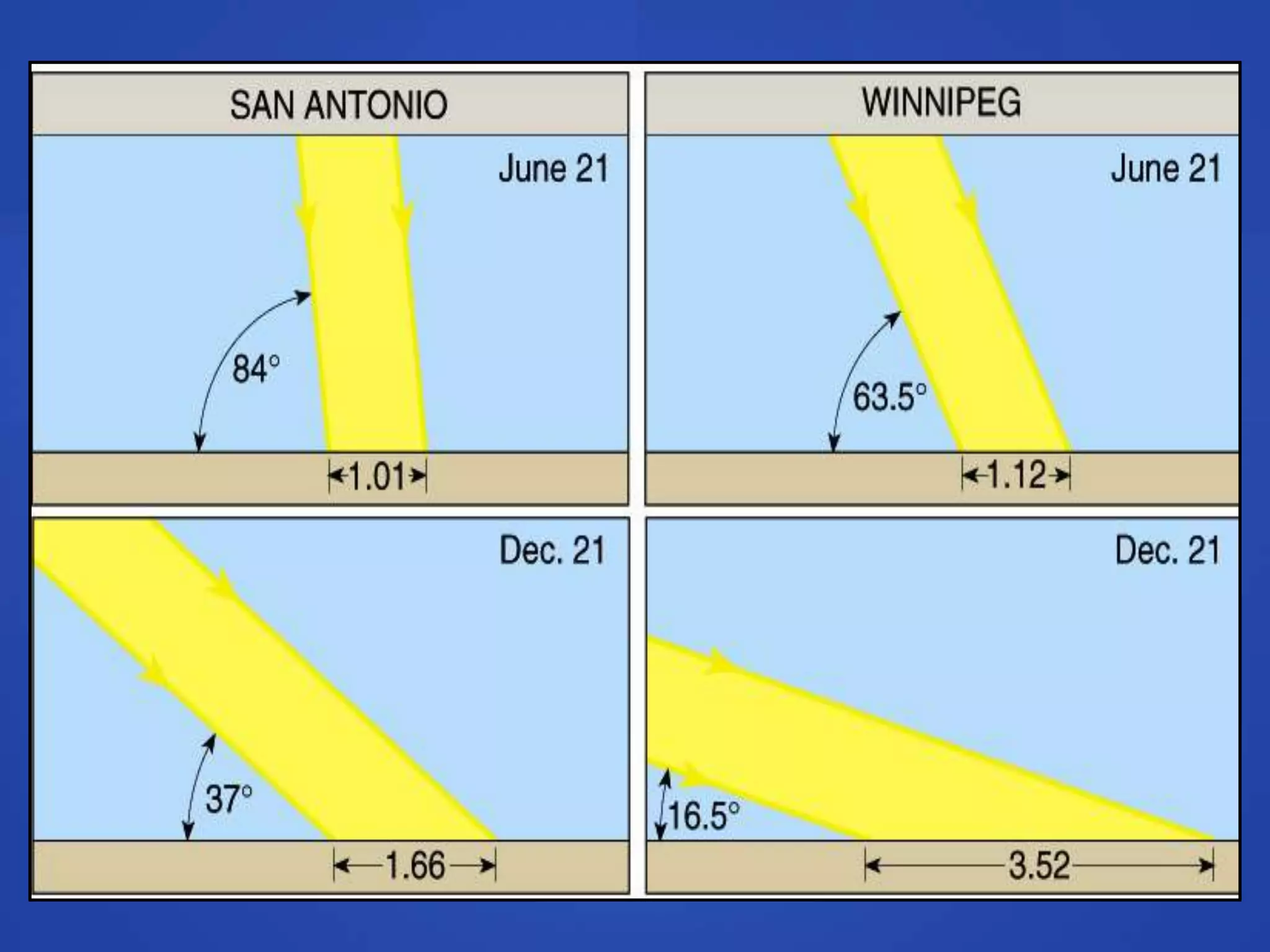
 Round surface of Earth + 23.5° tilt on axis = differential
  heat distribution
Insolation and Latitude
Absorption vs Reflection
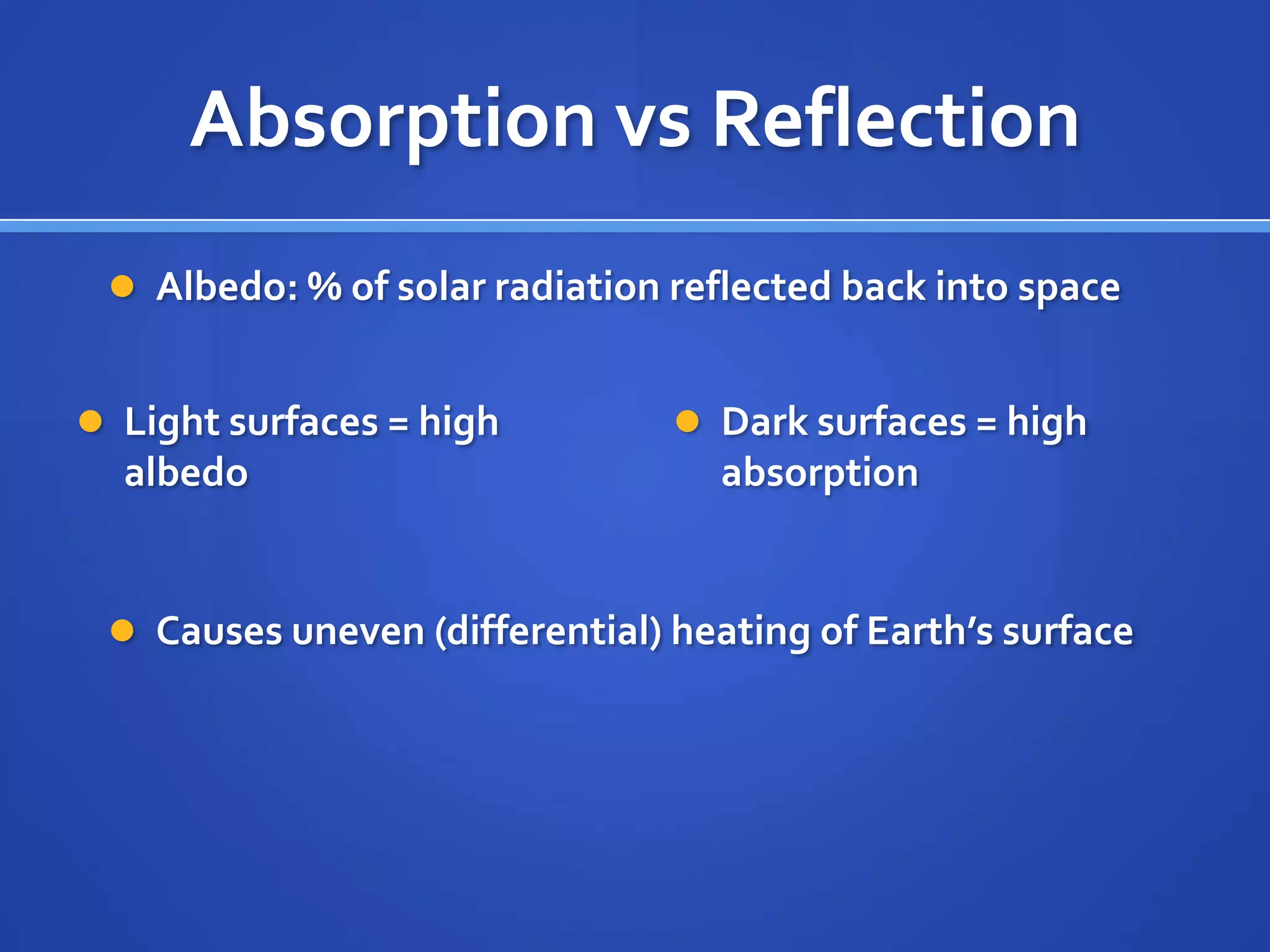
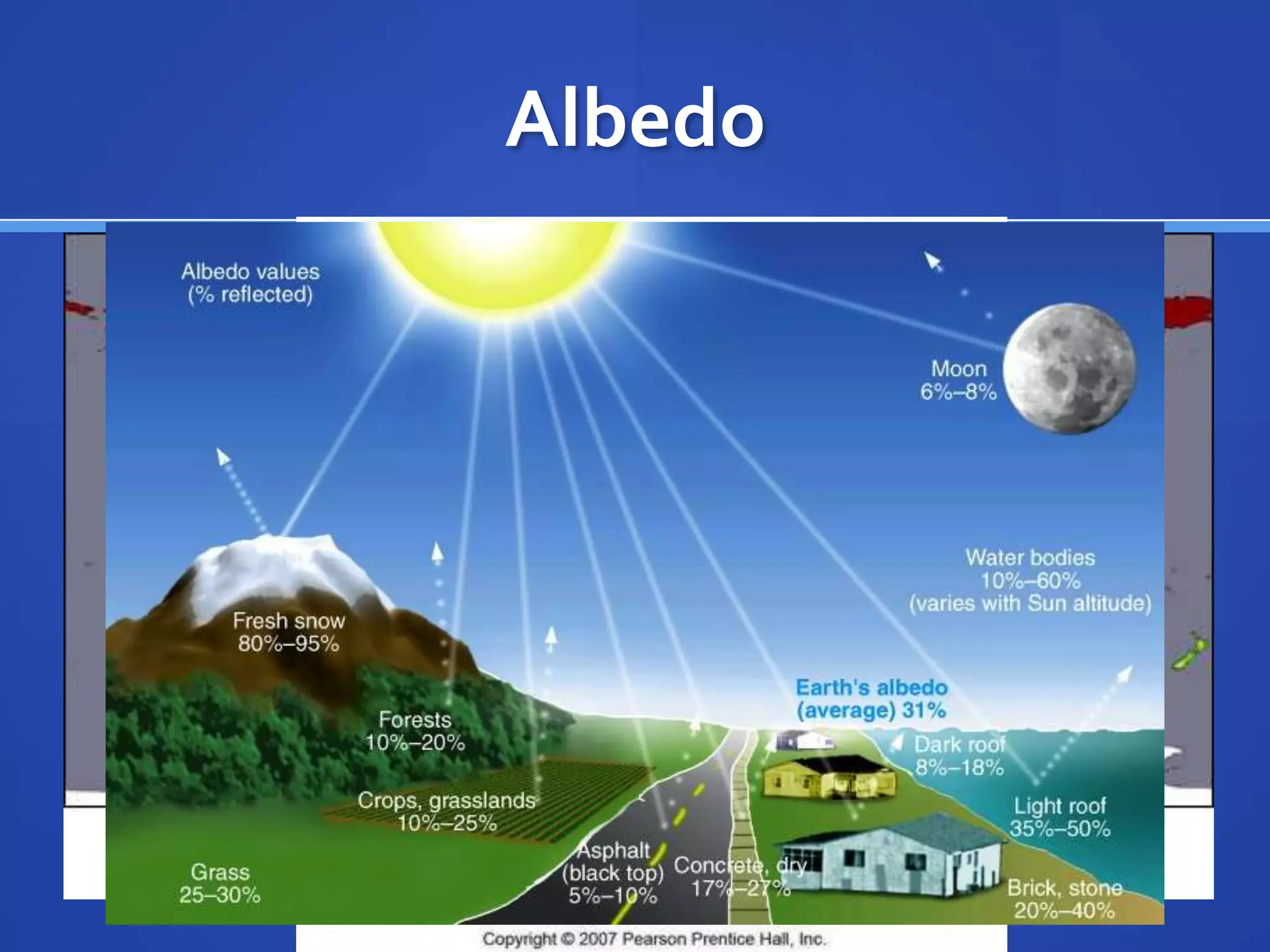
  Albedo: % of solar radiation reflected back into space


 Light surfaces = high          Dark surfaces = high
  albedo                           absorption


  Causes uneven (differential) heating of Earth’s surface
Albedo
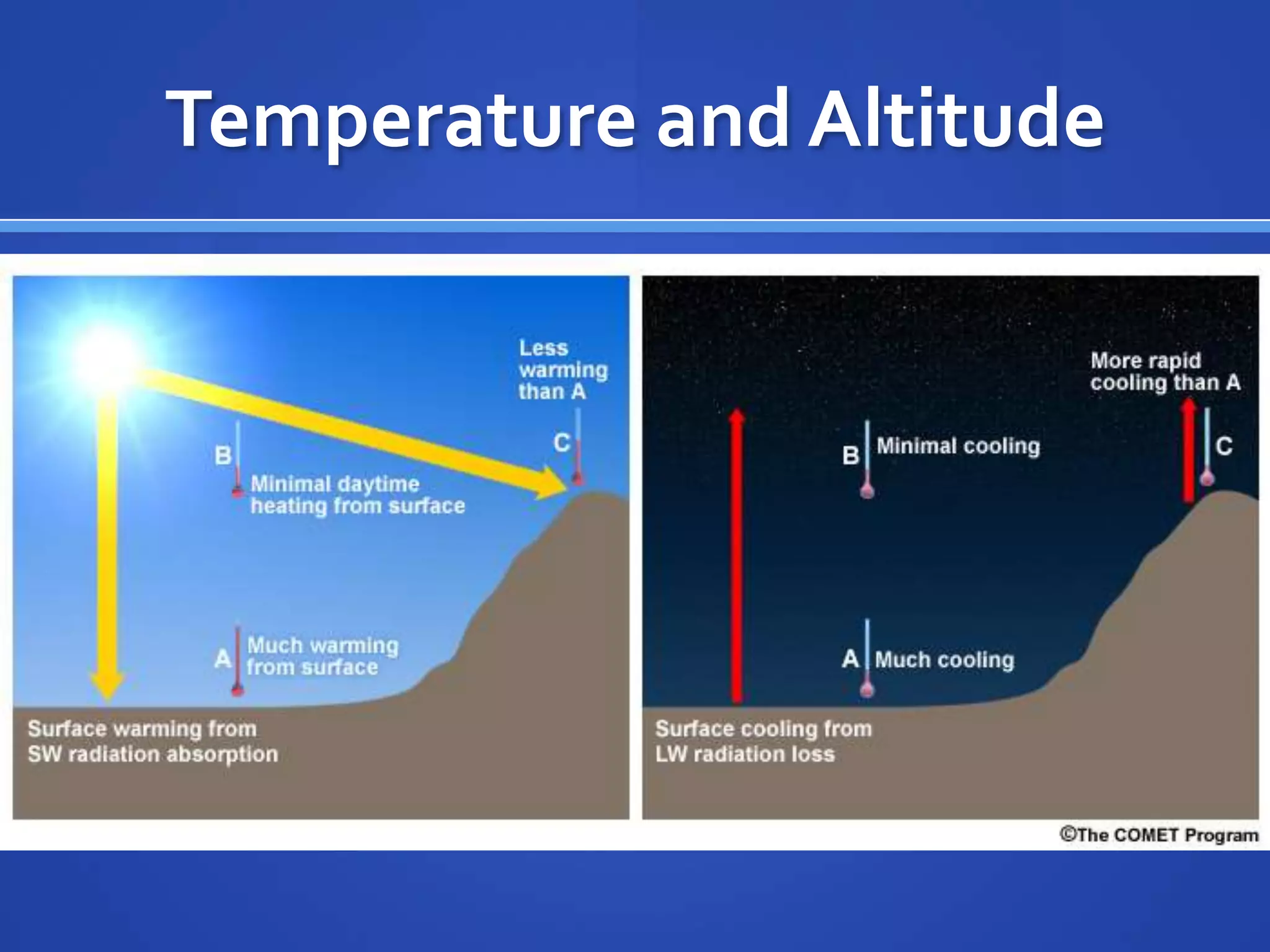
Lapse Rate

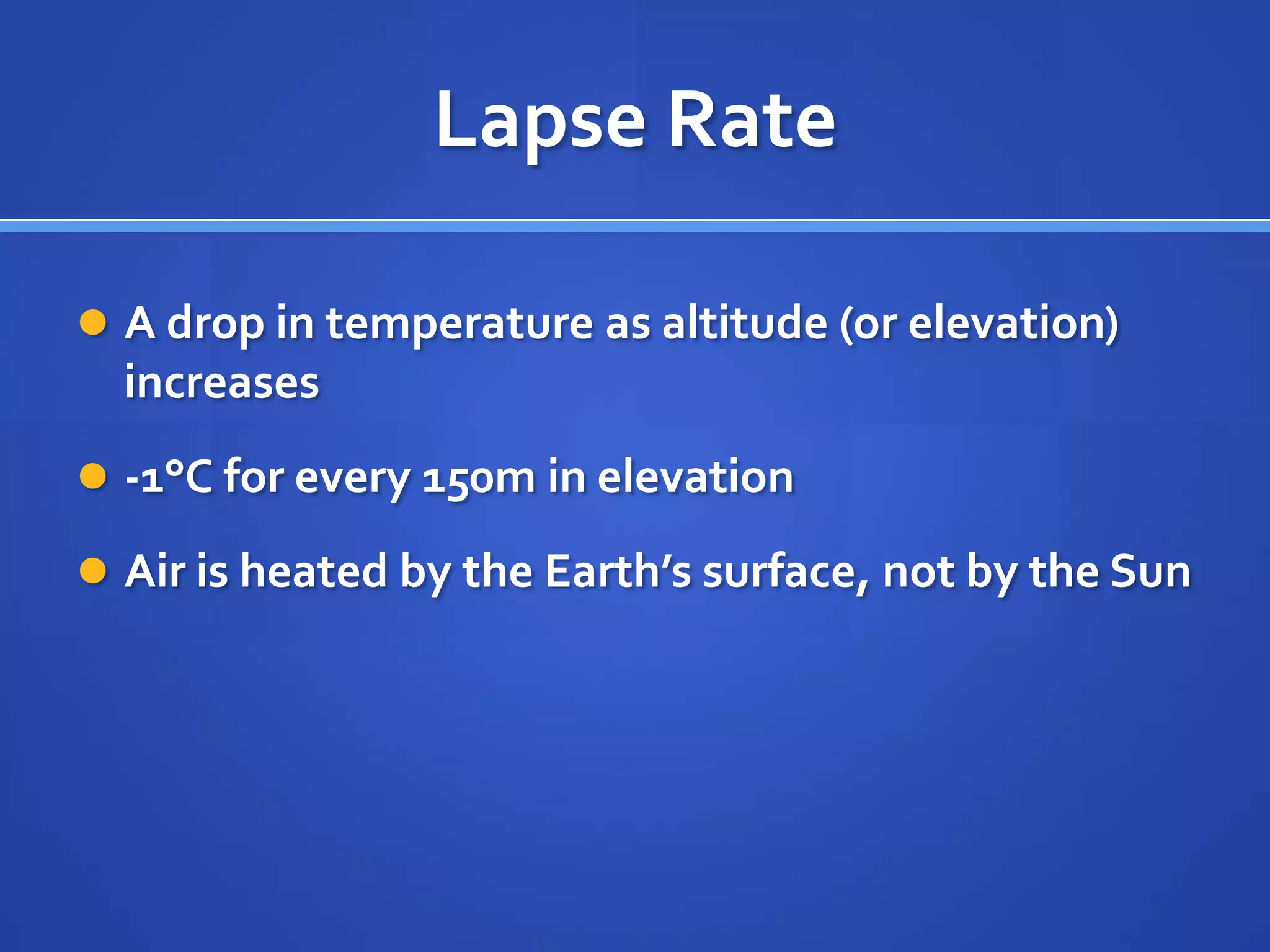
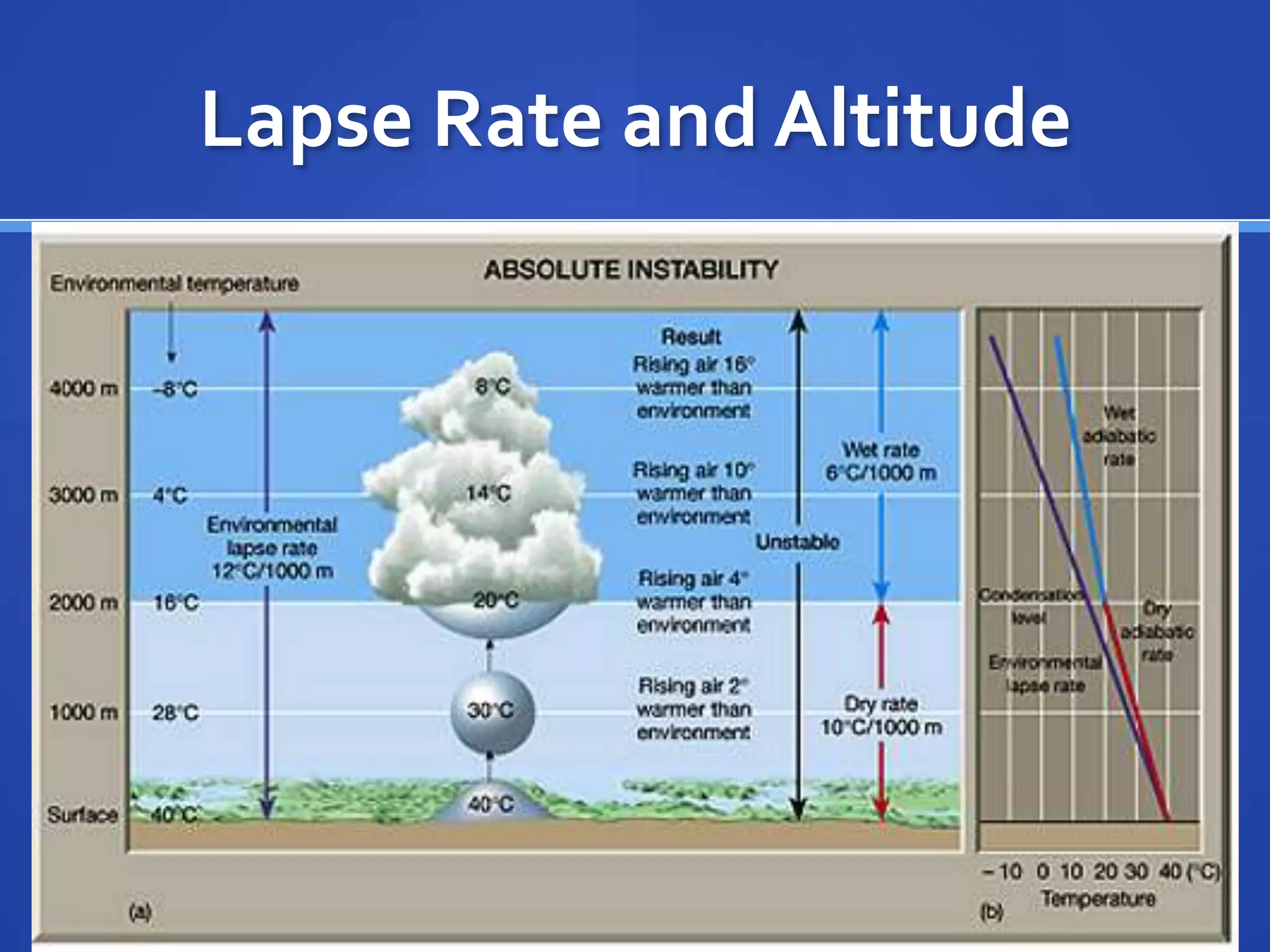
 A drop in temperature as altitude (or elevation)
  increases
 -1°C for every 150m in elevation

 Air is heated by the Earth’s surface, not by the Sun
Lapse Rate and Altitude
Temperature and Altitude
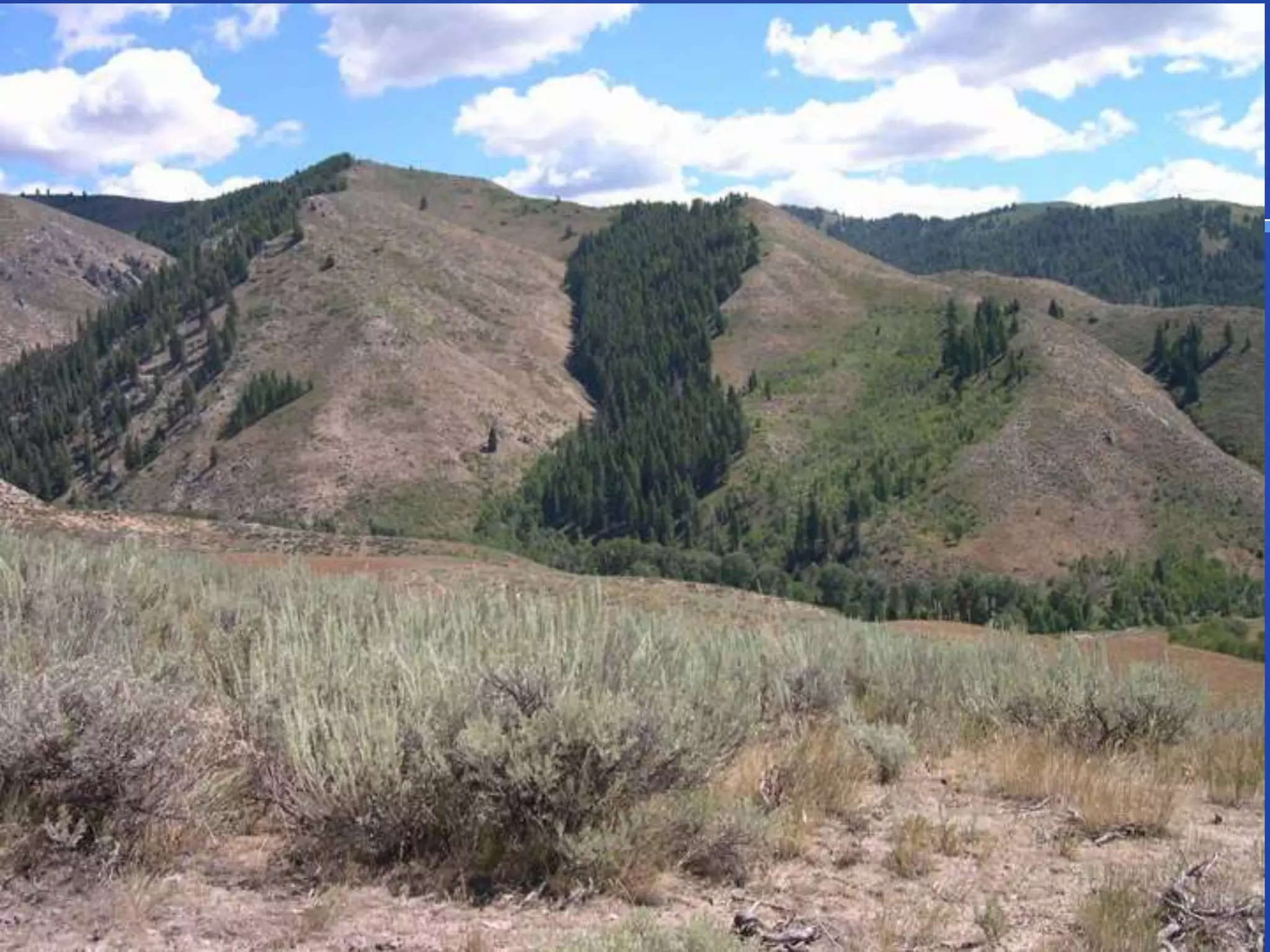
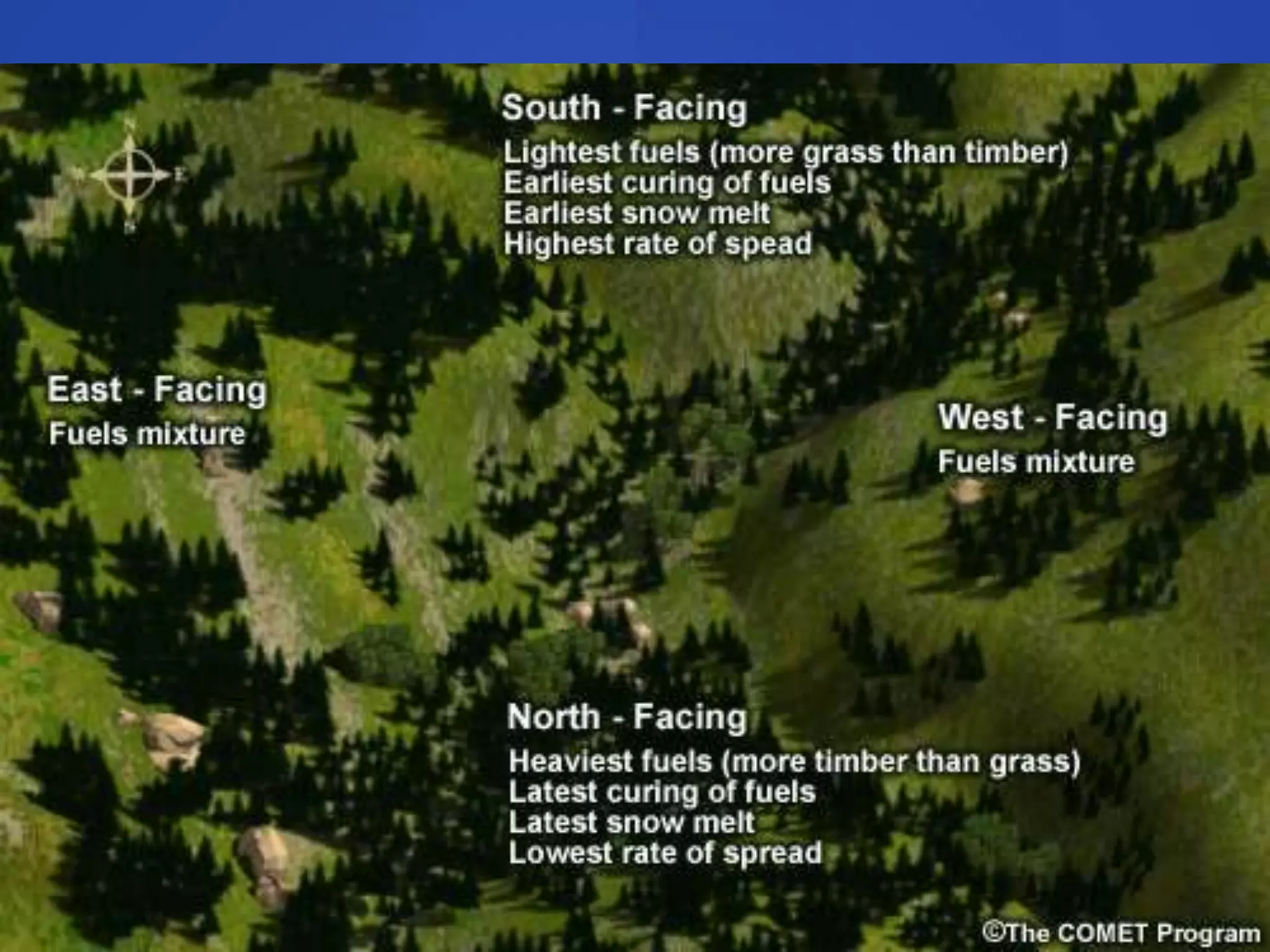
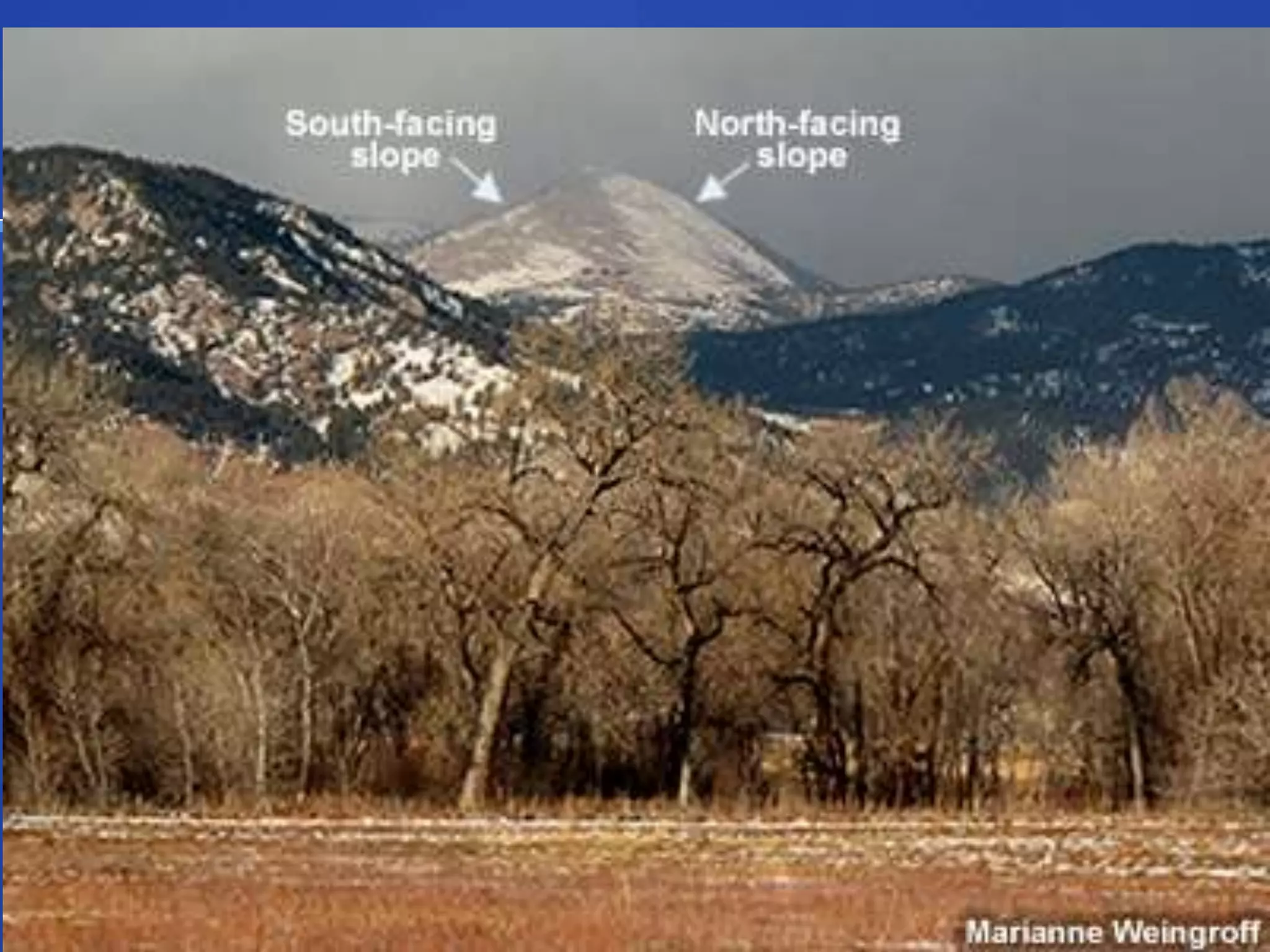
Aspect

 The compass direction a slope is facing

 In the Northern hemisphere…
   South-facing slopes get more sunlight
Aspect
Solar Energy Received

• Although the greatest intensity of solar radiation
  occurs at the time of the summer solstice, in the
  Northern Hemisphere the months of July and August
  are generally the warmest of the year.


• Conversely, in the Northern Hemisphere a minimum
  of solar energy is received in December at the time of
  the winter solstice, but January and February are
  usually colder.
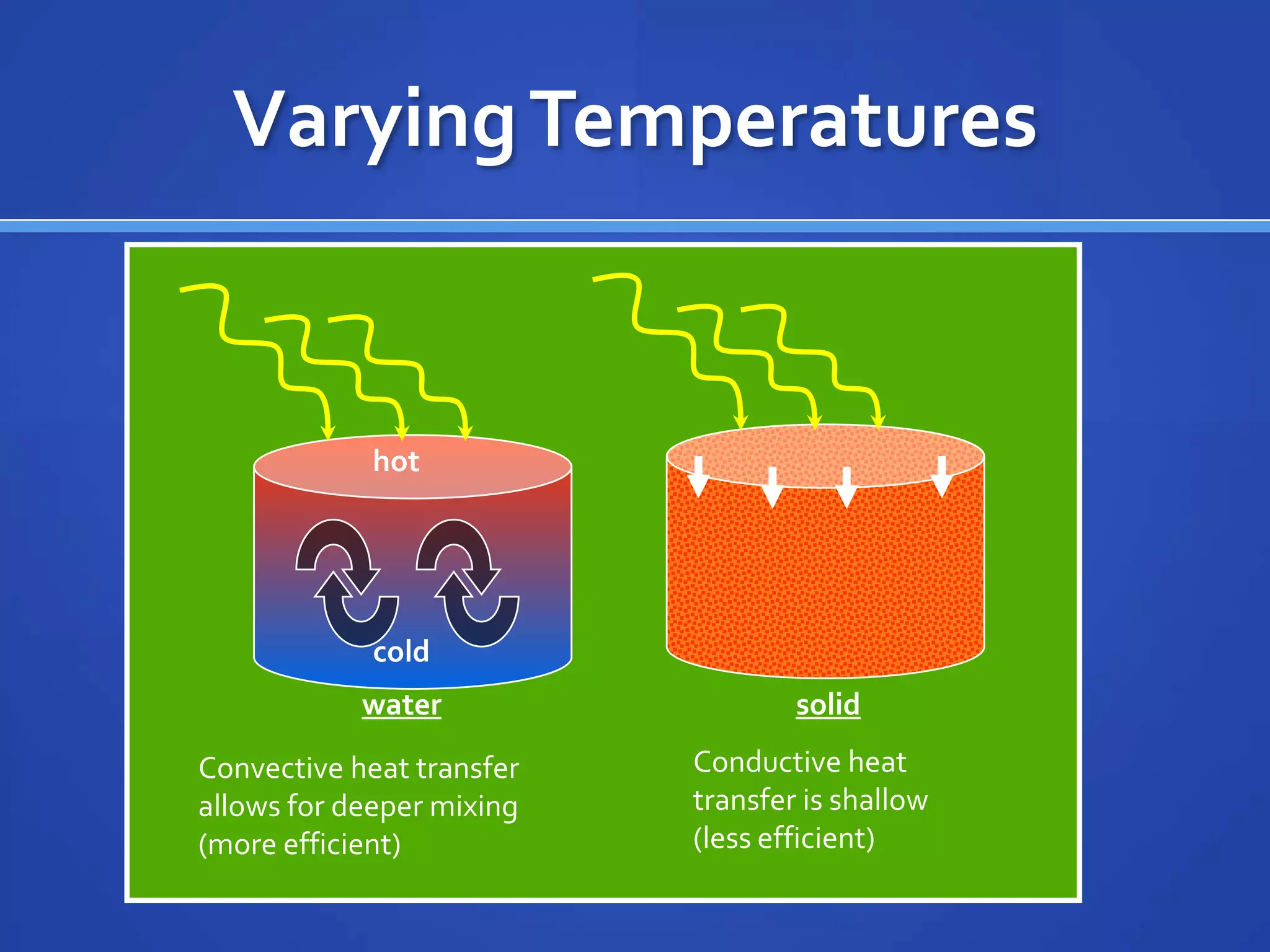
Varying Temperatures


             hot


             cold
            water                  solid
Convective heat transfer   Conductive heat
allows for deeper mixing   transfer is shallow
(more efficient)           (less efficient)
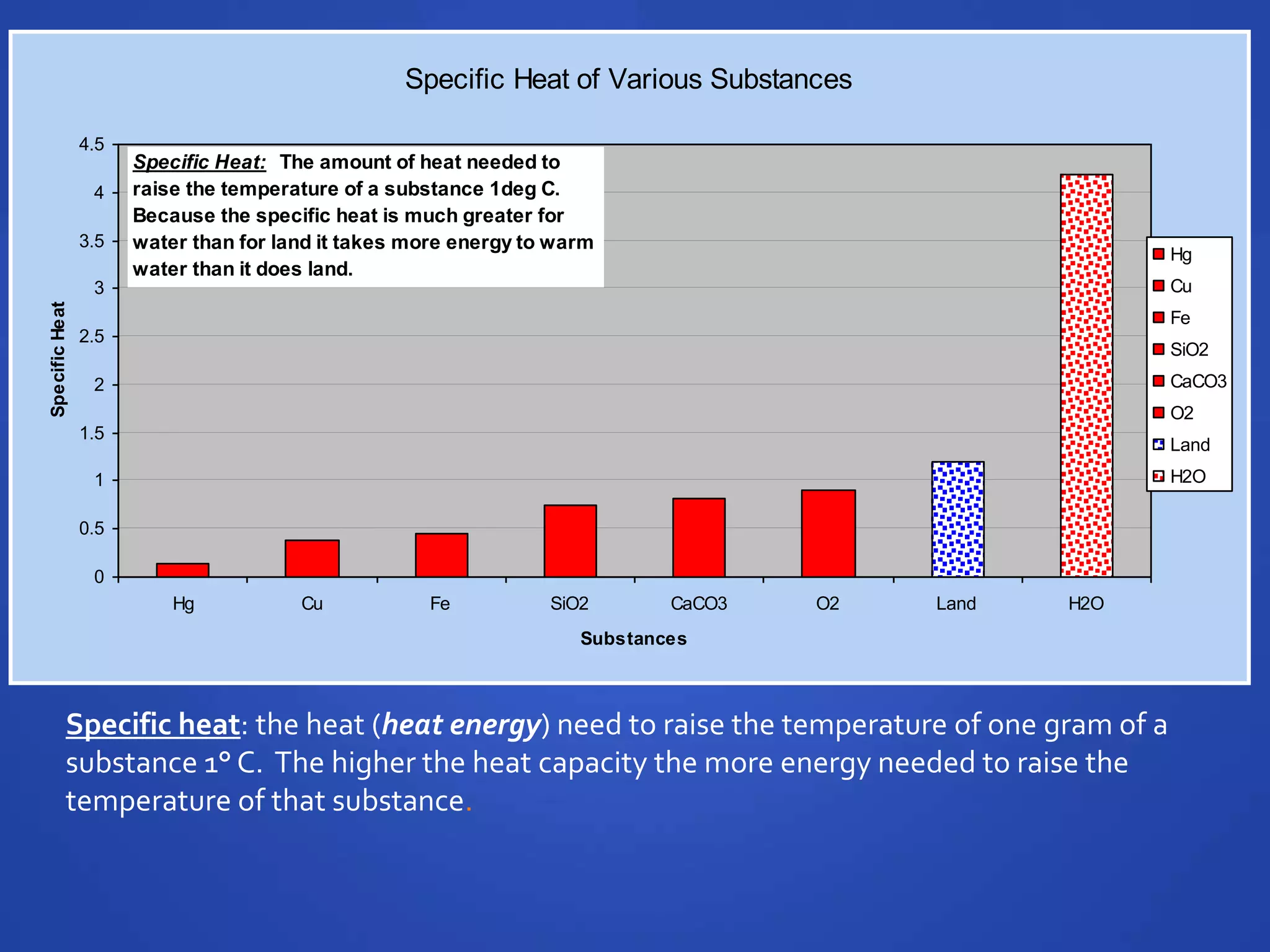
Specific Heat of Various Substances

                4.5
                      Specific Heat: The amount of heat needed to
                 4    raise the temperature of a substance 1deg C.
                      Because the specific heat is much greater for
                3.5   water than for land it takes more energy to warm
                                                                                                      Hg
                      water than it does land.
                 3                                                                                    Cu
Specific Heat


                                                                                                      Fe
                2.5
                                                                                                      SiO2
                 2                                                                                    CaCO3
                                                                                                      O2
                1.5
                                                                                                      Land
                 1                                                                                    H2O

                0.5

                 0
                          Hg           Cu           Fe           SiO2       CaCO3   O2   Land   H2O
                                                                    Substances


           Specific heat: the heat (heat energy) need to raise the temperature of one gram of a
           substance 1° C. The higher the heat capacity the more energy needed to raise the
           temperature of that substance.
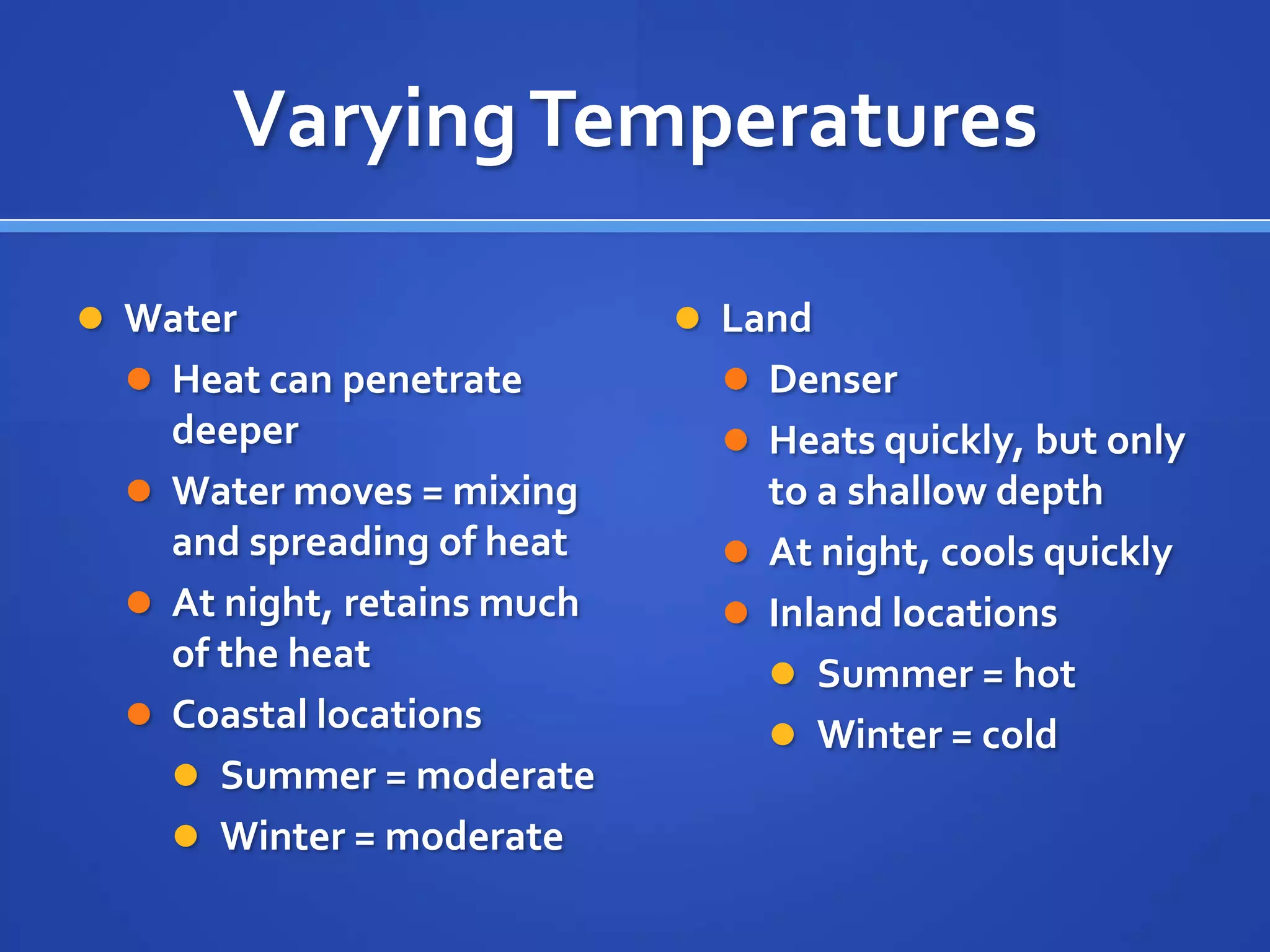
Varying Temperatures

 Water                       Land
   Heat can penetrate          Denser
    deeper                      Heats quickly, but only
   Water moves = mixing         to a shallow depth
    and spreading of heat       At night, cools quickly
   At night, retains much      Inland locations
    of the heat                   Summer = hot
   Coastal locations
                                  Winter = cold
     Summer = moderate
     Winter = moderate
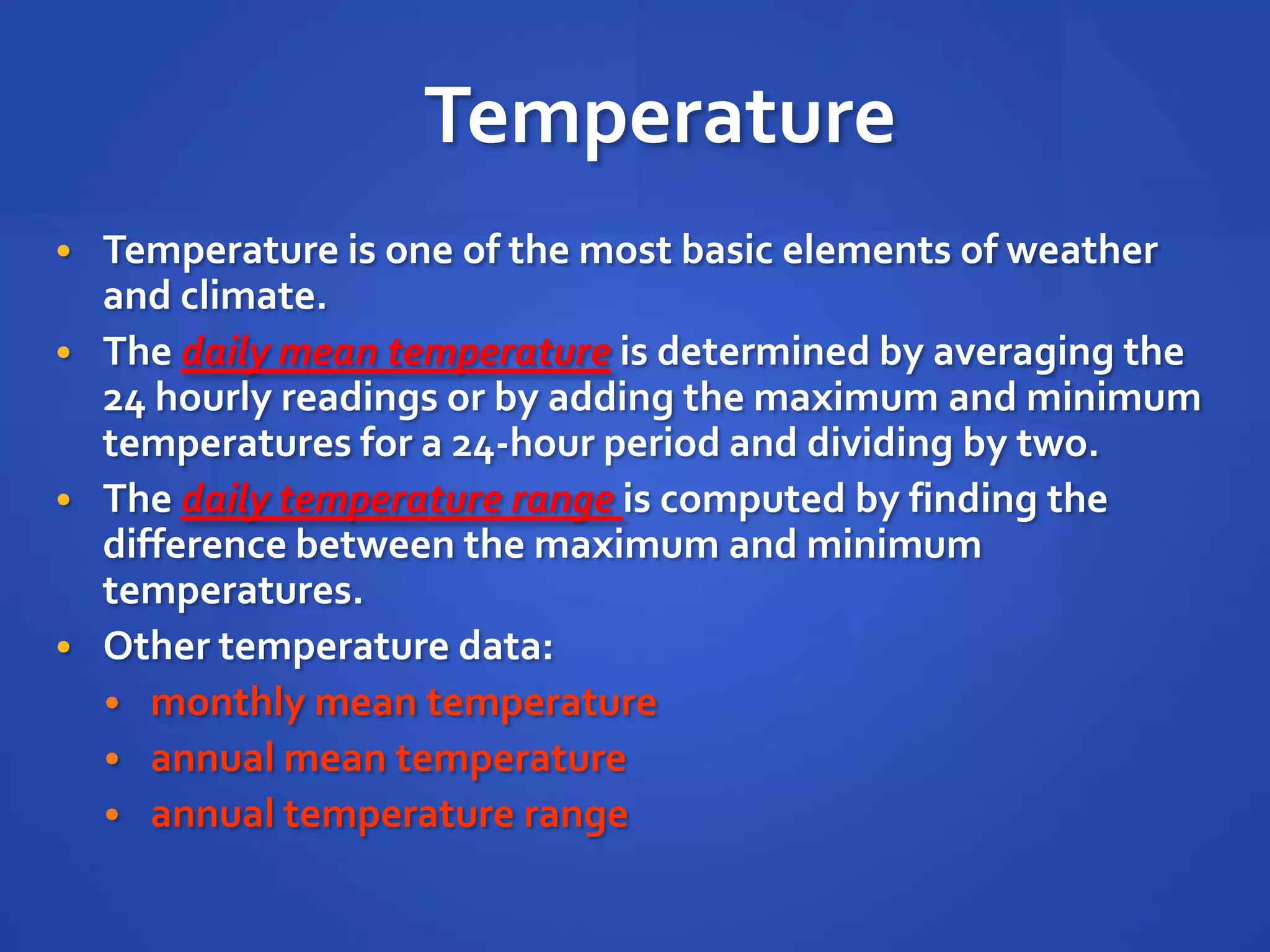
Temperature
• Temperature is one of the most basic elements of weather
  and climate.
• The daily mean temperature is determined by averaging the
  24 hourly readings or by adding the maximum and minimum
  temperatures for a 24-hour period and dividing by two.
• The daily temperature range is computed by finding the
  difference between the maximum and minimum
  temperatures.
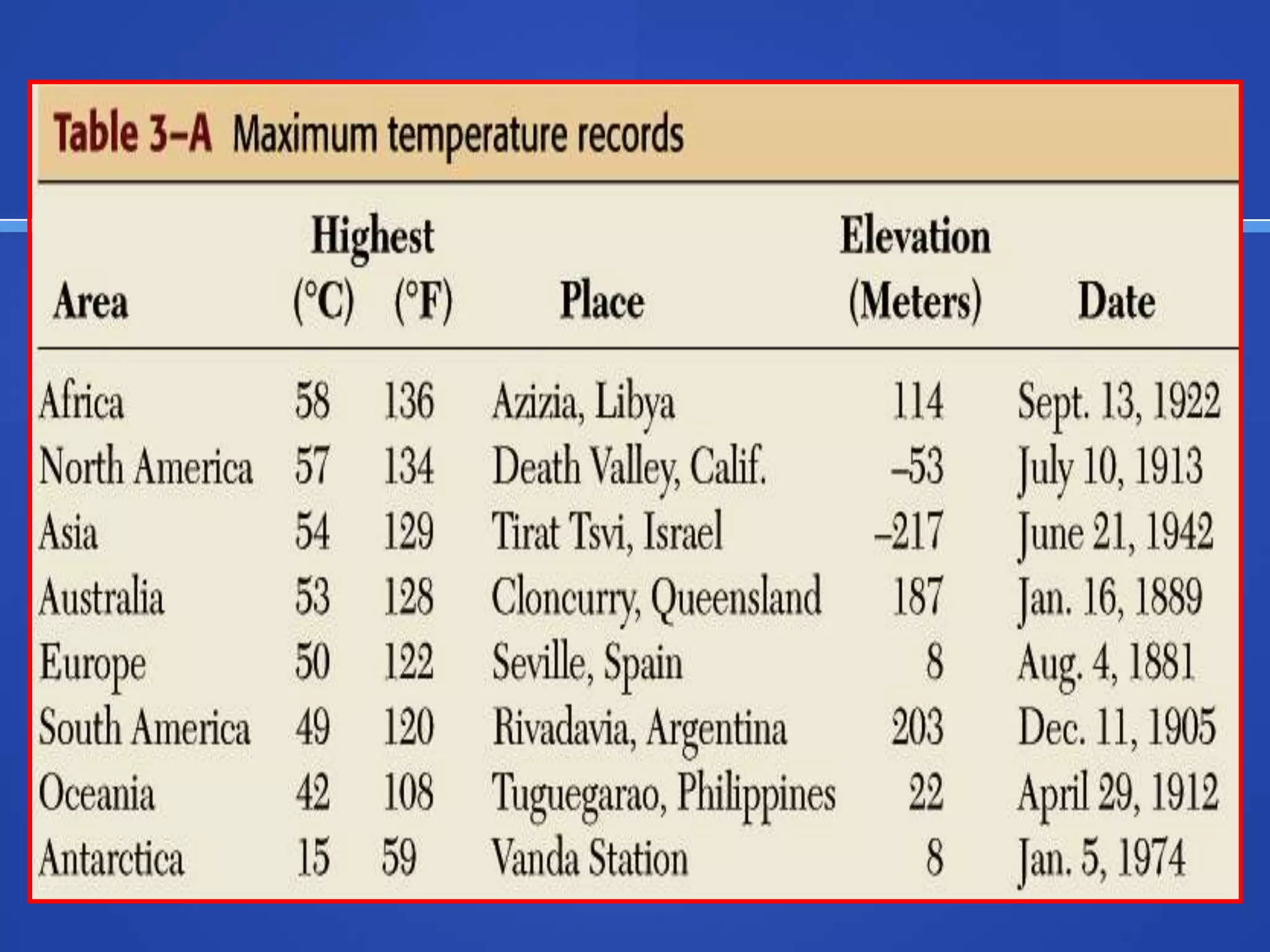
• Other temperature data:
  • monthly mean temperature
  • annual mean temperature
  • annual temperature range
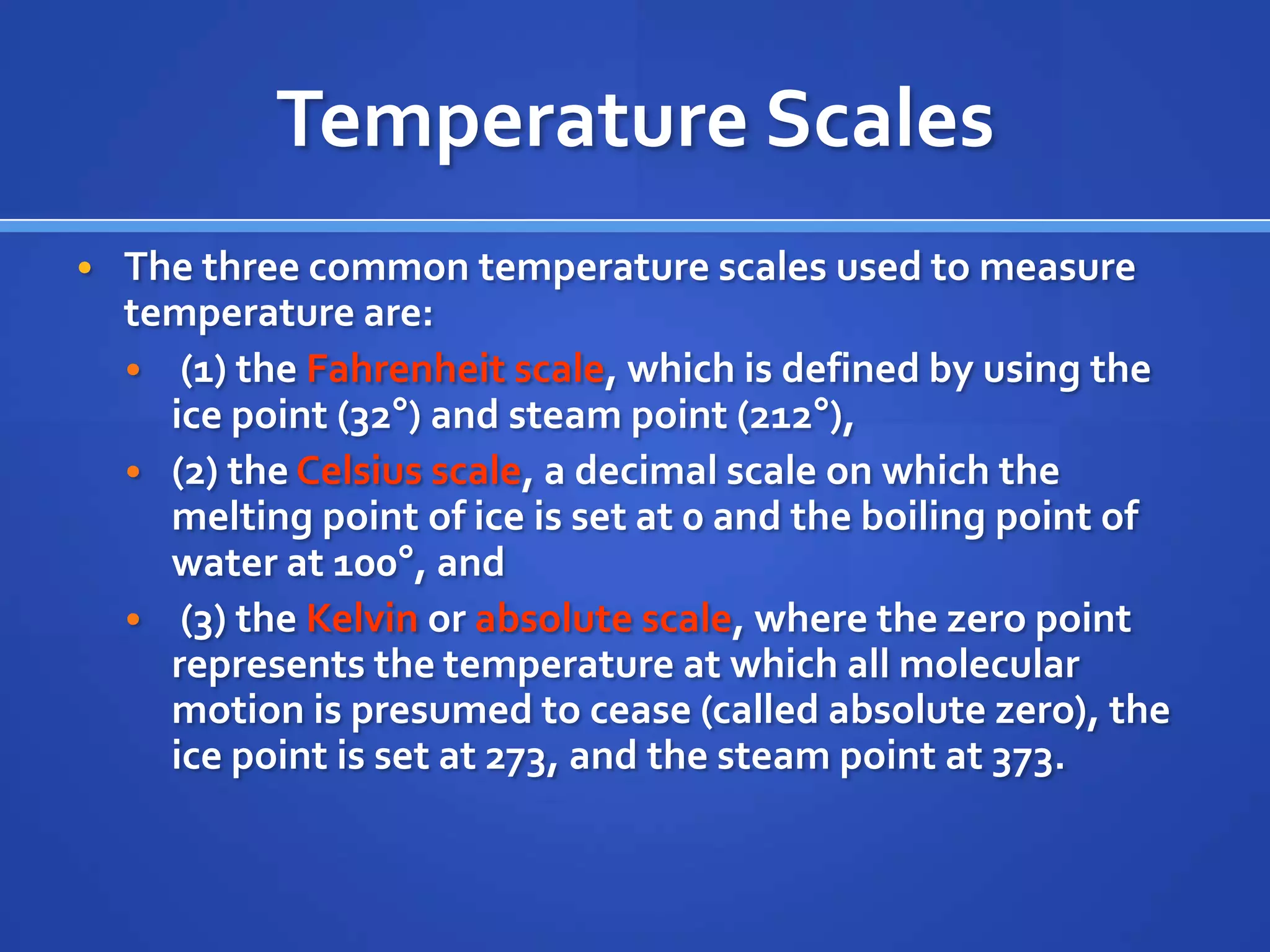
Temperature Scales
• The three common temperature scales used to measure
  temperature are:
  • (1) the Fahrenheit scale, which is defined by using the
    ice point (32°) and steam point (212°),
  • (2) the Celsius scale, a decimal scale on which the
    melting point of ice is set at 0 and the boiling point of
    water at 100°, and
  • (3) the Kelvin or absolute scale, where the zero point
    represents the temperature at which all molecular
    motion is presumed to cease (called absolute zero), the
    ice point is set at 273, and the steam point at 373.
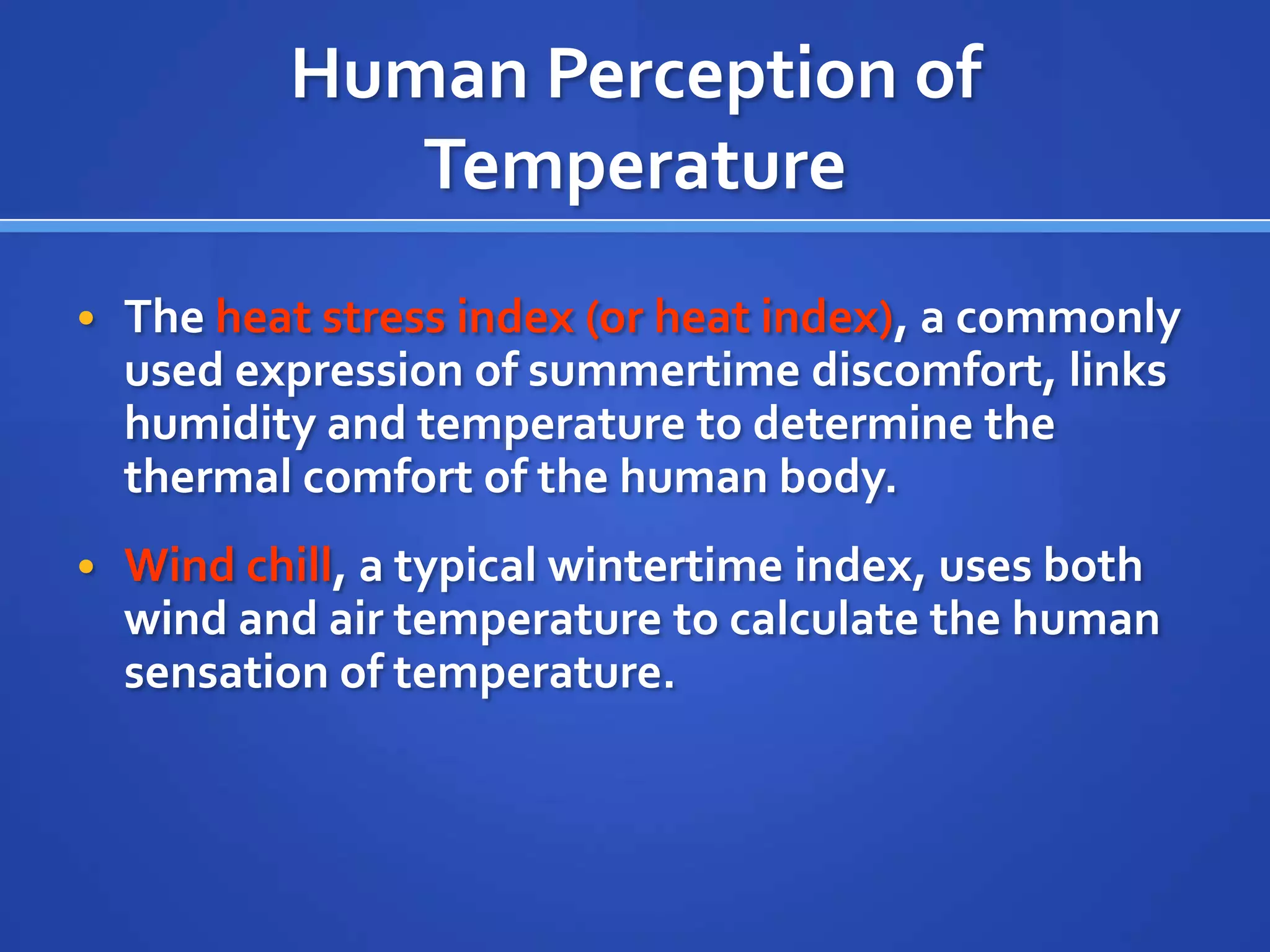
Human Perception of
             Temperature
• The heat stress index (or heat index), a commonly
  used expression of summertime discomfort, links
  humidity and temperature to determine the
  thermal comfort of the human body.
• Wind chill, a typical wintertime index, uses both
  wind and air temperature to calculate the human
  sensation of temperature.
Warm Ocean Currents
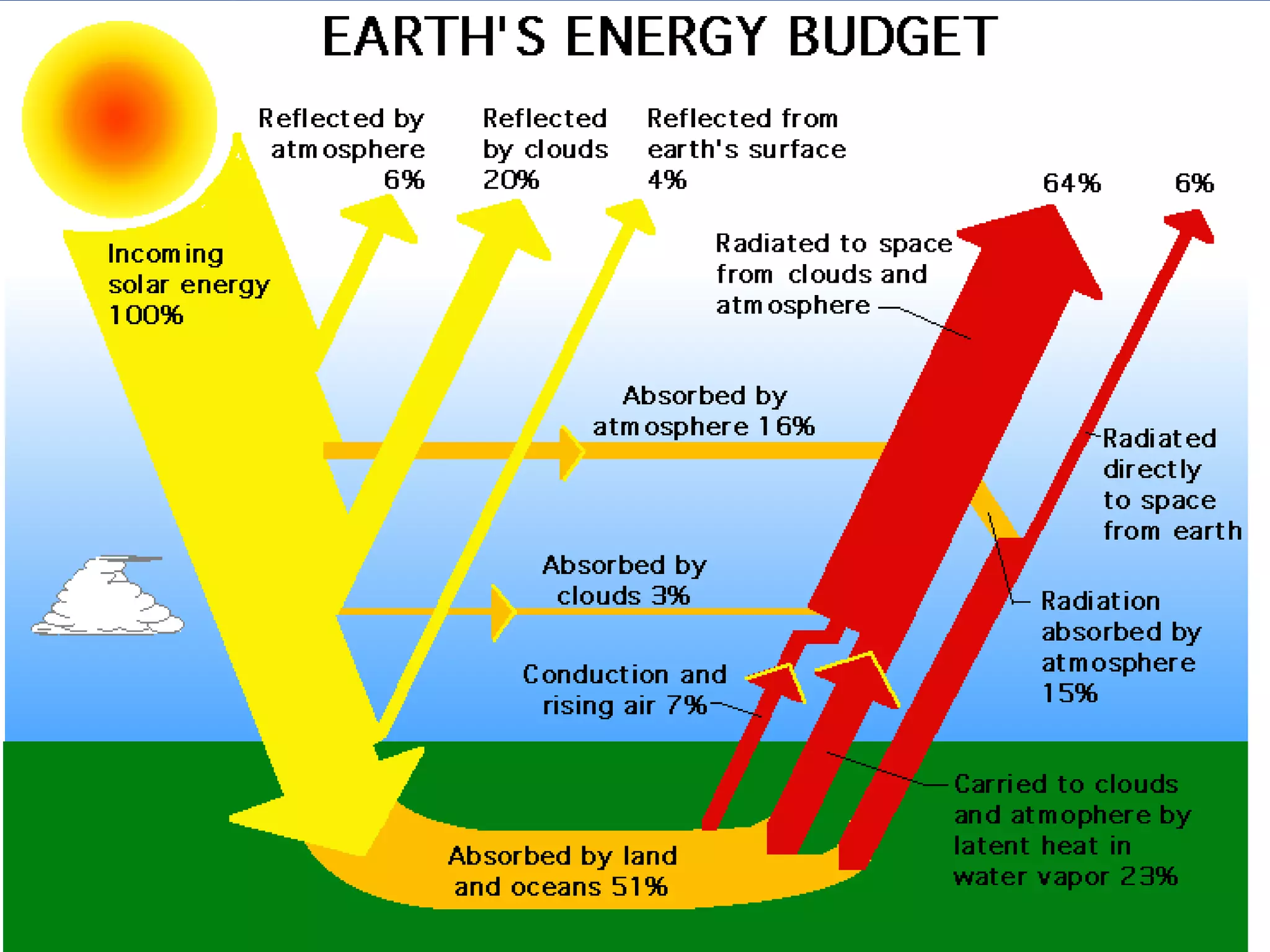
Earth’s Energy Budget

 Balance between incoming solar radiation and
  outgoing infrared radiation
 Solar Radiation           Infrared Radiation
   Incoming                     Outgoing
   Shortwave                    Longwave
   Heats our planet             Lost to outer space
Energy Budget
Distribution of Heat

 Warm land or water bodies heats air above

 Warm air rises (Convection) = low air pressure

 Cold air sinks = high air pressure

 Wind = air pushing from high to low pressure areas

 Water moves heat in the same manner
WIND
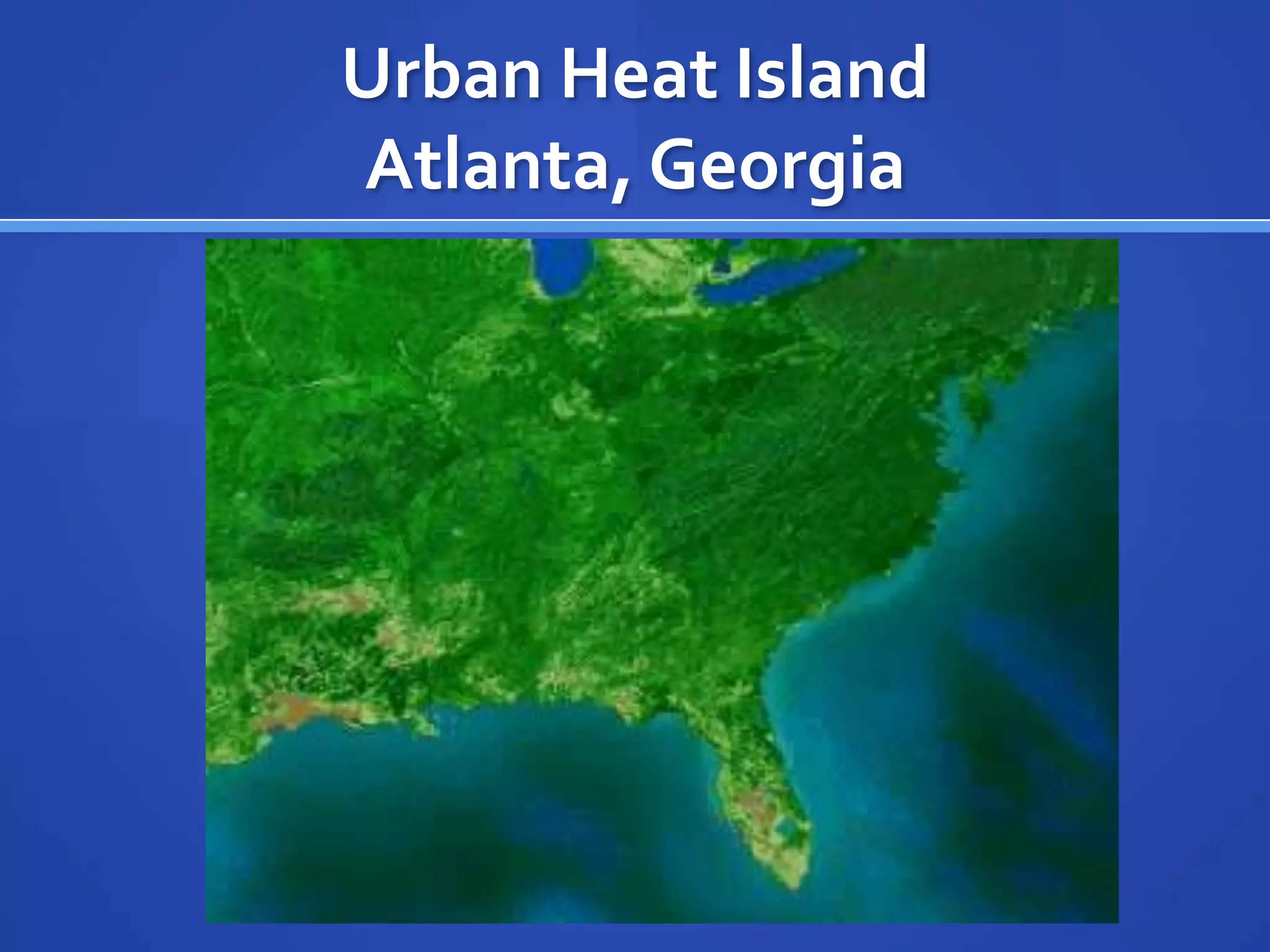
Urban Heat Island
Urban Heat Island
Atlanta, Georgia

The Sun: Our Heat Source

  • 1.
  • 2.
    Insolation  Insolation isincoming solar radiation that heats our planet.  Round surface of Earth + 23.5° tilt on axis = differential heat distribution
  • 3.
  • 5.
    Absorption vs Reflection  Albedo: % of solar radiation reflected back into space  Light surfaces = high  Dark surfaces = high albedo absorption  Causes uneven (differential) heating of Earth’s surface
  • 6.
  • 7.
    Lapse Rate  Adrop in temperature as altitude (or elevation) increases  -1°C for every 150m in elevation  Air is heated by the Earth’s surface, not by the Sun
  • 8.
  • 9.
  • 10.
    Aspect  The compassdirection a slope is facing  In the Northern hemisphere…  South-facing slopes get more sunlight
  • 11.
  • 17.
    Solar Energy Received •Although the greatest intensity of solar radiation occurs at the time of the summer solstice, in the Northern Hemisphere the months of July and August are generally the warmest of the year. • Conversely, in the Northern Hemisphere a minimum of solar energy is received in December at the time of the winter solstice, but January and February are usually colder.
  • 18.
    Varying Temperatures hot cold water solid Convective heat transfer Conductive heat allows for deeper mixing transfer is shallow (more efficient) (less efficient)
  • 19.
    Specific Heat ofVarious Substances 4.5 Specific Heat: The amount of heat needed to 4 raise the temperature of a substance 1deg C. Because the specific heat is much greater for 3.5 water than for land it takes more energy to warm Hg water than it does land. 3 Cu Specific Heat Fe 2.5 SiO2 2 CaCO3 O2 1.5 Land 1 H2O 0.5 0 Hg Cu Fe SiO2 CaCO3 O2 Land H2O Substances Specific heat: the heat (heat energy) need to raise the temperature of one gram of a substance 1° C. The higher the heat capacity the more energy needed to raise the temperature of that substance.
  • 20.
    Varying Temperatures  Water  Land  Heat can penetrate  Denser deeper  Heats quickly, but only  Water moves = mixing to a shallow depth and spreading of heat  At night, cools quickly  At night, retains much  Inland locations of the heat  Summer = hot  Coastal locations  Winter = cold  Summer = moderate  Winter = moderate
  • 21.
    Temperature • Temperature isone of the most basic elements of weather and climate. • The daily mean temperature is determined by averaging the 24 hourly readings or by adding the maximum and minimum temperatures for a 24-hour period and dividing by two. • The daily temperature range is computed by finding the difference between the maximum and minimum temperatures. • Other temperature data: • monthly mean temperature • annual mean temperature • annual temperature range
  • 22.
    Temperature Scales • Thethree common temperature scales used to measure temperature are: • (1) the Fahrenheit scale, which is defined by using the ice point (32°) and steam point (212°), • (2) the Celsius scale, a decimal scale on which the melting point of ice is set at 0 and the boiling point of water at 100°, and • (3) the Kelvin or absolute scale, where the zero point represents the temperature at which all molecular motion is presumed to cease (called absolute zero), the ice point is set at 273, and the steam point at 373.
  • 23.
    Human Perception of Temperature • The heat stress index (or heat index), a commonly used expression of summertime discomfort, links humidity and temperature to determine the thermal comfort of the human body. • Wind chill, a typical wintertime index, uses both wind and air temperature to calculate the human sensation of temperature.
  • 25.
  • 26.
    Earth’s Energy Budget Balance between incoming solar radiation and outgoing infrared radiation  Solar Radiation  Infrared Radiation  Incoming  Outgoing  Shortwave  Longwave  Heats our planet  Lost to outer space
  • 27.
  • 28.
    Distribution of Heat Warm land or water bodies heats air above  Warm air rises (Convection) = low air pressure  Cold air sinks = high air pressure  Wind = air pushing from high to low pressure areas  Water moves heat in the same manner
  • 29.
  • 30.
  • 32.