ARDS
Diana May B. Laraya, MD
Acute
Respiratory
Distress
Syndrome
Definition:
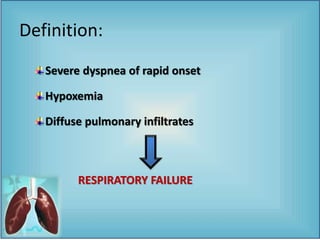
Severe dyspnea of rapid onset
Hypoxemia
Diffuse pulmonary infiltrates
RESPIRATORY FAILURE
ARDS
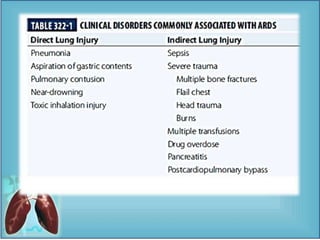
• Caused by diffuse lung injury
• Medical or surgical disorders
• Direct or Indirect
18th ed HPIM
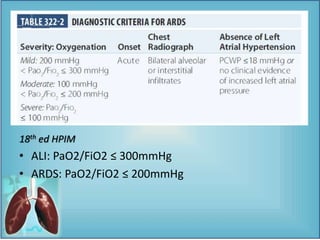
• ALI: PaO2/FiO2 ≤ 300mmHg
• ARDS: PaO2/FiO2 ≤ 200mmHg
etiology
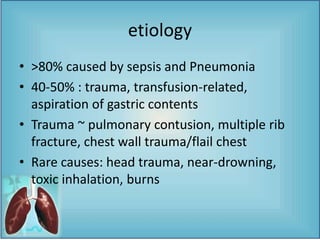
• >80% caused by sepsis and Pneumonia
• 40-50% : trauma, transfusion-related,
aspiration of gastric contents
• Trauma ~ pulmonary contusion, multiple rib
fracture, chest wall trauma/flail chest
• Rare causes: head trauma, near-drowning,
toxic inhalation, burns
ARDS
• Clinical course
1. Exudative
2. Proliferative
3. Fibrotic
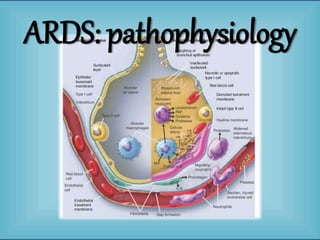
ARDS: pathophysiology
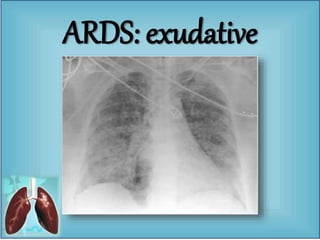
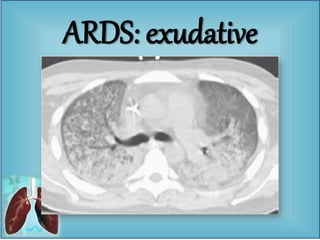
ARDS: exudative
ARDS: exudative
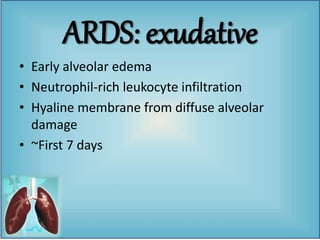
• Early alveolar edema
• Neutrophil-rich leukocyte infiltration
• Hyaline membrane from diffuse alveolar
damage
• ~First 7 days
ARDS: exudative
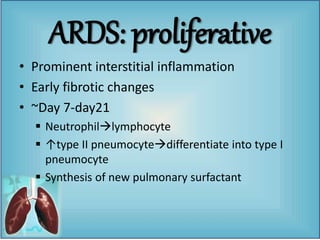
• Prominent interstitial inflammation
• Early fibrotic changes
• ~Day 7-day21
 Neutrophillymphocyte
 ↑type II pneumocytedifferentiate into type I
pneumocyte
 Synthesis of new pulmonary surfactant
ARDS: proliferative
• Alveolar type III procollagen peptide
~↑ mortality from ARDS
• Extensive alveolar duct and interstitial fibrosis
• Emphysema-like changes with bullae
• Intimal fibroproliferation in the pulmonary
microcirculation vascular occlusion
pulmonary HPN
ARDS: fibrotic
• Long-term support on MV and supplemental O2
• INCREASED RISK pneumothorax
• REDUCTION in lung compliance
• Increased pulmonary dead space
↑↑↑ Morbidity and Mortality
ARDS: fibrotic
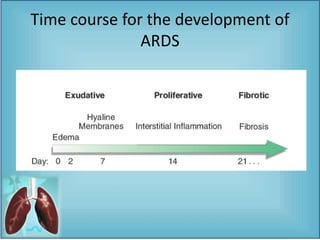
Time course for the development of
ARDS
ARDS: MANAGEMENT
• GENERAL PRINCIPLES
Recognition and treatment of the underlying medical and
surgical disorder
Minimizing procedures and their complications
Prophylaxis against VTE, GI bleeding, aspiration, excessive
sedation and central venous catheter infection
Prompt recognition of nosocomial infections
Provision of adequate nutrition
• Mechanical ventilation management
• VENTILATOR-induced lung injury:
• Repeated alveolar lung overdistention
• Recurrent alveolar collapse
ARDS: MANAGEMENT
• National Institute of Health:ARDS Network
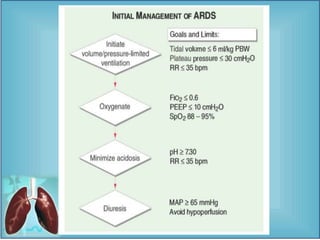
– RCT comparing low VT (6mL/kg BW) ventilation
vs
conventional VT (12mL/kg BW)
- Significantly low mortality rate in the low VT pxs
(31%) compare to conventional VT (40%)
ARDS: MANAGEMENT
VT=6mL/kg BW
• Mechanical ventilation management
• VENTILATOR-induced lung injury:
Repeated alveolar lung overdistention
• Recurrent alveolar collapse
ARDS: MANAGEMENT
• Prevention of alveolar collapse
• ALVEOLAR COLLAPSE due to
– Presence of alveolar and interstitial fluid
– Loss of surfactant
– Decrease in lung compliance
ARDS: MANAGEMENT
• Positive end-expiratory pressure (PEEP)
– Minimize FiO2
– Maximize PaO2
• “Optimal PEEP” in ARDS: 12-15mmHg
ARDS: MANAGEMENT
• Inverse-ratio ventilation
– Increase mean airway pressure
– Longer inspiration time than expiration time
I:E >1:1
• ↓ time to exhale => dynamic hyperinflation =>
increased end-expiratory pressure => oxygenation
improved
No benefit in ARDS mortality
ARDS: MANAGEMENT
• PRONE position
– Improve arterial oxygenation
– Uncertain effect on survival and outcomes
Hazards:
Accidental endotracheal extubation
Loss of central venous catheters
Orthopedic injury
ARDS: MANAGEMENT
• Other mechanical ventilation strategies:
1. High-frequency ventilation (HFV)
• High respiratory rates (5-20 cycles per second) and
• Low VTS (1-2mLkg)
2. Partial liquid ventilation (PLV)
• Perfluorocarbon
 No survival benefit from ARDS
ARDS: MANAGEMENT
• Lung-replacement therapy with extracorporeal
membrane oxygenation (ECMO)
– Neonates
– With survival benefit
ARDS: MANAGEMENT
adjunctive ventilator therapy
(PEEP, HFV, PLV, ECMO, etc)
incomplete efficacy data
rescue therapy
ARDS: MANAGEMENT
ARDS: Fluid Management
• Fluid restriction
• Diuretics
  reduce left atrial filling pressure
↓
Minimizes pulmonary edema  prevents further
decrements in arterial oxygenation and lung compliance
NEUROMUSCULAR blockade
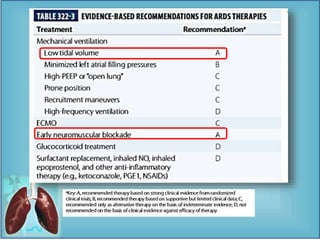
• EARLY Neuromuscular blockade for 48H
– Cisatracurium besylate
lung-protective ventilation
 px-ventilator synchrony
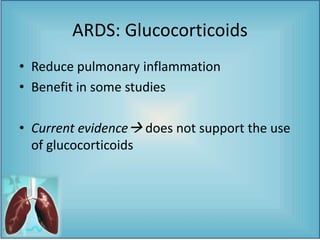
ARDS: Glucocorticoids
• Reduce pulmonary inflammation
• Benefit in some studies
• Current evidence does not support the use
of glucocorticoids
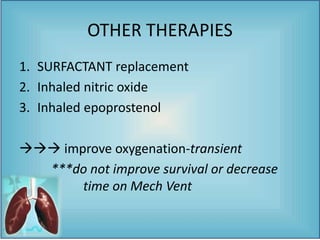
OTHER THERAPIES
1. SURFACTANT replacement
2. Inhaled nitric oxide
3. Inhaled epoprostenol
 improve oxygenation-transient
***do not improve survival or decrease
time on Mech Vent
ARDS: Prognosis
• Mortality ~ 26%-44%
Nonpulmonary causes >80%
 Sepsis
 Nonpulmonary organ failure
ARDS: Mortality Risk Factors
• Nonpulmonary cause – major
• Advanced age (>75yo)
• Preexisting organ failure
• Direct lung injury (2x)
• Severe hypoxemia (PF ratio <100)
Functional Recovery in ARDS survivors
• Maximal lung fxn – 6months
• 1yr after extubation ~ 1/3 have N spirometry
• Most have mild abnormalities in pulmo fxn
• 5yr assessment ~ exercise limitation and
decreased physical quality of life
ARDS
Thank you…

Ards

  • 1.
    ARDS Diana May B.Laraya, MD Acute Respiratory Distress Syndrome
  • 2.
    Definition: Severe dyspnea ofrapid onset Hypoxemia Diffuse pulmonary infiltrates RESPIRATORY FAILURE
  • 3.
    ARDS • Caused bydiffuse lung injury • Medical or surgical disorders • Direct or Indirect
  • 5.
    18th ed HPIM •ALI: PaO2/FiO2 ≤ 300mmHg • ARDS: PaO2/FiO2 ≤ 200mmHg
  • 6.
    etiology • >80% causedby sepsis and Pneumonia • 40-50% : trauma, transfusion-related, aspiration of gastric contents • Trauma ~ pulmonary contusion, multiple rib fracture, chest wall trauma/flail chest • Rare causes: head trauma, near-drowning, toxic inhalation, burns
  • 7.
    ARDS • Clinical course 1.Exudative 2. Proliferative 3. Fibrotic
  • 8.
  • 9.
  • 10.
  • 11.
    • Early alveolaredema • Neutrophil-rich leukocyte infiltration • Hyaline membrane from diffuse alveolar damage • ~First 7 days ARDS: exudative
  • 12.
    • Prominent interstitialinflammation • Early fibrotic changes • ~Day 7-day21  Neutrophillymphocyte  ↑type II pneumocytedifferentiate into type I pneumocyte  Synthesis of new pulmonary surfactant ARDS: proliferative
  • 13.
    • Alveolar typeIII procollagen peptide ~↑ mortality from ARDS • Extensive alveolar duct and interstitial fibrosis • Emphysema-like changes with bullae • Intimal fibroproliferation in the pulmonary microcirculation vascular occlusion pulmonary HPN ARDS: fibrotic
  • 14.
    • Long-term supporton MV and supplemental O2 • INCREASED RISK pneumothorax • REDUCTION in lung compliance • Increased pulmonary dead space ↑↑↑ Morbidity and Mortality ARDS: fibrotic
  • 15.
    Time course forthe development of ARDS
  • 16.
    ARDS: MANAGEMENT • GENERALPRINCIPLES Recognition and treatment of the underlying medical and surgical disorder Minimizing procedures and their complications Prophylaxis against VTE, GI bleeding, aspiration, excessive sedation and central venous catheter infection Prompt recognition of nosocomial infections Provision of adequate nutrition
  • 17.
    • Mechanical ventilationmanagement • VENTILATOR-induced lung injury: • Repeated alveolar lung overdistention • Recurrent alveolar collapse ARDS: MANAGEMENT
  • 18.
    • National Instituteof Health:ARDS Network – RCT comparing low VT (6mL/kg BW) ventilation vs conventional VT (12mL/kg BW) - Significantly low mortality rate in the low VT pxs (31%) compare to conventional VT (40%) ARDS: MANAGEMENT VT=6mL/kg BW
  • 19.
    • Mechanical ventilationmanagement • VENTILATOR-induced lung injury: Repeated alveolar lung overdistention • Recurrent alveolar collapse ARDS: MANAGEMENT
  • 20.
    • Prevention ofalveolar collapse • ALVEOLAR COLLAPSE due to – Presence of alveolar and interstitial fluid – Loss of surfactant – Decrease in lung compliance ARDS: MANAGEMENT
  • 21.
    • Positive end-expiratorypressure (PEEP) – Minimize FiO2 – Maximize PaO2 • “Optimal PEEP” in ARDS: 12-15mmHg ARDS: MANAGEMENT
  • 22.
    • Inverse-ratio ventilation –Increase mean airway pressure – Longer inspiration time than expiration time I:E >1:1 • ↓ time to exhale => dynamic hyperinflation => increased end-expiratory pressure => oxygenation improved No benefit in ARDS mortality ARDS: MANAGEMENT
  • 23.
    • PRONE position –Improve arterial oxygenation – Uncertain effect on survival and outcomes Hazards: Accidental endotracheal extubation Loss of central venous catheters Orthopedic injury ARDS: MANAGEMENT
  • 24.
    • Other mechanicalventilation strategies: 1. High-frequency ventilation (HFV) • High respiratory rates (5-20 cycles per second) and • Low VTS (1-2mLkg) 2. Partial liquid ventilation (PLV) • Perfluorocarbon  No survival benefit from ARDS ARDS: MANAGEMENT
  • 25.
    • Lung-replacement therapywith extracorporeal membrane oxygenation (ECMO) – Neonates – With survival benefit ARDS: MANAGEMENT
  • 26.
    adjunctive ventilator therapy (PEEP,HFV, PLV, ECMO, etc) incomplete efficacy data rescue therapy ARDS: MANAGEMENT
  • 27.
    ARDS: Fluid Management •Fluid restriction • Diuretics   reduce left atrial filling pressure ↓ Minimizes pulmonary edema  prevents further decrements in arterial oxygenation and lung compliance
  • 28.
    NEUROMUSCULAR blockade • EARLYNeuromuscular blockade for 48H – Cisatracurium besylate lung-protective ventilation  px-ventilator synchrony
  • 29.
    ARDS: Glucocorticoids • Reducepulmonary inflammation • Benefit in some studies • Current evidence does not support the use of glucocorticoids
  • 30.
    OTHER THERAPIES 1. SURFACTANTreplacement 2. Inhaled nitric oxide 3. Inhaled epoprostenol  improve oxygenation-transient ***do not improve survival or decrease time on Mech Vent
  • 33.
    ARDS: Prognosis • Mortality~ 26%-44% Nonpulmonary causes >80%  Sepsis  Nonpulmonary organ failure
  • 34.
    ARDS: Mortality RiskFactors • Nonpulmonary cause – major • Advanced age (>75yo) • Preexisting organ failure • Direct lung injury (2x) • Severe hypoxemia (PF ratio <100)
  • 35.
    Functional Recovery inARDS survivors • Maximal lung fxn – 6months • 1yr after extubation ~ 1/3 have N spirometry • Most have mild abnormalities in pulmo fxn • 5yr assessment ~ exercise limitation and decreased physical quality of life
  • 36.

Editor's Notes

  • #28 Feature of ARDS: inc pulmonary vascular permeability  interstitial and alveolar edema fluid rich in proteins Thus…improves pulmonary mechanics, shortens ICU stay and duration of mech vent use leading to lower mortality rate