• Cells are the structural units of all living things.
All cells arise from existing cells by the process
of cell division, in which one cell divides into
two identical cells.
• The English scientist Robert Hooke first
observed plant cells with a crude microscope in
the late 1600s. Then, in the 1830s two German
scientists, Matthias Schleiden and Theodor
Schwann, proposed that all living things are
composed of cells.
Cell diversity
PARTS OF A CELL
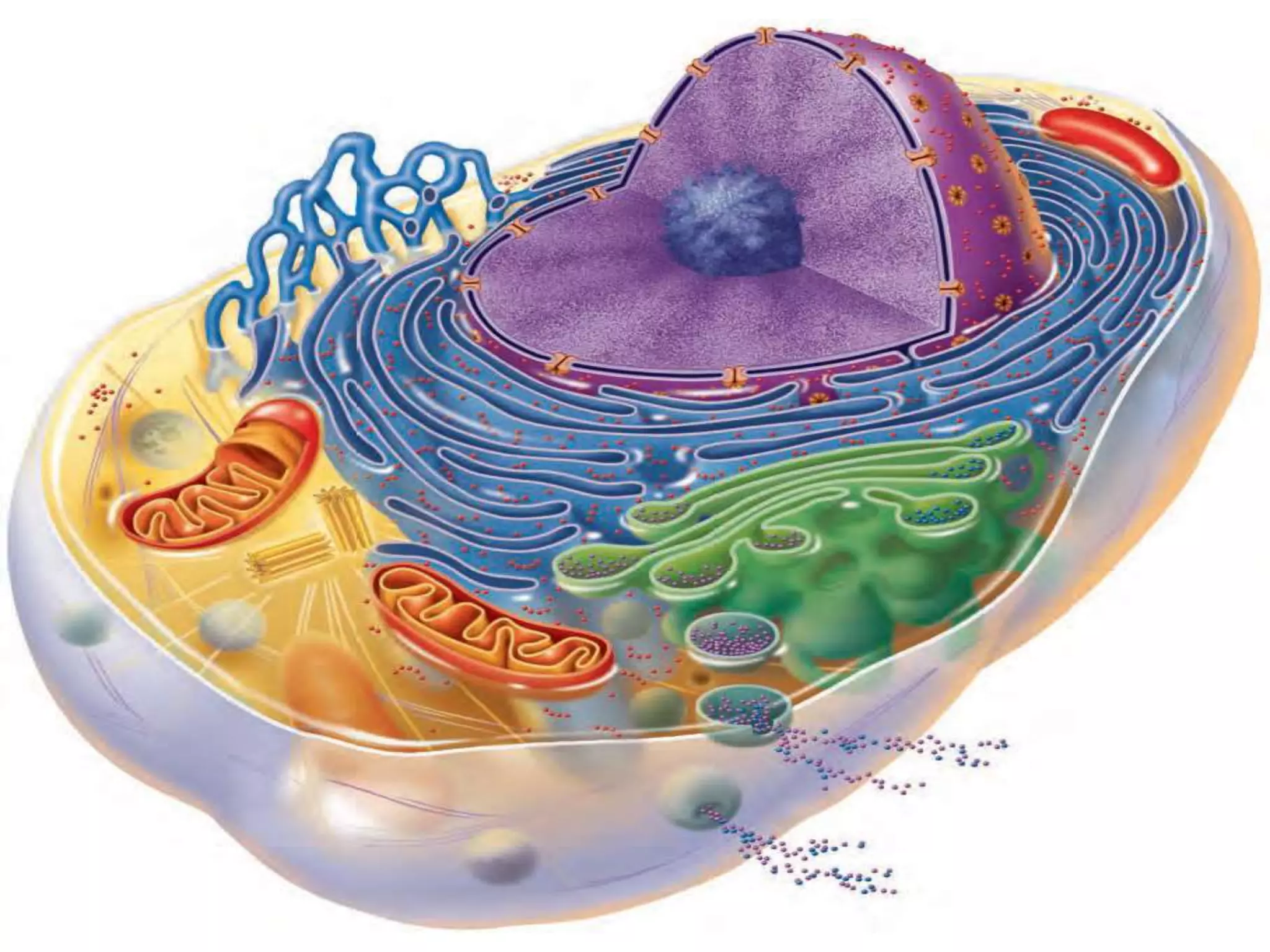
A human cell has three main parts:
• The plasma membrane: the outer
boundary of the cell.
• The cytoplasm: the intracellular fluid
packed with organelles, small structures
that perform specific cell functions.
• The nucleus: an organelle that controls
cellular activities. The nucleus lies near the
cell’s center.
A. THE PLASMA MEMBRANE
• The plasma membrane defines the extent
of a cell, thereby separating two of the
body’s major fluid compartments the
intracellular fluid within cells and the
extracellular fluid (ECF) outside cells. The
plasma membrane encloses cell contents,
mediates exchanges with the extracellular
environment, and plays a role in cellular
communication.
Structure
The Fluid Mosaic Model
• The fluid mosaic model of membrane
structure depicts the plasma membrane as
an exceedingly thin (7–10 nm) structure
composed of a double layer of lipid
molecules with protein molecules dispersed
in it.
• The proteins which float in the fluid lipid
bilayer, form a constantly changing mosaic
pattern.
The Glycocalyx
• Plasma membrane contains a carbohydrate
rich area at the cell surface called glycocalyx.
Cell junctions.
• An epithelial cell is shown joined to adjacent
cells by three common types of cell junctions.
1. Tight Junctions: Impermeable junctions
prevent molecules from passing through the
intercellular space.
2. Desmosomes: Anchoring junctions bind
adjacent cells together like a molecular
“Velcro” and help form an internal tension
reducing network of fibers.
3. Gap junctions: Communicating junctions
allow ions and small molecules to pass for
intercellular communication
B. THE CYTOPLASM
The cellular material between the plasma
membrane and the nucleus, is the site of most
cellular activities. It consists of three elements:
–The cytosol
–Organelles
–Inclusions.
1. The cytosol: it is the viscous, semitransparent
fluid in which the other cytoplasmic elements
are suspended.
2. The organelles are the metabolic machinery
of the cell. Each type of organelle carries out a
specific function for the cell.
3. The inclusions are chemical substances that
may or may not be present, depending on cell
type.
Mitochondria
• Rodlike, double-
membrane structures;
inner membrane
folded into projections
called cristae.
• Site of ATP synthesis;
powerhouse of the cell.
Ribosomes
• Dense particles
consisting of two
subunits, each
composed of
ribosomal RNA and
protein. Free or
attached to rough
endoplasmic
reticulum.
• The sites of protein
synthesis.
Rough endoplasmic reticulum
• Membranous system
enclosing a cavity, the
cistern, and coiling
through the cytoplasm.
Externally studded with
ribosomes.
• Sugar groups are attached
to proteins within the
cisterns. Proteins are
bound in vesicles for
transport to the Golgi
apparatus and other sites.
• External face synthesizes
phospholipids.
Smooth endoplasmic reticulum
• Membranous system
of sacs and tubules;
free of ribosomes.
• Site of lipid and steroid
(cholesterol)
synthesis, lipid
metabolism, and drug
detoxification.
Golgi apparatus
• A stack of flattened
membranes and
associated vesicles
close to the nucleus.
• Packages, modifies,
and segregates
proteins for secretion
from the cell, inclusion
in lysosomes, and
incorporation into the
plasma membrane.
Peroxisomes
• Membranous sacs of
catalase and oxidase
enzymes.
• The enzymes detoxify
a number of toxic
substances. The most
important enzyme,
catalase, breaks down
hydrogen peroxide.
Lysosomes
• Membranous sacs
containing acid
hydrolases.
• Sites of intracellular
digestion.
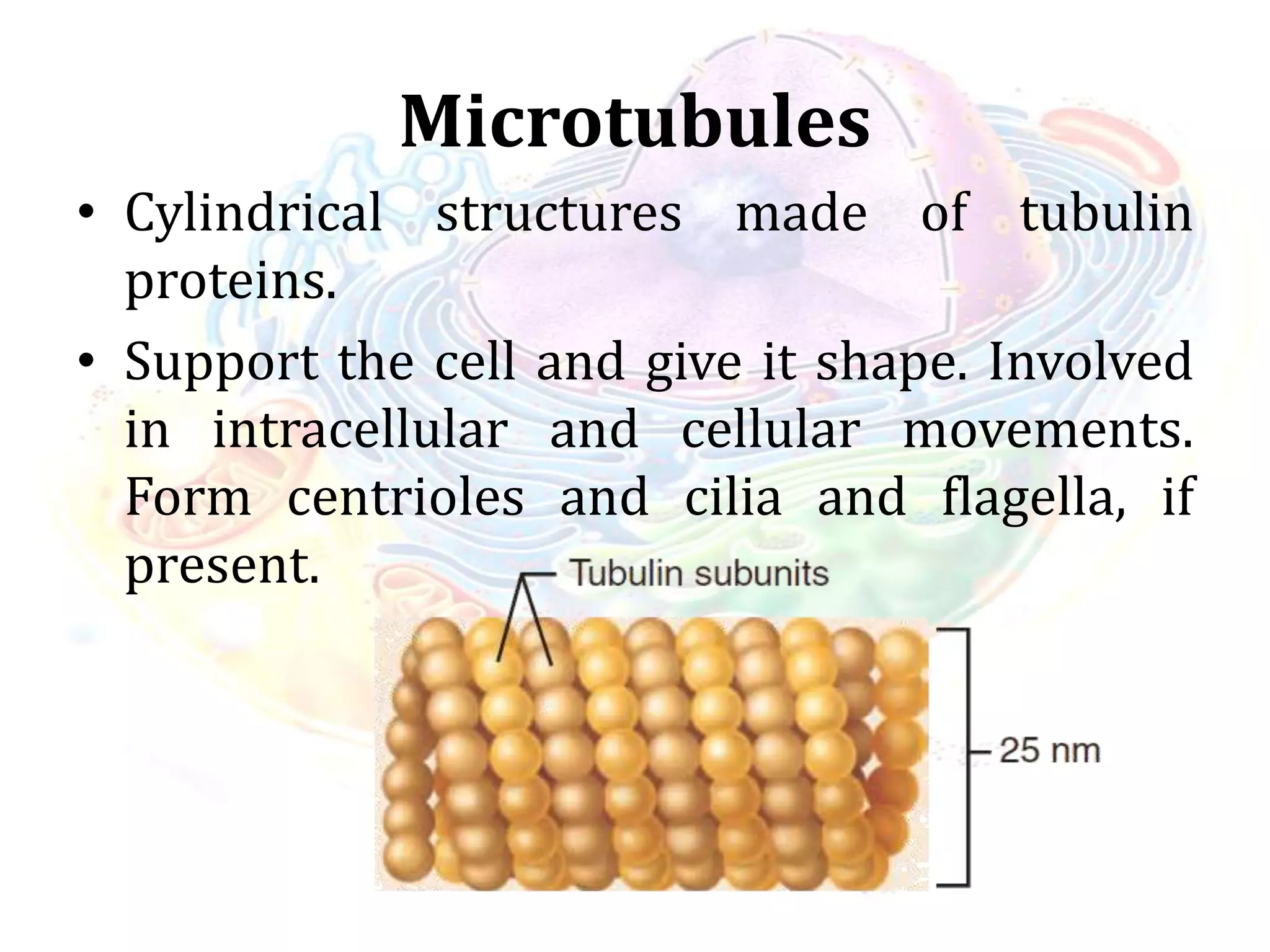
Microtubules
• Cylindrical structures made of tubulin
proteins.
• Support the cell and give it shape. Involved
in intracellular and cellular movements.
Form centrioles and cilia and flagella, if
present.
Microfilaments
• Fine filaments composed of the protein
actin. Involved in muscle contraction and
other types of intracellular movement, help
form the cell’s cytoskeleton.
Intermediate filaments
• Protein fibers; composition varies. The
stable cytoskeletal elements; resist
mechanical forces acting on the cell.
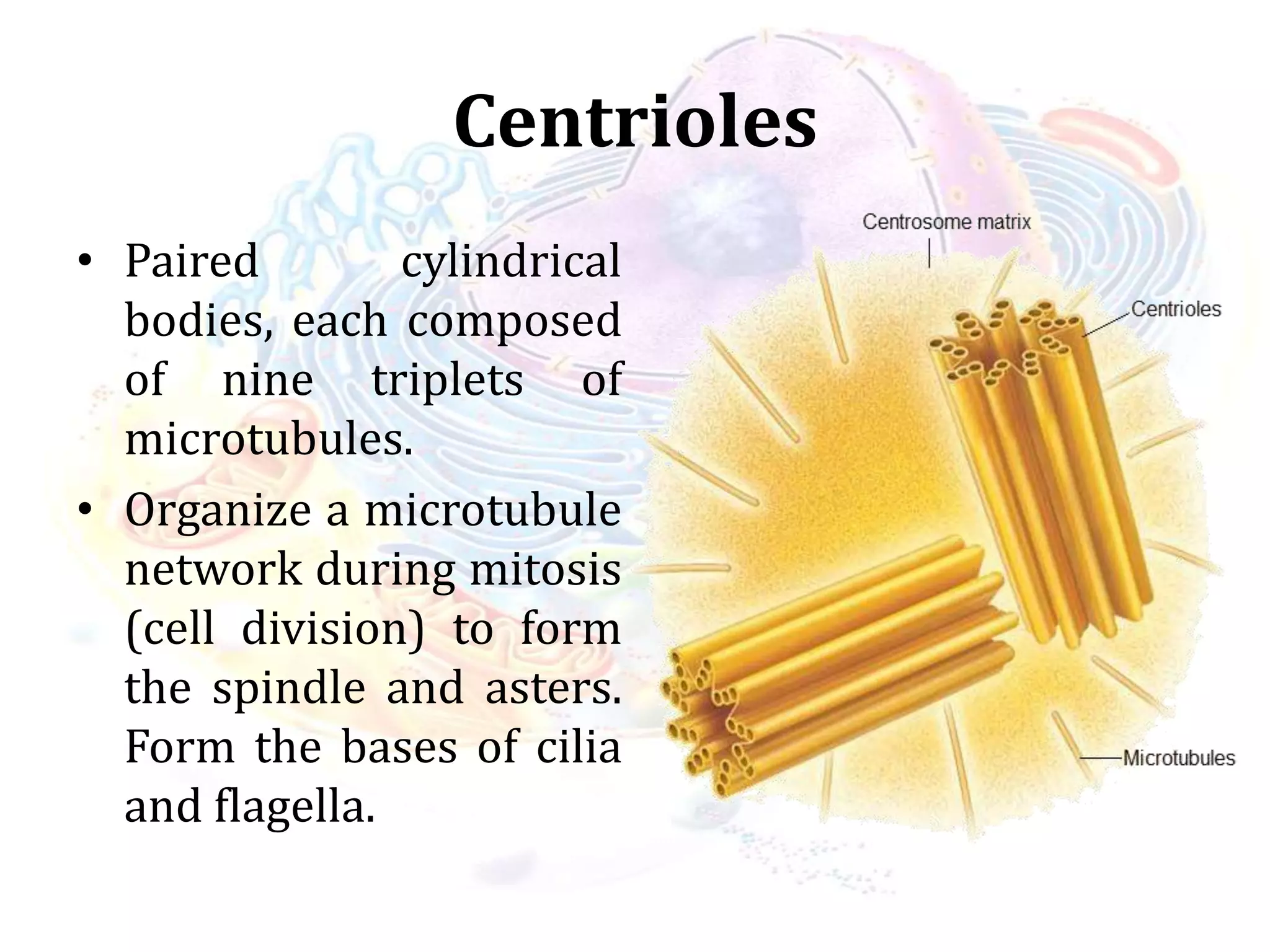
Centrioles
• Paired cylindrical
bodies, each composed
of nine triplets of
microtubules.
• Organize a microtubule
network during mitosis
(cell division) to form
the spindle and asters.
Form the bases of cilia
and flagella.
Inclusions
• Inclusions includes stored nutrients such
as lipid droplets and glycogen granules,
protein crystals, pigment granules. Storage
for nutrients, wastes, and cell products.
Cellular Extensions
• The major cellular extensions are
1. Cilia
2. Flagellum
3. Microvilli
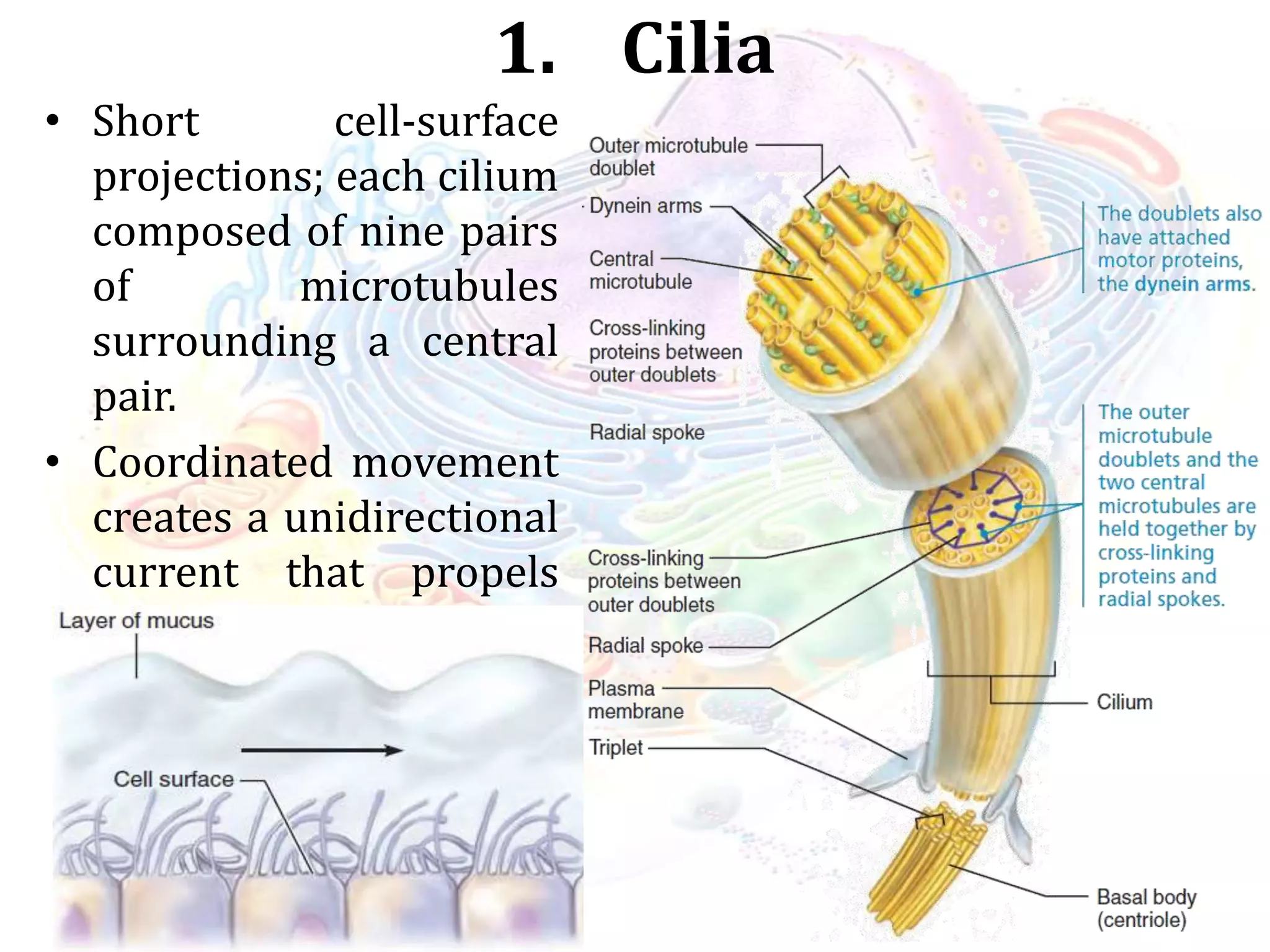
1. Cilia
• Short cell-surface
projections; each cilium
composed of nine pairs
of microtubules
surrounding a central
pair.
• Coordinated movement
creates a unidirectional
current that propels
substances across cell
surfaces.
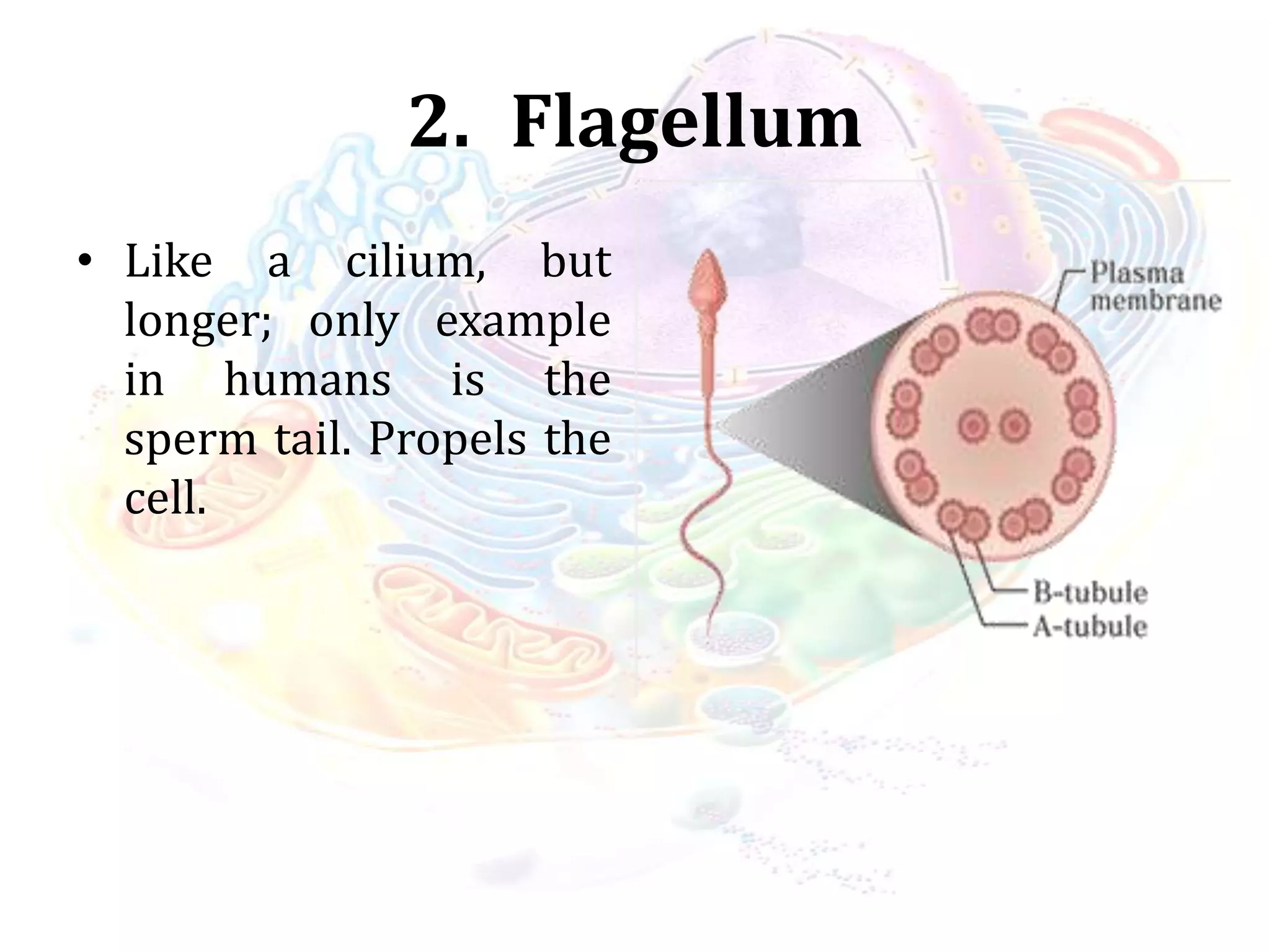
2. Flagellum
• Like a cilium, but
longer; only example
in humans is the
sperm tail. Propels the
cell.
3. Microvilli
• Tubular extensions of
the plasma membrane;
contain a bundle of
actin filaments.
Increase surface area
for absorption.
C. NUCLEUS
• The nucleus is a spherical or oval-shaped
structure that usually is the most prominent
feature of a cell. Surrounded by the nuclear
envelope; contains fluid nucleoplasm,
nucleoli, and chromatin.
• Control center of the cell; responsible for
transmitting genetic information and
providing the instructions for protein
synthesis.
Structure of the Nucleus
1. The nuclear envelope
2. Nucleoplasm
3. Chromatin
4. The nucleolus
Nuclear Envelope
• The nuclear envelope is a double-layered
membrane perforated with pores, which
control the flow of material going in and
out of the nucleus.
• The outer layer is connected to the
endoplasmic reticulum, communicating
with the cytoplasm of the cell. The
exchange of the large molecules (protein
and RNA) between the nucleus and
cytoplasm happens here.
Nucleoplasm
• A jelly-like (made mostly of water) matrix
within the nucleus
• All the other materials “float” inside
• Helps the nucleus keep its shape and
serves as the median for the
transportation of important molecules
within the nucleus
Chromatin
• Chromatin appears as a fine, unevenly
stained network, but special techniques
reveal it as a system of bumpy threads
weaving through the nucleoplasm.
– Chromatin is composed of approximately
– 30% DNA, our genetic material
– 60% globular histone proteins which package
and regulate the DNA
– 10% RNA chains, newly formed or forming
Chromosomes
• Chromosomes contain DNA in a condensed form
attached to a histone protein.
• Chromatin is comprised of DNA. There are two
types based on function.
– Heterochromatin: highly condensed,
transcriptionally inactive mostly located
adjacent to the nuclear membrane
– Eurochromatin: delicate, less condensed
organization of chromatin, located in a
transcribing cell
Functions
• The nucleus is often compared to the
“command center,” as it controls all
functions of the cell.
• It is important in regulating the actions
of the cells.
• It plays an important part in creating
the cell’s proteins.
• It is involved in important processes
dealing with DNA and other genetic
molecules.
DNA
• DNA or deoxyribonucleic acid, contains
the information needed for the creation
of proteins (which include enzymes and
hormones) and is stored in the nucleus,
as already said, in the form of chromatin
or chromosomes.
• The nucleus is the site of DNA
duplication, which is needed for cell
division (mitosis) and organism
reproduction and growth.
RNA
• RNA are made fromthe DNA template:
1. Messenger RNA (mRNA) directs the synthesis
of a protein.
2. Ribosomal RNA (rRNA) joins with ribosomal
proteins to make ribosomes.
3. Transfer RNA (tRNA) binds to an amino acid
and holds it in place on a ribosome until it is
incorporated into a protein during translation
Proteins and Cell Regulation
• The nucleus oversees cells’ functions and
regulatory mechanisms for keeping the cell
healthy and alive.
• The nucleus controls growth of the cell through
the synthesis of structural proteins, energy and
nutrient metabolism.
• The nucleus regulates the secretion of
ribosomes, which are made in the nucleolus
and are the sites of gene transcription.
Molecule Movement
• Passive Transport
• Active Transport
• Endocytosis
(phagocytosis & pinocytosis)
• Exocytosis
Passive Transport
• No energy required
• Move due to gradient
– differences in concentration, pressure, charge
• Move to equalize gradient
– High moves toward low
Types of Passive Transport
1. Diffusion
2. Osmosis
3. Facilitated diffusion
Diffusion
• Molecules move to equalize concentration
Osmosis
• Special form of diffusion
• Fluid flows from lower solute concentration
• Often involves movement of water
– Into cell
– Out of cell
Solution Differences
• Solvent + solute = solution
• Hypotonic
– Solutes in cell more than outside
– Outside solvent will flow into cell
• Isotonic
– Solutes equal inside & out of cell
• Hypertonic
– Solutes greater outside cell
– Fluid will flow out of cell
Facilitated Diffusion
• Differentially permeable membrane
• Channels (are specific) help molecule or
ions enter or leave the cell
• Channels usually are transport proteins
(aquaporins facilitate the movement of
water)
• No energy is used
Process of Facilitated Transport
• Protein binds with molecule
• Shape of protein changes
• Molecule moves across membrane
Active Transport
• Molecular movement
• Requires energy (against gradient)
• Example is sodium-potassium pump
Endocytosis
• Movement of large material
– Particles
– Organisms
– Large molecules
• Movement is into cells
• Types of endocytosis
– bulk-phase (nonspecific)
– receptor-mediated (specific)
Process of Endocytosis
• Plasma membrane surrounds material
• Edges of membrane meet
• Membranes fuse to form vesicle
Forms of Endocytosis
• Phagocytosis – cell eating
• Pinocytosis – cell drinking
Exocytosis
• Reverse of endocytosis
• Cell discharges
material
• Vesicle moves to cell
surface
• Membrane of vesicle
fuses
• Materials expelled
Thank You

Cell anatomy

  • 2.
    • Cells arethe structural units of all living things. All cells arise from existing cells by the process of cell division, in which one cell divides into two identical cells. • The English scientist Robert Hooke first observed plant cells with a crude microscope in the late 1600s. Then, in the 1830s two German scientists, Matthias Schleiden and Theodor Schwann, proposed that all living things are composed of cells.
  • 3.
  • 4.
    PARTS OF ACELL A human cell has three main parts: • The plasma membrane: the outer boundary of the cell. • The cytoplasm: the intracellular fluid packed with organelles, small structures that perform specific cell functions. • The nucleus: an organelle that controls cellular activities. The nucleus lies near the cell’s center.
  • 6.
    A. THE PLASMAMEMBRANE • The plasma membrane defines the extent of a cell, thereby separating two of the body’s major fluid compartments the intracellular fluid within cells and the extracellular fluid (ECF) outside cells. The plasma membrane encloses cell contents, mediates exchanges with the extracellular environment, and plays a role in cellular communication.
  • 8.
    Structure The Fluid MosaicModel • The fluid mosaic model of membrane structure depicts the plasma membrane as an exceedingly thin (7–10 nm) structure composed of a double layer of lipid molecules with protein molecules dispersed in it. • The proteins which float in the fluid lipid bilayer, form a constantly changing mosaic pattern.
  • 9.
    The Glycocalyx • Plasmamembrane contains a carbohydrate rich area at the cell surface called glycocalyx. Cell junctions. • An epithelial cell is shown joined to adjacent cells by three common types of cell junctions.
  • 10.
    1. Tight Junctions:Impermeable junctions prevent molecules from passing through the intercellular space. 2. Desmosomes: Anchoring junctions bind adjacent cells together like a molecular “Velcro” and help form an internal tension reducing network of fibers. 3. Gap junctions: Communicating junctions allow ions and small molecules to pass for intercellular communication
  • 12.
    B. THE CYTOPLASM Thecellular material between the plasma membrane and the nucleus, is the site of most cellular activities. It consists of three elements: –The cytosol –Organelles –Inclusions.
  • 13.
    1. The cytosol:it is the viscous, semitransparent fluid in which the other cytoplasmic elements are suspended. 2. The organelles are the metabolic machinery of the cell. Each type of organelle carries out a specific function for the cell. 3. The inclusions are chemical substances that may or may not be present, depending on cell type.
  • 14.
    Mitochondria • Rodlike, double- membranestructures; inner membrane folded into projections called cristae. • Site of ATP synthesis; powerhouse of the cell.
  • 15.
    Ribosomes • Dense particles consistingof two subunits, each composed of ribosomal RNA and protein. Free or attached to rough endoplasmic reticulum. • The sites of protein synthesis.
  • 16.
    Rough endoplasmic reticulum •Membranous system enclosing a cavity, the cistern, and coiling through the cytoplasm. Externally studded with ribosomes. • Sugar groups are attached to proteins within the cisterns. Proteins are bound in vesicles for transport to the Golgi apparatus and other sites. • External face synthesizes phospholipids.
  • 17.
    Smooth endoplasmic reticulum •Membranous system of sacs and tubules; free of ribosomes. • Site of lipid and steroid (cholesterol) synthesis, lipid metabolism, and drug detoxification.
  • 18.
    Golgi apparatus • Astack of flattened membranes and associated vesicles close to the nucleus. • Packages, modifies, and segregates proteins for secretion from the cell, inclusion in lysosomes, and incorporation into the plasma membrane.
  • 19.
    Peroxisomes • Membranous sacsof catalase and oxidase enzymes. • The enzymes detoxify a number of toxic substances. The most important enzyme, catalase, breaks down hydrogen peroxide.
  • 20.
    Lysosomes • Membranous sacs containingacid hydrolases. • Sites of intracellular digestion.
  • 21.
    Microtubules • Cylindrical structuresmade of tubulin proteins. • Support the cell and give it shape. Involved in intracellular and cellular movements. Form centrioles and cilia and flagella, if present.
  • 22.
    Microfilaments • Fine filamentscomposed of the protein actin. Involved in muscle contraction and other types of intracellular movement, help form the cell’s cytoskeleton.
  • 23.
    Intermediate filaments • Proteinfibers; composition varies. The stable cytoskeletal elements; resist mechanical forces acting on the cell.
  • 24.
    Centrioles • Paired cylindrical bodies,each composed of nine triplets of microtubules. • Organize a microtubule network during mitosis (cell division) to form the spindle and asters. Form the bases of cilia and flagella.
  • 25.
    Inclusions • Inclusions includesstored nutrients such as lipid droplets and glycogen granules, protein crystals, pigment granules. Storage for nutrients, wastes, and cell products.
  • 26.
    Cellular Extensions • Themajor cellular extensions are 1. Cilia 2. Flagellum 3. Microvilli
  • 27.
    1. Cilia • Shortcell-surface projections; each cilium composed of nine pairs of microtubules surrounding a central pair. • Coordinated movement creates a unidirectional current that propels substances across cell surfaces.
  • 28.
    2. Flagellum • Likea cilium, but longer; only example in humans is the sperm tail. Propels the cell.
  • 29.
    3. Microvilli • Tubularextensions of the plasma membrane; contain a bundle of actin filaments. Increase surface area for absorption.
  • 30.
    C. NUCLEUS • Thenucleus is a spherical or oval-shaped structure that usually is the most prominent feature of a cell. Surrounded by the nuclear envelope; contains fluid nucleoplasm, nucleoli, and chromatin. • Control center of the cell; responsible for transmitting genetic information and providing the instructions for protein synthesis.
  • 32.
    Structure of theNucleus 1. The nuclear envelope 2. Nucleoplasm 3. Chromatin 4. The nucleolus
  • 33.
    Nuclear Envelope • Thenuclear envelope is a double-layered membrane perforated with pores, which control the flow of material going in and out of the nucleus. • The outer layer is connected to the endoplasmic reticulum, communicating with the cytoplasm of the cell. The exchange of the large molecules (protein and RNA) between the nucleus and cytoplasm happens here.
  • 34.
    Nucleoplasm • A jelly-like(made mostly of water) matrix within the nucleus • All the other materials “float” inside • Helps the nucleus keep its shape and serves as the median for the transportation of important molecules within the nucleus
  • 35.
    Chromatin • Chromatin appearsas a fine, unevenly stained network, but special techniques reveal it as a system of bumpy threads weaving through the nucleoplasm. – Chromatin is composed of approximately – 30% DNA, our genetic material – 60% globular histone proteins which package and regulate the DNA – 10% RNA chains, newly formed or forming
  • 36.
    Chromosomes • Chromosomes containDNA in a condensed form attached to a histone protein. • Chromatin is comprised of DNA. There are two types based on function. – Heterochromatin: highly condensed, transcriptionally inactive mostly located adjacent to the nuclear membrane – Eurochromatin: delicate, less condensed organization of chromatin, located in a transcribing cell
  • 37.
    Functions • The nucleusis often compared to the “command center,” as it controls all functions of the cell. • It is important in regulating the actions of the cells. • It plays an important part in creating the cell’s proteins. • It is involved in important processes dealing with DNA and other genetic molecules.
  • 38.
    DNA • DNA ordeoxyribonucleic acid, contains the information needed for the creation of proteins (which include enzymes and hormones) and is stored in the nucleus, as already said, in the form of chromatin or chromosomes. • The nucleus is the site of DNA duplication, which is needed for cell division (mitosis) and organism reproduction and growth.
  • 40.
    RNA • RNA aremade fromthe DNA template: 1. Messenger RNA (mRNA) directs the synthesis of a protein. 2. Ribosomal RNA (rRNA) joins with ribosomal proteins to make ribosomes. 3. Transfer RNA (tRNA) binds to an amino acid and holds it in place on a ribosome until it is incorporated into a protein during translation
  • 41.
    Proteins and CellRegulation • The nucleus oversees cells’ functions and regulatory mechanisms for keeping the cell healthy and alive. • The nucleus controls growth of the cell through the synthesis of structural proteins, energy and nutrient metabolism. • The nucleus regulates the secretion of ribosomes, which are made in the nucleolus and are the sites of gene transcription.
  • 42.
    Molecule Movement • PassiveTransport • Active Transport • Endocytosis (phagocytosis & pinocytosis) • Exocytosis
  • 43.
    Passive Transport • Noenergy required • Move due to gradient – differences in concentration, pressure, charge • Move to equalize gradient – High moves toward low
  • 44.
    Types of PassiveTransport 1. Diffusion 2. Osmosis 3. Facilitated diffusion
  • 45.
    Diffusion • Molecules moveto equalize concentration
  • 46.
    Osmosis • Special formof diffusion • Fluid flows from lower solute concentration • Often involves movement of water – Into cell – Out of cell
  • 47.
    Solution Differences • Solvent+ solute = solution • Hypotonic – Solutes in cell more than outside – Outside solvent will flow into cell • Isotonic – Solutes equal inside & out of cell • Hypertonic – Solutes greater outside cell – Fluid will flow out of cell
  • 49.
    Facilitated Diffusion • Differentiallypermeable membrane • Channels (are specific) help molecule or ions enter or leave the cell • Channels usually are transport proteins (aquaporins facilitate the movement of water) • No energy is used
  • 50.
    Process of FacilitatedTransport • Protein binds with molecule • Shape of protein changes • Molecule moves across membrane
  • 51.
    Active Transport • Molecularmovement • Requires energy (against gradient) • Example is sodium-potassium pump
  • 52.
    Endocytosis • Movement oflarge material – Particles – Organisms – Large molecules • Movement is into cells • Types of endocytosis – bulk-phase (nonspecific) – receptor-mediated (specific)
  • 53.
    Process of Endocytosis •Plasma membrane surrounds material • Edges of membrane meet • Membranes fuse to form vesicle
  • 54.
    Forms of Endocytosis •Phagocytosis – cell eating • Pinocytosis – cell drinking
  • 55.
    Exocytosis • Reverse ofendocytosis • Cell discharges material • Vesicle moves to cell surface • Membrane of vesicle fuses • Materials expelled
  • 56.