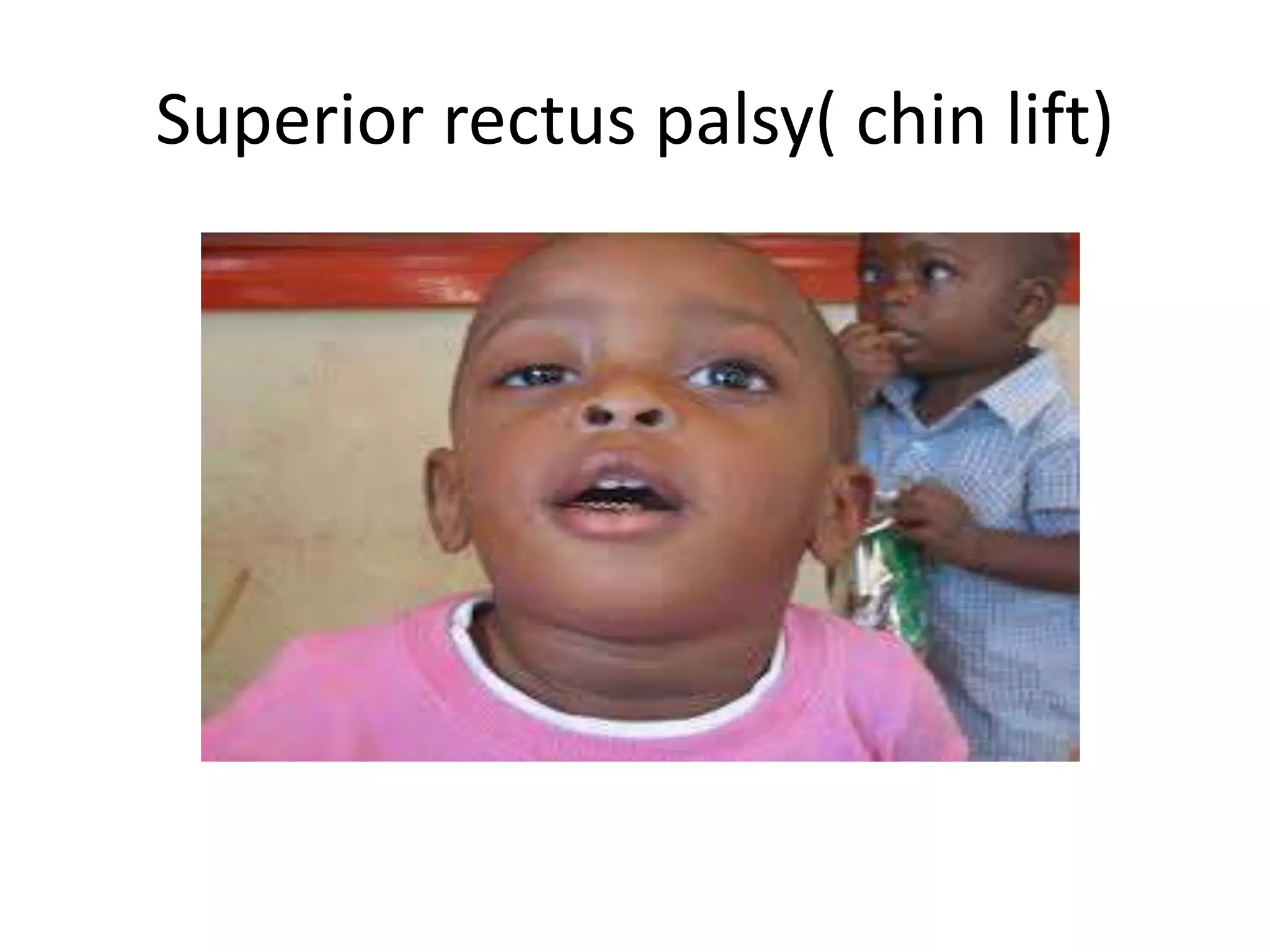
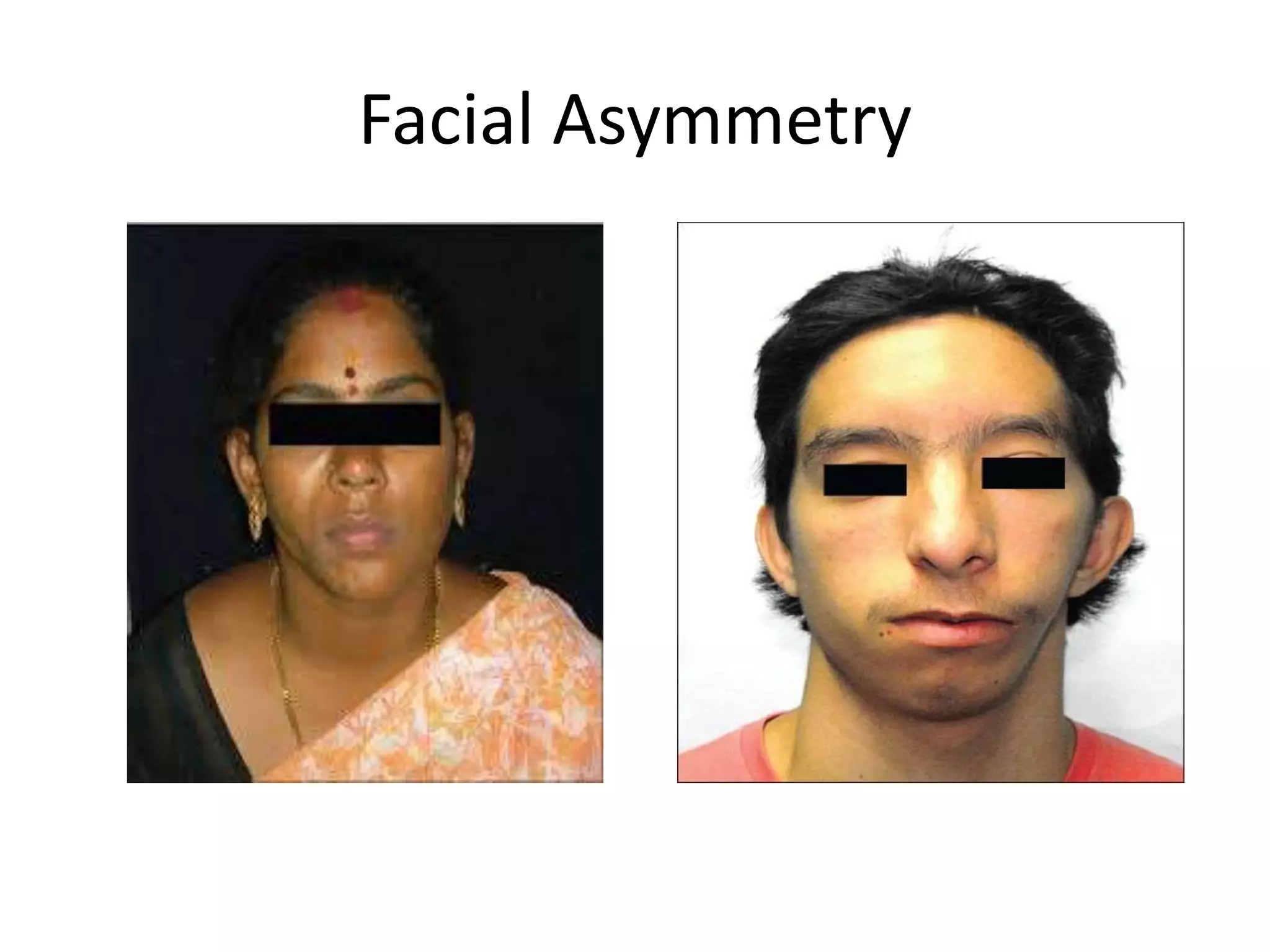
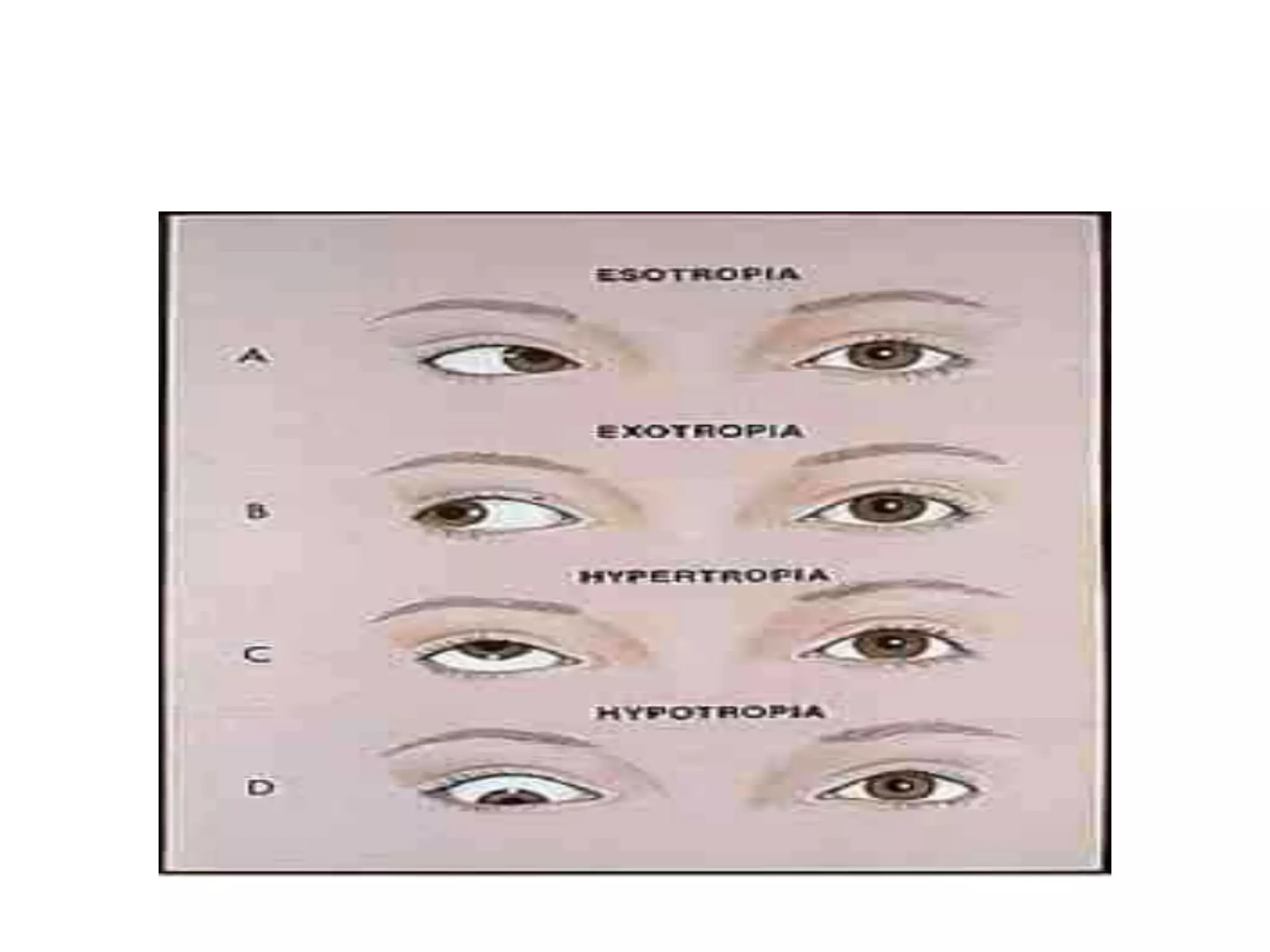
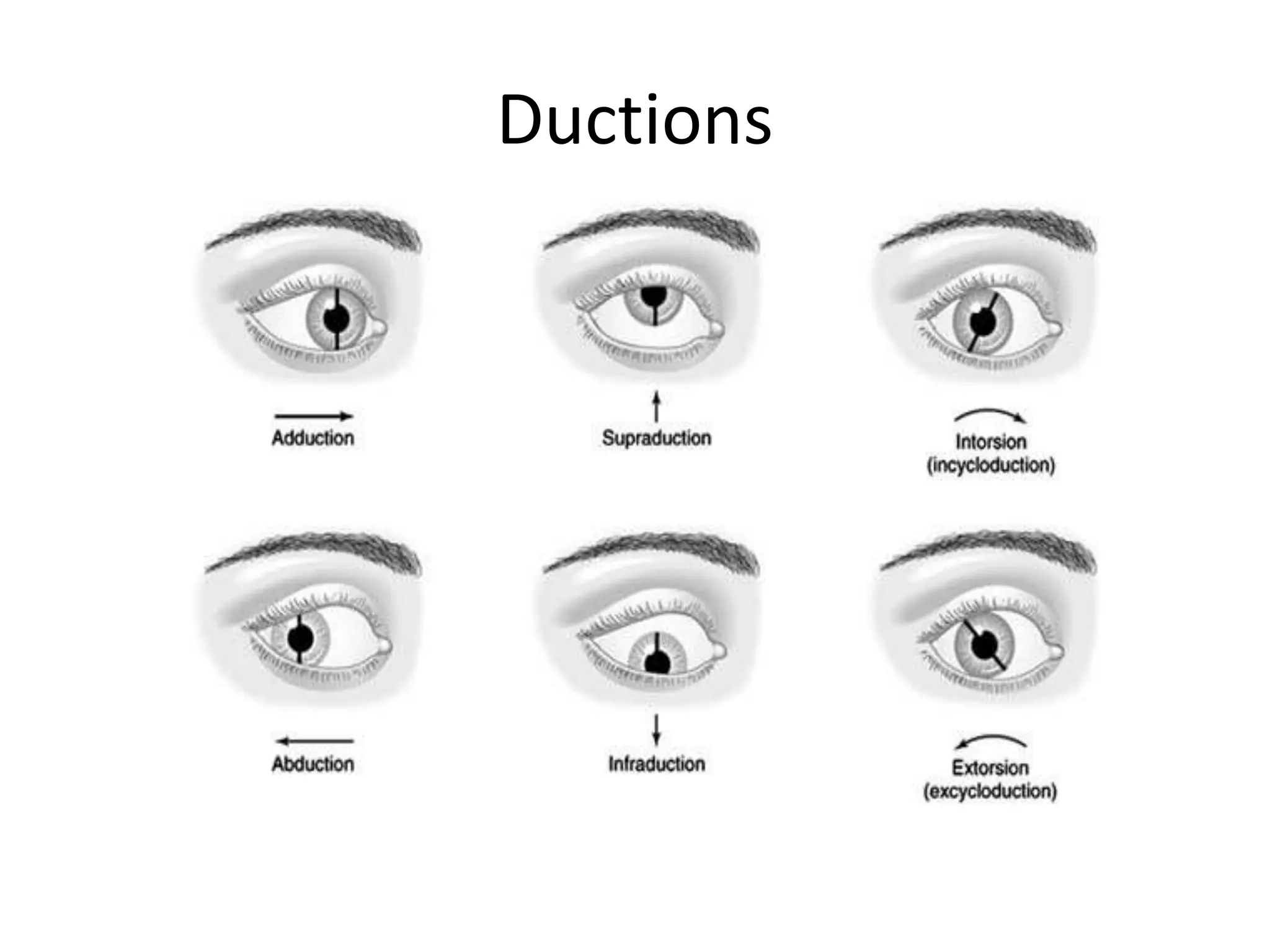
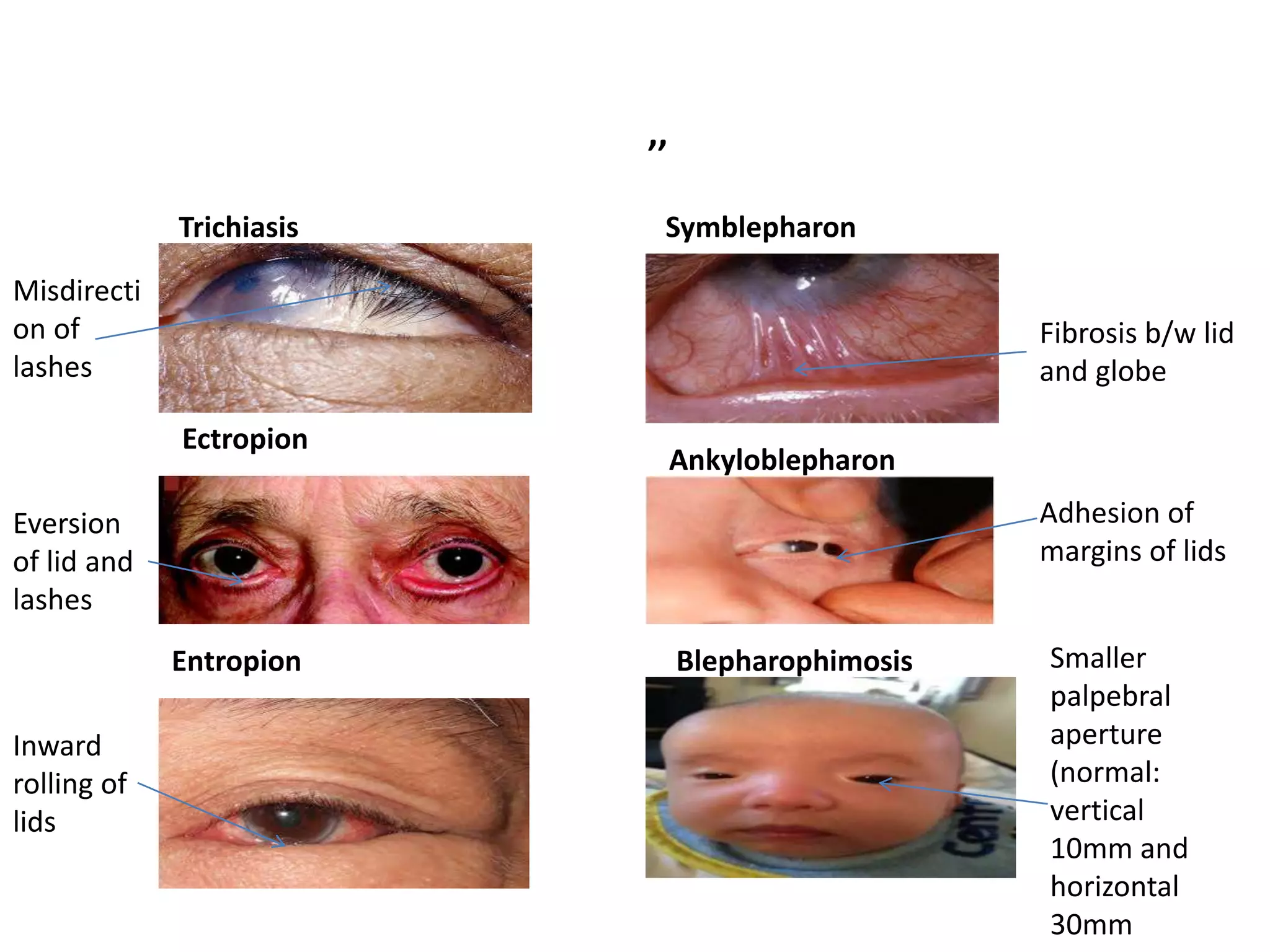
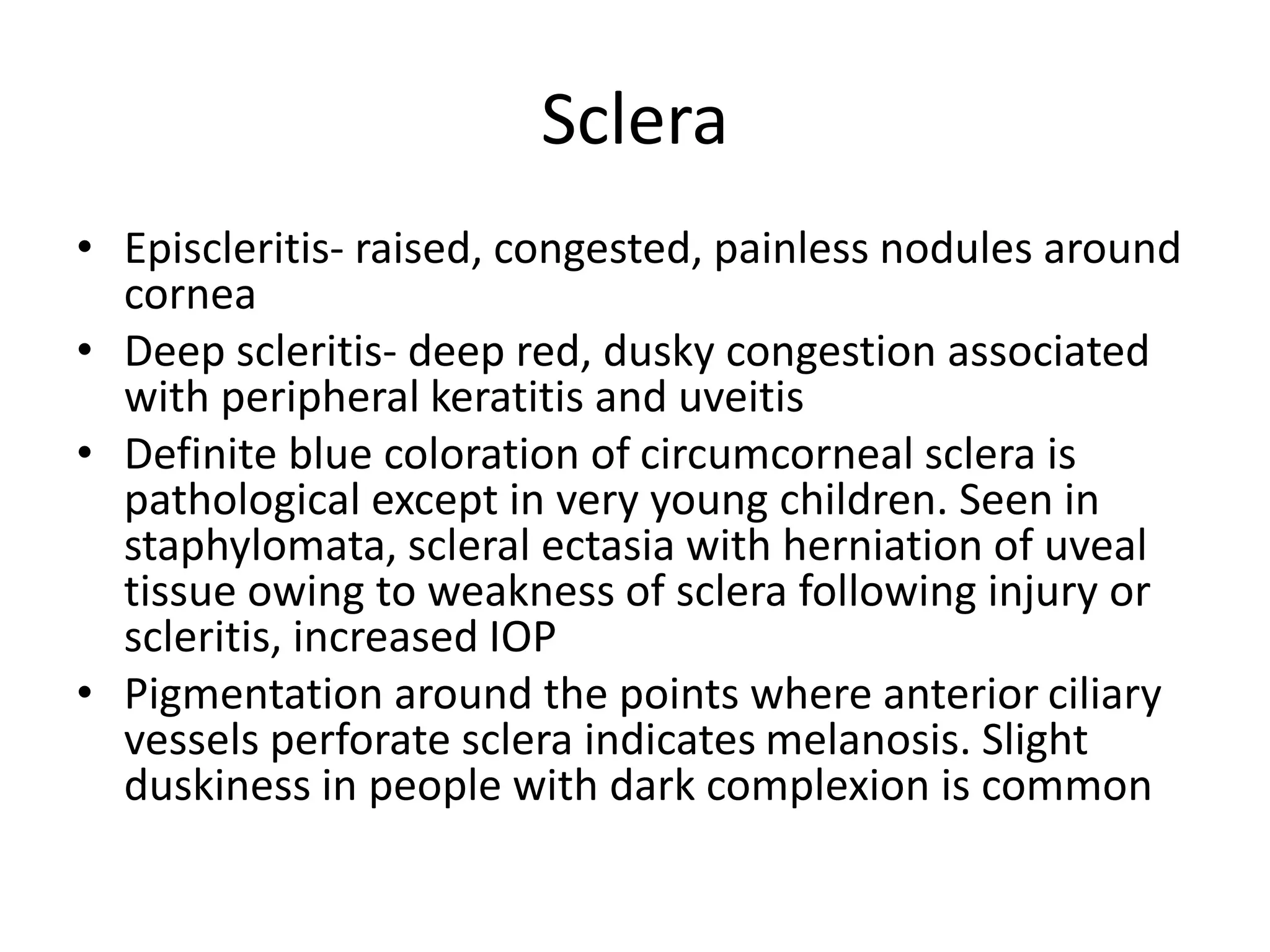
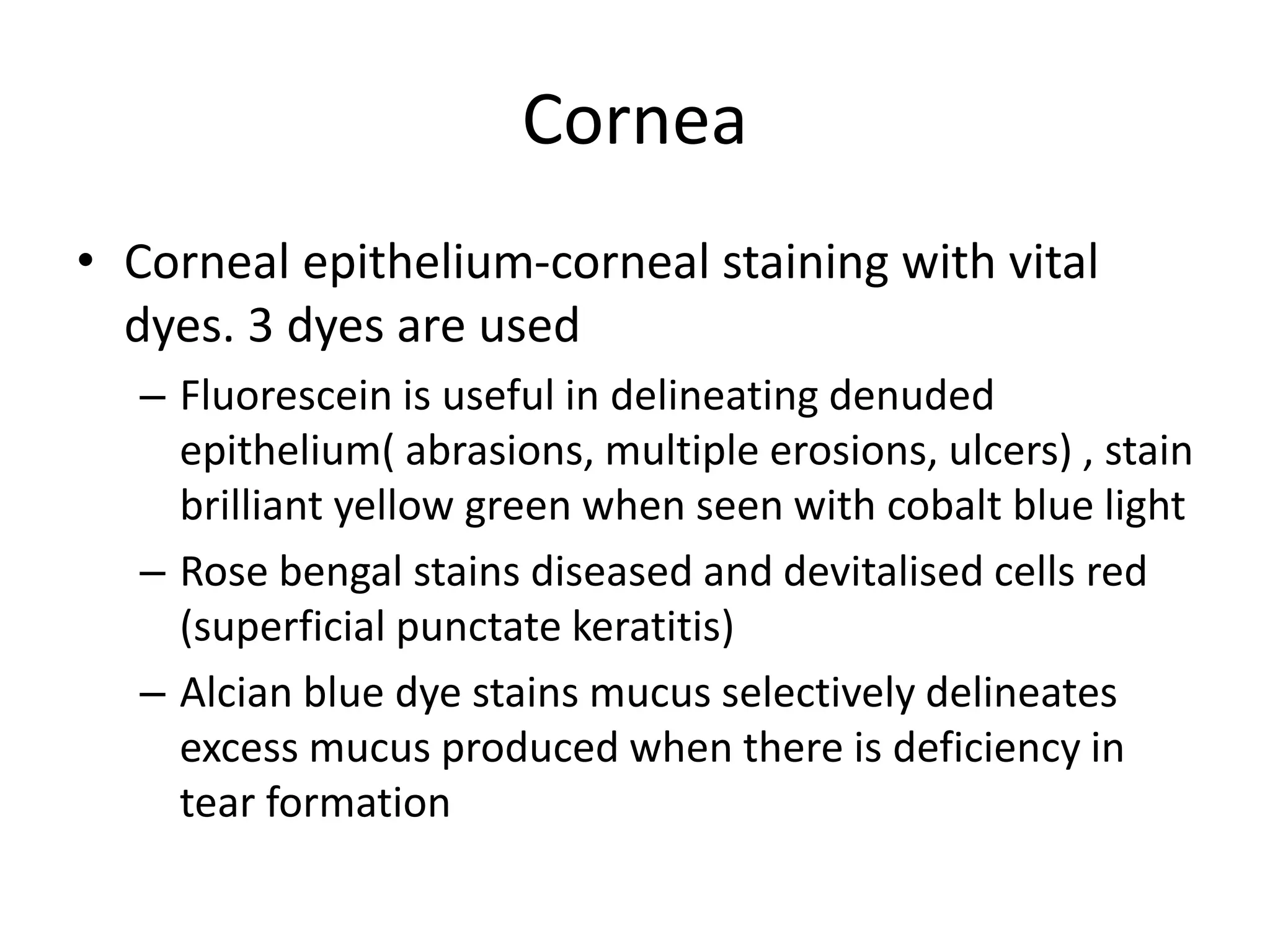
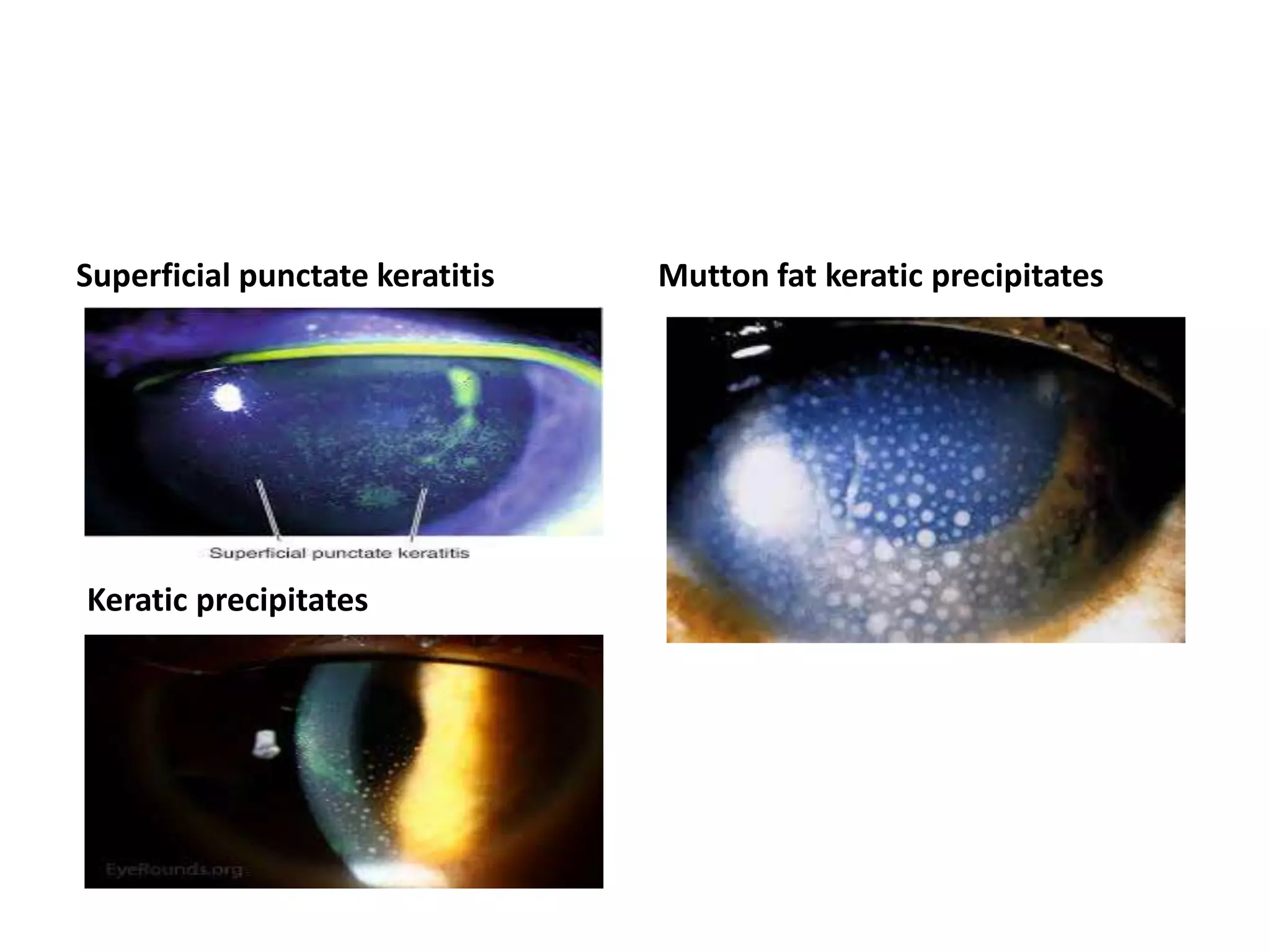
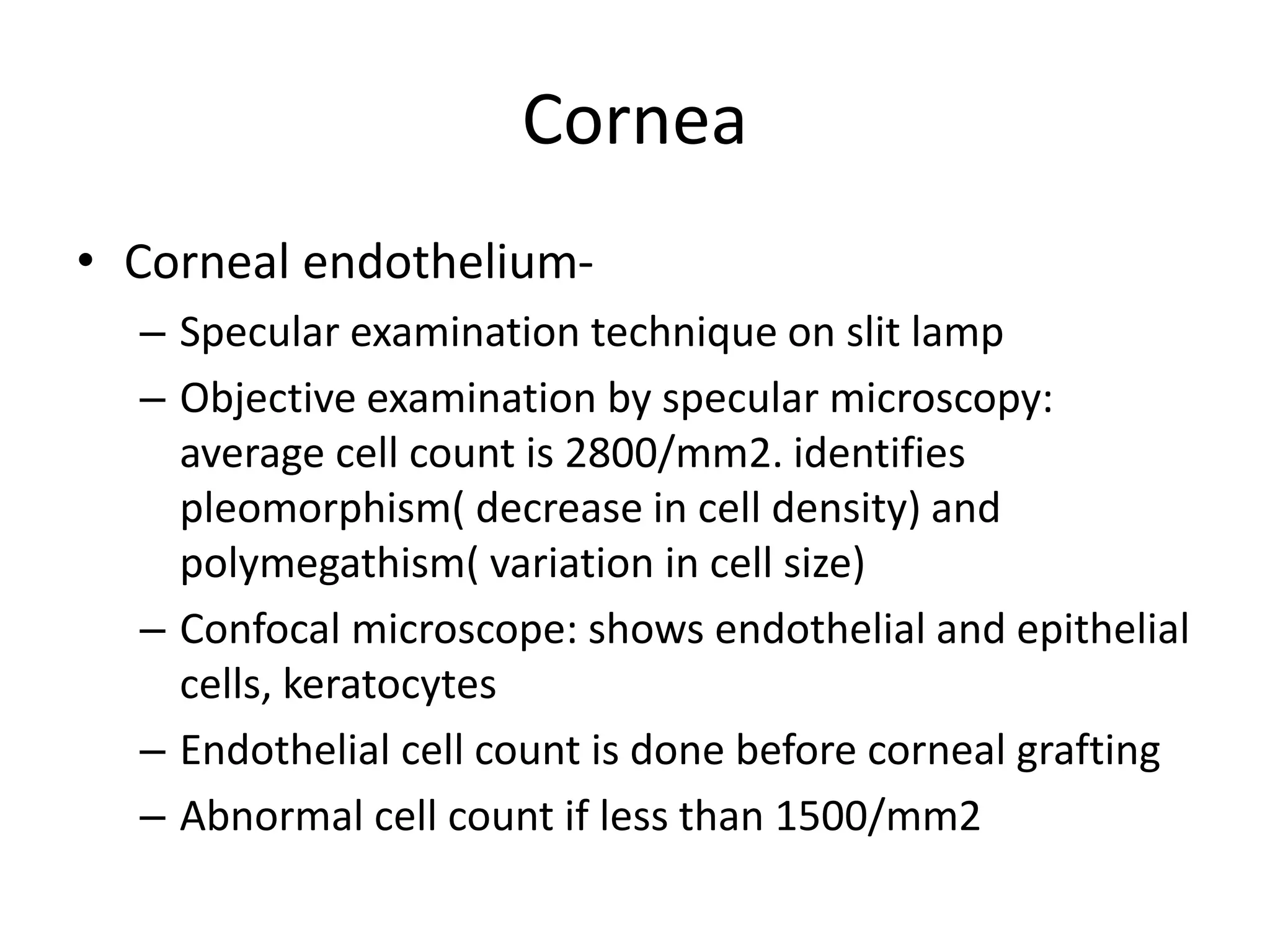
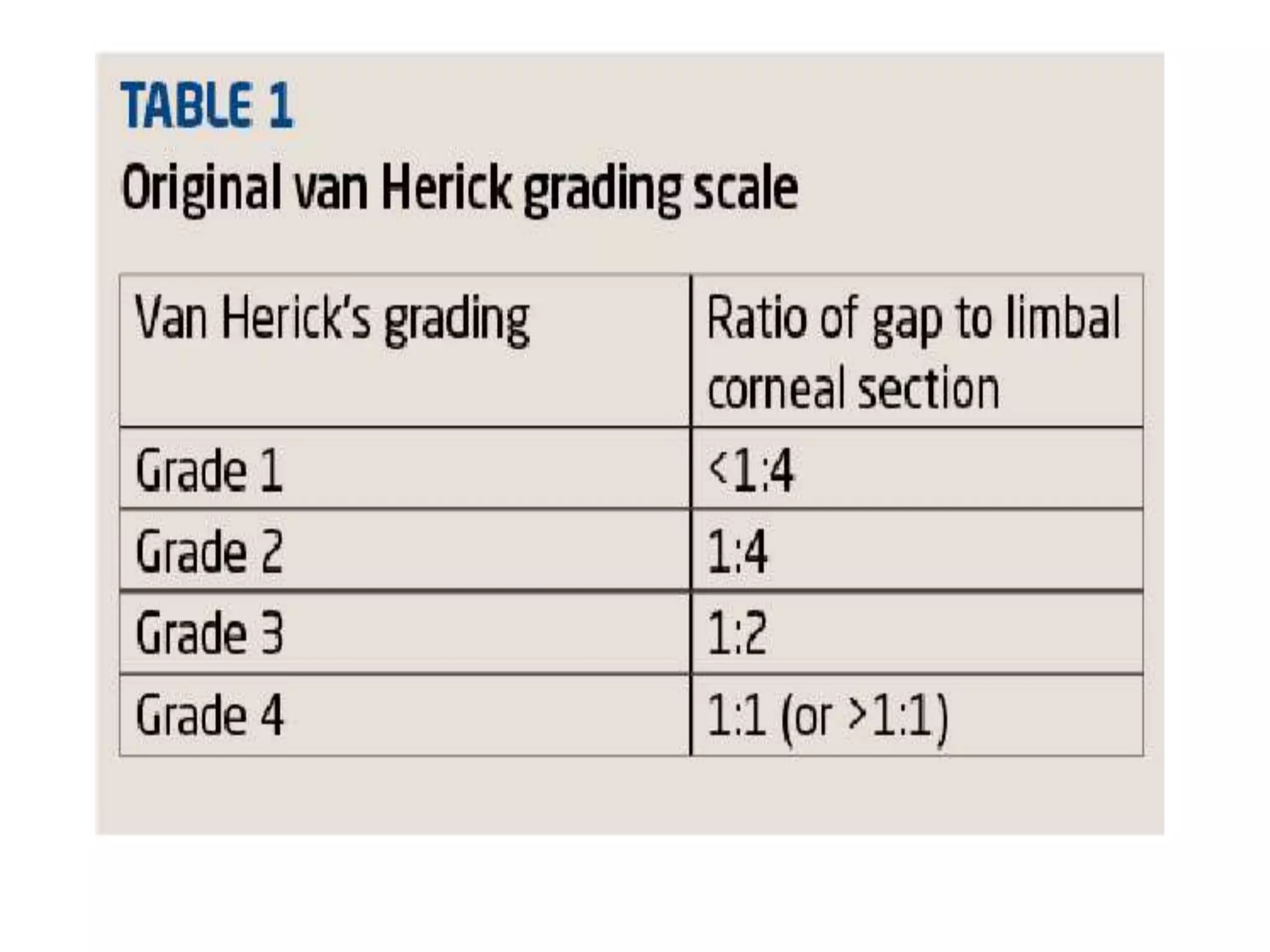
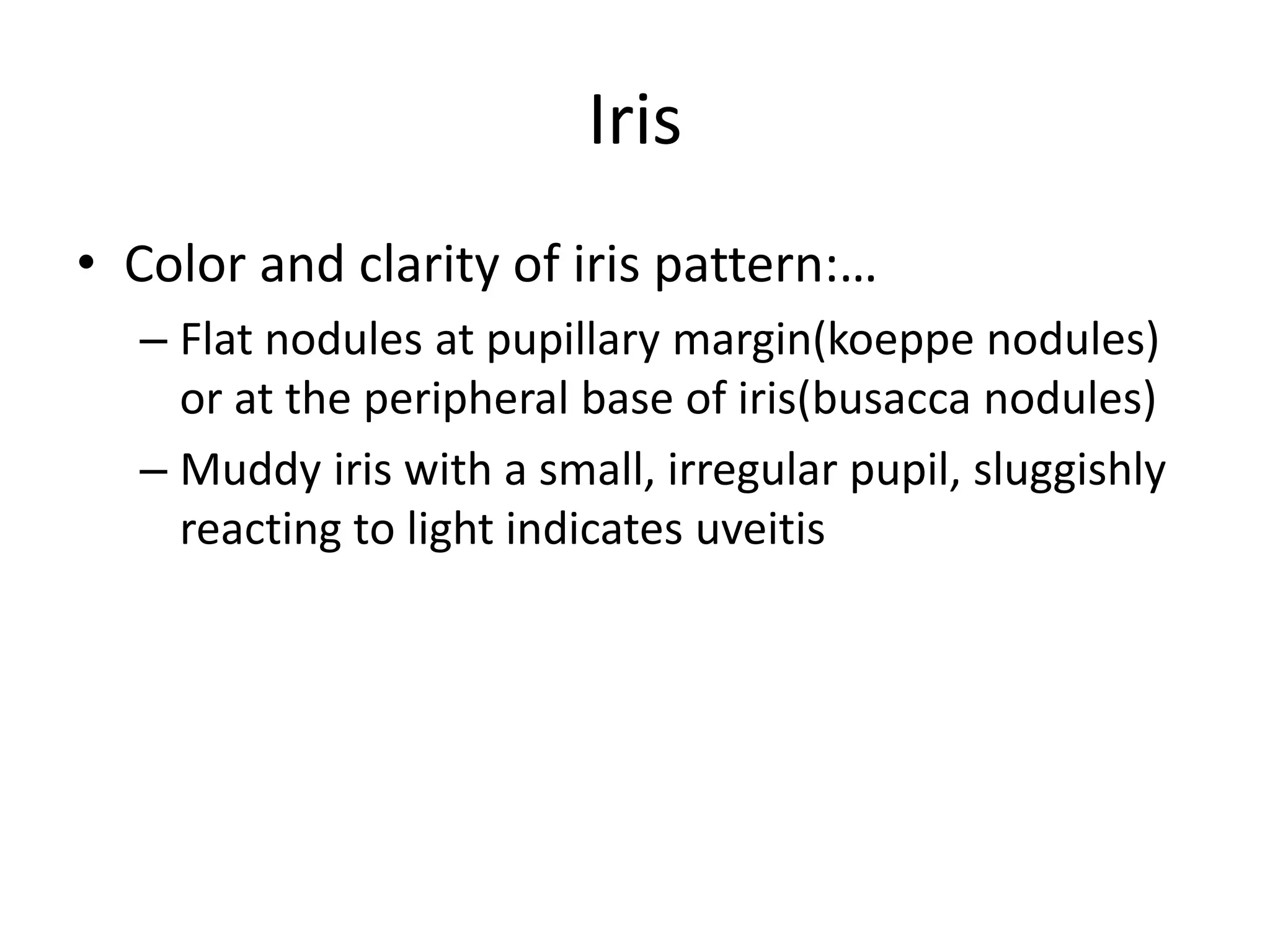
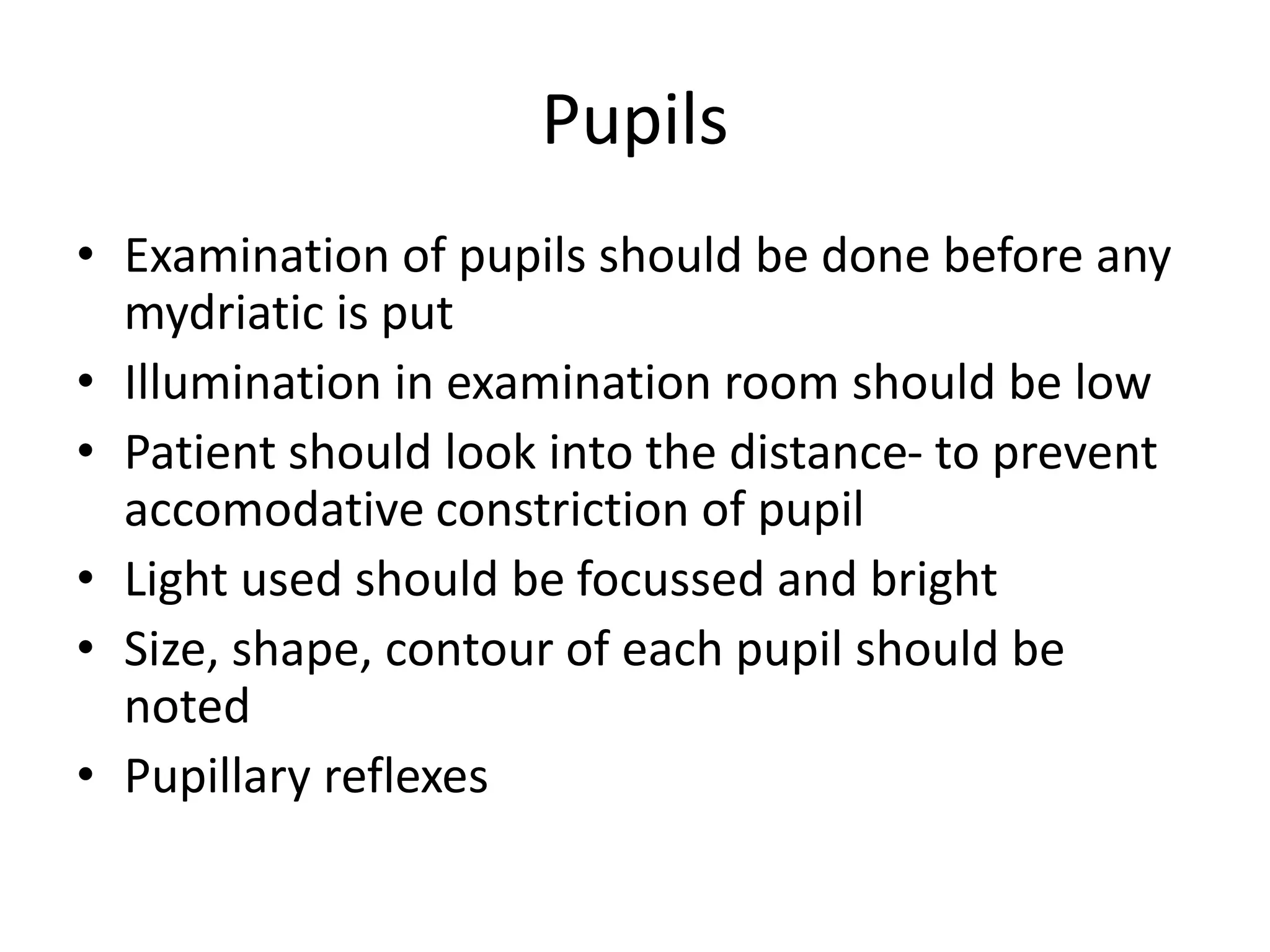
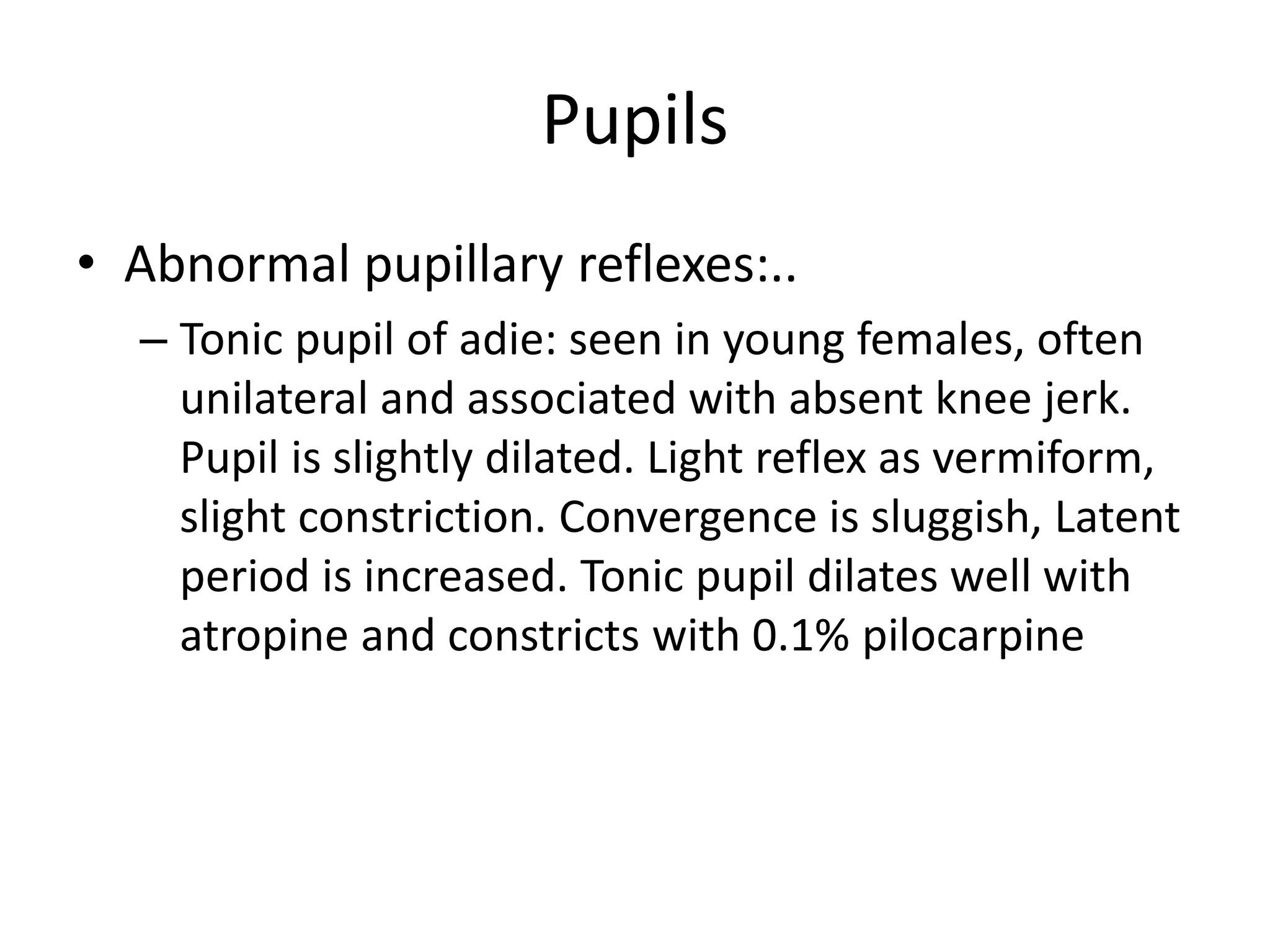
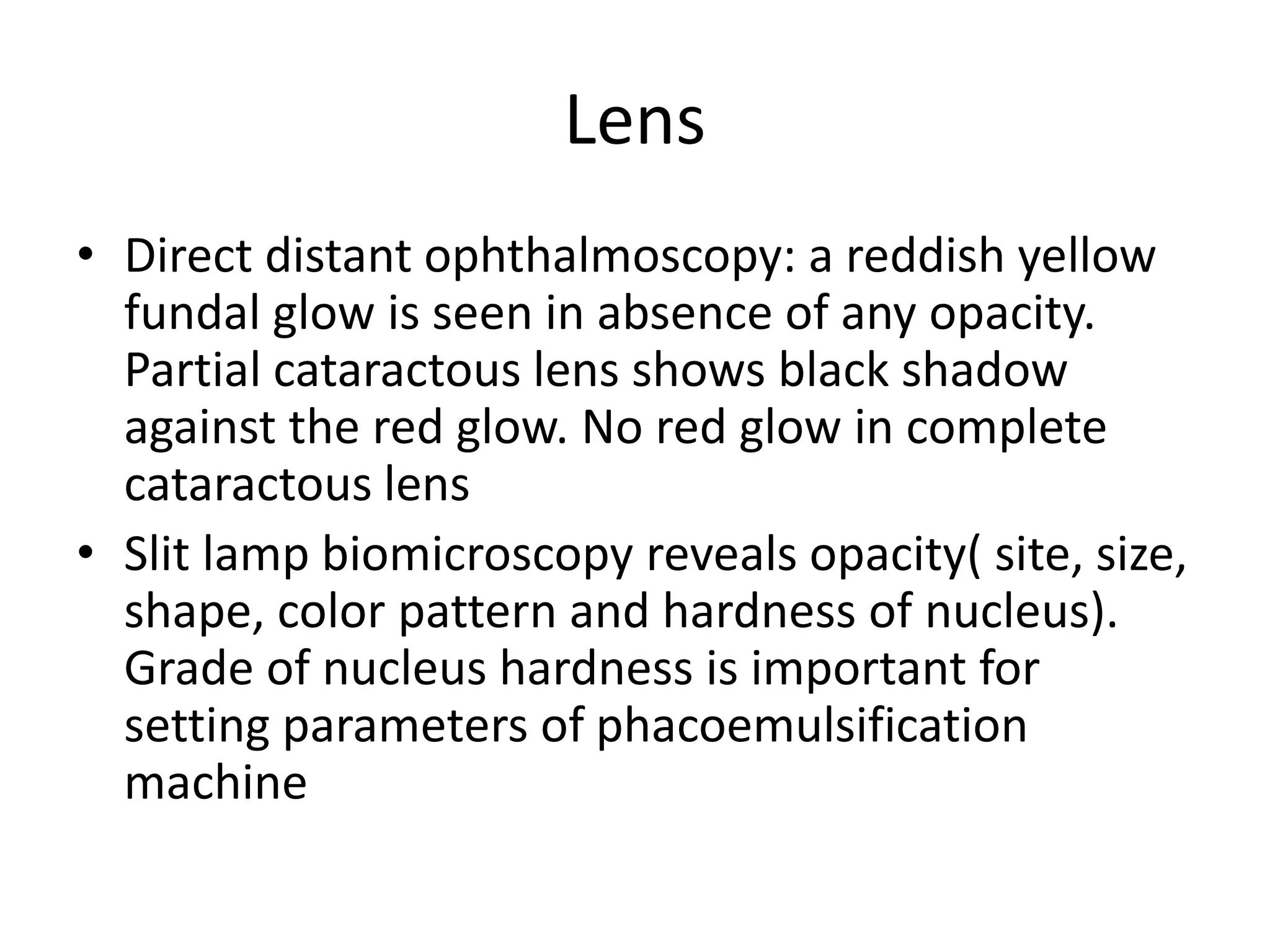
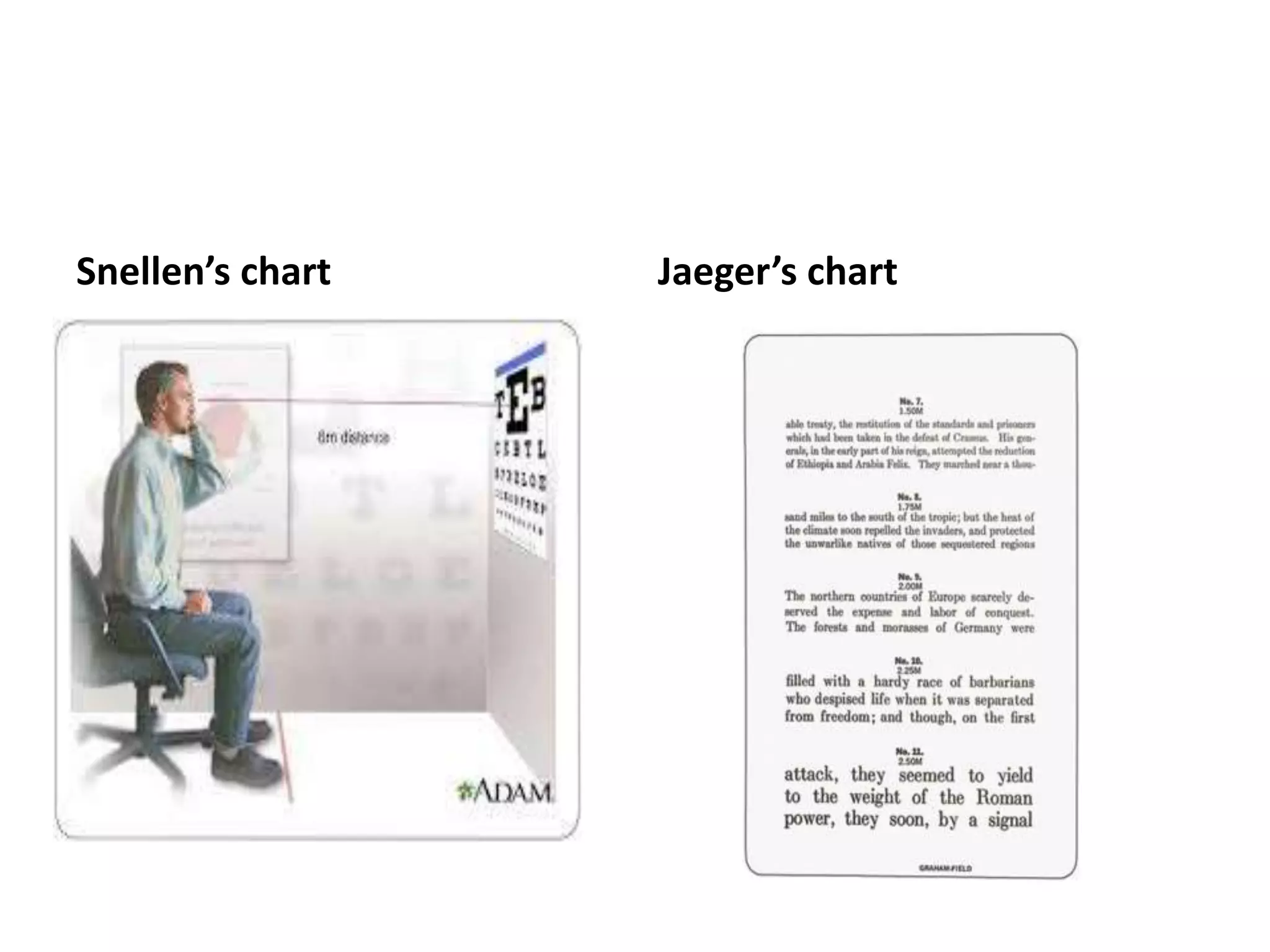
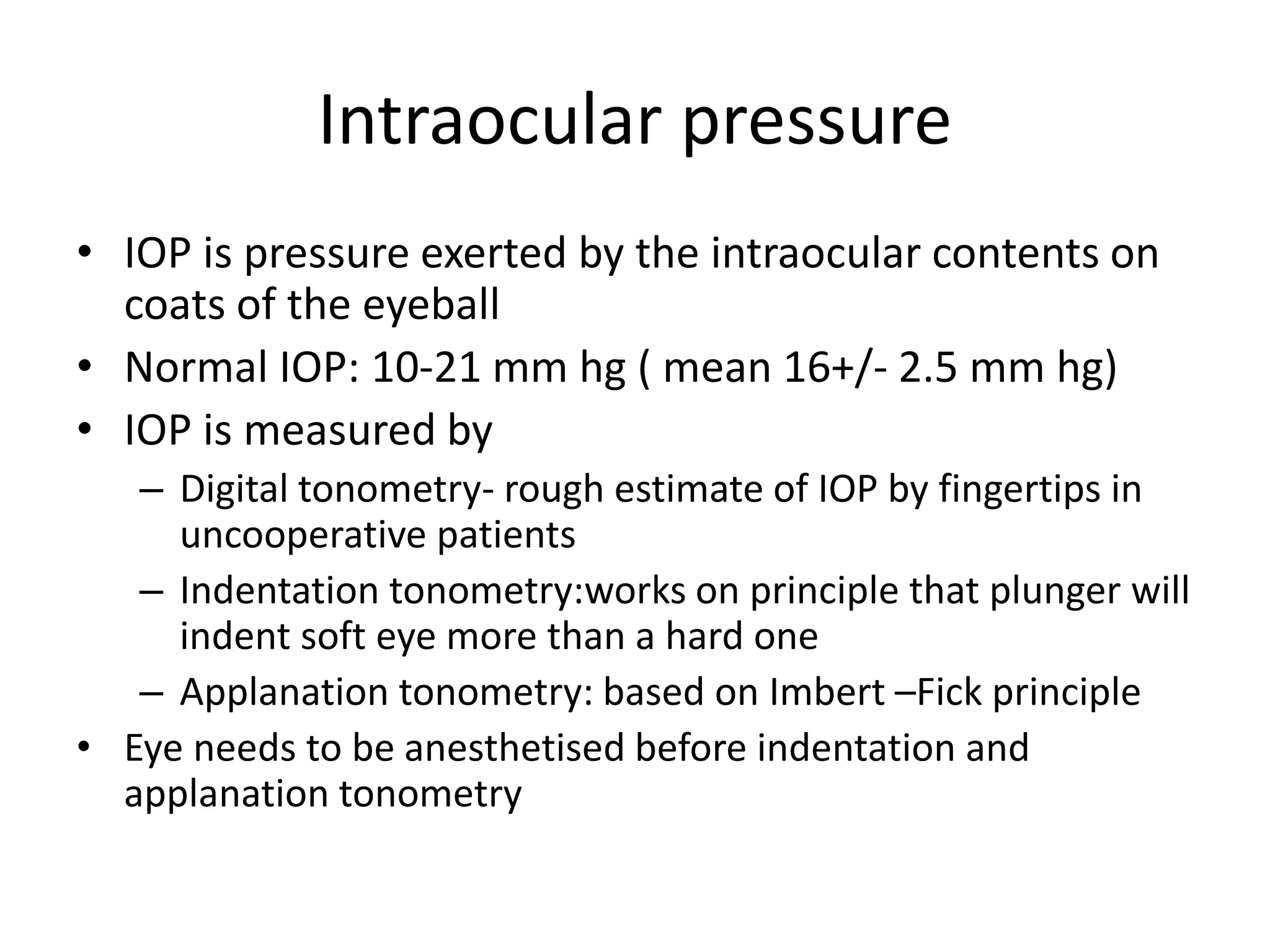
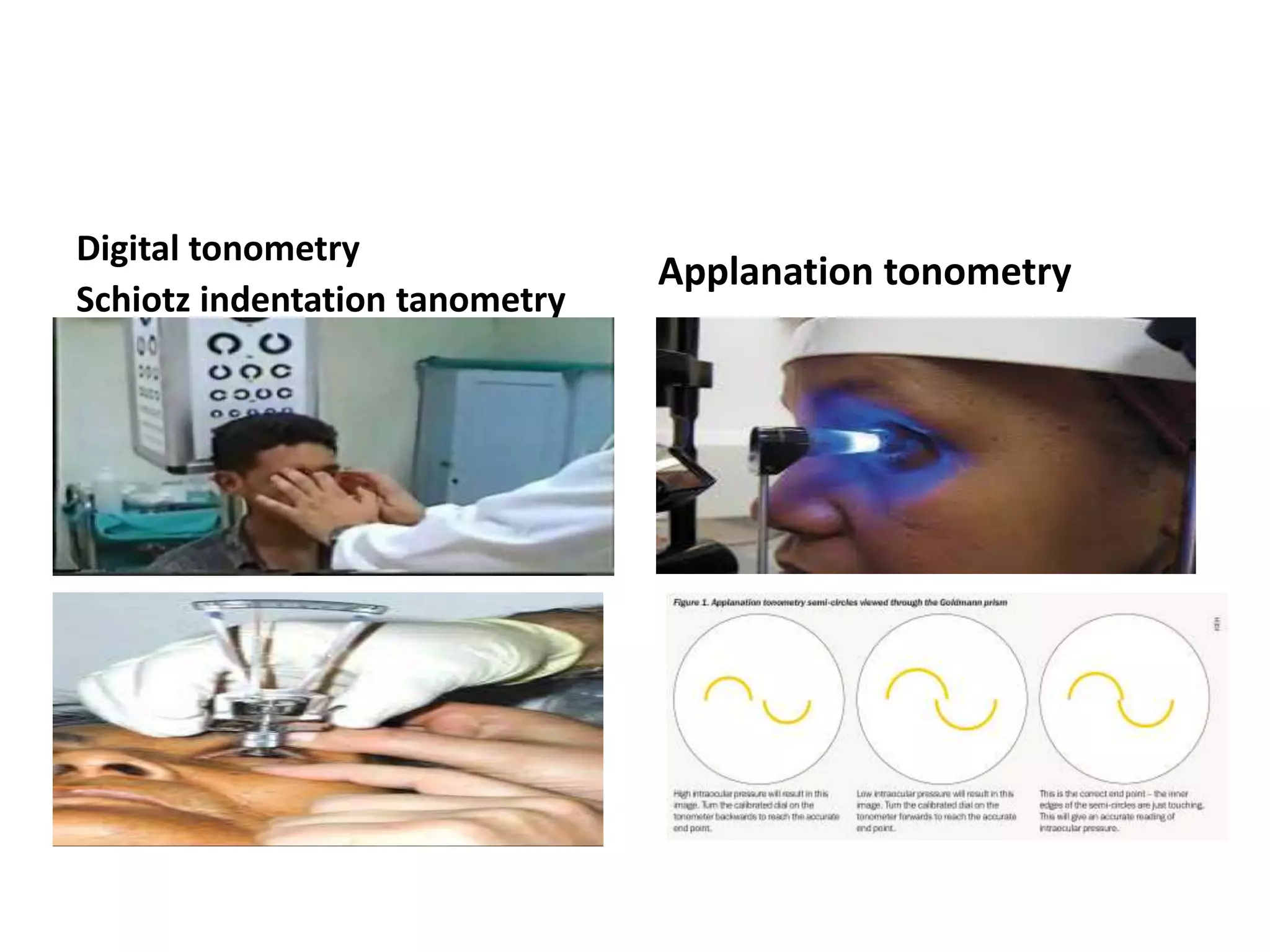
This document discusses the evaluation of ocular examination in cataract patients. It covers various components of the eye exam including head posture, facial asymmetry, visual axis, ocular movements, eyelids, conjunctiva and more. Abnormal head postures can indicate strabismus while facial asymmetry may be due to dental, skeletal or muscular issues. Tests like cover tests are used to evaluate the visual axis and detect strabismus. Ocular movements involve evaluations of ductions, versions, vergences and following diagnostic positions of gaze. The eyelids, lashes, glands and tumors are also examined for abnormalities.