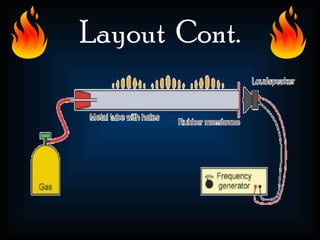
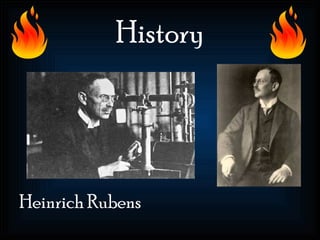
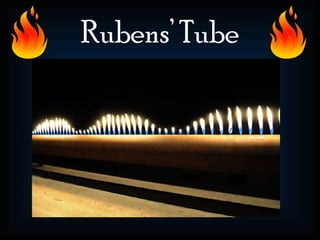
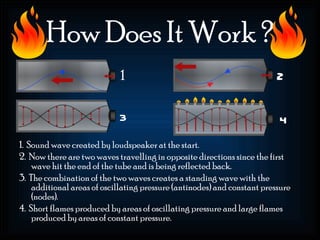
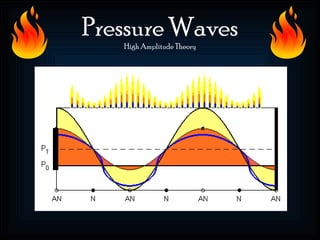
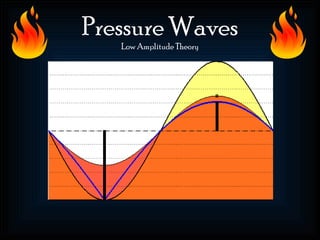
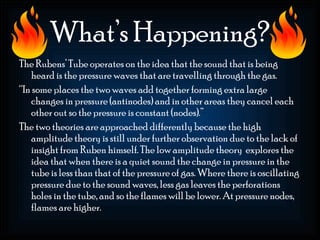
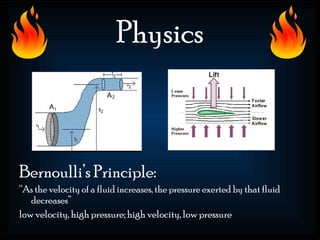
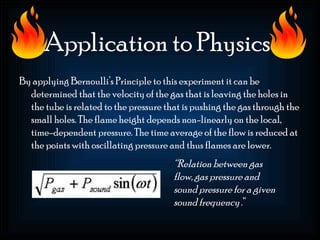
The Rubens' Tube experiment uses a tube with holes lined with gas flames to visually demonstrate standing sound waves, with the varying heights of the flames corresponding to areas of high and low pressure caused by the interference of sound waves traveling through the tube. Named after its inventor, German physicist Heinrich Rubens, the tube applies Bernoulli's principle relating gas pressure and velocity to show how pressure nodes and antinodes from standing waves create differing flame heights.