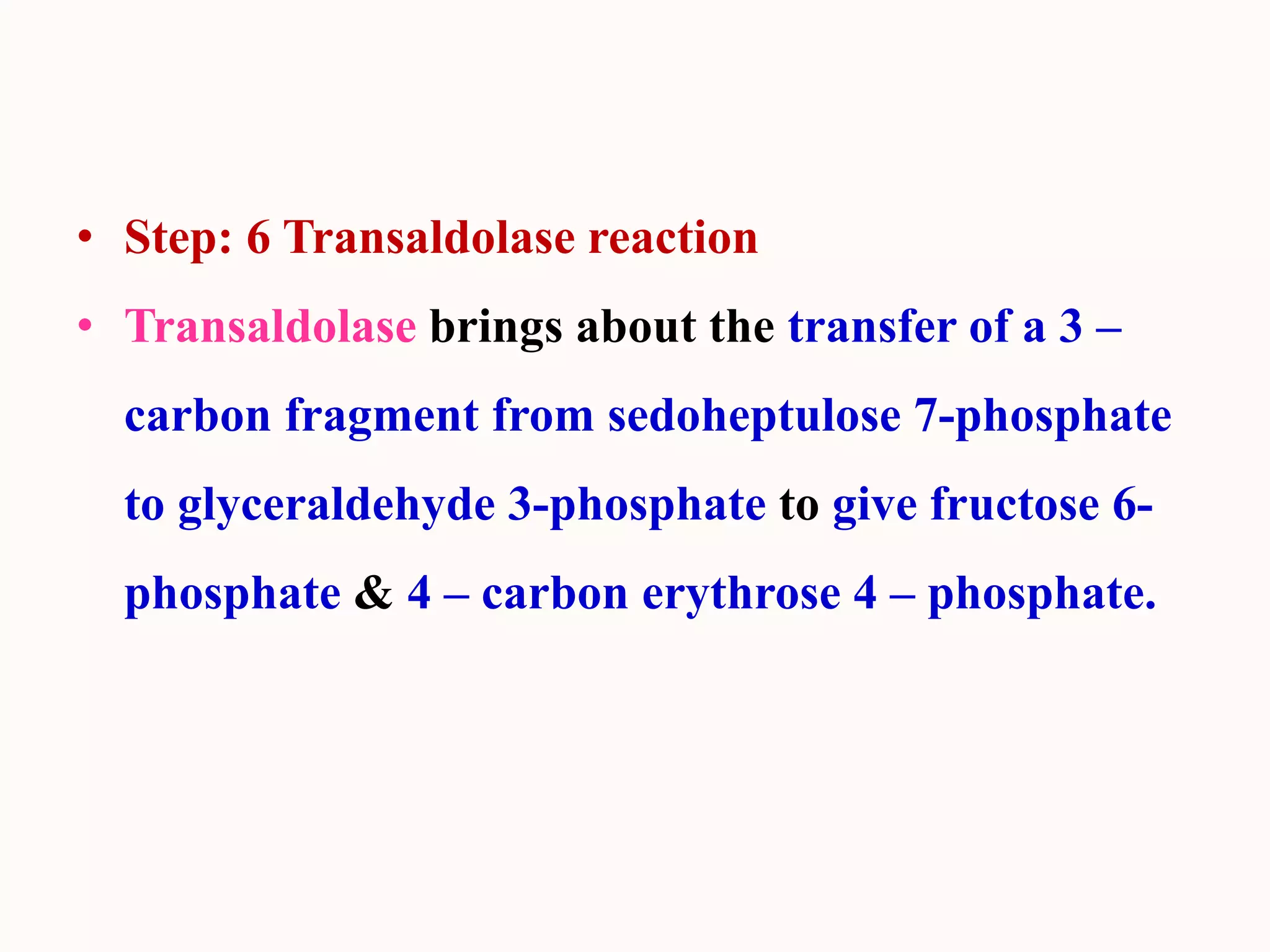
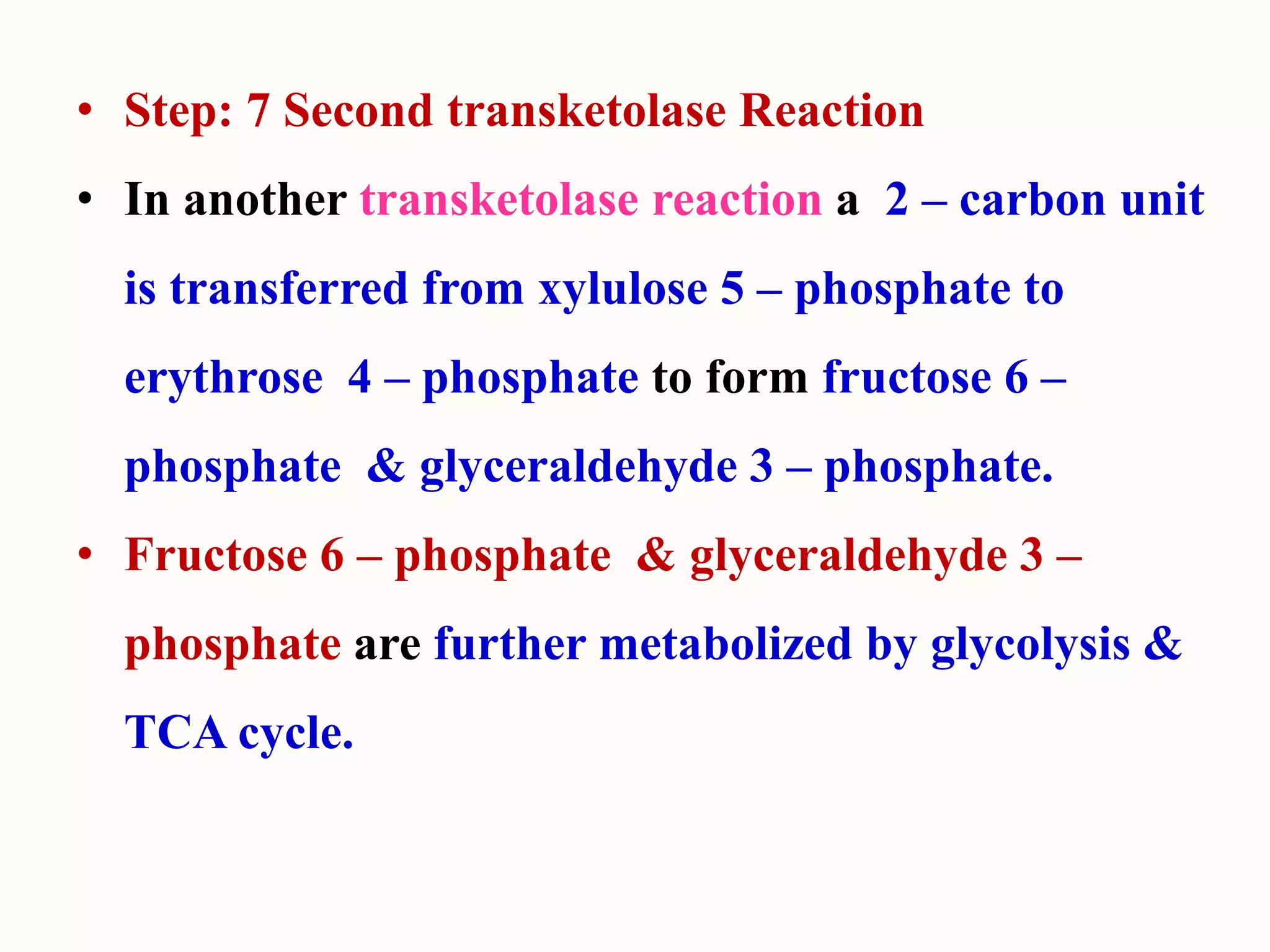
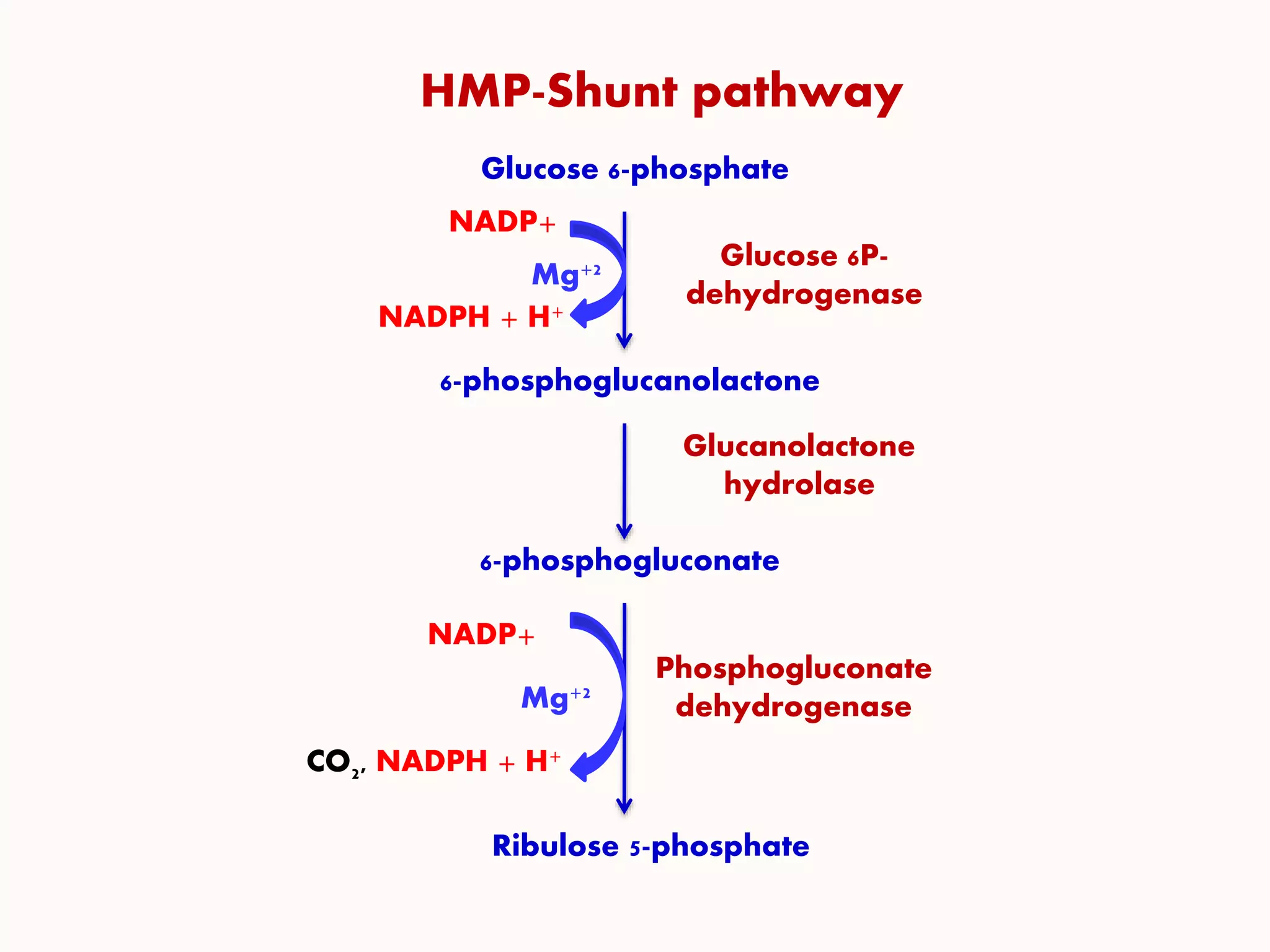
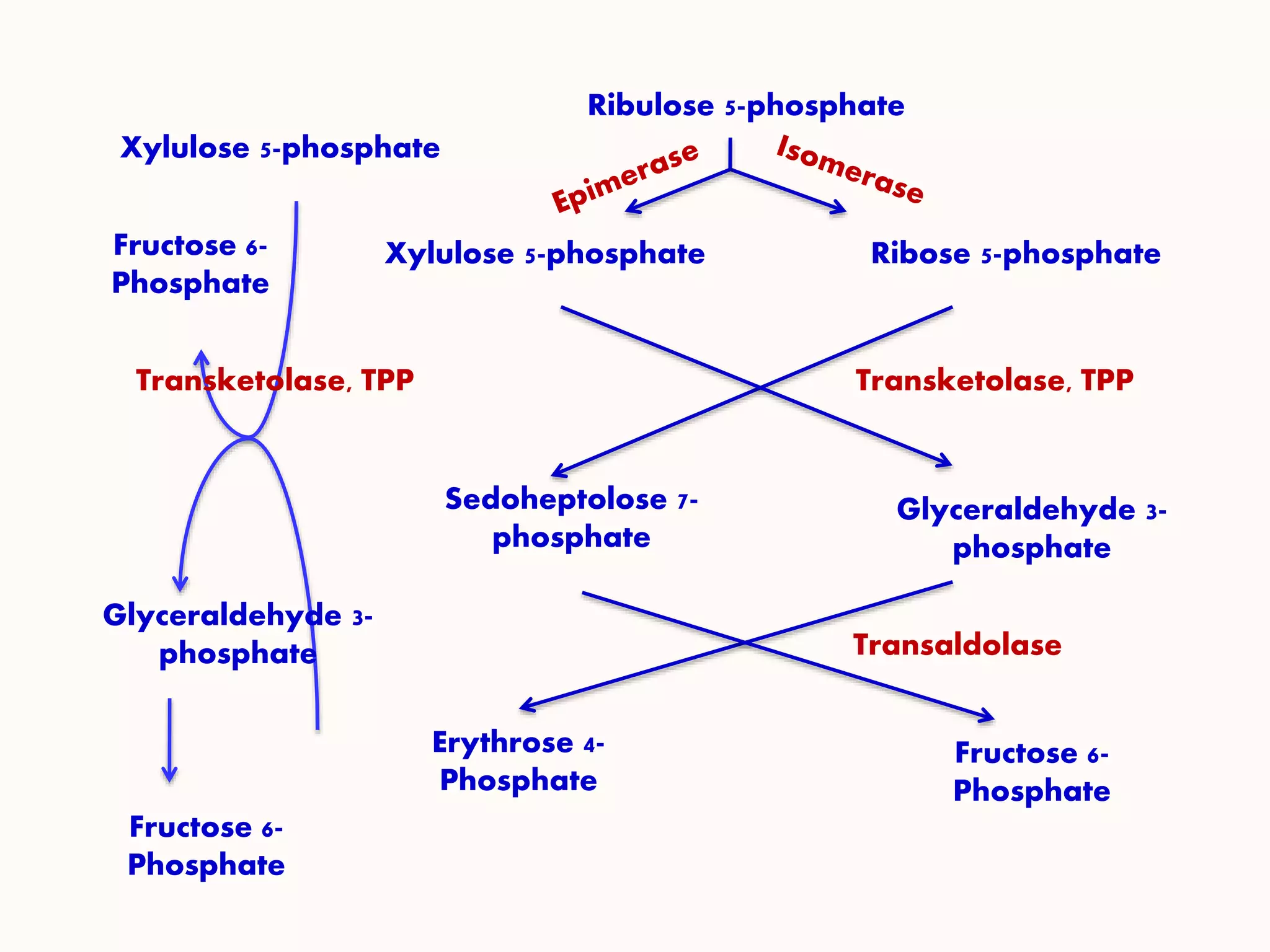
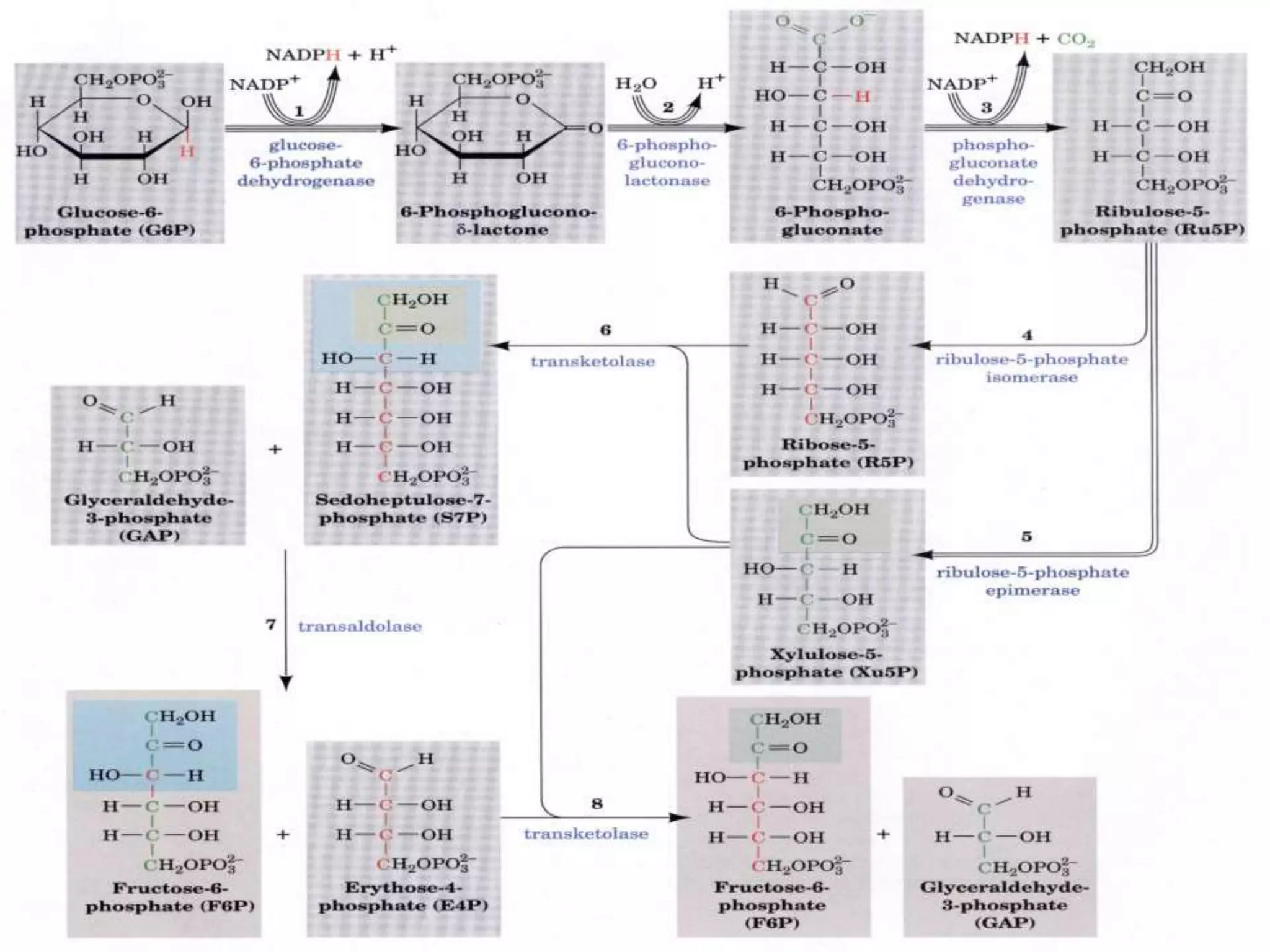
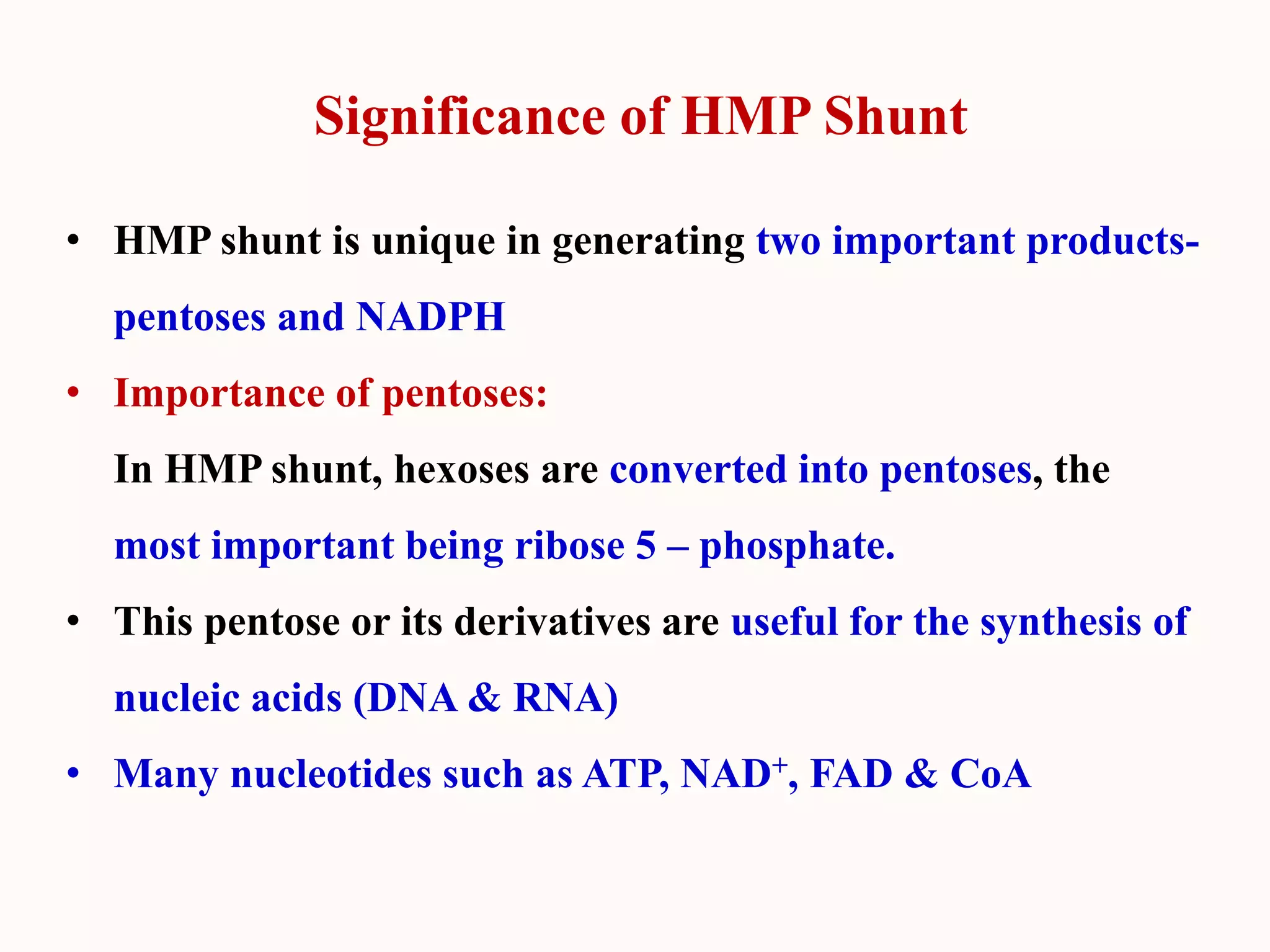
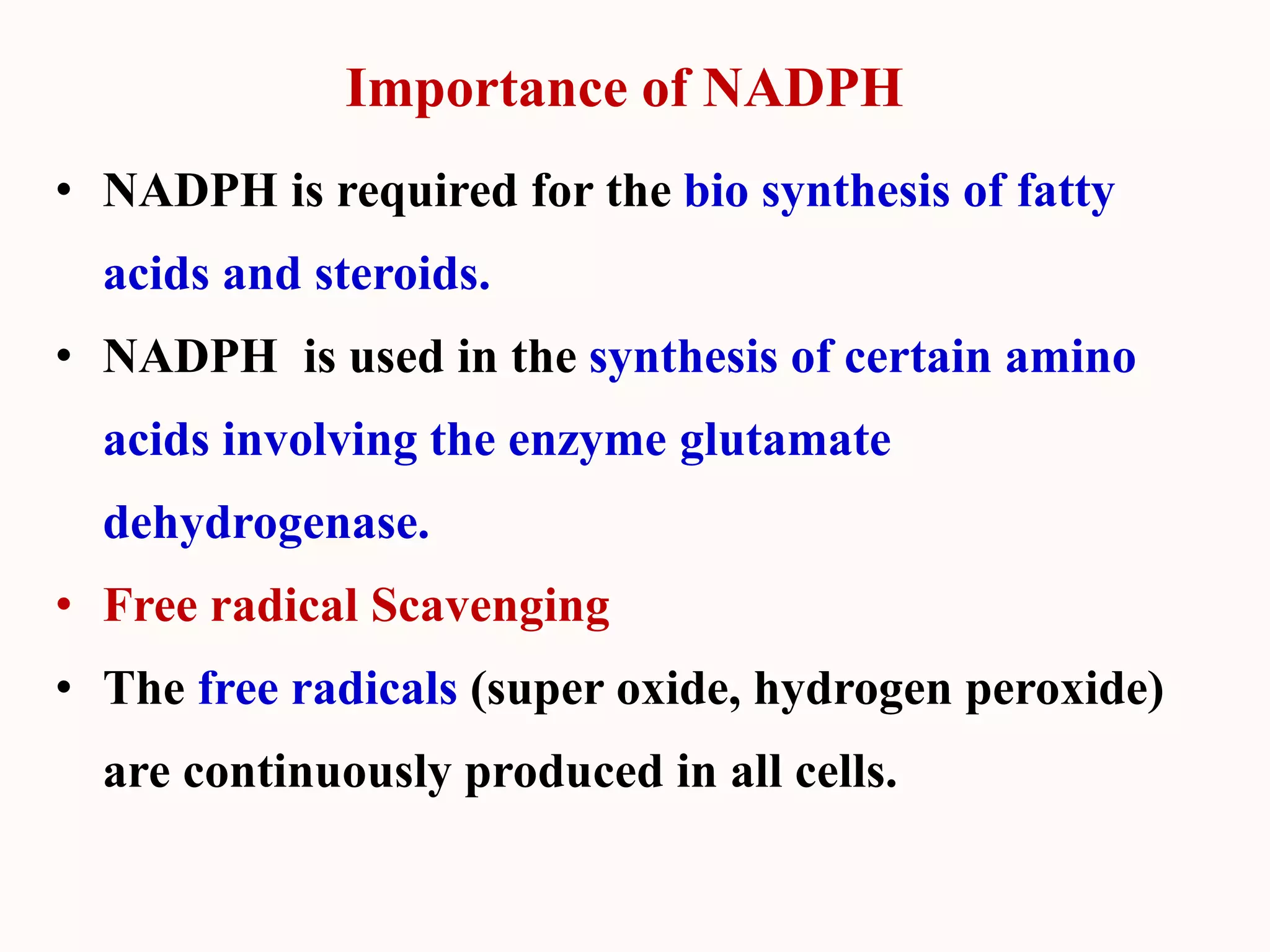
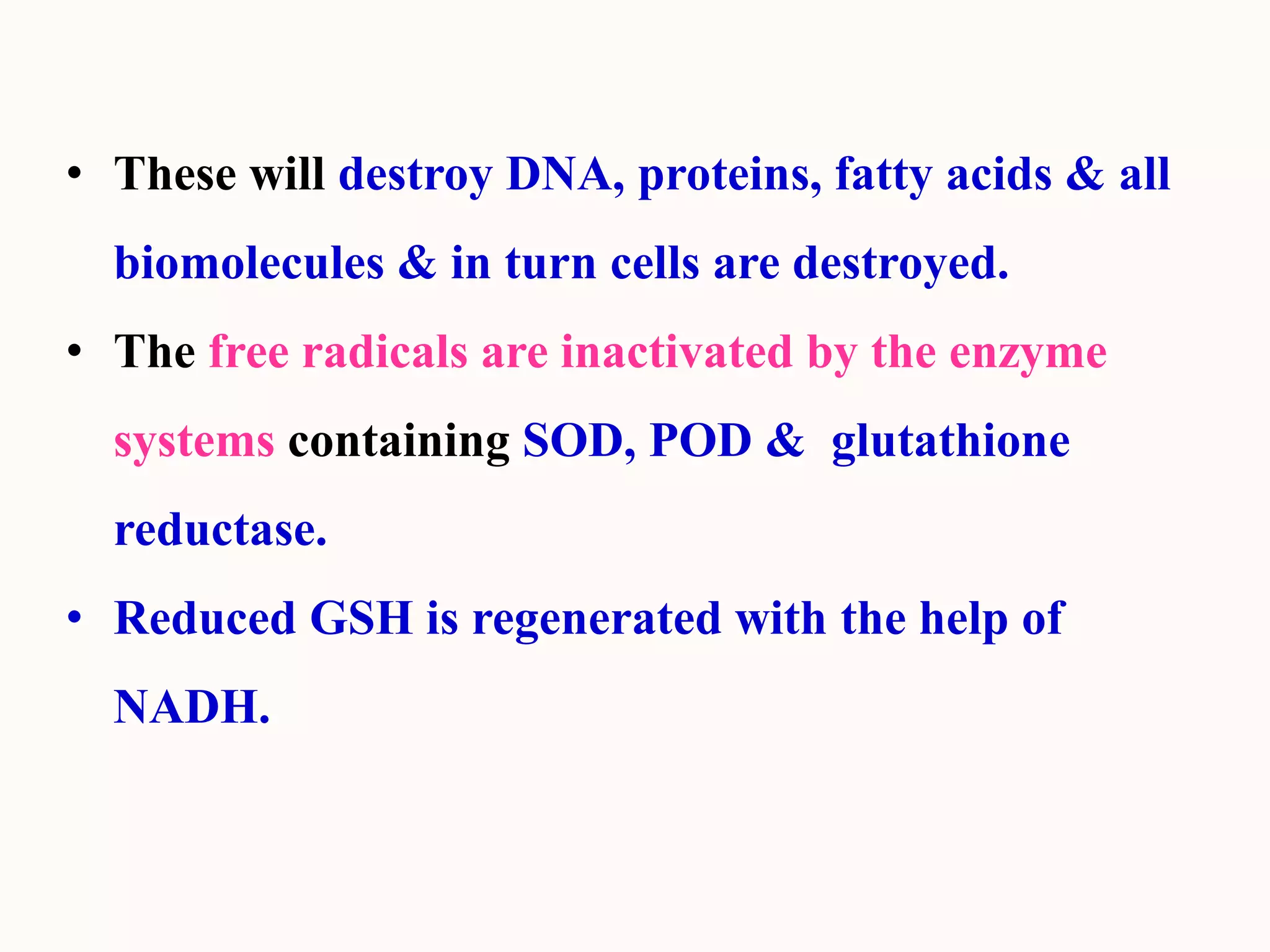
The HMP shunt, also known as the pentose phosphate pathway or phosphogluconate pathway, is an alternative pathway to glycolysis and the TCA cycle for glucose oxidation. It is more anabolic in nature and concerned with biosynthesis of NADPH and pentoses. Approximately 10% of glucose enters this pathway daily, with the liver and RBCs metabolizing around 30% of glucose through this pathway. The HMP shunt occurs in the cytosol and generates NADPH and pentoses like ribose-5-phosphate, which are important for lipid, steroid, and nucleic acid synthesis. No ATP is directly utilized or produced in the HMP shunt.