DIFFUSE TOXIC
&
ENDEMIC GOITER
 This disease is an autoimmune nature
characterised by overproduction of thyroid
hormoneby the thyroid gland and the
development of thyrotoxicosis with damage to
many organs and symptoms,espicially the
nervous and cardiovascular system.
 CLASSIFICATION:-
diffuse goiter
multi-noduler goiter
Solitary noduler goiter
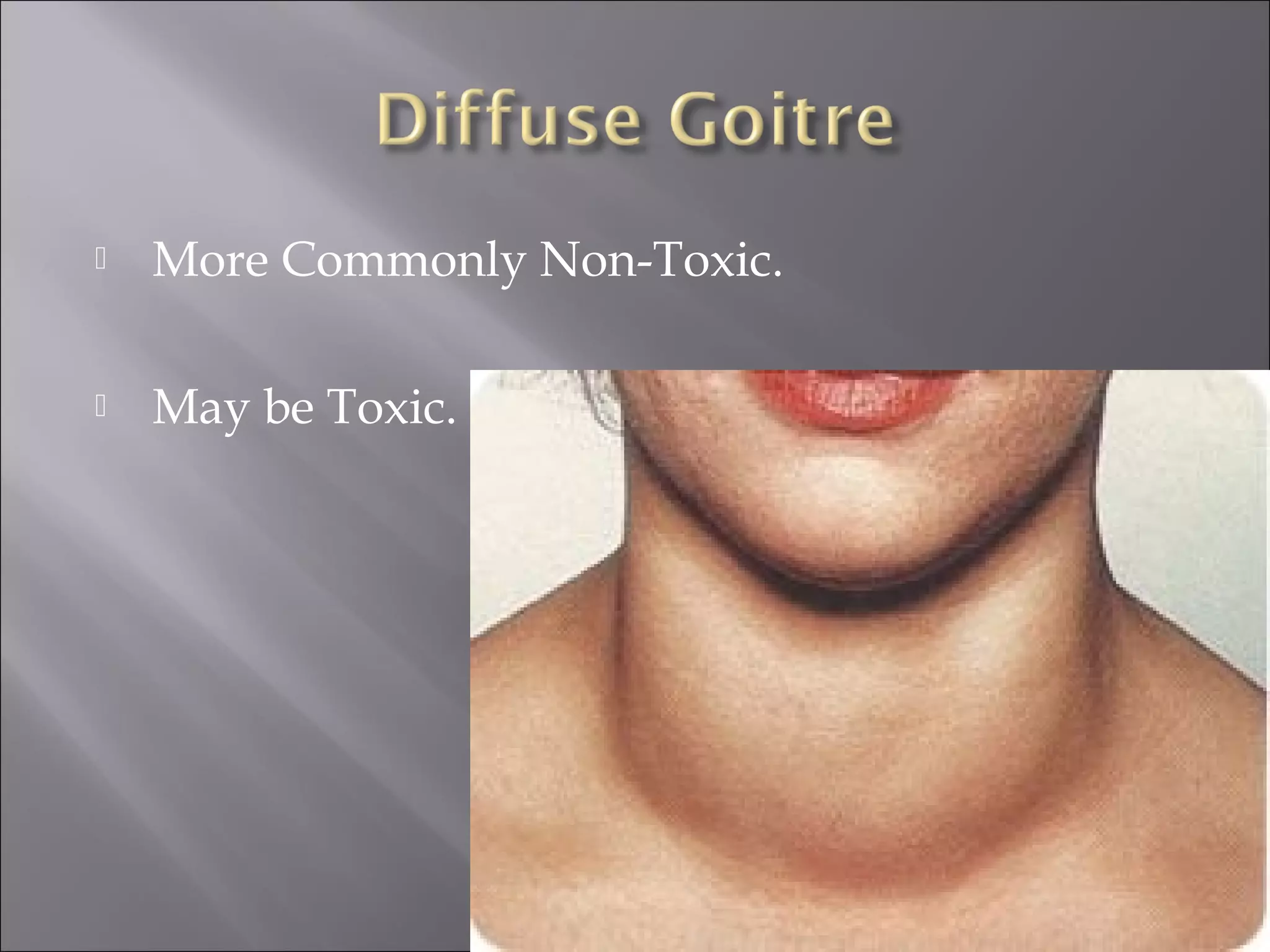
 More Commonly Non-Toxic.
 May be Toxic.
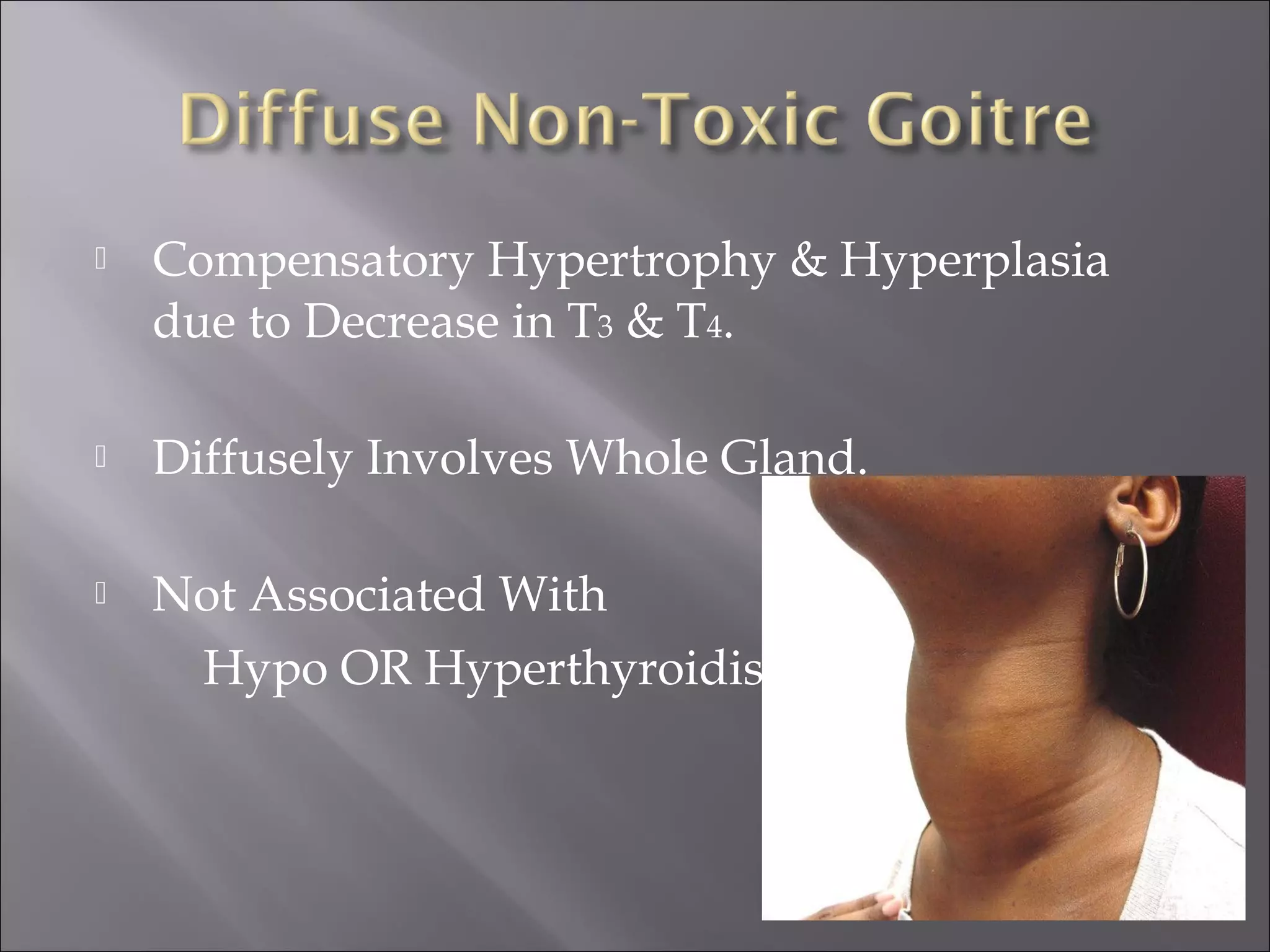
 Compensatory Hypertrophy & Hyperplasia
due to Decrease in T3 & T4.
 Diffusely Involves Whole Gland.
 Not Associated With
Hypo OR Hyperthyroidism.
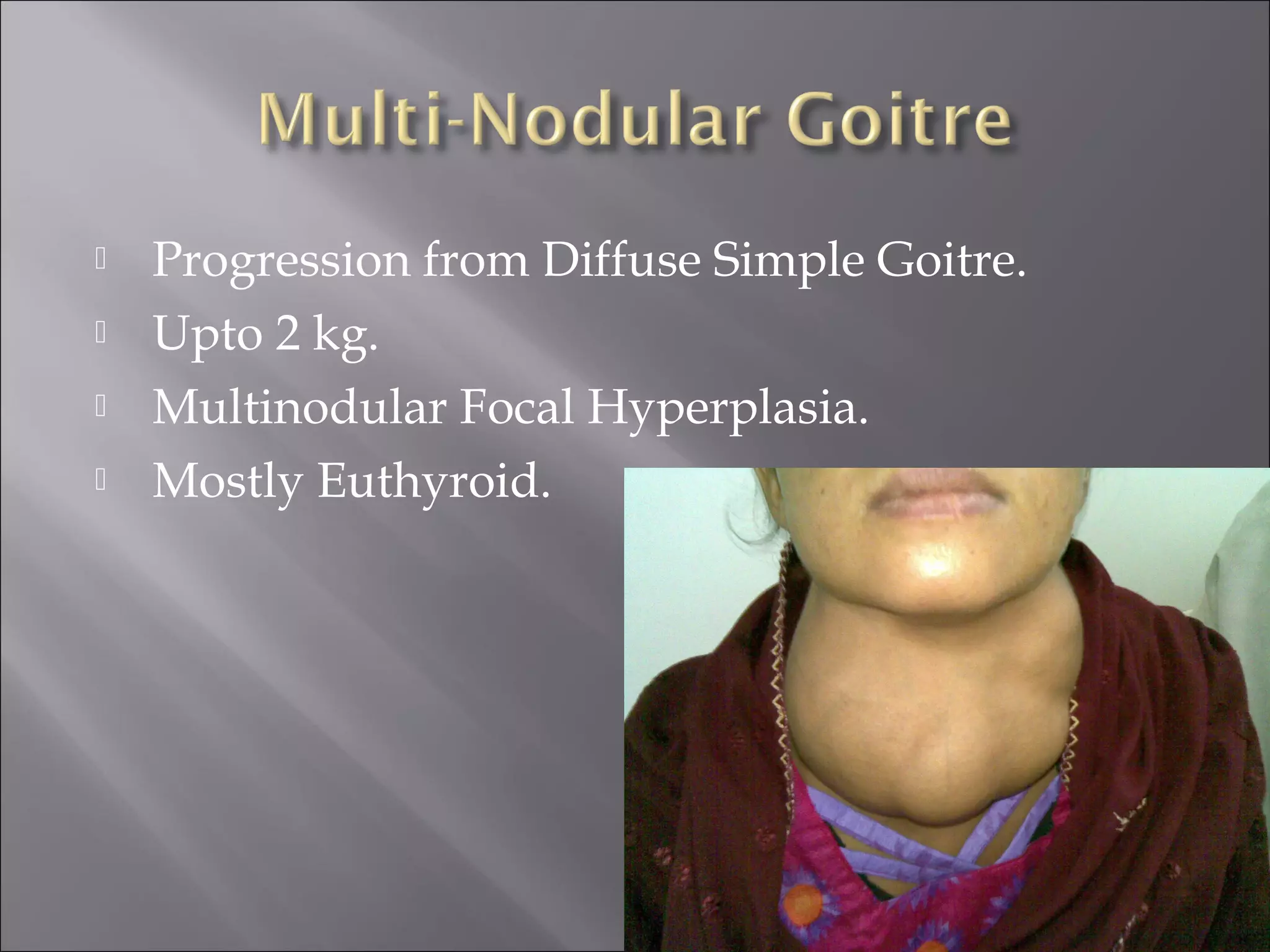
 Progression from Diffuse Simple Goitre.
 Upto 2 kg.
 Multinodular Focal Hyperplasia.
 Mostly Euthyroid.
 Physiological Goitre:
 Puberty OR Pregnancy.
 Dietary Iodine Deficiency:
 In Areas Far From Sea.
 Dietary Goitrous Agents:
 Cabbage & Turnips.
 Calcium or Flouride in water.
 PAS, Lithium, Phenylbutazone, Thiouracil,
Carbimazol.
 Hereditary.
 Treated Graves’ Disease.
 Rare Cause:
 Lymphoma.
 Anaplastic.
 Thyroiditis (Autoimmune or de-Quervain’s).
 Amyloidosis.
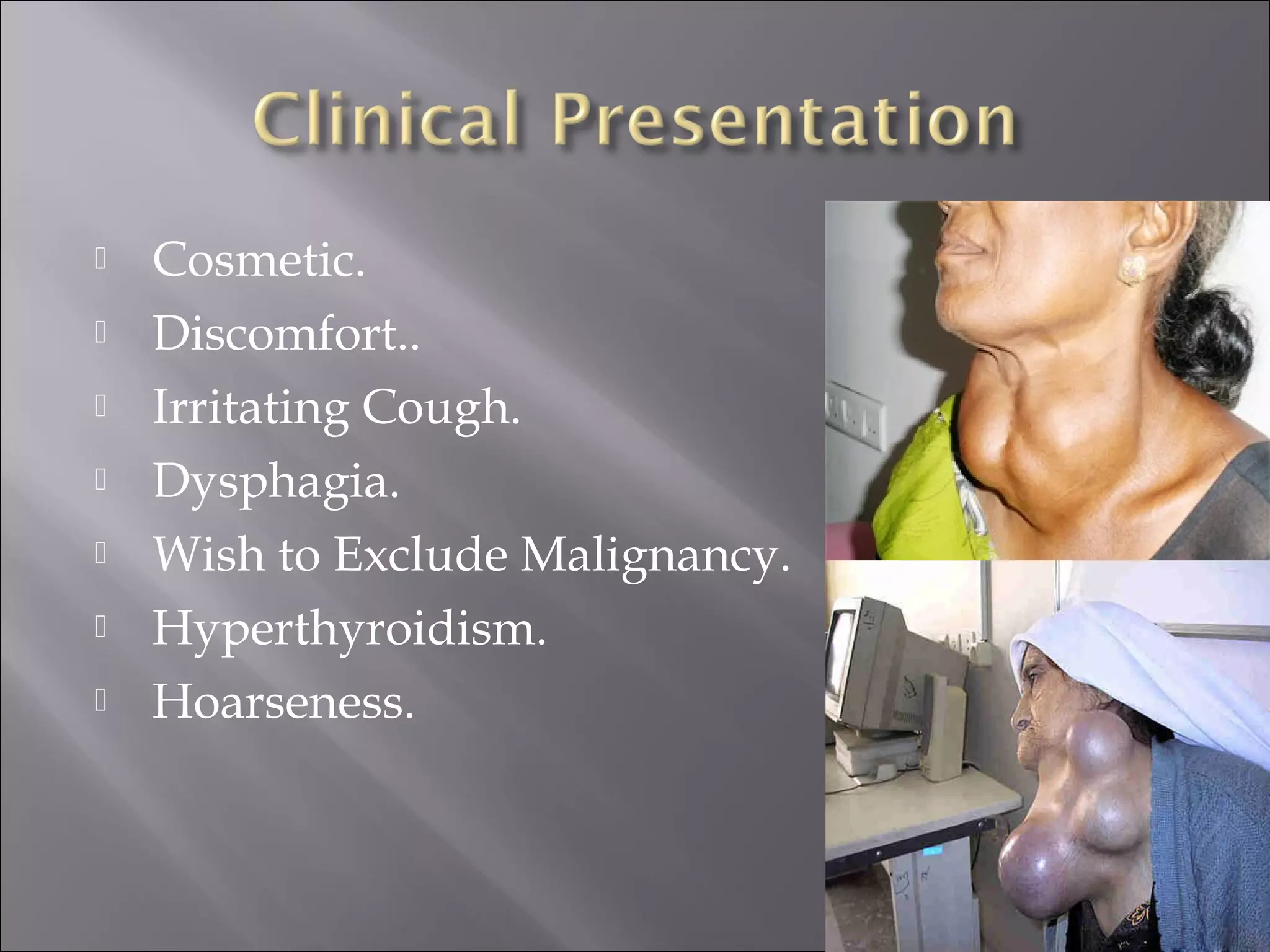
 Cosmetic.
 Discomfort..
 Irritating Cough.
 Dysphagia.
 Wish to Exclude Malignancy.
 Hyperthyroidism.
 Hoarseness.
 Most Sensible & Universal Investigations;
 Ultrasound.
 FNAC.
 Medical:
 Thyroxine.
 Surgery:
 Total Thyroidectomy.
 Near-Total Thyroidectomy.
 Small:
 No Treatment.
 Reassurance.
 Iodine Support.
 Large/Pressure Symptoms OR Cosmesis:
 Near-Total Thyroidectomy.
 This disease is accompined by a progressive
increase in the thyroid gland with subsequent
reduction of its functions.
endemic goiter is observed in people living in
areas of iodine deficency in the
environment,espicially in soil and water.
 Lack of iodine in food due to a lack of its in the
soil and water.
 SYMPTOMATOLOGY:-
 diffuse or noduler thyroid enlargement.
 feeling difficulty during swaloing.
 severe cases mental decline.
 difficulty to turn head.
 cardiovasculer system distrabences.
 PALPATION:-
0 -no goiter (visually and by
palpation)
1 –determined on palpation
2 – determined visually by palpation.
Levels of thyroid hormone:-
t4,t3 and TSH above normal.
 The use of thyroid drugs in theraputic doses
 Treatment of hypothyroidism
 Surgery(subtotal resection of the thyroid gland)
 PREVENTION:-
 Providing the population with iodized salt and
iodised food
 Drug(thyroid drug in small doses)

diffuse toxic & endemic goiter

  • 1.
  • 3.
     This diseaseis an autoimmune nature characterised by overproduction of thyroid hormoneby the thyroid gland and the development of thyrotoxicosis with damage to many organs and symptoms,espicially the nervous and cardiovascular system.  CLASSIFICATION:- diffuse goiter multi-noduler goiter Solitary noduler goiter
  • 4.
     More CommonlyNon-Toxic.  May be Toxic.
  • 5.
     Compensatory Hypertrophy& Hyperplasia due to Decrease in T3 & T4.  Diffusely Involves Whole Gland.  Not Associated With Hypo OR Hyperthyroidism.
  • 6.
     Progression fromDiffuse Simple Goitre.  Upto 2 kg.  Multinodular Focal Hyperplasia.  Mostly Euthyroid.
  • 7.
     Physiological Goitre: Puberty OR Pregnancy.  Dietary Iodine Deficiency:  In Areas Far From Sea.  Dietary Goitrous Agents:  Cabbage & Turnips.  Calcium or Flouride in water.  PAS, Lithium, Phenylbutazone, Thiouracil, Carbimazol.
  • 8.
     Hereditary.  TreatedGraves’ Disease.  Rare Cause:  Lymphoma.  Anaplastic.  Thyroiditis (Autoimmune or de-Quervain’s).  Amyloidosis.
  • 9.
     Cosmetic.  Discomfort.. Irritating Cough.  Dysphagia.  Wish to Exclude Malignancy.  Hyperthyroidism.  Hoarseness.
  • 10.
     Most Sensible& Universal Investigations;  Ultrasound.  FNAC.
  • 11.
     Medical:  Thyroxine. Surgery:  Total Thyroidectomy.  Near-Total Thyroidectomy.
  • 12.
     Small:  NoTreatment.  Reassurance.  Iodine Support.  Large/Pressure Symptoms OR Cosmesis:  Near-Total Thyroidectomy.
  • 13.
     This diseaseis accompined by a progressive increase in the thyroid gland with subsequent reduction of its functions. endemic goiter is observed in people living in areas of iodine deficency in the environment,espicially in soil and water.
  • 14.
     Lack ofiodine in food due to a lack of its in the soil and water.  SYMPTOMATOLOGY:-  diffuse or noduler thyroid enlargement.  feeling difficulty during swaloing.  severe cases mental decline.  difficulty to turn head.  cardiovasculer system distrabences.
  • 15.
     PALPATION:- 0 -nogoiter (visually and by palpation) 1 –determined on palpation 2 – determined visually by palpation. Levels of thyroid hormone:- t4,t3 and TSH above normal.
  • 16.
     The useof thyroid drugs in theraputic doses  Treatment of hypothyroidism  Surgery(subtotal resection of the thyroid gland)  PREVENTION:-  Providing the population with iodized salt and iodised food  Drug(thyroid drug in small doses)