Nutrigenomics: New Directions
for Disease Prevention and
Health Promotion
Presented by-
Razib Datta Shubhra,
Exam Roll - 110520,
Reg. No.- 30685.
Nutrigenomics ???
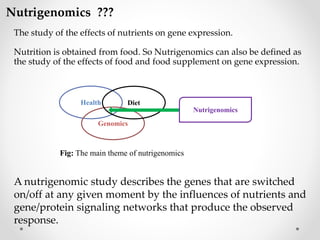
The study of the effects of nutrients on gene expression.
Nutrition is obtained from food. So Nutrigenomics can also be defined as
the study of the effects of food and food supplement on gene expression.
Health
Genomics
Diet
Nutrigenomics
Fig: The main theme of nutrigenomics
A nutrigenomic study describes the genes that are switched
on/off at any given moment by the influences of nutrients and
gene/protein signaling networks that produce the observed
response.
Food/
Nutrients
Genome
Nutrigenomics (Gene Expression)
Nutrigenetics (Genetic Variation)
The effect of diet on gene expression
The effects of individual’s genetic variations to diet
Interaction of diet-genome
Fig: The understanding of genomic approaches in nutrigenetics and nutrigenomics
Nutrigenomics research for disease prevention and health
promotion also depends on some other topics
1. Nutrigenetics
2. Single Nucleotide Polymorphism (SNP)
The complex interactions between genetics, diet and disease are also
depends on SNP. Nutrigenetics can identify specific polymorphisms
linked to altered risk of disease or sensitivity to diet. This is important
for personalized nutrition therapy.
3. Biomarkers and Metabolomics
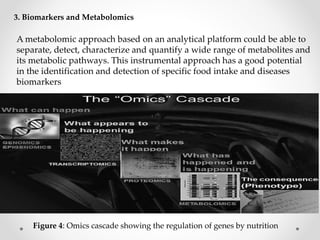
Figure 4: Omics cascade showing the regulation of genes by nutrition
A metabolomic approach based on an analytical platform could be able to
separate, detect, characterize and quantify a wide range of metabolites and
its metabolic pathways. This instrumental approach has a good potential
in the identification and detection of specific food intake and diseases
biomarkers
4. Genetic test involved in nutrigenomics
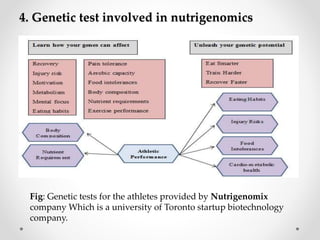
Fig: Genetic tests for the athletes provided by Nutrigenomix
company Which is a university of Toronto startup biotechnology
company.
Disease Prevention
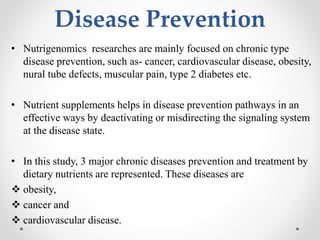
• Nutrigenomics researches are mainly focused on chronic type
disease prevention, such as- cancer, cardiovascular disease, obesity,
nural tube defects, muscular pain, type 2 diabetes etc.
• Nutrient supplements helps in disease prevention pathways in an
effective ways by deactivating or misdirecting the signaling system
at the disease state.
• In this study, 3 major chronic diseases prevention and treatment by
dietary nutrients are represented. These diseases are
 obesity,
 cancer and
 cardiovascular disease.
Obesity
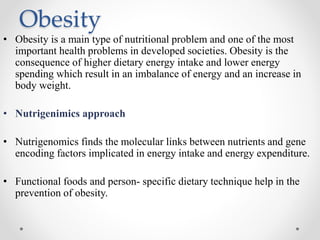
• Obesity is a main type of nutritional problem and one of the most
important health problems in developed societies. Obesity is the
consequence of higher dietary energy intake and lower energy
spending which result in an imbalance of energy and an increase in
body weight.
• Nutrigenimics approach
• Nutrigenomics finds the molecular links between nutrients and gene
encoding factors implicated in energy intake and energy expenditure.
• Functional foods and person- specific dietary technique help in the
prevention of obesity.
Cancer
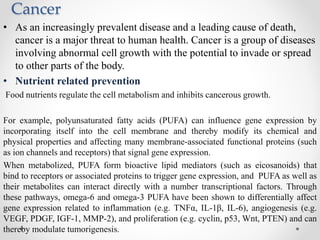
• As an increasingly prevalent disease and a leading cause of death,
cancer is a major threat to human health. Cancer is a group of diseases
involving abnormal cell growth with the potential to invade or spread
to other parts of the body.
• Nutrient related prevention
Food nutrients regulate the cell metabolism and inhibits cancerous growth.
For example, polyunsaturated fatty acids (PUFA) can influence gene expression by
incorporating itself into the cell membrane and thereby modify its chemical and
physical properties and affecting many membrane-associated functional proteins (such
as ion channels and receptors) that signal gene expression.
When metabolized, PUFA form bioactive lipid mediators (such as eicosanoids) that
bind to receptors or associated proteins to trigger gene expression, and PUFA as well as
their metabolites can interact directly with a number transcriptional factors. Through
these pathways, omega-6 and omega-3 PUFA have been shown to differentially affect
gene expression related to inflammation (e.g. TNFα, IL-1β, IL-6), angiogenesis (e.g.
VEGF, PDGF, IGF-1, MMP-2), and proliferation (e.g. cyclin, p53, Wnt, PTEN) and can
thereby modulate tumorigenesis.
Cardiovascular Disease
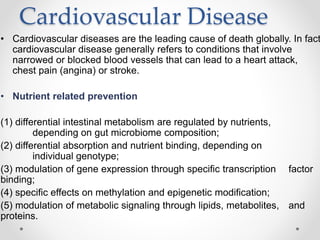
• Cardiovascular diseases are the leading cause of death globally. In fact
cardiovascular disease generally refers to conditions that involve
narrowed or blocked blood vessels that can lead to a heart attack,
chest pain (angina) or stroke.
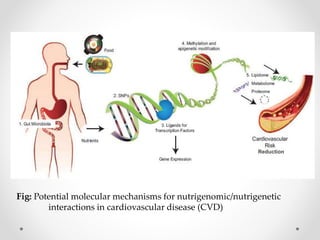
• Nutrient related prevention
(1) differential intestinal metabolism are regulated by nutrients,
depending on gut microbiome composition;
(2) differential absorption and nutrient binding, depending on
individual genotype;
(3) modulation of gene expression through specific transcription factor
binding;
(4) specific effects on methylation and epigenetic modification;
(5) modulation of metabolic signaling through lipids, metabolites, and
proteins.
Fig: Potential molecular mechanisms for nutrigenomic/nutrigenetic
interactions in cardiovascular disease (CVD)
Reduction
Health promotion and Personalized Nutrition
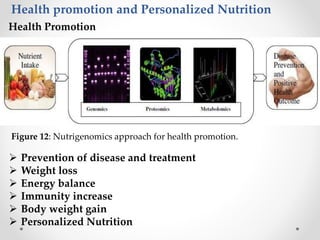
Health Promotion
Figure 12: Nutrigenomics approach for health promotion.
 Prevention of disease and treatment
 Weight loss
 Energy balance
 Immunity increase
 Body weight gain
 Personalized Nutrition
Ethical concerns in Nutrigenomics
To identify disease susceptibilities and diagnosis, nutrigenomics
research uses genetic test. many companies commercially perform this
genetic test whose results are provided to patients. This tests are also
refered to as direct to customer (DTC) genetics tests. This evolves
some ethical concerns....
 Regulatory concern
 Privacy
 Unethical medical claims
 Validity of nutrigenomic tests
 Emotional distress of consumers
Nutrigenomics Perspective in Bangladesh
• Unconsiousness and knowledge deficiency
• High cost of the genetic test
• Poor socio-economic development
• Cultural effect
• Lack of research
• Lack of laboratory facilities
Future aspects of nutrigenomics in Bangladesh
• Genetic test provider
• Test result counselor
• Diet plan provider
• Equipment and research facility supplier
Thank You

Nutrigenomics

  • 1.
    Nutrigenomics: New Directions forDisease Prevention and Health Promotion Presented by- Razib Datta Shubhra, Exam Roll - 110520, Reg. No.- 30685.
  • 2.
    Nutrigenomics ??? The studyof the effects of nutrients on gene expression. Nutrition is obtained from food. So Nutrigenomics can also be defined as the study of the effects of food and food supplement on gene expression. Health Genomics Diet Nutrigenomics Fig: The main theme of nutrigenomics A nutrigenomic study describes the genes that are switched on/off at any given moment by the influences of nutrients and gene/protein signaling networks that produce the observed response.
  • 3.
    Food/ Nutrients Genome Nutrigenomics (Gene Expression) Nutrigenetics(Genetic Variation) The effect of diet on gene expression The effects of individual’s genetic variations to diet Interaction of diet-genome Fig: The understanding of genomic approaches in nutrigenetics and nutrigenomics Nutrigenomics research for disease prevention and health promotion also depends on some other topics 1. Nutrigenetics 2. Single Nucleotide Polymorphism (SNP) The complex interactions between genetics, diet and disease are also depends on SNP. Nutrigenetics can identify specific polymorphisms linked to altered risk of disease or sensitivity to diet. This is important for personalized nutrition therapy.
  • 4.
    3. Biomarkers andMetabolomics Figure 4: Omics cascade showing the regulation of genes by nutrition A metabolomic approach based on an analytical platform could be able to separate, detect, characterize and quantify a wide range of metabolites and its metabolic pathways. This instrumental approach has a good potential in the identification and detection of specific food intake and diseases biomarkers
  • 5.
    4. Genetic testinvolved in nutrigenomics Fig: Genetic tests for the athletes provided by Nutrigenomix company Which is a university of Toronto startup biotechnology company.
  • 6.
    Disease Prevention • Nutrigenomicsresearches are mainly focused on chronic type disease prevention, such as- cancer, cardiovascular disease, obesity, nural tube defects, muscular pain, type 2 diabetes etc. • Nutrient supplements helps in disease prevention pathways in an effective ways by deactivating or misdirecting the signaling system at the disease state. • In this study, 3 major chronic diseases prevention and treatment by dietary nutrients are represented. These diseases are  obesity,  cancer and  cardiovascular disease.
  • 7.
    Obesity • Obesity isa main type of nutritional problem and one of the most important health problems in developed societies. Obesity is the consequence of higher dietary energy intake and lower energy spending which result in an imbalance of energy and an increase in body weight. • Nutrigenimics approach • Nutrigenomics finds the molecular links between nutrients and gene encoding factors implicated in energy intake and energy expenditure. • Functional foods and person- specific dietary technique help in the prevention of obesity.
  • 8.
    Cancer • As anincreasingly prevalent disease and a leading cause of death, cancer is a major threat to human health. Cancer is a group of diseases involving abnormal cell growth with the potential to invade or spread to other parts of the body. • Nutrient related prevention Food nutrients regulate the cell metabolism and inhibits cancerous growth. For example, polyunsaturated fatty acids (PUFA) can influence gene expression by incorporating itself into the cell membrane and thereby modify its chemical and physical properties and affecting many membrane-associated functional proteins (such as ion channels and receptors) that signal gene expression. When metabolized, PUFA form bioactive lipid mediators (such as eicosanoids) that bind to receptors or associated proteins to trigger gene expression, and PUFA as well as their metabolites can interact directly with a number transcriptional factors. Through these pathways, omega-6 and omega-3 PUFA have been shown to differentially affect gene expression related to inflammation (e.g. TNFα, IL-1β, IL-6), angiogenesis (e.g. VEGF, PDGF, IGF-1, MMP-2), and proliferation (e.g. cyclin, p53, Wnt, PTEN) and can thereby modulate tumorigenesis.
  • 9.
    Cardiovascular Disease • Cardiovasculardiseases are the leading cause of death globally. In fact cardiovascular disease generally refers to conditions that involve narrowed or blocked blood vessels that can lead to a heart attack, chest pain (angina) or stroke. • Nutrient related prevention (1) differential intestinal metabolism are regulated by nutrients, depending on gut microbiome composition; (2) differential absorption and nutrient binding, depending on individual genotype; (3) modulation of gene expression through specific transcription factor binding; (4) specific effects on methylation and epigenetic modification; (5) modulation of metabolic signaling through lipids, metabolites, and proteins.
  • 10.
    Fig: Potential molecularmechanisms for nutrigenomic/nutrigenetic interactions in cardiovascular disease (CVD) Reduction
  • 11.
    Health promotion andPersonalized Nutrition Health Promotion Figure 12: Nutrigenomics approach for health promotion.  Prevention of disease and treatment  Weight loss  Energy balance  Immunity increase  Body weight gain  Personalized Nutrition
  • 12.
    Ethical concerns inNutrigenomics To identify disease susceptibilities and diagnosis, nutrigenomics research uses genetic test. many companies commercially perform this genetic test whose results are provided to patients. This tests are also refered to as direct to customer (DTC) genetics tests. This evolves some ethical concerns....  Regulatory concern  Privacy  Unethical medical claims  Validity of nutrigenomic tests  Emotional distress of consumers
  • 13.
    Nutrigenomics Perspective inBangladesh • Unconsiousness and knowledge deficiency • High cost of the genetic test • Poor socio-economic development • Cultural effect • Lack of research • Lack of laboratory facilities Future aspects of nutrigenomics in Bangladesh • Genetic test provider • Test result counselor • Diet plan provider • Equipment and research facility supplier
  • 14.