Downloaded 425 times
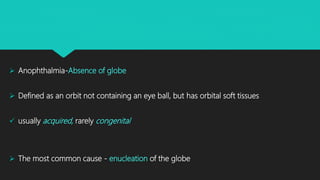
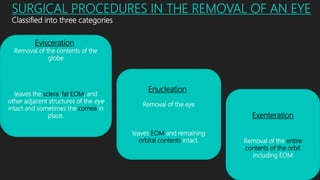
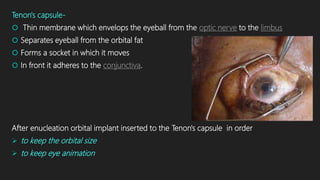
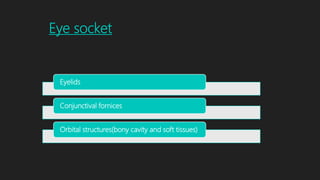
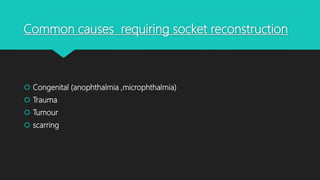
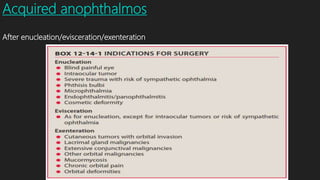
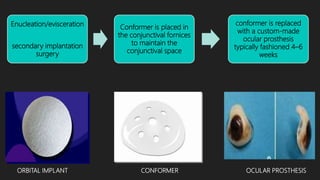
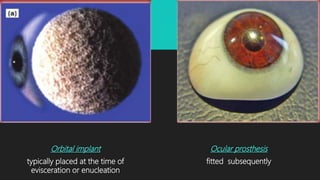
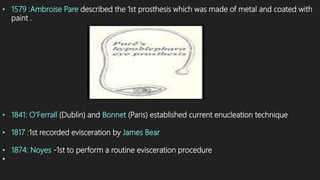
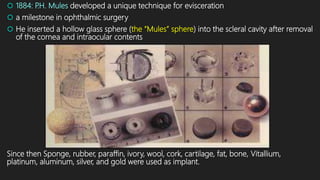
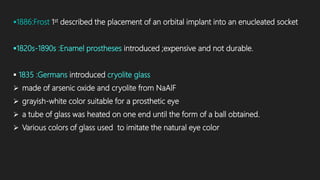
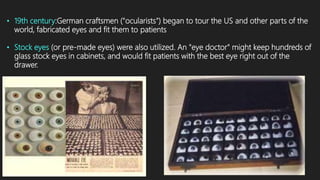
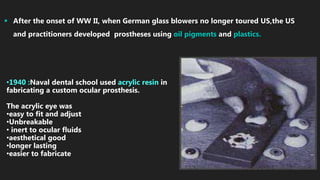
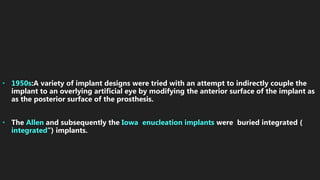
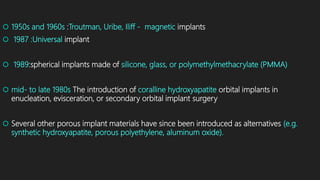
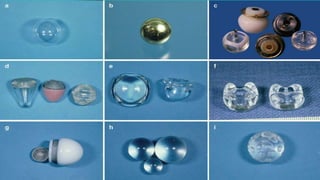
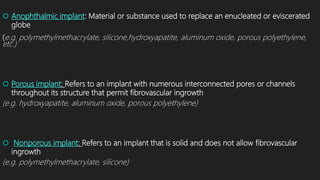
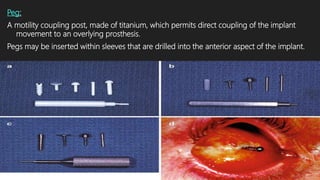
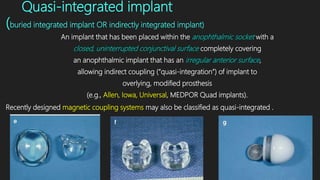
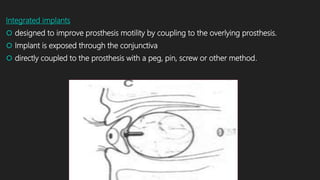
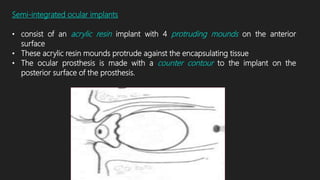
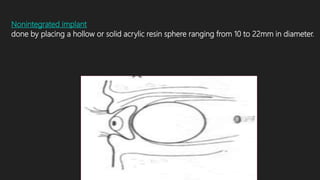
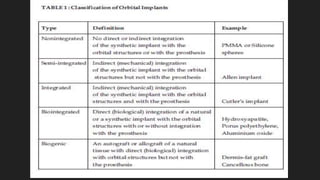
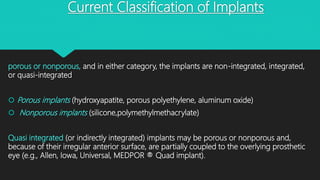
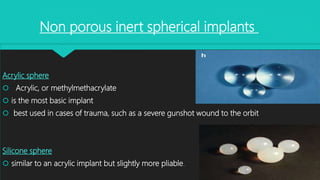
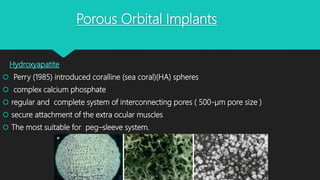
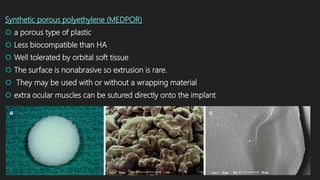
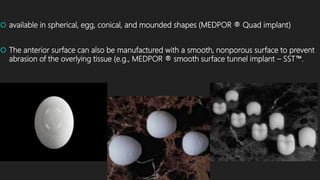
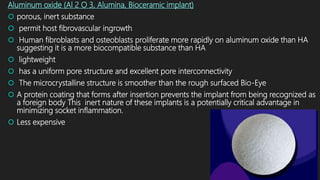
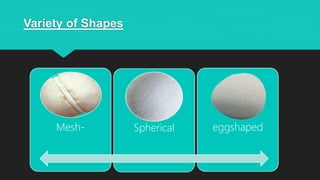
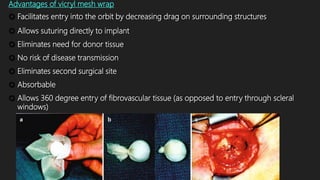
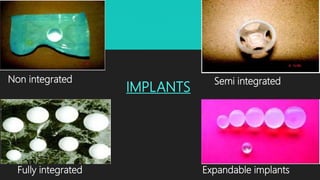
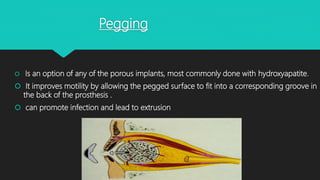
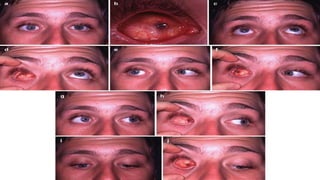
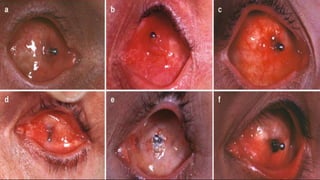
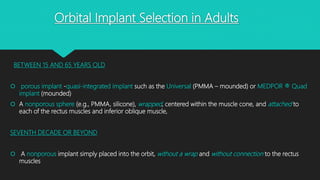
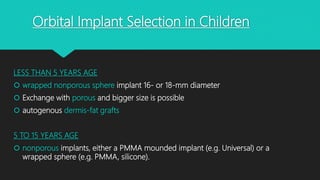
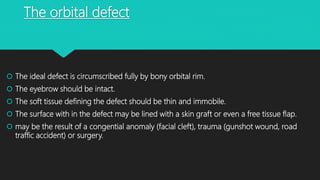
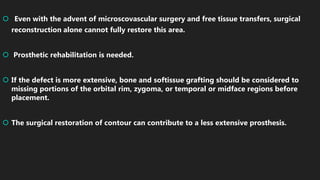
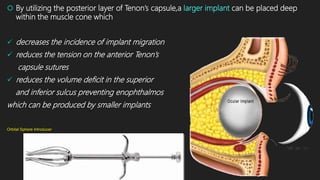
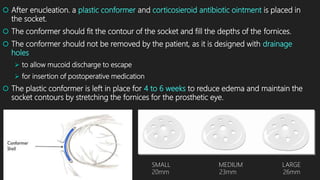
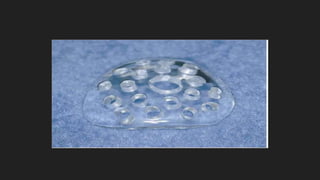
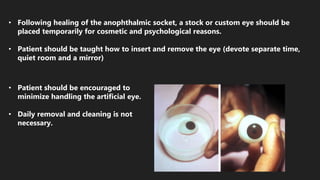
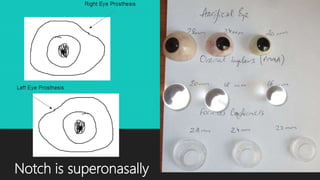
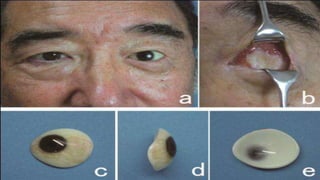
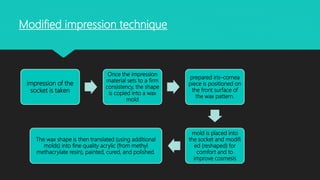
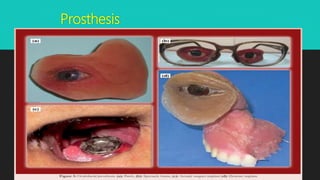
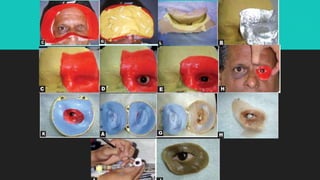
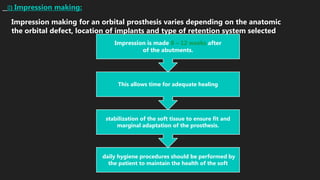
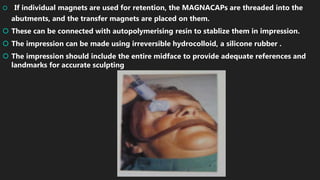
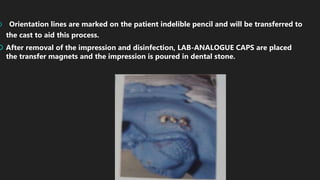
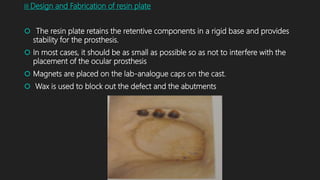


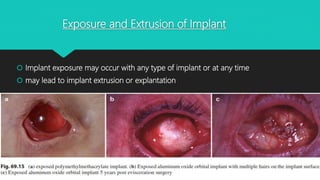
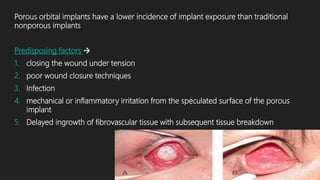
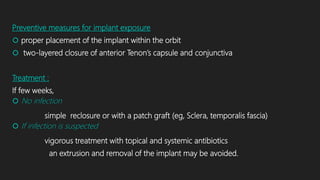
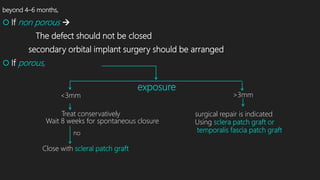
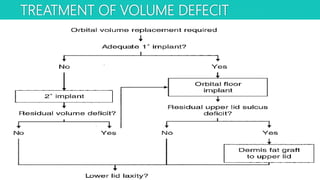
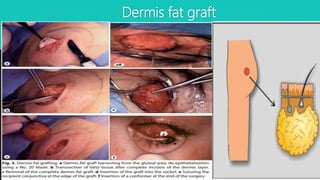
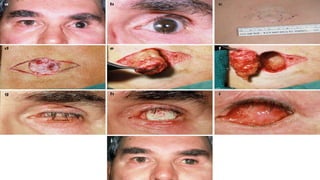
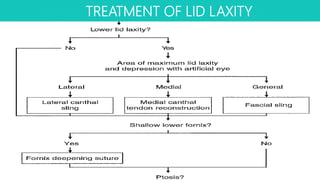
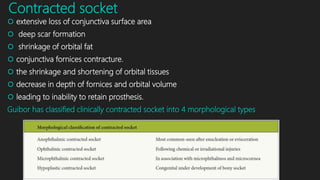
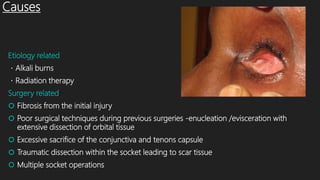
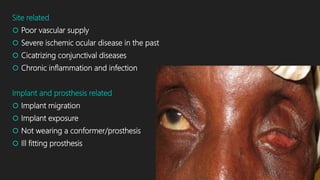
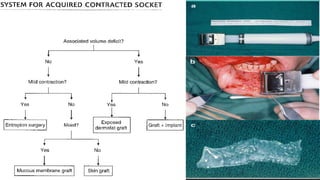


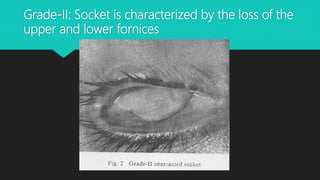
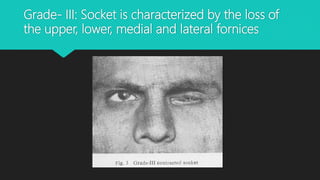
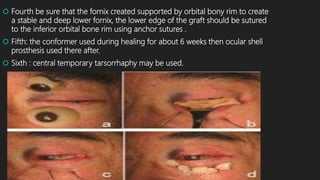
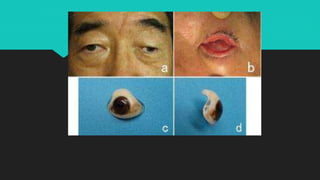


This document discusses orbital implants used to replace an eye after removal (enucleation or evisceration). It describes the history and types of implants, including porous (e.g. hydroxyapatite) and non-porous (e.g. acrylic) varieties. Porous implants allow tissue ingrowth while non-porous are inert. Integrated implants directly connect to a prosthetic eye while non-integrated are fully buried. Selection depends on factors like age and defect. The goal is a natural-appearing, comfortable socket that retains a prosthesis and transfers motility.


![CTEV [ clubfoot] DR ARUN LAL ,DR MOHAMED ASHRAF travancore medical college k...](https://cdn.slidesharecdn.com/ss_thumbnails/ctevclubfootdrarunlaldrmohamedashraftravancoremedicalcollegekollamkeralaindia-260208063247-18fc466c-thumbnail.jpg?width=640&height=640&fit=bounds)


