Presented by –
Piyush Tripathi
• Knowledge Management systems are the set of processes developed in an
organization to create, gather, store, maintain, and disseminate the firm's
knowledge.
• The major information systems that support knowledge management are
office systems, knowledge work systems, group collaboration systems,
and artificial intelligence systems
• Knowledge work systems help create and integrate new knowledge within
the organization. Knowledge management systems codify knowledge and
experience, make the collected knowledge and experience available when
and where it is needed, and provide links to external sources of
knowledge.
• Knowledge workers perform three key roles that are critical to the
organization and to the managers who work within the organization:
1.Keeping the organization current in knowledge
2.Serving as internal consultants regarding the areas of their knowledge
3.Acting as change agents
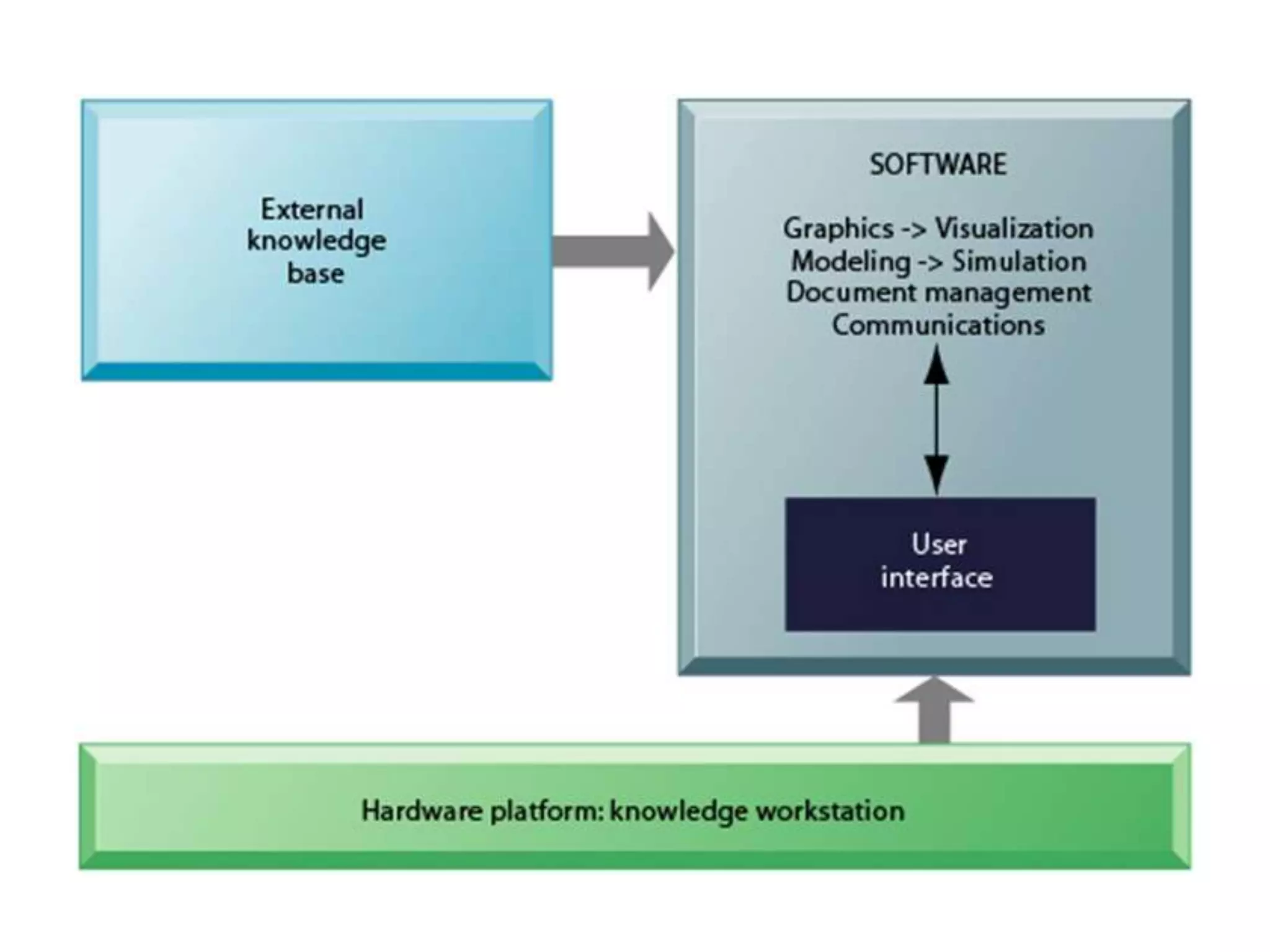
• Knowledge workers rely on traditional office systems but often require
highly specialized knowledge work systems with powerful graphics,
analytical tools, and communications and document management
capabilities.
• These systems require great computing power, access to external
databases, easy-to-use interfaces, and optimization for the specific tasks to
be performed.
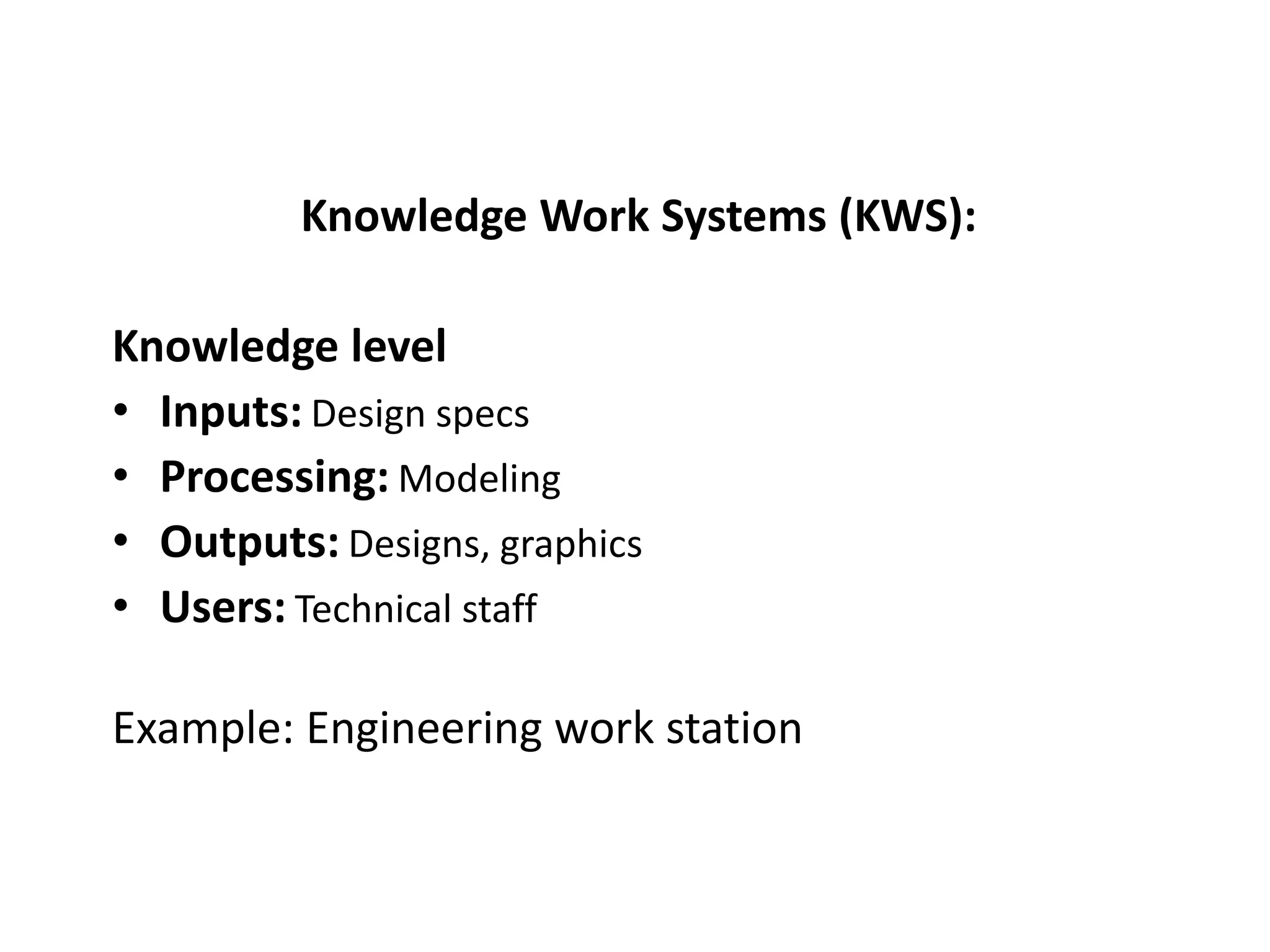
Knowledge Work Systems (KWS):
Knowledge level
• Inputs: Design specs
• Processing: Modeling
• Outputs: Designs, graphics
• Users: Technical staff
Example: Engineering work station
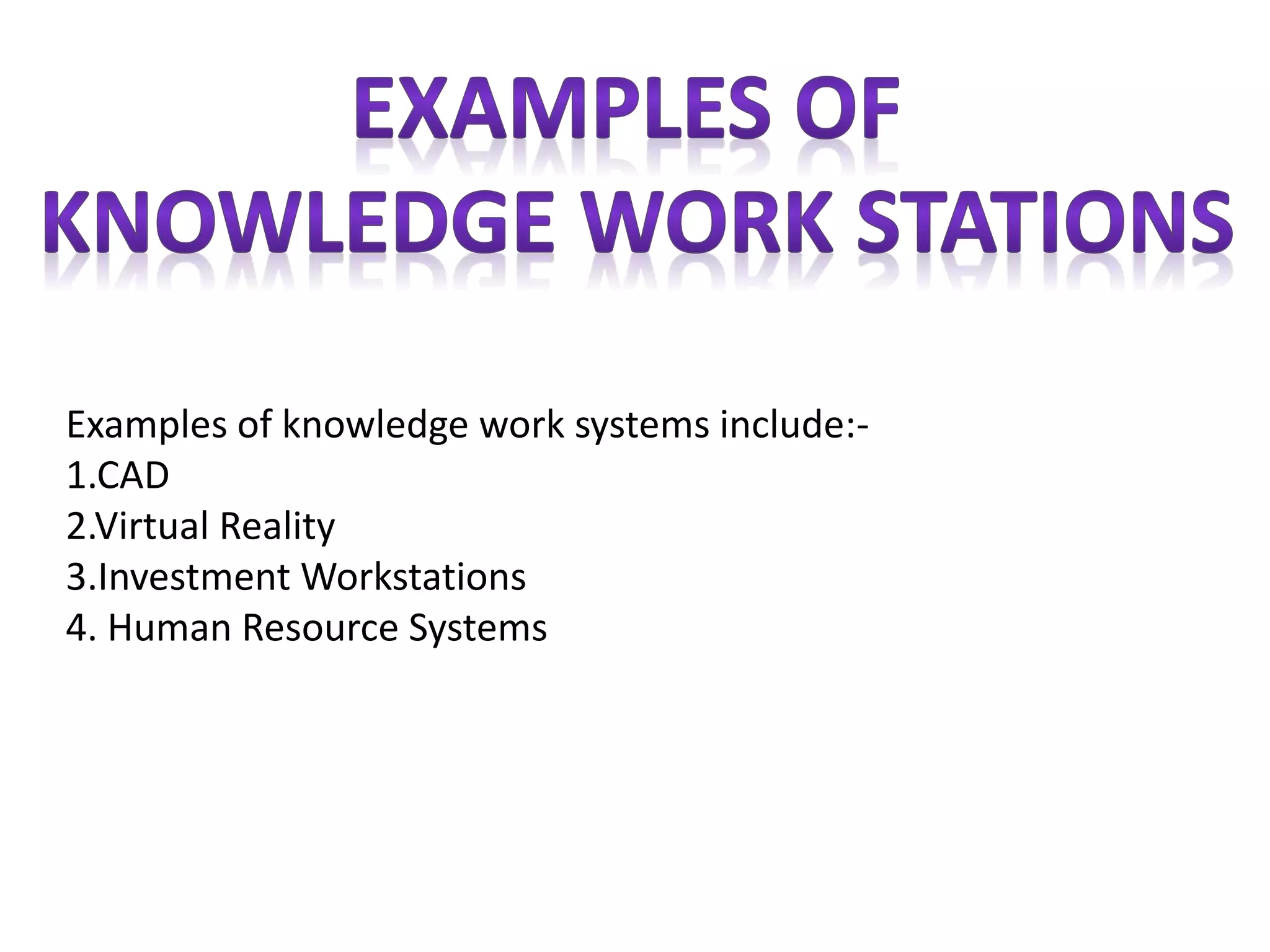
Examples of knowledge work systems include:-
1.CAD
2.Virtual Reality
3.Investment Workstations
4. Human Resource Systems
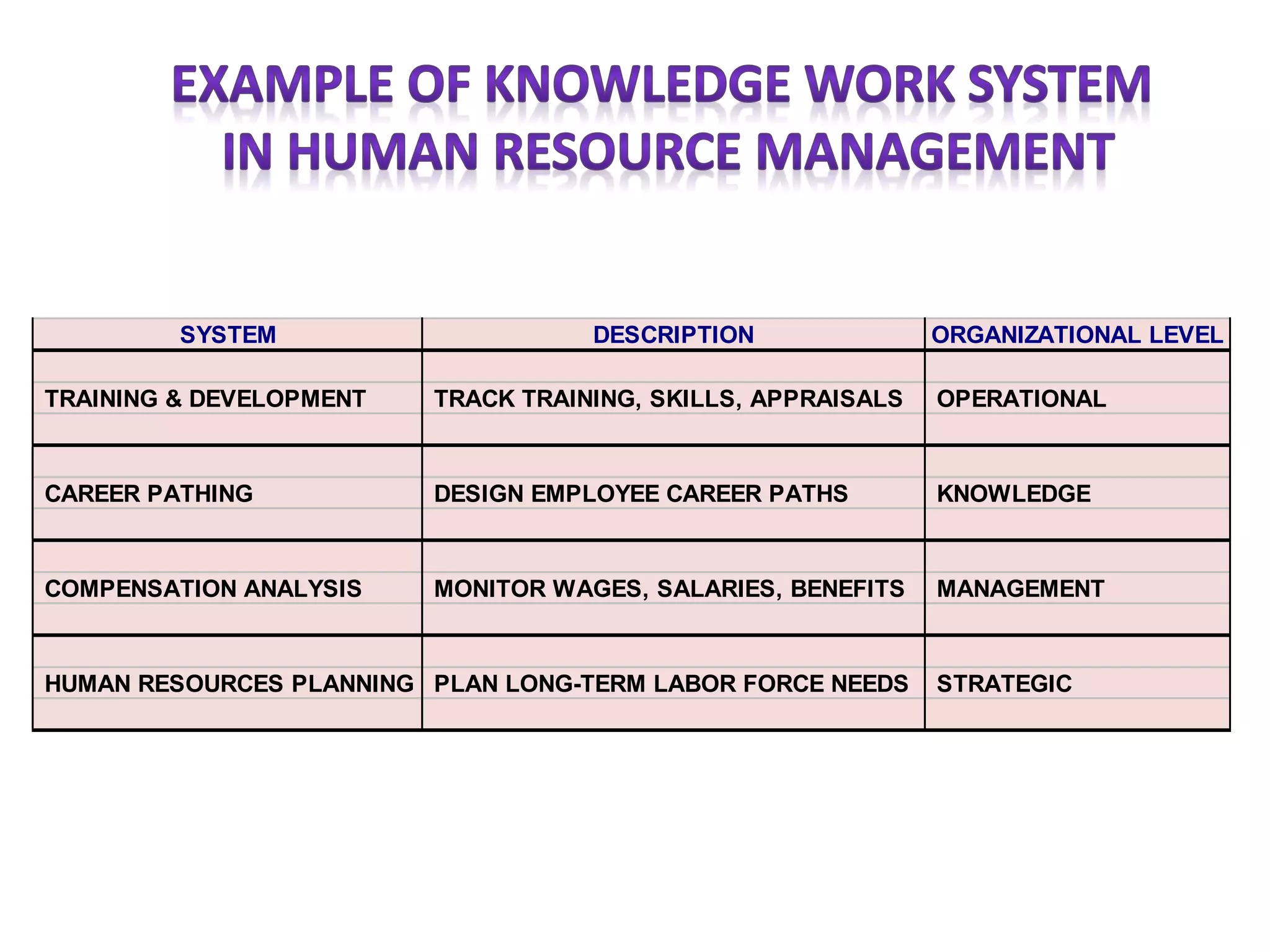
SYSTEM DESCRIPTION ORGANIZATIONAL LEVEL
TRAINING & DEVELOPMENT TRACK TRAINING, SKILLS, APPRAISALS OPERATIONAL
CAREER PATHING DESIGN EMPLOYEE CAREER PATHS KNOWLEDGE
COMPENSATION ANALYSIS MONITOR WAGES, SALARIES, BENEFITS MANAGEMENT
HUMAN RESOURCES PLANNING PLAN LONG-TERM LABOR FORCE NEEDS STRATEGIC
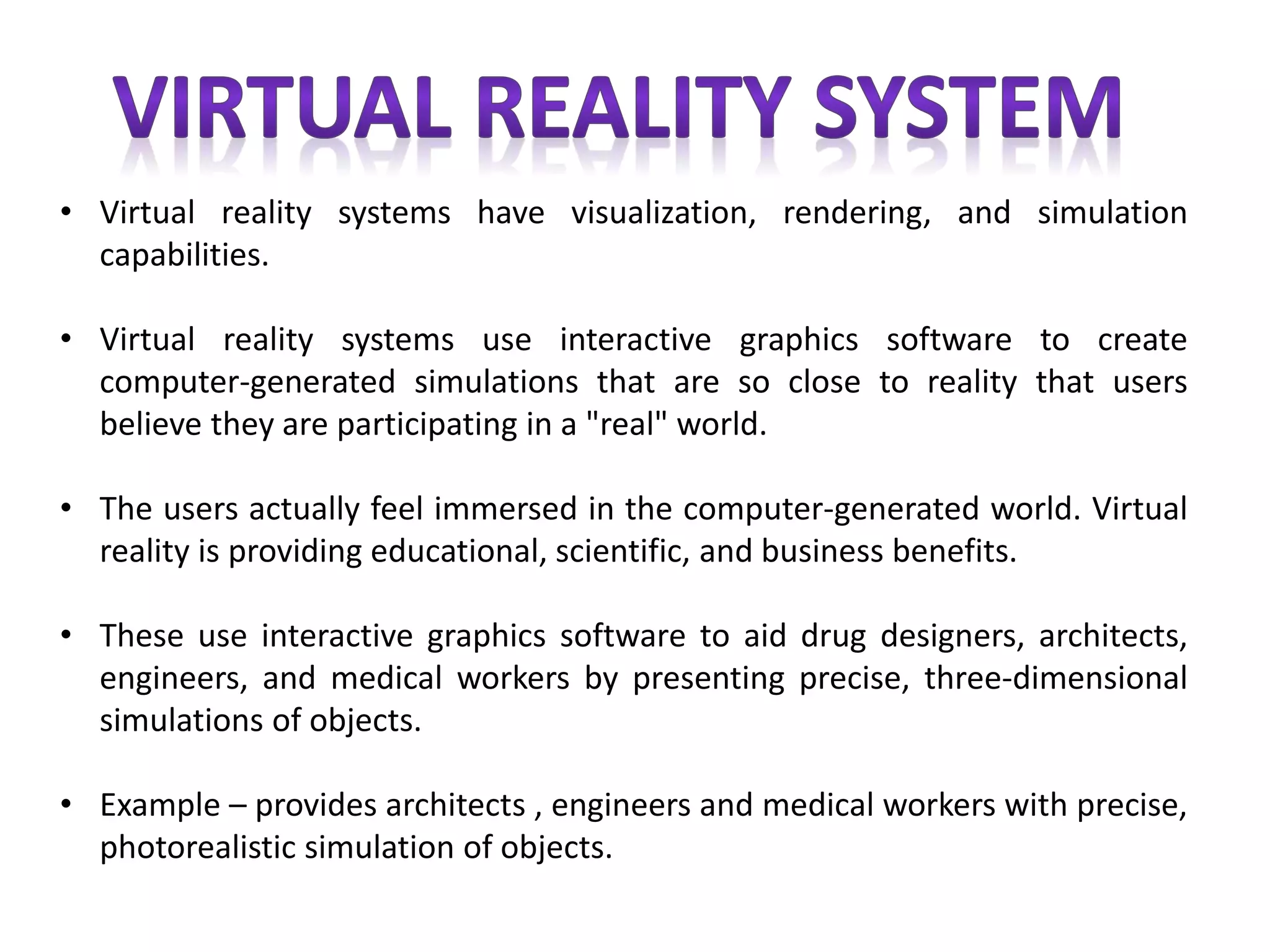
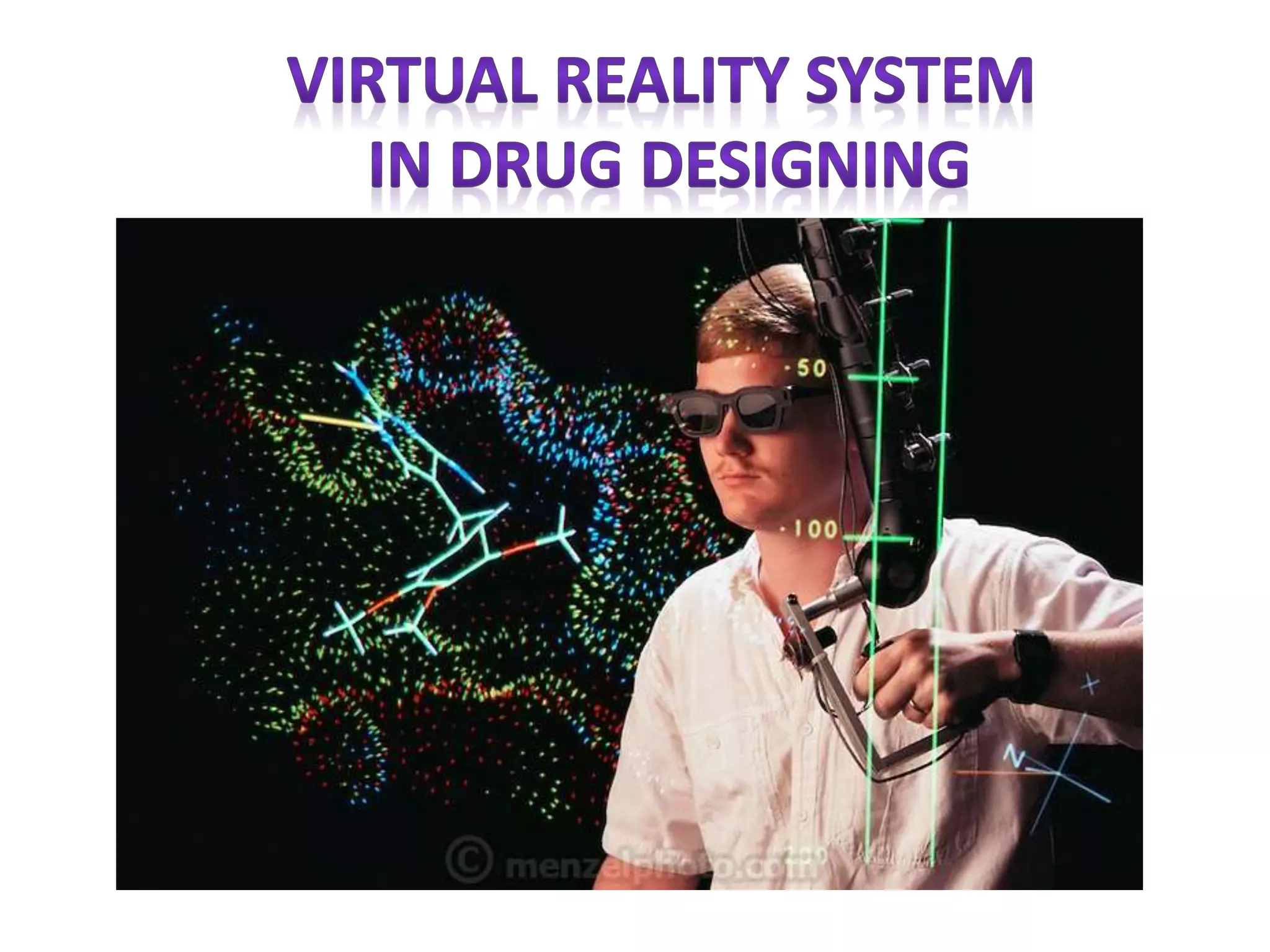
• Virtual reality systems have visualization, rendering, and simulation
capabilities.
• Virtual reality systems use interactive graphics software to create
computer-generated simulations that are so close to reality that users
believe they are participating in a "real" world.
• The users actually feel immersed in the computer-generated world. Virtual
reality is providing educational, scientific, and business benefits.
• These use interactive graphics software to aid drug designers, architects,
engineers, and medical workers by presenting precise, three-dimensional
simulations of objects.
• Example – provides architects , engineers and medical workers with precise,
photorealistic simulation of objects.
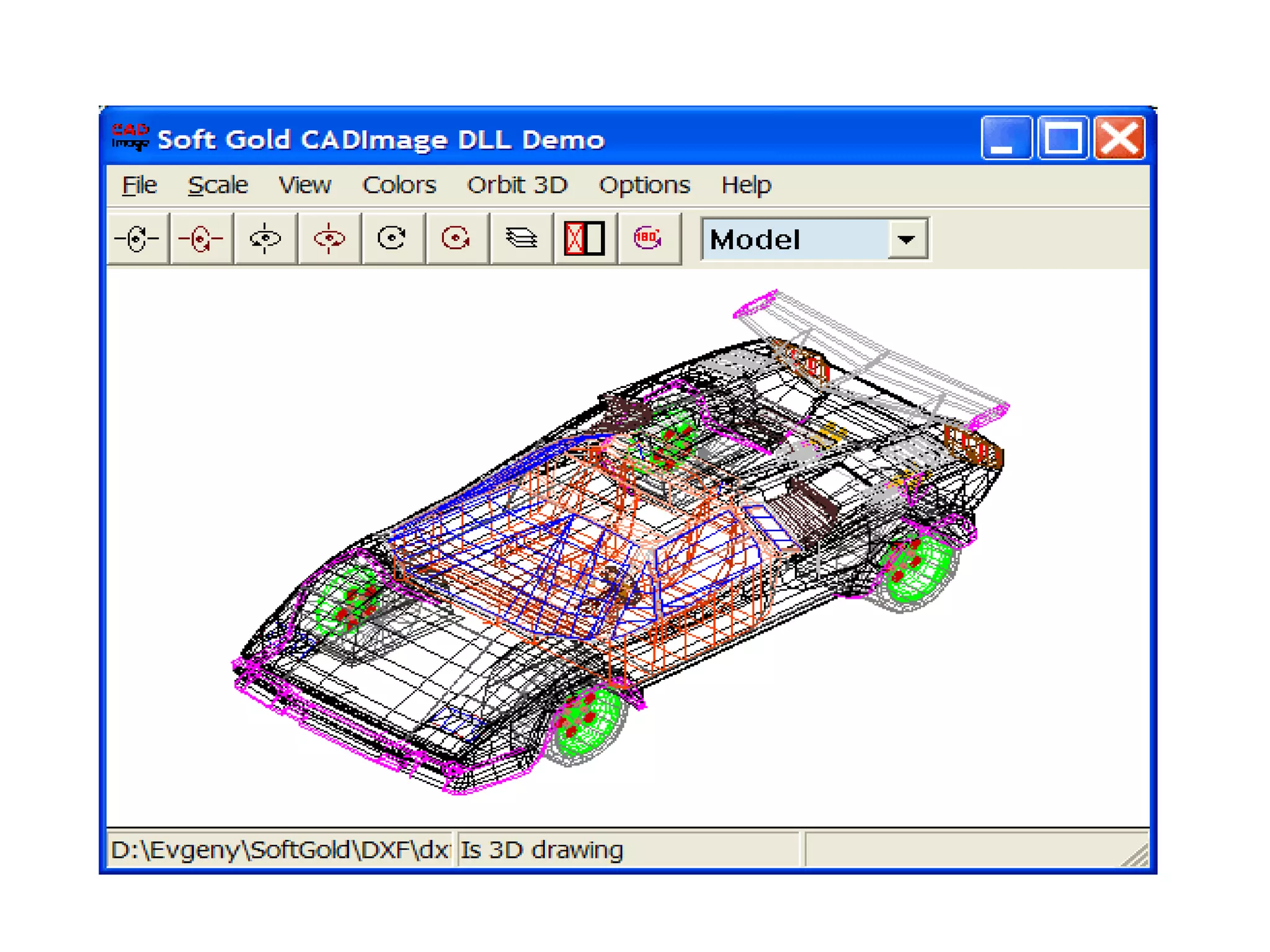
• CAD automates the creation and revision of designs , using computers
and sophisticated graphics software.
• Using a more traditional design methodology , each design modification
requires a mold to be made and a prototype to be tested physically .
These steps must be repeated many times , which is very expensive and
time consuming.
• Using a CAD workstation , the designer needs to only make a physical
prototype towards the end of the design process as the design can be
easily tested and changed on the computer.
• The ability of CAD software provides design specification for tooling and
manufacturing processes saving time and money with far fewer
problems.
• Example – Provides engineers , designers and factory managers with
precise control over industrial design and manufacturing of goods.
Powerful desktop computer for financial
specialists, which is optimized to access and
manipulate massive amounts of financial data.
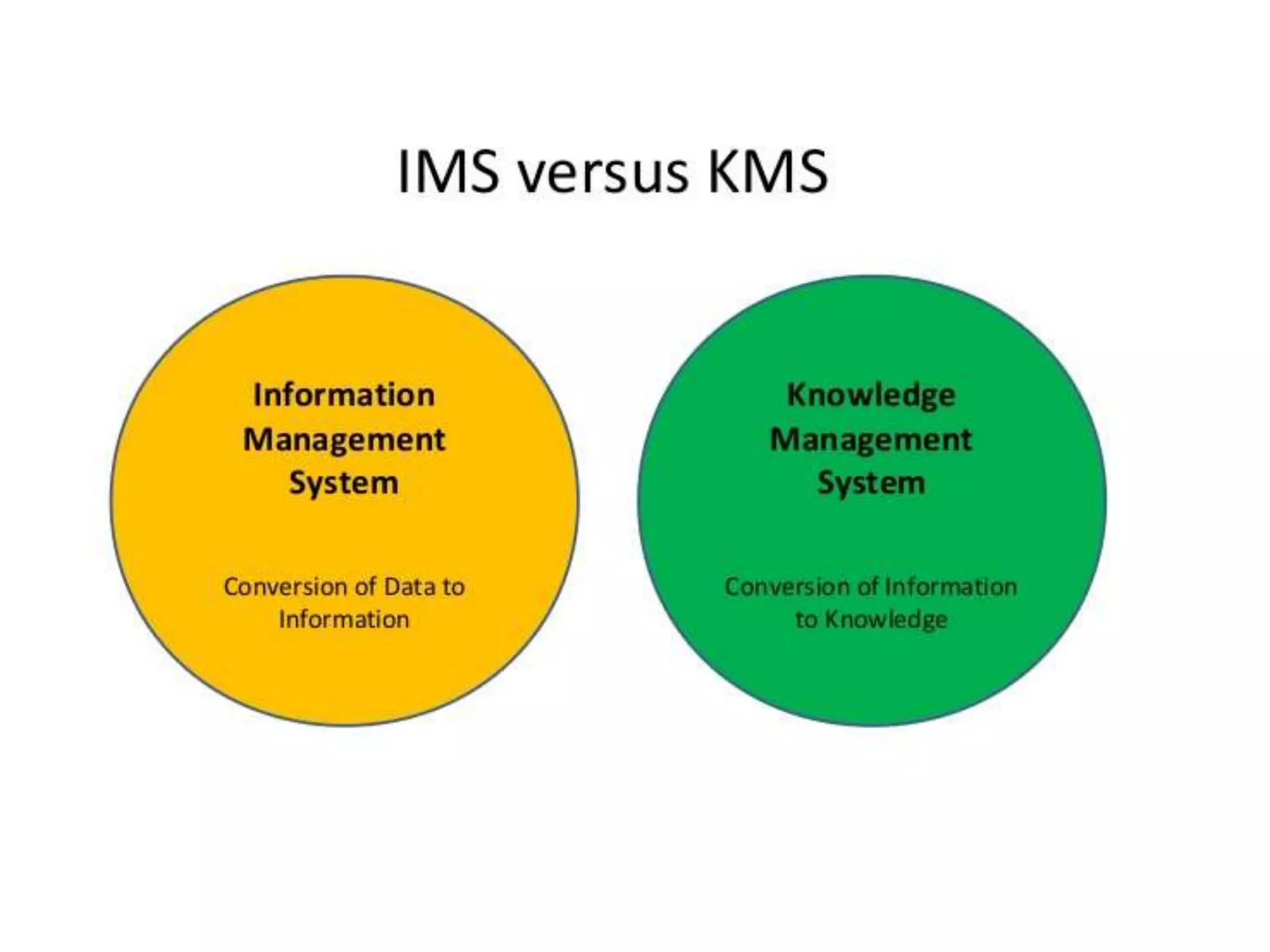
• Knowledge Management is about systematically making use of the
knowledge in the organization.
• The productivity of individual firms and the entire economy increasingly
depends on knowledge-level systems.
• Knowledge is the ability to make effective decisions, and take effective
action.
Information systems help organizations
• Achieve great efficiencies by automating parts of processes
• Rethink and streamline processes
Knowledge Work System

Knowledge Work System

  • 1.
  • 2.
    • Knowledge Managementsystems are the set of processes developed in an organization to create, gather, store, maintain, and disseminate the firm's knowledge. • The major information systems that support knowledge management are office systems, knowledge work systems, group collaboration systems, and artificial intelligence systems • Knowledge work systems help create and integrate new knowledge within the organization. Knowledge management systems codify knowledge and experience, make the collected knowledge and experience available when and where it is needed, and provide links to external sources of knowledge.
  • 4.
    • Knowledge workersperform three key roles that are critical to the organization and to the managers who work within the organization: 1.Keeping the organization current in knowledge 2.Serving as internal consultants regarding the areas of their knowledge 3.Acting as change agents • Knowledge workers rely on traditional office systems but often require highly specialized knowledge work systems with powerful graphics, analytical tools, and communications and document management capabilities. • These systems require great computing power, access to external databases, easy-to-use interfaces, and optimization for the specific tasks to be performed.
  • 6.
    Knowledge Work Systems(KWS): Knowledge level • Inputs: Design specs • Processing: Modeling • Outputs: Designs, graphics • Users: Technical staff Example: Engineering work station
  • 7.
    Examples of knowledgework systems include:- 1.CAD 2.Virtual Reality 3.Investment Workstations 4. Human Resource Systems
  • 8.
    SYSTEM DESCRIPTION ORGANIZATIONALLEVEL TRAINING & DEVELOPMENT TRACK TRAINING, SKILLS, APPRAISALS OPERATIONAL CAREER PATHING DESIGN EMPLOYEE CAREER PATHS KNOWLEDGE COMPENSATION ANALYSIS MONITOR WAGES, SALARIES, BENEFITS MANAGEMENT HUMAN RESOURCES PLANNING PLAN LONG-TERM LABOR FORCE NEEDS STRATEGIC
  • 9.
    • Virtual realitysystems have visualization, rendering, and simulation capabilities. • Virtual reality systems use interactive graphics software to create computer-generated simulations that are so close to reality that users believe they are participating in a "real" world. • The users actually feel immersed in the computer-generated world. Virtual reality is providing educational, scientific, and business benefits. • These use interactive graphics software to aid drug designers, architects, engineers, and medical workers by presenting precise, three-dimensional simulations of objects. • Example – provides architects , engineers and medical workers with precise, photorealistic simulation of objects.
  • 11.
    • CAD automatesthe creation and revision of designs , using computers and sophisticated graphics software. • Using a more traditional design methodology , each design modification requires a mold to be made and a prototype to be tested physically . These steps must be repeated many times , which is very expensive and time consuming. • Using a CAD workstation , the designer needs to only make a physical prototype towards the end of the design process as the design can be easily tested and changed on the computer. • The ability of CAD software provides design specification for tooling and manufacturing processes saving time and money with far fewer problems. • Example – Provides engineers , designers and factory managers with precise control over industrial design and manufacturing of goods.
  • 13.
    Powerful desktop computerfor financial specialists, which is optimized to access and manipulate massive amounts of financial data.
  • 14.
    • Knowledge Managementis about systematically making use of the knowledge in the organization. • The productivity of individual firms and the entire economy increasingly depends on knowledge-level systems. • Knowledge is the ability to make effective decisions, and take effective action. Information systems help organizations • Achieve great efficiencies by automating parts of processes • Rethink and streamline processes