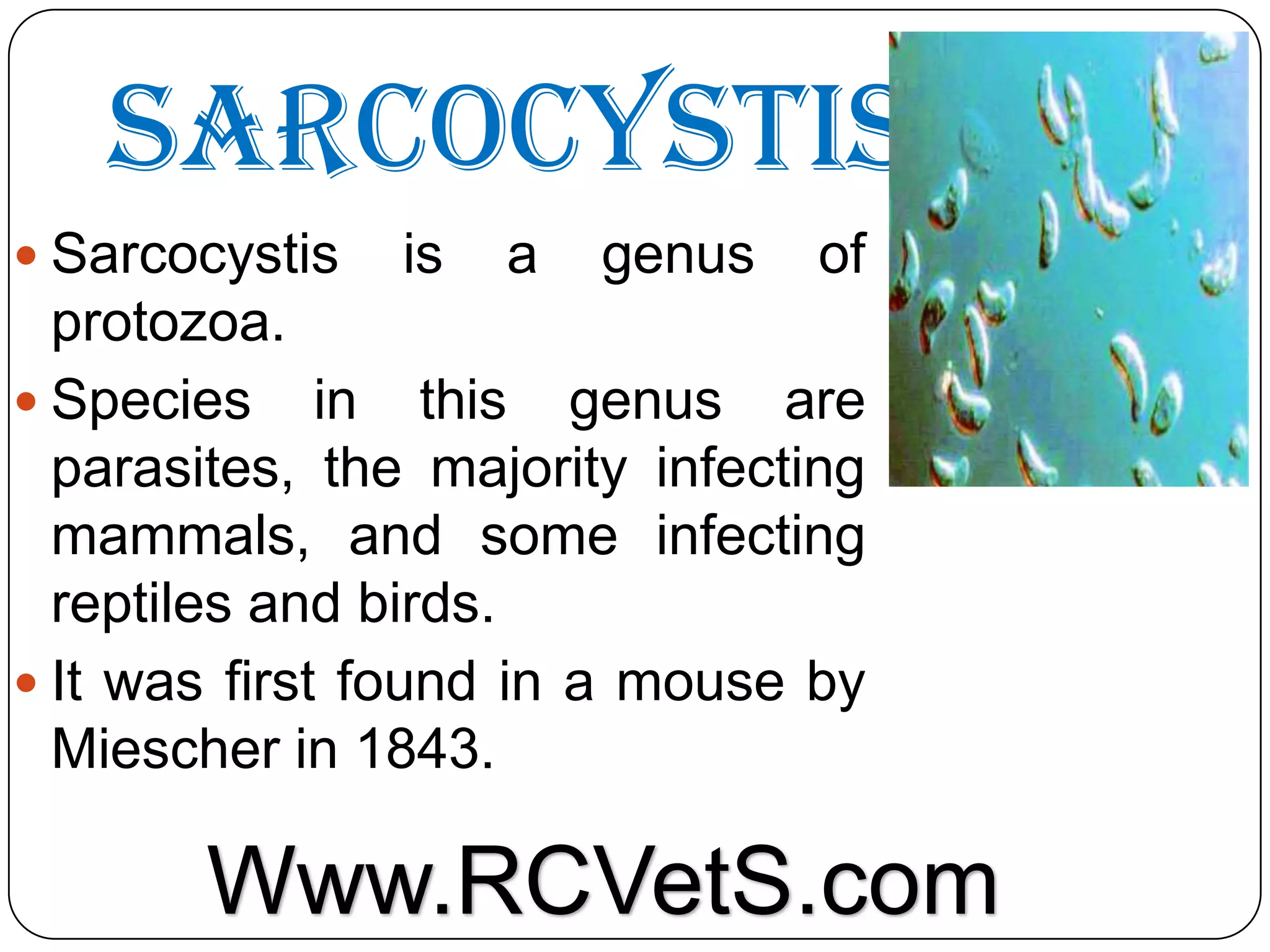
Sarcocystis
 Sarcocystis

is

a

genus

of

protozoa.
 Species in this genus are
parasites, the majority infecting
mammals, and some infecting
reptiles and birds.
 It was first found in a mouse by
Miescher in 1843.

Www.RCVetS.com
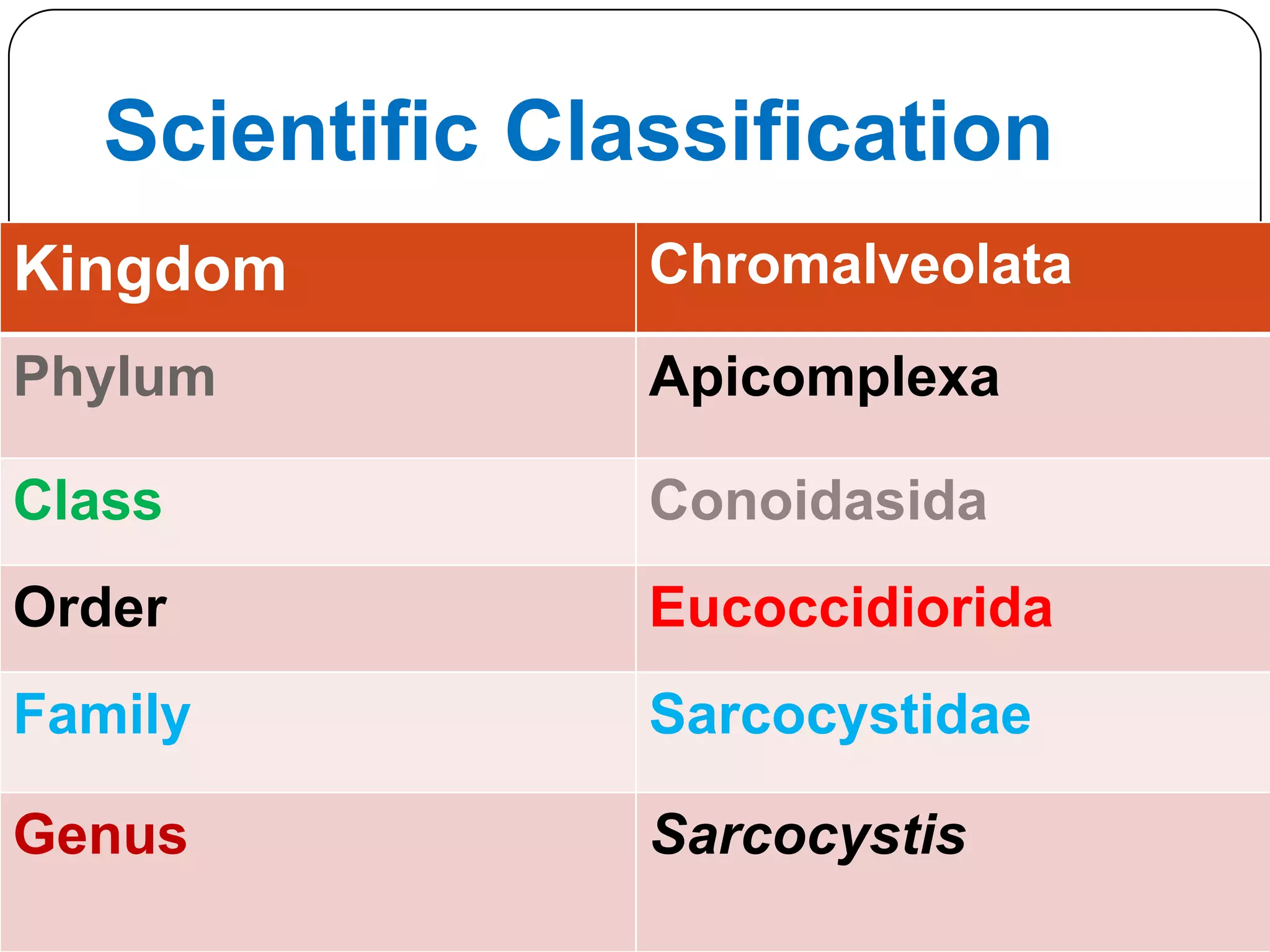
Scientific Classification
Kingdom

Chromalveolata

Phylum

Apicomplexa

Class

Conoidasida

Order

Eucoccidiorida

Family

Sarcocystidae

Genus

Sarcocystis
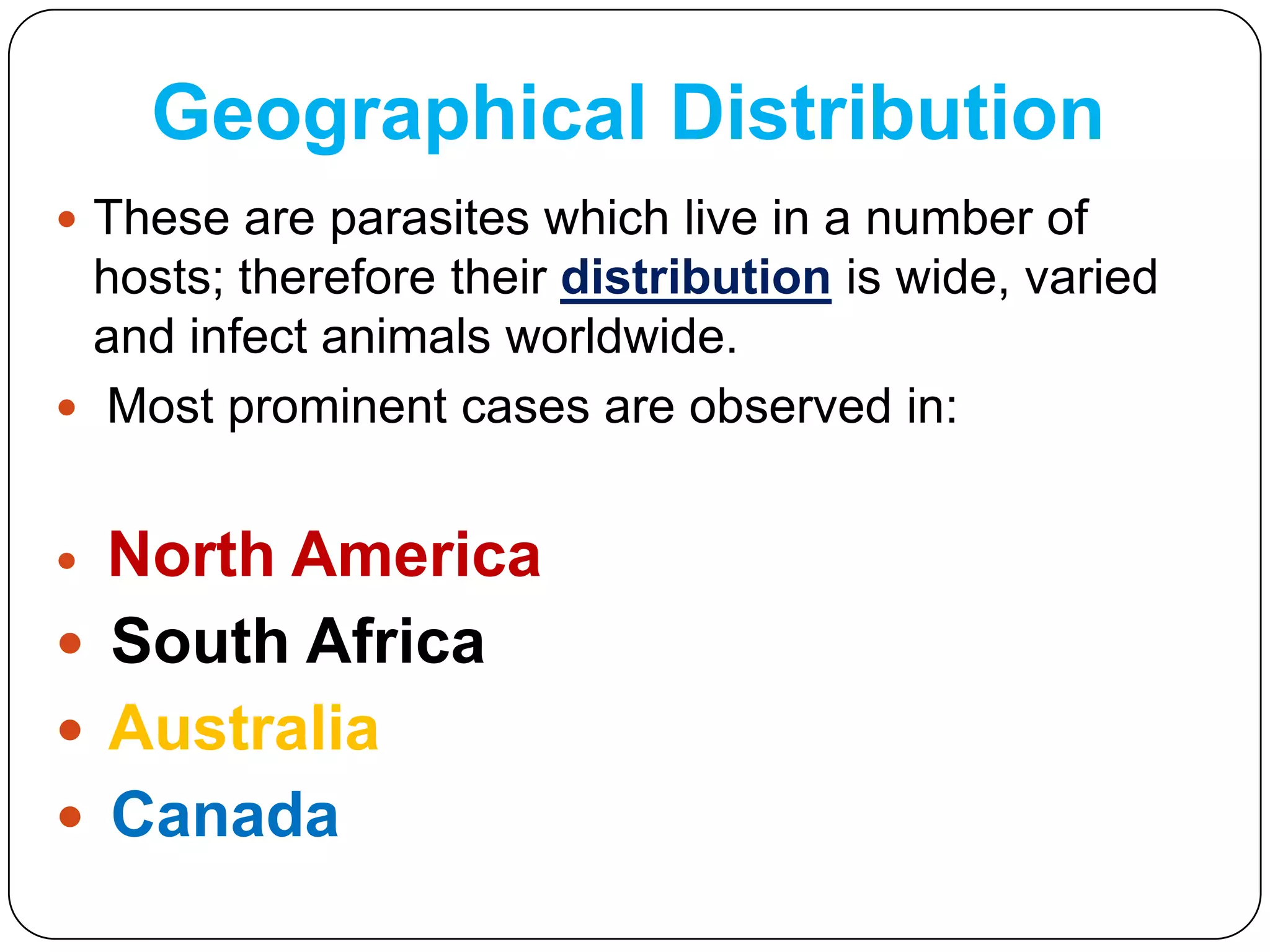
Geographical Distribution
 These are parasites which live in a number of

hosts; therefore their distribution is wide, varied
and infect animals worldwide.
 Most prominent cases are observed in:

North America
 South Africa
 Australia
 Canada

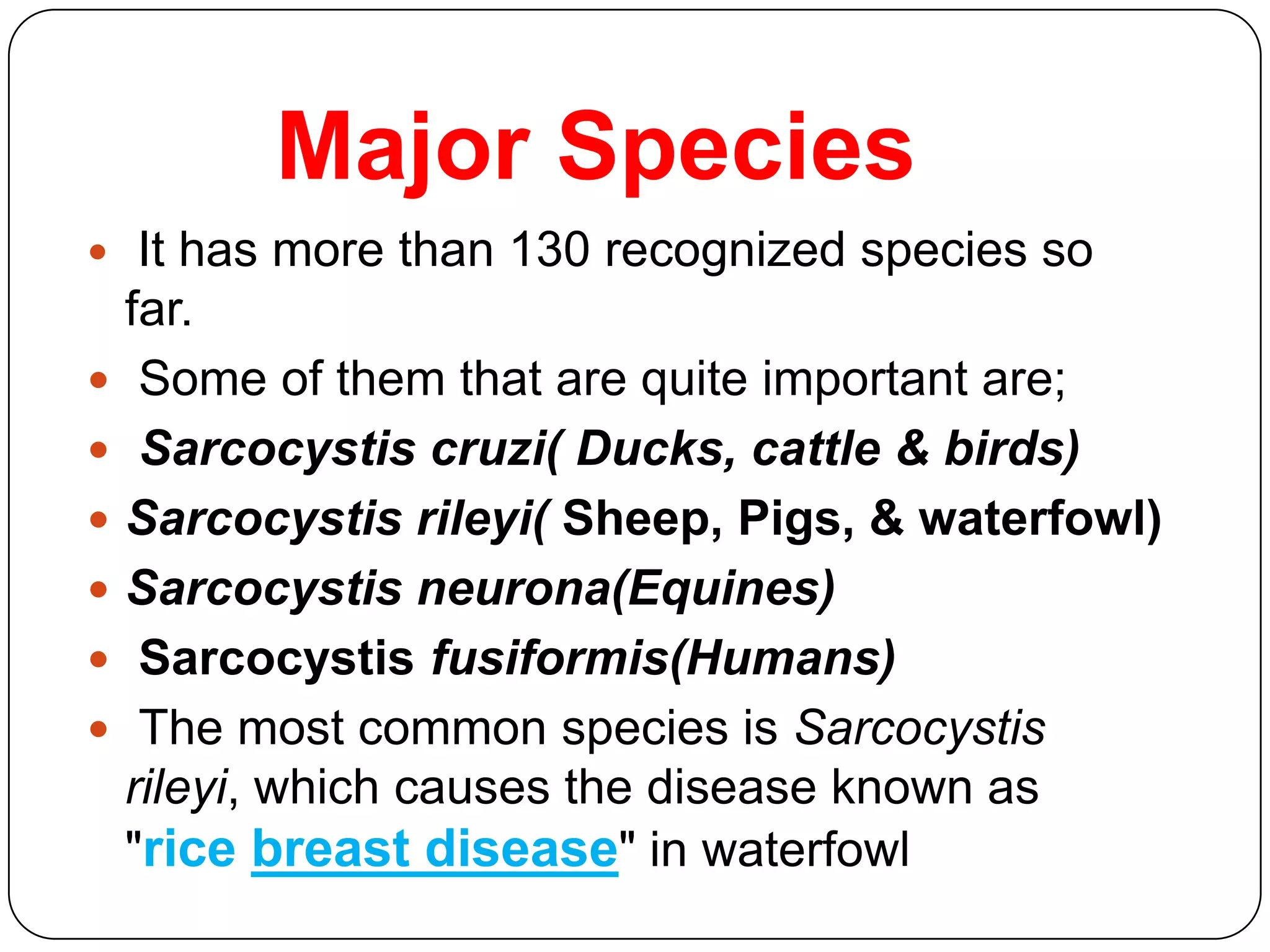
Major Species









It has more than 130 recognized species so
far.
Some of them that are quite important are;
Sarcocystis cruzi( Ducks, cattle & birds)
Sarcocystis rileyi( Sheep, Pigs, & waterfowl)
Sarcocystis neurona(Equines)
Sarcocystis fusiformis(Humans)
The most common species is Sarcocystis
rileyi, which causes the disease known as
"rice breast disease" in waterfowl
Hosts


It’s hosts are;



Ducks

Sheep
 Cattle
 Pigs
 Rats


 Raccoons

Horse
 Water fowls
 Humans

Transmission in
Host
 The mode of transmission from animal to

animal is incompletely understood.
 For many years it was believed
Sarcocystis was transmitted by ingestion of
flesh containing sarcocysts.
 Now another indirect method of infection has
been proven whereby carnivores and
omnivores pass an infective stage of the
parasite in their feces.
 An animal is infected by ingesting material
contaminated by the infected feces.
Life cycle of
Sarcocystis
Life Cycle
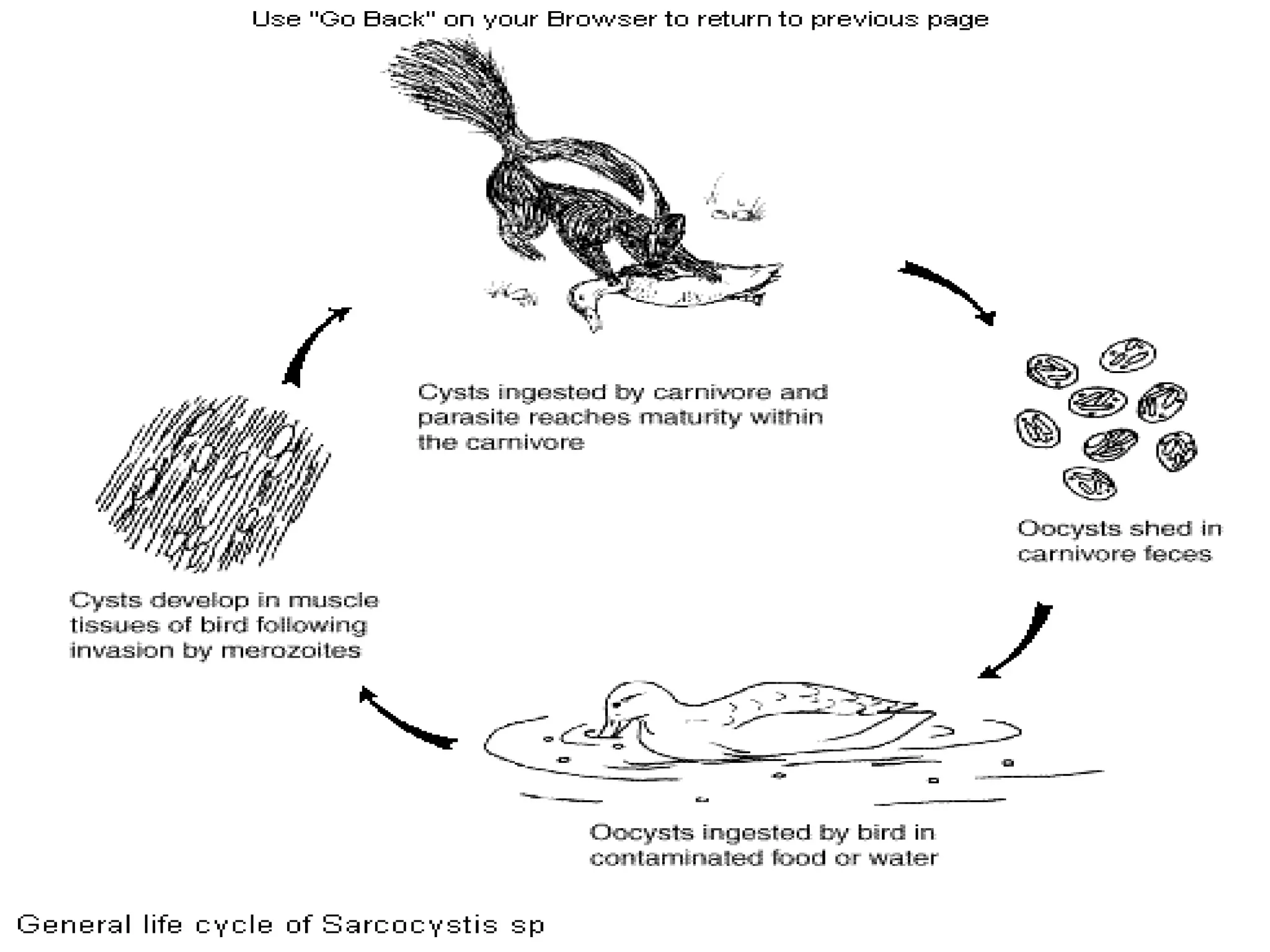
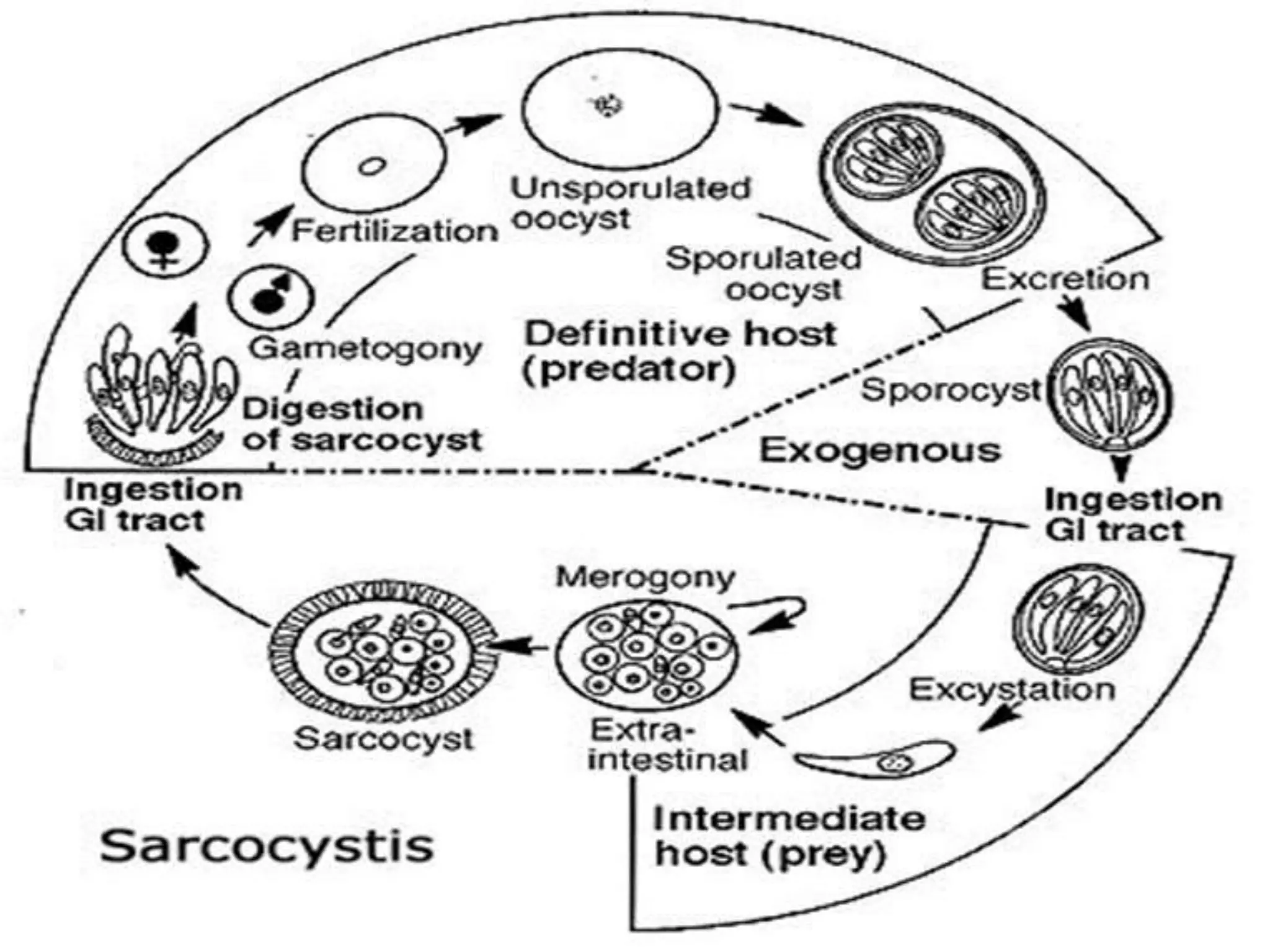
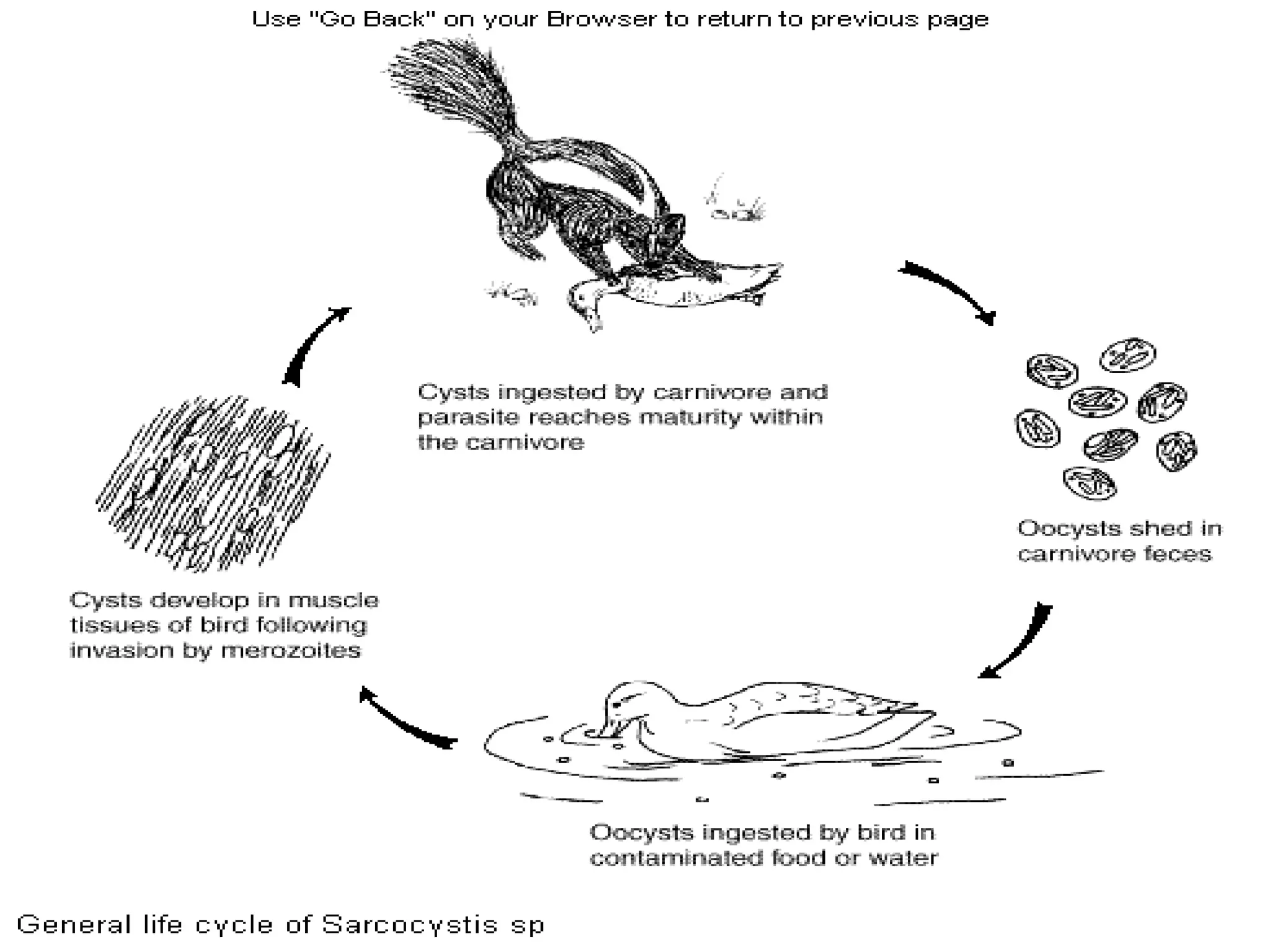
 The Sarcocystis sp. parasites have an indirect life

cycle that requires a paratentic or transport
host animal (a bird), in which they live for a time
before they are transported to a definitive host
animal (a carnivore), in which they reach
maturity.
 Birds ingest the eggs or oocysts of the mature
parasite in food or water that is contaminated by
carnivore feces, which contain the oocysts.
 The oocysts develop in the intestine of the bird
into an intermediate form, the sporozoites, that
enter the bird’s bloodstream and infect specific
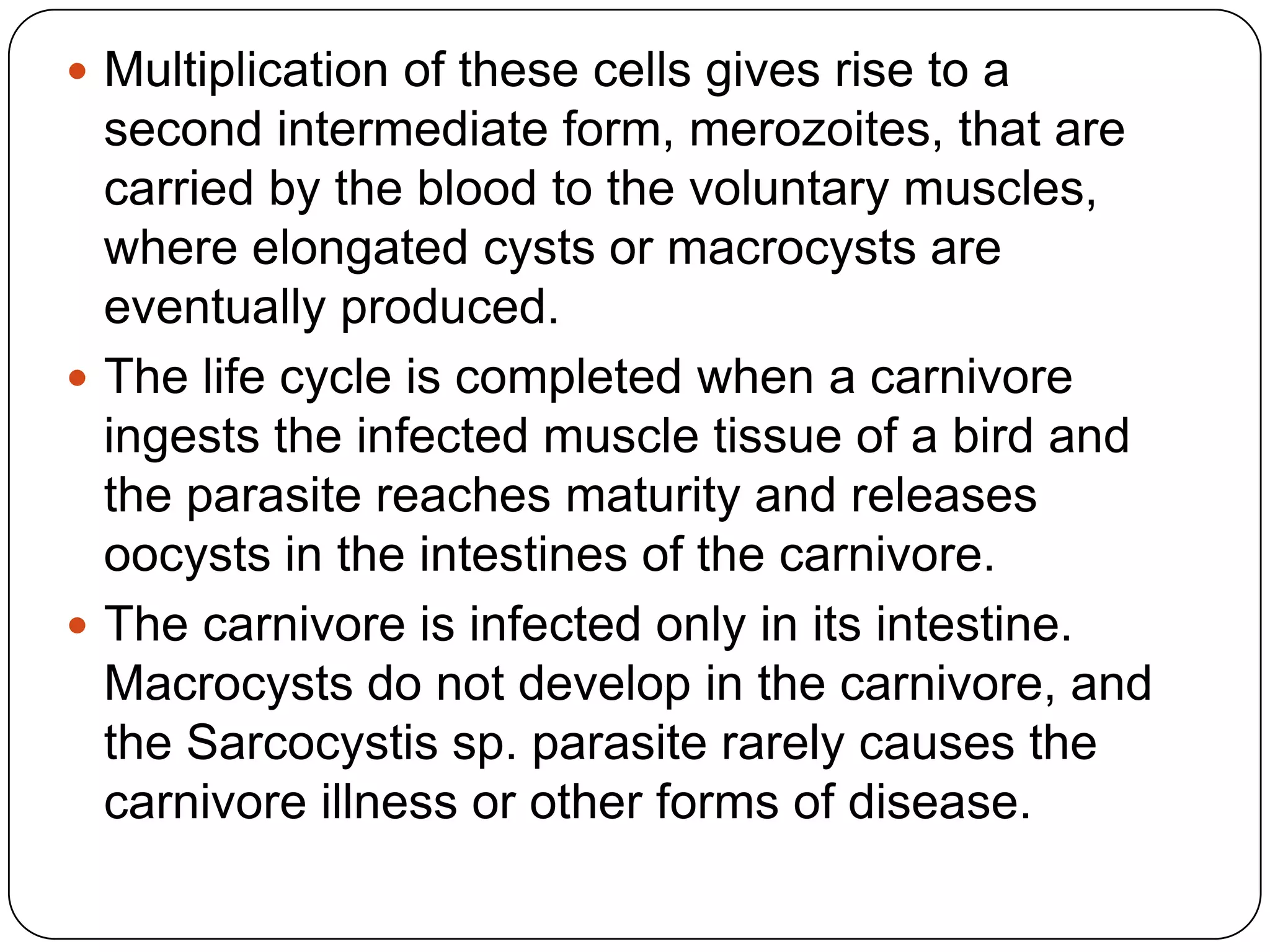
 Multiplication of these cells gives rise to a

second intermediate form, merozoites, that are
carried by the blood to the voluntary muscles,
where elongated cysts or macrocysts are
eventually produced.
 The life cycle is completed when a carnivore
ingests the infected muscle tissue of a bird and
the parasite reaches maturity and releases
oocysts in the intestines of the carnivore.
 The carnivore is infected only in its intestine.
Macrocysts do not develop in the carnivore, and
the Sarcocystis sp. parasite rarely causes the
carnivore illness or other forms of disease.
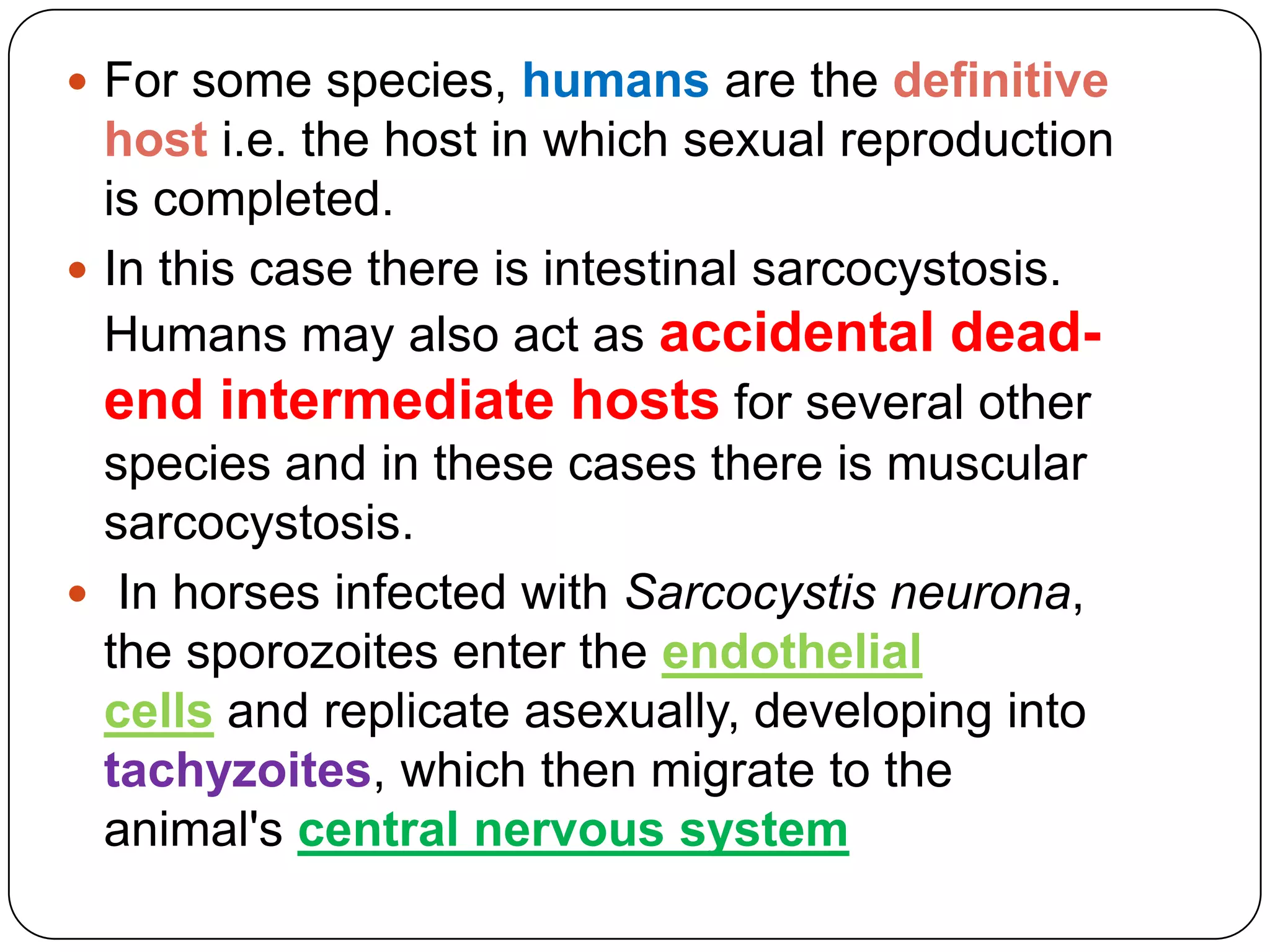
 For some species, humans are the definitive

host i.e. the host in which sexual reproduction
is completed.
 In this case there is intestinal sarcocystosis.
Humans may also act as accidental deadend intermediate hosts for several other
species and in these cases there is muscular
sarcocystosis.
 In horses infected with Sarcocystis neurona,
the sporozoites enter the endothelial
cells and replicate asexually, developing into
tachyzoites, which then migrate to the
animal's central nervous system
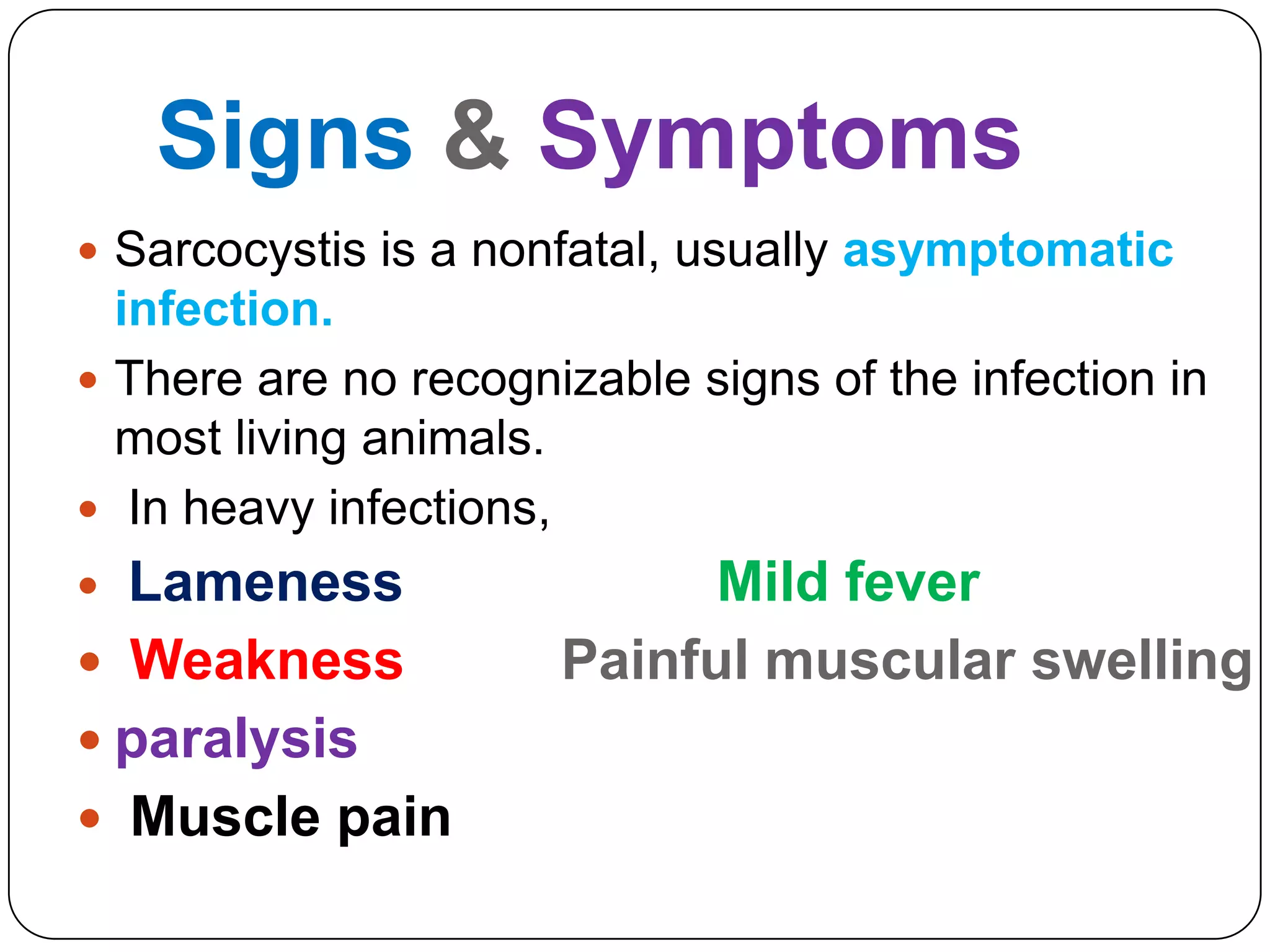
Signs & Symptoms
 Sarcocystis is a nonfatal, usually asymptomatic

infection.
 There are no recognizable signs of the infection in
most living animals.
 In heavy infections,

Lameness
 Weakness
 paralysis
 Muscle pain


Mild fever
Painful muscular swelling
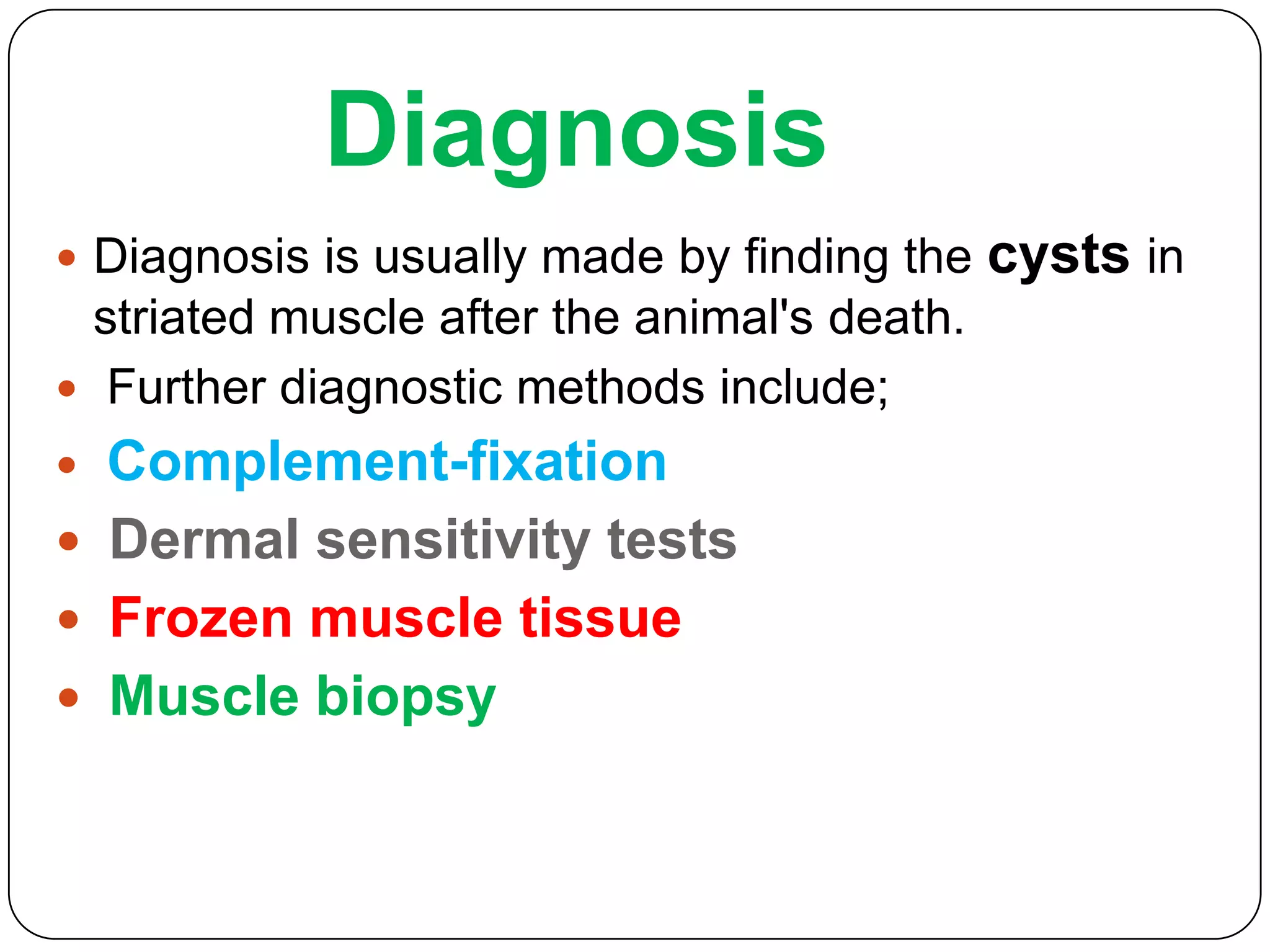
Diagnosis
 Diagnosis is usually made by finding the

striated muscle after the animal's death.
 Further diagnostic methods include;

Complement-fixation
 Dermal sensitivity tests
 Frozen muscle tissue
 Muscle biopsy


cysts in
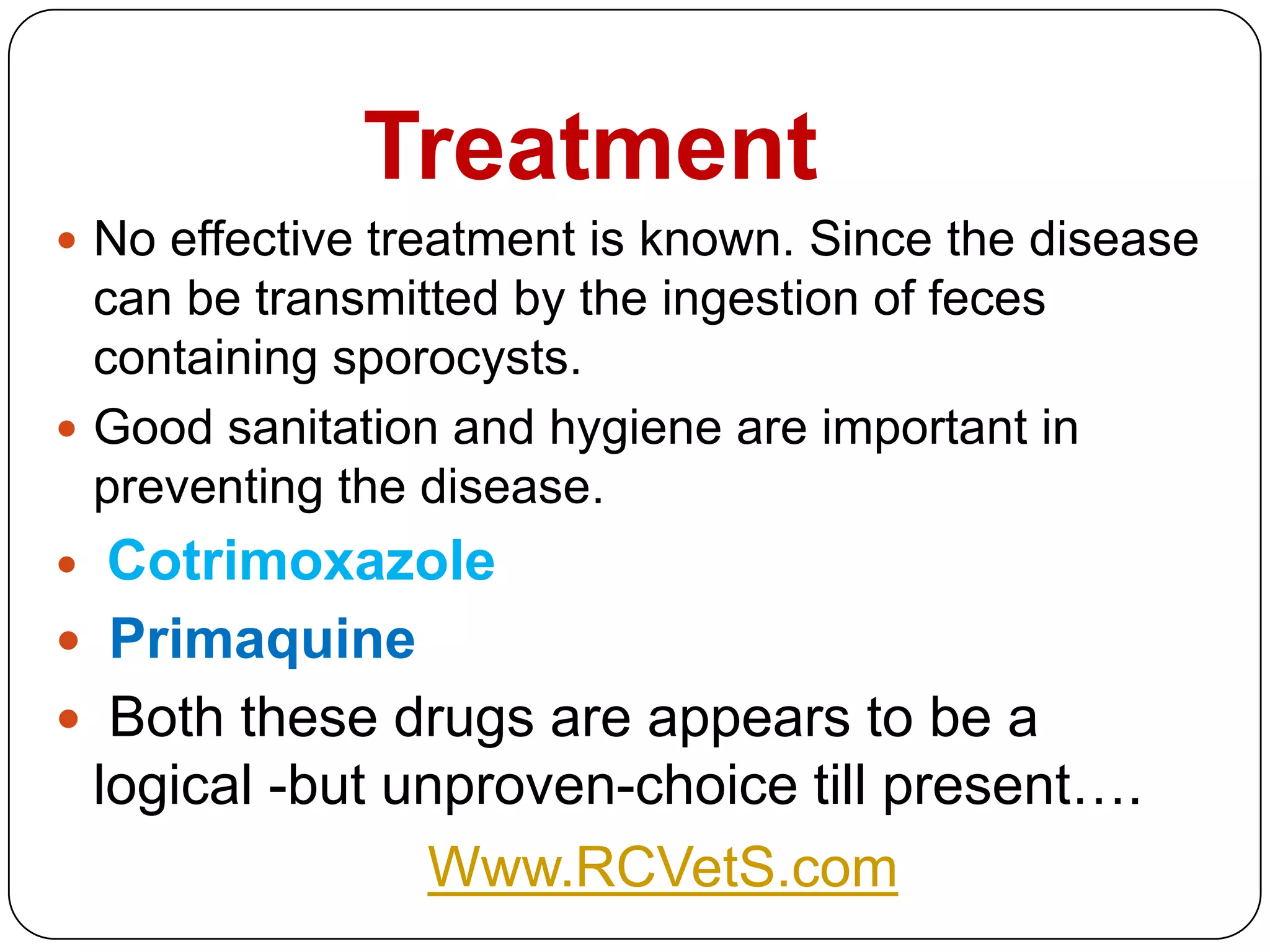
Treatment
 No effective treatment is known. Since the disease

can be transmitted by the ingestion of feces
containing sporocysts.
 Good sanitation and hygiene are important in
preventing the disease.

Cotrimoxazole
 Primaquine
 Both these drugs are appears to be a
logical -but unproven-choice till present….
Www.RCVetS.com


Sarcocystis

  • 1.
    Sarcocystis  Sarcocystis is a genus of protozoa.  Speciesin this genus are parasites, the majority infecting mammals, and some infecting reptiles and birds.  It was first found in a mouse by Miescher in 1843. Www.RCVetS.com
  • 2.
  • 3.
    Geographical Distribution  Theseare parasites which live in a number of hosts; therefore their distribution is wide, varied and infect animals worldwide.  Most prominent cases are observed in: North America  South Africa  Australia  Canada 
  • 4.
    Major Species        It hasmore than 130 recognized species so far. Some of them that are quite important are; Sarcocystis cruzi( Ducks, cattle & birds) Sarcocystis rileyi( Sheep, Pigs, & waterfowl) Sarcocystis neurona(Equines) Sarcocystis fusiformis(Humans) The most common species is Sarcocystis rileyi, which causes the disease known as "rice breast disease" in waterfowl
  • 5.
    Hosts  It’s hosts are;  Ducks Sheep Cattle  Pigs  Rats   Raccoons Horse  Water fowls  Humans 
  • 6.
    Transmission in Host  Themode of transmission from animal to animal is incompletely understood.  For many years it was believed Sarcocystis was transmitted by ingestion of flesh containing sarcocysts.  Now another indirect method of infection has been proven whereby carnivores and omnivores pass an infective stage of the parasite in their feces.  An animal is infected by ingesting material contaminated by the infected feces.
  • 8.
  • 10.
    Life Cycle  TheSarcocystis sp. parasites have an indirect life cycle that requires a paratentic or transport host animal (a bird), in which they live for a time before they are transported to a definitive host animal (a carnivore), in which they reach maturity.  Birds ingest the eggs or oocysts of the mature parasite in food or water that is contaminated by carnivore feces, which contain the oocysts.  The oocysts develop in the intestine of the bird into an intermediate form, the sporozoites, that enter the bird’s bloodstream and infect specific
  • 12.
     Multiplication ofthese cells gives rise to a second intermediate form, merozoites, that are carried by the blood to the voluntary muscles, where elongated cysts or macrocysts are eventually produced.  The life cycle is completed when a carnivore ingests the infected muscle tissue of a bird and the parasite reaches maturity and releases oocysts in the intestines of the carnivore.  The carnivore is infected only in its intestine. Macrocysts do not develop in the carnivore, and the Sarcocystis sp. parasite rarely causes the carnivore illness or other forms of disease.
  • 13.
     For somespecies, humans are the definitive host i.e. the host in which sexual reproduction is completed.  In this case there is intestinal sarcocystosis. Humans may also act as accidental deadend intermediate hosts for several other species and in these cases there is muscular sarcocystosis.  In horses infected with Sarcocystis neurona, the sporozoites enter the endothelial cells and replicate asexually, developing into tachyzoites, which then migrate to the animal's central nervous system
  • 14.
    Signs & Symptoms Sarcocystis is a nonfatal, usually asymptomatic infection.  There are no recognizable signs of the infection in most living animals.  In heavy infections, Lameness  Weakness  paralysis  Muscle pain  Mild fever Painful muscular swelling
  • 15.
    Diagnosis  Diagnosis isusually made by finding the striated muscle after the animal's death.  Further diagnostic methods include; Complement-fixation  Dermal sensitivity tests  Frozen muscle tissue  Muscle biopsy  cysts in
  • 16.
    Treatment  No effectivetreatment is known. Since the disease can be transmitted by the ingestion of feces containing sporocysts.  Good sanitation and hygiene are important in preventing the disease. Cotrimoxazole  Primaquine  Both these drugs are appears to be a logical -but unproven-choice till present…. Www.RCVetS.com 