PXBioVisioN


Peptidomics -
Analysis of Native Peptides by Offline-LC-MS
Harald Tammen , CMO
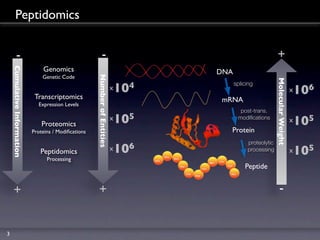
Peptidomics


           -                                                 -                                                 +
                                 Genomics
    Cumulative Information


                                                                                      DNA
                                 Genetic Code


                                                       Number of Entities


                                                                                                               Molecular Weight
                                                                                            splicing
                                                                            x 104
                              Transcriptomics
                                                                                                                                  x   106
                                                                                      mRNA
                               Expression Levels
                                                                                              post-trans.

                                 Proteomics
                                                                            x   105          modifications                         x   10 5
                             Proteins / Modifications                                    Protein
                                                                                                 proteolytic
                                Peptidomics                                 x   106              processing                       x   105
                                   Processing
                                                                                                Peptide


     +                                                 +                                                          -


3
NCBI-PubMed Search
                                                Proteomics          Genomics
                                      0.700


                                      0.525
     % of Publications [normalized]


                                      0.350


                                      0.175


                                         0
                                         1980     1986       1992     1998     2004   2010
4
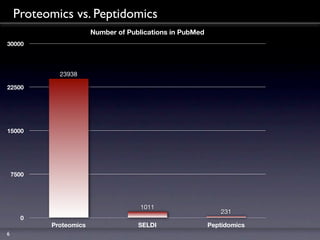
Proteomics vs. Peptidomics


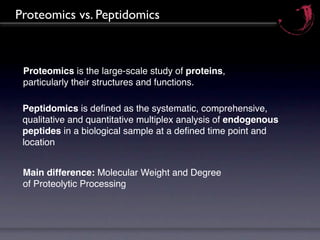
 Proteomics is the large-scale study of proteins,
 particularly their structures and functions.

 Peptidomics is defined as the systematic, comprehensive,
 qualitative and quantitative multiplex analysis of endogenous
 peptides in a biological sample at a defined time point and
 location


 Main difference: Molecular Weight and Degree
 of Proteolytic Processing
Proteomics vs. Peptidomics
                        Number of Publications in PubMed
30000


             23938

22500


15000


    7500


                                      1011
                                                              231
      0
           Proteomics                SELDI                 Peptidomics
6
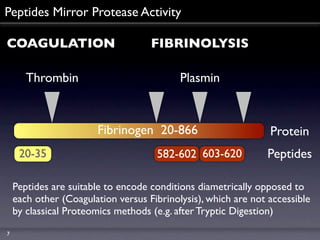
Peptides Mirror Protease Activity

COAGULATION                         FIBRINOLYSIS

       Thrombin                            Plasmin


                       Fibrinogen 20-866                        Protein
     20-35                           582-602 603-620           Peptides

    Peptides are suitable to encode conditions diametrically opposed to
    each other (Coagulation versus Fibrinolysis), which are not accessible
    by classical Proteomics methods (e.g. after Tryptic Digestion)

7
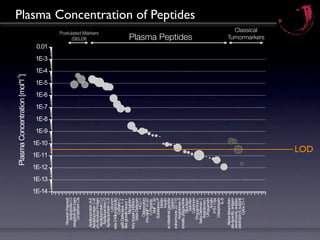
Plasma Concentration of Peptides
       Postulated Markers
                                                Classical
             (SELDI)        Plasma Peptides   Tumormarkers


                                                             LOD
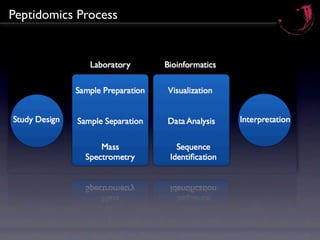
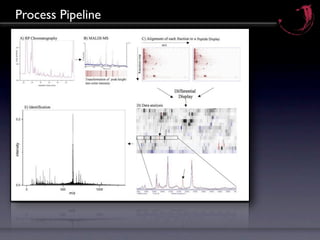
Peptidomics Process
Process Pipeline
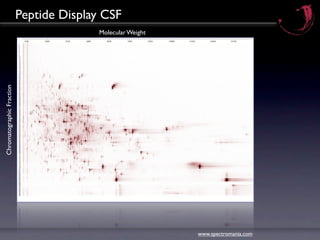
Peptide Display CSF
                                         Molecular Weight
Chromatographic Fraction


                                                            www.spectromania.com
Correlation Analysis
                                                         m/z


Each datapoint (1-3 Mill./Display) is              [INS_human 57-87]
correlated to a corresponding
variable (e.g. plasma level insulin).


                                        Fraction
                                                           [INS_human 25-54]
By applying a threshold value only
correlating datapoints are shown.

In contrast to „conventional“
methods no export of signals is
required:

The full information content of each
mass spectrum is used for analysis.
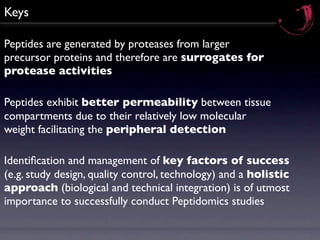
Keys

Peptides are generated by proteases from larger
precursor proteins and therefore are surrogates for
protease activities

Peptides exhibit better permeability between tissue
compartments due to their relatively low molecular
weight facilitating the peripheral detection

Identification and management of key factors of success
(e.g. study design, quality control, technology) and a holistic
approach (biological and technical integration) is of utmost
importance to successfully conduct Peptidomics studies
Contact


               PXBioVisioN GmbH
               Feodor-Lynen-Str. 5
               30625 Hannover
               Germany
          PX


               Dr. Harald Tammen
               CMO
               info@pxbiovision.com

Peptidomics Basics

  • 1.
    PXBioVisioN Peptidomics - Analysis ofNative Peptides by Offline-LC-MS Harald Tammen , CMO
  • 3.
    Peptidomics - - + Genomics Cumulative Information DNA Genetic Code Number of Entities Molecular Weight splicing x 104 Transcriptomics x 106 mRNA Expression Levels post-trans. Proteomics x 105 modifications x 10 5 Proteins / Modifications Protein proteolytic Peptidomics x 106 processing x 105 Processing Peptide + + - 3
  • 4.
    NCBI-PubMed Search Proteomics Genomics 0.700 0.525 % of Publications [normalized] 0.350 0.175 0 1980 1986 1992 1998 2004 2010 4
  • 5.
    Proteomics vs. Peptidomics Proteomics is the large-scale study of proteins, particularly their structures and functions. Peptidomics is defined as the systematic, comprehensive, qualitative and quantitative multiplex analysis of endogenous peptides in a biological sample at a defined time point and location Main difference: Molecular Weight and Degree of Proteolytic Processing
  • 6.
    Proteomics vs. Peptidomics Number of Publications in PubMed 30000 23938 22500 15000 7500 1011 231 0 Proteomics SELDI Peptidomics 6
  • 7.
    Peptides Mirror ProteaseActivity COAGULATION FIBRINOLYSIS Thrombin Plasmin Fibrinogen 20-866 Protein 20-35 582-602 603-620 Peptides Peptides are suitable to encode conditions diametrically opposed to each other (Coagulation versus Fibrinolysis), which are not accessible by classical Proteomics methods (e.g. after Tryptic Digestion) 7
  • 8.
    Plasma Concentration ofPeptides Postulated Markers Classical (SELDI) Plasma Peptides Tumormarkers LOD
  • 9.
  • 10.
  • 11.
    Peptide Display CSF Molecular Weight Chromatographic Fraction www.spectromania.com
  • 12.
    Correlation Analysis m/z Each datapoint (1-3 Mill./Display) is [INS_human 57-87] correlated to a corresponding variable (e.g. plasma level insulin). Fraction [INS_human 25-54] By applying a threshold value only correlating datapoints are shown. In contrast to „conventional“ methods no export of signals is required: The full information content of each mass spectrum is used for analysis.
  • 13.
    Keys Peptides are generatedby proteases from larger precursor proteins and therefore are surrogates for protease activities Peptides exhibit better permeability between tissue compartments due to their relatively low molecular weight facilitating the peripheral detection Identification and management of key factors of success (e.g. study design, quality control, technology) and a holistic approach (biological and technical integration) is of utmost importance to successfully conduct Peptidomics studies
  • 14.
    Contact PXBioVisioN GmbH Feodor-Lynen-Str. 5 30625 Hannover Germany PX Dr. Harald Tammen CMO info@pxbiovision.com